Jaisalmer
Send it to whoever you'd travel with
Jaisalmer is Rajasthan's golden sandstone desert city, famous for its living fort, intricate havelis, and camel safaris into the Thar Desert dunes.
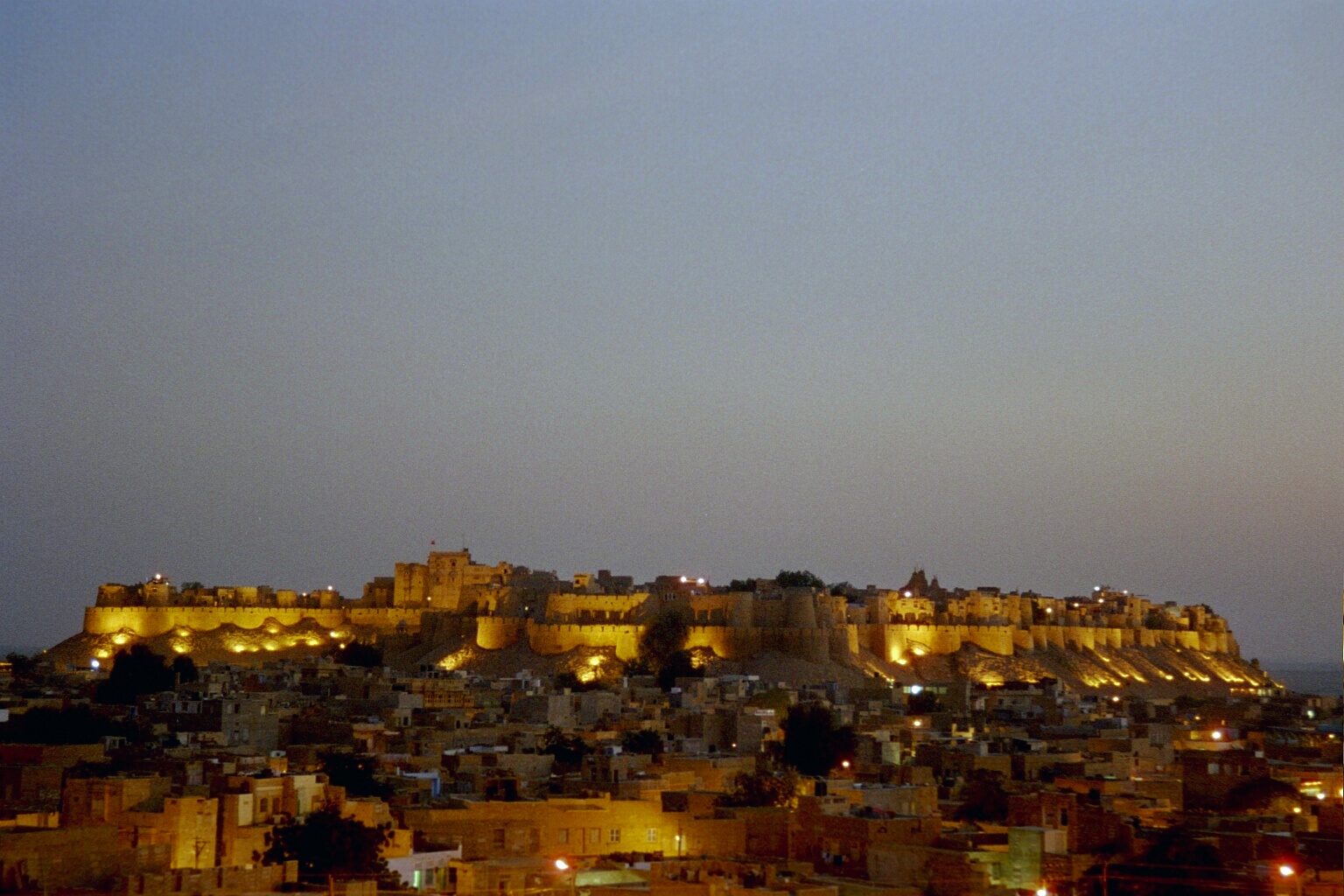
Jaisalmer hits differently than any other Rajasthan city. The whole place is built from the same yellow-gold sandstone, so at sunrise and sunset the entire skyline glows the colour of a lit candle — hence the 'Golden City' nickname, which actually earns it. The Jaisalmer Fort still has roughly three thousand people living inside its walls, making it one of the last working medieval forts on earth. You don't visit it so much as walk through somebody's neighbourhood that happens to be 850 years old.
The catch is that this is desert desert — proper Thar, four hours by road from the nearest big city, and parked closer to the Pakistan border than to Jodhpur. That remoteness is the whole point. Travellers come for the silence outside town, the cinematic dunes at Sam and Khuri, and the kind of starfield you can't get anywhere with light pollution. It's not a place for sightseeing checklists. Two days inside the walls, one night in the desert, and you've basically got it.
Stay outside the fort, not inside. Sounds counterintuitive — the inside is more atmospheric — but the haveli guesthouses within the walls have, over decades, leaked water into the foundations and accelerated structural damage. Conservation groups now openly ask visitors to sleep in the town below. The hotels along Amar Sagar Pol and the Patwa Haveli area are five minutes' walk from the fort gates and you still wake up looking at it.
Skip Jaisalmer in summer. Genuinely skip it. April through July the temperature passes 45°C / 113°F and the sandstone radiates heat like an oven all night. The window that works is October to March, and the sweet spot is mid-November to mid-February — cool enough for the desert nights to require a blanket, warm enough to enjoy a rooftop dinner. The Desert Festival in late January or early February is the obvious peg to plan around.
The practical bits.
- Best time
-
Nov – FebPleasant 8–28°C days, cool desert nights, prime camel safari weather.
- How long
-
3-5 nights recommendedTwo nights in town, one in a desert camp is the classic shape.
- Budget
-
$55 / day typicalDesert safaris and luxury tented camps swing the upper bracket sharply.
- Getting around
-
Walkable old town; auto-rickshaws and jeeps for everything else.Inside the fort and the immediate streets around it, you walk — the lanes are too narrow for cars. For Bada Bagh, Kuldhara, Sam or Khuri, hire an auto for short hops or a jeep with driver for a half day. There are no public buses worth using for sightseeing.
- Currency
-
₹ INR (Indian Rupee)Cash dominates for autos, small shops and desert vendors. Hotels and bigger restaurants take cards; UPI is everywhere but needs an Indian bank account.
- Language
- Hindi and Rajasthani; English is widely understood in tourism, less so with local autowallahs.
- Visa
- Most nationalities need an e-Tourist Visa, applied online at indianvisaonline.gov.in at least 4 days before arrival. 30-day, 1-year and 5-year options exist; passport needs 6 months' validity.
- Safety
- Generally safe, including for solo women — Rajasthan is one of the easier Indian states for first-time visitors. Standard market-touts and overpriced-safari hustles apply; agree on prices before getting in any jeep.
- Plug
- Type C / D / M, 230V
- Timezone
- GMT+5:30
A few specific picks.
Hand-picked, not algorithmic. Each of these has earned its space.
A 12th-century living fort, UNESCO-listed, with roughly 3,000 residents still inside. Walk in through First Fort Gate at golden hour.
A cluster of five 19th-century merchant mansions with over 60 balconies. The carved sandstone facade is one of the most photographed in Rajasthan.
A 14th-century artificial reservoir ringed by chhatris and small temples. Best at sunrise — paddle boats, migratory birds, very little noise.
Seven interconnected temples carved between the 12th and 16th centuries. Same golden sandstone as the fort, but the interior carving is denser and finer.
Royal cenotaphs scattered across a low hill. Empty, atmospheric, and the best non-dune sunset in the area.
The headline dunes. Busier and more theatrical — camel rides, jeep safaris, folk music after dark. Go for the social desert-camp experience.
Quieter alternative to Sam. Smaller dunes but fewer tourists, more intact village life, better stargazing.
A Paliwal Brahmin settlement abandoned overnight in the early 1800s. Reputed to be haunted; in daylight it's just eerie and quiet.
Mirrored textiles, leather camel-hide jutti, silver. Bargain hard — opening prices for foreigners tend to start at 3–4× fair.
Long-running rooftop with a head-on view of the fort and reliable Rajasthani thalis. Get there before sunset for the better tables.
The closest thing to a destination hotel in the region — heritage-style fortress hotel in the desert. Worth a night at the top of the budget.
Simple, family-run rooftop kitchen serving classic ker sangri and dal baati churma. Cash only; closes early.
Pick a neighborhood, not a hotel.
Jaisalmer is a city of neighborhoods. The one you stay in shapes the trip more than the property does.
Different trips for different travelers.
Same city, very different stays. Pick the lens that matches your trip.
Jaisalmer for photographers
Few cities on earth offer this much visual consistency — every building is the same gold sandstone, lit cinematically morning and evening.
Jaisalmer for slow travelers
Jaisalmer rewards staying put. Three days in the same haveli, the same rooftop dinner spot, watching the fort change colour, is the actual experience.
Jaisalmer for solo travelers
Small, walkable, friendlier to solo women than most Rajasthan cities, with hostels and group desert tours that make meeting people easy.
Jaisalmer for couples
Tented camps at Sam and Suryagarh sell a particular kind of desert-honeymoon experience — private dinners under the stars, dune-side breakfasts.
Jaisalmer for history buffs
850 years of Bhati Rajput history embedded in a still-living fort, plus the merchant-haveli architecture of the Silk Road trading era.
Jaisalmer for backpackers
Dorm beds under $10, cheap thalis, and shared safari jeeps make this one of the better-value stops on the Rajasthan circuit.
When to go to Jaisalmer.
A quick year at a glance. Great, good, or skip — see what each month is doing before you book.
Pack a jacket for desert nights; book ahead, especially around the Desert Festival.
Desert Festival usually falls in late January or early February — best week of the year.
Last solid window before the heat takes over.
Doable if you stick to dawn and evening sightseeing.
Not recommended; even hotel pools feel like bathwater.
Hardest month to enjoy outdoor anything.
Still uncomfortably hot; greenery is minimal in the Thar.
Lowest-season prices but limited reward for the heat.
Shoulder month — workable for heat-tolerant travellers.
Season starts ramping; desert camps begin reopening fully.
Top of the season alongside December–February.
Christmas and New Year weeks book out fast and prices spike.
Day trips from Jaisalmer.
When you want a change of pace. Each one's a half-day or full-day out, easy from Jaisalmer.
Sam Sand Dunes
1 hour driveThe headline dunes — busy, theatrical, easiest to book.
Khuri Sand Dunes
1 hour driveSmaller dunes but fewer crowds and better stars.
Kuldhara Village
30 min driveAbandoned Paliwal Brahmin settlement; pairs naturally with Bada Bagh.
Bada Bagh
15 min driveRoyal memorials on a low hill 6km out; quiet and very photogenic.
Lodurva
25 min driveFormer Bhati capital with a small but intricately carved temple.
Tanot Mata Temple
3 hours driveFamous border temple near the Pakistan border; long but memorable.
Jaisalmer vs elsewhere.
Quick honest reads on the cities people compare Jaisalmer to.
Jodhpur is bigger, bluer, more urban, with India's most imposing fort (Mehrangarh). Jaisalmer is smaller, sandier, slower, and built around dune trips rather than city sightseeing.
Pick Jaisalmer if: Pick Jaisalmer if you want desert silence, Jodhpur if you want a denser old-town buzz.
Udaipur is romantic-lake India — palaces reflected on water, white marble, boat rides. Jaisalmer is the opposite: dry, gold, big-sky desert.
Pick Jaisalmer if: Pick Jaisalmer for adventure and desert atmosphere, Udaipur for honeymoons and palace luxury.
Jaipur is the big, accessible, capital-city Rajasthan starter — packed with monuments, food and shopping. Jaisalmer is the smaller, remoter payoff after you've done the obvious places.
Pick Jaisalmer if: Pick Jaipur for first-time Rajasthan, Jaisalmer for a second or third trip.
Pushkar is a small lakeside pilgrimage town with a backpacker bazaar vibe and the famous camel fair. Jaisalmer offers a more cinematic, fort-and-desert experience.
Pick Jaisalmer if: Pick Jaisalmer for grand architecture and dunes, Pushkar for a chiller, hippie-trail stop.
Bikaner is a less-touristed desert city with its own grand fort and the famous Karni Mata 'rat temple'. Jaisalmer has prettier streets and far better dune access.
Pick Jaisalmer if: Pick Jaisalmer for the headline desert experience, Bikaner for a quieter, off-circuit stop en route.
Itineraries you can start from.
Rough shapes for a trip here — a feel for the pace and cost. Find the one that fits you.
Two nights in town for the fort, havelis and Gadisar; one night out at a Sam or Khuri desert camp.
Three nights in Jaisalmer with a full day for Kuldhara and Bada Bagh, plus two nights split between a luxury tented camp and a remote village stay.
Three nights in Jodhpur for Mehrangarh and the blue lanes, overnight train to Jaisalmer, three nights including a desert camp. The classic western Rajasthan pairing.
Things people ask about Jaisalmer.
Is Jaisalmer safe for solo travelers?
Yes, Jaisalmer is one of the safer cities in India for solo travellers, including solo women. Violent crime against tourists is rare and the old town is small enough to feel familiar within a day. The real risks are commercial — overpriced camel safaris, jeep drivers who quote one price and demand another, and hotel touts at the station. Agree on every price in writing, ignore unsolicited 'free guide' offers, and you'll be fine.
How many days do you need in Jaisalmer?
Three to five nights is the sweet spot. Two full days handle the fort, Patwon Ki Haveli, Gadisar Lake and the in-town museums at a relaxed pace. One night in a Sam or Khuri desert camp is essential and basically non-negotiable — it's the whole reason to come this far. A fifth night gives room for Kuldhara, Bada Bagh and a slow afternoon you didn't know you needed.
What is the best time to visit Jaisalmer?
Mid-November to mid-February. Daytime temperatures sit between 18°C and 28°C, evenings get genuinely cool, and desert nights need a blanket — perfect safari weather. October and March are still workable shoulder months. Skip April through July entirely; the Thar regularly hits 45°C and the sandstone radiates heat for hours after sunset. If you can time it for the late-January Desert Festival, do.
Is Jaisalmer cheap or expensive?
Cheap by global standards, mid-range by Indian standards. A backpacker can live well on $20 a day with a fort-view guesthouse, street food and shared jeeps. Mid-range travel runs $50–$70 with a comfortable hotel, a private driver for a day, and a standard desert camp. Luxury heritage hotels and premium tented camps like Suryagarh push $200+ a night. Desert safaris and private jeeps are the main thing that bend the budget.
What is Jaisalmer known for?
Jaisalmer is known as the Golden City — every major building is carved from the same yellow sandstone that turns molten at sunset. It's most famous for Jaisalmer Fort, one of the very few inhabited medieval forts left anywhere in the world; for ornate merchant havelis like Patwon Ki and Salim Singh; and for being the gateway to the Thar Desert, with camel safaris, dune camps and Rajasthani folk music under the stars.
Cash or card in Jaisalmer?
Carry cash. Most hotels and bigger restaurants accept cards, but autorickshaws, market stalls, small cafes, desert camp extras, camel guides and Kuldhara entry are cash only. ATMs are plentiful in the new town and around Hanuman Circle but become sparse the second you leave Jaisalmer for the dunes. Pull out a few thousand rupees before any desert trip and assume you can't tap-to-pay anywhere outside the city.
How do you get from Jaisalmer airport to the city?
Jaisalmer Airport (JSA) sits about 17 km southeast of town. There's no metro or organised airport bus, so you either pre-book a hotel pickup (usually 500–800 INR), take a prepaid taxi from the desk in arrivals, or grab an auto-rickshaw for around 400 INR. The ride takes 25–35 minutes. Most international visitors actually arrive overnight by train from Delhi or Jodhpur rather than flying in.
What are the best day trips from Jaisalmer?
Sam Sand Dunes (42 km) for the classic dune-and-camel experience; Khuri (48 km) for a quieter, more village-feeling alternative; Kuldhara Village (17 km) for the abandoned-ghost-town atmosphere; Bada Bagh (6 km) for sunset cenotaphs; and Lodurva (15 km) for its quiet Jain temple. Most travellers combine Bada Bagh, Kuldhara and the dunes into a single jeep-day half-day-half-night loop.
Best neighborhood to stay in Jaisalmer?
Stay just outside the fort walls — in the Amar Sagar Pol, Gandhi Chowk or Patwa Haveli Marg area. You get fort-view rooftops, easy walking access to everything, and you avoid contributing to the drainage problems inside the fort that conservationists have flagged for years. Sleeping inside the fort itself is atmospheric but is now actively discouraged. Stay in town for two nights, then do one night at a desert camp.
Jaisalmer vs Jodhpur — which is better?
Different cities for different moods. Jodhpur is the bigger, busier 'Blue City' with the massive Mehrangarh Fort and a denser old-town energy. Jaisalmer is smaller, quieter, sandier, and built for slow desert atmosphere rather than urban exploration. If you only have time for one and you want forts-and-bazaars India, do Jodhpur. If you want dunes, camels and golden-hour silence, do Jaisalmer. Most people doing western Rajasthan properly do both, often by overnight train.
Is the Jaisalmer desert safari worth it?
Yes — but pick your operator carefully and consider Khuri over Sam if you can. Sam is closer, easier and more popular, but the dunes are crowded with jeeps and music until late. Khuri is further out, smaller scale, with much better stargazing and quieter camps. Avoid the cheapest 'overnight safari' packages from touts at the train station; book through your hotel or a known operator, confirm what's included, and lock the price in writing.
Can you visit Jaisalmer in summer?
Technically yes, practically no. April through July daytime highs regularly cross 45°C / 113°F and the entire town is built from sandstone that traps heat for hours after sunset. Camel safaris are genuinely unsafe in midday summer heat. If you absolutely must come in those months, restrict outdoor sightseeing to dawn and after 6pm and stay somewhere with reliable air conditioning. Far better to shift the trip to November–February.
How do you get to Jaisalmer from Delhi?
The most popular route is the overnight train — the Jaisalmer Express leaves Delhi in the evening and arrives the next morning, taking about 17 hours. There are also daily flights from Delhi to Jaisalmer (JSA) that take under two hours but cost considerably more. By road, it's roughly 800 km via Bikaner — drivable in two days with an overnight stop, but most travellers prefer the train both for cost and the classic Rajasthan-by-rail experience.
What should you eat in Jaisalmer?
The Rajasthani thali is the obvious starting point — dal baati churma (lentils with baked wheat balls and crushed sweet), gatte ki sabzi (chickpea-flour dumplings in yoghurt curry), and ker sangri (a desert-bean and berry dish that's basically unique to this region). Try kachori and pyaaz pakoda from street stalls in Sadar Bazaar. Lassi and saffron-flavoured makhania lassi are everywhere. Most rooftop restaurants do a mix of Rajasthani, North Indian and traveller-friendly options.
Do you need a guide for Jaisalmer Fort?
Optional but useful. The fort itself is free to enter and you can wander the lanes without one. Where a guide adds value is the Raj Mahal Palace Museum and the Jain Temples, where the history, the sculpture details and the Bhati dynasty backstory aren't well signposted. Licensed guides hang around the First Fort Gate and charge roughly 500–800 INR for a 90-minute walking tour. Negotiate and confirm the language up front.
Is Jaisalmer good for photography?
Exceptional. The whole town is one colour palette — golden sandstone against blue sky — so even amateur shots come out cinematic. Best windows: sunrise from the Vyas Chhatri cenotaphs, mid-morning inside the fort lanes when the light angles through the carved screens, and Bada Bagh at sunset. Drones are restricted in most Rajasthan heritage sites, so check current rules before flying anything near the fort.
Know someone headed to Jaisalmer?
Send them this guide — real neighborhoods, timing, and prices, with nothing to sign up for.
Copies the link — nothing to install