Heraklion
Send it to whoever you'd travel with
Heraklion is Crete's capital and the gateway to the Minoan civilization — home to the world's best Minoan archaeological museum and the Palace of Knossos 5 km away, in a city that most visitors underestimate because they spend their time rushing through it to the beach.
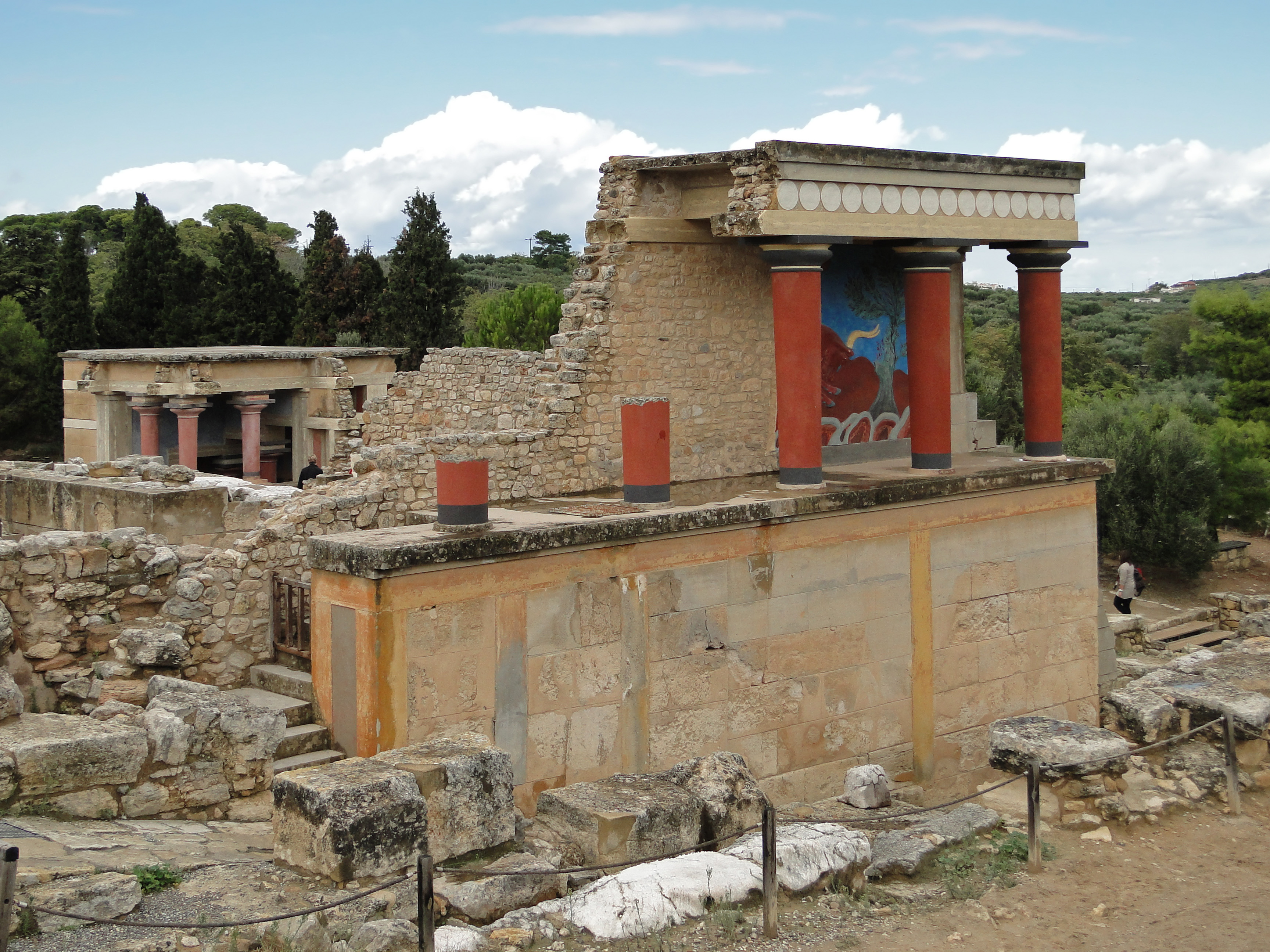
Heraklion is one of the most important archaeological cities in Europe, which most visitors discover after they've already booked their hotel in Chania. The Archaeological Museum of Heraklion is the finest collection of Minoan artifacts in the world — the Phaistos Disc, the Bull-Leaper fresco, the Snake Goddess figurines, the gold Bee Pendant from Malia — assembled in a purpose-built museum that gives the Bronze Age Aegean a coherence and beauty that the individual site visits don't always provide alone. Knossos Palace, 5 km south, is the largest of Crete's Minoan palaces and the most controversial in terms of its reconstruction (Sir Arthur Evans's 1920s concrete restorations are architecturally contested but help non-specialists understand the palace's original three-storey form).
The city itself is underrated as an urban environment. The Venetian harbour fortress (Koules, 16th century) dominates the waterfront. The covered market on 1866 Street is the best market street in Crete. The Venetian Loggia, the Morosini Fountain (1628), and the Venetian arsenali give the old city centre a coherent historical character. El Greco was born in Heraklion's Fodele village — the Greco connection to Crete is something the city has only recently begun to exploit properly.
Heraklion works best as a 2-night stop that combines the museum on day one and Knossos on day two, with the city centre explored in the evenings. As a standalone destination it's less atmospheric than Chania; as the Minoan archaeology anchor of a Crete trip it's non-negotiable. The Heraklion Archaeological Museum received a major upgrade in recent years and is now one of the genuinely great museums of Europe.
Budget note: Heraklion is Crete's most affordable major destination. Mid-range hotels in the city centre run €60–130/night — considerably less than Chania's old town boutiques. Knossos entry is €15 (combined with the museum: €20). The museum alone is €12.
The practical bits.
- Best time
-
April – June · September – OctoberMay–June for archaeology without the summer heat — the museum is indoors but Knossos is fully exposed and brutal at 35°C. September is excellent: crowds thin, sea warm, evening city life at its most pleasant. Avoid July–August for the outdoor sites; the museum is fine year-round.
- How long
-
2 nights recommendedOne night works only if you're splitting your Crete time between Heraklion and Chania. Two nights is the right allocation: museum one day, Knossos the next, city evenings. Three nights adds Phaistos (2h south) or the beaches at Matala.
- Budget
-
~$130 / day typicalOne of the most affordable capitals in Greece. City-centre hotels €60–130/night. Taverna dinner €15–25. Museum €12, Knossos €15 (combined €20). Bus to Knossos (line 2) €1.50.
- Getting around
-
Walking + city busHeraklion airport (HER) is 4 km from centre (bus €1.50, taxi €10). City bus line 2 runs from Lion Square to Knossos every 15 minutes (€1.50, 20 min). Old city centre fully walkable. KTEL long-distance buses to Chania (2h 30min), Rethymno (1h 30min) from the bus station near the port.
- Currency
-
Euro (€). Cards widely accepted.Cards accepted everywhere in the city. Market stalls may prefer cash.
- Language
- Greek. English spoken in tourist and hotel areas.
- Visa
- Schengen zone. 90-day visa-free for US, UK, Canadian, Australian passports. ETIAS from late 2026.
- Safety
- Safe. Standard city awareness around the bus station.
- Plug
- Type C / F · 230V
- Timezone
- EET · UTC+2 (EEST UTC+3 late March – late October)
A few specific picks.
Hand-picked, not algorithmic. Each of these has earned its space.
The finest Minoan collection in the world — Phaistos Disc, Bull-Leaper fresco, Snake Goddess figurines, gold jewellery. Recently renovated to international standard. Entry €12. Allow 2–3 hours. Do this before Knossos; it gives the palace visit essential context.
The largest Minoan palace — labyrinthine storerooms, the throne room, Evans's controversial reconstructions. Entry €15 (or €20 combined with museum). Book online; arrive before 10 AM or after 4 PM to avoid the tour groups. Bus line 2 from Lion Square.
The 16th-century Venetian sea-fortress at the harbour entrance — three floors, cannon emplacements, exhibitions of Venetian Crete history. Entry €4. The view back to the city and the sea are worth the climb.
Heraklion's covered and open-air market street — Cretan cheeses (graviera, anthotyros), honey, olive oil, fresh vegetables, herbs, and local wine. Better than a supermarket for any Cretan food you want to take home.
The 1628 Venetian fountain with marble lions at the city's main square — the orientation point for the old city and the evening café scene. The surrounding kafeneia are the city's best for people-watching.
A small but thoughtful museum to Crete's most famous artistic export (born Domenikos Theotokopoulos in Fodele village near Heraklion, 1541). Replicas and context for the artist's Cretan origins and Spanish fame.
The former hippie beach on Crete's south coast — volcanic rock caves carved by the Romans and re-occupied by 1960s–70s travellers (Joni Mitchell wrote California here). Sandy beach, good swimming, a different register from the organized north coast.
Pick a neighborhood, not a hotel.
Heraklion is a city of neighborhoods. The one you stay in shapes the trip more than the property does.
Different trips for different travelers.
Same city, very different stays. Pick the lens that matches your trip.
Heraklion for archaeology and history enthusiasts
Heraklion has the best Minoan museum in the world and the most important Minoan palace. For Bronze Age archaeology, nowhere in Europe comes close.
Heraklion for museum lovers
The Heraklion Archaeological Museum is one of Europe's genuinely great archaeological museums — the 2014 renovation brought it to international standard. Allow a full morning.
Heraklion for crete first-timers
Heraklion as the entry point — museum day, Knossos day, bus west to Chania — is the ideal Crete itinerary structure. The archaeology provides context for everything else.
Heraklion for budget travelers
Heraklion is Crete's most affordable city. City-centre accommodation, bus transport, and affordable tavernas make it the best value base on the island.
Heraklion for cruise ship day-trippers upgrading to an overnight
Heraklion is a major cruise port. Those with a day in port almost always wish they had two nights — the museum alone justifies an extra day.
When to go to Heraklion.
A quick year at a glance. Great, good, or skip — see what each month is doing before you book.
Museums open, beaches quiet, city fully functional. Good value.
Low season. Museum visits without any crowds. Cheap flights.
Good month for the museum and Knossos without heat. Easter preparation late March.
Excellent — warm enough for light beach visits, archaeology without heat, Easter celebrations.
Best month. Knossos before tour groups, museum uncrowded, Matala beach open.
Good early June. Knossos gets very hot by 11 AM — early start essential.
Museum excellent (air-conditioned). Knossos brutal midday — do it first thing only.
Knossos at capacity by 10 AM. Museum is the right call. City evenings pleasant.
Excellent — comfortable for Knossos, sea still warm, city life at its best.
Best balance of weather, crowds, and price. All sites comfortable.
Quiet. Excellent for museum-focused visits. Beach season over.
Crete's mild winters keep Heraklion functional year-round. Christmas quiet.
Day trips from Heraklion.
When you want a change of pace. Each one's a half-day or full-day out, easy from Heraklion.
Knossos Palace
20 min by busThe essential Minoan site — book tickets online, arrive before 10 AM. The €20 combined ticket with the museum is good value and the right order: museum context first, site second.
Phaistos
2h by KTEL busThe second-largest Minoan palace, unreconstructed, on a hilltop overlooking the Mesara plain. Quieter than Knossos, arguably more honest. The bus continues to Matala beach for an afternoon swim.
Matala
2h by KTEL bus (via Phaistos)The south-coast beach where 1960s travellers lived in Roman-era caves. Now a standard beach resort with cave-access fee (€3). Combine with Phaistos for a full south-Crete day.
Chania
2h 30min by KTEL busThe western Crete city that complements Heraklion. KTEL buses run hourly from Heraklion bus station.
Spinalonga
1h 30min by bus to Elounda + boatThe island fortress north of Heraklion (Elounda area) that was Europe's last active leprosy colony until 1957. Made famous by Victoria Hislop's novel The Island. Boat from Elounda or Plaka.
Heraklion vs elsewhere.
Quick honest reads on the cities people compare Heraklion to.
Chania wins on atmosphere and old-town beauty. Heraklion wins on archaeology and museum. For a Crete holiday of 7+ nights: both. For 4–5 nights: choose based on whether your priority is Venetian harbour charm or Minoan palace culture.
Pick Heraklion if: You want the world's best Minoan archaeology and don't need the prettiest harbour in Crete.
Athens has the Acropolis and more diverse urban culture. Heraklion has Knossos and a more relaxed Cretan character. Athens is larger and more intense; Heraklion is an easier city to navigate and significantly cheaper.
Pick Heraklion if: You want Minoan civilization depth rather than classical Athens archaeology and urban scale.
Rhodes Old Town is a medieval UNESCO city. Heraklion has Bronze Age archaeology at a different scale entirely. They're complementary on a Greek islands trip but represent very different eras of Mediterranean history.
Pick Heraklion if: You want the deepest dive into ancient European civilization over a medieval Knights Hospitaller city.
Itineraries you can start from.
Rough shapes for a trip here — a feel for the pace and cost. Find the one that fits you.
Day 1: Archaeological Museum 3h (morning), Lion Square lunch, old city afternoon, Koules fortress sunset. Day 2: Knossos bus at 9 AM, palace 2–3h, lunch in Knossos village, afternoon market street, farewell dinner.
Add Phaistos (2h bus, Minoan palace on southern coast) and Matala beach for an afternoon swim and the cave scene. Three days covers the full Minoan context — Knossos, Phaistos, museum — with a coastal addition.
2 nights Heraklion (museum + Knossos). KTEL bus to Chania (2h 30min). 3–4 nights Chania for Samaria and beaches. The ideal Crete itinerary combining archaeology and beach/gorge access.
Things people ask about Heraklion.
Is Heraklion worth visiting?
Yes — specifically for the Archaeological Museum and Knossos. As a standalone city destination, it's less immediately charming than Chania, but anyone serious about the Minoan civilization (3,500 years ago, Europe's first great palace culture) needs to be here. Two nights is the right allocation.
Should I visit Knossos?
Yes, despite the controversies about Evans's reconstructions. The reconstructed palace gives non-specialists a genuine sense of the three-storey scale, the throne room, and the storerooms that the unreconstructed sites (Phaistos, Malia) don't convey. Go with the context the museum provides and form your own view of the restorations.
How do I get from Heraklion to Knossos?
City bus line 2 from Lion Square: €1.50, every 15 minutes, 20-minute journey. Taxi: €12–15. Walking: 5 km, about 1 hour, mostly uphill. Book online entry tickets in advance; the ticket office can have queues.
What is the Phaistos Disc?
A fired clay disc from approximately 1700 BC, found at the Minoan palace of Phaistos in 1908, covered on both sides with a spiral of stamped symbols in an undeciphered script. It is the most studied undeciphered text in the world and the most famous object in the Heraklion museum. Room 3.
Is Heraklion cheaper than Chania?
Yes — meaningfully so for accommodation. City-centre hotels run €60–130/night versus Chania's old-town boutiques at €100–200+. Food prices are comparable. Heraklion is the better budget base; Chania is the more beautiful one.
What beaches are near Heraklion?
Ammoudara (6 km west, long sandy organized beach). Kokkini Hani (12 km east, resort beach). Matala (80 km south, cave beach with history). Heraklion is not the best Crete base for beach-focused trips — Chania has better beach access to the west.
Can I visit both Heraklion and Chania on one Crete trip?
Yes — and this is the ideal approach. KTEL bus runs Heraklion–Chania in 2h 30min (€14). Two nights Heraklion for archaeology, three nights Chania for beaches and gorge, covers the full Crete experience. Or reverse the order.
What should I eat in Heraklion?
Lamb (arnaki) slow-roasted with Cretan herbs. Fresh sea urchins in season. Graviera cheese on everything. Tsikoudia (Cretan grappa) as a digestif. For restaurants: Peskesi (Cretan farm-to-table in an old mansion), Brilliant (good-value Cretan modern), the fish tavernas along the harbour west of Koules.
Know someone headed to Heraklion?
Send them this guide — real neighborhoods, timing, and prices, with nothing to sign up for.
Copies the link — nothing to install