Sifnos
Send it to whoever you'd travel with
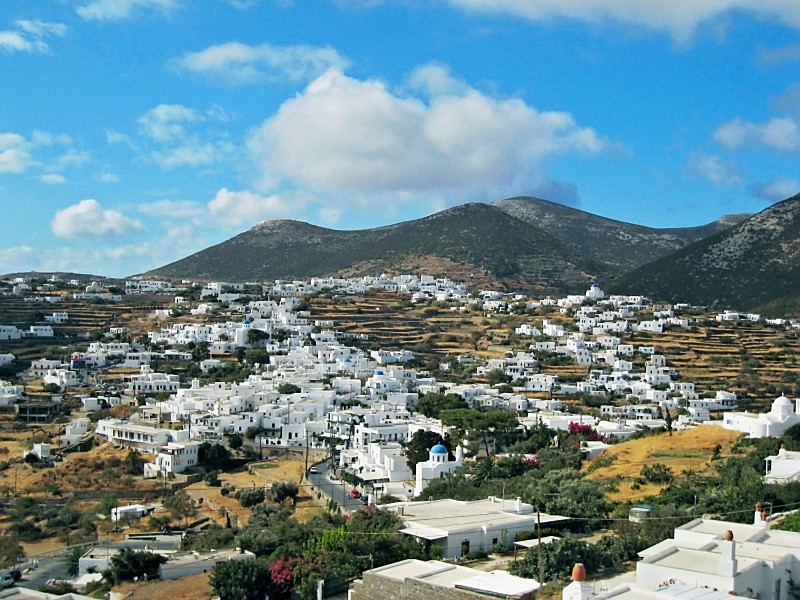
Sifnos is a quietly soulful Cycladic island known for its chickpea stews, terraced hiking trails, and unhurried whitewashed villages above turquoise coves.
Sifnos is the island Greeks themselves quietly recommend when they want to send you somewhere good. It sits in the western Cyclades — a ferry ride from Piraeus, not a flight — which alone filters out the bachelorette-party crowd that floods Mykonos and Santorini. What you get instead is a 74-square-kilometre island stitched together by a hundred kilometres of marked footpaths, three hilltop villages that actually feel inhabited, and a food culture serious enough that the man who literally wrote the first Greek cookbook, Nikolaos Tselementes, was born here in 1878. Every September the island throws a gastronomy festival in his name, and it is not a tourist gimmick.
The geography is more interesting than the postcards suggest. Apollonia, Artemonas, and Kastro form a connected spine across the island's central highlands, all walkable to each other along old stone paths. The coast is mostly cliff, interrupted by sandy inlets — Vathi, Platis Gialos, Faros, Cheronissos — each with one good taverna and a handful of sunbeds. You rent a car for a day or you take the bus network, which is genuinely excellent and reaches every beach village. The classic move is to base yourself in Apollonia or Artemonas, then make the coast your day-trip rotation.
Food is the through-line. Revithada — chickpeas slow-cooked overnight in a sealed clay pot in a wood-fired oven, traditionally served at Sunday lunch — is the dish the island is built around. Mastelo, lamb or goat steamed with red wine and dill on vine twigs inside its namesake clay vessel, is the Easter dish that now appears on most serious menus. The pottery itself matters: Sifnos has been making ceramic cookware for 4,000 years, and the clay pots aren't decorative, they are the cooking vessel. You can visit working studios in Vathi and Artemonas and watch the same shapes being thrown that your dinner arrives in.
Sifnos doesn't try hard. There's no nightlife scene to speak of beyond a few good bars in Apollonia's pedestrian main street, the Steno. Sunsets get watched from the chapel at Chrysopigi or the cliff terraces of Kastro, not from packed infinity pools. Come for five to seven nights, walk the trails between villages in the morning before the sun bites, swim in the afternoon, eat slowly. It's the rare Greek island that rewards staying put rather than racing through a checklist.
The practical bits.
- Best time
-
Late May – June, SeptemberWarm sea, open tavernas, hiking weather, and noticeably thinner crowds than July–August.
- How long
-
5-7 nights recommendedThree nights covers the three main villages and a couple of beaches; a week lets the island slow you down properly.
- Budget
-
$160 / day typicalSifnos runs roughly 30-40% cheaper than Santorini or Mykonos. Boutique hotels and August weeks are what push the high end.
- Getting around
-
Excellent local bus network plus rental cars and ATVs.The KTEL bus runs hourly between Kamares, Apollonia, Kastro, Platis Gialos and Vathi in summer and is the easiest way around. A rental car or ATV unlocks the quieter north (Cheronissos) and saves time if you're chasing multiple beaches per day. Distances are small — nothing is more than 30 minutes from anything else.
- Currency
-
€ Euro (EUR)Cards accepted at most hotels and bigger restaurants, but bring euros for small tavernas, bakeries, bus tickets, and beach kiosks. ATMs exist in Kamares, Apollonia and Platis Gialos.
- Language
- Greek; English is widely spoken across the tourism trade and most menus are bilingual.
- Visa
- Schengen visa rules apply — most US, UK, Canadian, Australian and EU travelers enter visa-free for up to 90 days.
- Safety
- Sifnos is exceptionally safe — petty crime is rare, and the island is comfortable for solo travelers including women. The real hazards are sun, dehydration on midday hikes, and scooter accidents on narrow roads.
- Plug
- Type C/F, 230V
- Timezone
- GMT+2 (GMT+3 in summer)
A few specific picks.
Hand-picked, not algorithmic. Each of these has earned its space.
The medieval capital until 1836, a tiny fortified village of Venetian-Cycladic houses balanced on a cliff above the sea. Walk the loop in the late afternoon when the light hits the white walls.
An 17th-century whitewashed monastery on its own tied-island rock, with a tiny pebble beach below the chapel and water so clear it doesn't look real.
Sustainability-minded seafood on the small bay below Kastro. Reserve, and ask for a table close to the water.
The island's best-known fish restaurant, on the Platis Gialos waterfront. Crudo, grilled fish, and a serious wine list.
The white-stone pedestrian corridor through Apollonia, lined with bakeries, gelato shops, boutiques and bars. Where the island actually gathers after dark.
Wide, shallow bay on the southwest coast with calm water, a handful of tavernas, and the working ceramics studios that supply much of the island.
A tiny fishing cove at the island's northern tip. Drive 40 minutes, swim, eat fish at one of the two waterside tavernas, drive back. That's the day.
The hike to the island's highest point (680m), a 17th-century monastery with 360-degree Aegean views. Go early — there's no shade.
Just north of Apollonia, a quieter village of 19th-century neoclassical mansions, bougainvillea-draped lanes, and the best bakery on the island for almond sweets.
Full-day boat trip to the uninhabited volcanic islet of Poliegos and isolated southern beaches inaccessible by road. Includes lunch on board.
The ferry port and a working fishing bay. Not where you stay, but the line of tavernas along the beach is a fine first or last meal.
Toes-in-sand dining at the southern end of Platis Gialos. Greek classics done properly with a long sunset window.
Pick a neighborhood, not a hotel.
Sifnos is a city of neighborhoods. The one you stay in shapes the trip more than the property does.
Different trips for different travelers.
Same city, very different stays. Pick the lens that matches your trip.
Sifnos for foodies
Birthplace of Greek cookbook author Nikolaos Tselementes, with serious local dishes (revithada, mastelo), a September gastronomy festival, and a tight cluster of standout restaurants in Platis Gialos and Kastro.
Sifnos for hikers
Over 100 kilometres of marked, well-signed trails connecting villages, monasteries and beaches — one of the best walking networks in Greece, comfortable spring through autumn.
Sifnos for couples
Quiet boutique stays in Artemonas and Kastro, sunset swims at Chrysopigi, and a low-key dinner scene that rewards lingering. No clubs, no party boats.
Sifnos for families
Shallow safe beaches at Vathi and Platis Gialos, on-beach tavernas, a reliable bus network, and short distances make Sifnos low-stress with kids.
Sifnos for solo travelers
Safe, walkable, sociable enough in Apollonia's Steno for evenings but never overwhelming. Good for first solo trips and for shoulder-season decompressing.
Sifnos for slow travelers
Stay in one village, walk the trails between coves, eat at the same taverna twice and they'll remember your wine. The island rewards staying put over racing through.
When to go to Sifnos.
A quick year at a glance. Great, good, or skip — see what each month is doing before you book.
Most tourism is closed; ferries reduced. Locals' season.
Quiet and authentic but with limited services.
Trails are gorgeous but most tavernas still closed.
Easter on Sifnos is a strong cultural moment; some businesses reopen.
Excellent hiking and shoulder-season prices; sea swimmable by month-end.
The sweet spot — everything open, crowds still moderate.
Busy and pricier; beaches start filling up.
Greek summer holidays — book months ahead and expect premium prices.
Best month for many — Tselementes gastronomy festival and thinner crowds.
Quiet and beautiful; some businesses close mid-month.
Most tourism shuts down; ferry options reduced.
Off-season; visit only if you specifically want the local-life experience.
Day trips from Sifnos.
When you want a change of pace. Each one's a half-day or full-day out, easy from Sifnos.
Poliegos islet
Full day by boatVolcanic islet between Sifnos and Milos with some of the clearest water in the Cyclades.
Milos
Day trip by ferry1-2 hour ferry; rent a car on arrival to reach Sarakiniko and Kleftiko viewpoints.
Kimolos
Day trip by ferrySmall island just off Milos, easy add-on if you're already heading that way.
Kastro village
Half day on footHike or bus to Sifnos' medieval capital, then descend to Seralia for a swim and lunch.
Chrysopigi & Faros loop
Half dayWalk from Kastro down to Chrysopigi monastery, on to Faros for a swim and a beach taverna lunch.
Cheronissos
Half day by carThe island's northernmost cove, with two tavernas and almost no day-trippers.
Sifnos vs elsewhere.
Quick honest reads on the cities people compare Sifnos to.
Milos is more visually spectacular thanks to its volcanic coastline (Sarakiniko, Kleftiko), while Sifnos is gentler, greener and more about food and walking. Milos draws bigger summer crowds.
Pick Sifnos if: You want one drop-jaw landscape moment, choose Milos. You want the island to feel like a home for a week, choose Sifnos.
Folegandros is smaller, quieter and arguably more dramatic-looking from the sea, but with less to do — most travelers cap it at three or four nights. Sifnos sustains a full week comfortably.
Pick Sifnos if: Pick Folegandros for two-or-three nights of pure cliff-village atmosphere. Pick Sifnos as your week-long base.
Paros is bigger, busier and easier to ferry-hop from, but more touristed — Naoussa is glossy and packed in August. Sifnos is slower, less developed and more food-driven.
Pick Sifnos if: Pick Paros for nightlife, ferry connectivity and more accommodation choice. Pick Sifnos for atmosphere and a real food scene.
Santorini is the icon, with the caldera sunset and the price tag and the cruise-ship volume to match. Sifnos costs 30-40% less, doesn't deliver the same one-photo moment, and feels like an actual place you live in.
Pick Sifnos if: First-time Greece, must-see-the-caldera — Santorini. Second-time Greece, want to slow down and eat — Sifnos.
Naxos is much larger, with mountain villages, big beaches and more variety, but also more traffic and a tourier feel along the west coast. Sifnos is smaller, more concentrated and more intimate.
Pick Sifnos if: Pick Naxos if you want road-trip variety and big sandy beaches; Sifnos if you want one cohesive island experience.
Itineraries you can start from.
Rough shapes for a trip here — a feel for the pace and cost. Find the one that fits you.
Base in Apollonia or Artemonas. Three days alternating between coastal villages (Vathi, Platis Gialos, Faros) and the inland trio, with a half-day hike from Kastro to Chrysopigi.
A week split between an Artemonas mansion stay and a Kastro guesthouse, anchored around a cooking class, the Cantina-Omega3-Yalos restaurant circuit, and one boat day to Poliegos.
Six nights on Sifnos (villages, hiking, beaches) followed by four nights on Milos for the volcanic coastline and Kleftiko boat trip. One short ferry hop between them.
Things people ask about Sifnos.
Is Sifnos worth visiting?
Yes, especially if you've already done the headline Cycladic islands and want a quieter, more lived-in experience. Sifnos is consistently rated among the most soulful of the Cyclades — strong food culture, an excellent hiking trail network, three connected hilltop villages, and beaches that don't feel processed. It's a destination for travelers prioritising place over party.
How many days do you need in Sifnos?
Five to seven nights is the sweet spot. Three days is enough to see the three main villages, hit two or three good beaches and one hike. A week lets you actually slow down, do a boat trip to Poliegos, take a cooking class, and discover the quieter beaches like Vathi and Cheronissos without rushing.
What is the best time to visit Sifnos?
Late May to June and September are the strongest windows. Sea temperatures are swimmable, hiking weather is comfortable, tavernas are open, and crowds are thin. July and August are hot, busy and pricey. September adds the Nikolaos Tselementes gastronomy festival, which is worth timing a trip around if food is a priority.
How do you get to Sifnos?
By ferry from Athens' Piraeus port — there's no airport. Conventional ferries take around 5 hours and high-speed catamarans about 2.5 to 3 hours, with up to four daily crossings in summer. Tickets start around €40. Operators include Aegean Sea Lines, Fast Ferries and Seajets. Arrive at Piraeus at least an hour before departure in peak season.
Is Sifnos expensive?
Sifnos runs roughly 30-40% cheaper than Santorini or Mykonos but it isn't dirt cheap. Budget travelers manage around $75 a day, mid-range $150-180, and boutique hotel stays with seafood dinners can push past $300. August is the most expensive month; May, June and September offer noticeably better value.
What is Sifnos known for?
Three things: food, pottery, and trails. It's the birthplace of Nikolaos Tselementes, who wrote the first Greek cookbook in 1932, and dishes like revithada (overnight chickpea stew) and mastelo (lamb steamed with wine) are island specialties. It has a 4,000-year ceramics tradition still being practiced, and one of the best-marked hiking trail networks in Greece.
Cash or card in Sifnos?
Both. Hotels, supermarkets and bigger restaurants take cards comfortably. Small village tavernas, bakeries, beach kiosks and the public bus prefer cash. ATMs are reliable in Kamares, Apollonia and Platis Gialos but can run dry in peak August weekends, so withdraw a buffer when you see one.
Where should I stay in Sifnos?
Apollonia for a balanced first-time base — restaurants, nightlife, bus connections. Artemonas for a quieter, more elegant village stay within walking distance of Apollonia. Kastro for atmosphere and sea views. Platis Gialos if you want a beach-first holiday with everything walkable. Vathi for families with small children.
Is Sifnos good for solo travelers?
Very. The island is safe, the bus network makes it easy to get around without renting a vehicle, and Apollonia's pedestrian Steno makes evenings sociable without being clubby. Hiking solo on the marked trails is straightforward in shoulder season. Solo women travelers consistently report feeling comfortable here, including in villages and at night.
Do you need a car in Sifnos?
Not strictly. The KTEL bus network is unusually good and connects all main villages and beaches hourly in summer. A rental car or ATV is useful for two or three days if you want to reach quieter spots like Cheronissos or Fykiada beach without time pressure. Many travelers rent for a couple of days and bus the rest.
Sifnos vs Milos — which should I choose?
Pick Sifnos for food, villages, and walking; pick Milos for dramatic volcanic coastline and boat trips to places like Kleftiko and Sarakiniko. Sifnos feels softer and more lived-in, Milos feels more visually spectacular but busier in summer. With seven-plus nights, combine them — they're a short ferry hop apart and complement each other well.
What are the best beaches in Sifnos?
Platis Gialos for length, sand and amenities; Vathi for shallow calm water and pottery studios behind the beach; Chrysopigi for swimming below the famous chapel; Faros for three quiet coves in walking distance; Cheronissos at the remote northern tip for fewer people; and Kamares for sunset swims off the port beach.
Is Sifnos good for families?
Yes. Beaches like Vathi, Platis Gialos and Kamares have shallow calm water and on-beach tavernas, making them easy with small children. The bus network reduces the need for car seats. Villages are walkable and largely pedestrian. Kid-friendly food like grilled fish, fries, yogurt and bakery sweets is everywhere.
What day trips can you do from Sifnos?
By boat: Poliegos, an uninhabited volcanic islet with extraordinary swimming, via day cruises from Platis Gialos. By ferry: Milos and Kimolos are short hops for a day trip and back. Most travelers, though, treat Sifnos itself as the trip — there's enough on the island for a week without needing to leave it.
What language do they speak in Sifnos?
Greek. English is widely spoken throughout the tourism trade — hotels, restaurants, car rentals, and most beach businesses — and menus are typically bilingual. Learning a few words (kalimera, efharisto, parakalo) is appreciated in family-run village tavernas where older owners may have less English.
Can you visit Sifnos in winter?
You can, but expect a very different island. Winters are mild compared with the Greek mainland, but most tourist-facing restaurants, hotels and ferries scale back from November to March. It's a season for travelers who want authenticity, hiking in cool weather, and contact with the year-round local community rather than a beach holiday.
Know someone headed to Sifnos?
Send them this guide — real neighborhoods, timing, and prices, with nothing to sign up for.
Copies the link — nothing to install