Delphi
Send it to whoever you'd travel with
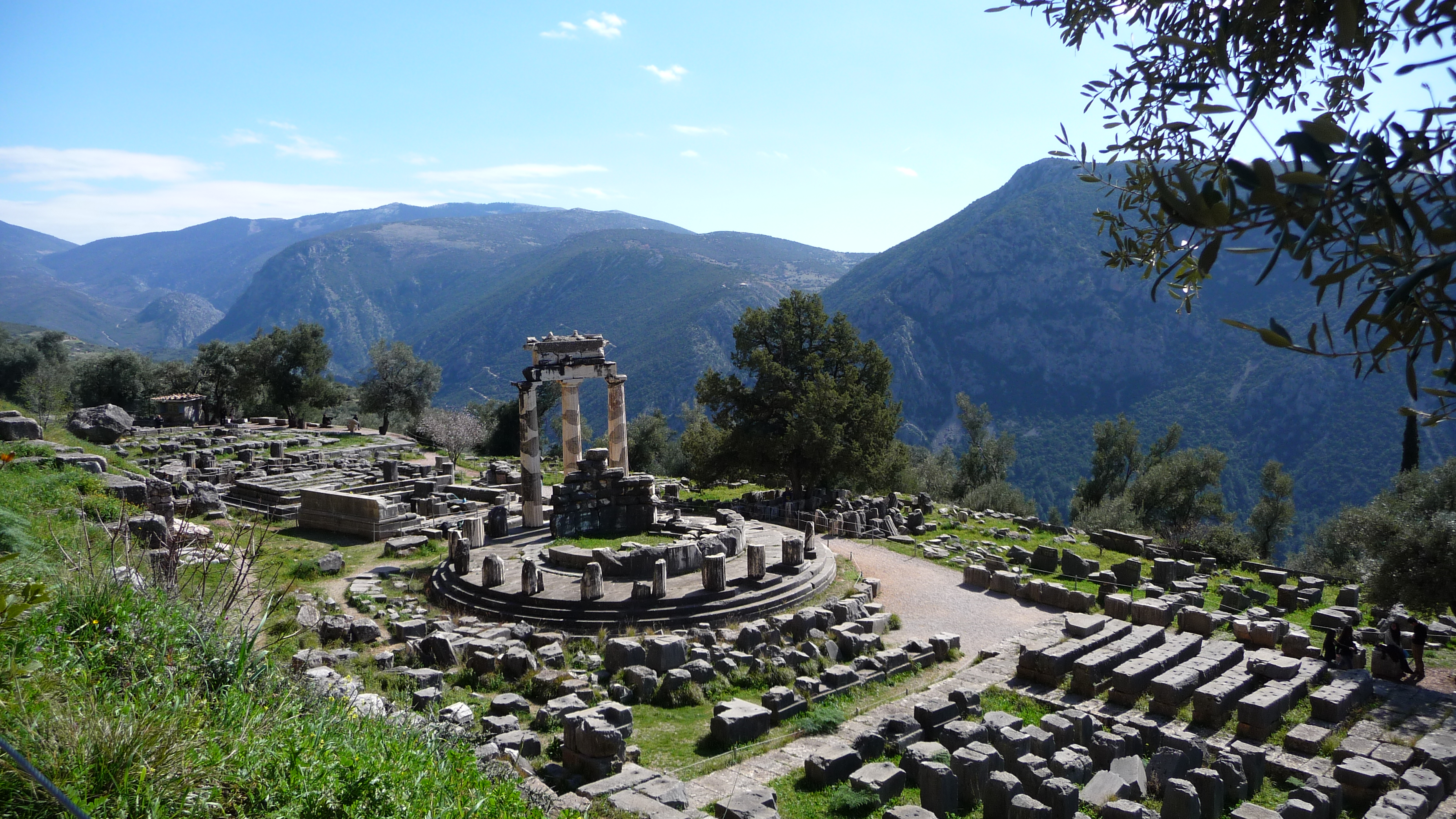
Delphi was the centre of the ancient world, where the Oracle pronounced on wars and kings from a seat on Mount Parnassus — and it still feels that way, the ruins climbing a steep sacred slope with a panorama over the olive-covered valley of Phocis that makes it the most dramatically sited ancient site in Greece.
Delphi sits on the southern slopes of Mount Parnassus, 570 metres above the valley of Phocis, with a view over an enormous olive grove that runs all the way to the Gulf of Corinth. The position alone communicates why the ancient Greeks considered this the centre (omphalos — navel) of the world. The sanctuary of Apollo here was the most important in classical Greece — kings and city-states consulted the Oracle (the Pythia, a priestess who inhaled volcanic gases from a fissure and delivered ambiguous prophecy) before major decisions. Wars were started and stopped based on her pronouncements.
The archaeological site is arranged along the Sacred Way, the ancient pilgrims' road that climbs from the entrance through the treasuries (miniature temples funded by city-states to display their wealth and thanks) up to the Temple of Apollo. The temple itself is ruined — columns standing, foundations clear, the inscriptions 'Know Yourself' and 'Nothing in Excess' no longer visible but historically documented here. Above the temple: the ancient theatre, with a view over the site and the valley that no modern concert hall matches. Higher still: the ancient stadium where the Pythian Games (forerunner to the Olympics) were held every four years.
The Delphi Museum, a short walk from the entrance, contains the finest collection of archaic and classical sculpture in existence outside Athens. The Charioteer of Delphi (478 BC) — a bronze figure of extraordinary preserved detail, eyes of inset stone still gleaming — is the single most arresting ancient sculpture I have encountered in Greece. The museum alone justifies the 180 km trip from Athens.
The modern village of Delphi (Kastri/Delphi) is a functional tourist village without great charm, but several good tavernas and the views at dawn or dusk from the village are worth the overnight stay. Day-tripping from Athens (3h each way by KTEL bus) is feasible and popular; staying one night gets you the site at 8 AM when the tour buses haven't yet arrived — a completely different, far better experience.
The practical bits.
- Best time
-
April – June · September – OctoberSpring is the ideal season — wildflowers on Parnassus, comfortable temperatures for the uphill walk, and far fewer tour buses than summer. October adds autumn colour and extraordinary light in the valley below. July–August is hot and crowded with coach tours. Winter can have snow on Parnassus and bring beautiful solitude.
- How long
-
1–2 nights recommendedA day trip from Athens (KTEL bus, 3h each way) covers the archaeological site and museum in a full day. Staying overnight lets you do the site at opening time before tour groups, and adds evening tranquility in the village. Two nights allows a hiking day on Mount Parnassus.
- Budget
-
~$100 / day typicalDelphi is one of Greece's most affordable overnight stops. Village hotels run €50–100/night. The combined site+museum ticket is €12 (free for EU students under 25). A full taverna dinner with wine runs €18–25. Budget €5–10 for the KTEL bus from Athens.
- Getting around
-
KTEL bus + walkingKTEL buses from Athens Liossion terminal: 3h, €17 each way, several daily departures. The village is entirely walkable. The archaeological site entrance is a 5-minute walk from the village centre. No need for a car in Delphi itself; a car is useful to explore the wider Parnassus area.
- Currency
-
Euro (€). Cards accepted at hotels; the site ticket office accepts cards. Village tavernas often cash-preferred.Cards accepted at accommodation and the museum. Small restaurants may be cash-only.
- Language
- Greek. English spoken at the site and in tourist tavernas. Less so in the wider village.
- Visa
- Schengen zone. 90-day visa-free for US, UK, Canadian, Australian passports. ETIAS from late 2026.
- Safety
- Very safe. The site itself involves significant uphill walking on uneven stone — wear proper footwear and bring water and sun protection in summer.
- Plug
- Type C / F · 230V
- Timezone
- EET · UTC+2 (EEST UTC+3 late March – late October)
A few specific picks.
Hand-picked, not algorithmic. Each of these has earned its space.
The heart of the ancient sanctuary and the seat of the Oracle. Six columns stand; the foundations and stylobate are clear. The Sacred Way leads directly to it. Arrive at site opening (8 AM) for the best experience.
Built in the 4th century BC above the Temple of Apollo, with a view over the entire sanctuary and the olive valley below. Better acoustics than most modern venues; the Pythian Games concerts were held here.
The highest point of the site — where the Pythian Games athletic competitions were held. 178m long, capacity 7,000. The starting blocks are still in place. The climb is strenuous; the isolation from tour groups at the top is worth it.
The finest surviving Greek bronze sculpture — a charioteer from 478 BC with inset stone eyes, eyelashes of bronze, and copper lips. He was part of a larger group; only the driver survived. Allow 90 minutes for the full museum.
The circular Tholos temple (380 BC) is the most photographed structure at Delphi — three Doric columns re-erected against the Parnassus backdrop. A separate site, 10 minutes' walk east of the main entrance. Often missed by day-trippers; don't miss it.
The sacred spring where pilgrims purified themselves before consulting the Oracle. The carved rock niches and water channels are still visible. Between the Tholos and the main site entrance.
The mountain village above Delphi is one of the most attractive in central Greece — stone houses, Byzantine church, winter ski resort culture. Worth a meal or a wander on the way to or from Delphi.
Pick a neighborhood, not a hotel.
Delphi is a city of neighborhoods. The one you stay in shapes the trip more than the property does.
Different trips for different travelers.
Same city, very different stays. Pick the lens that matches your trip.
Delphi for classical history enthusiasts
Delphi is the most important religious sanctuary of the ancient Greek world. The Oracle, the Pythian Games, the Treasuries — layers of history at a density that rewards serious engagement.
Delphi for museum lovers
The Delphi Museum is among the finest in Greece — the Charioteer, the Siphnian Treasury frieze, the Sphinx of Naxos. Allow 90 minutes minimum.
Delphi for hikers and outdoor enthusiasts
Mount Parnassus offers excellent summer hiking (Corycian Cave, summit trails) and winter skiing from Arachova. Delphi as a base adds the archaeological layer.
Delphi for athens day-trippers
Delphi is the single best day trip from Athens — longer than most (6h round trip by bus) but the combination of site, museum, and mountain setting is unmatched by closer alternatives.
Delphi for spiritual and philosophical travelers
For those interested in ancient religious practice, divination, and Apollonian philosophy, Delphi is a genuine pilgrimage — the 'Know Yourself' inscription and the Oracle's role in Greek civilization give the ruins a weight beyond archaeology.
When to go to Delphi.
A quick year at a glance. Great, good, or skip — see what each month is doing before you book.
Very quiet. Possible snow closures on the mountain road. The site is open but atmospheric in winter light.
Ski season at Parnassus peak. Delphi village very quiet.
Spring arrives. Site reopens to better weather. Good for photos without crowds.
Best spring month. Parnassus flowering. Easter is busy; midweek much better.
Ideal conditions. Before the summer coach tour peak. Comfortable for the site climb.
Still manageable early June. Start at 8 AM opening. Heat makes the stadium climb demanding.
Busiest month. Coach tours all day. Site worthwhile before 9 AM or after 5 PM.
Peak heat and crowds. Site opening time (8 AM) is the only comfortable option.
Excellent — coach tours thinning, comfortable temperatures, beautiful evening light on the valley.
Best overall month. Olive harvest in the valley below. Clear mountain air.
Very quiet. Site open, village half-empty. Moody winter light for photographers.
Mountain can have snow. Ski season beginning at Parnassus. Delphi itself quiet.
Day trips from Delphi.
When you want a change of pace. Each one's a half-day or full-day out, easy from Delphi.
Arachova
10 km, 15 min by taxiThe best village in central Greece for a meal — stone lanes, feta formaela cheese, kontosouvli (rotisserie pork). Winter ski culture adds a different energy. Essential addition to any Delphi visit.
Osios Loukas Monastery
1h southOne of the finest Byzantine monasteries in Greece, with extraordinary 11th-century mosaics in the main catholicon. 35 km from Delphi; requires a car or an expensive taxi.
Galaxidi
30 min southA beautifully preserved 19th-century maritime town on the Gulf. Good for a seafood lunch or an atmospheric overnight on the way between Delphi and the Peloponnese.
Nafplio
3h south via CorinthFrom Delphi, the natural continuation is south via Corinth to Nafplio for Peloponnese archaeology. Athens as a one-night stop on this route is optional.
Meteora
3h northwest by KTELThe most dramatic landscape in Greece — Byzantine monasteries perched on vertical sandstone columns. Delphi–Meteora–Athens is the classic central Greece circuit.
Delphi vs elsewhere.
Quick honest reads on the cities people compare Delphi to.
Olympia is the site of the ancient Olympic Games — flat, forested, important. Delphi is more dramatically sited, has the better museum, and the Oracle gives it a narrative weight Olympia lacks. If choosing one: Delphi.
Pick Delphi if: You want the most dramatically sited ancient sanctuary in Greece rather than the birthplace of the Olympics.
Mycenae is Bronze Age (3,500 years old); Delphi is Classical (2,500 years old). Mycenae has the Lion Gate and the Treasury of Atreus. Delphi has the Oracle and the Charioteer. Both are unmissable on a serious Greece trip.
Pick Delphi if: You want classical Greek civilization and the Oracle over Bronze Age Mycenaean power.
The Acropolis is more famous and has the Parthenon. Delphi has a more complete ancient setting with no modern city visible in any direction. They are not alternatives — anyone in Greece for a week should do both.
Pick Delphi if: You want a sacred ancient site in a mountain landscape rather than an urban acropolis experience.
Itineraries you can start from.
Rough shapes for a trip here — a feel for the pace and cost. Find the one that fits you.
KTEL bus from Athens morning. Tholos first (10-min walk past village). Museum (2h). Main archaeological site 2 PM when tour buses are leaving. Village dinner with valley view. Early morning to the stadium at site opening. Bus back to Athens by noon.
Night 1: arrive, museum, village. Day 2: site at 8 AM, stadium. Afternoon: drive or taxi to Arachova, walk the village. Day 3: Parnassus hiking trails from Arachova, bus back to Athens late afternoon.
Athens to Delphi (KTEL, 3h). Delphi overnight. Delphi to Meteora by KTEL via Lamia (3h + 2h). Meteora 2 nights. Return Athens. The classic central Greece loop.
Things people ask about Delphi.
Is Delphi worth visiting?
Unquestionably — it's the most dramatically sited ancient site in Greece, with a combination of ruins, museum, and natural setting that Olympia doesn't match and Athens only partially achieves. The Charioteer of Delphi alone is worth a day trip. Anyone doing a Greece trip beyond Athens and the islands should be here.
How do I get to Delphi from Athens?
KTEL bus from the Liossion terminal (Athens): 3h, €17 each way, multiple departures daily (usually 7:30 AM, 10:30 AM, and 1:30 PM from Athens). By car: 2h via the E65/National Road 3. Driving gives flexibility to visit Arachova and Itea.
How long should I spend at the Delphi archaeological site?
Three to four hours covers the Sacred Way, Treasury of Athens, Temple of Apollo, Theatre, and Stadium at a comfortable pace. Add 90 minutes for the museum (do this separately, ideally before or after the site). Allow more time if the site is crowded with tour groups.
What is the Oracle of Delphi?
The Oracle was the Pythia — a priestess of Apollo who delivered prophecy while seated on a tripod over a chasm from which volcanic gases emerged (ethylene has been identified). Her utterances were interpreted by priests and returned to questioners in ambiguous verse. Kings, generals, and city-states consulted her for six centuries (8th–4th century BC). The most famous response: to Croesus of Lydia — 'If you cross the river, a great empire will fall' — he did; it was his own.
What is the Charioteer of Delphi?
A bronze statue from 478 BC, one of the few surviving original Greek bronzes of the classical period. It depicts a chariot driver after a Pythian Games victory — his copper lips, inset stone eyes, and bronze eyelashes are perfectly preserved. In Delphi Museum Room 5. It is arguably the single most important classical bronze in the world.
Can I hike on Mount Parnassus from Delphi?
Yes, though the main hiking access is from Arachova (10 km from Delphi, €15 by taxi). The Parnassus Ski Centre (winter) becomes a hiking base in summer. The Corycian Cave (2-hour hike from the ski centre) was sacred to Pan and the nymphs. A car or taxi is needed to reach the trailheads from Delphi village.
Is Delphi accessible as a day trip from Athens?
Yes — KTEL buses leave Athens early enough to be at the site by 10:30 AM, with time for the museum and main site before the return departure. It's a long day (3h each way) but entirely feasible. Staying overnight is better if you want the site at opening time.
What else is near Delphi?
Arachova (10 km, mountain village worth a meal). Itea (25 km, Gulf of Corinth seafood lunch). Osios Loukas monastery (1h south, one of Greece's finest Byzantine monasteries). The route continues northwest to Meteora (3h by KTEL).
Know someone headed to Delphi?
Send them this guide — real neighborhoods, timing, and prices, with nothing to sign up for.
Copies the link — nothing to install