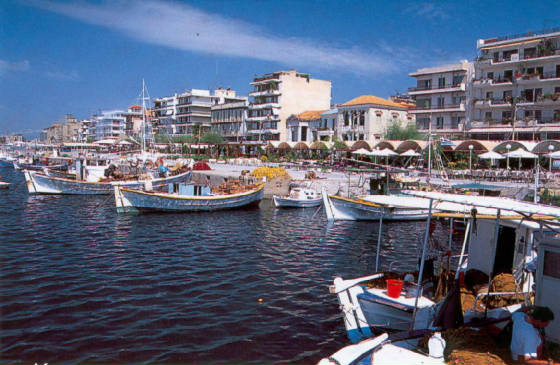
Kalamata
Send it to whoever you'd travel with
Kalamata is the Peloponnese's working capital — a beach city of olive groves, Byzantine streets, and a weekly market that still outnumbers its tourists.
Kalamata is the city that actually lives in the southern Peloponnese — not the postcard one. It's the second-largest city on the peninsula, a real port town with a working waterfront, an old town that survived (just barely) the 1986 earthquake, and a Wednesday-and-Saturday market where 450 producers haul in olives, sfela cheese, sea bream, and figs from the hills behind town. That market is the single best argument for staying here over Nafplio. You're surrounded by Greeks doing Greek things, with the Messinian Gulf glittering at one end of Navarino Avenue and the Taygetos mountains hanging snow-streaked over the other.
The geography is the whole pitch. From Kalamata you can swim before breakfast, drive ninety minutes into the Mani Peninsula for stone-tower villages and Diros Caves, double back through Mystras' UNESCO-listed Byzantine ruins, and be home in time for a late dinner of grilled octopus on the marina. Ancient Messene — Greece's most underrated archaeological site, and emptier than Olympia — is twenty minutes inland. Voidokilia, that horseshoe beach that always shows up on lists of Europe's best, is just over an hour west. Kalamata works as a base, not a destination, and travelers who treat it that way leave delighted.
Don't expect Cycladic prettiness. The lower town is concrete-block rebuild from after the earthquake, and the beachfront sprawls in that messy Mediterranean-resort way. The charm is concentrated: the Kastro on its pine hill, the cathedral of Ypapanti, the alleys around Platia 23is Martiou, and the long Navarino strip where the city actually hangs out at sunset. Eat at Ta Rolla, which has been feeding locals from the same family-run dining room since 1924. Get souvlaki at Nikitas. Take pastries from Zaxaroplasteio Skiada back to your hotel. This isn't a place where you tick attractions — it's a place where you settle in for a week and let the Peloponnese come to you.
A note on timing: July and August are hot, busy, and price-bumped, especially along the coast. The dance festival in July is genuinely world-class if you're into contemporary choreography, but it crowds the town. The sweet spot is late May to mid-June, when the sea has warmed and the bougainvillea is at peak, or late September through early October, when the olive harvest is starting and the swimming season hasn't quite ended.
The practical bits.
- Best time
-
May – Jun, Sep – early OctWarm sea, dry days, manageable crowds, and shoulder-season prices on the coast.
- How long
-
5 – 7 nights recommendedThree nights covers the city itself; a week unlocks the Mani, Mystras, and Ancient Messene as proper day trips.
- Budget
-
$120 / day typicalCoastal hotels in July–August can double mid-tier costs; a rental car adds ~$40/day but pays for itself by day two.
- Getting around
-
Walk the old town and waterfront; rent a car for everything else.The city itself is flat and walkable, with Bus Line 1 covering the spine from the old town down to the seafront. Once you want to leave town — and you will — a rental car is the only sensible option. KTEL buses run out to Kardamyli and Stoupa but timetables are sparse.
- Currency
-
€ Euro (EUR)Cards are widely accepted in restaurants and hotels, but the Wednesday and Saturday market, most tavernas in the Mani, and small bakeries are cash-only. Carry €50 in small notes.
- Language
- Greek; English is widely spoken in hotels, restaurants, and at the airport, less so in inland villages.
- Visa
- EU/Schengen rules apply — most Western passport holders get 90 days visa-free; from 2026 the ETIAS pre-authorization is required for non-EU visitors.
- Safety
- Very safe by any measure — Greece is a Level 1 destination and Kalamata has minimal street crime. Standard caution around the bus station and crowded market days; the bigger hazard is mountain roads after dark.
- Plug
- Type C / F, 230V
- Timezone
- GMT+2 (GMT+3 in summer)
A few specific picks.
Hand-picked, not algorithmic. Each of these has earned its space.
13th-century Villehardouin fortress on a pine-shaded hill above the old town — short climb, big view over the gulf, and it improbably survived the 1986 quake.
Wednesdays and Saturdays only — 450 producers selling Kalamata olives, sfela cheese, pasteli, mountain honey, and whatever's just come off the boats.
Open since 1924 and still run by the same family. Home-cooked Greek classics, no menu theatrics, locals at every table.
The local consensus pick for souvlaki — pork marinated overnight, finished in real Kalamata olive oil.
Old-school sweet shop famous nationally for its galaktoboureko. Get one warm, eat it walking.
Small, well-curated, and a useful primer before you head out to Ancient Messene. Skippable in summer heat, essential in winter.
The Byzantine-style cathedral that anchors the old town's most photogenic square — quiet, working church rather than a tourist site.
One of Greece's most complete collections of traditional regional dress and jewelry. Niche, but stunning if textiles are your thing.
The long Blue Flag city beach. Not Greece's prettiest, but you can walk to it from a hotel and the sunset bars are good.
Ten minutes east of the city — warmer water, organized sunbeds, lively beach bars at golden hour. Best in the morning if you want quiet.
An hour south down the coast road. Sandy, shallow, fed by cold mountain streams — the family-friendly Mani beach worth a day.
Sunset stroll, ice cream from one of the kiosks, and a proper plate of grilled octopus at one of the seafront tavernas.
Pick a neighborhood, not a hotel.
Kalamata is a city of neighborhoods. The one you stay in shapes the trip more than the property does.
Different trips for different travelers.
Same city, very different stays. Pick the lens that matches your trip.
Kalamata for foodies
The Wednesday-Saturday central market, single-origin olive oil from groves you can see from the beach, and tavernas where the recipes haven't changed in a century make this one of the more rewarding food bases in mainland Greece.
Kalamata for road-trippers
Kalamata is the natural anchor for a southern Peloponnese loop — Mani, Mystras, Messene, and Voidokilia are all within 90 minutes, and the airport rental desks make pickup easy.
Kalamata for history buffs
Within an hour you have a Frankish castle, a Byzantine cathedral, a Mycenaean palace, a classical Greek city, and a UNESCO Byzantine ruin. Few European bases pack that much in.
Kalamata for beach travelers
A Blue Flag city beach for low-effort swims, Verga for the warmer water, and an hour south the Mani opens up turquoise coves with mountain backdrops.
Kalamata for slow travelers
Kalamata rewards staying put. A week of morning swims, market mornings, mountain afternoons, and long taverna dinners is the genuine recommendation, not a hyped sell.
Kalamata for walkers and hikers
The Taygetos range climbs straight out of town and the Outer Mani is laced with old kalderimi mule paths — the Kardamyli loop walks are some of the best in mainland Greece.
When to go to Kalamata.
A quick year at a glance. Great, good, or skip — see what each month is doing before you book.
Cheapest hotels, sleepy old town, mountains often capped with snow.
Pre-carnival quiet — fine for a museum-and-food weekend, not for the coast.
Hiking weather opens up in the Taygetos; sea is still cold.
Greek Orthodox Easter is a beautiful time to be in the old town.
One of the two best months — warm enough for beach, cool enough to walk.
Peak shoulder — long days, manageable crowds, hotels not yet at peak price.
Dance festival energizes the city; coast is busy and pricey.
Greek domestic holiday peak — book everything in advance, expect crowds.
The other best month — quieter, cheaper, swim-perfect.
Olive harvest culture is in full swing — visit a press and try first-cold oil.
Off-season pricing; some coastal restaurants close mid-month.
Local, low-key, festive in the old town but quiet on the coast.
Day trips from Kalamata.
When you want a change of pace. Each one's a half-day or full-day out, easy from Kalamata.
Ancient Messene
25 minVast 4th-century-BC city with an intact stadium and theatre — far emptier than Olympia.
Mystras
90 minUNESCO-listed medieval Byzantine city above modern Sparta — half a day minimum.
Kardamyli
45 minPatrick Leigh Fermor's old village — pebble beach, walking trails, the prettiest coastal stop in the Outer Mani.
Stoupa
75 minSandy, shallow, with cold mountain-fed water and a relaxed taverna scene.
Voidokilia Beach
75 minPerfect horseshoe bay near Pylos — pair with the Palace of Nestor and Methoni Castle.
Diros Caves
2 hrBoat-tour through flooded caverns, then lunch on the harbor at Limeni.
Kalamata vs elsewhere.
Quick honest reads on the cities people compare Kalamata to.
Nafplio is prettier, smaller, and more romantic; Kalamata is bigger, cheaper, and a better base for day trips. Nafplio wins on first impressions, Kalamata on a full week.
Pick Kalamata if: You want a working Greek city, the Mani, and more for your money — pick Kalamata. Want a Venetian harbor and a short break — pick Nafplio.
Athens is the obvious city stop; Kalamata is the slower, beach-plus-mountains counterpoint two-and-a-half hours south.
Pick Kalamata if: First-time-in-Greece travelers should combine both — three nights Athens, four in Kalamata, fly out of KLX.
Heraklion is your gateway to Crete — bigger archaeological sites, longer beach season, livelier nightlife. Kalamata is calmer and easier to base out of.
Pick Kalamata if: Want Minoan history and big-island variety, pick Heraklion. Want mainland accessibility and a quieter food scene, pick Kalamata.
Chania has the photogenic Venetian harbor and an old town that out-charms Kalamata; Kalamata has cheaper food and more diverse day trips.
Pick Kalamata if: Aesthetics-first traveler — Chania. Anchor-and-explore traveler with a rental car — Kalamata.
Both are working Peloponnesian cities, but Patras is a transport hub and university town; Kalamata has the better food, beaches, and mountain access.
Pick Kalamata if: Ferries to Italy or carnival season — Patras. Anything else in the Peloponnese — Kalamata.
Itineraries you can start from.
Rough shapes for a trip here — a feel for the pace and cost. Find the one that fits you.
Two nights in the old town for the market, castle, and tavernas, then two nights in Kardamyli or Stoupa for the Mani coast.
Use Kalamata as a base for day trips to Ancient Messene, Mystras, Voidokilia Beach, and the Diros Caves, with two relaxed beach days bookending the drives.
Three nights Kalamata, three nights Kardamyli for the Mani Peninsula, and three nights Nafplio for Mycenae and the Argolid — the classic southern loop.
Things people ask about Kalamata.
Is Kalamata worth visiting?
Yes, but for a specific kind of traveler: someone who wants a working Greek city as a base for the southern Peloponnese rather than a polished resort. The food, the Wednesday-Saturday market, the proximity to Ancient Messene, the Mani Peninsula, and Mystras make it one of the best-value bases in Greece. It's not picturesque like Nafplio, but it's authentic and cheaper.
How many days do you need in Kalamata?
Three nights is enough for the city itself — the old town, the castle, the market, a beach afternoon, and dinner on the marina. Five to seven nights is the sweet spot if you want to use Kalamata as a base for day trips to the Mani Peninsula, Mystras, Ancient Messene, and Voidokilia Beach. Beyond ten nights you'd want to move to Kardamyli or Nafplio.
Best time to visit Kalamata?
Late May through mid-June, or mid-September through early October. Sea temperatures are warm, the dry season is in full swing, and prices are well below July–August peak. Spring brings wildflowers in the Taygetos and the olive harvest starts in late October. July and August are hot (often 33°C+) and busy, especially on the coast.
Is Kalamata expensive?
No — Kalamata is one of the better-value destinations in Greece. Mid-range hotels average $60–90 per night, a sit-down taverna meal runs €15–20 per person, and a strong coffee costs €2. Budget travelers can manage on around €50 a day; a couple looking for comfort plus a rental car should plan around €180. July and August coastal prices spike about 40–60%.
What is Kalamata known for?
Kalamata is best known for its olives — the long, almond-shaped purple-black variety carries the city's name as a protected designation of origin. Beyond olives, it's known as the second-largest city of the Peloponnese, the gateway to the Mani Peninsula, the host of an internationally respected dance festival every July, and the city that famously rebuilt itself after the 1986 earthquake.
Cash or card in Kalamata?
Mostly card. Hotels, restaurants on Navarino Avenue, the marina, and supermarkets all take contactless. But the central market is largely cash, many old-town tavernas prefer cash, and once you leave Kalamata for villages in the Mani or Messene, cash becomes essential. Carry €50–100 in small notes whenever you're heading out of the city.
How do you get from Kalamata airport to the city?
Kalamata International (KLX) is about 11 km from the city center. A taxi takes 15 minutes and costs €20–25 in daytime, €30–35 between midnight and 5am. KTEL Messinias runs a bus that takes 20–25 minutes for a few euros, but schedules are limited and tied to flight times. Pre-booked transfers run €30–40 with a fixed price.
What are the best day trips from Kalamata?
The five essentials: Ancient Messene (25 minutes inland, vast and uncrowded), Mystras (about 90 minutes — UNESCO-listed Byzantine ruins), the Mani Peninsula villages of Kardamyli and Stoupa (45–75 minutes south), the Diros Caves and Limeni on the deep Mani, and Voidokilia Beach (just over an hour west). All are realistically reachable by car as round-trips.
Where is the best neighborhood to stay in Kalamata?
For first-time visitors, the Old Town puts you in walking range of the castle, the cathedral, the market, and the best tavernas. For beach-first travelers, Paralia (the long Navarino Avenue strip) or Verga puts you on the sand. The Marina is best for nightlife and seafood dinners but quieter for sleeping. Skip the western resort strip unless you want pool-and-buffet.
Kalamata vs Nafplio — which is better?
They're different trips. Nafplio is the postcard town — pretty Venetian harbor, photogenic old town, smaller, more romantic, more touristed, pricier. Kalamata is bigger, scruffier, cheaper, and feels like a real Greek city. Choose Nafplio for a 3–5 day Peloponnese first-timer break; choose Kalamata for a week with day trips, the Mani, and better food at lower prices.
Is Kalamata safe for solo travelers?
Very safe. Greece is consistently ranked among Europe's safest countries, with a US State Department Level 1 advisory, and Kalamata is a settled, family-oriented city rather than a party town. Standard urban precautions apply around the bus station and the market at peak hours. Solo women travelers report Kalamata as one of the easier Greek mainland cities to navigate.
Can you swim in Kalamata?
Yes — the long city beach is Blue Flag-certified for cleanliness and amenities, and the swimming season runs roughly mid-May through mid-October. The water is warmest in August and September. For prettier swimming, head ten minutes east to Verga or an hour south into the Outer Mani for Stoupa and Kardamyli, where pebbled coves and turquoise water make for the better photos.
Do you need a car in Kalamata?
Not for the city itself — the old town, market, and beachfront are all walkable, and Bus Line 1 covers the spine. But everything that makes Kalamata special as a base — Ancient Messene, Mystras, the Mani Peninsula, Voidokilia — is far more flexible by car. KTEL buses exist but are slow and infrequent. Most travelers staying four nights or more rent a car for at least part of the trip.
What food is Kalamata famous for?
Kalamata olives, obviously — the protected-designation black olives grown in the surrounding groves. Beyond that: lalangia (fried dough strips eaten at breakfast), pasteli (honey-sesame bars), sfela cheese, syglino pork from the Mani, mountain honey, and grilled fish from the Messinian Gulf. The galaktoboureko at Zaxaroplasteio Skiada is genuinely famous across Greece.
When does the Kalamata Dance Festival happen?
The Kalamata International Dance Festival runs every July, usually mid-month for around ten days, and has been a fixture since 1995. It's a real festival, not a tourist event — international choreographers, world premieres, performances at the castle and around the city. If you're into contemporary dance it's reason enough to time the trip; if not, expect higher prices and busier nights.
Know someone headed to Kalamata?
Send them this guide — real neighborhoods, timing, and prices, with nothing to sign up for.
Copies the link — nothing to install