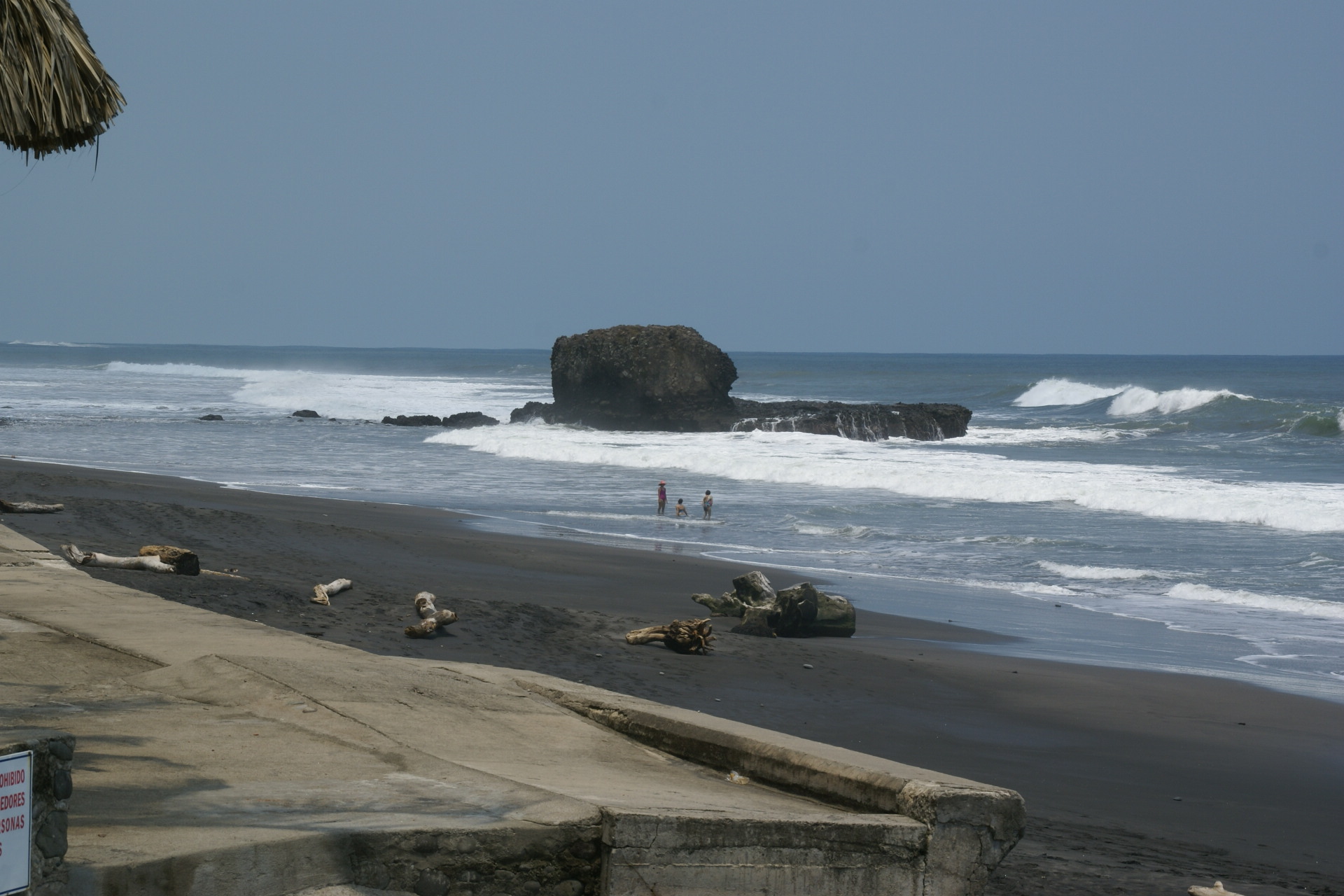
El Tunco
Send it to whoever you'd travel with
El Tunco is El Salvador's scrappy Pacific surf town — black sand, consistent waves at El Sunzal, and a three-block strip of bars that wake up Thursday night.
El Tunco is what happens when a fishing village gets discovered by surfers and never quite gets over it. The whole town is essentially three pedestrian streets that dead-end at a black-sand beach, anchored by a rock formation shaped vaguely like a pig (the tunco the place is named after). It sits 40-odd kilometers southwest of San Salvador on the Pacific coast — close enough for a Friday-night airport-to-beach run, far enough to feel like a different country. The dollar is the currency, Bitcoin is legal tender, and the gravitational center of life is the lineup at El Sunzal, a forgiving right-hand point that's been training beginner surfers for thirty years.
What's changed in the last five years is the country, not the town. El Salvador's homicide rate has collapsed, the State Department dropped it to Level 2 (the same as France), and tourism numbers jumped past 3.4 million visitors in 2024. El Tunco was the first beach to feel that shift — Surf City branding, paved coastal highway, ATMs that mostly work, English-speaking hostel staff. The infrastructure caught up but the scruffiness didn't fully leave, which is the whole appeal. You can still get a dorm bed for under fifteen dollars and pupusas for under two.
The weekly rhythm matters more here than the seasonal one. Sunday through Wednesday the town is sleepy — surfers, yoga retreats, digital nomads on laptops at Day Cafe. Thursday afternoon the speakers come out, and by Friday night La Guitarra and Blu Bar are loud enough to hear from the beach. If you want surf-then-sleep, book at the quieter northern end (Boca Olas, Cielo Vista) and walk in for dinner. If you want the party, anything on Calle Principal puts you in it. Locals will tell you both stays are fine — the mistake is picking the wrong one for who you actually are.
Surf-wise the town punches above its size: El Sunzal for longboards and learners, Sunzalito next door, and Punta Roca fifteen minutes up the coast — a fast right-hand point that's hosted World Surf League events and is genuinely one of the best waves in the Americas. May through October brings the south swells and the overhead days; November through April flattens things out enough for beginners and keeps the rain off. Outside surf, the Tamanique waterfalls and Santa Ana volcano are real day trips, not filler. Four nights gets you the basics. Seven nights and you start to understand why people extend.
The practical bits.
- Best time
-
Nov – AprDry season, smaller learner-friendly waves, sunny mornings, minimal rain.
- How long
-
5 nights recommendedThree nights is enough for the beach and one day trip; longer if you're learning to surf or pairing with Ruta de las Flores.
- Budget
-
$90 / day typicalSurf lessons ($30-40), private rooms vs dorms, and how much you drink on weekends are the swing factors.
- Getting around
-
Walk the town, shuttle or scooter for everything else.El Tunco itself is three blocks and entirely walkable — no cars on the main strip. For Punta Roca, Tamanique, or San Salvador you'll grab a tuk-tuk, a shared shuttle, or rent a scooter (most come with a board rack).
- Currency
-
$ US Dollar (Bitcoin is also legal tender)Cards work at hotels, surf shops, and most sit-down restaurants; carry small US bills for pupusas, tuk-tuks, and beach vendors. Bitcoin Lightning is accepted at a surprising number of spots.
- Language
- Spanish; basic English is widespread along the surf strip but not in tuk-tuks or rural day trips.
- Visa
- US, EU, UK, Canadian, and most Latin American visitors get a 90-day tourist card on arrival for $12 — no advance visa required.
- Safety
- Significantly safer than its reputation suggests — Level 2 advisory, visible police presence, and El Tunco specifically is a tourism-priority zone. Standard beach-town caution applies (don't flash valuables, don't walk dark side streets alone), and watch for Bitcoin wallet scams from over-helpful strangers.
- Plug
- Type A/B, 115V
- Timezone
- GMT-6 (no DST)
A few specific picks.
Hand-picked, not algorithmic. Each of these has earned its space.
The town's home break — a forgiving right-hand point that's been turning beginners into surfers for decades. Mellow at low tide, fun at mid.
Fifteen minutes up the coast: a world-class right-hander that's hosted WSL events. Fast, hollow, and not for first-timers.
Long-standing beachfront seafood spot at the river mouth — go for the grilled fish and the sunset, not the speed of service.
Asian-leaning baos, bowls, and dumplings with cold local beer. Bao Mondays is the weekly tradition worth showing up for.
The default live-music bar — pub-vibe inside, dancing by midnight on weekends, dead quiet Tuesdays.
Beach club with a DJ overlooking the lineup. Sunset cocktails into late-night, depending on the day.
The post-surf brunch room: smoothie bowls, avo toast, fresh juices, and the strongest WiFi in town.
A short scramble down through jungle to a stack of swimming pools and jump-able cascades. Half-day trip, guide recommended.
Quiet northern end of town, pool, and golf-cart shuttle into the strip — the choice if you want surf without the bass.
Right on the sand at El Sunzal — roll out of bed into the lineup. Pool, decent restaurant, weekend noise included.
French-leaning kitchen with live music on Tuesdays and Saturdays and a happy hour that runs long on Thursdays.
Easy beachside seats, cocktails, and the kind of slow afternoon that becomes a full day if you let it.
Pick a neighborhood, not a hotel.
El Tunco is a city of neighborhoods. The one you stay in shapes the trip more than the property does.
Different trips for different travelers.
Same city, very different stays. Pick the lens that matches your trip.
El Tunco for surfers
El Sunzal for learners, Punta Roca for experts, and a working surf-shop economy that makes board rental and lessons effortless.
El Tunco for backpackers
$10-15 dorm beds, $1.50 pupusas, and a hostel scene that does most of your social planning for you.
El Tunco for digital nomads
Fast WiFi at most cafes, $30-50 private rooms, Bitcoin-friendly payments, and a routine of surf-work-yoga that's hard to leave.
El Tunco for couples
Stay at the quiet north end, eat sunset at La Bocana, and do Tamanique together — skip weekends if you want it romantic.
El Tunco for solo travelers
One of Central America's easiest solo stops: small, walkable, social hostels, and English widely spoken on the strip.
El Tunco for yoga retreaters
Multiple drop-in studios and full-board retreats that pair daily classes with surf lessons and beachfront accommodation.
When to go to El Tunco.
A quick year at a glance. Great, good, or skip — see what each month is doing before you book.
Peak dry season — book ahead, especially weekends.
Sweet spot: dry weather, smaller waves, post-holiday crowds thin out.
Hottest dry month — shoulder pricing kicks in mid-month.
Easter week (Semana Santa) is the country's busiest — book early or skip.
South swells start arriving — surf upgrades, weather downgrades.
Solid for advanced surfers; rough for sunset-on-the-beach travelers.
Veranillo (mid-summer dry spell) sometimes calms things mid-month.
Best month for advanced surfers; worst for non-surfers.
Cheap, empty, and damp — skip unless you're chasing waves.
Late-October starts to dry out — gamble that pays off some years.
Arguably the best month: dry weather, lingering swell, low crowds.
Holidays bring a price spike and a livelier weekend strip.
Day trips from El Tunco.
When you want a change of pace. Each one's a half-day or full-day out, easy from El Tunco.
Santa Ana Volcano
Full dayTwo-hour hike to a turquoise sulphur crater lake at 2,381m — the country's signature view.
Tamanique Waterfalls
Half dayJungle scramble to a stack of cascade pools 45 minutes inland — bring grippy shoes.
El Zonte
Half day or overnightThe original Bitcoin Beach — smaller, sleepier, and 20 minutes down the coast.
San Salvador
Full dayCapital city day trip for the historic center, markets, and the rebuilt downtown plaza.
Suchitoto
Full dayCobbled colonial town overlooking Lake Suchitlán — best combined with San Salvador on a longer day.
Ruta de las Flores
OvernightMountain route through coffee towns like Ataco and Juayúa — better as a two-day side trip than a day-tripper.
El Tunco vs elsewhere.
Quick honest reads on the cities people compare El Tunco to.
El Zonte is what El Tunco was ten years ago — smaller, quieter, fewer bars, and the original Bitcoin Beach. El Tunco has the food scene and the nightlife.
Pick El Tunco if: Pick El Zonte for peace and Bitcoin lore; El Tunco for bars and variety.
Santa Teresa, Costa Rica is the more developed cousin — pricier, slicker, with a wider surf scene but a fraction of the value.
Pick El Tunco if: Pick El Tunco if budget matters; Santa Teresa if you want more polish and don't mind paying triple.
Nicaragua's San Juan is the closer comparison — same backpacker-surf DNA but rowdier, with worse waves close to town and a longer airport transfer.
Pick El Tunco if: Pick El Tunco for better surf and shorter transfers; San Juan for cheaper beer and more chaos.
Puerto Escondido is bigger, more developed, and home to a heavier wave (Zicatela) plus a hipper food scene — but it's also four times the price.
Pick El Tunco if: Pick El Tunco for value and beginner-friendly waves; Puerto for the food scene and serious barrels.
Tulum is what El Tunco refuses to become — designer boutique hotels, $25 cocktails, and a beach that's increasingly unswimmable.
Pick El Tunco if: Pick El Tunco if Tulum's prices and crowds have ruined it for you and you want the vibe Tulum had in 2012.
Itineraries you can start from.
Rough shapes for a trip here — a feel for the pace and cost. Find the one that fits you.
Friday in, lessons at El Sunzal, sunset at La Bocana, party Saturday, recover Sunday with a Tamanique waterfall trip.
Seven days of morning lessons, afternoon yoga, and a midweek day trip to Santa Ana volcano. Built around a surf-camp package.
Four nights in El Tunco, a quiet detour to El Zonte, then up to Ruta de las Flores and a coffee finca before flying out of SAL.
Things people ask about El Tunco.
Is El Tunco safe for solo travelers?
Yes — El Tunco is one of the safest spots in El Salvador, and El Salvador itself has dropped to a Level 2 US travel advisory (the same as France). The country's homicide rate fell from 6,656 in 2015 to 114 in 2024, and El Tunco specifically is a tourism-priority zone with visible police presence. Standard beach-town caution still applies: don't leave bags on the sand, skip dark side streets at night, and be polite-but-firm with strangers offering Bitcoin wallet help.
How many days do you need in El Tunco?
Four to five nights is the sweet spot. Three is enough for the beach, one surf session, and a single day trip — but you'll leave feeling rushed. Five nights lets you take a real surf course, hit Tamanique waterfalls, do a Santa Ana volcano day, and still have a slow morning or two. Surf-camp travelers and digital nomads routinely stretch to seven or ten nights without running out of things to do.
Best time to visit El Tunco?
November through April for most travelers — dry season means sunny mornings, smaller waves that are friendlier for learners, and minimal rain. May through October brings the big south swells advanced surfers come for, but also afternoon storms and grey skies. March and November are the shoulder-season sweet spots: solid swell potential, dry weather, and lower hostel prices than peak December–February.
Is El Tunco cheap or expensive?
Genuinely cheap by Central American standards. Dorm beds start around $8-15, private surf-hostel rooms run $25-40, and mid-range hotels with a pool sit at $60-90. Pupusas are under $1.50, a sit-down dinner with a beer is $12-18, and group surf lessons are $30-40. The high end exists — Las Flores Resort tops $200 — but most travelers spend $35-90 per day all-in, which makes it one of the most affordable surf destinations in the Americas.
What is El Tunco known for?
Surfing, sunsets, and being El Salvador's most accessible beach. The town is named after a pig-shaped rock at the river mouth, and the surrounding breaks — El Sunzal, Sunzalito, and Punta Roca up the coast — are the country's calling card. It's also become a hub for the Bitcoin Beach movement, with many bars and hostels accepting Lightning Network payments. The black volcanic sand and three-block walkable strip are what visitors remember most.
Cash or card in El Tunco?
Bring both. Most sit-down restaurants, surf shops, and hotels take cards (Visa and Mastercard, sometimes a 3-5% surcharge). Pupuserias, tuk-tuks, beach vendors, and the corner stores want US cash — small bills, ideally $1, $5, and $10. ATMs exist in town but go down occasionally; pull money in San Salvador before you arrive if you're nervous. Bitcoin via Lightning works at a surprising number of places if that's your thing.
How to get from San Salvador airport to El Tunco?
It's a 40-50 minute drive west along the coastal highway. Shared shuttles cost $20-30 per person and most hostels can pre-book one; private transfers run $50-70 for the car. Uber works from the airport but availability drops late at night. The cheapest route is a public bus to La Libertad and a $1 microbus from there, which takes 90+ minutes and is fine in daylight with light luggage.
Best day trips from El Tunco?
Three stand out. Santa Ana volcano is a roughly two-hour drive plus a moderate two-hour hike to a turquoise sulphur crater lake — book a tour. Tamanique waterfalls are 45 minutes inland and a half-day scramble through a stack of jungle pools. El Zonte, twenty minutes down the coast, is the smaller, quieter sibling beach and the original Bitcoin Beach. Puerta del Diablo and Joya de Cerén round out the list if you have a fourth day.
Best neighborhood to stay in El Tunco?
Depends on what you want. For first-timers, anywhere on Calle Principal puts you in the middle of bars, restaurants, and surf shops within a two-minute walk. Beachfront places (Roca Sunzal, La Guitarra) put you in the water at sunrise but on top of the weekend noise. The quiet north end (Boca Olas, Cielo Vista) is the call for couples and anyone over thirty who'd rather sleep through the bass.
Is El Tunco good for beginners learning to surf?
Yes — it's one of the best beginner surf towns in the Americas. El Sunzal is a long, gentle right-hand point that lets first-timers ride for genuine distance, and there's a small army of local instructors charging $30-40 for a group lesson with board included. Surf camps offering week-long packages with accommodation, daily lessons, and yoga run $400-900. Dry season (Nov-Apr) is when the waves are smallest and friendliest.
El Tunco vs El Zonte — which should I pick?
El Tunco if you want bars, a wider food scene, and easier transit to day trips. El Zonte if you want quieter mornings, fewer tourists, and the Bitcoin Beach origin story. They're twenty minutes apart, so plenty of travelers split nights between them. El Tunco has roughly five times the accommodation and the only real nightlife between San Salvador and the Guatemalan border — that's the deciding factor for most.
Can you drink the tap water in El Tunco?
No — stick to bottled or filtered water for drinking and brushing teeth. Most hostels and hotels have free filtered refills, and 5-gallon jug refills cost under $2 if you have a reusable bottle. Ice in cocktails at established bars and restaurants is fine; street vendor ice is hit or miss. Pupusas, ceviche, and grilled fish from busy spots are safe — just use the usual traveler judgment on slow days.
Do I need a visa for El Salvador?
Most Western travelers don't need a pre-arranged visa. US, Canadian, UK, EU, Australian, and most Latin American passport holders get a 90-day tourist card on arrival for a $12 fee paid in cash at immigration. Your passport needs at least six months validity. The card also covers the CA-4 region (Guatemala, Honduras, Nicaragua) on the same 90-day allowance, so border-hopping doesn't reset the clock.
What's the nightlife like in El Tunco?
Sleepy Sunday through Wednesday, loud Thursday through Saturday. The strip — La Guitarra, Blu Bar, La Bonita Beach Club, Papaya Surf Garden — turns the speakers up around 9pm on weekends and runs until 2 or 3am. Live music is constant: reggae, rock, the occasional cumbia DJ. It's a party town by Central American standards but tame compared to Tulum or Bocas. Stay at the north end if you want sleep on Friday.
What should I pack for El Tunco?
Reef-safe sunscreen (the black sand cooks you), rash guard, flip-flops you can lose, one nicer shirt for sunset dinners, and a light rain layer if you're traveling in shoulder season. Boards are easy to rent ($10-15/day) so leave yours unless you're picky. Bug spray for jungle day trips. Cash USD in small bills. You will not need long pants or a jacket — it does not get cold here.
Are there ATMs in El Tunco?
Yes, a few — but they're not always reliable. The most dependable ones are at the Texaco station on the highway and inside the bigger hotels. Daily withdrawal limits are typically $200-300 and fees run $4-6 per pull. Bigger lesson: take out a chunk of cash in San Salvador or at the airport before you arrive, and use cards at hotels and restaurants for the rest.
Know someone headed to El Tunco?
Send them this guide — real neighborhoods, timing, and prices, with nothing to sign up for.
Copies the link — nothing to install