Tikal
Send it to whoever you'd travel with
Tikal is the most dramatic Maya archaeological site in the Americas — colossal limestone temples emerging above the jungle canopy in Guatemala's Petén region — best experienced at sunrise from Temple IV or on an early morning walk before the day-tour crowds arrive from Flores.
Tikal was one of the most powerful cities in the ancient Maya world — at its peak between 200 and 900 CE, it held perhaps 100,000 people, dominated a political and trade network extending across the lowlands of what is now Guatemala, Belize, and Mexico, and built temples that rose 65 meters above the jungle floor. The site was abandoned by around 900 CE, and the forest reclaimed it so completely that the first systematic European documentation of the ruins came only in the 1840s. Much of the 576 square kilometers of the national park remains unexcavated — thousands of structures buried under forest mounds, their contents still unknown.
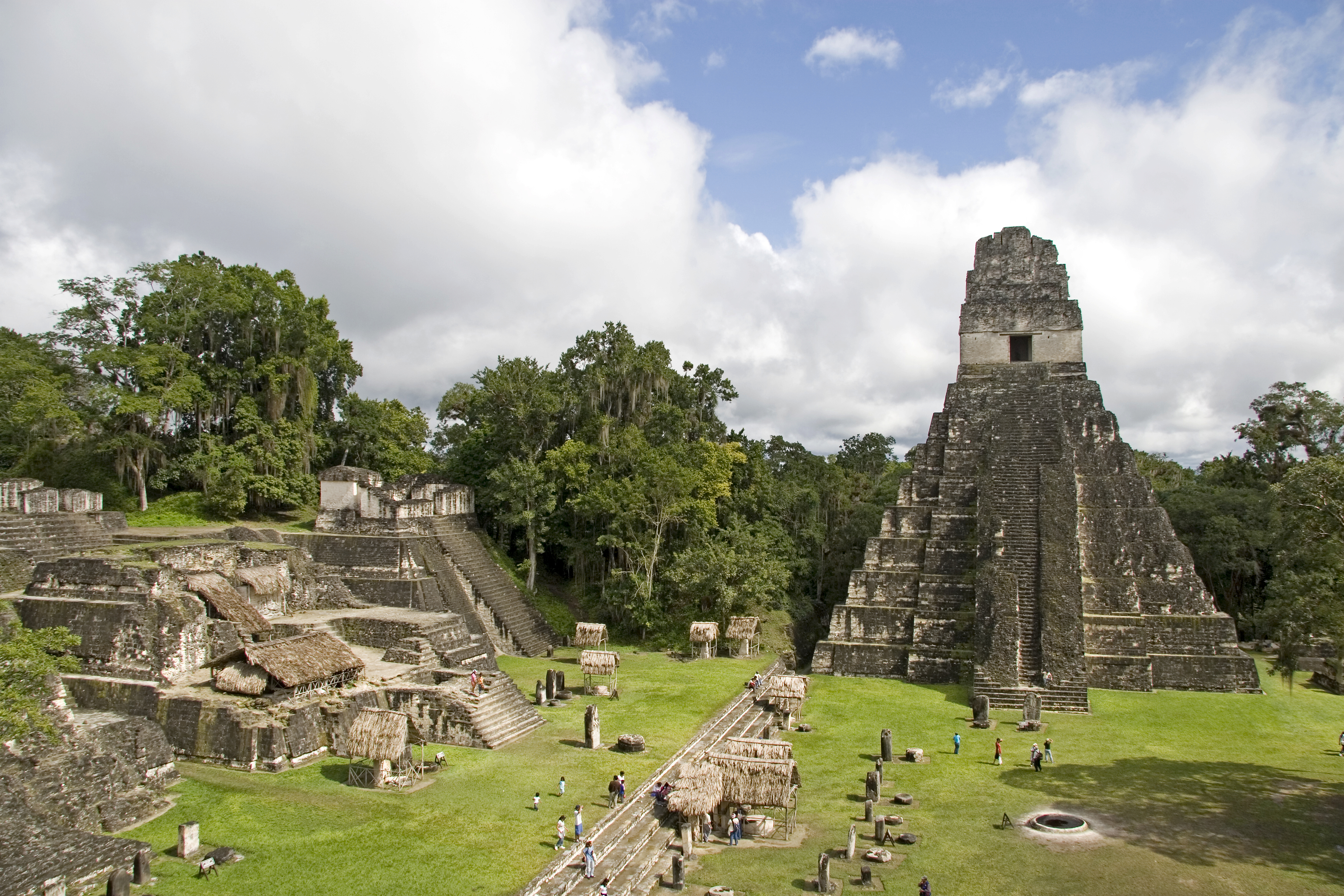
What the visitor encounters today is defined by the Grand Plaza — the open ceremonial center flanked by Temple I (Temple of the Great Jaguar, 44 meters) and Temple II (Temple of the Masks), with the North Acropolis and Central Acropolis completing the rectangle. The sight of these precisely oriented temples across a cleared plaza, surrounded on all sides by jungle, delivers an experience that no photograph adequately prepares you for. Temple IV, in the park's northwest, is 65 meters tall and is one of the tallest pre-Columbian structures in the Americas — the view from its summit over the jungle canopy, with other temple tops emerging through the trees, is the image the site is known for.
Tikal is not merely an archaeological experience — it is a wildlife corridor. The national park (a UNESCO World Heritage Site) protects primary lowland jungle that shelters howler monkeys, spider monkeys, white-nosed coatis, agoutis, toucans, parrots, and the occasional puma or jaguar. The pre-dawn walk from the park entrance to Temple IV is accompanied by the howler monkeys' deep roar — a sound that carries for miles through jungle and that sets the tone for everything that follows. Ocellated turkeys — iridescent blue-headed wild turkeys found only in this region — walk through the plazas with complete indifference to human visitors.
The town of Flores, on an island in Lake Petén Itzá about 60 kilometers south, serves as the main base for Tikal visits. The town's colored houses connected by a narrow causeway to the mainland have a distinct Caribbean-tinged character unusual in the Guatemalan highlands. The proximity to Belize (2–3 hours east) and to other Petén Maya sites like Yaxhá makes Tikal the natural anchor for a broader archaeological circuit of the lowland Maya region.
The practical bits.
- Best time
-
November – AprilThe dry season keeps trails clear and the jungle heat manageable (85–95°F). December through February are the most comfortable months with lower humidity. May through October brings daily rain that makes temple staircase climbing slippery and raises humidity significantly; the jungle is dramatically green but thunderstorms can arrive quickly in the afternoon. The rainy season also brings more mosquitoes.
- How long
-
2 nights recommended1 night allows the sunrise tour and a half-day in the park. 2 nights covers two full park visits (early morning and late afternoon light on different days), the Mundo Perdido complex, and wildlife-watching walks. 3–4 nights includes Yaxhá, El Mirador approach, or a Flores lake day.
- Budget
-
$130 / day typicalPark entry is $20/person/day (Q150). An after-hours sunrise permit adds Q100. Flores guesthouses start at $25/night; mid-range hotels $60–120. In-park lodges (Tikal Inn, Jungle Lodge) run $100–200/night and provide direct sunrise access without a 1-hour drive. Meals in Flores $5–15; in-park restaurants $10–20.
- Getting around
-
Flights or bus to Flores; car or minivan to TikalFlores Mundo Maya International Airport (FRS) receives direct flights from Guatemala City (1 hour), Cancún, and Belize City on Avianca and local carriers. Overland from Guatemala City takes 8–10 hours by bus. From Belize, the border crossing at Melchor de Mencos is 2–3 hours east of Flores. Within Tikal: the site is 60 km north of Flores; minivan shuttles run from all Flores hotels ($10–15 round-trip) and take 1 hour. Within the park itself, walking is the only option — most visitors cover 5–10 km on foot in a full day.
- Currency
-
Guatemalan Quetzal (GTQ) · some US dollars acceptedCash is essential in Tikal and Flores. ATMs exist in Flores but not at Tikal. Park entry fees can sometimes be paid by card but this is unreliable — bring sufficient quetzales. US dollars are accepted at most hotels at approximate exchange rates. Budget $100–150 USD cash per person per day.
- Language
- Spanish. Inside the park, guides speak English to varying degrees; the best English-speaking guides can be arranged through Flores tour operators. Basic Spanish is helpful in Flores.
- Visa
- US, Canadian, and most EU/UK citizens can enter Guatemala visa-free for 90 days. Central America's C-4 Agreement allows movement between Guatemala, El Salvador, Honduras, and Nicaragua on a single entry. Mexico, Belize, and Costa Rica are not in the C-4.
- Safety
- Tikal and Flores are considered safe for tourists by Central American standards. The main site has park guards and is well-patrolled. The jungle walk between park zones in absolute darkness before sunrise is best done with a licensed guide who knows the paths. The Flores area has occasional petty theft; normal urban precautions apply. The road from Flores to Tikal (CA-13) passes through rural Petén and is safe in daytime.
- Plug
- Type A / B · 120V — same as US, no adapter needed for North American devices.
- Timezone
- CST · UTC-6 (Guatemala does not observe daylight saving time)
A few specific picks.
Hand-picked, not algorithmic. Each of these has earned its space.
The defining Tikal experience — climb the wooden ladders to the top of the 65-meter Temple IV before dawn and watch the jungle emerge from darkness as howler monkeys roar below. Temple I and Temple II tops emerge through the mist as the sun rises over the canopy. Requires an after-hours sunrise permit (Q100 extra) and an early entrance time of 4–4:30 AM.
The site's ceremonial heart — Temple I and Temple II facing each other across a clear stone plaza, with the North Acropolis layered with earlier temple structures. The experience of standing in the center of this plaza and looking in all four directions delivers the full scale of what Tikal was. Best in early morning before day-tour crowds arrive (after 9 AM).
The 44-meter funerary temple of the great ruler Siyaj Chan K'awil II, who died around 734 CE. Climbing Temple I is no longer permitted (to protect the carved roof comb and staircase). Temple II opposite can still be climbed with a guide.
The oldest complex in Tikal — the central pyramid dates to roughly 400 BCE and was a major astronomical observatory. The views from the top across the jungle to the Great Pyramid are excellent. Less visited than the Grand Plaza and worth spending time in on a second park day.
The park's howler monkey population announces dawn with a sound like a distant fog horn or a lion's roar — it is the alarm clock of Tikal. The monkeys are throughout the park and comfortable near the main structures. The roar heard from Temple IV at sunrise is one of the most atmospheric jungle sounds in Central America.
At 57 meters, the second-tallest temple at Tikal. Temple V's function was unclear for decades; recent research suggests it was a funerary monument to a ruler around 600 CE. The climb via wooden stairs is steep and vertiginous. The view over the site's southern sector is excellent and the crowds are lower than Temple IV.
The island town of Flores — colored houses on a teardrop island connected by a causeway — is the main base for Tikal. The waterfront restaurants, mezcal bars, and the walking circuit of the island's perimeter in 30 minutes give the base town its own enjoyable character. Sunset from the causeway bridge is particularly good.
The ocellated turkey (Meleagris ocellata) is a large, iridescent bird found only in the Maya lowlands — it has a blue-grey head, orange-tipped orbital markings, and copper-green body feathers. Several individuals walk through the Grand Plaza and around the North Acropolis with no concern for visitors. They are one of the park's most remarkable wildlife encounters.
A large Maya site on the shores of Lake Yaxhá — less visited than Tikal with excellent sunset views over the lake from the main pyramid. One of the most beautiful settings of any Maya site in Guatemala. Day trip from Flores; also appeared in the TV show Survivor Guatemala.
Temple III (Temple of the Jaguar Priest, 55 meters) is surrounded by unexcavated forest mounds and is one of the quieter corners of the main site. The overgrown approach adds atmosphere. Late afternoon light in this area, with the jungle beginning to call with birds and insects, is the counterpart to the Temple IV sunrise.
Pick a neighborhood, not a hotel.
Tikal is a city of neighborhoods. The one you stay in shapes the trip more than the property does.
Different trips for different travelers.
Same city, very different stays. Pick the lens that matches your trip.
Tikal for archaeological travelers
Tikal is one of the five or six most significant archaeological sites in the Americas. A licensed guide who can interpret the stella inscriptions, the political history of the site, and the architectural sequence between the 200 BCE Preclassic and 900 CE Late Classic periods transforms the visit from impressive ruins into a legible historical narrative.
Tikal for wildlife and nature travelers
The park's primary jungle is a working wildlife corridor. The dawn chorus, the howler monkeys, the ocellated turkeys in the plazas, and the toucans on the temple roof combs are the wildlife highlights. A naturalist guide who can identify birds and understand forest ecology makes the wildlife dimension as rewarding as the archaeology.
Tikal for photographers
Temple IV sunrise is the primary target. The mist rising from the jungle canopy while temples emerge in the early light is the image. A second-day long-exposure shot at Temple III surrounded by unexcavated mounds in the forest is the less-seen alternative. Dawn and dusk are the only times worth serious photography — midday light on stone temples is flat and harsh.
Tikal for adventure and expedition travelers
The El Mirador trek (5 days each way on jungle paths, camping, arriving at the largest Maya pyramid ever built) is one of the genuine expedition experiences in the Americas. Requires a licensed guide, camping equipment, and physical fitness for multi-day jungle hiking. Helicopter access also exists for those with the budget.
Tikal for families with children
Tikal works well for families with children 8 and older who can manage the walking and the temple climbs. The howler monkeys, toucans, and coatis wandering through the ruins provide natural engagement that requires no architectural interpretation. The sunrise tour is viable for older children who can handle the early start. Mosquito protection and shade clothing are essential.
Tikal for first-time central america travelers
Tikal is logistically straightforward despite its remote location — the Guatemala City to Flores flight is 1 hour, the Flores-to-park minivan is organized from every hotel, and the main archaeological zone is well-signposted. A 2-night visit to Flores and Tikal is an extremely rewarding introduction to Guatemala and to the Maya world.
When to go to Tikal.
A quick year at a glance. Great, good, or skip — see what each month is doing before you book.
One of the best months. Dry trails, clear skies, manageable heat. Low humidity makes the jungle walking pleasant.
Excellent conditions — the peak dry season. Wildlife activity is high around water sources. Highly recommended.
Still dry but heat builds. Spring break domestic tourism. Good conditions before humidity spikes.
Hot and dry. Midday heat is intense. Dawn-to-10 AM hiking is excellent. Easter week brings domestic visitors.
Rainy season begins with irregular afternoon showers. Jungle turns green. Good shoulder month.
Daily afternoon rain. Humidity high. Trails become slippery on temple stairs. Fewer tourists.
Rainy season full. Jungle most lush. Waterfalls appear. Wildlife activity can be high. Not ideal for ruins.
Similar to July. Budget travel season. Occasional breaks between rains still allow good wildlife watching.
Peak rain. Some minor flooding of park paths possible. Not recommended for most visitors.
Rain frequency decreasing toward month end. The jungle is still vibrantly green. Good for budget-focused visits.
One of the best transition months. Rain stops, heat is moderate, wildlife activity high. Recommended.
Dry season fully established. Christmas week brings visitors; book in advance. Excellent conditions.
Day trips from Tikal.
When you want a change of pace. Each one's a half-day or full-day out, easy from Tikal.
Yaxhá Ruins
1 hour east of FloresDrive or take a guided tour east on CA-13 to the Yaxhá turnoff. The sunset from the main pyramid over Lake Yaxhá is extraordinary. Combine with nearby Nakum or Topoxté for a full day. Yaxhá appeared in the TV show Survivor: Guatemala.
El Remate and Lake Petén Itzá
30 minutes from FloresThe northeast shore of Lake Petén Itzá has several small lodges, good birding, and a more local character than Flores. The ARCAS wildlife rescue center near Petencito rehabilitates injured jungle animals — an educational visit. The lake swimming is good in the dry season.
Uaxactún
24 km north of Tikal (through the park)Accessible only by 4WD vehicle on an unpaved forest road through the national park. The Group E complex is one of the earliest known astronomical observation sites in the Maya world. Very few visitors. Best arranged through Flores tour operators with a 4WD vehicle.
Antigua Guatemala
Flight from Flores to Guatemala City + 45-min driveAntigua is Guatemala's most visited colonial city — cobblestoned streets, Spanish Baroque ruins, and the Acatenango volcano overnight hike above the smoking Fuego cone. Combine with a Flores/Tikal stay in a Guatemala highlights trip.
Lake Atitlán
Flight from Flores + 3-hour shuttleLake Atitlán is Guatemala's other flagship destination — a caldera lake surrounded by three volcanoes and indigenous Maya villages each with distinct textile traditions. Combine with Flores/Tikal on a 7–10 day Guatemala trip.
San Ignacio, Belize
2.5 hours east via the borderCross the border at Melchor de Mencos/Benque Viejo del Carmen. San Ignacio is the hub for Belize's inland adventure tourism — ATM Cave (ceremonial cave system), Caracol ruins (Belize's largest Maya site), and Cockscomb Basin wildlife sanctuary are all accessible.
Tikal vs elsewhere.
Quick honest reads on the cities people compare Tikal to.
Chichen Itzá is more accessible and more famous internationally; Tikal is more remote, more immersive, and uniquely integrated with primary jungle. Chichen Itzá receives millions of visitors; Tikal sees far fewer and retains a sense of discovery. Both are among the most important Maya sites but deliver completely different experiences.
Pick Tikal if: You want the jungle-emerging temples, wildlife, and atmospheric isolation of an archaeological site that feels genuinely remote rather than a mass-tourism landmark.
Palenque (Mexico) is another jungle Maya site, smaller and more enclosed than Tikal, with exceptional carved reliefs and the famous sarcophagus of Pakal in Temple of the Inscriptions. Tikal has more dramatic vertical architecture; Palenque has more intricate carved iconography. Both are in lowland jungle.
Pick Tikal if: You want the most physically dramatic Maya site — the tallest temples, the widest plazas, and the most overwhelming sense of lost-city scale.
Machu Picchu is an Incan citadel in the Peruvian Andes; Tikal is a Maya site in Guatemalan jungle. Both are UNESCO World Heritage Sites, both require effort to reach, and both deliver extraordinary atmosphere. Machu Picchu has the mountain setting; Tikal has the jungle wildlife and the verticality of its temples above the canopy.
Pick Tikal if: You want jungle rather than mountain, Maya rather than Incan, and fewer visitors than Machu Picchu currently receives.
Antigua is a charming Spanish colonial city in the highlands with volcano hiking; Tikal is a remote Maya site in the lowland jungle. They attract different visitor types but are both central to a Guatemala trip. Antigua is more comfortable and easier; Tikal is more singular and harder to replicate.
Pick Tikal if: You have one destination to choose in Guatemala and want the experience that exists nowhere else — the specific combination of Maya archaeology and primary jungle is unique to Tikal.
Itineraries you can start from.
Rough shapes for a trip here — a feel for the pace and cost. Find the one that fits you.
Day one: Temple IV sunrise (pre-dawn departure from Flores), Grand Plaza, Mundo Perdido, wildlife walk, afternoon rest. Day two: Temple III and V sector, North Acropolis detail, late-afternoon jungle in changing light. Flores evening both nights.
Tikal (2 nights) + Yaxhá at sunset (half-day, stay nearby or return to Flores) + a Lake Petén Itzá day with San Andrés village and the ARCAS wildlife rescue center near Petencito.
Antigua (3 nights, colonial city + Volcán Acatenango hike) → Guatemala City flight to Flores → Tikal (3 nights, full circuit + Yaxhá). The two most rewarding Guatemala destinations in one trip.
Things people ask about Tikal.
What is Tikal and why is it significant?
Tikal was one of the most powerful cities in the ancient Maya lowlands, occupied from roughly 600 BCE to 900 CE. At its peak it held an estimated 100,000 people, controlled a regional hegemony through trade and military alliance, and built temples that still rank among the tallest pre-Columbian structures in the Americas. The site covers 576 km2 in Guatemala's Petén jungle; only a small central area has been excavated and restored.
How do I do the Tikal sunrise and is it worth it?
The sunrise from Temple IV is one of the genuine travel experiences of Central America and is worth every logistical inconvenience. You need an after-hours sunrise permit (available at the park entrance or through tour operators, Q100 extra) and must enter the park by 4–4:30 AM. From Flores this means leaving your hotel by 3–3:30 AM. From the in-park lodges you walk directly. Climb Temple IV's wooden ladders in the dark; sit at the top and wait.
When is the best time to visit Tikal?
November through April is the dry season — comfortable temperatures (85–95°F), firm trails, and lower humidity. December through February are the most comfortable months. The rainy season (May–October) brings daily afternoon thunderstorms, slippery temple stairs, more mosquitoes, and higher humidity, but the jungle is dramatically green and wildlife activity can actually be higher after rain. Most travelers avoid the rainiest months (June–September) but May and October are manageable shoulder months.
Should I stay in Flores or inside Tikal?
Flores is the standard choice — more accommodation variety, restaurants, and town life for evenings. The in-park lodges (Tikal Inn, Jungle Lodge, Jaguar Inn) are the right choice if the sunrise tour is your priority and you don't want the logistical complexity of leaving Flores at 3 AM.
What wildlife can I see at Tikal?
Tikal's primary jungle is a functioning wildlife corridor. Howler monkeys are guaranteed — you will hear them before you see them, and see several troops throughout any full-day park visit. Spider monkeys are common in the upper canopy. Ocellated turkeys walk through the main plazas. White-nosed coatis (raccoon relatives) forage everywhere. Agoutis are frequent. Toucans, parrots, and the orange-and-black Montezuma oropendola are among the most visible birds. Less reliably seen but present: puma, jaguar, tayra, and various deer.
How do I get to Tikal from Guatemala City?
The fastest route is to fly from Guatemala City to Flores Mundo Maya Airport (FRS) — the flight takes about 1 hour with Avianca and TA (Transportes Aéreos Guatemaltecos). Overland buses from Guatemala City to Flores take 8–10 hours via a combination of highway and rural road. From Flores, Tikal is 60 km north — a 1-hour drive via CA-13. Shuttle minivans run from Flores hotels to the park entrance for $10–15 round-trip.
How do I get to Tikal from Belize?
From Belize City, the most direct route is bus or shuttle to Benque Viejo del Carmen/Melchor de Mencos border crossing (3 hours), then a shuttle or local bus to Flores (2 hours more). From San Ignacio (Belize's Cayo District), the border is 15 minutes and Flores is about 2.5 hours total. Several shuttle operators in San Ignacio offer direct Tikal day trips.
Do I need a guide at Tikal?
Not strictly — the park is navigable with a map and the main structures are signed. However, a licensed guide substantially enriches the experience: the Maya calendar system, the iconography of the temples' carved panels, the forest ecology, and the wildlife-finding skills are all significantly better with someone who knows the site deeply. Licensed Tikal guides are available at the entrance ($30–50 for a half-day).
What is Mundo Perdido and why should I visit it?
Mundo Perdido (Lost World) is the oldest excavated complex at Tikal, centered on a large pyramid dating to around 400 BCE — approximately 1,000 years older than the Grand Plaza's main structures. It was a major astronomical observatory used to track solstice and equinox alignments. Less crowded than the central site, it gives a sense of the time depth at Tikal that the more famous temples don't emphasize.
How strenuous is visiting Tikal?
Moderately strenuous. A full-day visit covers 5–10 km of walking on uneven stone paths and jungle trails. The temples have steep wooden staircases (in some cases 60–65 meters of vertical climbing) that are genuinely demanding, especially in heat and humidity. The pre-dawn walk to Temple IV in the dark is over jungle paths with tree roots. Wearing good grip shoes is essential; bringing 2–3 liters of water is necessary.
What should I know about visiting Guatemala as a first-time visitor?
Guatemala is a small Central American country of around 18 million people, geographically diverse from Pacific coast to Caribbean to highland Maya communities to lowland jungle. It is generally safe for visitors in the tourist circuit (Antigua, Lake Atitlán, Quetzaltenango, and the Petén/Tikal region). Petty theft is the main concern in cities; the tourist areas are well-established.
What are the other major Maya sites near Tikal?
Yaxhá (50 km east of Flores) is a large site on the shore of Lake Yaxhá with excellent sunset views from the main pyramid and fewer crowds than Tikal — an excellent half-day or day trip. El Mirador (70 km north of Tikal, only accessible by 5-day jungle trek or helicopter) has the tallest Maya pyramid ever built and is entirely unexcavated — a major archaeological expedition destination for serious travelers.
What is the difference between Tikal and Chichen Itzá?
Both are major Maya archaeological sites, but they are geographically, culturally, and experientially different. Chichen Itzá in Mexico's Yucatán is more developed for mass tourism, easier to access, and more famous internationally — it receives millions of visitors. Tikal is in jungle, requires more effort to reach, receives far fewer visitors, and integrates wildlife and primary forest into the experience. Chichen Itzá's El Castillo is more photographically iconic; Tikal's jungle-emerging temples are more primally atmospheric.
Is Tikal safe?
Yes — Tikal and the Flores area are considered safe for tourists. The national park has park guards throughout, and the main archaeological zone is well-patrolled. The pre-dawn walk on the park paths is safe with a licensed guide. Flores island has occasional petty theft (pickpockets near the waterfront, bag theft in unlocked guesthouses); standard precautions apply. The road from Flores to Tikal (CA-13) is safe in daytime. Night driving in rural Petén is not recommended.
Can I visit Tikal in a day trip from Flores?
Yes — a day trip is the most common visit pattern. Leave Flores at 3–4 AM for the sunrise experience, spend the day at the park, and return to Flores by 4–5 PM. This gives about 10–12 hours in the park, which is enough for all major structures. The downside is the exhaustion of a 3 AM start plus a full day of walking in heat.
What should I pack for Tikal?
Insect repellent with DEET is non-negotiable — the jungle has mosquitoes, and in the rainy season they are substantial. Lightweight quick-dry clothing in neutral colors (khaki, olive, grey) rather than dark clothes that absorb heat. Sun protection (hat, SPF 50) for open plaza areas. A minimum of 2–3 liters of water; more in summer. Grippy trail shoes or hiking sandals for the stone paths and tree-root-covered jungle trails. A flashlight or headlamp for the pre-dawn temple walk.
What is the howler monkey and why is it so loud?
The howler monkey (Alouatta pigra in the Petén) produces one of the loudest sounds made by any land animal — audible for up to 3 miles through jungle. The sound is produced by an enlarged hyoid bone in the throat that acts as a resonating chamber. Troops use the howl primarily to establish territorial boundaries with neighboring groups and to locate each other in dense forest.
Know someone headed to Tikal?
Send them this guide — real neighborhoods, timing, and prices, with nothing to sign up for.
Copies the link — nothing to install