Copán
Send it to whoever you'd travel with
Copán is a small Honduran town next to the Maya world's most artistically refined ruined city, with stelae, hieroglyphs, and cloud-forest valleys.
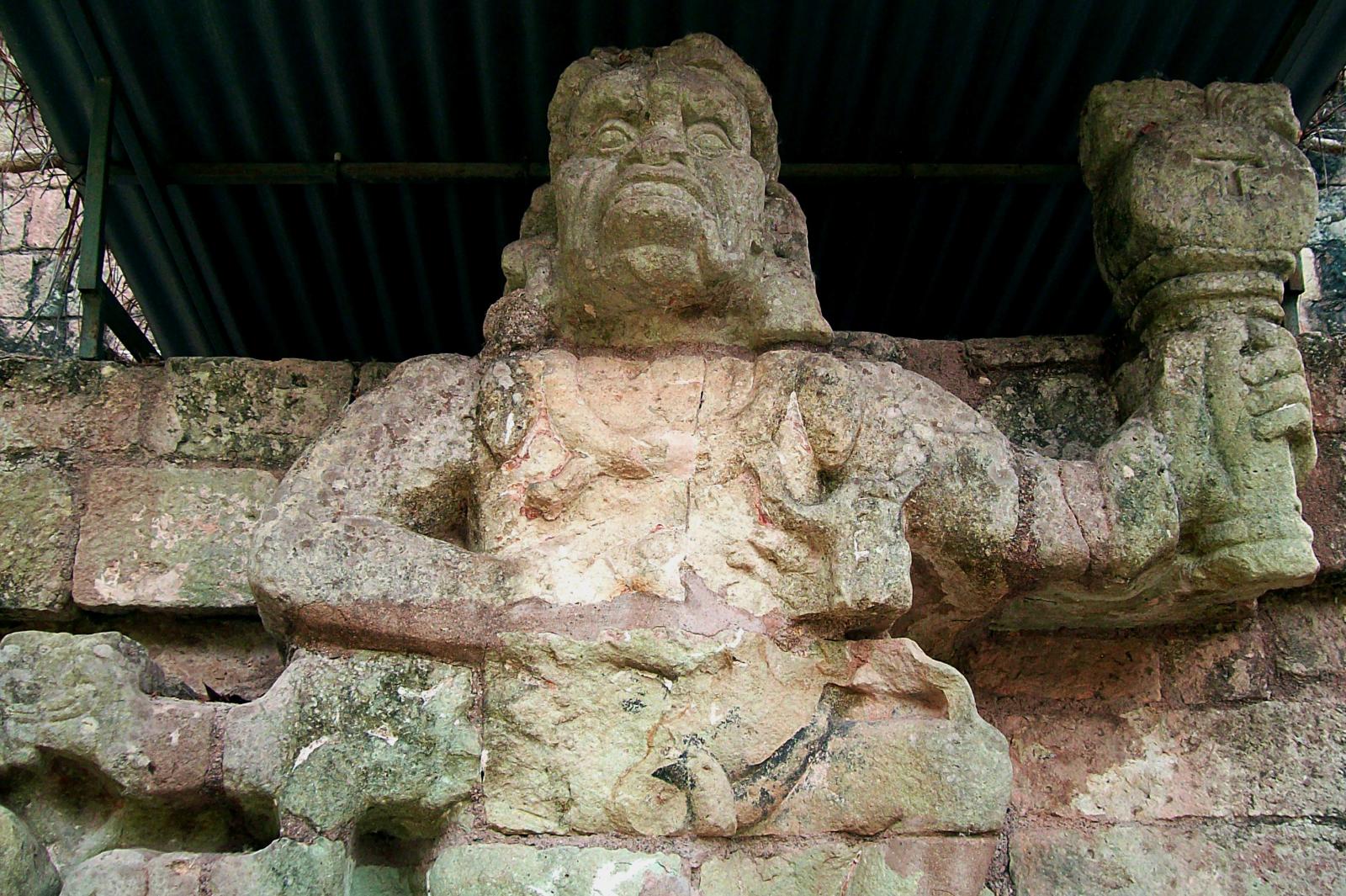
Copán is the Maya site you visit when you've already done Tikal and Chichén Itzá and want to understand what the civilization was actually thinking. The pyramids here aren't the tallest — Tikal beats it on scale, and Palenque on jungle drama — but the carving is the best preserved in the Maya world. Stelae stand three to five meters high in the Great Plaza, their rulers' faces and headdresses cut in such deep relief they read almost as freestanding sculpture. The Hieroglyphic Stairway, 63 steps and several thousand glyphs, is the longest Maya inscription anywhere. You feel less like a tourist and more like a reader.
The town itself — properly Copán Ruinas, to distinguish it from the archaeological site — is a cobblestoned grid of low pastel buildings about a kilometer from the ruins, walkable end to end in fifteen minutes. It's quieter than almost any tourist hub in Central America, which is part of the appeal and part of the puzzle: you keep waiting for the place to feel busier, and it never does. Most people roll in from Antigua on a 3am shuttle, spend a night, do the ruins in a morning, and leave. Staying two or three nights is when Copán turns from a stop into a destination.
What fills those extra days is mostly green: Macaw Mountain, where rescued scarlet macaws (the national bird, painted onto every Maya stela here) screech through a forested aviary; coffee fincas in the surrounding cloud-forest hills where you can walk the picking trails and roast a small batch yourself; and the Luna Jaguar hot springs, a properly built spa complex an hour up a dirt road into the mountains, where a stream cools from near-boiling into a string of stone pools you actually want to sit in. Add a tea-and-chocolate workshop in town and a long lunch of baleadas and you have a perfectly paced 72 hours.
A practical note: Copán sits ten minutes from the Guatemalan border, which is why it works so well as a tail-end add-on to an Antigua or Río Dulce trip rather than a standalone Honduras itinerary. The mainland reputation around safety puts some travelers off the whole country, but the Copán valley is consistently flagged as one of the safest pockets in Honduras — closer in feel to small-town Guatemala than to San Pedro Sula. Treat it as the western edge of the Maya world map and it makes immediate sense.
The practical bits.
- Best time
-
Nov – AprDry season; clear mornings at the ruins, comfortable hill weather, low rain risk.
- How long
-
2-3 nights recommendedOne full morning for the ruins, one day for hot springs or coffee finca, one for town and Macaw Mountain.
- Budget
-
$75 / day typicalRuins ticket ($20) + tunnels ($15) + museum ($10) front-loads day one; boutique hotels and private tours swing the high end.
- Getting around
-
On foot, plus tuk-tuks for outlying sites.The town is fifteen minutes corner to corner. Tuk-tuks (mototaxis) cost around 20-30 lempiras for hops within town and a few hundred to the ruins, Macaw Mountain, or the river. Hot springs and coffee farms need a tour van or 4WD.
- Currency
-
L Lempira (HNL)Mid-range hotels and tour operators take cards; ruins tickets, tuk-tuks, comedores, and most cafés expect lempiras. ATMs work but bring a backup card.
- Language
- Spanish; English is common with guides and at boutique hotels, patchy elsewhere.
- Visa
- US, Canadian, EU, UK, and Australian passport holders enter visa-free for up to 90 days under the CA-4 agreement; passport must be valid 3+ months.
- Safety
- The Copán valley is one of the safest parts of mainland Honduras — the town, the trail to the ruins, and the archaeological park itself are routinely walked by solo travelers. Standard small-town caution at night is enough.
- Plug
- Type A/B, 110V
- Timezone
- GMT-6
A few specific picks.
Hand-picked, not algorithmic. Each of these has earned its space.
The Great Plaza's stelae and the Hieroglyphic Stairway are the headline acts; allow three hours and add the tunnels if you have any archaeology nerd in you.
A full-color replica of the Rosalila temple sits inside; the original is buried under Structure 16 and you're literally standing on it.
Rescued scarlet macaws fly free through a forested ravine; tickets include a return visit so you can come back at feeding time.
An hour up a rough mountain road, then a series of stone pools fed by a near-boiling stream. Worth the bumpy ride.
Bean-to-bar cacao workshop with a terrace café; the chili-cacao sauces make the best souvenir in town.
German-run basement microbrewery and grill; sausages, schnitzel, and house lager that feels improbable in rural Honduras.
Estate-roasted coffee, cheese boards from their own dairy, and the best breakfast in the valley.
Big-portion Honduran classics — *pollo chuco*, *baleadas*, grilled meats — in a courtyard locals actually use.
Working coffee and cardamom farm offering day and overnight tours with horseback riding and a river swim stop.
Quieter residential ruins complex included in your main ticket; a short walk along the road shows how everyday Maya lived.
Six rooms, hillside terrace with valley views, and the best in-house breakfast in Copán.
Ten rooms in a garden compound run by the same couple for decades; the unofficial information hub of Copán.
Pick a neighborhood, not a hotel.
Copán is a city of neighborhoods. The one you stay in shapes the trip more than the property does.
Different trips for different travelers.
Same city, very different stays. Pick the lens that matches your trip.
Copán for history buffs
Copán is the most readable Maya site there is — stelae, altars, and a 63-step hieroglyphic narrative all in one compact plaza.
Copán for slow travelers
Two or three nights in the valley, a coffee finca, a hot spring, and a long café morning is the rhythm Copán is built for.
Copán for couples
Small boutique hotels with valley-view terraces, a working spa in the mountains, and dinners by candlelight in courtyards make for an easy romantic add-on.
Copán for solo travelers
One of the safest small towns in Central America to walk solo, with hostels, group tours, and a steady stream of overland travelers to share dinner with.
Copán for cross-border overlanders
Ten minutes from the Guatemala frontier and four hours from San Pedro Sula, Copán is the natural tail end of an Antigua-to-Caribbean route.
Copán for coffee and chocolate lovers
Working fincas, a bean-to-bar cacao workshop, and estate-roasted cafés mean you can spend three days here just following crops.
When to go to Copán.
A quick year at a glance. Great, good, or skip — see what each month is doing before you book.
Peak dry season; clearest light at the ruins.
The most reliably dry month; book ahead.
Hot middays at the site; start early.
Holy Week brings domestic crowds; book around it.
Mornings still good for the ruins; greener landscape.
Morning visits work fine; expect humid evenings.
Coffee fincas are lush; rain risk still real.
Lower crowds and lower prices.
Outdoor sites can get cut short by storms.
Trails muddy; coffee harvest beginning.
Excellent value before December crowds arrive.
Holiday season brings shuttle traffic from Antigua.
Day trips from Copán.
When you want a change of pace. Each one's a half-day or full-day out, easy from Copán.
Luna Jaguar Hot Springs
1 hr driveA 13-station spa complex hidden in the mountains; bumpy road in, blissful pools at the end.
Finca El Cisne
1 hr driveWorking coffee and cardamom farm with horseback riding, lunch on the finca, and a river swim.
Quiriguá (Guatemala)
2 hr driveSmaller sister site with the tallest known Maya stelae; doable as a long day with a private driver.
Santa Rosa de Copán
2 hr driveHighland coffee town with a working cigar factory and a calmer pace than the ruins corridor.
El Rubí Waterfalls
45 min driveA short forest trail leads to layered limestone pools good for cooling off mid-trip.
Río Amarillo Archaeological Site
30 min driveSmall outlying Maya site rarely visited; pair it with a coffee farm to fill the day.
Copán vs elsewhere.
Quick honest reads on the cities people compare Copán to.
Tikal is the jungle-canopy spectacle — taller temples, howler monkeys, sunrise drama. Copán is smaller but has finer carving and a calmer town base.
Pick Copán if: You're a first-time Maya traveler chasing scale; pick Copán if you've already done Tikal.
Antigua is colonial Spanish baroque with volcano backdrops; Copán is pre-Columbian Maya in a cattle valley. They pair beautifully — most travelers do both.
Pick Copán if: You want cobblestones and cafés; Copán adds the Maya layer underneath.
Palenque has the more dramatic jungle setting and the better-known tomb of Pakal; Copán has the better sculpture and an easier town to base in.
Pick Copán if: You're already deep into southern Mexico; Copán pairs with Guatemala instead.
Roatán is the Caribbean reef island side of Honduras — diving, beaches, and resorts. Copán is the highland cultural side. Many travelers do one then fly the short hop to the other.
Pick Copán if: You want beaches and reef; pick Copán for the historical depth.
Chichén Itzá is the famous Yucatán postcard; Copán is the smaller, quieter, more carved-up alternative with a real town attached.
Pick Copán if: You want the iconic Maya pyramid photo; pick Copán if you want to actually understand who built it.
Itineraries you can start from.
Rough shapes for a trip here — a feel for the pace and cost. Find the one that fits you.
An overnight shuttle from Antigua, a full morning at the ruins and Sculpture Museum, an afternoon at Macaw Mountain, and a second day for Luna Jaguar hot springs.
Add a full day at Finca El Cisne with horseback riding through coffee terraces, plus the Tea & Chocolate workshop and dinner at Sol de Copán.
Private guide through the ruins and tunnels, hot springs, coffee finca, Macaw Mountain, and a half-day hike out to the rural Las Sepulturas complex.
Things people ask about Copán.
Is Copán safe for solo travelers?
The Copán valley is consistently ranked among the safest parts of mainland Honduras. The town, the road to the archaeological park, and the ruins themselves see no significant tourist crime, and solo female travelers regularly report walking the central grid without trouble. Standard small-town caution applies after dark, but the place feels closer to rural Guatemala than to the larger Honduran cities.
How many days do you need in Copán?
Two nights is the practical minimum and lets you cover the ruins in a morning and either Macaw Mountain or the hot springs the next day. Three nights is the sweet spot — it adds a coffee finca tour or a slow second visit to the archaeological park. Four nights is for travelers who genuinely want to settle into valley life rather than rush through it.
Best time to visit Copán?
Late November through April is the dry season and the clear winner. Mornings are clear and cool, afternoons in the 25-30°C range, and rain rarely interrupts a ruins visit. February through April is the most reliably dry stretch. The wet season from May to October still works if you visit the open-air site in the morning and accept afternoon downpours.
Is Copán cheap or expensive?
Copán is one of the more affordable Maya sites to visit. Budget travelers manage on around $35 a day with hostel beds and *baleadas* from street stands; mid-range stays run $75 a day with a boutique guesthouse, sit-down meals, and one tour. The ruins ticket itself is the biggest single cost at $20, plus $15 for the tunnels and $10 for the Sculpture Museum if you want the full package.
What is Copán known for?
Copán is known for having the most artistically refined sculpture in the Maya world. While Tikal is bigger and Chichén Itzá more famous, Copán's stelae, altars, and the Hieroglyphic Stairway — the longest Maya inscription ever found, with several thousand glyphs across 63 steps — are unmatched anywhere. It's a UNESCO World Heritage site and was the capital of a major Classic-period kingdom that peaked around 800 AD.
Cash or card in Copán?
Bring lempiras for daily life. Tuk-tuks, comedores, the ruins ticket booth, market stalls, and many cafés are cash only. Mid-range and boutique hotels, sit-down restaurants on the main square, and most tour operators accept cards but often add a small surcharge. There are working ATMs around the central park; bring a backup card in case one is offline.
How do you get from San Pedro Sula airport to Copán?
It's a four-hour overland trip. From SAP airport, take a 20-minute taxi to the Hedman Alas bus terminal (around $15-20), then their luxury bus straight to Copán Ruinas for about $22. Budget buses run from the main terminal for around $6 but take five hours with stops. Private shuttles cost $80-150 one-way and are worth it if you land late.
Can you do Copán as a day trip from Antigua?
Technically yes, but it's brutal. Shuttles leave Antigua around 3-4am, take six or seven hours each way, and dump you back at midnight. You'd see the ruins for two hours and miss everything else. An overnight stay is the standard sensible version; two nights lets you actually relax into the place rather than just check the UNESCO box.
Best day trips from Copán Ruinas?
Luna Jaguar Hot Springs an hour into the mountains is the standout — a properly built spa complex with a dozen stone pools fed by a steaming stream. Finca El Cisne is a working coffee and cardamom farm offering day tours with horseback riding. Macaw Mountain is technically in town but feels like an excursion, and crossing into Guatemala for Quiriguá ruins is a feasible long day with a guide.
Best neighborhood to stay in Copán?
Stay in the central grid around Parque Central if it's your first visit — everything is within five minutes on foot. San Fernando and La Encarnación a few blocks off the square are quieter alternatives with valley views. For a rural base, the Río Copán valley has coffee-finca lodges that pair beautifully with three or more nights but require a tuk-tuk for every meal in town.
How does Copán compare to Tikal?
Tikal is bigger and more dramatic — towering temples breaking through Guatemalan jungle canopy, with howler monkeys at dawn. Copán is smaller but artistically richer: the stelae, altars, and Hieroglyphic Stairway are the finest carved monuments in the Maya world. If you only see one, pick Tikal for the spectacle. If you can do both, Copán turns Tikal's scale into something you can also read.
Do you need a guide at the Copán ruins?
Strongly recommended. The carving is so dense with meaning that without context you're looking at impressive stone shapes rather than a readable history. Licensed guides wait at the park entrance and charge roughly $30-40 for a two-hour tour you can split with another group. Hotels can also arrange specialist Maya archaeologists for a deeper, longer walk-through at higher rates.
Is the airport in Copán open?
Copán has a small airport (RUY) but at the time of writing it does not run regular scheduled commercial flights. The practical arrival point for almost all travelers is San Pedro Sula (SAP), four hours away by road, or Guatemala City (GUA) via Antigua, six to seven hours away by shuttle.
What's the food like in Copán?
Honduran staples dominate — *baleadas* (folded flour tortillas with beans, cheese, and sometimes egg), grilled meats, plantains, and rich black bean stews — alongside surprisingly strong international spots. Sol de Copán runs a German microbrewery and grill, Café San Rafael does estate coffee and farmhouse cheeses, and Vamos a Ver leans European bistro. For a small town, the range is unexpected.
Are the Copán tunnels worth the extra ticket?
If you've come this far and care about Maya architecture, yes. The two excavated tunnels expose the older Rosalila and Margarita temples buried inside larger pyramids — you're literally walking through earlier construction phases. Visits are short (around 15-20 minutes total) and the $15 surcharge stings, but seeing original Maya stucco still bearing red pigment is rare.
Know someone headed to Copán?
Send them this guide — real neighborhoods, timing, and prices, with nothing to sign up for.
Copies the link — nothing to install