Roatán
Send it to whoever you'd travel with
Roatán is the Caribbean's most accessible world-class dive destination — the island sits on the Mesoamerican Barrier Reef, the largest reef system in the Western Hemisphere, making it the best place in the Americas to learn to dive or to complete your 100th dive at a fraction of the Cayman Islands price.
Roatán is the largest of Honduras's Bay Islands, 50 kilometers north of the Caribbean coast, and has been on the global dive community's radar since the 1980s. The reef that surrounds the island — part of the Mesoamerican Barrier Reef System, which runs 700 miles from Mexico's Yucatan to Honduras — drops sharply from shallow coral gardens to wall dives that plunge hundreds of feet, passing through every major Caribbean reef habitat in the space of a single dive profile. Visibility regularly reaches 100 feet. The concentration of dive operators, live-aboard vessels, and PADI training centers has made Roatán one of the cheapest places in the Americas to earn a dive certification.
The island divides, practically and culturally, into two ends. West End is the backpacker and dive village — a single car-free road running along the water, lined with dive shops, cheap restaurants, hammock bars, and small guesthouses. The atmosphere is informal, slightly ramshackle, and genuinely Caribbean in character. West Bay, 15 minutes by golf cart, is a developed beach resort area with larger hotels, clear shallow water, and the island's most photographed stretch of sand. Most visitors pass through both; where you stay shapes the experience significantly.
The cruise ship reality deserves acknowledgment. Roatán is a major cruise port with a terminal in Coxen Hole at the island's west end that receives multiple ships per week during peak season. On cruise days, the West End and West Bay areas see a noticeable surge in day visitors. The island has been managing this tension — between the cruise economy and the dive-destination culture — for decades. Staying overnight and diving early morning means you're largely operating before the day-trippers arrive.
Beyond the reef, Roatán has a natural interior worth exploring: cloud forest remnants along the island's spine, iguana farms, and small Garifuna communities on the east end at Punta Gorda and Oak Ridge that maintain distinct cultural traditions. The Garifuna — descendants of Carib/Arawak and West African ancestry — have been living on the Bay Islands since the 19th century and their punta music, cassava bread, and fishing traditions represent a Caribbean cultural dimension most dive tourists never encounter.
The practical bits.
- Best time
-
March – OctoberMarch through October is Roatán's dry season — the best visibility on the reef (100+ feet in clear conditions), minimal rain, and comfortable temperatures (80–88°F). The wet season (November–February) brings more rain and reduced visibility but also lower prices and fewer crowds. The island is south of the main hurricane belt and has historically been spared major direct impacts, though late-season storms occasionally reach the Bay Islands.
- How long
-
7 nights recommendedFive nights is the minimum for a meaningful dive trip (enough for PADI Open Water certification). Seven nights allows a full certification plus exploration dives and non-diving activities. Ten to fourteen nights suits advanced divers doing specialty courses or live-aboard segments.
- Budget
-
$145 / day typicalRoatán is significantly cheaper than its Caribbean peers. Dive packages run $30–45/tank compared to $60–90 in the Cayman Islands. PADI Open Water certification costs approximately $250–350 USD all-in. Mid-range hotels in West End run $60–120/night; luxury resorts on the east end run $200–400+.
- Getting around
-
Golf cart, water taxi, or local busWest End village is car-free and walkable. Golf carts ($40–60/day) are the preferred transport for the West End–West Bay corridor. Local minibuses (collective taxis) run the length of the island for $1–3 USD per trip. Renting a car is an option for exploring the eastern end but roads become basic. Water taxis connect West End and West Bay frequently.
- Currency
-
HNL (Honduran Lempira) · USD acceptedUSD is widely accepted and often preferred at tourist-facing businesses. Dive shops, hotels, and most restaurants take US dollars and credit cards. Some local comedores and market vendors prefer cash in lempiras. Carry a mix; lempiras are easy to get from ATMs in Coxen Hole.
- Language
- Spanish is the official language. English widely spoken in West End and West Bay, particularly in the Bay Island Creole English dialect spoken by the island's Afro-Caribbean population.
- Visa
- US and Canadian citizens do not require a visa for Honduras — a tourist card valid for 90 days is issued on entry. A valid passport is required. The CA-4 agreement provides additional travel flexibility across Honduras, Guatemala, El Salvador, and Nicaragua.
- Safety
- Roatán is significantly safer than mainland Honduras — the Bay Islands have a distinct security situation from Tegucigalpa and the north coast cities. Standard beach-destination precautions apply: don't leave valuables unattended, use hotel safes, and avoid poorly lit roads after midnight. The US State Department's Honduras travel advisory should be reviewed; the Bay Islands section is typically less restrictive than the mainland advisory.
- Plug
- Type A / B · 110V (same as US)
- Timezone
- CST · UTC-6 (Honduras does not observe daylight saving time)
A few specific picks.
Hand-picked, not algorithmic. Each of these has earned its space.
The island's backpacker and dive hub — a single waterfront road with no cars, a concentration of dive shops, open-air bars, fish taco stands, and small guesthouses. The social center of the island's dive culture and the most naturally Caribbean-feeling part of Roatán.
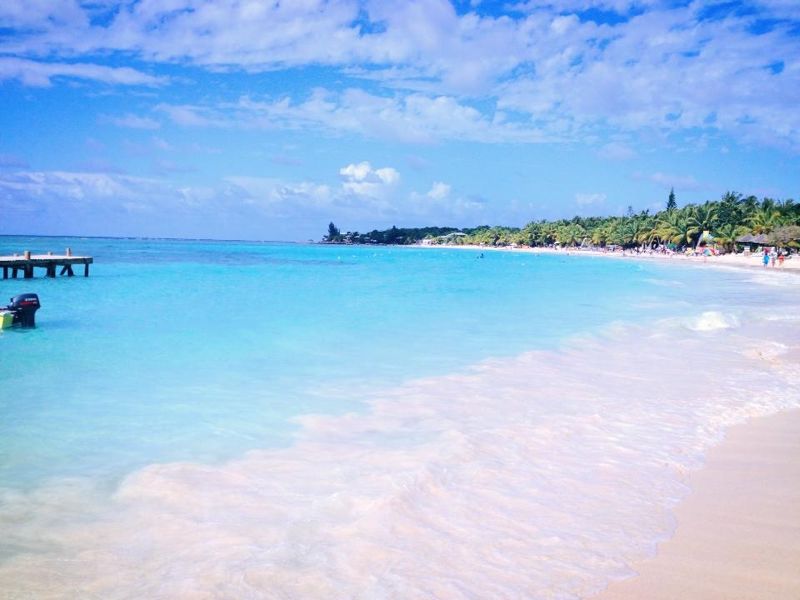
A 1.5-km arc of white sand 15 minutes from West End with calm shallow water, a reef accessible from shore, and the island's most developed beach bar infrastructure. Day-trip crowds from cruise ships are heaviest here in the morning; quieter in late afternoon.
The reef surrounding Roatán is part of the second-longest barrier reef in the world. Wall dives on the island's south side drop to 200+ feet past black coral trees, tube sponges, and sea fans. The north side has shallower coral gardens. Mary's Place (a crevice dive), CoCo View Wall, and Half Moon Bay are the most cited dives.
Roatán has the highest density of PADI dive training centers in the Western Caribbean, and certification costs significantly less than in the Cayman Islands or Belize. A standard Open Water course takes 3–4 days. West End's shallow reef is ideal for checkout dives. Expect to pay $250–350 USD all-in.
The most celebrated dive site on the island — a crevice in the reef wall that splits into a narrow shaft dropping 80+ feet, with black coral trees and tube sponges on the walls. Strong intermediate to advanced. Best dived with an experienced guide.
The largest Garifuna community on Roatán — a distinct Afro-Caribbean culture with its own punta music, food traditions, and language. Guided cultural tours are available from West End operators; visiting independently requires a car or collective taxi to the east end.
A dolphin research and conservation center at Anthony's Key Resort that offers supervised dolphin encounters with an educational component. More responsible than typical dolphin shows; the research component is genuine.
A small family-run iguana breeding and reintroduction operation that has become a quirky but genuinely interesting visitor attraction. The giant green iguanas approach visitors for banana offerings and photos. One of the island's few non-diving nature activities.
West End's social ritual — the stretch of waterfront bars (Sundowners, Blue Marlin, Cannibal Café) runs competing happy hour deals from 4–6 PM. Watching the sunset from a dock with a Salva Vida beer is the island's most universal experience.
The fishing village on the east end of the island — a water-based community where houses are built on stilts over the lagoon and the only way between houses is by boat. Completely different in character from West End; accessible by collective taxi or car.
Pick a neighborhood, not a hotel.
Roatán is a city of neighborhoods. The one you stay in shapes the trip more than the property does.
Different trips for different travelers.
Same city, very different stays. Pick the lens that matches your trip.
Roatán for beginner divers
Roatán is the Caribbean's best value for PADI Open Water certification — approximately $250–350 USD for the full course in world-class conditions. West End's 15+ dive shops compete on price and instruction quality. The shallow West Bay reef provides ideal checkout dive conditions.
Roatán for advanced divers
Mary's Place, the CoCo View Wall system, El Aguila wreck, and the consistently high visibility make Roatán a serious advanced dive destination. Live-aboard vessels depart from Roatán for multi-day reef explorations. Specialty courses (Nitrox, wreck, cavern, deep) are available from most West End operators.
Roatán for budget caribbean travelers
Roatán is among the most affordable genuine Caribbean island experiences available — lobster season (August–February) delivers fresh grilled lobster for $12–20 USD, dive certifications at half the Cayman price, and guesthouses for $40–70/night. The overall cost of a week's diving vacation is significantly less than equivalent Caribbean destinations.
Roatán for couples
West Bay's beach is excellent for sunset walks, and the dive culture creates a shared activity framework that non-Caribbean destinations can't offer. Many couples do their dive certification together in Roatán as a relationship milestone. The West End's evening social scene is relaxed without being loud or commercial.
Roatán for cultural travelers
The Garifuna communities at Punta Gorda and the east end represent one of the Caribbean's most distinctive Afro-Caribbean cultural traditions. Garifuna food, music (punta), and language are all accessible through guided cultural tours from West End operators or by driving east independently.
Roatán for long-stay expat and remote workers
Roatán has a significant expat and digital nomad community, particularly around West Bay and Sandy Bay. Long-term rental rates are very reasonable by Caribbean standards, and the island's infrastructure (good internet in West End and West Bay, reliable grocery supply, medical clinic in Coxen Hole) supports multi-month stays.
When to go to Roatán.
A quick year at a glance. Great, good, or skip — see what each month is doing before you book.
Wet season continues. Some rain but dry periods. Dive visibility good. Lobster season open — best value month for seafood.
Transition to dry season. Crowds building as winter travelers arrive. Lobster season ends February 28 — last month for in-season lobster.
Dry season officially begins. Visibility improving to 80–100+ feet. Cruise ships increasing. Spring break brings more visitors.
One of the best months — excellent visibility, comfortable temperatures, and fewer cruise ships than the Christmas peak. Easter week is busy.
Good diving conditions. Lobster season closed but wahoo and other sportfish peaking. Pre-summer pricing.
Dry season continues. Occasional afternoon showers don't significantly affect diving. Quieter and good value.
Often cited as the best dive month — exceptional visibility, warm water, and full reef activity. Caribbean summer adds US tourist traffic.
Hottest month. Lobster season reopens August 1 — significant restaurant event. Hurricane season begins but Roatán is rarely directly affected.
Hurricane risk highest. Roatán sits south of the main hurricane belt and is often unaffected when storms track north through the Caribbean. Lowest prices of year.
Lower risk than September. Visibility beginning to drop from summer highs. Very few tourists — genuinely quiet and very affordable.
Wet season begins. More rain but usually in afternoon concentrated bursts. Lobster season fully open. Dive visibility decent at 60–80 feet.
Christmas and New Year week is the peak demand period with the highest accommodation prices of the year. Book months ahead. Dive conditions acceptable.
Day trips from Roatán.
When you want a change of pace. Each one's a half-day or full-day out, easy from Roatán.
Utila
1 hour by ferry from La CeibaUtila is the other major Bay Island — smaller, cheaper, and known as the world's most affordable place to learn to dive. Whale shark encounters are Utila's specific claim to fame. Getting there from Roatán requires a flight or ferry to La Ceiba on the mainland and then the Utila Utila Dream ferry.
Cayos Cochinos (Hog Islands)
45 min by boatA protected marine reserve of small uninhabited cays 40 miles southeast of Roatán — among the most pristine Caribbean reef environments accessible from the Bay Islands. Day-trip boat tours from Roatán available through West End dive operators.
Copán Ruins
5 hours by car/bus from RoatánThe finest Maya stelae and hieroglyphic carving in Central America — the Hieroglyphic Stairway at Copán is the longest known pre-Columbian text. Getting from Roatán requires flying to San Pedro Sula and driving 3 hours, or taking a 2-day excursion. Best treated as a separate trip rather than a day trip.
Oak Ridge & East End
1 hour by collective taxiThe east end's fishing communities are a completely different Roatán from the dive village. The water-taxi system in Oak Ridge (small skiffs navigating between stilt houses over the lagoon) and the Garifuna community at Punta Gorda are accessible by collective taxi for $2–3 USD from Coxen Hole.
Sherman's Iguana Farm
20 min by carA family-run iguana breeding facility near Coxen Hole where hundreds of green iguanas roam freely and approach visitors for bananas. An unusual non-diving half-day from West End. More legitimate conservation enterprise than it looks.
West Bay Beach
15 min by golf cart or water taxiFor West End-based visitors, a half-day at West Bay Beach is an easy complement. Water taxis run frequently and cost $2–3 USD each way. Arrive after 1 PM when the cruise ship day-trippers are starting to head back to their boats.
Roatán vs elsewhere.
Quick honest reads on the cities people compare Roatán to.
Grand Cayman has better developed infrastructure, Stingray City, and a British-standards financial and tourism economy; Roatán offers comparable or superior wall diving at significantly lower prices, a more Caribbean-authentic atmosphere, and a less commercial dive culture. Budget travelers choose Roatán overwhelmingly.
Pick Roatán if: You want world-class diving at Caribbean prices rather than Caribbean diving at Cayman prices.
Belize has the Great Blue Hole and Lighthouse Reef Atoll, which are among the world's finest single dive sites; Roatán has more consistent wall diving, cheaper certification costs, and easier US flight connections. Both sit on the same Mesoamerican reef system. Belize is better for open water pelagics; Roatán for wall and reef fish diversity.
Pick Roatán if: You want the most Caribbean reef fish diversity and wall diving at the lowest cost, with direct US flights.
Isla Mujeres is closer to Cancun, calmer, better for beach-focused travelers, and has the MUSA underwater museum and whale shark season; Roatán has deeper wall diving, cheaper dive certifications, and a more established dive-village culture. Choose based on whether diving or beach life is the primary draw.
Pick Roatán if: Scuba diving and reef exploration are your primary motivation rather than beach and snorkeling from shore.
Utila is slightly cheaper, more backpacker-oriented, and known specifically for whale shark diving; Roatán is larger, has better infrastructure for non-divers and families, and has more diverse nightlife and dining. Utila is the purist budget dive destination; Roatán offers more complete island experience.
Pick Roatán if: You want a complete island with beach, culture, and diving rather than a single-minded dive camp atmosphere.
Itineraries you can start from.
Rough shapes for a trip here — a feel for the pace and cost. Find the one that fits you.
West End base. PADI Open Water course over 3.5 days. One exploration dive day post-certification. Half a day at West Bay beach. Happy hour every evening at Sundowners.
7 nights West End or West Bay. 14+ dives including Mary's Place, CoCo View Wall, and shallow reef gardens. One day exploring Garifuna east end. One West Bay beach afternoon. Nightly West End social scene.
10 nights with 4 days diving (advanced/specialty courses included), one day Oak Ridge and Garifuna cultural visit, one day inland forest hike, two complete rest days at West Bay. Best from April through August.
Things people ask about Roatán.
Is Roatán good for learning to dive?
Excellent — Roatán is one of the best and cheapest places in the Western Hemisphere to earn a PADI Open Water certification. The shallow reef around West End and West Bay provides perfect conditions for checkout dives, and the high concentration of certified instructors keeps prices competitive. A full Open Water certification including equipment, instruction, and four checkout dives runs approximately $250–350 USD — significantly less than the same course in the Cayman Islands, Belize, or the Florida Keys.
What is the Mesoamerican Barrier Reef?
The Mesoamerican Barrier Reef System runs approximately 700 miles along the Caribbean coasts of Mexico, Belize, Guatemala, and Honduras — the largest reef in the Western Hemisphere and the second-largest in the world after the Great Barrier Reef. Roatán sits at the reef's southern end where the system transitions from the shallow Belizean shelf to deeper Caribbean waters, producing dramatic wall dives on the island's south face.
What is the difference between West End and West Bay?
West End is the dive village — car-free, relatively rustic, lined with dive shops and affordable restaurants, and the social heart of the island. West Bay is a beach resort area 15 minutes away by golf cart or water taxi, with larger hotels, calmer water, and a more resort-style infrastructure. Most serious divers stay in West End; families and beach-focused travelers often prefer West Bay. A golf cart makes it easy to stay in one and visit the other.
How do I get to Roatán?
Juan Manuel Gálvez International Airport (RTB) on Roatán has direct flights from Houston (United), Atlanta (Delta), Miami (American), Dallas (American), and Charlotte, as well as from multiple Central American cities. Most US visitors connect through Houston or Miami. Flight times are 2.5–3 hours from major US hubs. The airport is at the west end of the island, convenient for both West End and West Bay bases.
Is Roatán safe for tourists?
The Bay Islands, including Roatán, have a significantly better safety record than mainland Honduras and are widely visited by US, Canadian, and European tourists. The dive-tourist economy depends on visitor safety, which motivates strong local investment in security. Standard tropical destination precautions apply: use hotel safes for valuables, avoid poorly lit areas after midnight, don't flash expensive equipment, and hire reputable local guides for off-the-beaten-track excursions. Review current State Department travel notices before travel.
What is the visibility like for diving in Roatán?
Visibility on the Roatán reef averages 60–100 feet year-round and frequently exceeds 100 feet in the dry season (March–October). The Caribbean's warm, clear water and the relative depth of the reef walls contribute to this consistency. The best visibility is typically March through July; November through February sees more plankton bloom activity that can reduce visibility, though it also brings more whale shark and whaleshark-associated marine life in some years.
What marine life can I see diving in Roatán?
The Roatán reef hosts exceptional Caribbean biodiversity. Regular sightings include Caribbean reef sharks, spotted eagle rays, Nassau grouper, moray eels (green, spotted, goldentail), turtle species (loggerhead, hawksbill), lionfish (an invasive species now hunted by dive operators), large schools of jacks and snappers, and the full range of reef fish including parrotfish, angelfish, and trumpetfish. Whale sharks are occasionally seen at certain times of year in open water.
What is the Garifuna culture on Roatán?
The Garifuna are descendants of indigenous Carib and Arawak peoples mixed with West African ancestry who were exiled by the British from St. Vincent to Belize and Honduras in 1797. Their communities at Punta Gorda and across the Honduras mainland have maintained distinct cultural traditions — punta music (a rhythmic drum-based genre), their own Arawak-derived language, cassava-based food traditions, and spiritual practices. UNESCO recognized Garifuna language, dance, and music as Intangible Cultural Heritage in 2001.
When do cruise ships affect Roatán?
Roatán is a major cruise port, with ships docking at the Mahogany Bay terminal near Coxen Hole — peak season December through April, with some ships year-round. On cruise days, West Bay and West End see a day-tripper surge from 9 AM to 5 PM. Divers who depart at 7–8 AM largely avoid the crowds. Staying overnight and diving early makes cruise days a non-issue.
What is the lionfish situation in Roatán?
Lionfish, an Indo-Pacific invasive that arrived via the aquarium trade in the 1990s, has impacted Caribbean reef ecosystems including Roatán. Dive operators actively hunt them during dives — it's encouraged, the fish are non-toxic when cooked, and most dive shops offer lionfish hunts as a specific activity. It's one of the few dive experiences where you actively help reef conservation and end the day with dinner.
Can you snorkel without scuba diving in Roatán?
Yes — the West Bay beach has a reef accessible from shore at about 50–100 feet from the sand in 10–15 feet of water, giving snorkelers access to coral heads and resident reef fish without a boat. The West End waterfront also has shore snorkeling access. Boat snorkel tours to better reef sections run $15–25 USD. The MUSA-equivalent underwater sculpture program is not available in Roatán, but the natural reef quality makes guided snorkel tours consistently rewarding.
What are the best dive sites in Roatán?
Mary's Place is the island's most celebrated dive — a south wall crevice dropping 80+ feet past black coral. Half Moon Bay wall has exceptional gorgonian fans at 50–80 feet. CoCo View Wall is known for nurse sharks and eagle rays. El Aguila is a colonized shipwreck at 100 feet. Calvin's Crack suits advanced divers. Lighthouse Reef off West Bay is the best shallow reef dive.
What food is typical in Roatán?
Roatán's food reflects its Caribbean and Garifuna heritage. Seafood dominates: grilled lobster (most abundant and cheapest May–November, when lobster season is open), fried whole fish, ceviche, and conch in various preparations. Rice and beans cooked in coconut milk is the daily staple. Baleadas — flour tortillas with beans, cheese, and cream — are the mainland Honduran contribution. The Garifuna cassava bread is a distinctive starch. Salva Vida and Imperial are the local beers, both remarkably good for the price.
Is Roatán good for families?
Yes — West Bay's calm beach water is safe for children, and many resorts have children's pools and family rooms. Snorkeling is accessible for children 8+. Sherman's Iguana Farm is a hit for families with younger children. The dolphin interaction at the Roatán Institute for Marine Sciences is popular with families (though opinions differ on swimming-with-dolphins programs). The island's relatively small scale prevents the overwhelm of large resort destinations.
What is the lobster season in Roatán?
Honduras's lobster season runs from August through February (closed March–July to protect breeding populations). When lobster is in season, it's abundant, fresh, and extraordinarily inexpensive by international standards — a whole grilled lobster at West End restaurants runs $10–20 USD. Many visitors specifically time Roatán trips to avoid the closed season (March–July) when lobster is either unavailable or imported.
How does Roatán compare to Belize for diving?
Both share the Mesoamerican Barrier Reef. Belize has the Great Blue Hole and Lighthouse Reef Atoll — arguably the Caribbean's finest atoll diving. Roatán is cheaper, has more direct US flights, and offers better wall diving and macro life on the south face. Belize wins for open-water pelagics and the Blue Hole experience; Roatán wins for value and consistent wall diving.
What should I know about the East End of Roatán?
The east end — Oak Ridge, Punta Gorda, and Camp Bay — is far less visited than West End. Oak Ridge is a fishing village on stilts over a lagoon where small boats navigate between homes. Punta Gorda is the main Garifuna community. Getting there requires a car or collective taxi (1 hour from West End) and rewards travelers who want cultural depth over dive shops.
Know someone headed to Roatán?
Send them this guide — real neighborhoods, timing, and prices, with nothing to sign up for.
Copies the link — nothing to install