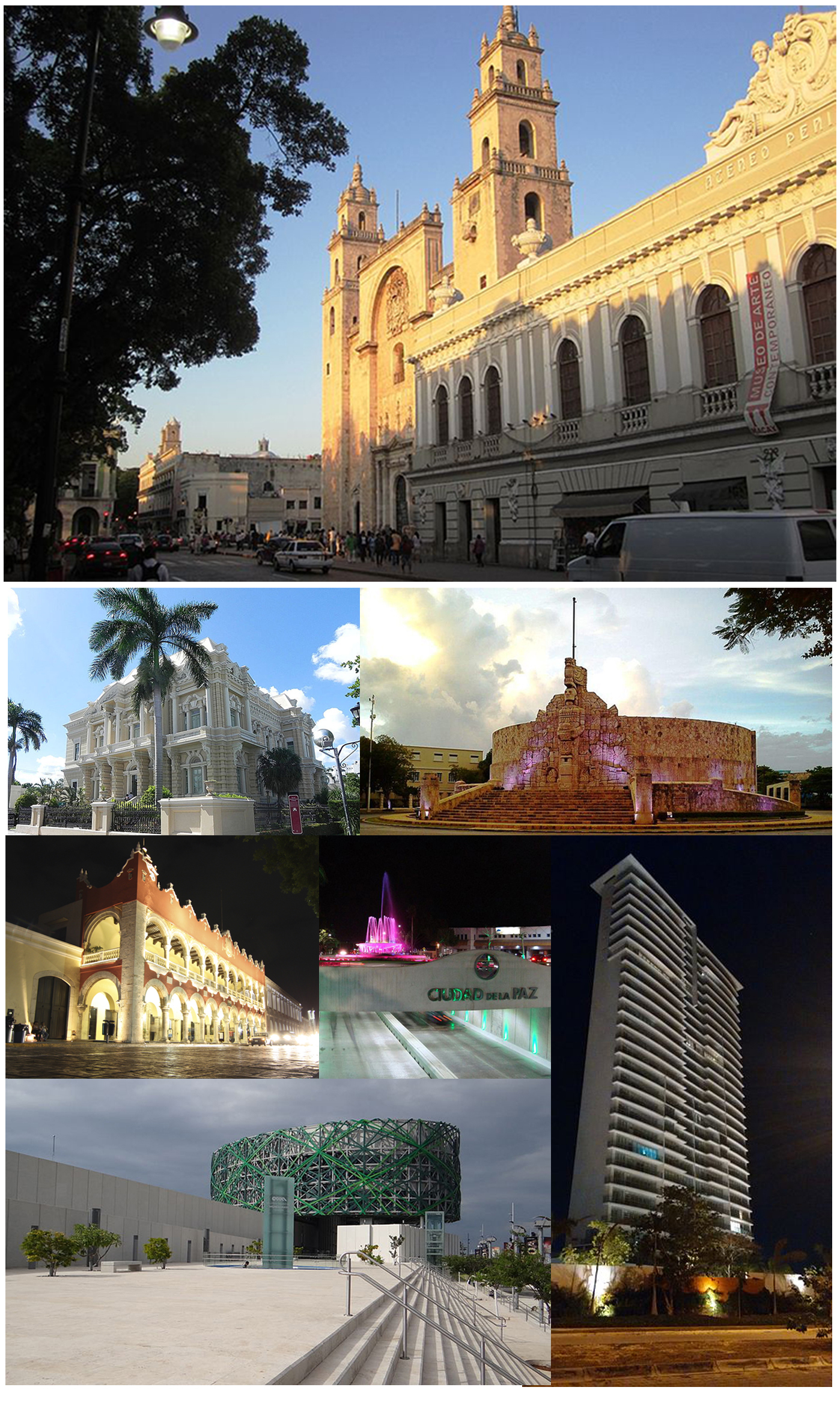
Mérida
Send it to whoever you'd travel with
Mérida is the Yucatán's colonial capital — a city of Moorish-influenced mansions, hammock sellers, and the best Yucatecan food in the country, positioned at the center of a Mayan archaeological universe that most beach tourists never reach.
Mérida has a claim on being Mexico's most underrated city. It is the capital of Yucatán state, the largest city on the peninsula, and the center of a cultural tradition — Yucatecan — that is distinct from Mexico City in the way that Lyon is distinct from Paris: slower, more local, more food-obsessed, and aware of its own identity in ways that more obvious cities often aren't. The street life begins before 7 AM and ends after midnight. The central plaza fills on Sunday evenings with Jarana dancing that has been going every Sunday for generations.
The food is the headline. Cochinita pibil — slow-roasted pork marinated in achiote and bitter orange, wrapped in banana leaves and cooked overnight in a pit — is the regional signature, and Mérida makes it better than anywhere else in Mexico. Sopa de lima is a citrus-forward chicken broth with fried tortilla strips. Papadzules are egg-stuffed tortillas in a pumpkin-seed sauce. Poc chuc is grilled marinated pork with pickled onions. None of these dishes translate well to restaurant chains or tourist-facing menus — find them at the mercado.
The Maya connection is not a tourist abstraction here. Mérida sits on top of a Mayan city — the stones of the ancient T'Hó were used to build the colonial cathedral and the mansions around the Plaza Grande. The Yucatán Peninsula has a higher proportion of indigenous Maya population than almost any other state in Mexico, and the cultural exchange between Mayan tradition and Spanish colonial legacy is visible on every block of the historic center. Chichen Itza, Uxmal, Kabah, and dozens of smaller sites are within day-trip range.
The practical argument for Mérida over Cancún or Tulum as a Yucatán base: cenotes are accessible by taxi or organized tour, Mayan ruins are in every direction, Chichen Itza is 1.5 hours east, Uxmal is 1 hour south, and the city itself has more genuine restaurants and cultural life per square kilometer than anywhere on the Caribbean coast. It is also significantly cheaper.
The practical bits.
- Best time
-
November – FebruaryNovember through February is Mérida's cool, dry season — temperatures stay below 30°C, humidity is bearable, and outdoor walking and dining are genuinely pleasant. March and April heat up considerably (35–38°C); May through October adds humidity and rain. The festival calendar peaks in winter: November's Day of the Dead and the Mérida International Film Festival, January's Mérida en Domingo celebrations.
- How long
-
4 nights recommendedTwo nights covers the historic center, a market visit, and one cenote or ruins day trip. Four nights is the natural fit — adds Chichen Itza, Uxmal, and a full market and food exploration. Seven nights makes Mérida a regional hub for Yucatán Peninsula exploration.
- Budget
-
$110 / day typicalOne of Mexico's best-value major cities. Budget hotels in the historic center run $30–60/night. A full cochinita pibil lunch at the market is $6–10. Mid-range restaurants charge $12–25 for a full meal. Day trips to Chichen Itza via organized tour run $60–90 including transport and entry.
- Getting around
-
Walking in the center, taxis for day tripsThe historic center is flat and highly walkable — the Plaza Grande, the cathedral, the market, and most restaurants are within 15 minutes on foot. Taxis are cheap and metered (or fixed-rate for known routes). Uber operates in Mérida. Day trips to Chichen Itza or Uxmal typically use organized tours or rental car; the bus system (ADO) reaches Chichen Itza in 1.5 hours for $8–10.
- Currency
-
Mexican Peso (MXN) · USD rarely accepted outside of tourist-facing hotelsCards accepted at hotels and mid-range restaurants. Cash (pesos) essential for the market, street food, and smaller establishments. ATMs are plentiful near the Plaza Grande.
- Language
- Spanish. English is spoken at tourist-facing hotels and some restaurants; much less in the market, residential neighborhoods, and outside the tourist center. The Mayan language Yucatec Maya is still spoken by a significant portion of the population — particularly in the surrounding villages and rural areas.
- Visa
- US, Canadian, EU, and UK citizens enter Mexico visa-free for up to 180 days.
- Safety
- Mérida is consistently ranked one of the safest large cities in Mexico. The historic center is well-patrolled and crime against tourists is rare. Standard precautions apply: street smarts, no display of expensive items. The surrounding region (Yucatán state as distinct from Quintana Roo) has a significantly lower crime profile than the Caribbean coast.
- Plug
- Type A/B · 127V — same as the US.
- Timezone
- CST · UTC−6 (Yucatán state does observe CDT in summer, unlike Quintana Roo)
A few specific picks.
Hand-picked, not algorithmic. Each of these has earned its space.
Mérida's main market — a vast indoor-outdoor space with cochinita pibil vendors, fresh fruit, spice sellers, and the specific chaos of a working Yucatecan market. The food section at the back of the building has stands serving sopa de lima, poc chuc, and fresh tortillas. Go for breakfast or lunch; bring pesos.
The most significant Mayan archaeological site in Mexico and a UNESCO World Heritage Site. El Castillo (the main pyramid) is the famous image; the Ball Court, the Temple of the Warriors, and the Sacred Cenote round out a site that takes 3–4 hours to cover properly. Go at opening to beat the crowds and the heat. Noon at Chichen Itza in summer is exhausting.
The central plaza — cathedral on the east, government buildings on the north, the Casas de Montejo on the south. Sunday evenings the plaza fills with Jarana dancing (a regional folk tradition dating to colonial times) and food stalls. The evening is free and genuinely local — not a tourist performance.
The most architecturally refined Mayan city in the Yucatán, and arguably more impressive than Chichen Itza despite fewer visitors. The Pyramid of the Magician, the Governor's Palace, and the Nunnery Quadrangle represent Puuc-style Mayan architecture at its best. The evening light-and-sound show is optionally cheesy.
The grand 19th-century boulevard lined with Beaux-Arts and Art Nouveau mansions built by henequen (sisal hemp) plantation owners during Mérida's gilded age. The Museo Palacio Cantón occupies one of the finest mansions and covers Mayan archaeology well. The weekend artisan market along the paseo runs Sunday mornings.
Two cenotes under one roof just outside Valladolid — the more famous Xkeken has a narrow sky opening illuminating the pool with a shaft of light. Smaller and more intimate than the large open-air Tulum cenotes. En route to or from Chichen Itza.
A working hacienda turned restaurant serving Yucatecan classics in a Colonial-era setting with garden seating. The cochinita pibil, lime soup, and papadzules here are the benchmarks. Lunch only. The drive east on the old Camino Real passes other haciendas worth a slow cruise.
A smaller Mayan site 15 minutes outside the city — the Temple of the Seven Dolls is aligned with the rising sun on the equinoxes. Has a swim-in cenote on-site (Cenote Xlacah) that is one of the most accessible cenote swims from the city. Good for a half-morning when you don't want a full day trip.
The most recommended sit-down Yucatecan restaurant in the historic center — reliable versions of all the classics, a clean environment, and staff who can explain the dishes. The tourist-facing menu works in its favor: the food is consistently good rather than market-level spectacular.
One of the oldest cathedrals in the Americas (completed 1598), built using stones quarried from the demolished Mayan city of T'Hó. The interior is notably austere — most of the original decoration was stripped during the Mexican Revolution. The Cristo de las Ampollas sculpture, salvaged from a church fire, is in the main chapel.
Pick a neighborhood, not a hotel.
Mérida is a city of neighborhoods. The one you stay in shapes the trip more than the property does.
Different trips for different travelers.
Same city, very different stays. Pick the lens that matches your trip.
Mérida for history and archaeology travelers
Mérida is the optimal base for Mayan archaeology — Chichen Itza, Uxmal, the Puuc Route, Dzibilchaltún, and the Mayan heritage museum are all within range. The city itself is built on a Mayan city and the cultural museum at the Palacio Cantón is among Mexico's best.
Mérida for food travelers
Yucatecan cuisine is distinct from all other Mexican regional traditions — cochinita pibil, sopa de lima, papadzules, and poc chuc can only be properly eaten here. The market is the non-negotiable starting point; the hacienda restaurants and newer creative places give depth.
Mérida for solo travelers
Mérida's plaza culture and weekly community events (Sunday Jarana, Thursday serenata) make it naturally social for solo visitors. The historic center is compact and safe; day trips by ADO bus are straightforward without a car. Genuinely one of the more rewarding solo destinations in Mexico.
Mérida for budget travelers
Mérida is one of Mexico's best-value cities. Budget hotels in the historic center run $25–50/night. Market meals cost $5–10. Day trips by public bus are $15–25 round trip. The Sunday Jarana, the cathedral, and the Paseo de Montejo are all free.
Mérida for cultural travelers
The Mayan cultural context — the cathedral built on a Mayan city, the hammock tradition, the Jarana, the hacienda plantation history — gives Mérida more historical layering than any purely beach destination. The Taller de Henequén and Museo de Cultura Maya are the best entry points.
Mérida for couples
Mérida's boutique hotels in renovated colonial mansions, the candlelit evening restaurants on Calle 60, and the romantic setting of Uxmal's Puuc ruins at sunset make it an unexpectedly strong couples destination — particularly for those who want culture alongside relaxation.
When to go to Mérida.
A quick year at a glance. Great, good, or skip — see what each month is doing before you book.
Best weather of the year. Dry season in full effect. Low humidity. Comfortable for walking and ruins visits.
Similar to January. Carnival celebrations in late February with traditional music and dancing in the plazas.
Spring equinox shadow on Chichen Itza's El Castillo draws large crowds around March 21. Heat building.
Hottest dry season month. Ruins visits require early starts and shade by noon. Still manageable with planning.
Extreme heat. Rains beginning late month. Not comfortable for extended outdoor exploration.
Afternoon rain provides some relief from heat. Ruins visited early morning or after rain. Lower hotel rates.
Heaviest rains. Mexican domestic tourism. Hot and wet — not ideal for most visitors.
Similar to July. Some hotel and tour operator discounts. Cenotes are refreshing in the heat.
Quietest and cheapest month. Rain most afternoons. Mexican Independence Day on 16th celebrated locally.
Rain reducing. Flamingo season begins at Celestún. Cooler evenings starting.
Dry season returning. Day of the Dead celebrations in the city and surrounding villages. One of the best cultural months.
Christmas season adds posadas and plaza events. Holiday week pricing somewhat elevated. Otherwise ideal.
Day trips from Mérida.
When you want a change of pace. Each one's a half-day or full-day out, easy from Mérida.
Chichen Itza
1.5 hours eastADO bus ($8–12) or organized tour ($60–90 including guide and entry). Arrive at 8 AM opening. The Ball Court, the Temple of Warriors, and the Sacred Cenote are as significant as El Castillo. Combine with Cenote Dzitnup and Valladolid for lunch on the return.
Uxmal
1 hour southThe Puuc Route's flagship site — the Pyramid of the Magician and the Governor's Palace are architectural masterworks. Afternoon light on the stone mosaics is exceptional. The light-and-sound show in the evening is optional. Can combine with Kabah (45 min farther south) for a full Puuc Route day.
Cuzamá Cenotes
45 min southeastThe most characteristically Yucatecan cenote experience — horse-drawn flatcars on old henequen railway tracks between three underground cenotes. Swim in all three with a ladder descent. Go mid-week to avoid weekend crowds. Best arranged through a local guide or tour operator.
Celestún Flamingo Reserve
1 hour westA fishing village on the Gulf Coast where thousands of American flamingos feed in the estuary. Boat tours from the bridge take you among the pink flocks. Best October through March when flamingos are in peak numbers. The beach at Celestún is a local weekend destination.
Valladolid
1.5 hours eastA well-preserved colonial city between Mérida and Chichen Itza. Cenote Zaci is in the city center. Cenotes Dzitnup and Samulá are 5 km south — walk-in underground pools with stalactites. The central market is excellent for lunch. Often combined with Chichen Itza.
Dzibilchaltún
15 min northThe most accessible Mayan ruins from Mérida, with the bonus of Cenote Xlacah on-site for swimming. The Temple of the Seven Dolls frames the rising sun perfectly on the equinoxes. Good half-morning option without committing to a full day trip.
Mérida vs elsewhere.
Quick honest reads on the cities people compare Mérida to.
Both are colonial Mexican cities with strong regional food traditions and nearby archaeological sites. Oaxaca is the more globally celebrated — mezcal, Day of the Dead, Monte Albán, mole — while Mérida has a stronger Mayan cultural connection and better beach proximity. Both reward at least 4 nights.
Pick Mérida if: You want Yucatecan Mayan context, cenotes, and Caribbean coast proximity alongside the colonial city.
Playa is a beach-primary Caribbean resort town; Mérida is an inland colonial capital. Mérida has better food, more cultural depth, and closer proximity to Uxmal. Playa has the beach, Cozumel diving, and Caribbean coast. Serious travelers often combine both.
Pick Mérida if: You want Yucatán's cultural and archaeological depth rather than a beach-and-dive base.
Mexico City is the overwhelming capital — museums, food scene, art, architecture, and scale that makes everything else in Mexico seem provincial. Mérida is quieter, more manageable, regionally distinct, and has a cultural identity that doesn't apologize for not being CDMX.
Pick Mérida if: You want a concentrated, navigable Mexican city with strong regional identity rather than the capital's overwhelming scale.
Both are colonial Latin American cities with colorful architecture, strong regional food, and Caribbean coast proximity. Cartagena is hotter, more visited, more expensive, and in Colombia. Mérida is slightly cooler seasonally, cheaper, and has the Mayan archaeological universe behind it.
Pick Mérida if: You want Mexico's Mayan colonial city over Colombia's Spanish Caribbean colonial city.
Itineraries you can start from.
Rough shapes for a trip here — a feel for the pace and cost. Find the one that fits you.
Historic center walk. Market breakfast. Dzibilchaltún half-morning. Chichen Itza full day. Sunday Jarana if timing allows.
Chichen Itza day (east). Uxmal day (south). Cenote swim at Dzitnup or Celestún flamingos day. City food exploration. Hacienda Teya lunch.
Four nights Mérida: ruins, haciendas, cenotes. Rent a car and drive east to Valladolid overnight. Day at Chichen Itza, continue to Playa del Carmen for two nights before flying home from Cancún.
Things people ask about Mérida.
What is Mérida known for?
Yucatecan cuisine (cochinita pibil, sopa de lima, papadzules), colonial architecture, proximity to Chichen Itza and Uxmal, the Paseo de Montejo mansion boulevard, and a Sunday plaza culture that has been continuous for centuries. It is also the gateway to the Yucatán's cenote belt and the Puuc Route of Mayan archaeological sites.
What is cochinita pibil and where should I eat it?
Cochinita pibil is slow-roasted pork marinated in achiote (annatto) paste and bitter orange juice, wrapped in banana leaves, and traditionally cooked overnight in an underground pit (pib). The result is deeply tender, subtly spiced, and rust-red. Eat it at the Mercado Lucas de Gálvez from the market stalls at breakfast (10 AM to noon is the prime window), or at Hacienda Teya for a more comfortable setting. Avoid versions made outside the Yucatán — the dish depends on the local bitter orange that doesn't grow elsewhere.
How far is Mérida from Chichen Itza?
About 200 km east, approximately 1.5 to 2 hours by car or ADO bus. The ADO bus runs multiple times daily from the main bus terminal and costs $8–12 each way. Organized tours from Mérida include transport, guide, and entry for $60–90. A rental car allows you to stop at Valladolid and Cenote Dzitnup en route, making it the most flexible option.
When is the best time to visit Mérida?
November through February. Temperatures stay below 30°C, humidity drops, and the city's outdoor culture — plaza life, pedestrian streets, terrace dining — is fully pleasant. March through May gets very hot (35–38°C); June through October adds rain and high humidity. The Day of the Dead celebrations in early November are worth planning around.
Is Mérida safe?
Mérida is consistently rated among the safest large cities in Mexico by multiple indices. Crime against tourists is rare. The historic center is well-patrolled. Yucatán state has a significantly different security situation from Quintana Roo (the Caribbean coast state) or Mexico City. Walk freely in the central zone, use normal urban awareness in less-familiar neighborhoods.
Can I visit cenotes from Mérida?
Yes — multiple cenote options are accessible by taxi, organized tour, or rental car. Dzibilchaltún (15 minutes north) has Cenote Xlacah, a large open-air swim cenote on a Mayan site. The Cuzamá cenote route (45 minutes southeast) offers a series of underground cenotes accessed by horse-drawn cart along old henequen railway tracks — a distinctly Yucatecan experience. Cenotes near Valladolid (Dzitnup, Samulá) are 1.5 hours east.
What is the difference between Chichen Itza and Uxmal?
Chichen Itza is the most famous Mayan site in Mexico and draws the largest crowds — it is busiest from 10 AM to 2 PM. El Castillo is the defining image; the site mixes Mayan and central Mexican architectural influence. Uxmal is smaller, less crowded, and represents the Puuc architectural style in its purest form — more refined stone mosaic work, less overtly monumental. Archaeology enthusiasts often prefer Uxmal; first-time visitors go to Chichen Itza.
What is Yucatecan food and how is it different from Mexican food?
Yucatecan cuisine developed in relative isolation from the rest of Mexico, shaped by Mayan tradition, Spanish colonial influence, and Lebanese immigration in the early 20th century (which is why you'll find shawarma-style cochinita and kibbeh-style meatballs). Key ingredients: achiote (annatto seed paste for color and flavor), bitter Seville oranges, habanero chile (used for heat, distinct from the chiles of central Mexico), chaya (a local leafy green), and pumpkin seeds. The food is not as chile-forward as Oaxacan or central Mexican cooking.
Is Mérida walkable?
The historic center is highly walkable — flat, compact, and with the major attractions within 20–30 minutes on foot. The Paseo de Montejo requires a 15-minute walk north from the Plaza Grande or a short cab ride. Beyond the historic center, Mérida sprawls and is not pedestrian-friendly — taxis are the practical solution.
What is the Cuzamá cenote experience?
Cuzamá, about 45 km southeast of Mérida, offers a series of underground cenotes (typically two or three visited in sequence) accessed by riding a flat-bed cart along old henequen railway tracks pulled by a horse. The cenotes are intimate, ladder-descended pools with crystalline water and stalactite formations. The horse-cart transport through former plantation land is the most distinctly Yucatecan tourism experience on the peninsula.
What is the Sunday Jarana in Mérida?
Every Sunday evening, the Plaza Grande hosts a free public Jarana — a regional folk dance tradition dating to the colonial period, with regional music (tunkules drums, marimbas), traditional dress, and open dancing on the plaza. It is not a tourist performance arranged for visitors; it is a weekly community event that happens to attract them. Local families bring chairs, children dance, and the plaza fills with a crowd that has been doing this every Sunday for generations.
What is the Ruta Puuc and is it worth visiting?
The Puuc Route is a circuit of Mayan archaeological sites in the hills south of Mérida — Uxmal, Kabah, Sayil, Xlapak, and Labná — connected by a two-lane road. Most visitors have only time for Uxmal (the most significant). A full day with a rental car can cover two or three sites. The Kabah Arch and Sayil's three-story palace are particularly impressive for the Puuc architectural style.
Is Mérida good for solo travelers?
Excellent. The central zone is compact and safe, the plaza culture makes social interaction natural, and the bus and tour system makes day trips straightforward without a car. The serenatas at Santa Lucía Park (Thursday evenings) and the Sunday Jarana are specifically the kinds of community events that solo travelers can attend and feel part of rather than separate from.
What is Mérida's gay scene like?
Mérida has a visible LGBTQ+ community and several gay-friendly bars and clubs concentrated in the Barrio de Santiago and around Calle 60. The scene is more locally-oriented than internationally tourist-facing. Mérida has had public gay pride events for many years and the local government has been broadly supportive. It is one of Mexico's more welcoming mid-size cities for LGBTQ+ travelers.
What markets and crafts should I look for in Mérida?
Hammocks are Mérida's most celebrated craft — the Yucatán is the world's hammock-making capital, and the market has vendors whose families have been making them for generations. Buy from artisans rather than from tourist shops: the fabric is cotton or nylon, woven by hand, and a quality hammock supports your full weight at multiple attachment points. Huipil embroidered blouses, woven palm hats (jipijapa, the original 'Panama hat'), and achiote paste are other Mérida-specific buys.
Where should I eat in Mérida besides the market?
La Chaya Maya (historic center, reliable Yucatecan classics). Hacienda Teya (15 min east, best cochinita outside the market). Rosas & Xocolate hotel restaurant for upscale Yucatecan. Apoala (for a creative take on regional ingredients). The Progreso beach town, 36 km north, is worth the Sunday trip for fresh mariscos (seafood) at a fraction of Cancún prices.
How do I get to Mérida from Cancún?
ADO bus from Cancún Terminal to Mérida runs multiple times daily — approximately 4 hours, $25–35. Rental car takes 3.5–4 hours on the cuota (toll) highway ($15–20 in tolls). Flights from Cancún to Mérida exist but are short-haul; the bus is more practical unless you're flying out of Mexico City and connecting. Mérida's airport (MID) has direct flights from Houston, Miami, and a handful of other US cities.
What is henequen and why does it matter in Mérida?
Henequen is a species of agave whose fibrous leaves were processed into sisal rope — a globally important industrial material before synthetic alternatives. From roughly 1880–1940, the Yucatán produced most of the world's henequen and the henequen plantation owners ('caste war' victors who used essentially enslaved Maya labor) built the mansions of the Paseo de Montejo with the profits. The abandoned haciendas around Mérida are a direct legacy of that era — some converted to hotels, some in ruins.
Know someone headed to Mérida?
Send them this guide — real neighborhoods, timing, and prices, with nothing to sign up for.
Copies the link — nothing to install