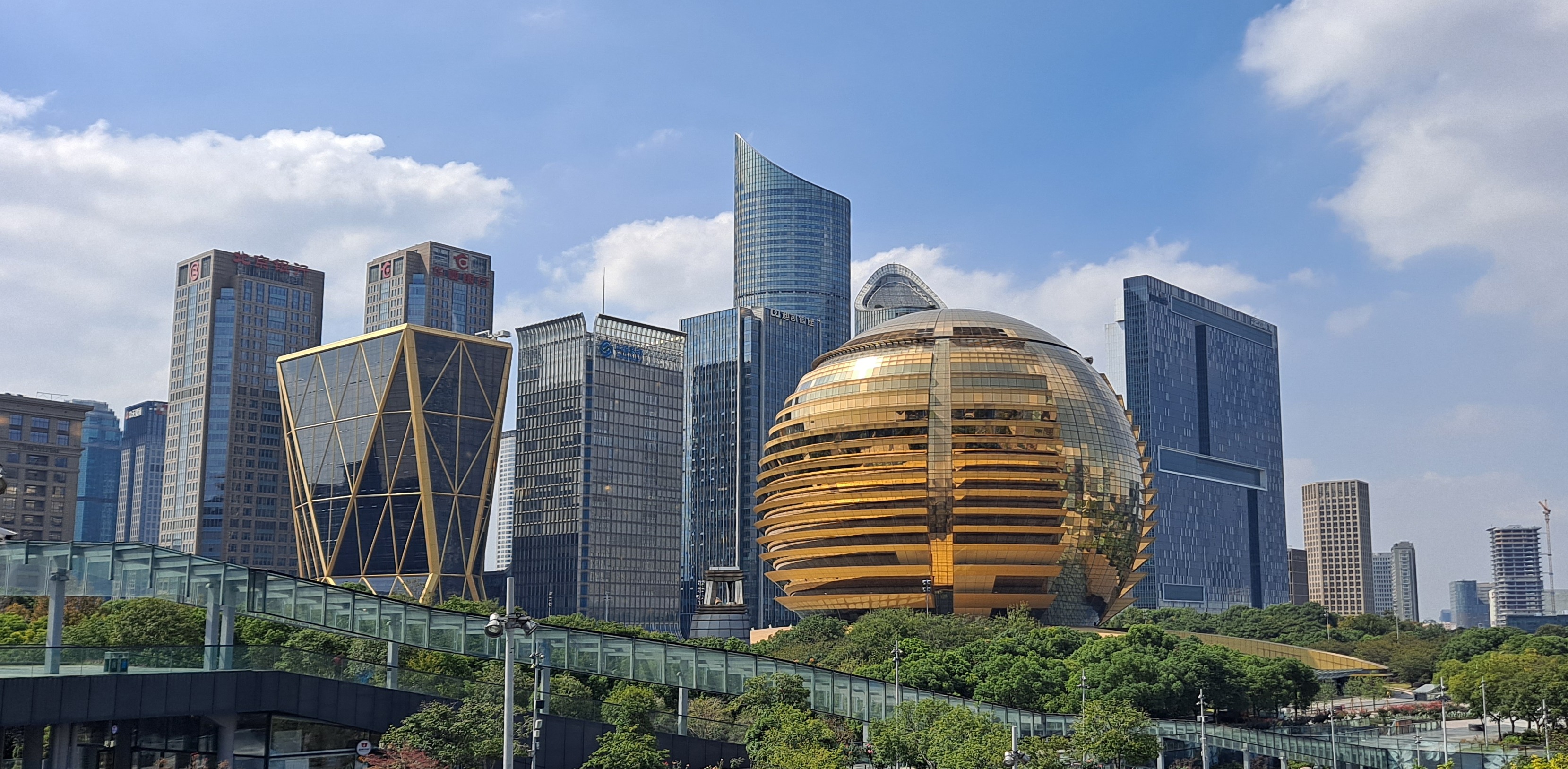
Hangzhou
Send it to whoever you'd travel with
Hangzhou is the city that Marco Polo called the finest in the world — and while the claim needs context, West Lake at dusk, surrounded by pagodas and causeways and the first sip of locally-grown Longjing tea in a pavilion above the water, makes you understand why someone would say it.
Hangzhou is the kind of Chinese city that makes you reconsider your assumptions about what the country's urban landscape can look like. The Yangtze Delta is dense with manufacturing cities and administrative centers, but Hangzhou has something almost none of them have: a center organized around beauty rather than productivity. West Lake (Xi Hu) is not a park next to a city; it is the reason the city exists where it does.
The lake was declared a UNESCO World Heritage Cultural Landscape in 2011 — not as a natural site, but specifically as a cultural landscape, meaning the causeways, pagodas, pavilions, and garden islands that were constructed and curated over 1,000 years are the thing being protected. The Song Dynasty emperors made Hangzhou their capital from 1127 to 1276, and the aesthetic sensibility of that period — ink wash paintings, celadon ceramics, classical gardens — saturates the physical environment in ways that are still legible today.
Longjing (Dragon Well) tea is the other organizing pillar. Grown in the hills immediately west of the lake, picked before Qingming Festival in early April, and hand-roasted in iron woks, Longjing is China's most famous green tea and one of the world's finest. The village of Longjing Cun (Dragon Well Village) sits in the tea-covered hills 15 minutes from the lake. Arriving at a tea farmer's home, watching the spring leaves being roasted, and drinking the tea at a table overlooking the plantation — this is an experience with almost no equivalent simplicity elsewhere.
Hangzhou is also 45 minutes from Shanghai by high-speed rail, which makes it the most accessible great classical Chinese city from the country's international hub. Many travelers who come to Shanghai on business or leisure take the train west for a night or two and come back with a perspective on China that the Shanghai Bund entirely fails to provide.
The practical bits.
- Best time
-
March – May · September – NovemberSpring (March–May) brings willows budding along the causeways, pre-Qingming Longjing tea season (March–early April), and comfortable temperatures. September–November has clear skies, lower humidity, and the autumn colors around West Lake. Summer (June–August) is hot (35–38°C), humid, and rainy — but West Lake in morning mist after rain is atmospheric. January–February is cold (3–8°C) with occasional clear, uncrowded days.
- How long
-
2 nights recommended1 night from Shanghai: West Lake afternoon and morning. 2 nights: adds Longjing Village, Lingyin Temple, and a full lake circuit. 3–4 nights: adds the Grand Canal, Nanshan Road evening scene, and the National Tea Museum.
- Budget
-
$130 / day typicalWest Lake entry is free. Lingyin Temple charges 30 CNY. A simple lakeside noodle lunch costs 30–50 CNY; a good Hangzhou cuisine restaurant runs 150–350 CNY per person. Mid-range hotels on the lake perimeter cost $100–180/night. The Amanfayun and Four Seasons Westlake (on Longjing Road) are landmark luxury properties at $500–1,200/night.
- Getting around
-
Metro, DiDi, and lakeside bicyclesHangzhou Metro lines 1, 2, and 4 cover the main tourist areas including the train station, West Lake (Longxiang Bridge station), and Lingyin Temple corridor. DiDi (China's Uber equivalent) works without a Chinese phone number — download the international version before arriving. The city operates a free public bicycle system (Meituan Bike/Hello Bike) around the lake; the West Lake cycling path is one of the great urban bike routes in Asia.
- Currency
-
Chinese Yuan (CNY / RMB) · 1 USD ≈ 7.1–7.3 CNY (2025)China operates a QR code payment ecosystem (Alipay and WeChat Pay) that has replaced cash for most transactions. Foreigners can now link international Visa/Mastercard to Alipay's international version. Cash (CNY) is still accepted at most places but increasingly avoided. Your hotel can usually help set up payments. International cards directly accepted at major hotels and some restaurants.
- Language
- Mandarin Chinese. English is spoken at major hotels, some tourist sites, and by educated younger residents, but Hangzhou is less international-facing than Shanghai or Beijing. Download the DeepL app for offline translation; the camera translation function is essential for menus. WeChat translation function works when connected.
- Visa
- China Visa required for most non-Chinese travelers. Apply through your country's Chinese embassy or consulate: tourist visa (L visa) takes 4–10 business days, costs $140–185 depending on nationality and processing speed. China has expanded its visa-free policy for short stays for some nationalities in 2024–2025 — check current exemptions before applying. A Hong Kong/Macau transit does not count as a China visa.
- Safety
- Hangzhou is among China's safest cities — violent crime against tourists is extremely rare. Main considerations: traffic (electric scooters and bikes run silently at speed), phone connectivity (most foreign apps including Google Maps, WhatsApp, and Instagram are blocked — download VPN and offline maps before arriving), and the cashless economy (sort out your Alipay setup before you need it).
- Plug
- Type A / C / I · 220V — China uses a hybrid socket that accepts both flat US-style (Type A) and angled Australian-style (Type I) plugs. Most travelers bring a universal adapter.
- Timezone
- CST · UTC+8
A few specific picks.
Hand-picked, not algorithmic. Each of these has earned its space.
UNESCO Cultural Landscape. The full 15km perimeter walk or bike ride takes 3–4 hours; the Bai Causeway and Su Causeway cut across the water and are the primary routes. Sunrise from the Broken Bridge at Bai Causeway is one of China's great light photography moments. Sunset boat on the lake is 80–120 CNY per person.
The source of China's most famous green tea, 15 minutes west of the lake by DiDi. Arrive at a tea farmer's home (roadside signs offer 'free tea tastings' — they're commission-selling, but the tea experience is real), watch the roasting process, and buy directly from the producer in the spring season (March–April). Best tea of your life, or close.
One of China's largest and most active Buddhist temples, set in a forested valley. The main hall's 33-meter Maitreya Buddha (rebuilt in 1956) is extraordinary in its scale. The Feilai Feng grottos opposite the temple — 470 stone-carved Buddhist figures from the 10th–14th centuries — are the more historically interesting attraction.
A genuinely good museum on the 5,000-year history of Chinese tea culture — cultivation, processing, ceremony, and trade. Surrounded by tea gardens; free entry (small charge for guided tastings). Best combined with a Longjing Village visit. 20 minutes southwest of the lake.
The 2.8km causeway bisecting West Lake, built by the poet-administrator Su Dongpo in the 11th century and lined with willows, lotus, and six arched bridges. Walking it at 6:30 AM, before the tour groups arrive, is the most peaceful urban hour in Hangzhou.
Founded 1848 on the lake's Solitary Hill island, Lou Wai Lou is Hangzhou's most storied restaurant. The dongpo pork (red-braised pork belly named for the poet Su Dongpo), West Lake vinegar fish (fresh carp in sweet-sour sauce), and Beggar's Chicken (whole chicken baked in lotus leaves and clay) are the reference preparations of Hangzhou cuisine.
The rebuilt pagoda on the southern hill of West Lake — the original Song-dynasty pagoda collapsed in 1924; the current structure (2002) incorporates the bronze archaeological ruins of the old foundations. The elevator or stairs give the best bird's-eye view of the lake's geometry. 40 CNY entry.
Hangzhou's silk production history spans 2,400 years; the China Silk Museum is the national institution documenting the tradition. The looms, the cocoon-to-cloth progression, and the historical garment collection are genuinely absorbing. Free entry; 3 km south of the lake.
The old commercial pedestrian street of Hangzhou — traditional pharmacy buildings, silk shops, street snack vendors, and the former Hu Qing Yu Tang pharmacy (founded 1874, now a museum and still-operating traditional Chinese medicine store). The best place for street food: shengjianbao (pan-fried dumplings), stinky tofu, and osmanthus-flavored sweets.
Hangzhou is the southern terminus of the Grand Canal — the world's longest canal system, begun in the 5th century BC. The Gongchen Bridge area has an old warehouse district converted into a cultural park. Evening boat tours on the canal are 50–80 CNY and give a water-level view of the historical transition from old Hangzhou to new.
Pick a neighborhood, not a hotel.
Hangzhou is a city of neighborhoods. The one you stay in shapes the trip more than the property does.
Different trips for different travelers.
Same city, very different stays. Pick the lens that matches your trip.
Hangzhou for first-time china visitors from shanghai
The 45-minute train and completely different aesthetic register makes Hangzhou the ideal complement to Shanghai. Two nights in Hangzhou alongside 3 nights in Shanghai gives a more complete picture of Chinese civilization than either city alone.
Hangzhou for tea travelers
Longjing Village in spring (March–early April) is one of the world's definitive tea pilgrimage sites. Combine with the National Tea Museum and a session with a tea master in a lakeside pavilion. The timing with the ming qian harvest is specific and worth planning around.
Hangzhou for landscape and photography travelers
West Lake in morning mist after rain, the broken bridge at dawn, autumn reflections in the Su Causeway willows — Hangzhou has supplied Chinese visual culture with imagery for 1,000 years for reasons that remain legible with a camera in hand.
Hangzhou for architecture and classical culture
The Song Dynasty aesthetic that Hangzhou preserves is the defining moment of Chinese classical civilization — the tea ceremony, ink painting, celadon pottery, and garden design all crystallized here in the 10th–13th centuries. The lake's constructed landscape is the direct expression of that aesthetic.
Hangzhou for business travelers visiting the alibaba campus
Hangzhou is Alibaba's headquarters and a significant tech hub. The Xixi area (west of the lake) hosts the main campus; Qianjiang New City has the modern business hotel cluster. The combination of Alibaba's presence and West Lake's proximity makes Hangzhou the most interesting Chinese business-travel city after Beijing and Shanghai.
Hangzhou for couples
West Lake at dusk, a boat ride to the Three Pools Mirroring the Moon island, a Longjing tea house above the plantation, and a Hangzhou cuisine dinner at Lou Wai Lou. Few Chinese cities have assembled this combination of setting and food quality in a compact area.
When to go to Hangzhou.
A quick year at a glance. Great, good, or skip — see what each month is doing before you book.
Quiet and uncrowded. West Lake in winter mist is beautiful if cold. Chinese New Year (Jan/Feb) sees domestic tourism spike.
Plum blossom season at Gushan Hill near Bai Causeway. Spring Festival (Chinese New Year) brings local closures and crowds.
Early Longjing tea harvest begins. Willows budding along causeways. One of the best months.
Pre-Qingming Longjing harvest (first week of April) is the tea year's climax. Perfect weather. Domestic crowds rise for the holiday.
Lotus beginning to emerge on the lake. Excellent weather before summer humidity arrives.
Humidity very high. Plum rain season makes outdoor activity less pleasant but the lake in mist is atmospheric.
Peak lotus season on the lake — extraordinary midsummer landscape. Heat and humidity are real challenges.
Similar to July. The lake is very busy with domestic summer tourists. Cool evenings on the water.
Osmanthus (guihua) flowering fills the city with fragrance — late September is the Hangzhou osmanthus festival. Excellent month.
Best month of the year for photography and walking. Autumn colors on the hills framing the lake. National Day Golden Week (first week) brings large crowds.
Excellent month. The lake is quieter; autumn colors linger on the hills. Good value at hotels.
Winter calm. West Lake in cold clear light. Wintersweet (laba plum) beginning to flower near Lingyin.
Day trips from Hangzhou.
When you want a change of pace. Each one's a half-day or full-day out, easy from Hangzhou.
Wuzhen Water Town
90 min by bus from HangzhouGo on a weekday to avoid weekend crowds. The East and West districts have separate tickets (180 CNY for both). Stay for the evening when the lanterns light the canals.
Shaoxing
45 min by high-speed trainMore genuine than Wuzhen — local residents still live in the old lanes. The Lu Xun Memorial Hall and nearby Shen Garden are excellent. Shaoxing rice wine (huangjiu) tasting at a winery is a cultural activity.
Moganshan
2 h by bus or carA Qing-era hill retreat now popular with Shanghai and Hangzhou weekenders. Bamboo groves, cool air in summer, and several beautiful 1920s villa hotels. Better as an overnight.
Suzhou
1h 20 min by high-speed trainThe 'Venice of the East' — 9 UNESCO Classical Gardens including the Humble Administrator's Garden and the Master of the Nets Garden. Best combined with a Hangzhou trip for a full Jiangnan water-country circuit.
Shanghai
45 min by G-trainThe natural pairing city — Hangzhou for classical China, Shanghai for modern China. Most travelers do this in either direction.
Zhoushan / Putuo Island
2.5 h by bus and ferryOne of China's four sacred Buddhist mountains, on an island off the Zhoushan Archipelago. The Nanhai Guanyin (33-meter bronze statue) visible from the ferry. Best as an overnight.
Hangzhou vs elsewhere.
Quick honest reads on the cities people compare Hangzhou to.
Shanghai is China's global city — the Bund, sky-high density, international dining, contemporary art, and the energy of a place that defines itself by speed. Hangzhou is Shanghai's classical counterpoint — slower, more beautiful, and organized around a different set of values. Forty-five minutes apart by train; thousands of years apart aesthetically.
Pick Hangzhou if: You want China's classical landscape aesthetic and a less intense pace than Shanghai's.
Suzhou has the finest classical Chinese garden collection in the world (nine UNESCO gardens). Hangzhou has West Lake's landscape at a grander scale plus the tea culture. Both are in the Jiangnan water-country tradition; both can be done in 2–3 nights each in one trip.
Pick Hangzhou if: You want the lake landscape, tea culture, and a city that feels complete at a bigger scale than Suzhou.
Beijing is imperial China — the Forbidden City, the Great Wall, the political gravity. Hangzhou is Song Dynasty China — aesthetic refinement, tea, painting, and the lake. Beijing is grand and heavy; Hangzhou is graceful and light. Both are essential; they represent entirely different Chinese historical moments.
Pick Hangzhou if: You want China's elegant classical aesthetic rather than its imperial monumental power.
The comparison travelers always make: both are classical capital cities, both have preserved aesthetics that influenced their regions for centuries, both have temple and garden cultures. Kyoto is more preserved and more internationally accessible; Hangzhou is cheaper, less polished, and arguably more genuine. Kyoto's influence on Japanese aesthetics partially traces back to Song Dynasty Hangzhou.
Pick Hangzhou if: You want the Chinese original of the aesthetic that Kyoto refined — and don't mind navigating the language gap.
Itineraries you can start from.
Rough shapes for a trip here — a feel for the pace and cost. Find the one that fits you.
Afternoon train from Shanghai. West Lake bike circuit. Lou Wai Lou dinner. Bai Causeway dawn walk. Back to Shanghai before lunch.
Longjing Village tea tasting morning. Su Causeway lunch break. Lingyin Temple and Feilai Feng. Leifeng Pagoda sunset. Hefang Street street food evening. China Silk Museum.
Full lake exploration, National Tea Museum, Grand Canal evening boat, Nanshan Road café morning, Wuzhen water town day trip, Shaoxing half-day.
Things people ask about Hangzhou.
Why is West Lake famous?
West Lake (Xi Hu) is a UNESCO World Heritage Cultural Landscape — recognized not for natural scenery alone but for 1,000 years of deliberate cultivation as a Chinese cultural ideal. The causeways (Bai and Su, named for the poet-administrators who built them), the garden islands, the pagodas, and the surrounding hills together form what Chinese aesthetics consider the perfect integration of landscape and culture. It inspired countless Chinese paintings, poems, and garden designs across Asia. Marco Polo's 13th-century description of Hangzhou as the world's finest city was substantially about this.
Is Hangzhou worth the trip from Shanghai?
Absolutely, and it's effortlessly easy. The G-train (high-speed rail) takes 45 minutes to 1 hour from Shanghai Hongqiao station to Hangzhou East. The contrast makes the trip more valuable: Shanghai is intensely modern and international; Hangzhou gives you the classical Chinese aesthetic register that Shanghai has largely traded away. Two nights is ideal; one night still delivers the core experience.
What is Longjing tea and why is it special?
Longjing (Dragon Well) is China's most renowned green tea — produced in the hills immediately west of West Lake, hand-picked and hand-roasted in iron woks in small batches. The finest grade is picked before Qingming Festival (early April) when leaves are smallest and most tender; this pre-Qingming (ming qian) Longjing is the most prized. The flat, jade-green leaves and the sweet, grassy, slightly nutty flavor are unmistakable. A premium 50g of ming qian Longjing in the village runs 200–800 CNY; tourist shops sell inferior product. Buy directly from a farmer if you can.
How do I get from Shanghai to Hangzhou?
G-train (high-speed) from Shanghai Hongqiao Station to Hangzhou East Station: 45 minutes, departs every 10–20 minutes, 73–124 CNY. Book on the 12306.cn app (requires Chinese phone number for full access, though foreigners can use passport booking on the website) or through a hotel concierge. Alternatively, train from Shanghai South Station to Hangzhou Station (the city-center station, closer to the lake): 1 hour, cheaper but slower trains. Airport transfers from Shanghai Pudong are longer; use Hongqiao.
Is West Lake free to visit?
The lake itself, the causeways, and the lakeshore parks are all free and open 24 hours. Individual attractions on and around the lake charge entry: Lingyin Temple (30 CNY temple, plus 35 CNY for the Feilai Feng grottos), Leifeng Pagoda (40 CNY), boat rides (50–120 CNY depending on route). China Silk Museum and National Tea Museum are free. Budget around 200–300 CNY for the paid attractions combined.
What is Hangzhou cuisine like?
Hangzhouese cooking (Zhejiang cuisine) is one of China's Eight Great Cuisines — lighter, sweeter, and more ingredient-focused than Sichuan or Cantonese. The signature dishes: dongpo pork (red-braised pork belly, melt-off-the-bone, named for the poet Su Dongpo), West Lake vinegar fish (grass carp in sweet-vinegar glaze), Beggar's Chicken (lotus-leaf baked whole bird), and longjing shrimp (river shrimp stir-fried with the tea leaves in spring). Lou Wai Lou restaurant (1848) on Solitary Hill island is the canonical address.
When is the best time to visit Hangzhou for the tea harvest?
The Longjing spring harvest runs from mid-March through late April. The most prized tea (ming qian) is picked before Qingming Festival (April 4–6 depending on year). Arriving in Longjing Village in the first week of April means seeing active picking and roasting in real time — farmers working through the day, the smell of fresh leaves in iron woks, and the chance to buy from the source. This is unambiguously the best time to visit if tea is your primary interest.
What is the Feilai Feng stone Buddha carvings?
Feilai Feng (Flying Peak) is a limestone cliff opposite Lingyin Temple covered with 470 Buddhist stone carvings created between the 10th and 14th centuries. The most famous is the large, laughing Maitreya Buddha (Laughing Buddha) carved in the 10th century — distinct from the thin, meditative Buddhas of earlier Indian influence, this round-bellied, grinning figure became the standard Chinese representation of the future Buddha and has since spread across all of East Asia.
Can I pay with card or cash in Hangzhou?
The city, like most of China, operates primarily on Alipay and WeChat Pay QR code payments. Foreign visitors can link an international Visa/Mastercard to Alipay's international version before arriving. Cash (CNY) is still technically accepted at most places but can cause confusion at small vendors who don't keep change. International cards are accepted at major hotels. The key practical advice: sort out your Alipay international setup before you leave home.
What internet apps work in China?
Most Western apps are blocked: Google Maps, Google Search, Gmail, Instagram, Facebook, WhatsApp, and YouTube all require a VPN to access. Download your VPN, offline maps (Maps.me works well in China, or Apple Maps offline), and a translation app (Google Translate downloaded for offline use) before you enter China — VPN websites are also blocked once inside. WeChat works everywhere and is the dominant communication platform. DiDi (Uber equivalent) works with an international phone number.
What is the best way to see West Lake?
The bicycle circuit is the most satisfying. Rent from a docking station on Hello Bike or Meituan (requires Alipay) and follow the designated cycling path around the perimeter (15 km, takes 2–3 hours leisurely). Stop on the Bai Causeway for the broken-bridge view and Su Causeway for the willow reflection. A boat ride on the lake (50–120 CNY) is the complement to the shore circuit — the view back to the pagodas and hills from the water is the one that appears in all the classical paintings.
What is the Grand Canal in Hangzhou?
Hangzhou is the southern terminus of the Beijing–Hangzhou Grand Canal — the world's longest canal system, running 1,794 km, begun in the 5th century BC and completed to its full extent in the Sui dynasty (6th century CE). The canal is a UNESCO World Heritage site in its own right. The Gongchen Bridge area in northern Hangzhou has been developed as a canal culture park with historical warehouses and a museum; evening boat tours from here give the most atmospheric experience of the canal's living character.
What is the China Silk Museum and should I visit?
The China Silk Museum, 3 km south of West Lake, is the national museum of silk culture — documenting 2,400 years of silk production in Hangzhou. The exhibits cover sericulture (raising silkworms), loom technology from hand-throw to industrial Jacquard, historical silk garments, and silk trade. Hangzhou was traditionally China's primary silk city; the 'Silk Road' effectively began here. The museum is free, uncrowded, and genuinely absorbing — about 90 minutes.
What is the best day trip from Hangzhou?
Wuzhen Water Town (90 minutes by bus) is the most visited — a preserved canal town with stone bridges, wooden buildings, and the Blue Calico Workshop (traditional indigo dyeing). It gets crowded on weekends; go on a weekday and stay for the evening water illuminations. Shaoxing (45 minutes by train) is the more authentic alternative: the hometown of the writer Lu Xun, with its own rice-wine tradition and canal lanes.
Is Hangzhou good for families?
Very good. West Lake is stroller and child-friendly. The bicycle rental works for families with older children. The National Tea Museum has interactive demonstrations. The boat rides and the Feilai Feng climbing grottos engage kids. The food is less spicy than other Chinese regional cuisines — Hangzhounese dishes are generally sweet-leaning and accessible. The Songcheng Theme Park (a recreation of Song Dynasty Hangzhou) is explicitly built for families and extremely popular with Chinese domestic visitors.
Do I need a visa for China to visit Hangzhou?
Most Western nationals need a Chinese visa (L tourist visa) — apply at a Chinese consulate 4–10 business days before travel. In 2024–2025, China significantly expanded its visa-free entry policy for short stays from certain countries (including Germany, France, Italy, Spain, Netherlands, Switzerland, and others for stays under 15 days). Check the current exemption list on the Chinese embassy website — the policy has been updated multiple times and varies by passport nationality and entry port.
What is the weather like in Hangzhou?
Hot and humid summers (June–August, 35–38°C), mild and sometimes foggy springs (March–May), pleasant autumns (September–November, 15–25°C), and cold winters (December–February, 3–8°C). Hangzhou sits in the Yangtze Delta climate zone — more rain and humidity than Beijing, less extreme than Guangzhou. The plum rain season (mei yu) in June brings persistent grey drizzle. Spring and autumn are the most comfortable and the most photographically rewarding.
Know someone headed to Hangzhou?
Send them this guide — real neighborhoods, timing, and prices, with nothing to sign up for.
Copies the link — nothing to install