Aomori
Send it to whoever you'd travel with
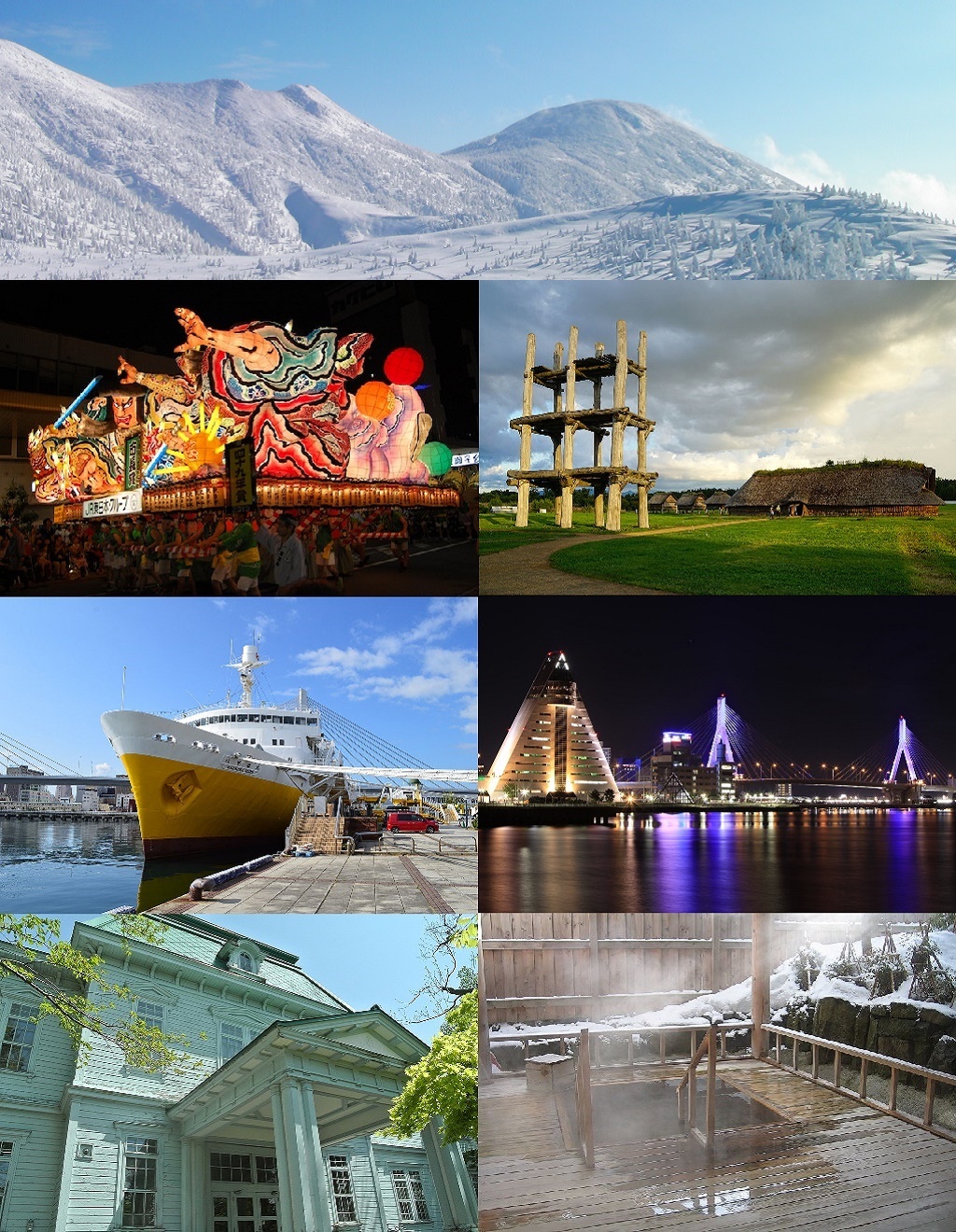
Aomori is northern Honshu's snowiest port city, famous for the Nebuta float festival, Japan's apple country, Hakkoda powder, and easy access to Oirase Gorge.
Aomori is the kind of Japanese city that rewards travelers who are willing to ride a bullet train past Tokyo, past Sendai, and keep going. It's the northernmost prefectural capital on Honshu — a working port that spent decades as the jumping-off point for ferries to Hokkaido, and which now gets bypassed by most tourists who tunnel straight under the strait. That bypass is the opportunity. What's left is a compact, walkable waterfront city ringed by some of the most absurdly snowy mountains in the world, with one of Japan's three great summer festivals exploding through its streets every August. The crowds you find here are mostly Japanese.
The city itself is a quick read: a triangular bayfront sandwiched between Aomori Station and a cluster of low-rise downtown blocks called Shinmachi. A-FACTORY sits at the water's edge, half cidery and half food hall, pressing apples from the orchards that produce roughly 60% of Japan's supply. A five-minute walk inland is Furukawa Market, where the famous Nokkedon — a build-your-own seafood rice bowl assembled by trading tickets at thirty-odd vendor stalls — turns lunch into a participatory sport. The Nebuta Museum WARASSE keeps a few of last year's parade floats permanently lit up, so you can see what the fuss is about even if you miss August.
What pulls people deeper into the prefecture is what's around Aomori. Oirase Gorge — a moss-and-waterfall walk under ancient beech — feeds into Lake Towada, a caldera lake with cruise boats and quiet shoreline trails. Mount Hakkoda is 80 minutes south with a ropeway to alpine plateaus that explode crimson in October and grow ice-coated 'snow monster' trees by January. An hour west, Hirosaki Castle anchors one of Japan's most loved cherry-blossom parks, drawing close to two million visitors in late April. Most travelers base in Aomori City and day-trip — a sensible play, since rural lodging is sparse outside festival months.
Winter is the secret. Aomori City regularly tops the world's snowfall rankings for any urban area its size, averaging around eight meters per year, and the Hakkoda backcountry sits on dry, light powder that locals consider equal to anything in Hokkaido but without Niseko's lift queues or English signage. Add the Tsugaru Stove Train — a vintage potbelly-stove carriage that rattles through frozen rice fields while attendants grill dried squid over the coal — and you have a winter trip that feels designed for a quieter, slower kind of traveler. Skip in early November and mid-March: shoulder weeks where it's too late for foliage and too early for reliable snow.
The practical bits.
- Best time
-
Aug 2 – 7 for Nebuta; late Sep – mid Oct for foliage; Jan – Feb for powderAomori is a three-peak destination — choose festival, autumn, or snow rather than splitting the difference.
- How long
-
4 – 7 nights recommended2 nights covers the city; you need 4+ to fold in Hakkoda, Oirase, and Hirosaki.
- Budget
-
$180 / day typicalNebuta week roughly doubles hotel rates and rural ryokan rates near Hakkoda swing wildly by season.
- Getting around
-
Walk downtown, use the Nebutan-go loop bus for sights, rent a car or take JR trains for day trips.Anything in the Shinmachi/waterfront area is on foot. The Nebutan-go shuttle (¥200 per ride, ¥500 day pass) loops Aomori Station, Shin-Aomori, the art museum, and Sannai-Maruyama. Oirase and Hakkoda are reachable by JR bus but a rental car halves transit time in shoulder season.
- Currency
-
¥ Japanese Yen (JPY)Cards work at hotels, A-FACTORY, and most chains; carry cash for Furukawa Market stalls, small izakaya, rural bus fares, and the Tsugaru Stove Train.
- Language
- Japanese; English signage at Aomori Station, A-FACTORY, and major museums, but spotty elsewhere — a translation app is genuinely useful.
- Visa
- Most Western passport holders (US, UK, EU, AU, CA) get 90 days visa-free; check current rules for your nationality before booking.
- Safety
- Extremely safe day or night, including for solo women. Real risks are weather-related — winter ice on station forecourts and unpredictable Hakkoda storms — not crime.
- Plug
- Type A, 100V
- Timezone
- GMT+9 (no daylight saving)
A few specific picks.
Hand-picked, not algorithmic. Each of these has earned its space.
A red-slatted shed by the harbor that keeps several winning Nebuta floats lit year-round, with hourly drum demonstrations.
Apple cidery and food hall behind Aomori Station — tasting cards let you sample five cidres for the price of one bad cocktail.
Trade ¥2,000 in tickets across thirty stalls to build a sashimi rice bowl with whatever's good that morning — go before 11am.
White-cube galleries hold Yoshitomo Nara's giant Aomori-ken Dog plus a permanent Shiko Munakata wing — pair with Sannai-Maruyama next door.
Reconstructed Jomon-period village (5,000 years old) on UNESCO's roster — admission is free and the longhouses are weirdly affecting.
Cable car to a 1,300m plateau — alpine wildflowers in July, crimson maples in October, frozen 'snow monster' trees January through March.
Seaside hot-spring district 20 minutes north by train, with a public bath inside the station and ryokan facing Mutsu Bay.
Winter-only vintage train (mid-Dec through March) with potbelly stoves grilling dried squid — book a window seat for snow fields.
Edo-era keep ringed by 2,600 cherry trees that bloom hot pink in late April — show up at sunrise to beat the two-million-person Golden Week crowd.
A 14km mossy stream walk under ancient beech with named waterfalls every kilometer — Choshi Otaki is the postcard one.
Local French-Japanese kitchen using Mutsu Bay scallops and Tsugaru apples — the closest the city gets to fine dining without a Tokyo bill.
Mid-range business hotel five minutes from the station — bay-view rooms on upper floors are worth the small surcharge.
Pick a neighborhood, not a hotel.
Aomori is a city of neighborhoods. The one you stay in shapes the trip more than the property does.
Different trips for different travelers.
Same city, very different stays. Pick the lens that matches your trip.
Aomori for festival chasers
Nebuta is one of Japan's three great summer festivals, and unlike Kyoto's Gion or Osaka's Tenjin you can actually get close to the floats and join the haneto dance crew with rental costumes.
Aomori for powder skiers
Hakkoda's tree skiing, snow monsters, and 8m annual snowfall rival Niseko, but lift lines are minimal and English signage is sparse — best for confident off-piste skiers.
Aomori for foliage travelers
Oirase Gorge and Lake Towada explode crimson and gold from late September to mid-October — quieter and less photographed than Kyoto or Nikko at peak.
Aomori for foodies
Mutsu Bay scallops, apple cidre at A-FACTORY, build-your-own Nokkedon bowls, and a niche miso-curry-milk ramen scene reward travelers willing to dig past the obvious tourist plates.
Aomori for slow travelers
Asamushi onsen ryokan, Tsugaru Stove Train, lakeside Towada lodgings — Aomori suits travelers who want to read a book on a tatami floor more than tick attractions off a list.
Aomori for solo travelers
Very safe, walkable downtown, English-friendly major sights, and counter-seat izakaya culture that makes solo dinners painless rather than awkward.
When to go to Aomori.
A quick year at a glance. Great, good, or skip — see what each month is doing before you book.
Prime Hakkoda powder; Aomori Snow Light Festival lights 2,000 handmade snow lamps across the city.
Hirosaki Castle snow lantern festival and continued Hakkoda powder — second-best ski month.
Early March still skis well; mid-March is awkward — too late for snow, too early for blossoms.
Hirosaki cherry blossom festival typically peaks April 20 – May 5 — book hotels six months out.
Trails open at Oirase Gorge in fresh green; weather window is excellent post-Golden Week.
Pre-Nebuta calm — cheap hotels and empty trails on Hakkoda.
Alpine wildflowers peak on Hakkoda; locals start practicing Nebuta drums in the streets.
Nebuta Matsuri runs Aug 2 – 7 — book hotels six to nine months ahead for any nights in that window.
Late September is when foliage begins at the higher Hakkoda plateaus.
Peak foliage at Oirase Gorge and Lake Towada usually falls mid-to-late October — the city's other great moment.
Awkward shoulder window — leaves are gone but ski lifts not yet open.
Hakkoda Ropeway and Tsugaru Stove Train both open by late December — winter is officially on.
Day trips from Aomori.
When you want a change of pace. Each one's a half-day or full-day out, easy from Aomori.
Hirosaki
45 min by JR limited expressEdo-era keep, 2,600 sakura trees, and a handful of preserved Western-style buildings from the Meiji era.
Mount Hakkoda
80 min by JR busRopeway to a 1,300m plateau; snow monsters in winter, crater walks in October.
Oirase Gorge
2 hrs by JR busPair with Lake Towada for a full day — Choshi Otaki waterfall is the photo.
Lake Towada
2.5 hrs by JR busOften combined with Oirase Gorge into a single loop tour.
Asamushi Onsen
20 min by Tsugaru LinePublic footbath inside the station; aquarium next door if you have kids.
Hakodate
2 hrs by Hokkaido ShinkansenThrough the Seikan Tunnel under the strait — easier than most travelers expect.
Aomori vs elsewhere.
Quick honest reads on the cities people compare Aomori to.
Sapporo is the bigger, livelier Hokkaido capital with stronger nightlife, ramen scene, and the world-famous February Snow Festival; Aomori is quieter, more rural, and trades crowds for landscape.
Pick Aomori if: Pick Sapporo for urban energy and bigger-name festivals; pick Aomori for Nebuta and Hakkoda's emptier slopes.
Sendai is Tohoku's largest city — easier from Tokyo, with Matsushima Bay and stronger restaurant breadth, but less dramatic landscape and no signature festival on Nebuta's scale.
Pick Aomori if: Pick Sendai for a one-stop Tohoku introduction; pick Aomori if you can spare extra travel time for snow, festival, or foliage payoff.
Hakodate is just across the Tsugaru Strait — famous for its night view from Mount Hakodate and a morning fish market that rivals Aomori's Nokkedon, but with less surrounding nature.
Pick Aomori if: Pick Hakodate for a port-city day-trip add-on; pick Aomori as the base if you want festival, mountains, and lake within reach.
Kanazawa is the polished, traditional-arts cousin — Kenrokuen garden, samurai districts, gold leaf shops — and substantially easier to add to a Kyoto itinerary than Aomori.
Pick Aomori if: Pick Kanazawa for refined tradition on a Kyoto loop; pick Aomori for wilder landscape and a much rawer festival.
Niseko has English-everything, ski-in/ski-out luxury, and Australian après-ski; Hakkoda (out of Aomori) has comparable powder for half the price and a fraction of the crowds.
Pick Aomori if: Pick Niseko for ease and après; pick Aomori/Hakkoda if you want tree skiing without lift lines.
Itineraries you can start from.
Rough shapes for a trip here — a feel for the pace and cost. Find the one that fits you.
Two nights in the city for Nokkedon, A-FACTORY, the Nebuta museum, and Sannai-Maruyama, plus a Hakkoda Ropeway day and an evening at Asamushi Onsen.
Time the trip to August 2 – 7. Three nights in Aomori for the festival parades, one night in Hirosaki, then two nights at Lake Towada to decompress on the lake.
Late-October circuit: Aomori City, Oirase Gorge hike, two nights at Towada, a Hakkoda crater walk, and a closing night at Sukayu Onsen.
Things people ask about Aomori.
Is Aomori worth visiting?
Yes — but match the trip to a season. Aomori delivers three distinct payoffs: the Nebuta Festival in early August, brilliant foliage at Oirase and Hakkoda in October, and some of Japan's best powder snow December through March. Outside those windows it's a quiet port city most travelers can skip in favor of Sendai or Hokkaido.
How many days do you need in Aomori?
Two nights covers Aomori City itself — Furukawa Market, A-FACTORY, the Nebuta museum, the art museum. Four to seven nights is the sweet spot if you want to fold in Hakkoda, Oirase Gorge, Lake Towada, and Hirosaki Castle. Beyond a week, you're really exploring the wider Tohoku region rather than Aomori specifically.
When is the best time to visit Aomori?
Early August (the 2nd through the 7th) for the Nebuta Matsuri, the city's defining festival. Late September through mid-October for autumn foliage at Oirase Gorge and Lake Towada. January and February for Hakkoda powder skiing and the Tsugaru Stove Train. Late April brings Hirosaki cherry blossoms but Golden Week crowds.
Is Aomori expensive?
Cheaper than Tokyo or Kyoto. Mid-range hotels run $60–$120 per night outside festival weeks, a Nokkedon bowl is around ¥2,000, and the JR East Pass covers nearly all your major transit. Hakkoda ryokan and Nebuta-week hotels are the big-ticket exceptions — both can triple normal rates if you book late.
What is Aomori famous for?
Three things: the Nebuta Matsuri summer festival with giant illuminated paper floats; producing roughly 60% of Japan's apples (and the cidre, juice, and pies that come with them); and being one of the snowiest urban areas on earth. Hakkoda powder, Oirase Gorge foliage, and Hirosaki cherry blossoms are the supporting cast.
Is Aomori safe for solo travelers?
Very safe, including for solo women. Violent crime is rare, late-night convenience stores are everywhere, and station staff will literally walk you to the right platform if you look lost. Real risks are weather: winter ice on pavement, sudden Hakkoda whiteouts, and bear sightings on remote Oirase trails in summer.
How do you get from Aomori Airport to the city?
The JR airport limousine bus runs to Aomori Station in about 35 minutes for ¥980, and is fully covered by the Japan Rail Pass and JR East Pass. A direct bus also runs to Hirosaki Station in roughly 60 minutes for ¥1,200. Taxis to downtown are around ¥4,500 — fine for late arrivals.
How long does the shinkansen take from Tokyo to Aomori?
Roughly 4 hours total. The Hayabusa on the Tohoku Shinkansen reaches Shin-Aomori Station in about 3 hours 20 minutes, then a 5-minute local train links Shin-Aomori to Aomori Station downtown. One-way fare is around ¥18,000 and the route is fully covered by the JR East Pass and Japan Rail Pass.
What is the Nebuta Festival?
Aomori's signature summer festival, held every August 2nd through 7th. Around twenty massive illuminated paper floats — sculpted as warriors, demons, and gods — are paraded through downtown each night, surrounded by costumed dancers called haneto and taiko drums. It's one of Japan's three largest festivals and easily the loudest, most kinetic festival in the north.
Can you ski in Aomori?
Yes. The Hakkoda Mountains have five lift-served courses topping out at 1,300m via the Hakkoda Ropeway, with a 5km top-to-bottom run weaving through ice-coated 'snow monster' trees. Snow is dry and abundant — averaging around 8 meters annually — and lift lines are tiny compared to Niseko. Best months are January through early March.
Best neighborhood to stay in Aomori?
Shinmachi, the covered arcade district behind Aomori Station, is the right base for almost every traveler. You'll be five minutes from Furukawa Market, the waterfront museums, and the train. Asamushi Onsen is the alternative if you want a hot-spring ryokan night with a 20-minute commute. Skip Sannai for first trips — it's too quiet.
Cash or card in Aomori?
Both, in mixed proportion. Hotels, department stores, A-FACTORY, and chain restaurants all take cards and IC cards (Suica/Pasmo). Carry at least ¥10,000 in cash for Furukawa Market stalls, small izakaya in Shinmachi, the Tsugaru Stove Train fare, rural bus rides around Hakkoda and Oirase, and shrine donation boxes.
What are the best day trips from Aomori?
Four classics: Hirosaki Castle and cherry-blossom park (45 min by train), the Hakkoda Ropeway and crater hikes (80 min by JR bus), Oirase Gorge and Lake Towada often combined into one long loop (2 hr by bus), and Asamushi Onsen seaside hot springs (20 min by Tsugaru Line). A rental car cuts most travel times significantly.
Aomori vs Sapporo — which is better?
Sapporo is bigger, livelier, and easier — its February Snow Festival, ramen alley, and beer culture are world-class, but you'll share them with crowds. Aomori is slower, more rural, and more rewarding for travelers who want festivals without the queues, real apple country, and Hakkoda powder. Pick Sapporo for nightlife, Aomori for landscape and tradition.
Is Aomori good for cherry blossoms?
Aomori City itself is fine but unremarkable for sakura. The reason to come north in spring is Hirosaki Castle Park, 45 minutes west — 2,600 cherry trees ring a moated Edo-era keep, drawing close to two million visitors during the late-April festival. Book Hirosaki hotels months ahead or day-trip from Aomori City.
What food is Aomori known for?
Apples and everything made from them — cidre, juice, pies, tarts. Mutsu Bay scallops and uni from the cold local waters. Build-your-own Nokkedon rice bowls at Furukawa Market. Apple-fed Aomori Shamorock chicken, and miso curry milk ramen — a local oddity invented in the 1970s that genuinely works once you stop expecting it to make sense.
Know someone headed to Aomori?
Send them this guide — real neighborhoods, timing, and prices, with nothing to sign up for.
Copies the link — nothing to install