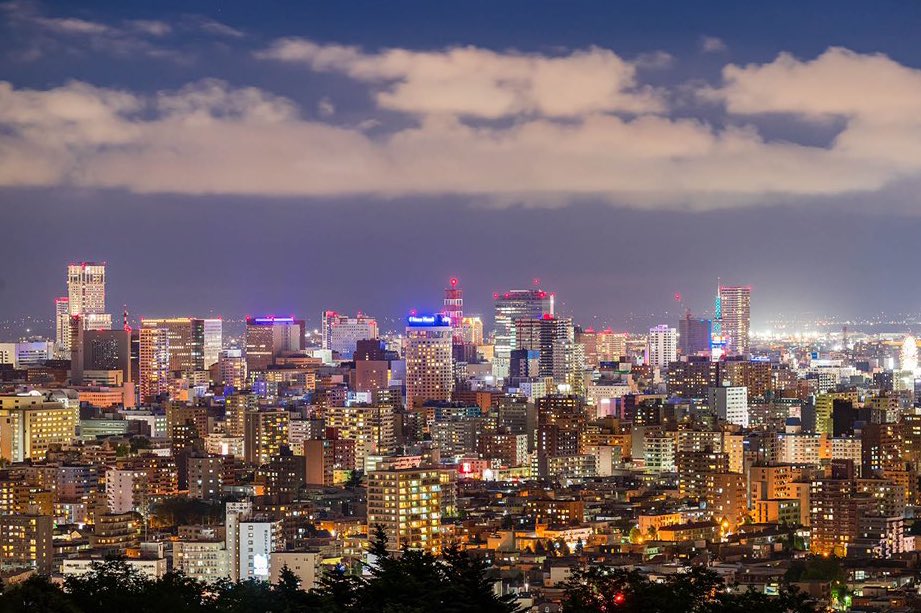
Sapporo
Send it to whoever you'd travel with
Sapporo is Japan's great northern city — built on a grid instead of centuries of accretion, it is easier to navigate than any other major Japanese destination, and it trades in seafood, ramen, beer, and one of the world's finest winter festivals.
Most travelers who come to Hokkaido arrive in Sapporo and stay one night before heading to Niseko, Furano, or the Daisetsuzan. That is a navigational error. Sapporo has more going for it per square kilometer than most Japanese cities of its size — the central Susukino district is one of the best eat-and-drink neighborhoods in the country, Ramen Alley has been perfecting miso ramen since the 1960s, and the Nijo Market opens at dawn with fresh crab and sea urchin from the Sea of Japan.
The Snow Festival in early February is genuinely extraordinary and not at all kitschy — blocks of Odori Park given over to multi-story ice sculptures, some of which take a month to build. The city fills with two million visitors and every ryokan within 100km books out. If you want to go, plan six months out. If you miss it, February is still excellent for skiing Sapporo Teine or Kiroro, and the city functions in deep snow better than anywhere else in the world.
Summer is underrated. Hokkaido's climate is far cooler than the rest of Japan — July in Sapporo feels like a mild European spring compared to Tokyo's wet-season humidity. The lavender in Furano blooms from late June through August; the beer gardens in Odori Park open all summer. Sapporo in July is the version most Japanese mainlanders prefer.
The grid layout, laid out by American agricultural advisors in the Meiji era, makes the city intuitively navigable in a way that Tokyo and Kyoto are not. Streets have numbers, not ancient names. The subway is clean and simple. You can be oriented within hours. This makes it an excellent entry point for Japan first-timers who find the major cities overwhelming.
The practical bits.
- Best time
-
February (Snow Festival) · July–August · OctoberFebruary is iconic but requires advance booking — the Snow Festival runs the first or second week of the month. July and August offer cool summer weather that is the envy of mainland Japan. October brings Hokkaido autumn colors (kobushi, rowan, silver birch) in the surrounding mountains. Avoid late March and November — slushy transition seasons with little upside.
- How long
-
3–4 nights recommendedTwo nights covers central Sapporo and one evening in Susukino. Three to four nights adds Otaru or a Niseko day ski. A week suits anyone using Sapporo as a base for Hokkaido exploration.
- Budget
-
$130 / day typicalCheaper than Tokyo and Osaka. Ramen bowls cost JPY 800–1,200 (USD 5.50–8). Mid-range hotels run JPY 10,000–18,000/night (USD 65–120). Seafood at Nijo Market gets pricey if you order set meals — buying individual pieces at the stalls is cheaper.
- Getting around
-
Subway + walkingThe Sapporo Municipal Subway runs three lines through the central city — clean, punctual, and cheap (JPY 200–280 per ride). The central zone between Odori and Susukino is walkable. Buses cover outer neighborhoods and ski resorts. IC cards (Kitaca) work across subway, bus, and convenience stores.
- Currency
-
Japanese Yen (JPY). Cash is still important — many ramen shops and small restaurants are cash-only. ATMs at 7-Eleven, Family Mart, and Japan Post accept foreign cards.IC card for transit. Cash for most eating-out situations; Susukino bars increasingly accept cards. 7-Eleven ATMs are the most reliable for foreign cards.
- Language
- Japanese. English signage is reasonable in tourist areas and the main subway stations. Most restaurant menus have photos. Google Translate camera mode handles Japanese menus well.
- Visa
- 90-day visa-free for US, UK, EU, Australian, and most Western passports. Japan's digital nomad and tourism visas are available for longer stays.
- Safety
- Extremely safe. Sapporo is consistently one of the safest large cities in the world. Leave your wallet on the table; you'll find it when you return. The only real risk is weather — blizzards can be extreme in winter.
- Plug
- Type A (2-pin flat) · 100V. Japanese voltage differs from US (110V) and Europe (230V) — most modern devices handle 100-240V; check your adapter.
- Timezone
- JST · UTC+9 (no daylight saving)
A few specific picks.
Hand-picked, not algorithmic. Each of these has earned its space.
Early February, Odori Park: massive ice sculptures, some 15 meters high, illuminated at night. The Tsudome family venue has snow slides and ice activities for kids. The largest blocks weigh 500+ tons. Reserve accommodation six months out minimum.
Hokkaido's finest seafood — uni (sea urchin), ikura (salmon roe), hairy crab, and snow crab — sold from stalls that open at 6 AM. Morning donburi bowls in the market's stools are worth getting up for.
A narrow alley of 17 ramen shops, operating since 1951. Miso ramen is the Sapporo standard — rich, butter-topped, made with Hokkaido corn and a fatty pork broth. Go at 9 PM when the steam and neon are at full intensity.
The principal Shinto shrine of Hokkaido, set in a forested park in the Maruyama district. Cherry blossoms in late April–early May; autumn colors in October. Far less crowded than Kyoto's equivalent.
Japan's oldest beer factory, now a free museum and paid tasting hall inside a brick 1876 brewery building. Sapporo's lager heritage told properly, without being a tourist trap.
Japan's largest entertainment district outside Tokyo — multi-story buildings of restaurants, izakayas, bars, ramen shops, and crab houses. Best approached at 8 PM with no plan and an appetite.
A 1.5km green ribbon splitting the city center east-west. Lilac Festival in May; beer garden in summer; Snow Festival sculptures in February. The Sapporo TV Tower at the east end has the city overview.
Upscale residential area with excellent cafés, bakeries, and the Maruyama Zoo. The zoo's polar bear and red panda exhibits draw Japanese families. The bakery and specialty coffee scene around Maruyama Park rivals anything in Tokyo.
A 188-hectare park designed by sculptor Isamu Noguchi — a former garbage dump transformed into a landscape of geometric hills, glass pyramid, and fountains. Surreal and worth the 30-minute bus ride.
30 minutes from central Sapporo by bus — the closest ski resort to any major Japanese city. Powder season runs December through March. The Highland zone has steeper runs; the Olympia zone (1972 Winter Olympics venue) is good for intermediates.
Pick a neighborhood, not a hotel.
Sapporo is a city of neighborhoods. The one you stay in shapes the trip more than the property does.
Different trips for different travelers.
Same city, very different stays. Pick the lens that matches your trip.
Sapporo for foodies
Nijo Market for seafood donburi, Ramen Alley for miso ramen, Daruma for jingisukan, and a soup curry shop each day. The eating in Sapporo is underrated compared to Tokyo and Osaka — the ingredients are Hokkaido's finest, the prices are lower, and the competition forces standards up.
Sapporo for winter sports travelers
Sapporo is the gateway to Hokkaido powder — the best in the world by snowflake density. Base in Sapporo and day-ski Teine; or make the highway bus run to Niseko or Furano. The Snow Festival is a cultural bonus when ski legs give out.
Sapporo for first-time japan visitors
The grid layout and readable subway system make Sapporo one of Japan's most accessible cities. If Tokyo overwhelms with its scale, Sapporo gives you the full Japan experience — ramen, onsen day trips, convenience stores, obsessive quality — at a human scale.
Sapporo for couples
Noboribetsu ryokan for a night (private onsen room, kaiseki dinner, the volcanic landscape), then back to Sapporo's Susukino for late-night ramen and izakaya. The combination of wilderness and city energy is the Sapporo romantic formula.
Sapporo for budget travelers
Sapporo is cheaper than Tokyo in every category. Business hotels near the station run USD 55–75/night. Ramen costs USD 6–8. The subway is straightforward and cheap. Budget travelers can eat extremely well here — the quality-to-price ratio in Susukino izakayas is exceptional.
Sapporo for nature and outdoor travelers
Sapporo is the base for Hokkaido national parks — Daisetsuzan, Shiretoko (UNESCO), and the Shikotsu-Toya national park are all reachable. In summer, hiking, cycling, and wildflower meadows; in winter, snowshoeing and backcountry skiing. Rent a car for the parks; trains for the resort towns.
When to go to Sapporo.
A quick year at a glance. Great, good, or skip — see what each month is doing before you book.
Peak winter. Excellent skiing at Teine and nearby resorts. The city handles snow expertly. Good month if you're dressed for it.
Snow Festival in early February — the main annual event. Book accommodation and flights 5–6 months ahead. Skiing at its best.
Late ski season — snow quality declines after mid-month. The city looks grey and wet. Not recommended unless skiing is the reason.
Spring arrives slowly. Cherry blossoms at Hokkaido Shrine come late — usually late April. Still chilly; pack layers.
Odori Park's Lilac Festival is a genuine local event — fragrant blooms, food stalls, the city at its spring best. A warm coat is still needed in the evenings.
The start of the Hokkaido summer advantage — comfortable, cool, nothing like Tokyo's rainy-season misery. Beer garden season begins.
The best summer month. Beer gardens in Odori Park are packed with locals. Furano lavender peaks in early July. Excellent for outdoor eating.
August in Sapporo feels like a mild European summer. The Odori Beer Garden runs all month. Lavender is winding down in Furano by late August.
Shoulder season. The summer crowds have gone; the autumn colors are not yet at peak. Pleasant but quiet.
Hokkaido's autumn colors — silver birch, rowan, and maple — peak in early to mid-October. Maruyama Park and the mountains surrounding the city are spectacular.
The transition month — autumn is over, ski season hasn't started. Little reason to visit unless ski resorts have opened early.
Ski season opens mid-month. The city begins its winter festival preparations. A good month for early-season powder at Teine.
Day trips from Sapporo.
When you want a change of pace. Each one's a half-day or full-day out, easy from Sapporo.
Otaru
30 min by JRThe most popular Sapporo day trip. The canal district is atmospheric; the sushi restaurants near Sankaku Market serve Hokkaido seafood at its freshest. In February the Otaru Snow Light Path festival illuminates the canal with ice lanterns.
Noboribetsu Onsen
1h 20m by JRJigokudani (Hell Valley) is a volcanic crater of boiling mud pools and sulfurous steam. The ryokan here pump mineral-rich water from nine different spring types. Book a room with private onsen access if budget allows.
Furano
2h by JRThe Farm Tomita lavender estate peaks in the first two weeks of July. In winter, Furano Ski Resort is one of Japan's finest — less crowded than Niseko, with deep powder and Japanese atmosphere. The cheesemaking and winemaking farms are worth visiting any season.
Lake Shikotsu
1h by busOne of Japan's clearest lakes, ringed by volcanoes. Excellent kayaking in summer; the Ice Festival in January–February creates elaborate ice sculptures around the lakeside. Quieter and more nature-focused than Noboribetsu.
Hakodate
4h by shinkansenBetter as an overnight than a day trip. Hakodate's morning market (Asaichi) is famous for live squid and crab. Goryokaku star-shaped fort is striking in cherry blossom season. The view from Mount Hakodate at night is one of Japan's three greatest city panoramas.
Niseko
2h by highway busHokkaido's most international ski resort — consistent Japow (Japan powder), English signage everywhere, a strong après-ski scene. Book accommodation 3–4 months ahead for the December–February peak. The Hirafu village is the most lively; Hanazono is quieter.
Sapporo vs elsewhere.
Quick honest reads on the cities people compare Sapporo to.
Tokyo is the mega-city — overwhelming scale, global culinary height, unparalleled depth of culture. Sapporo is Tokyo's relaxed northern counterpoint: a grid city at human scale, with Hokkaido seafood and miso ramen instead of sushi omakase. Both are worth doing; they complement rather than replace each other.
Pick Sapporo if: You want a Japan experience with space to breathe, better weather in summer, and the best seafood in the country at lower prices.
Kyoto is ancient Japan — temples, geisha districts, centuries of cultural layering. Sapporo is modern Japan — a planned Meiji-era grid city without the historical weight. Kyoto in autumn or spring is transformative; Sapporo in February or July is the better practical choice.
Pick Sapporo if: You want skiing, seafood, and a Japanese city that functions as a comfortable base rather than a heritage monument.
Both cities care about food more than appearances. Osaka is louder, warmer, Mediterranean in temperament; Sapporo is calmer, colder, more northern in its pace. Osaka's takoyaki, kushikatsu, and street food are different in kind from Sapporo's ramen and seafood — both are worth eating through.
Pick Sapporo if: You want cold-weather Japan, a ski resort nearby, and Hokkaido seafood as the star rather than street snacks.
Niseko and Furano are ski resorts; Sapporo is a city with its own ski resort nearby. You don't choose between them — you base in Sapporo and day-trip to the ski fields, or you do a night or two at a resort before returning to Sapporo's restaurants.
Pick Sapporo if: You want city infrastructure, seafood markets, and brewery culture alongside easy ski resort access.
Itineraries you can start from.
Rough shapes for a trip here — a feel for the pace and cost. Find the one that fits you.
Base in Susukino. Nijo Market at dawn. Ramen Alley twice. Beer Museum afternoon. One day trip to Otaru.
2 nights Sapporo, 3 nights Niseko. Shinkansen-style transfer by highway bus. Powder skiing with a Sapporo seafood bookend.
3 nights Sapporo, 2 nights Furano (lavender in summer, skiing in winter), 2 nights Hakodate for morning squid market and Western-style Goryokaku fort.
Things people ask about Sapporo.
When is the best time to visit Sapporo?
February for the Snow Festival — the city's most iconic event, though it requires booking six months in advance. July and August offer Hokkaido's famous cool summers: no humidity, no crowds compared to mainland Japan, and lavender in bloom at Furano. October brings brilliant autumn color in the surrounding mountains. Avoid late March and November — slush and grey without the festival payoff.
How do I get to Sapporo?
New Chitose Airport (CTS) is 40 minutes from central Sapporo by rapid train (JR Airport Line, JPY 1,150). International flights arrive from Tokyo (90 min), Seoul, Beijing, and a growing number of Asian cities. From Tokyo, the Tohoku and Hokkaido Shinkansen reaches Sapporo station in around 5 hours — useful if you have a Japan Rail Pass and want to see the Tohoku coast en route.
What is Sapporo famous for?
The Snow Festival (Yuki Matsuri) in February is the headline draw. Miso ramen — developed in Sapporo in the 1950s — is the city's culinary signature. Sapporo Beer, brewed here since 1876, is another claim to fame. But Hokkaido seafood (sea urchin, hairy crab, salmon roe) is arguably the most compelling reason to visit.
Is Sapporo worth visiting outside the Snow Festival?
Absolutely. The summer version of Sapporo — cool temperatures, beer gardens in Odori Park, day trips to lavender fields in Furano — is underrated and far less crowded than February. Autumn colors in October are beautiful. The seafood, ramen, and izakaya culture are year-round attractions. Most Japan veterans consider Hokkaido summer one of the country's best-kept secrets.
What is the Snow Festival like?
The Sapporo Snow Festival (Yuki Matsuri) runs for roughly a week in early February, spread across three sites: Odori Park (the giant sculptures, some as tall as a 5-story building), Susukino (ice sculptures and illuminations), and Tsudome (family snow activities). Nighttime is the best viewing — the sculptures are lit until 10 PM. Around two million people attend; hotels fill up fast.
What should I eat in Sapporo?
Miso ramen first — rich Hokkaido miso broth, butter, corn, thick wavy noodles. Then a seafood donburi at Nijo Market: uni and ikura over hot rice, eaten at a stall counter at 7 AM. Genghis Khan (jingisukan) — lamb grilled on a convex iron grill — is the Hokkaido barbecue tradition. Soup curry (a thin, fragrant curry soup with vegetables and fried chicken) is a Sapporo invention worth seeking out.
How is Sapporo different from Tokyo?
Smaller, slower, much easier to navigate, and cheaper. The grid layout means you can't get lost the way you can in Tokyo. The food is different — ramen, crab, and lamb grills rather than Tokyo's sushi and yakitori hierarchy. Sapporo feels like a livable northern city rather than a megacity; many Japanese people who live there describe it as Japan's best quality-of-life city.
Is Sapporo good for skiing?
Yes. The city has its own ski resort (Teine, 30 min by bus), and Hokkaido's legendary powder is within two hours by highway bus — Niseko, Kiroro, Rusutsu, and Furano are the main resorts. Niseko is the most international and expensive; Furano is more authentically Japanese and less crowded. The season runs December through March, with February typically offering the best snow.
How cold does Sapporo get in winter?
Average January temperatures hover around -6 to -3°C (21–27°F). Blizzards are common and snowfall is heavy — the city typically accumulates 4–6 meters of snow per season. But Sapporo handles it exceptionally well: underground walkways connect the main shopping and transit hubs, streets are plowed within hours of snowfall, and buildings are heated to a high standard. Dress in proper winter layers, not just a coat.
What is the best ramen in Sapporo?
Miso ramen is the Sapporo style — developed at Aji no Sanpei in the 1950s, now found everywhere. Ramen Alley (Ganso Sapporo Ramen Yokocho) in Susukino is the tourist-facing option; for local preference, try Kirakutei or Hashiya in the suburbs. Sapporo also has a strong shoyu (soy-based) ramen scene in the less-visited neighborhoods north of Odori.
Can I do a day trip from Sapporo?
Several good ones. Otaru (30 min by JR) is the most popular — a historic canal town with excellent sushi and glass-blowing workshops. Noboribetsu (90 min by JR) has some of Hokkaido's most dramatic onsen and the Hell Valley volcanic landscape. Furano (2h by train) is the lavender destination in summer. Hakodate (4h by shinkansen) is better as an overnight.
Is Sapporo expensive?
Less expensive than Tokyo or Osaka. A miso ramen bowl costs JPY 900–1,200 (USD 6–8). Business hotels near Sapporo Station run JPY 8,000–12,000/night (USD 55–80). Beer at Susukino izakayas costs JPY 500–700 per glass. The main expense is seafood — a uni-ikura donburi at Nijo Market can run JPY 2,500–4,000 (USD 17–28), which is still excellent value for the quality.
Is Sapporo safe?
Extremely safe. Sapporo has one of the lowest crime rates of any city its size in the world. Solo travelers, including women, can walk any part of the city at any hour without meaningful risk. The Susukino entertainment district has the usual caveats of any dense nightlife zone, but nothing that would alarm a traveler familiar with major cities.
What is Susukino known for?
Susukino is Japan's largest entertainment district outside Tokyo — roughly 1,000 restaurants, bars, izakayas, and ramen shops packed into a few city blocks south of Odori. It starts filling up after 7 PM and peaks around 10–11 PM. Famous for crab houses (kani ryori), ramen alleys, craft izakayas, and the neon-and-snow nightscape that appears on every Sapporo travel photograph.
Do I need a JR Pass for Hokkaido?
If you're doing more than just Sapporo, the JR Hokkaido Rail Pass is worth it — 3-day (JPY 12,000, ~USD 80) or 5-day (JPY 17,000) versions cover unlimited travel on JR trains across Hokkaido including Furano, Hakodate, and New Chitose Airport connections. The national Japan Rail Pass also covers Hokkaido; run the numbers against your actual route before buying.
What is Hokkaido seafood like?
Exceptional. The cold waters of the Sea of Okhotsk and Sea of Japan produce sea urchin (uni) with a sweetness that makes the Tokyo restaurant version taste like a compromise, hairy crab (ke-gani) from Abashiri in winter, snow crab (zuwaigani), king scallops, and salmon at every stage of preparation. Nijo Market and the sushi restaurants around it are the best access point in Sapporo.
What is Genghis Khan (Jingisukan)?
Hokkaido's signature barbecue: lamb and vegetables grilled over charcoal on a convex dome-shaped iron grill. The name refers to Mongolian warriors, though the connection is mostly mythological. The dish is cheap, social, and associated with outdoor beer garden eating in summer. The Hokkaido Tourism Board credits Sapporo as the dish's modern home. Daruma is the most famous old-school jingisukan restaurant in Susukino.
What is soup curry?
A Sapporo-invented dish from the 1970s: a thin, fragrant curry broth (much lighter than standard Japanese curry) served with a whole chicken leg, large-cut vegetables (pumpkin, eggplant, potato, bell pepper), and rice on the side for dipping. Every soup curry restaurant has its own broth formula. Picante and Garaku are the most well-known chains; Yoshimi at the Sapporo Factory is the tourist-friendly entry point.
Know someone headed to Sapporo?
Send them this guide — real neighborhoods, timing, and prices, with nothing to sign up for.
Copies the link — nothing to install