Aeolian Islands
Send it to whoever you'd travel with
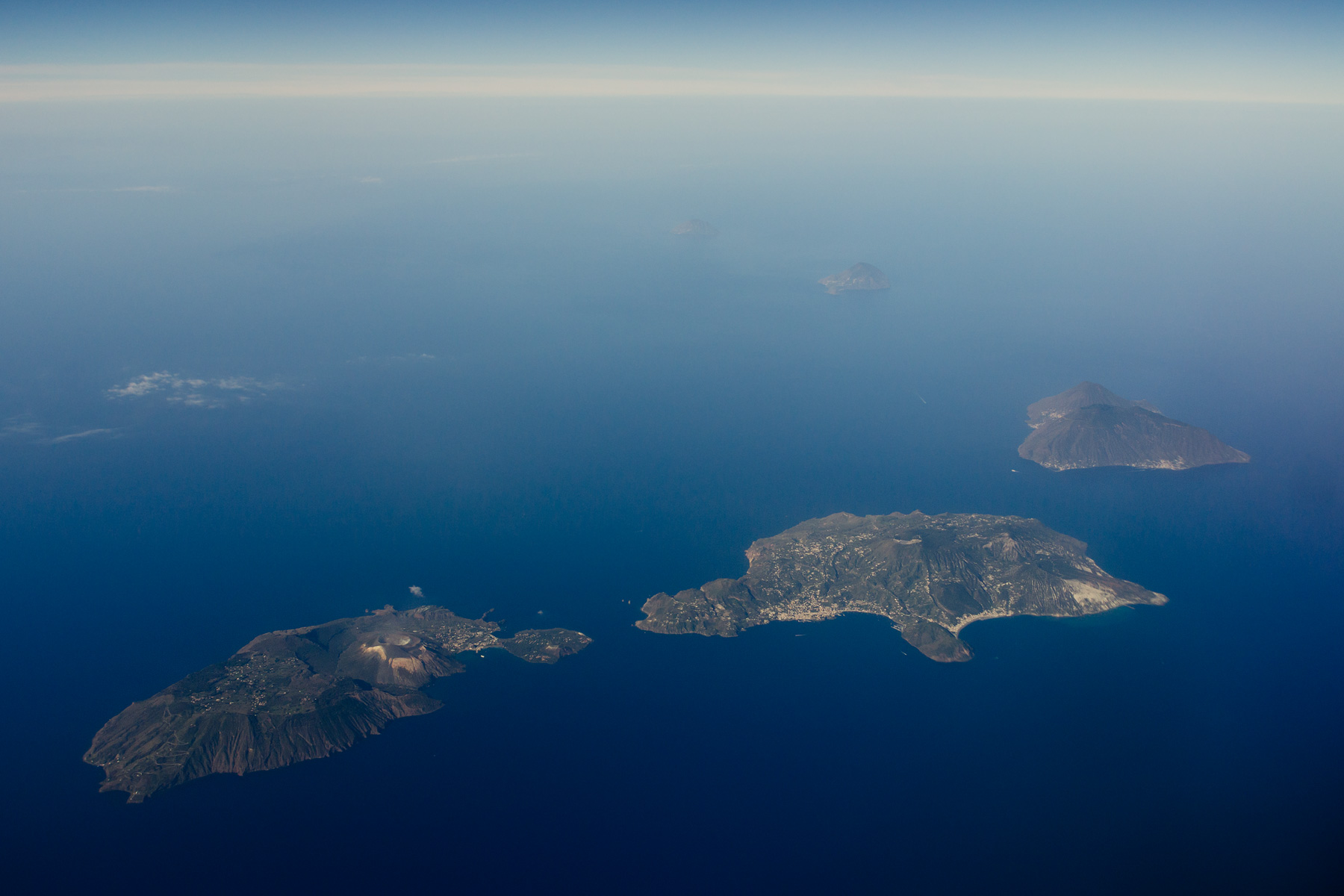
Seven volcanic islands off Sicily's north coast, where Stromboli erupts every twenty minutes and the white-pumice beaches of Lipari and the vineyards of Salina make a compelling case that Italy still has places that reward the effort to reach them.
The Aeolian Islands are seven inhabited volcanic islands in the Tyrrhenian Sea, off the northern tip of Sicily. Lipari is the biggest and most practical — it has supermarkets, year-round ferries, a properly preserved hilltop citadel, and pumice-white cliffs that fall into improbably blue water. Stromboli is the one that doesn't stop: its volcano erupts roughly every 15–20 minutes, producing a glow visible on clear nights from miles at sea. The experience of watching it from a boat at sunset, with periodic bursts of orange against a darkening sky, is one of the more primal things available in European travel.
Salina is the greenest and most agricultural of the islands — the setting for the film Il Postino, producer of the best Malvasia wine in the archipelago, and significantly calmer than Lipari. Vulcano is the sulphur island — its volcano smells strongly, its mud baths are legendary (and genuinely therapeutic if you can tolerate the rotten-egg proximity), and it has the archipelago's best sea views from its crater rim. Panarea is the small, expensive, and fashionable one where summer brings a yacht set and the Aeolians' only real nightlife.
Getting here requires commitment: ferries and hydrofoils from Milazzo (north Sicily) are the main access point, with longer routes from Palermo and Naples in summer. The effort is the point. Island hopping between the seven is logistically manageable but demands flexibility — hydrofoils are weather-dependent, and summer seas can be rough. The right approach is to choose a base (Lipari for logistics, Salina for atmosphere, Stromboli for the volcano experience) and radiate from there.
Budget note: the Aeolians are more expensive than mainland Sicily but cheaper than Capri. Accommodation is limited, so July–August prices spike dramatically. May and September are the sweet spots: warm water, open businesses, dramatically thinner crowds, and a more honest version of island life.
The practical bits.
- Best time
-
May – June · September – OctoberMay–June and September–October give warm-enough sea, minimal crowds, and the islands still fully operational. July–August is peak season: prices highest, accommodation scarce, Stromboli crater hikes may have restrictions. October is excellent — sea still warm from summer, some restaurants beginning to close for winter but key ones open.
- How long
-
5 nights recommendedThree nights lets you base on Lipari and visit Vulcano and Salina. Five nights adds Stromboli comfortably. Seven nights for the full archipelago loop including Panarea and the minor islands.
- Budget
-
~$180 / day typicalLipari and Salina are mid-range comparable to Sicily coast resorts. Panarea and Stromboli are premium — fewer beds means higher prices. Vulcano is the cheapest base. Budget accommodation on Lipari runs €60–100/night; mid-range €100–200.
- Getting around
-
Ferry and hydrofoilFerries (traghetti) and hydrofoils (aliscafi) connect all islands; Liberty Lines and Siremar are the main operators from Milazzo. Hydrofoil Milazzo–Lipari: 55 min. Within Lipari town: walkable. Island scooter rental ~€25/day. Cars can be taken to Lipari on the ferry but are not permitted on smaller islands.
- Currency
-
Euro (€). Cards accepted in most hotels and restaurants; cash essential on smaller islands and for ferry tickets.Cards widely accepted on Lipari and Salina. Smaller islands increasingly card-friendly but carry cash.
- Language
- Italian. Limited English outside tourist establishments.
- Visa
- Schengen zone. 90-day visa-free for US, UK, Canadian, and Australian passports. ETIAS required from late 2026.
- Safety
- Safe. Stromboli volcanic activity is continuously monitored — the crater hike requires a licensed guide (mandatory above 290m). Weather-related ferry cancellations are a genuine logistical issue in shoulder and off season.
- Plug
- Type C / F · 230V
- Timezone
- CET · UTC+1 (CEST UTC+2 late March – late October)
A few specific picks.
Hand-picked, not algorithmic. Each of these has earned its space.
Watch eruptions from the sea on a night boat tour — the most accessible option. The summit crater hike (above 290m requires a licensed guide) takes 5–6 hours return and requires a permit; book through authorized agencies weeks ahead in summer.
The hilltop citadel contains one of the best archaeological museums in Southern Italy — Aeolian prehistory from the Bronze Age forward, including finds from the surrounding islands. The cathedral complex within is Norman in origin.
Salina produces the finest Malvasia delle Lipari — a golden dessert wine from passito-dried grapes. Cantina Capofaro and Tenuta Capofaro are the top producers; the wines pair perfectly with the island's capers and almonds.
The sulphurous mud pool near Porto di Levante is a Aeolian institution — €2 entry, sulphur smell that will follow you for hours. The crater rim hike (1h return) gives the best views in the archipelago.
The pumice quarry area north of Lipari has otherworldly white pumice-dust beaches where the stone has been mined for centuries. The water is startlingly clear; the landscape looks like a moonscape. Access by boat or a strenuous walk.
The smallest and most exclusive of the inhabited islands — no cars, boutique hotels, summer yacht moorings. Worth visiting for its Bronze Age village site (Punta Milazzese) and exceptionally clear water. Expensive; day-trip from Lipari is the budget option.
Any of the inter-island boat operators runs night excursions timed to watch the Sciara del Fuoco (stream of fire) eruptions at dusk. No guide certification required to watch from the water. The most dramatic two hours in the Aeolians.
Salina's main town has a morning market where local capers, sundried tomatoes, almonds, and wine are sold. The island's capers are among the finest in Italy — flat and briny, the Pantelleria comparison is legitimate.
Pick a neighborhood, not a hotel.
Aeolian Islands is a city of neighborhoods. The one you stay in shapes the trip more than the property does.
Different trips for different travelers.
Same city, very different stays. Pick the lens that matches your trip.
Aeolian Islands for volcano and adventure seekers
Stromboli is one of the world's most accessible active volcanoes. The crater hike and night boat eruption viewing are the defining Aeolian experiences.
Aeolian Islands for sailors and boaters
The Aeolians are a classic sailing destination — chartering a boat lets you circumnavigate all seven islands, access sea caves, and anchor in coves unreachable by foot.
Aeolian Islands for wine enthusiasts
Malvasia delle Lipari is one of Italy's great dessert wines. Salina's wine culture rewards those who seek it out — Capofaro in particular is worth a serious tasting.
Aeolian Islands for slow travel advocates
The logistical effort of getting here filters out day-trippers. Those who stay find islands that run at an unhurried pace.
Aeolian Islands for divers and snorkelers
The Aeolian waters are among the clearest in the Mediterranean, with volcanic sea beds, caves, and marine reserves around Filicudi and Alicudi.
When to go to Aeolian Islands.
A quick year at a glance. Great, good, or skip — see what each month is doing before you book.
Very quiet — most accommodation and restaurants on smaller islands close November–March.
Lipari has some year-round businesses open. Other islands largely closed.
Things begin to open. Wild herbs and early spring vegetation on Salina. Ferries still weather-dependent.
Excellent — spring wildflowers, full business reopening, thin crowds.
Best spring month. Sea warm enough to swim. Accommodation available without months-ahead booking.
Peak season begins. Still manageable early June. Stromboli crater hike before heat peak.
Busiest month. Book accommodation months ahead. Ferries packed. Spectacular nights.
Ferragosto brings maximum crowds. The islands are still wonderful but you must plan ahead.
Excellent — sea temperature peaks, crowds thin, everything open. Best value month.
Great for Salina harvest. Some restaurants close midweek. Stromboli still operating.
Smaller islands shutting for winter. Lipari remains partially operational.
Only Lipari has meaningful year-round activity. Peaceful for those who seek it.
Day trips from Aeolian Islands.
When you want a change of pace. Each one's a half-day or full-day out, easy from Aeolian Islands.
Taormina
2h from Milazzo (base before ferry)The most beautiful town in Sicily is a natural complement to the Aeolians — combine a Taormina night before or after the ferry with the island stay.
Mount Etna
2h from CataniaEurope's largest active volcano is a full-day from Catania. Pairs naturally with Stromboli for a volcanoes-of-southern-Italy theme.
Cefalù
90 min from Palermo (if entering via Palermo ferry)A beautiful small beach town with a world-class Norman-Arab cathedral. Worth a night if routing via Palermo.
Marsala
3h from PalermoWestern Sicily is a different world from the Aeolians — flat, Phoenician, wine-producing. Worth including on a longer Sicily circuit.
Aeolian Islands vs elsewhere.
Quick honest reads on the cities people compare Aeolian Islands to.
Capri is one island, glamorous, easily reached from Naples, and very expensive. The Aeolians are seven islands, volcanic, harder to reach, and significantly more varied. For effort-to-reward ratio: Aeolians win.
Pick Aeolian Islands if: You want a multi-island volcanic archipelago over a single glam island.
The Cyclades or Dodecanese offer better infrastructure, more island options, and cleaner connections. The Aeolians offer Stromboli, Malvasia, and a deeper sense of remoteness. They're complementary rather than competing.
Pick Aeolian Islands if: You want active volcanoes and Italian island food culture over Greek whitewashed architecture.
Sardinia has better beaches overall and more varied landscapes. The Aeolians have volcanoes and a more concentrated drama. Sardinia suits a car-based beach holiday; the Aeolians suit island-hopping and nature focus.
Pick Aeolian Islands if: You want volcanic drama and island-hop logistics over beach perfection.
Itineraries you can start from.
Rough shapes for a trip here — a feel for the pace and cost. Find the one that fits you.
Fly to Catania, train/bus to Milazzo, hydrofoil to Lipari. Day 1: citadel and museum. Day 2: boat day to Vulcano mud baths and crater. Day 3: Salina Malvasia tasting and ferry home via Milazzo.
Nights 1–2 Lipari. Night 3 Stromboli (night boat to watch eruptions). Night 4 Salina (wine dinner at Capofaro). Night 5 back to Lipari for early Milazzo ferry. Add Panarea day-trip from Stromboli.
All seven islands — Lipari base with day hydrofoils to Vulcano and Panarea; overnight Stromboli; overnight Salina; half-day on Filicudi and Alicudi for true remote-island silence. End at Lipari for departure.
Things people ask about Aeolian Islands.
How do I get to the Aeolian Islands?
The main hub is Milazzo on Sicily's north coast — hydrofoils (55 min to Lipari) and ferries operate year-round from there. Summer adds routes from Palermo (3h) and Naples (11h overnight ferry). Fly to Catania or Palermo, then transfer to Milazzo by train (Messina then Milazzo) or direct bus.
Which Aeolian island should I base on?
Lipari for logistics and the full accommodation choice. Salina for atmosphere, wine, and the greenest landscape. Stromboli for the volcano — but it's remote and accommodation is limited. First-timers: Lipari with day trips. Repeat visitors: Salina.
Is visiting Stromboli volcano safe?
Yes, with proper precautions. The mandatory guide requirement above 290m exists for safety and is enforced. The crater hike is strenuous (5–6 hours return, significant elevation gain). Watching from the sea on a night boat requires no special preparation and is equally spectacular. Check alert levels before the summit hike.
When should I visit to avoid crowds?
May–June and September–October. July–August is peak Italian summer — ferries are packed, accommodation books months ahead, and the islands lose some of their character. October is arguably the best month: warm sea, thin crowds, harvest season on Salina.
Can I island-hop the Aeolians?
Yes — hydrofoils connect all the inhabited islands. The key caveat is weather: rough seas cancel hydrofoils (not ferries), which can trap you on an island for 24–48 hours. Build flexibility into your itinerary. The main routes run multiple times daily in summer, less frequently in shoulder season.
How much does the Stromboli crater hike cost?
In 2026, the mandatory guide for above-290m costs approximately €30–40 per person for a group hike. The online booking platform (stromboliguidedtrekks.com) is the official channel. Add trekking poles rental, headlamps, and footwear suitable for volcanic terrain.
What should I eat in the Aeolian Islands?
Malvasia wine (Salina's contribution). Capers in everything — the Aeolian caper is extraordinary in pasta, on fish, in salads. Swordfish and tuna preparations. Granita and almond paste from the Sicilian tradition. Pane cunzato — olive-oil-dressed bread with tomatoes, capers, and anchovies — at any bar, any time.
Is the Aeolian Islands trip expensive?
More expensive than mainland Sicily, cheaper than Capri. Budget accommodation on Lipari runs €60–100/night; mid-range hotels €120–220. Restaurant meals €20–40 per person. The main costs are getting there and island-to-island hydrofoils (€8–20 per crossing). Overall: a quality but not luxury budget is achievable.
Know someone headed to Aeolian Islands?
Send them this guide — real neighborhoods, timing, and prices, with nothing to sign up for.
Copies the link — nothing to install