Williamsburg
Send it to whoever you'd travel with
Williamsburg is where the 18th century is performed with scholarly seriousness — a living history district staffed by costumed interpreters who can carry a genuine conversation about colonial economics, adjacent to a theme park that does not try to be educational at all.
Colonial Williamsburg is one of the largest and most ambitious outdoor history museums in the world — not a reconstruction, but in many cases the actual 18th-century buildings, staffed by costumed interpreters who deliver a genuinely educational and often surprising experience. The 301-acre Historic Area covers the original Virginia colonial capital from the 1699 relocation of the capital to Richmond in 1780. Walk down Duke of Gloucester Street at 10 AM and you'll find a blacksmith working iron in a period forge, a printer operating an 18th-century press, and a tavern serving traditional Virginia food by candlelight.
What separates Williamsburg from a superficial theme park experience is the depth of the Colonial Williamsburg Foundation's interpretive program. The interpreters are trained historians and reenactors who know their material — conversations about British colonial taxation policy, enslaved labor on Virginia plantations, and the compromises embedded in the Declaration of Independence are available if you engage seriously. In recent years the Foundation has significantly expanded programming on the experience of enslaved people in colonial Virginia, making the history more honest and more complete than it was a generation ago.
The adjacent geography matters: Williamsburg sits at the center of the Historic Triangle, 14 miles from Jamestown (first permanent English settlement in North America, 1607) and 13 miles from Yorktown (where the Revolutionary War effectively ended in 1781). The Colonial Parkway connects all three through a corridor of protected Tidewater Virginia forest and waterfront with no commercial signage — a deliberate time-capsule drive.
Busch Gardens Williamsburg, two miles from Colonial Williamsburg, is one of the most aesthetically considered theme parks in the US — the European-country zone theming, the classic wooden coasters, and the landscaping are consistently rated among the best in the industry. The juxtaposition of spending a morning in an 18th-century courthouse and an afternoon on a roller coaster named Griffon is distinctly American, but both experiences deliver on their own terms. The College of William & Mary's campus, the second-oldest in the US, is embedded in the city fabric and worth a walk.
The practical bits.
- Best time
-
April – June and September – NovemberSpring and fall bring mild temperatures, full programming at Colonial Williamsburg, and smaller crowds than summer. Summer is peak family season with long hours but high heat and busy queue times at Busch Gardens. Winter has reduced Colonial Williamsburg hours but some of the most atmospheric Christmas programming in the country.
- How long
-
3 nights recommendedTwo nights covers Colonial Williamsburg basics and one Busch Gardens day. Three nights adds Jamestown and Yorktown. Five covers the full Historic Triangle plus Water Country USA, Jamestown Settlement, and a Richmond day.
- Budget
-
$230 / day typicalColonial Williamsburg admission runs $45/day (adult) or $150+ for a multi-day ticket covering all sites. Busch Gardens adds $60–100/day. Hotels range from $120–180/night budget options to $350+ at Colonial Williamsburg-owned properties. Tavern dinners add $50–80/person.
- Getting around
-
Car recommended; Colonial Williamsburg core is walkableThe Colonial Williamsburg Historic Area itself is pedestrian-only (vehicles restricted). A free shuttle runs from parking areas to the visitor center. Getting to Jamestown (14 miles), Yorktown (13 miles), and Busch Gardens (2 miles) requires a car. Newport News/Williamsburg Airport (PHF) is 17 miles east; Richmond (RIC) and Norfolk (ORF) are both 50 miles away.
- Currency
-
US Dollar (USD)Cards everywhere. Cash for some tavern tips and street vendor spots.
- Language
- English.
- Visa
- No visa required for US citizens. Standard ESTA requirements for international visitors.
- Safety
- Williamsburg is one of Virginia's safest destinations. Standard precautions in warm months for heat exposure during outdoor historic site visits.
- Plug
- Type A / B · 120V
- Timezone
- EST · UTC-5 (EDT UTC-4 mid-March – early November)
A few specific picks.
Hand-picked, not algorithmic. Each of these has earned its space.
The 301-acre open-air living history museum with the Governor's Palace, Capitol, Court House, trade shops, and taverns all staffed by costumed interpreters. Duke of Gloucester Street is the main spine. Allow at least a full day; two days for a thorough visit.
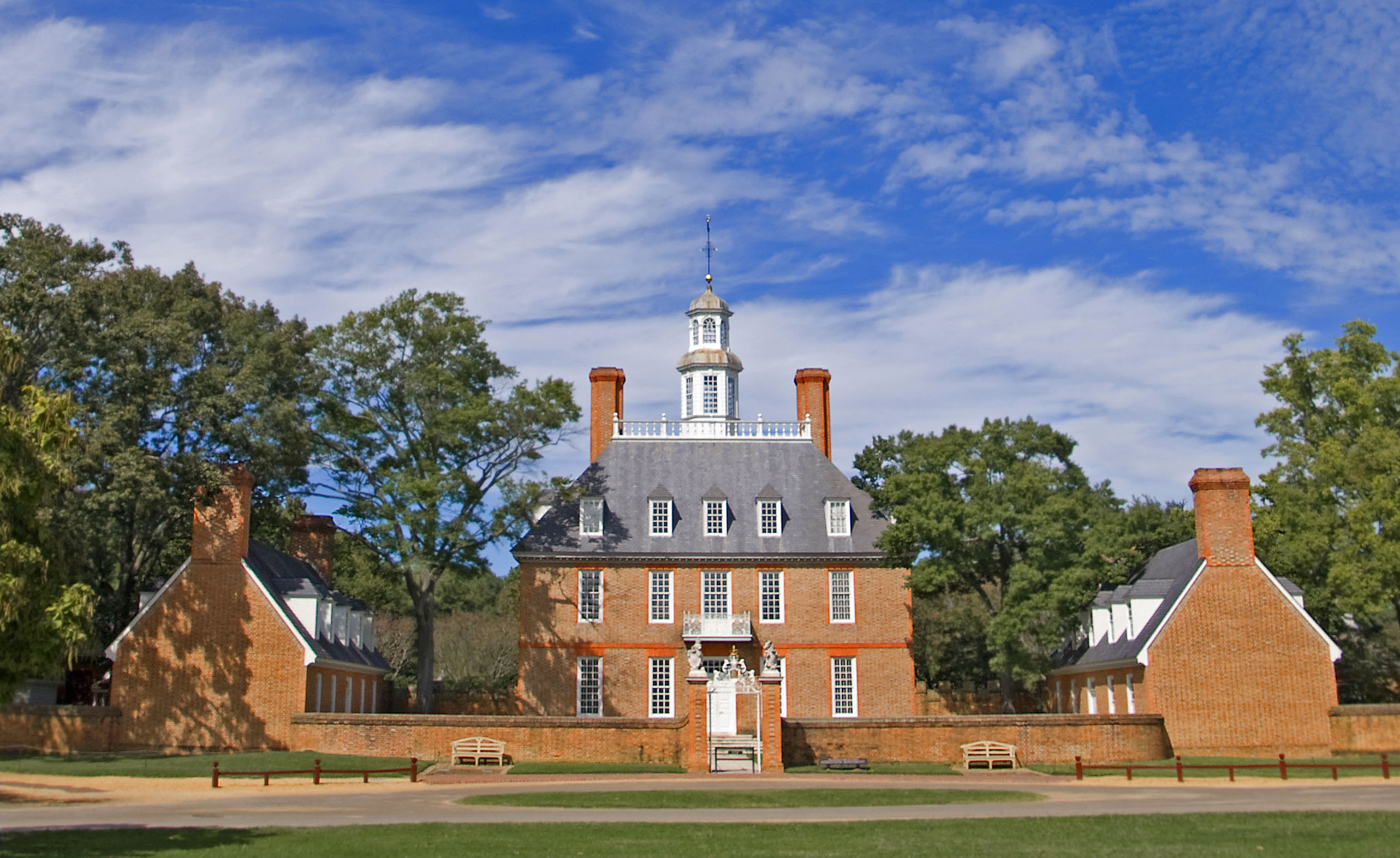
The most architecturally impressive structure in Colonial Williamsburg — the home of Virginia's royal governors, with period room restorations, extensive formal gardens, and an original kitchen outbuilding. Guided tours run throughout the day.
The living history museum at the 1607 Jamestown site — full-scale replicas of the three Susan Constant ships and the fort, with costumed interpreters. Distinct from the National Park Service's Historic Jamestowne site (the actual archaeological excavation a mile away). Both are worth visiting.
Consistently voted the most beautiful theme park in the US for its European-country landscaping and architecture. Griffon (dive coaster), Alpengeist (inverted coaster), and Verbolten are the flagship rides. Arrive early and front-load the major coasters before queues build.
A 23-mile National Park Service scenic road connecting Williamsburg, Jamestown, and Yorktown through protected forest and James River waterfront with no commercial signage. One of Virginia's great drives — take it slowly.
The most historically significant tavern in Colonial Williamsburg — where colonial leaders met privately during the independence-era crises. Today hosts interpretive programming and period food demonstrations. Chowning's Tavern and King's Arms Tavern serve colonial-era meals to ticketed diners.
The site of Cornwallis's 1781 surrender that effectively ended the Revolutionary War. The NPS battlefield auto tour covers the siege lines and American artillery positions. The Yorktown Victory Monument and the small colonial town's waterfront make the visit complete.
The second-oldest university in the US (founded 1693) is directly adjacent to the Colonial Williamsburg boundary. The Wren Building (c. 1699) is the oldest academic building in continuous use in North America. Walk the main yard and the Sunken Garden.
The actual archaeological site of the 1607 fort — distinct from Jamestown Settlement museum. Active excavations continue; the glass pavilion displays recent finds. The James Fort outline is visible in the ground and the church tower (c. 1639) still stands.
Virginia wine country extends to the Williamsburg area. The Williamsburg Winery (founded 1985) is the largest and most established, producing Chardonnay, Viognier, and Merlot from the Middle Peninsula AVA. Tastings and estate tours available.
Pick a neighborhood, not a hotel.
Williamsburg is a city of neighborhoods. The one you stay in shapes the trip more than the property does.
Different trips for different travelers.
Same city, very different stays. Pick the lens that matches your trip.
Williamsburg for families with school-age children
Colonial Williamsburg is built for this demographic — hands-on history, cannon demonstrations, printing press experiences, and militia programs engage children in ways a static museum cannot. Recommended age 7 and up for real engagement. Add Busch Gardens for teenagers.
Williamsburg for history and heritage travelers
The Historic Triangle covers three of the most significant sites in American colonial history within 15 miles. Serious history travelers spend a week covering Colonial Williamsburg, Jamestown Settlement, Historic Jamestowne NPS, Yorktown battlefield, and the Colonial Parkway with real depth.
Williamsburg for education and school groups
Colonial Williamsburg is one of the premier educational travel destinations in the US. The Foundation offers structured school programs, teacher resources, and immersive curriculum programs. A significant portion of its visitors are student groups, particularly from the Mid-Atlantic and Southeast.
Williamsburg for theme park enthusiasts
Busch Gardens Williamsburg consistently ranks among the top non-Disney theme parks in the US. Griffon and Alpengeist are considered classic coasters. The park is worth a dedicated day separate from the historical sites — don't try to combine them in a single day.
Williamsburg for couples and history buffs
The candlelight tavern dinner programs, the evening ghost tours, and the quieter fall/winter visiting seasons make Williamsburg surprisingly romantic. The Williamsburg Inn (within the Historic Area) is one of the better destination hotel experiences on the East Coast.
Williamsburg for road trippers along the east coast
Williamsburg sits logically on an I-95 corridor trip between Washington DC and the Carolina coast — or on a Virginia loop including Richmond and Shenandoah Valley. A two-night stop breaks the drive and covers genuinely unique American history.
When to go to Williamsburg.
A quick year at a glance. Great, good, or skip — see what each month is doing before you book.
Quiet season — lowest crowds and prices. Colonial Williamsburg operates on reduced winter schedule. Cold but passable for determined history travelers.
Presidents' Day weekend brings a spike in visitors. Otherwise quiet. Some special historical programs.
Good shoulder month. Spring programs beginning. Daffodils in the gardens. Crowds building toward spring break.
One of the best months — full programming, manageable crowds, flowering gardens at Governor's Palace and Williamsburg Inn grounds.
Excellent month. Full programming. Busch Gardens opens for the season. Humidity building but still comfortable.
School groups ending, family season beginning. Longer operating hours. Heat and humidity noticeable by late June.
Fourth of July programming is excellent but July 4th week brings maximum crowds. Summer heat takes energy for outdoor historical walking.
Peak summer heat. Busiest crowds. Air-conditioning the relief between outdoor site visits. Evening programs more comfortable.
Excellent month. Crowds thin after Labor Day. Full programming continues. Fall color beginning late September in the surrounding forest.
Strong fall programming including harvest and Halloween-themed events. Fall color on the Colonial Parkway. Highly recommended.
Thanksgiving week brings the Grand Illumination candlelight opening of the Christmas season. One of the most atmospheric weeks of the year.
The colonial Christmas experience — carolers, candlelight tours, 18th-century recipes, and the Grand Illumination — is distinctive and worth the cold.
Day trips from Williamsburg.
When you want a change of pace. Each one's a half-day or full-day out, easy from Williamsburg.
Jamestown (Settlement & Historic Site)
14 miles via Colonial PkwyVisit both Jamestown Settlement (museum with ship replicas) and Historic Jamestowne NPS site (actual excavations) on the same day. Budget a full day — they're 1 mile apart. The NPS archaeological glass pavilion is one of the best active-dig presentations in the country.
Yorktown
13 miles via Colonial PkwyThe NPS auto tour of the 1781 siege lines is excellent. The Yorktown Victory Center museum complements the battlefield. The small waterfront town has good seafood lunch options on the York River.
Richmond, Virginia
50 miles westThe American Civil War Museum, the Virginia Museum of Fine Arts, and the James River Parks System make Richmond a full day. Oregon Hill and Carytown neighborhoods have the best independent restaurants.
Virginia Beach
75 miles eastThe closest ocean beach to Williamsburg. The boardwalk is heavily developed; First Landing State Park at the north end offers a more natural beach experience and is where John Smith first landed in 1607.
Annapolis, Maryland
2h 30 min northMaryland's colonial capital — a strong historical complement to Williamsburg's Virginia perspective. The Naval Academy campus, the State House (oldest in continuous use in the US), and the Chesapeake crabcake tradition are the draws.
Williamsburg Winery & Virginia Wine Country
5 miles south of Colonial areaVirginia has developed a serious wine industry, with the Williamsburg area as one accessible node. The Williamsburg Winery estate tour and tasting covers the main regional producers. Combine with a drive along the James River.
Williamsburg vs elsewhere.
Quick honest reads on the cities people compare Williamsburg to.
Washington DC has the Smithsonian system, monuments, and the full capital-city infrastructure — better for breadth of American history from founding to the present. Williamsburg is deeper on colonial and early national period specifically, more experiential, and more family-engaging. Both together is the definitive East Coast American history trip.
Pick Williamsburg if: You want a deep, immersive colonial living history experience rather than the national museums and monuments model.
Philadelphia has Independence Hall, the Liberty Bell, and the Constitutional framing story — the birth of the republic. Williamsburg tells the colonial buildup story. Both are on the East Coast history circuit. Philadelphia is a full city with a better food scene; Williamsburg is a contained destination.
Pick Williamsburg if: You want the colonial Virginia lived experience over the Philadelphia declaration and constitution story.
Gettysburg is Civil War; Williamsburg is colonial and Revolutionary War. Both are among the country's best historical destinations but cover different eras and different interpretive styles. Gettysburg is battlefield-focused; Williamsburg is daily-life-focused. Many East Coast history travelers visit both on separate trips.
Pick Williamsburg if: You want colonial and Revolutionary War history with a living history and family-activity dimension.
Old Sturbridge Village in Massachusetts covers 1830s New England rural life with similar living-history methodology. Colonial Williamsburg is larger, better funded, covers the colonial period, and has the actual urban capital character. Sturbridge is an excellent complement for New England trips; Williamsburg is the larger and more developed program.
Pick Williamsburg if: You want the full scale of American living history interpretation and the colonial capitol context.
Itineraries you can start from.
Rough shapes for a trip here — a feel for the pace and cost. Find the one that fits you.
Day 1: Colonial Williamsburg Historic Area — Governor's Palace, trade shops, Raleigh Tavern, evening tavern dinner. Day 2: Busch Gardens or Jamestown Settlement.
Day 1–2 Colonial Williamsburg (deep). Day 3 Jamestown — Jamestown Settlement museum plus Historic Jamestowne NPS site. Day 4 Yorktown battlefield and waterfront. Colonial Parkway connecting all three.
Three days Colonial Williamsburg plus Busch Gardens. Day 4 Jamestown. Day 5 Yorktown and Richmond day trip. Williamsburg Winery evening if adults-only.
Things people ask about Williamsburg.
What is Colonial Williamsburg and is it worth visiting?
Colonial Williamsburg is a 301-acre living history museum — the restored and reconstructed colonial capital of Virginia, staffed by costumed interpreters working in period trades and reenacting 18th-century political life. It's one of the most ambitious public history projects in the world. It's worth visiting if you engage with the interpreters and walk beyond the main street. If you treat it as a backdrop for photos, it will feel overpriced.
How much does Colonial Williamsburg cost?
A single-day adult ticket to the Historic Area is approximately $45. Multi-day passes (covering the Capitol, Governor's Palace, Peyton Randolph House, and all trade shops) run $60–100 for adults. Tavern dinners are separate reservations at $50–80 per person. Children under 6 are free. The Foundation also sells an annual pass that pays off quickly if you spend multiple days.
How many days do you need for Colonial Williamsburg?
At minimum one full day to cover the Duke of Gloucester Street main sites and the Governor's Palace. Two days lets you go deeper — the Peyton Randolph House (most comprehensive interpretation of enslaved life), the DeWitt Wallace Decorative Arts Museum, and the trade shops at leisure. Three days covers Jamestown and Yorktown as well, completing the Historic Triangle.
Is Busch Gardens Williamsburg good?
Yes — it's consistently rated among the top theme parks in the US for its aesthetics and ride quality. The European-country zone theming (Germany, France, Italy, Scotland) is more immersive than most parks. Griffon, Alpengeist, and Verbolten are first-tier coasters. It runs very crowded on summer weekends; early morning arrival and front-loading the major rides is the standard strategy.
What is the Historic Triangle?
The three sites connected by the Colonial Parkway: Colonial Williamsburg (capital, 1699–1780), Jamestown (first permanent English settlement, 1607), and Yorktown (final major Revolutionary War battle, 1781). Each is about 13–14 miles from Williamsburg's center. The parkway connecting them was built by the National Park Service in the 1930s and intentionally excludes commercial signage.
How is Jamestown Settlement different from Historic Jamestowne?
Jamestown Settlement (run by the Jamestown-Yorktown Foundation) is the living history museum with full-scale ship replicas and fort reconstruction — a more accessible, family-friendly experience. Historic Jamestowne (National Park Service) is the actual 1607 site with ongoing archaeological excavation and the original 1639 church tower. Both are worth visiting on the same day; budget 2–3 hours total for both.
Is Williamsburg good for families with kids?
One of the best family history destinations in the US. Colonial Williamsburg's costumed programming engages children differently than a static museum — cannon firings, militia drills, printing demonstrations, and the Governor's Palace are all engaging for different ages. Busch Gardens for older children and teenagers. Water Country USA (seasonal waterpark) for summer families. Recommended age for Colonial Williamsburg is roughly 7 and up for real engagement.
What is the best time of year to visit Williamsburg?
April through June for spring weather and blooming gardens within the Historic Area. September through November for fall color, thinner crowds, and full programming. Summer brings peak crowds and heat but the fullest activity schedule and longest operating hours. The Colonial Williamsburg Foundation runs a distinctive Christmas programming season in December with candlelight tours, 18th-century music, and holiday cooking demonstrations.
What are the best tavern experiences at Colonial Williamsburg?
The four operating colonial taverns within the Historic Area require advance reservations, especially on summer weekends. Chowning's Tavern is the most accessible — casual colonial food, reasonable prices, and Colonial gaming evenings. King's Arms Tavern is the most formal. Christiana Campbell's and Shields Tavern round out the options. All are staffed in period costume and serve colonial-era recipe dishes.
Can I visit Williamsburg without a car?
Difficult but partially possible. Amtrak (Williamsburg station) connects to Richmond and Washington DC — an option for visitors coming from the corridor. The Colonial Williamsburg Historic Area itself is pedestrian-only and walkable once you're there. Getting to Jamestown, Yorktown, Busch Gardens, or any of the outlying sites without a car requires expensive taxis or limited shuttle services. A car is recommended for the full Historic Triangle experience.
What airport do I fly into for Williamsburg, Virginia?
Newport News/Williamsburg International Airport (PHF) is 17 miles east with limited regional service. Richmond (RIC) and Norfolk (ORF) are both about 50 miles away with broader national connections. Washington Dulles (IAD) is 2.5 hours north — useful for East Coast visitors combining a Washington DC stop. Amtrak from Washington Union Station to Williamsburg is about 2.5 hours.
Is Colonial Williamsburg historically accurate?
The Foundation takes historical accuracy seriously and has undergone significant revision in the last 20 years, particularly regarding the representation of enslaved people in colonial Virginia (approximately half the colonial population). The 'Previously Enslaved' programming and sites like the Peyton Randolph House now present a more complete picture than the founding-fathers-only narrative of earlier decades. The physical structures are a mix of original, restored, and reconstructed buildings — documentation distinguishes them.
How far is Washington DC from Williamsburg?
About 2.5 hours by car via I-95 and I-64 (150 miles). Amtrak connects Washington Union Station to Williamsburg in roughly 2.5 hours with several daily trains. A Washington DC–Williamsburg pairing is a popular East Coast two-destination trip — the capital city plus the colonial capital covers American history from two different centuries.
What is nearby to Williamsburg for a day trip?
Jamestown and Yorktown are the logical Historic Triangle completions. Richmond (50 miles west) has excellent museums including the American Civil War Museum and strong James River park outdoor activities. Virginia Beach (75 miles east) adds a beach day. The Northern Neck of Virginia and the Colonial Parkway drives toward the James and York rivers offer scenic relief from the tourist infrastructure.
Is Williamsburg, Virginia expensive?
Moderately expensive for a historical destination. Colonial Williamsburg admission plus meals can easily run $150–200 per adult per day. Hotels within the Historic Area's Colonial Williamsburg Foundation properties (Williamsburg Inn, Williamsburg Lodge) run $250–450/night. Budget chains two miles out run $100–150/night. Busch Gardens adds $60–100/day. A family of four should budget $600–900/day all-in for summer peak.
What is the College of William & Mary?
Founded in 1693 by royal charter from King William III and Queen Mary II, William & Mary is the second-oldest university in the US (after Harvard). The campus is directly adjacent to the Colonial Williamsburg boundary — the Wren Building dates to 1699 and is the oldest academic building in continuous use in America. It's a public research university with roughly 6,000 undergraduates and a strong liberal arts reputation.
What should I not miss at Colonial Williamsburg?
The Governor's Palace (architecturally the finest building; formal gardens are exceptional). The Capitol (where the legislative and legal drama of colonial governance played out). The Peyton Randolph House (best programming on enslaved life). An evening at one of the taverns. A visit to a working trade shop — the printer, blacksmith, or gunsmith conversations are the clearest window into 18th-century daily life. The evening programs (ghost tours, candlelight concerts) are separately valuable.
Does Colonial Williamsburg change by season?
Yes. The Christmas season (late November–early January) features the Grand Illumination — the lighting of the Historic Area with thousands of candles and lanterns — plus colonial music concerts and special programs. Spring brings the full garden program. Summer has the longest hours and most events. Fall programming often focuses on colonial harvest practices. Winter is the least-attended period with shorter hours but a quieter, more intimate atmosphere.
Know someone headed to Williamsburg?
Send them this guide — real neighborhoods, timing, and prices, with nothing to sign up for.
Copies the link — nothing to install