Tehran
Send it to whoever you'd travel with
Tehran is Iran's sprawling, mountain-backed capital — a 9-million-person tangle of palaces, bazaars, cafés, and Alborz hiking trails on the city's northern edge.
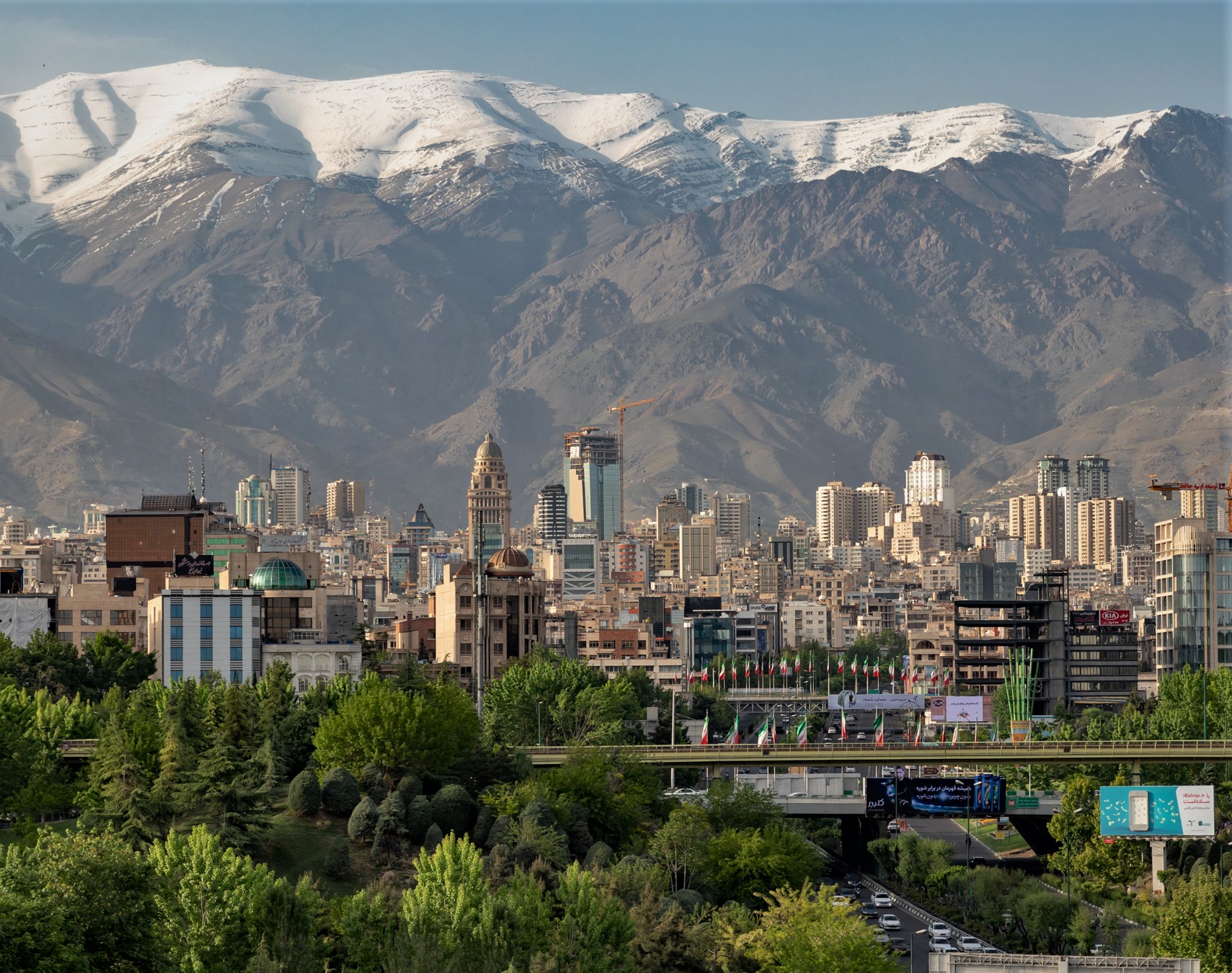
Tehran is not the city most travelers imagine. The capital sits at 1,200 meters with the snow-streaked Alborz wall to the north and the Dasht-e Kavir desert blurring the southern horizon, and the whole place tilts physically uphill — south Tehran is the old, dense, working bazaar city; north Tehran is leafy, wealthy, café-laced and noticeably cooler in summer. You feel the gradient on the metro and in the air. A lot of first-time visitors arrive bracing for somewhere severe and instead spend their first afternoon drinking saffron ice cream in a park, surrounded by twenty-something Tehranis on dates.
The travel reality, though, deserves to be stated upfront. Iran is under heavy US sanctions, ATMs do not accept foreign cards, and Western travel advisories sit at their highest level — most notably for American, British, and dual-national passport holders, who face real arrest risk and, in the US case, a mandatory guided-tour structure. Most European, Asian, and Australasian visitors travel independently without incident, but everyone arrives with cash in hand, a downloaded Snapp app, and a willingness to dress and behave by local rules. This is not a casual weekend break. It rewards travelers who plan.
What Tehran actually does well: museums (the National Museum of Iran is a 7,000-year walk through Persian civilization, and the Holy Defense Museum is one of the most affecting war museums anywhere), the Grand Bazaar (an entire enclosed neighborhood with caravanserais, mosques, and tea-stops inside it), Qajar-era palace complexes like Golestan, and a café culture in central districts like Iranshahr that genuinely rivals Istanbul. Then on weekends locals all but evacuate the city — up into Darband, Darakeh, and Tochal to walk riverside trails lined with kebab stalls. The Tochal cable car runs from inside the city limits to 3,750 meters.
Treat Tehran as a 3-to-5-night opener or closer rather than the whole trip. Pair it with Isfahan and Shiraz to complete the classic Persian itinerary, or use it as a base for a ski day in Dizin and a desert night in Kavir. The city is enormous and the traffic is genuinely terrible, so don't overplan — pick one museum, one bazaar half-day, one café neighborhood, one mountain afternoon. That's the rhythm Tehranis themselves keep.
The practical bits.
- Best time
-
Apr – May, Oct – early NovMild 18–25°C days, clear skies, before/after the summer 38°C heat and winter inversions.
- How long
-
3 – 5 nights recommendedMost travelers fold Tehran into a longer Iran loop with Isfahan, Shiraz, and Yazd.
- Budget
-
$89 / day typicalSanctions-distorted rial makes meals and taxis cheap; flights, guides, and Western-style hotels swing the spend.
- Getting around
-
Metro for distance, Snapp for everything else.The metro runs 7 lines from 5am–10:30pm and is the only fast way through Tehran's traffic. Snapp and TAPSI are the local Uber equivalents; register before arrival with an Iranian SIM. Taxis are cheap but rarely metered — agree on a price or use the app.
- Currency
-
﷼ Iranian Rial (IRR), spoken in Toman (1 toman = 10 rial)Cash only for foreigners. Foreign Visa/Mastercard does not work anywhere in Iran — bring euros or US dollars and exchange on arrival, or load a tourist Mah Card before your trip.
- Language
- Persian (Farsi). English is spoken by hotel staff, younger Tehranis, and tour guides; rarely by taxi drivers.
- Visa
- Most nationalities can get a 30-day tourist visa via authorization code through a travel agency; US, UK, and Canadian citizens must book a government-approved guided tour and apply in advance.
- Safety
- Petty crime is low and tourists are routinely treated with warmth, but traffic is genuinely dangerous, demonstrations can escalate without warning, and dual nationals face real arbitrary-detention risk. Dress code (hijab, covered arms/legs) is mandatory and enforced.
- Plug
- Type C / F, 220V 50Hz
- Timezone
- GMT+3:30 (no DST since 2022)
A few specific picks.
Hand-picked, not algorithmic. Each of these has earned its space.
Qajar-era royal complex with mirror halls, tile work, and the most photographed peacock throne in Iran. Go early — by 10am the courtyard fills with school groups.
Two buildings, 7,000 years of objects — Achaemenid reliefs from Persepolis, Sassanid silver, a startlingly intact Salt Man mummy from a Zanjan mine.
A covered city of its own — 10km of corridors, carpet rooms, spice stalls, and historic caravanserais. Lunch at Moslem Restaurant inside for the tahchin.
Three-level pedestrian bridge by Leila Araghian, soaring over a highway between two parks. Locals come at sunset; it doubles as a café terrace.
435m communications tower with an observation deck and a revolving restaurant near the top. The view explains Tehran's scale in a way no map can.
Confronting, well-curated walk through the Iran–Iraq war. Outdoor tank park, immersive trench reconstructions, deeply Iranian in framing.
Riverside trailhead at the foot of the Alborz, lined with teahouses serving dizi and grilled corn. Walk up an hour, eat, walk back.
Northern Tehran's smaller, livelier counterpart to the Grand Bazaar — pomegranates, saffron, the Imamzadeh Saleh shrine right next door.
The central café strip where young Tehranis actually hang out. Specialty coffee, laptop crowd, art-house cinema next door.
Open-air food street between the National Museum and the Fire Temple. Falafel, kebab sandwiches, fresh juice — busiest on Thursday evenings.
7.5km gondola from the city's edge to 3,750m. Hike, ski in winter, or just ride up for tea and a panorama back over the smog line.
Small but exquisite — 150+ historic rugs in one room, with context for every regional weaving tradition you'll see in the bazaars.
Pick a neighborhood, not a hotel.
Tehran is a city of neighborhoods. The one you stay in shapes the trip more than the property does.
Different trips for different travelers.
Same city, very different stays. Pick the lens that matches your trip.
Tehran for history travelers
Persia's 7,000-year arc is laid out across Tehran's museums and Qajar palaces in a way no other Iranian city quite matches — start here before Persepolis.
Tehran for mountain & ski travelers
Nowhere else has 3,900m peaks and a metro stop on the same map. Tochal, Dizin, and Shemshak are all reachable as day trips from central hotels.
Tehran for café and culture travelers
Central districts like Iranshahr have a specialty coffee, indie cinema, and gallery scene that quietly rivals Istanbul or Beirut.
Tehran for foodies
Persian cuisine in its capital form — saffron rice, slow stews, Caspian and Azeri regional specialties, and a bazaar food culture that hasn't been smoothed for tourists.
Tehran for architecture travelers
Qajar tilework at Golestan, mid-century modernism in District 6, and contemporary landmarks like Tabiat Bridge — Tehran is a layered architectural primer.
Tehran for independent budget travelers
Few capital cities deliver this much on $40–50 a day, provided you arrive with cash, a VPN, and patience for the sanctions logistics.
When to go to Tehran.
A quick year at a glance. Great, good, or skip — see what each month is doing before you book.
Ski season at Dizin and Shemshak is in full swing.
Still ski weather; the city itself is grey.
Nowruz (Iranian New Year) closes much of the country for two weeks — beautiful but logistically tricky.
One of the two best months to visit.
Peak shoulder — book hotels ahead.
Manageable mornings, brutal afternoons; head into the mountains.
Tehranis evacuate to the Caspian coast on weekends.
Worst month for city sightseeing.
Late September starts the autumn sweet spot.
Arguably the single best month of the year.
First half is excellent, second half pollution begins.
Ski season opens; city sightseeing is bracing.
Day trips from Tehran.
When you want a change of pace. Each one's a half-day or full-day out, easy from Tehran.
Mount Tochal
Half dayAccessible from inside Tehran's city limits via the Tochal Telecabin in Velenjak.
Darband
Half dayA 30-minute taxi from central Tehran; walk the river path and eat at one of the kebab stalls.
Darakeh
Half dayNorthwest of the city — the parallel valley to Darband, less crowded on weekdays.
Lavasan
Full dayAbout an hour northeast of Tehran in the southern Alborz foothills.
Dizin Ski Resort
Full dayThe Middle East's largest ski resort, 2.5 hours north of Tehran at 3,600m.
Qazvin & Alamut Castles
Full day (long)2 hours west; combine with the dramatic Alamut Valley for a 12-hour day.
Tehran vs elsewhere.
Quick honest reads on the cities people compare Tehran to.
Tehran is the modern, mountain-edged capital with the country's best museums; Isfahan is the Safavid masterpiece built around Naqsh-e Jahan Square.
Pick Tehran if: Pick Isfahan if you have to choose just one Iranian city. Pick Tehran if you want context for everything else.
Tehran is dense, fast, and cosmopolitan; Shiraz is poetic, smaller, and the gateway to Persepolis and the Persian wine-and-poetry tradition.
Pick Tehran if: Shiraz for romance and ruins, Tehran for scale and contemporary Iran.
Both are huge, mountainous-edged, café-driven Middle Eastern capitals — but Istanbul is open and easy, Tehran is closed and logistically heavy.
Pick Tehran if: Istanbul for a first regional trip. Tehran when you're ready for Iran specifically.
Often paired in the same trip — Yerevan is the open, drinkable, Christian Caucasus capital just across the border; Tehran is the Persian counterweight.
Pick Tehran if: Combine them: fly Yerevan to Tehran in two hours and see the contrast for yourself.
Baku has the oil money and the Caspian glamour; Tehran has the depth, the mountains, and a far older cultural pedigree.
Pick Tehran if: Baku for a polished weekend, Tehran for a substantial trip into Persian history.
Itineraries you can start from.
Rough shapes for a trip here — a feel for the pace and cost. Find the one that fits you.
Golestan and the National Museum on day one, the Grand Bazaar and 30 Tir Street on day two, Darband and Tajrish on day three. Tight but doable.
Three days in the city plus a Tochal cable car day and a Lavasan or Karaj Lake excursion. Time for Iranshahr cafés and a proper bazaar afternoon.
Pair the capital with two nights in the mountains — Dizin or Shemshak in winter, or a hiking base in Darakeh in shoulder season.
Things people ask about Tehran.
Is Tehran safe for tourists?
For everyday street safety — yes, surprisingly so. Petty crime is uncommon and foreigners are routinely welcomed. The real risks are political rather than criminal: occasional demonstrations, very dangerous traffic, and a serious arbitrary-detention risk for dual nationals and US/UK/Canadian passport holders. Most independent travelers from Europe, Asia, and Australasia visit without incident, but everyone should follow the local dress code and avoid political conversation in public.
How many days do I need in Tehran?
Three to five nights is the sweet spot. Two nights is enough to see Golestan Palace, the National Museum, and the Grand Bazaar but you'll skip the mountain side of the city entirely. Five nights lets you fold in Darband, the Tochal cable car, the Holy Defense Museum, and a slow café afternoon in Iranshahr. Anything more than a week and most travelers start looking at day trips out to Lavasan, Karaj, or the ski resorts.
What is the best time to visit Tehran?
Mid-April to late May, and late September to early November. These shoulder windows give you 18–25°C days, clear mountain views, and almost no rain. Summer (June–August) regularly hits 38°C with thick afternoon smog trapped against the Alborz. Winter is cold (-5 to 5°C), occasionally snowy, and pollution inversions can close schools — though it's the best time for the nearby Dizin and Shemshak ski resorts.
Is Tehran cheap or expensive to visit?
Cheap by international standards thanks to the sanctions-distorted rial. Budget travelers manage on around $37 a day, mid-range trips average $89, and even luxury stays rarely exceed $200 per day including driver and guide. The real cost is getting there — flights from Europe run $400–700 round-trip and from the US closer to $1,200 with a long routing through Doha, Istanbul, or Dubai.
What is Tehran known for?
Tehran is Iran's political and cultural capital — known for its Qajar and Pahlavi palaces (Golestan, Niavaran, Sa'dabad), the Grand Bazaar, world-class museums of pre-Islamic and Islamic Persian art, and a strikingly modern café and gallery scene in its central districts. It's also famous for its setting: the Alborz Mountains rise straight out of the city, putting ski slopes and 3,900m summits within an hour of downtown.
Cash or card in Tehran?
Cash — and only cash brought from outside Iran. Foreign Visa, Mastercard, and Amex do not work anywhere in the country because of US sanctions, and there is no workaround at ATMs. Bring euros or US dollars in clean, undamaged bills and exchange them at a Ferdowsi Street sarafi (money changer) on arrival. Some agencies now offer prepaid 'tourist cards' (Mah Card, Daric Pay) you can load before arrival for hotel and restaurant use.
How do I get from Imam Khomeini Airport to central Tehran?
IKA is 50km southwest of the city and the transfer takes 45–90 minutes depending on traffic. The cheapest option is the metro Line 1 extension (about $1) which runs to the airport but only every 30–60 minutes. Most travelers use Snapp or TAPSI from the arrivals hall (around $8–12 to the center) or pre-book a hotel transfer. Avoid the unmarked taxi touts in the terminal.
What are the best day trips from Tehran?
The Alborz Mountains dominate every shortlist. Tochal's cable car runs from the city limits to 3,750m. Darband and Darakeh are riverside hiking villages 30 minutes from the center. Lavasan offers lakes and resort-style restaurants an hour out. In winter, Dizin and Shemshak ski resorts are 2–3 hours away. Further afield, Qazvin and the Alamut Valley castles make a long day trip for fortress and landscape fans.
Where is the best neighborhood to stay in Tehran?
First-time visitors should base in District 12 or Iranshahr (District 6) — both walkable to the major museums, palaces, and the Grand Bazaar, and well connected by metro. Travelers prioritizing cleaner air and mountain access should pick Tajrish, Velenjak, or Niavaran in the north. The trade-off is real: north Tehran is calmer and prettier but a 45-minute metro ride from the historic core.
Tehran vs Isfahan — which should I visit?
Visit both if you can. Tehran is the modern, museum-heavy, café-driven capital with mountains on its doorstep — it's where you understand contemporary Iran. Isfahan is the masterpiece, built around Naqsh-e Jahan Square with the Imam Mosque, Sheikh Lotfollah, and the historic bridges; it's where you understand Persian art and architecture. Most itineraries spend 3 nights in Tehran and 3–4 in Isfahan, connected by a 7-hour drive or 90-minute flight.
Can Americans travel to Tehran?
Yes, but only on a pre-approved guided tour. US citizens cannot travel independently in Iran — you must book through a licensed Iranian agency, be accompanied by a government-approved guide at all times, and apply for the visa in advance through an Iranian Interest Section (currently via the Pakistani embassy in Washington). The US State Department maintains a Level 4 'Do Not Travel' advisory citing risk of arbitrary arrest.
What should women wear in Tehran?
By law, all women — Iranian and foreign — must cover their hair with a loose headscarf and wear clothing that covers arms, legs, and the shape of the body. A long tunic or manteau over leggings and a scarf is the standard tourist outfit. Enforcement has been uneven since 2022 and many young Tehrani women push the limits, but visitors should comply on arrival and in any official setting. Tight or transparent fabrics are not appropriate.
Is the Tehran metro safe and easy to use?
Yes — it's clean, cheap (around $0.20 a ride), and the fastest way across the city given the surface traffic. Signs are in Persian and English, announcements are bilingual on the major lines, and there are women-only carriages at each end of every train if preferred. Trains run 5am to 10:30pm. Buy a rechargeable Tehran Card at any station for convenience.
What food should I try in Tehran?
Start with chelo kabab koobideh (minced lamb skewers with saffron rice) at Moslem near the Grand Bazaar, dizi (a slow-cooked lamb and chickpea stew) in a Darband teahouse, and tahchin (a saffron rice cake layered with chicken) anywhere serious. For something regional, Little Khoshbin specializes in Gilaki food from the Caspian coast. Finish with bastani sonati — saffron and rosewater ice cream — from a stand on Vali Asr Street.
Do I need a guide in Tehran?
Americans, Britons, and Canadians legally do. Other nationalities don't, and the city is navigable on Snapp and the metro with translation apps. But a half-day guided walk through the Grand Bazaar and Golestan Palace pays off — the layers of history are easy to miss otherwise. Many travelers self-guide most days and book one guided day for context.
Can I drink alcohol in Tehran?
No. Alcohol is illegal under Iranian law for residents and visitors alike, and there are no bars, clubs, or licensed restaurants serving it. Penalties for foreigners caught drinking are usually a fine and deportation rather than imprisonment, but it's not worth testing. Iran does have an excellent non-alcoholic café and tea culture — the saffron-cardamom mocktails and fresh fruit juices are genuinely good.
Is internet and WhatsApp blocked in Tehran?
Many sites are blocked, including Facebook, Twitter, YouTube, and at various times WhatsApp, Instagram, and Telegram. Most Tehranis use a VPN constantly. Install one before arrival — the Iranian government blocks VPN provider websites from inside Iran, so you can't download one once you've landed. Hotel Wi-Fi is generally available but slow and filtered.
Know someone headed to Tehran?
Send them this guide — real neighborhoods, timing, and prices, with nothing to sign up for.
Copies the link — nothing to install