Baku
Send it to whoever you'd travel with
Baku is a wind-swept Caspian capital where medieval caravanserais sit beneath Flame Tower glass and saffron plov perfumes the streets.
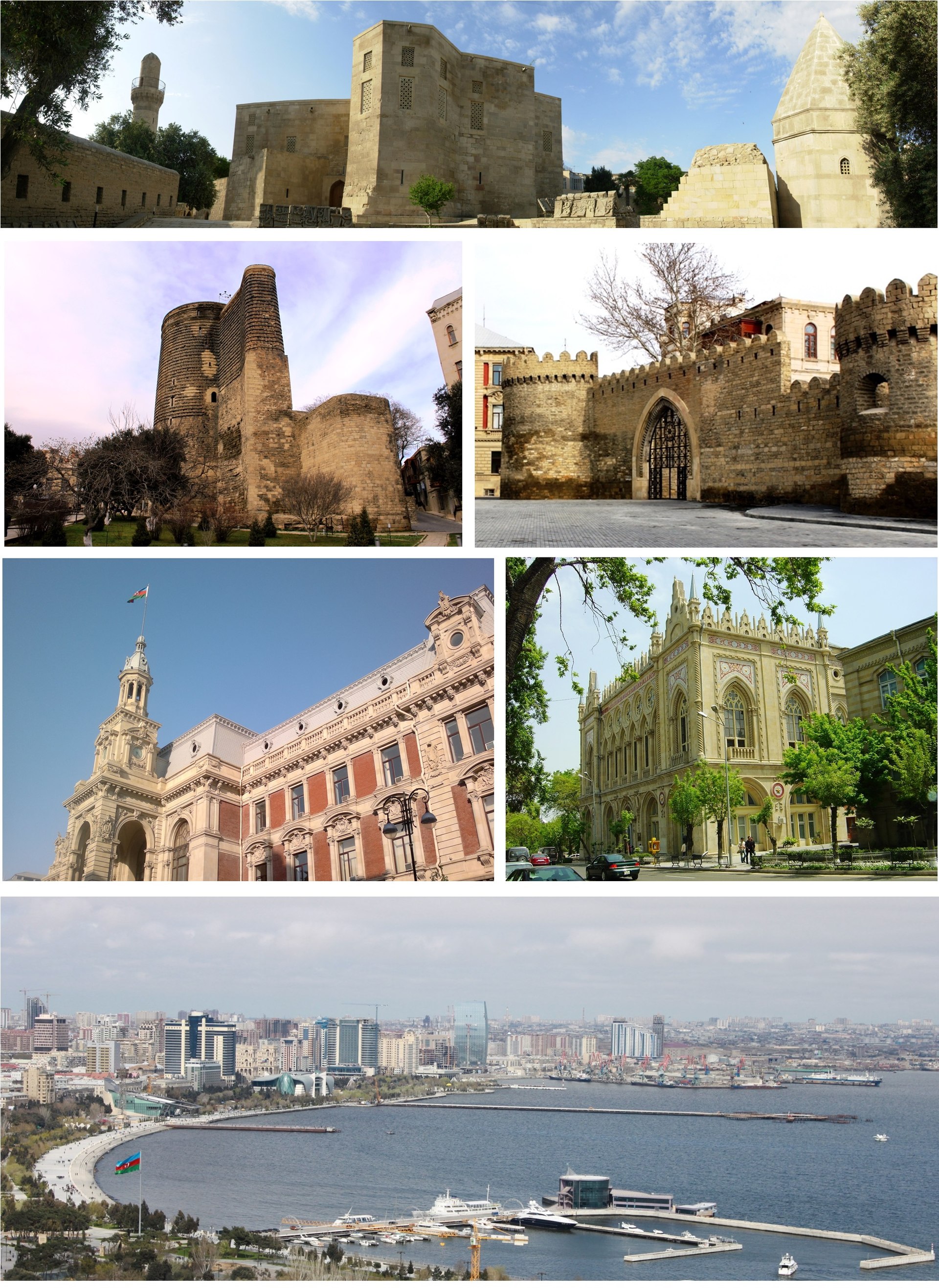
Baku doesn't behave like anywhere else. Walk five minutes from a UNESCO-listed medieval walled city and you're standing under three glass Flame Towers that change colour after dark; another five and you're on a Caspian promenade lined with palm trees and Soviet-era ice cream stands. The city is genuinely strange in the best way — a post-Soviet capital that struck oil, hired Zaha Hadid, and still can't decide whether it's Persian, Turkic, Russian or its own thing. The honest answer is: all of them, often on the same block.
The Old City — Icherisheher — is the gravitational centre, and despite the carpet-shop hustle it still feels lived-in. Cats sleep on Maiden Tower's ramparts, locals shortcut through alleys to get home, and the call to prayer drifts over hammams that have been running for centuries. Outside the walls, Fountain Square and the long pedestrianised Nizami Street are where Baku actually socialises after sunset, when the heat drops and families spill out for ice cream and tea. It's a late-night city — restaurants don't fill until 9pm and the boulevard stays busy past midnight.
Food is the unsung argument for coming. Azerbaijani cuisine is what happens when Persian, Turkish, Russian and Caucasian kitchens all share a border for a thousand years — saffron plov heaped with chestnuts and dried fruit, lamb stews thickened with sour plums, fresh herbs on every table by default. Tea is a ritual, not a beverage: served in pear-shaped armudu glasses with cubes of jam to bite between sips. Most travellers leave shocked at how good (and how affordable) eating well is here.
Two warnings worth giving up front. Summer — June through August — is brutal: 35°C+ with a hot Caspian wind that genuinely strips the joy out of sightseeing. And the Armenian border is closed, so this is a one-way leg of any Caucasus trip; most people fly in or out via Tbilisi. Get the timing right and Baku rewards you with one of the most genuinely original capitals in the region.
The practical bits.
- Best time
-
Late Apr – early Jun, Sep – mid OctWarm, dry, and the Caspian wind is at its most pleasant rather than punishing.
- How long
-
4 – 7 nights recommendedThree nights covers the Old City and one day trip; a full week lets you reach Sheki or Quba.
- Budget
-
$110 / day typicalSit-down meals and metro are cheap; tours, taxis to Gobustan, and Old City boutique hotels are where it climbs.
- Getting around
-
Metro and Bolt rideshare cover almost everything.The metro is clean, fast and costs around AZN 0.50 per ride on a rechargeable BakiKart. Bolt is the default taxi app and almost always cheaper than flagging a car — street taxis routinely overcharge tourists. The central tourist core from the Old City to Fountain Square is walkable.
- Currency
-
₼ Azerbaijani Manat (AZN)Cards are accepted in most central restaurants, malls and hotels. Carry cash for taxis, smaller cafés, bazaars, and anywhere outside the centre.
- Language
- Azerbaijani is the official language; Russian is widely spoken; English works in hotels, central restaurants and tourist sites but drops off quickly elsewhere.
- Visa
- Most nationalities need an e-visa via evisa.gov.az — around $69, issued in three business days, valid for a single 30-day stay.
- Safety
- Violent crime is rare and the central districts feel comfortable to walk late. The main hassles are taxi overcharging (use Bolt) and occasional unwanted attention toward women in nightlife areas.
- Plug
- Type C/F, 220V
- Timezone
- GMT+4
A few specific picks.
Hand-picked, not algorithmic. Each of these has earned its space.
Climb the 12th-century stone cylinder for a rooftop view that frames the Old City against the Flame Towers and the Caspian.
A surprisingly intimate 15th-century royal complex of courtyards, a mausoleum and a tiny tiled mosque — easy to spend two hours.
Zaha Hadid's white poured-concrete wave is the photo of modern Baku; the rotating exhibitions inside are usually worth the ticket too.
Ride the funicular up at dusk; the three towers light up at sunset and the city spreads out below toward the bay.
A six-kilometre Caspian promenade that locals stroll every evening; the Little Venice canal section is touristy but charming after dark.
Pedestrianised European-style heart of the city; the place to eat ice cream, people-watch and find late dinner.
Modern take on Azerbaijani classics — lamb plov, herb-laden dolma, sturgeon kebab — in a polished room. Book ahead.
Traditional Old City spot inside a former caravanserai; come for saj-cooked lamb and the live tar music.
The city's working food market — saffron, sumac, walnut jam, sheets of dried sour plum sheets, and pomegranate everything.
A Soviet-modernist seafront pavilion shaped like a shell; come for tea, baklava and a view of the bay.
Stations like Nizami and Icherisheher are stunning marble-and-mosaic survivors of the Soviet era — and a single ride costs about 30 cents.
Belle Époque pile on the seafront with rooms looking onto the boulevard; the best in the city if budget allows.
Pick a neighborhood, not a hotel.
Baku is a city of neighborhoods. The one you stay in shapes the trip more than the property does.
Different trips for different travelers.
Same city, very different stays. Pick the lens that matches your trip.
Baku for architecture fans
Few cities pack medieval walls, Soviet modernism, Belle Époque oil-boom mansions and Zaha Hadid into a 4 km radius the way Baku does.
Baku for foodies
Azerbaijani cooking is genuinely underrated — Persian and Turkic influences with cheap, very good produce. Plov, kebab and herb culture done seriously.
Baku for solo travellers
Safe central districts, easy metro, a strong café-and-boulevard culture that makes eating alone effortless.
Baku for history travellers
A UNESCO Old City, Zoroastrian fire temples, Silk Road caravanserais and Stone Age petroglyphs at Gobustan are all within an hour.
Baku for couples
The boulevard at dusk, rooftop bars under the Flame Towers and slow Old City dinners make it an easy four-night romantic break.
Baku for off-beat capital collectors
If you've already done the standard European capitals, Baku is the obvious next step — strange, photogenic and still genuinely uncrowded.
When to go to Baku.
A quick year at a glance. Great, good, or skip — see what each month is doing before you book.
Cheapest hotel rates of the year but limited daylight.
Quiet museums and Old City; pack a windproof layer.
Novruz around 20–24 March brings the city's biggest festival.
Genuinely one of the best months — green hillsides on day trips.
Peak shoulder season — book ahead, especially around the F1 Grand Prix weekend.
Early June is still excellent; late June starts pushing toward summer heat.
Locals decamp to the Absheron beaches; the city centre is hard going.
Worth visiting only if you'll spend most of your time on day trips or at the coast.
The single best month for most travellers — book early.
Excellent through about the 20th, cooler after that.
Quieter and cheaper; bring layers and a rain shell.
Atmospheric in the Old City but short daylight and biting wind.
Day trips from Baku.
When you want a change of pace. Each one's a half-day or full-day out, easy from Baku.
Gobustan National Park
70 min driveUNESCO-listed rock carvings from 5,000–20,000 years ago plus a field of bubbling mud cones.
Absheron Peninsula (Yanar Dag & Ateshgah)
40 min drivePairs naturally with Gobustan as a combined full-day private tour.
Lahij
3.5 hr driveBest as a long day or overnight; the road in from Ismayilli is spectacular.
Quba & Khinalug
2.5 hr driveWorth extending overnight if you want to reach Khinalug village above 2,300m.
Sheki
5 hr drive or trainAlmost always done as one overnight rather than a same-day return.
Shamakhi
2 hr driveQuiet, scenic, and easy to combine with the village of Lahij.
Baku vs elsewhere.
Quick honest reads on the cities people compare Baku to.
Tbilisi is warmer-feeling, more bohemian, and has the deeper café and wine-bar culture; Baku is bigger, stranger and more architecturally ambitious.
Pick Baku if: Pick Tbilisi for atmosphere and ease; pick Baku for novelty and architecture.
Yerevan is smaller, more relaxed and more accessible thanks to visa-free entry; Baku is wealthier, more polished and more visually dramatic.
Pick Baku if: Pick Yerevan if you value culture and ease of arrival; pick Baku if you want the grand-capital experience.
Istanbul is in a different league for scale, food and history; Baku gives you a vaguely similar Turkic-Persian cultural mix at one-tenth the crowd levels.
Pick Baku if: Pick Istanbul for a once-in-a-lifetime trip; pick Baku for a quieter long weekend in the same cultural family.
Both are post-Soviet capitals with strong Silk Road bones; Tashkent is the gateway to Samarkand, Baku is the gateway to the Caspian.
Pick Baku if: Pick Tashkent if you want to combine with Uzbek monuments; pick Baku for seafront and modern architecture.
Dubai is glossier, hotter and more about hotels and malls; Baku scratches a similar futuristic-skyline itch but with a real medieval old city attached.
Pick Baku if: Pick Dubai for resort comfort; pick Baku for substance underneath the skyline.
Itineraries you can start from.
Rough shapes for a trip here — a feel for the pace and cost. Find the one that fits you.
Two days walking Icherisheher and the boulevard, one day in Gobustan and Absheron, one easy evening at the Heydar Aliyev Center.
Cover the city slowly, eat your way through Nasimi, then take the train inland to Sheki for the Khan's Palace and silk caravanserai overnight.
Five nights in Baku with day trips to Gobustan, Lahij and Quba, then the overnight sleeper train across the border to Tbilisi.
Things people ask about Baku.
Is Baku safe for solo travelers?
Yes — Baku is one of the safer capitals in the wider region for solo travel. Violent crime against tourists is rare, central districts are well-lit and patrolled, and you can comfortably walk Fountain Square and the boulevard late at night. Solo women report occasional unwanted attention in nightlife areas and traditional looks outside the centre, so dressing modestly outside tourist zones helps. The most common hassle is taxi overcharging — use the Bolt app instead of flagging cars.
How many days do you need in Baku?
Four to five nights is the sweet spot. Plan two days to walk Icherisheher and the Caspian boulevard at the right pace, one full day for the combined Gobustan and Absheron Peninsula trip, and a day for the Heydar Aliyev Center, the Carpet Museum and a long modern Azerbaijani dinner. Add another two or three nights if you want to reach Sheki, Lahij or Quba, which need overnight stays or very long days.
What is the best time to visit Baku?
Late April through early June and September through mid October are ideal — temperatures sit between 18 and 26°C, the Caspian wind is pleasant rather than punishing, and the city is dry. Avoid July and August, when temperatures regularly hit the mid-30s and the wind turns hot and abrasive. Winter is cold, grey and windy but cheap, with hotel rates dropping sharply between December and February.
Is Baku cheap or expensive to visit?
Baku sits in the middle — cheaper than Western Europe, on par with Tbilisi, more expensive than the Balkans. Expect around $45 a day for hostels, metro and bazaar food; $110 a day for a mid-range hotel, sit-down restaurants and the occasional taxi; and $250+ for boutique Old City stays, private tours and modern Azerbaijani fine dining. Alcohol, hotels and tours are where costs climb fastest.
What is Baku known for?
Baku is best known for three things: the medieval UNESCO-listed Old City with its Maiden Tower and Palace of the Shirvanshahs; the futuristic Flame Towers and Zaha Hadid's Heydar Aliyev Center that mark its oil-money modern era; and Azerbaijani cuisine — saffron plov, lamb stews, herb-heavy dolma and tea drunk from pear-shaped glasses with cubes of jam.
Cash or card in Baku?
Both, but you'll need cash more than you might expect. Cards work in most central restaurants, malls, hotels and chain supermarkets, but bazaars, smaller cafés, taxis, and any small town outside the capital still run on cash. ATMs are easy to find in central districts and dispense Azerbaijani manat (AZN). Carry about AZN 50 in small notes for daily incidentals.
How do I get from Baku airport to the city?
Heydar Aliyev International Airport (GYD) is about 25 km northeast of central Baku. The Aero Express bus H1 runs roughly every 30 minutes to 28 May metro station and costs around AZN 1.30 with a BakiKart — the cheapest reliable option. A Bolt taxi to the centre costs roughly AZN 20–30 and takes 30–40 minutes depending on traffic. Avoid the unmetered drivers in the arrivals hall.
What are the best day trips from Baku?
Gobustan National Park and the Absheron Peninsula are the classic combined day trip — petroglyphs, mud volcanoes, the Ateshgah fire temple and Yanar Dag burning hillside in one loop. For something quieter, Lahij is a copper-working mountain village (long day from Baku), Quba is the gateway to the Caucasus foothills, and Sheki — with its painted Khan's Palace — is better as an overnight than a same-day trip.
Where is the best neighborhood to stay in Baku?
First-time visitors should stay in or right beside Icherisheher (the Old City) for atmosphere and walkability, or in the Sahil/Fountain Square area for European-style streets, late-night dining and easy metro access. Nasimi has the strongest mid-range hotel selection and sits right above the Taza Bazaar. Avoid staying in the outer districts unless you're on a long trip — taxi time into the centre adds up quickly.
Baku vs Tbilisi — which should I visit?
Tbilisi is warmer, hillier, more bohemian and easier to fall into — sulphur baths, wine bars, crumbling balconies. Baku is bigger, stranger and more visually dramatic, with oil-money modernism stacked next to a medieval walled city and the Caspian on its doorstep. Most travellers do both as part of a Caucasus loop; if you can only pick one and you want atmosphere and food culture, Tbilisi edges it. For architecture and novelty, Baku.
Do I need a visa for Azerbaijan?
Most non-CIS nationalities need a tourist visa, but the e-visa process is straightforward. Apply via the official ASAN Visa portal at evisa.gov.az, pay around $69, and receive a single-entry e-visa within three working days that lets you stay 30 days. Urgent three-hour processing is available at the same fee. You don't need to print it — Heydar Aliyev International Airport pulls your record electronically on arrival.
Is English spoken in Baku?
Reasonably, but inconsistently. Hotel staff, central restaurant servers, museum guides and younger people in tourist areas generally speak workable English. Older Bakuvians lean on Russian, and outside the central districts Azerbaijani is the default. Download Google Translate's Azerbaijani offline pack, learn a few basics (*salam*, *çox sağ ol*), and keep a translation app open for taxis and bazaars.
What food should I try in Baku?
Start with plov — saffron rice cooked with chestnuts, dried fruit and lamb under a crisp golden crust. Then dolma (vine leaves stuffed with herbed lamb), kebab — particularly lamb tika — fresh-baked tandir bread, and qutab (thin herb-stuffed flatbreads). Drink tea constantly: it comes in *armudu* glasses with cubes of fruit preserve to bite between sips. Pomegranate, walnuts and saffron appear in almost everything.
When is Novruz in Baku?
Novruz Bayram, the Persian-rooted spring new year, falls around March 20–24 each year and is the country's biggest holiday. Expect closed offices, bonfire jumping in courtyards, sweets stacked in every bakery (especially *shekerbura* and *pakhlava*) and a noticeably festive Fountain Square. Some restaurants and museums close for a day or two but most stay open with shorter hours — a great time to visit if you want atmosphere over efficiency.
Can you drink alcohol in Baku?
Yes. Azerbaijan is majority-Muslim but secular in practice, and alcohol is sold and consumed openly. Wine bars and craft beer spots cluster around Fountain Square and Nizami Street, hotel rooftops serve cocktails, and supermarkets sell local beer and Azerbaijani wines from the Shamakhi region. Drinks are modestly priced — a draft beer runs around AZN 4–6 and a glass of local wine AZN 6–10 in central bars.
Is Baku worth visiting?
Yes, if you want a capital that doesn't feel like anywhere else. The combination of a genuine medieval Old City, audacious modern architecture, an underrated food culture, and a Caspian seafront in one walkable centre is unusual. It's not a city of postcard set-pieces — it rewards walking, eating slowly and being a little curious. Skip it in midsummer; otherwise, three to five days is well spent.
Know someone headed to Baku?
Send them this guide — real neighborhoods, timing, and prices, with nothing to sign up for.
Copies the link — nothing to install