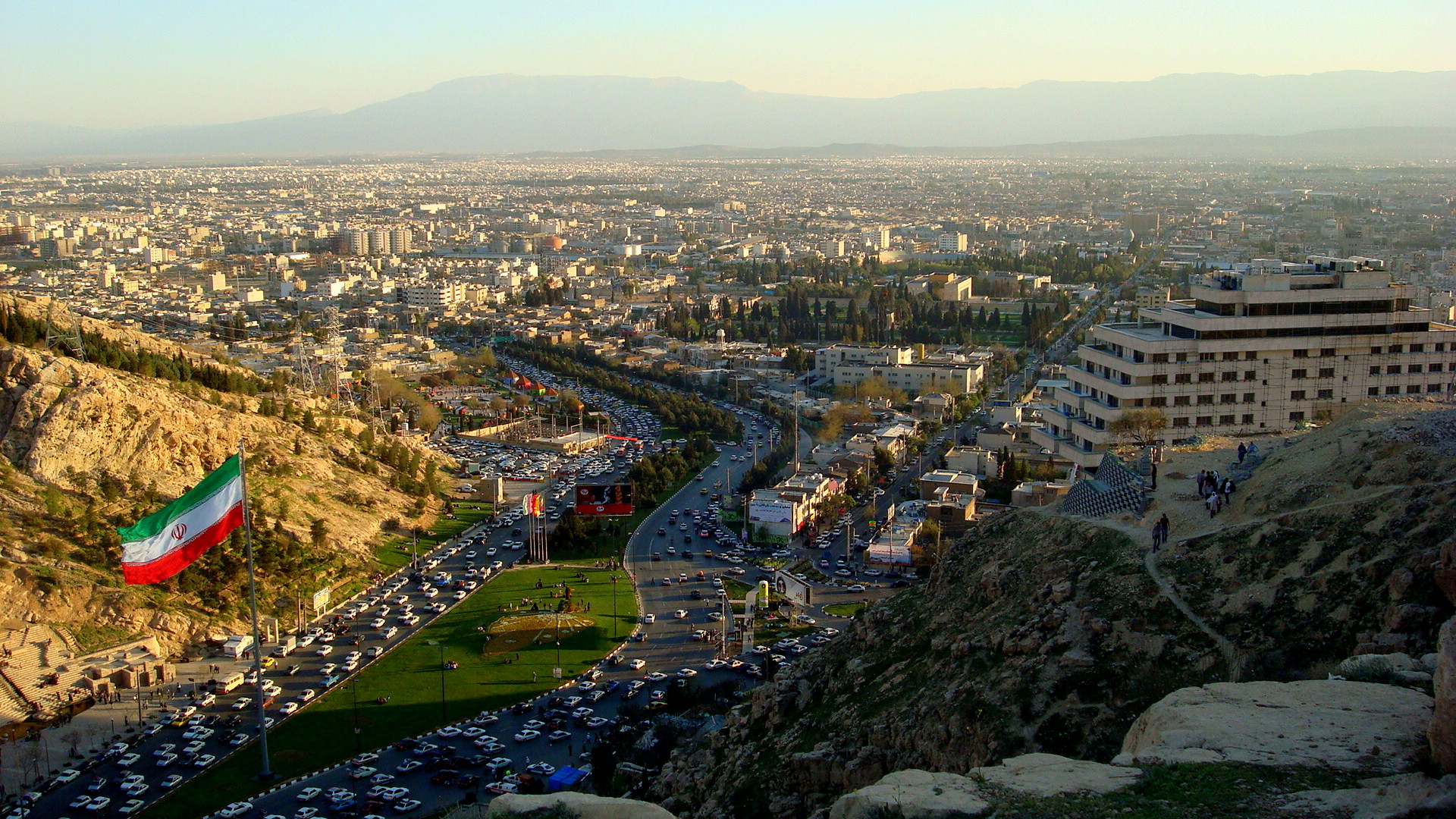
Shiraz
Send it to whoever you'd travel with
Shiraz is Iran's city of poets, roses, and Persian gardens — the languid southern base for visiting Persepolis and the country's most beloved shrines.
Shiraz moves at its own tempo. Tehran hustles, Isfahan dazzles, Yazd hides in adobe — Shiraz just sits in the sun reading Hafez. Locals will tell you, only half-joking, that this is the reason: the city is the resting place of Persia's two great poets, Hafez and Saadi, and the air around their tombs is genuinely treated as sacred. Twenty-somethings show up after work to drink tea and read out loud. The whole place feels like a city that decided centuries ago what mattered — gardens, verse, the late-afternoon shadow of a cypress — and has been quietly defending that decision ever since.
Most travellers come for two things: the Nasir al-Mulk Pink Mosque, which lights up in stained-glass colour for about an hour after sunrise, and Persepolis, an hour northeast, where Darius the Great's ceremonial capital still stands in the desert. Both deserve the hype. But the city itself rewards a slower visit — the Vakil Bazaar's vaulted brick arcades, the courtyard cafés inside 200-year-old Qajar mansions, the rose-water-and-saffron ice cream sold next to the Shah-e-Cheragh shrine. Three full days is the sweet spot. Two feels like a smash-and-grab.
Practical realities shape the trip more here than almost anywhere else. Iran's banking system is cut off from the world, so foreign cards don't work — you bring euros or dollars in cash and convert at exchange shops, or you load a tourist debit card before arrival. American, British, and Canadian passport holders cannot travel independently and must book through a licensed agency; most other Europeans get an e-visa with relative ease. Women must wear a headscarf in public, though enforcement on tourists is light and Shirazi style runs notably looser than Tehran's. None of this is a deal-breaker — it just means you plan a little harder than usual.
What people don't tell you is how kind the place is. Iranian hospitality is famous, but in Shiraz it tips into something else — strangers inviting you home for lunch, shopkeepers refusing money for tea, taxi drivers detouring to show you a courtyard you'd never have found. Take it. It's the trip.
The practical bits.
- Best time
-
Mid-Mar – late MayOrange blossom and rose season, mild days, peak Nowruz energy. October–November is the quieter shoulder alternative.
- How long
-
3 – 5 nights recommendedThree nights covers the old city plus a full Persepolis day; add nights for nomad and Qashqai excursions.
- Budget
-
$60 / day typicalDriver-guides and boutique mansion-hotels swing the budget hardest; food and entry fees stay cheap at every tier.
- Getting around
-
Walk the historic core; taxis everywhere else.Most sights cluster around the Vakil complex and are best done on foot. For longer hops use Snapp (Iran's Uber, which still works without a foreign card if a host books it) or hail metered taxis. The single metro line is clean and useful for the airport run.
- Currency
-
﷼ Iranian Rial (locals quote prices in Toman = Rial ÷ 10)Cash only for foreigners — Visa, Mastercard and Amex do not work anywhere in Iran. Bring euros or USD in clean bills and exchange at a sarafi, or arrange a prepaid tourist card (Mah Card, Daric Pay) before arrival.
- Language
- Persian (Farsi). English is common in tourism but rarely elsewhere; a translation app is essential.
- Visa
- EU and most Asian passports can apply for an Iran e-visa online; US, UK, Canadian, Australian and New Zealand citizens must travel on a guided itinerary through a licensed agency.
- Safety
- Street crime is rare and Shiraz consistently ranks among Iran's safest cities for solo travellers, including women. The real risks are geopolitical — check your government's travel advisory before booking, and dual nationals should review their status carefully.
- Plug
- Type C / F, 230V, 50Hz
- Timezone
- GMT+3:30 (IRST)
A few specific picks.
Hand-picked, not algorithmic. Each of these has earned its space.
The 'Pink Mosque.' Arrive by 7:30am — the stained-glass kaleidoscope lasts maybe an hour before the sun climbs above the prayer hall.
Darius's ceremonial capital, sacked by Alexander, still standing. Go in the afternoon when the bas-relief shadows deepen and tour buses thin out.
A working pilgrimage site with a mirror-tiled interior that looks like a disco ball turned inside out. Women borrow a chador at the entrance; non-Muslims are welcome.
18th-century vaulted brick arcades selling Qashqai rugs, saffron, rosewater and inlaid khatamkari boxes. Best at golden hour when the dome skylights drop columns of light.
More garden than monument. Locals come at dusk to read poems aloud over the marble grave — it's quietly moving even if you don't speak Farsi.
The textbook Persian garden: cypresses, channeled water, a Qajar pavilion. Peak roses bloom mid-April to mid-May.
Old-school traditional kebab house with live tar music most nights. Order the kalam polo and the saffron rice with sour cherries.
200-year-old Qajar mansion turned restaurant down a back alley. Cushioned takhts, slow service, and the best Halim Bademjan in town.
Four Achaemenid kings buried in cliff-face tombs above Sassanid bas-reliefs. Usually combined with Persepolis as one day.
Cyrus the Great's earlier capital and tomb — a lonelier, more atmospheric site than Persepolis. Worth it if you have a fourth day.
Zand-era fortress with a leaning corner tower in the middle of downtown. Quick visit; pairs naturally with the bazaar.
Seven restaurants under one roof spanning fine-dining Persian to street food. The traditional floor is the one to book.
Pick a neighborhood, not a hotel.
Shiraz is a city of neighborhoods. The one you stay in shapes the trip more than the property does.
Different trips for different travelers.
Same city, very different stays. Pick the lens that matches your trip.
Shiraz for first-time iran travellers
Shiraz, Isfahan and Yazd form the classic three-stop loop. Start in Shiraz and work north — the architecture builds in scale and ambition as you go.
Shiraz for history and archaeology travellers
Persepolis, Pasargadae and Naqsh-e Rostam put you closer to the Achaemenid heartland than anywhere else on earth. No other city offers this density of pre-Islamic Persian sites.
Shiraz for solo female travellers
Consistently ranked among Iran's safest cities for women travelling alone, with a relaxed atmosphere and a strong tradition of local hospitality toward female visitors.
Shiraz for garden and slow travellers
Persian gardens, courtyard hotels, and a culture genuinely built around sitting still. Three days here feels longer than a week elsewhere in Iran.
Shiraz for photographers
The Pink Mosque, Vakil Bazaar light wells, Persepolis at golden hour and the mirror-tiled Shah-e-Cheragh deliver more frames per day than almost anywhere in the region.
Shiraz for cultural and literary travellers
The Hafez and Saadi tombs are working pilgrimage sites for Persian poetry, not museums. Visit at dusk when locals come to read aloud and you'll see why Shirazis call this the soul of Iran.
When to go to Shiraz.
A quick year at a glance. Great, good, or skip — see what each month is doing before you book.
Low season — cheap, uncrowded, doable if you pack layers
Almond blossom starts in the gardens late month
Nowruz holidays bring crowds and price spikes around 20–28 March
The single best month for Shiraz; book hotels well ahead
Last great month before summer heat sets in
Doable with early starts and afternoon breaks
Cheap and empty but punishing midday — skip if you can
Maharloo Lake turns pink late month
Late September is the start of the autumn shoulder
Second-best month after April — quieter than spring
Excellent shoulder month with low crowds
Cheap and quiet — fine for a culture-focused trip
Day trips from Shiraz.
When you want a change of pace. Each one's a half-day or full-day out, easy from Shiraz.
Persepolis
1 hourThe ceremonial capital of Darius the Great — the trip you came for.
Naqsh-e Rostam
1 hourCliff-cut tombs of four Achaemenid kings, 6km from Persepolis.
Pasargadae
2 hoursCyrus the Great's earlier capital and the stark, lonely tomb of Cyrus himself.
Qashqai nomad camp
2 hoursSpring and autumn migration days with a semi-nomadic Turkic-speaking family in the Zagros foothills.
Maharloo (Pink) Lake
45 minSalt lake that turns pink in dry season; only worth the drive between July and October.
Firuzabad
2 hoursRuined Sassanid palaces and bas-reliefs in a wide green valley south of Shiraz.
Shiraz vs elsewhere.
Quick honest reads on the cities people compare Shiraz to.
Isfahan is grander — the world-class Naqsh-e Jahan Square, turquoise domes, painted bridges. Shiraz is softer, smaller, and built around poetry and Persepolis.
Pick Shiraz if: Pick Shiraz first if you care about ancient Persia; pick Isfahan first if Islamic architecture is the draw.
Yazd is a labyrinth of adobe alleys, badgir wind-towers and Zoroastrian fire temples in the central desert. Shiraz is greener, easier and more cosmopolitan.
Pick Shiraz if: Pick Yazd if you want desert atmosphere and walking; pick Shiraz if you want gardens and major ruins.
Tehran is the modern, chaotic capital — museums, mountains, traffic. Shiraz is the cultural soul: slower, smaller, more legible.
Pick Shiraz if: Pick Shiraz if you have limited time; only add Tehran for the National Museum and Golestan Palace.
Kashan is the courtyard-mansion town between Tehran and Isfahan — exquisite restored houses, rosewater festivals, fewer big-ticket sights. Shiraz is the deeper, longer trip.
Pick Shiraz if: Add Kashan as a stop, not an alternative — Shiraz remains the anchor of any southern Iran itinerary.
Both are Silk Road poetry-cities, but Samarkand's blue-domed monumentality dwarfs anything in Shiraz. Shiraz wins on intimacy, hospitality, and proximity to Persepolis.
Pick Shiraz if: Pick Samarkand for the visual punch; pick Shiraz for atmosphere and ancient history.
Itineraries you can start from.
Rough shapes for a trip here — a feel for the pace and cost. Find the one that fits you.
Two days in the old city around Vakil Bazaar and the Pink Mosque, one day at Persepolis and Naqsh-e Rostam.
Adds Pasargadae, an Eram Garden morning, a Qashqai nomad day in the foothills, and a long lunch at Parhami.
Four nights in Shiraz with Persepolis and Pasargadae, then overland to Yazd for the adobe old town and Zoroastrian sites.
Things people ask about Shiraz.
Is Shiraz safe for tourists?
Yes. Street crime is rare and Shiraz routinely ranks among Iran's safest cities, including for solo female travellers. The real risk factor is geopolitical, not local — check your government's current travel advisory before booking, and dual nationals (especially US-Iranian and UK-Iranian) should consult their embassy before travel. Inside the city, locals are famously protective of visitors.
How many days do you need in Shiraz?
Three full days is the sweet spot: one for the old city and bazaar, one for Persepolis and Naqsh-e Rostam, and one for the gardens, poet tombs, and Shah-e-Cheragh. Two days is doable but rushed. Five days lets you add Pasargadae and a Qashqai nomad day trip, and is the better choice if you've come this far.
What is the best time to visit Shiraz?
Mid-March through late May is peak: mild days, orange blossom in early April, roses by mid-May, and the energy of the Nowruz holidays. October and November are the quieter alternative with similar weather and lower prices. Avoid June through August when daytime highs regularly clear 38°C, and December–February when nights drop near freezing.
Is Shiraz expensive?
No — Shiraz is one of the cheapest major cities in the world for foreign travellers, thanks to the rial's weakness. Budget travellers manage on $25 a day, mid-range on $60, and even high-end stays in restored mansion-hotels with private guides rarely exceed $150 per person per day. The catch is that you must bring cash; foreign cards don't work anywhere in Iran.
What is Shiraz known for?
Shiraz is known as Iran's city of poets, roses, and Persian gardens. It's the burial place of Hafez and Saadi, the country's two most-quoted poets, and the launching base for Persepolis, the ceremonial capital of the ancient Achaemenid Empire. It's also famous for the Pink Mosque's stained glass, the Vakil Bazaar, and the gold-mirrored Shah-e-Cheragh shrine.
Can you use credit cards in Shiraz?
No. International sanctions cut Iran off from Visa, Mastercard, and Amex networks, so foreign cards do not work at hotels, restaurants, ATMs, or anywhere else. Bring euros or US dollars in clean, undamaged bills and exchange at a sarafi for rials. Some travellers preload a tourist debit card (Mah Card or Daric Pay) before arrival as a backup.
How do you get from Shiraz airport to the city?
Shahid Dastgheib International Airport (SYZ) sits about 10km southwest of the centre. The fastest option is a Snapp ride-hail (around $3, but you'll need an Iranian SIM or have your hotel book it), followed by a metered taxi (around $5–8). The Shiraz Metro's Allah Square station is at the airport entrance and reaches downtown in about 20 minutes.
What are the best day trips from Shiraz?
Persepolis is the obvious one — Darius's ceremonial capital, an hour northeast, almost always combined with Naqsh-e Rostam's cliff-tombs in a single day. Pasargadae, with the Tomb of Cyrus the Great, is another two hours further and worth a separate trip. Adventurous travellers add a day with a Qashqai nomad family in the Zagros foothills.
Where should I stay in Shiraz?
Stay inside or close to the old city, around the Vakil Bazaar and Karim Khan Citadel — this is where most sights cluster and where the converted Qajar mansion-hotels (boutique courtyard places like Niayesh and Forough) make a Shiraz visit memorable. The Zand Boulevard area is more functional with modern hotels, and Maaliabad suits travellers wanting a quieter, more contemporary base.
Shiraz vs Isfahan — which should I visit?
Both if you can. Isfahan dazzles with monumental architecture: the world-class Naqsh-e Jahan Square, turquoise domes, and bridges over the Zayanderud. Shiraz is softer, smaller, and built around poetry, gardens, and Persepolis. If you have only one, Isfahan wins on first-trip wow factor — but Shiraz wins on atmosphere and is the better base for ancient Persia.
Do I need a visa to visit Iran?
Most travellers do. EU citizens and many other nationalities can apply for an Iran e-visa online with relatively few obstacles. Citizens of the US, UK, Canada, Australia and New Zealand cannot travel independently — they must book a guided tour through a licensed Iranian agency, who arranges the visa as part of the package. Processing can take 4–8 weeks.
Do women have to wear a hijab in Shiraz?
Yes. A headscarf is legally required in all public places, and arms and legs should be covered. That said, enforcement on foreign tourists is light, and Shirazi women themselves wear the scarf notably looser than in Tehran — often pushed well back. Pack a couple of lightweight scarves and a long-sleeved tunic; you'll see how locals adapt within hours of arrival.
What food is Shiraz famous for?
Shiraz's signature dishes are kalam polo (cabbage rice with meatballs and aromatic herbs), faloodeh (a frozen vermicelli-and-rosewater dessert), and Halim Bademjan, a slow-cooked smoked-eggplant-and-lamb stew unique to the region. Sharzeh and Parhami are the classic traditional sit-down options; for street food, queue at any stall selling faloodeh near the Shah-e-Cheragh shrine.
Is alcohol available in Shiraz?
No. Alcohol has been illegal in Iran since 1979, and despite the city's namesake wine — which European traders carried from here in the 17th century — you will not find it served anywhere publicly. A black market exists but is risky for foreigners and is strongly discouraged. Iran has, however, developed an extraordinary café and non-alcoholic mocktail culture in its place.
What language is spoken in Shiraz?
Persian (Farsi) is the everyday language. The local Shirazi dialect is famously melodic and considered the prettiest in Iran. English is reasonably common in tourism — hotels, guides, and younger Shirazis — but rare in taxis, shops, and outside the centre. Download an offline translation app and learn the Persian numerals; menus and prices often use them exclusively.
Can you visit Persepolis from Shiraz in one day?
Yes, and most travellers do. Persepolis sits about 60km northeast, roughly an hour by car. A standard day-tour leaves Shiraz around 8:30am, covers Persepolis, Naqsh-e Rostam (the royal necropolis 6km away), and often Naqsh-e Rajab, and returns by early evening. Hiring a private driver-guide runs $40–80 per car; group tours start around $25 per person.
What is the Pink Mosque and when should I visit?
The Pink Mosque, officially Nasir al-Mulk, is a 19th-century mosque whose west-facing prayer hall has floor-to-ceiling stained glass. From roughly sunrise until 9am, sunlight pours through the windows and paints the carpets and columns in vivid colour. Arrive by 7:30am to beat tour groups and catch the peak hour; the effect fades quickly as the sun rises overhead.
Know someone headed to Shiraz?
Send them this guide — real neighborhoods, timing, and prices, with nothing to sign up for.
Copies the link — nothing to install