Svalbard
Send it to whoever you'd travel with
Svalbard is the Arctic archipelago where polar bears outnumber people, the sun doesn't set for four months, and Longyearbyen — the world's northernmost settlement of notable size — is the most accessible gateway to genuine Arctic wilderness on earth.
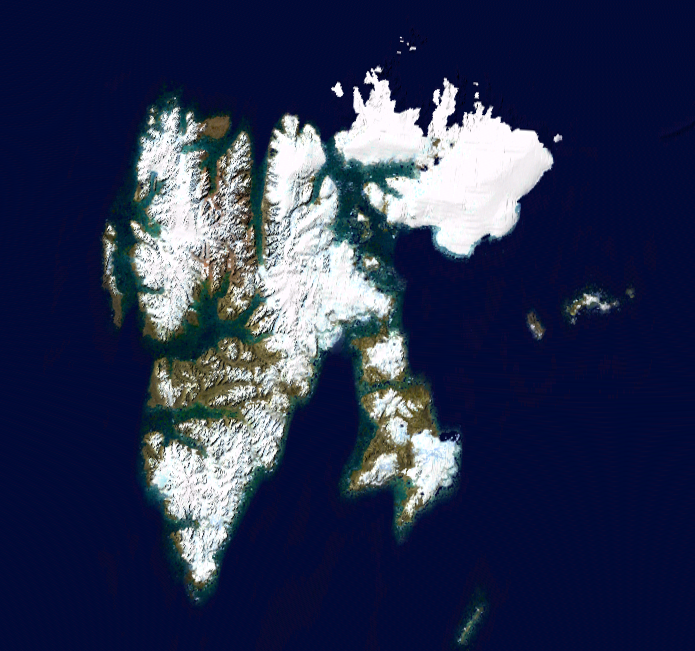
Svalbard sits at 78°N — closer to the North Pole than to Oslo. It is an archipelago of 61,000 km² of which 65% is permanently protected as national parks and nature reserves, with a permanent human population of about 2,500 concentrated in Longyearbyen, the main settlement on the island of Spitsbergen. The logistics of being here are genuinely simple despite the extreme latitude: direct flights from Oslo and Tromsø (SAS and Norwegian, daily), a modern airport 5 minutes from town, and the majority of the interesting wildlife and landscape accessible through day tours from Longyearbyen.
The wildlife is the primary draw. Svalbard has approximately 3,000 polar bears — more than the human population. You will not see them on a walk from your hotel; all excursions outside Longyearbyen's immediate perimeter require a guide with a rifle. But polar bear sightings on boat tours and snowmobile safaris are genuinely common, not manufactured tourist events. Reindeer wander through Longyearbyen itself. Arctic foxes are year-round residents. Walrus haul-out sites are accessible by boat May–August. Blue whales, humpbacks, and belugas frequent the fjords.
Svalbard has two distinct seasons that attract very different travelers. The midnight sun season (late April through late August) is when the archipelago is most accessible for wildlife boat tours, hiking, sea kayaking, and glacier walks. The polar night and aurora season (October through February) offers dog sledding, snowmobile safaris, and Northern Lights — Svalbard's extreme latitude makes aurora visible when clear skies allow, which in the 24-hour dark period is frequently. March is the sweet spot for many: days are returning (no longer polar night), the snow is stable for snowmobiles, and temperatures are cold but manageable (−15 to −10°C).
Budget reality: Svalbard is expensive even by Norwegian standards. The remoteness, the guide requirement for most outdoor activities, and the small local market all drive costs up. A snowmobile safari runs NOK 2,000–3,000 per person; a boat tour NOK 1,500–2,500; dog sledding NOK 2,000–3,500. Accommodation in Longyearbyen ranges from the budget Gjestehuset 102 hostel (NOK 600/bed) to the Svalbard Hotel (NOK 2,500–4,500/room). The Svalbard Museum and the Global Seed Vault (exterior) are free. Budget four nights minimum to justify the flight cost.
The practical bits.
- Best time
-
Feb – Mar (aurora, dog sled, returning sun) · Jun – Aug (midnight sun, wildlife boat tours)March: stable snow for snowmobile safaris, polar bear tracking, returning sun after polar night — the most complete Arctic winter experience. June–August: midnight sun, wildlife in full summer activity, boat tours to walrus colonies and bird cliffs, glacier hiking. November–January: deep polar night with best aurora potential but limited activity options.
- How long
-
5 nights recommendedThree nights is the minimum to justify the flight and see two or three major activities. Five nights allows the full seasonal experience: glacier walk, boat tour, Longyearbyen town exploration, and a longer snowmobile or dog-sled safari. Ten nights suits researchers, photographers, or those doing extended wilderness expeditions.
- Budget
-
~$400 / day typicalNorway's prices plus Arctic remoteness premium. Gjestehuset 102 hostel beds NOK 600–800. Mid-range hotel rooms NOK 2,500–4,000. Tours NOK 1,500–3,500 per person. Self-catering in the Longyearbyen SPAR supermarket reduces food costs but prices are 30–40% higher than mainland Norway.
- Getting around
-
Day tours from Longyearbyen (guide required outside town perimeter)All excursions outside Longyearbyen require a guide with a firearm (polar bear protection) — this is a strict regulation. Guide companies handle all logistics. In summer, boat tours depart from the Longyearbyen harbour. In winter, snowmobile and dog-sled tours depart from meeting points in town. Airport is 5 min from town centre by taxi.
- Currency
-
Norwegian Krone (NOK). Longyearbyen is nearly cashless — card payments universal. Note: Svalbard has no bank; the Longyearbyen ATM was removed. Bring sufficient card capacity.Cards accepted everywhere. Contactless standard. No cash ATM in Longyearbyen since 2023 — rely entirely on cards.
- Language
- Norwegian. English widely spoken — Longyearbyen has a highly international community (researchers, tourism workers from many countries).
- Visa
- Svalbard is unique: it is Norwegian sovereignty but not part of the Schengen Area or EEA for entry purposes. No visa required for any nationality to enter Svalbard — the Svalbard Treaty (1920) guarantees visa-free access for citizens of all 46 signatory nations. However, transit through mainland Norway (Oslo or Tromsø) requires Schengen entry rights for most non-EU visitors. ETIAS will apply to the Norwegian transit from late 2026.
- Safety
- Polar bear danger outside town: guides with rifles mandatory. Dress for extreme cold in winter (proper Arctic clothing, NOT just a warm coat). Frostbite risk at −20°C. Tour operators provide proper gear for winter activities. In summer: weather changes rapidly; bring waterproof layers and proper hiking boots.
- Plug
- Type C / F · 230V
- Timezone
- CET · UTC+1 (CEST UTC+2 late March – late October)
A few specific picks.
Hand-picked, not algorithmic. Each of these has earned its space.
Snowmobile or boat tours explicitly seeking polar bear sightings — success rates are high. In winter, guided snowmobile tours cross the Svalbard wilderness to known polar bear territories. In summer, boat tours sail to coastal areas where bears hunt for seals on sea ice remnants.
From late April to late August, the sun does not set. Midnight at 78°N in June looks like a long golden afternoon. Hiking at midnight, boat tours at 11pm, kayaking in the 2am light — the experience of the Arctic summer is genuinely disorienting in the best possible way.
Svalbard dog-sled tours run November–April when snow is sufficient. A half-day mushing experience costs NOK 2,000–3,500 and includes brief instruction on controlling the sled. Longer multi-day expeditions across the Svalbard plateau are available with specialist operators.
The Longyearbreen glacier above town is accessible on guided ice walks from the Longyearbyen valley (30 min from town). Blue ice, crevasses, and a dramatically receding front that illustrates Arctic climate change with physical immediacy. Available May–September.
The best single introduction to Svalbard's natural history, exploration heritage (polar expeditions), mining history, and the unique political status of the archipelago. Allow 2 hours; entry is free with a Svalbard guest card (provided by most hotels).
The Svalbard Global Seed Vault — humanity's backup of the world's crop diversity — is a 15-minute walk from Longyearbyen. The interior is not open to visitors but the exterior installation (a wedge of steel emerging from the mountain with a glowing skylight) is architecturally striking.
Summer boat tours (May–August) to walrus haul-out sites — beaches where hundreds of walruses rest in dense heaps. The boats maintain respectful distances but the scale of the animals at close range is extraordinary. Combine with seabird colonies (little auks, puffins, Brünnich's guillemots) on the same tours.
The polar night period (October–February) creates extended darkness for aurora viewing. Svalbard's latitude means the aurora band overhead rather than on the horizon. Clear winter nights are the prime window; snowmobile tours carry participants away from Longyearbyen's light pollution.
Pick a neighborhood, not a hotel.
Svalbard is a city of neighborhoods. The one you stay in shapes the trip more than the property does.
Different trips for different travelers.
Same city, very different stays. Pick the lens that matches your trip.
Svalbard for wildlife enthusiasts
Polar bears, Arctic foxes, walrus, reindeer, belugas, blue whales, and millions of seabirds. Svalbard has the most concentrated Arctic wildlife accessible by day tours anywhere on earth.
Svalbard for extreme latitude seekers
If the goal is genuine Arctic — permanent ice, polar night, midnight sun, permafrost — Svalbard is the most accessible way to experience it without a scientific expedition.
Svalbard for photographers
Midnight sun light at 2am over Arctic fjords, polar bears on sea ice, dog teams crossing frozen plateaus — Svalbard's photographic opportunities are genuinely unusual and not reproducible elsewhere.
Svalbard for northern lights hunters
The polar night period (October–February) at 78°N means the aurora is overhead rather than on the horizon. Clear nights in November and February–March offer some of the world's most intense aurora displays.
Svalbard for serious adventure travelers
Multi-day snowmobile expeditions, kayaking the Svalbard coast, ski touring across the plateau — Svalbard offers expedition-grade Arctic experiences at the more extreme end of traveler ambition.
When to go to Svalbard.
A quick year at a glance. Great, good, or skip — see what each month is doing before you book.
Full polar night. Northern Lights potential high on clear nights. Dog sledding season. Limited activities.
Sun returns mid-February. Dog sledding peak. Snowmobile safaris excellent. Aurora on dark evenings.
Best winter month: long days returning, snow stable, polar bear safaris excellent, aurora still possible.
24-hour daylight from late April. Snowmobile season ending. First boat tours. Arctic spring feel.
Midnight sun from late April. Wildlife very active. Boat tours to walrus colonies begin. Excellent.
Best summer month for wildlife. Seabird colonies at maximum density. Warmest temperatures.
Warmest month. Most boat tours running. Busiest period. Book accommodation and tours well ahead.
Still good wildlife. Midnight sun ending late August. First hints of polar night approaching.
Dramatic autumn light. Aurora begins as nights return. Wildlife transitioning. Shoulder season.
Rapidly darkening. Aurora season proper begins. Some tours shut down; others just starting.
Deep dark. Northern Lights with any clear night. Limited tour variety. Photography conditions dramatic.
Christmas in the Arctic. Dog sled tours beginning. Northern Lights. Not for the casual traveler.
Day trips from Svalbard.
When you want a change of pace. Each one's a half-day or full-day out, easy from Svalbard.
Barentsburg
2h by boat or snowmobile from LongyearbyenThe only other inhabited settlement on Spitsbergen — a Russian coal-mining town of ~500 residents. Soviet-era murals, a brewery (the world's northernmost), and a Lenin statue at 78°N. Boat in summer, snowmobile in winter. A genuinely surreal destination.
Ny-Ålesund
30 min by boat or charter flightA research settlement of 30–180 scientists depending on season. Tours visit the historic polar expedition base where Amundsen departed for the North Pole. Accessible on specialized tours.
Longyearbreen Glacier
2h return from townThe most accessible glacier from town — a guide-led 2-hour glacier walk on blue ice with crevasses. The retreating front is measurable year on year. Available May–September.
Svalbard vs elsewhere.
Quick honest reads on the cities people compare Svalbard to.
Tromsø is a full Norwegian city at 70°N with good aurora access, whale watching, and Arctic culture. Svalbard is an archipelago at 78°N with polar bears, genuine wilderness, and a single small town. Tromsø is a city break with Arctic add-ons; Svalbard is immersion in the Arctic itself.
Pick Svalbard if: You want genuine polar wilderness, polar bear encounters, and the most extreme latitude — rather than a city with Arctic adventures attached.
Iceland offers dramatic volcanic landscape, waterfalls, and accessible Northern Lights without the extreme cold or expense. Svalbard offers genuine polar conditions, polar bears, and the Arctic Ocean. Iceland is far more comfortable and varied; Svalbard is more extreme and more remote.
Pick Svalbard if: You want the actual Arctic — polar bears, 78°N, permafrost, and guided wilderness — rather than Iceland's volcanic and geological drama.
Finnish Lapland (Rovaniemi, Saariselkä) has reindeer, dog sledding, Northern Lights, and Santa Claus — accessible, family-friendly, and warm-hearted. Svalbard has polar bears, genuine Arctic wilderness, and a starker, more extreme character. Lapland is a winter fairytale; Svalbard is a polar expedition.
Pick Svalbard if: You want real polar wilderness and wildlife over the polished Lapland experience of dog sledding, lights, and Santa.
Itineraries you can start from.
Rough shapes for a trip here — a feel for the pace and cost. Find the one that fits you.
Day one: Longyearbyen orientation, Svalbard Museum. Day two: Full-day snowmobile safari (polar bear territory). Day three: Dog sledding half-day + Northern Lights evening tour. Day four: Glacier walk + Global Seed Vault exterior before flight.
Day one: Longyearbyen, museum. Day two: Full-day boat tour (walrus colony, seabird cliffs, glacier front). Day three: Glacier hike (Longyearbreen). Day four: Sea kayaking in the fjord. Day five: Hiking under midnight sun before flight.
Combines winter and summer activities in a shoulder-season trip (March): snowmobile days, boat tour on partially ice-free fjords, dog sled, glacier walk, aurora evenings. Requires specialist tour booking 3–6 months ahead.
Things people ask about Svalbard.
Do you need a visa for Svalbard?
No visa is required for citizens of any of the 46 Svalbard Treaty signatory nations — which includes most of the world's countries. However, to transit through mainland Norway (Oslo or Tromsø, where all Svalbard flights connect), Schengen entry rights are required for most non-EU citizens. The ETIAS electronic travel authorization (expected late 2026) will apply to the Norwegian transit. Check your specific nationality.
Is it safe to visit Svalbard?
Yes, with the correct guidance. The primary danger is polar bears — all excursions outside Longyearbyen's immediate perimeter require a guide carrying a firearm. In winter, frostbite risk at −20°C and below is real; tour operators provide proper Arctic gear. The town itself is safe and functioning.
What is the best time to visit Svalbard?
February–March for the returning sun after polar night, stable snow conditions for snowmobiling and dog sledding, and Northern Lights potential. June–August for midnight sun, wildlife boat tours, sea kayaking, and glacier hiking. November–January for deep polar night and aurora but limited outdoor activities.
Can you see polar bears in Svalbard?
Yes — polar bear sightings are a realistic expectation on guided safaris, not a manufactured tourist guarantee. In summer, boat tours to coastal areas where bears hunt near sea ice are the main method. In winter, snowmobile safaris traverse polar bear territories. Approximately 3,000 bears live on the archipelago.
How cold is Svalbard?
In winter (January–February) temperatures average −14 to −16°C in Longyearbyen, dropping to −25°C and below with wind chill on wilderness tours. In summer (July) the average is about 5–7°C — cool, rarely warm. Rain and wind are common in summer. Proper clothing is critical in both seasons.
How do I get to Svalbard?
Daily flights from Oslo Gardermoen (3h) and Tromsø (1h 30m) with SAS and Norwegian. The airport is 5 minutes from Longyearbyen. Book flights 2–4 months ahead for peak periods (Christmas, Easter, summer). No ferry from mainland Norway operates to Svalbard for regular visitors — the Hurtigruten coastal route reaches Tromsø but not Longyearbyen.
Is Svalbard expensive?
Very expensive, even by Norwegian standards. Remote location plus guide requirements plus small market size drives all costs up. Budget travelers can stay at Gjestehuset 102 (hostel, NOK 600–800/bed) and self-cater from the SPAR supermarket, but activities are unavoidably expensive (NOK 1,500–3,500 per day tour). A realistic budget is NOK 2,000–4,000/day all-in.
Do I need to book activities in advance?
Yes — especially for winter (dog sledding, snowmobile safaris) and popular summer (boat tours, glacier walks). Book 2–4 months ahead for July–August and the December–March winter season. Some same-day availability exists in shoulder months (May, September) but the main activities fill up.
Know someone headed to Svalbard?
Send them this guide — real neighborhoods, timing, and prices, with nothing to sign up for.
Copies the link — nothing to install