Tromsø
Send it to whoever you'd travel with
Tromsø is where the Arctic becomes accessible — northern lights from the city in winter, midnight sun in summer, whale safaris in late autumn, and a university-city atmosphere that makes it feel livelier than its latitude suggests.
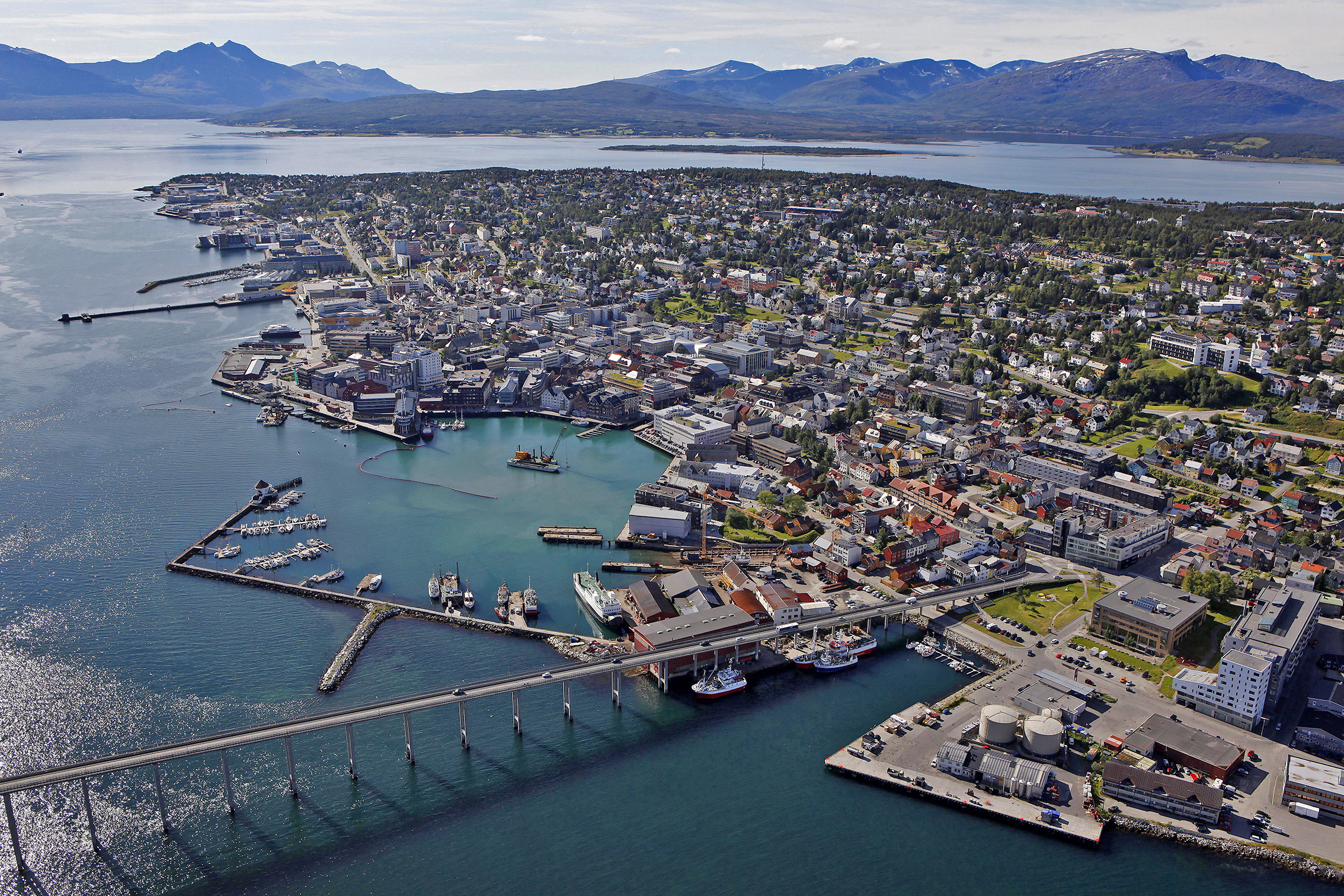
Tromsø sits at 69.6°N, 350km inside the Arctic Circle, and it is the world's most accessible Arctic city. Most travelers arrive expecting one thing — the northern lights — and discover several more: a city of 77,000 people that functions normally regardless of season, a university that gives it a youthful café culture unusual at this latitude, a whale safari industry that operates from the harbor in late autumn and early winter when humpback and orca follow the herring north, and a seasonal rhythm that alternates between polar night (late November to mid-January, when the sun doesn't rise at all) and midnight sun (mid-May to late July, when it doesn't set).
The northern lights are the primary draw for most visitors, and the honest description requires acknowledging the variables. The aurora requires three concurrent conditions: geomagnetic activity (the solar wind), a clear sky, and darkness. Tromsø averages 7–8 months per year when darkness is sufficient; geomagnetic activity correlates with the 11-year solar cycle (currently in an active phase through approximately 2025–2026, which is good timing). Clear skies are the most unpredictable element — Tromsø is a coastal city and cloud cover is frequent. Most serious aurora chasers budget 3–4 nights minimum to improve their odds. Organized chase tours use guides with vehicles who drive east and south seeking gaps in the cloud cover.
The polar night (mørketid) between approximately November 24 and January 18 is its own experience. The sun never rises — but 'polar night' in Tromsø is not complete darkness. The civil twilight period in December provides a blue-violet glow on the southern horizon from around 10 AM to 2 PM that locals describe as the most beautiful light of the year. Snow covers everything, the harbor freezes, and the city operates in this perpetual dusk with a characteristic calm. Christmas markets, mulled wine at outdoor stalls, ski trails accessible by cable car, and the northern lights on clear evenings make this a compelling winter destination for the right traveler.
Summer Tromsø reverses everything. During the midnight sun period (May 20 to July 22), the sun circles the sky and never sets — it reaches its lowest point around midnight but remains above the horizon throughout. The harbor fills with pleasure boats, the university students run midnight football games on outdoor pitches, and the hiking trails on the surrounding peaks are accessible 24 hours a day. The Tromsø fjords and islands glow with low-angle golden light throughout the evening hours, and the psychological effect of unending daylight — disorienting for some, exhilarating for others — is itself a travel experience worth encountering.
The practical bits.
- Best time
-
September–March for northern lights; June–July for midnight sunNorthern lights season requires sufficient darkness (September to April) plus geomagnetic activity and clear skies. October–March gives the darkest skies and the best aurora probability in combination with winter activities and whale watching. September and April are shoulder aurora months with milder temperatures. June–July deliver midnight sun with long, warm evenings and summer hiking. May and August are transition months suitable for both depending on your timing.
- How long
-
3 nights recommendedTwo nights gives one or two attempts at the northern lights with limited flexibility for bad-weather days. Three nights is the recommended minimum — most successful aurora sightings happen on the second or third night as guides find better cloud windows. Four to five nights is for winter activities (snowshoeing, dog sledding, snowmobile), whale safari plus aurora, or serious midnight sun hiking.
- Budget
-
$300 / day typicalTromsø is Norway expensive plus Arctic-premium pricing. Organized northern lights tours cost NOK 700–1,500 per person. Dog sledding full-day excursions run NOK 2,500–4,000. Hotel rooms from NOK 1,200/night budget to NOK 4,000+ for harbor-view rooms. A pub dinner costs NOK 250–400. The Aurora Borealis Observatory, the Arctic Cathedral, and city-center walking are the main free activities.
- Getting around
-
Walking for city center; organized tour transport for aurora chasingTromsø city center occupies an island (Tromsøya) connected by bridges to the mainland. The main sites — harbor, Arctic Cathedral, Polaria — are walkable within 20 minutes. The Fjellheisen cable car to Storsteinen mountain (421m) departs from the mainland side (10-min walk over Tromsø Bridge). Northern lights tours provide vehicle transport and are the only practical way to chase aurora in changing weather. City buses run infrequently; most visitors walk or take the occasional taxi.
- Currency
-
Norwegian Krone (NOK)Virtually cashless — cards and contactless payments accepted everywhere. Northern lights tours and most experiences can be booked and paid online in advance.
- Language
- Norwegian. English spoken universally and fluently — no language barrier for English-speaking visitors.
- Visa
- Schengen zone — 90-day visa-free for US, UK, Australian, and most OECD passports. ETIAS required from late 2026.
- Safety
- Very safe. Winter hiking on Tromsø's mountains requires appropriate gear and weather awareness — conditions deteriorate rapidly and trails can be icy. Always tell someone your route when hiking alone in winter. Organized tours handle all safety logistics for aurora chasing and dog sledding.
- Plug
- Type C / F · 230V
- Timezone
- CET · UTC+1 (CEST UTC+2 in summer — note that during midnight sun, the time zone means the sun is high at midnight in local time)
A few specific picks.
Hand-picked, not algorithmic. Each of these has earned its space.
The primary reason most visitors come. Strongest probability is September–March on clear nights with high geomagnetic activity. Organized chase tours (NOK 700–1,500) use knowledgeable guides and vehicles to escape cloud cover — strongly recommended over waiting in the city. The aurora is silent, moves in real time, and ranges from a subtle green glow to curtains of violet and green that fill the entire sky.
From May 20 to July 22, the sun circles the sky without setting. The harbor and city glow in low-angle golden light through the 'night' hours. Hike to Storsteinen after midnight for the full effect of the sun sitting on the mountain rim at 1 AM. One of the most psychologically distinctive travel experiences available.
The cable car to Storsteinen plateau (421m) provides the defining view of Tromsø — the city island, the fjord, the mountain summits in every direction. Runs year-round (NOK 260 return). Summer midnight sun hikes leave from the top station; winter snowshoeing circuits depart from the same point.
The city's most recognizable building — a 1965 A-frame concrete structure whose triangulated form represents the Arctic landscape it stands in. The stained glass wall behind the altar is one of the largest in Europe. Midnight Sun concerts are held here through summer. Free to enter outside service times.
From late October to January, humpback and orca whales follow herring schools into the fjords north of Tromsø, bringing the largest concentration of orca in European waters to within 2 hours of the city. Boat trips range from 3-hour rigid inflatable vessels to overnight exploration trips. Check for sea conditions — rough weather makes inflatable trips difficult.
The aquarium and experience center dedicated to the Arctic environment — panoramic Arctic film, live bearded seals, and exhibitions on polar bears and Arctic ecosystems. Best for families and for building context before outdoor excursions. The building's angled form was designed to suggest sheets of ice driven ashore.
Multiple operators run dog sled excursions from Tromsø — from 2-hour introductions to full-day wilderness circuits. The most atmospheric experience in Tromsø's winter portfolio. Combines physical engagement with the Arctic silence that most aurora-chasing tours don't provide.
The world's northernmost botanical garden, maintained by the University of Tromsø. The Alpine section has plants from Arctic and alpine zones worldwide; the Arctic section focuses on Norwegian northern species. In summer, flowers bloom in the midnight sun. Free entry.
Guided snowshoe tours from the cable car station reach viewpoints above the city treeline in 2–3 hours. The guides provide equipment and often time the excursion to coincide with moonrise or clear aurora windows. Self-guided snowshoeing is possible with equipment rental.
The university population gives Tromsø a café and bar density unusual at this latitude. Ølhallen (the old working-class pub on Storgata, opened 1928) is Norway's oldest continuously operating pub. Bardus Bistro and Vertshuset Skarven serve good Norwegian fish and craft beer in waterfront buildings.
Pick a neighborhood, not a hotel.
Tromsø is a city of neighborhoods. The one you stay in shapes the trip more than the property does.
Different trips for different travelers.
Same city, very different stays. Pick the lens that matches your trip.
Tromsø for northern lights chasers
Budget at least 3 nights from September to March. Book an organized chase tour for the first night (get oriented on the app systems and cloud-gap logic), then decide whether to book a second based on conditions. The solar maximum phase through 2025–2026 means elevated aurora activity — an unusually good window.
Tromsø for midnight sun travelers
June–July is the period. Plan the Storsteinen midnight hike as the centerpiece. Sleep with proper blackout curtains or an eye mask. The first night of genuinely not-setting sun is psychologically surprising even when you expected it.
Tromsø for wildlife enthusiasts
The October–January whale window and the spring seabird season are Tromsø's two wildlife highlights. Orca, humpback, white-tailed sea eagle, Atlantic puffin, and Arctic fox are all reachable from the city. The whale concentration in the northern fjords is one of the most accessible orca experiences in the world.
Tromsø for adventure travelers
Dog sledding, snowshoeing, glacier hiking in the Lyngen Alps, sea kayaking, and ski touring are all organized from Tromsø. The activity density for an Arctic city is exceptional — a 4-night winter stay can fill every day with a different physical Arctic experience.
Tromsø for photographers
Tromsø is a photography destination in every season. Aurora photography requires specific gear (tripod, manual settings). Midnight sun photography rewards patience with the best quality light. Wildlife photography needs longer focal lengths (300–600mm for whales and eagles). The city's own harbor-cathedral compositions are good in any light.
Tromsø for polar night travelers
A small but devoted group of travelers specifically seeks the polar night window (November 24 – January 18). The deep blue twilight period, Christmas market atmosphere, northern lights probability, and the unique experience of a functioning city in continuous dusk make this a compelling niche.
When to go to Tromsø.
A quick year at a glance. Great, good, or skip — see what each month is doing before you book.
Peak aurora season. Sun returns January 21 (Soldagen celebration). Cold, dark, magical for the right traveler.
Sun returns to city. Northern lights excellent. Carnival and winter festivals. Dog sledding peak.
Long, light days returning. Northern lights still good. Best ski touring conditions in Lyngen Alps.
Aurora season tails off as darkness reduces. Spring hiking begins at lower elevations.
Midnight sun begins May 20. Spring hiking opens. Whale season ended. Good shoulder month.
Best midnight sun experience. Long warm evenings. Summer hiking and kayaking at their best.
Peak summer. Most comfortable temperatures. Midnight sun ends July 22. Island boat trips excellent.
Darkness returning slowly. Transition month. Good hiking. Aurora possible in late August on clear nights.
Northern lights season opening. Increasing darkness. Autumn colors on mountain slopes.
Whale watching begins late October. Good aurora probability. Fewer tourists than winter peak.
Polar night begins November 24. Aurora season in full swing. Whale season active.
Deep polar night. Northern lights and whale watching combined. Christmas markets. Cold but extraordinary.
Day trips from Tromsø.
When you want a change of pace. Each one's a half-day or full-day out, easy from Tromsø.
Lyngen Alps
1–2h by car/boatThe most spectacular mountain scenery near Tromsø. Guided glacier walks from the Lyngseidet area. Reachable by car via tunnel or by express boat.
Sommarøy Island
1h by carThe white-sand island that surprises most visitors — Arctic beach with pale turquoise water, best in summer. Day trip by rental car or organized tour.
Kvaenangen Fjord (Whale Safari)
2h north of TromsøThe fjords northeast of Tromsø hold Norway's largest winter orca concentration. Organized from Tromsø harbor — the better operators provide marine biologist commentary.
Tromsdalstinden Summit Hike
From mainland, 5–6h round trip1,238m summit directly behind the city. Requires a clear day, 5–6 hours, and proper footwear. The view covers the entire fjord system and the Lyngen Alps.
Sami Cultural Experience
1–2h from citySeveral operators run winter Sami camp experiences with reindeer, traditional food, and cultural presentations. Seek Sami-owned operations for authentic context rather than performance.
Outer Tromsø Islands Boat Trip
2–4h boatSeveral boat operators offer island cruises through the outer Tromsø fjord system. White-tailed sea eagles are regularly sighted. Best in summer for midnight sun light quality.
Tromsø vs elsewhere.
Quick honest reads on the cities people compare Tromsø to.
Bergen is the fjord gateway city in western Norway at 60°N; Tromsø is the Arctic city at 69.6°N. Bergen offers UNESCO wharf, fish market culture, and accessible day trips to Norway's most famous fjords. Tromsø offers northern lights, midnight sun, whale watching, and the genuine Arctic city experience. They're not competing — most Norway trips can include both.
Pick Tromsø if: You specifically want Arctic phenomena (northern lights, midnight sun, polar night) rather than fjord scenery and maritime history.
Reykjavik (Iceland) and Tromsø both attract northern lights travelers. Reykjavik is at 64°N — less reliably dark for aurora than Tromsø — but Iceland's volcanic landscapes, geysers, and waterfalls create a different travel context. Tromsø is a more genuine city destination; Iceland offers more extreme landscapes.
Pick Tromsø if: You want northern lights with an established city base and broader winter activity options (whale watching, dog sledding, midnight sun).
Rovaniemi (Finnish Lapland) is the 'official hometown of Santa Claus' with heavy Christmas theme-park infrastructure, reindeer safaris, and northern lights. Tromsø is a real city with university culture, genuine restaurants, and more credible outdoor activities. Rovaniemi is better for families with young children; Tromsø is better for adults who want an authentic Arctic city experience.
Pick Tromsø if: You want a functioning Arctic city with real culture rather than a Christmas-themed experience center.
Svalbard (78°N, via Longyearbyen) is more extreme Arctic — polar bear territory, glaciers at the doorstep, and a genuinely remote settlement. Tromsø is more accessible, cheaper, and has better city infrastructure. Svalbard requires more careful planning and a higher budget; Tromsø is the gateway that many Svalbard travelers pass through.
Pick Tromsø if: You want the more accessible Arctic experience with city infrastructure and a variety of seasonal activities rather than remote polar wilderness.
Itineraries you can start from.
Rough shapes for a trip here — a feel for the pace and cost. Find the one that fits you.
Three nights with two organized chase tours scheduled. Daytime: Fjellheisen cable car, Arctic Cathedral, Polaria. Evenings: aurora tours each night. One likely clear-sky success in three attempts.
Night one arrival. Day two: dog sledding full day. Day three: whale safari (if in season Oct–Jan). Day four: snowshoeing + aurora. Night four departure.
Three nights in June–July. Day one: city exploration, harbor kayaking. Day two: midnight hike on Storsteinen (depart midnight, return 3 AM). Day three: island boat trip with midnight sun dinner.
Things people ask about Tromsø.
What are my realistic chances of seeing the northern lights in Tromsø?
Better than anywhere else in Europe, but not guaranteed on any given night. The three required conditions — sufficient darkness, geomagnetic activity, and clear skies — must align simultaneously. Tromsø has sufficient darkness September through March. Geomagnetic activity follows solar cycles and is currently elevated (solar maximum phase around 2025). Clear skies are the limiting factor — Tromsø is a coastal city with frequent cloud. A 3-night stay with organized chase tours gives probability of at least one good sighting of roughly 70–80% in the peak window (October–March). Budget 4 nights if you want higher certainty.
What is the difference between watching the northern lights from the city versus joining a chase tour?
The critical difference is cloud cover management. When Tromsø city is overcast (which is frequent), a chase tour drives east or south through the mountain valleys seeking gaps in the cloud — sometimes covering 100–200km in a night to find clear sky. Waiting in the city on a cloudy night produces nothing. Guides also know the best dark-sky locations without light pollution and can interpret the aurora app forecasts. The tours cost NOK 700–1,500 and typically run 5–8 hours. The best operators guarantee a second free tour if no aurora is seen on the first attempt.
What is polar night in Tromsø and what does it feel like?
Tromsø's polar night runs from approximately November 24 to January 18 — about 55 days when the sun stays below the horizon throughout the 24-hour cycle. 'Dark' is somewhat misleading: civil twilight creates a 3–4 hour window of deep blue and violet light on the southern horizon around midday, which Tromsø residents call 'blue time' (blåtimen). It's genuinely beautiful and not the complete darkness that pure astronomy predicts. After mid-January, the sun returns at a sliver, and the city celebrates Soldagen (Sun Day) on January 21 with outdoor festivities. Polar night in Tromsø is a surprisingly livable and even magical environment.
How do I photograph the northern lights?
A camera capable of manual settings and a tripod are essential — smartphone cameras have improved significantly, but a mirrorless or DSLR with a wide-angle lens (15–25mm) and the ability to set ISO 800–3200 and shutter speeds of 5–20 seconds will produce much better results. Use manual focus, set to infinity. Start with ISO 1600, f/2.8 (or wide open), and 10 seconds; adjust from there. The aurora moves in real time — shorter exposures capture movement; longer exposures average it into a more diffuse glow. Many aurora tours include a photography tutorial. A remote shutter release prevents camera shake.
What is the midnight sun and what can I do during it?
From May 20 to July 22, the sun remains above the horizon for the full 24-hour cycle in Tromsø — it circles low in the sky and at its lowest point around midnight, it sits just above the mountain ridgeline rather than setting. The psychological effect is striking: your body clock has no darkness cue, sleep requires blackout curtains, and the quality of the light at 1 AM is a warm golden color that photographers call 'the magic hour that doesn't end.' Activities include midnight hikes from the Fjellheisen cable car station, kayaking at 11 PM, midnight boat trips in the fjords, and simply sitting on a harbor terrace with a beer as the sun refuses to set.
When is whale watching available from Tromsø?
Orca and humpback whales follow Norwegian spring herring (now called Norwegian Spring Spawning herring) that migrate north into the Arctic fjords from late October through January. The concentration of orca in the Kvaenangen and Skjervøy fjords northeast of Tromsø represents one of the largest gatherings of orca in European waters. Whale safari boats depart from Tromsø harbor; trips take 4–10 hours depending on how far north the whales are. Whale watching and northern lights chasing can be combined into a single winter visit — the whale season overlaps entirely with the prime aurora window.
What dog sledding experience is available near Tromsø?
Multiple operators run Alaskan husky sled tours from kennels 30–60 minutes from the city. Options range from a 2-hour experience (drive a short circuit, meet the dogs, NOK 1,200–1,800) to a full-day wilderness tour (50–80km through mountain terrain, packed lunch, NOK 3,000–4,500) to multi-day expeditions with overnight camping in snow. The full-day option gives the most genuine sense of Arctic dog sledding — open terrain, silence except for the dogs' breathing, mountain scenery, and the satisfying physical task of managing the sled on your own after an initial lesson. Book 2–3 months ahead for December and January.
What should I pack for a winter visit to Tromsø?
The most common mistake is under-packing for the cold. You will be standing outside, possibly for hours, waiting for or watching aurora — and the windchill at the cloud-break location the tour drives you to may be -20°C. Pack: a proper down jacket rated to at least -20°C, wool base layers (not cotton), fleece mid-layer, waterproof outer pants, insulated waterproof boots, wool socks, inner gloves plus thick mittens over them, and a balaclava or neoprene face mask. Aurora tour operators often loan heated overalls — ask when booking. For daytime city walking, a standard winter coat, hat, and waterproof boots are sufficient.
How do I get to Tromsø?
Tromsø Airport (TOS) has direct flights from Oslo (1h 40m), Bergen (1h 50m), and London Gatwick (3h 15m). Norwegian and SAS run the domestic routes; easyJet, British Airways, and Widerøe connect to London and other European cities. The airport is on the island, 5km from the city center — city buses run every 30 minutes; Airport Express Bus (Flybussen) takes 20 minutes to the city center (NOK 100). No convenient overland route from southern Norway — flying is the practical option.
Is Tromsø appropriate for families with children?
Yes, with seasonal adjustment. Winter offers dog sledding (all ages), snowshoeing (ages 6+), Polaria aquarium, and northern lights watching (cold but manageable for children with proper clothing). Summer offers hiking, boat trips, and the midnight sun experience that children find genuinely fascinating. The city is small, safe, and has a family-friendly restaurant and café culture. The main consideration is cost — Norway with children is expensive. Budget NOK 5,000–8,000/day for a family of four in winter including one organized activity.
What is the Tromsø city experience like beyond aurora chasing?
Tromsø surprises visitors who arrive with only aurora expectations. The harbor area has a good concentration of restaurants and bars for a city this size. The Tromsø University Museum covers Arctic indigenous culture (Sami people), Arctic exploration history, and natural history. The Polarmuseet (Polar Museum) documents Norwegian polar exploration — Roald Amundsen was based here. Ølhallen, opened 1928, is a genuine old pub where Norwegian fishermen and academics have always mixed. The city's wooden house neighborhood near Elverhøy has 19th-century character. It's a real functioning Arctic city, not a theme park.
What is the Northern Lights Cathedral and can I visit it?
The Arctic Cathedral (Tromsdalstinden Catholic Church, colloquially called Ishavskathedralen) is a 1965 Lutheran church — not Catholic despite the name — designed by Jan Inge Hovig. The triangulated aluminum form on the mainland side of Tromsøysund is the city's architectural landmark. The stained glass wall behind the altar is one of the largest in Europe, depicting Christ's resurrection. Entry is free outside service times; organized Midnight Sun concerts run throughout summer (NOK 100–200, check schedule). The building photographs best from the Tromsø harbor side looking across the water.
What is the Sami culture connection to Tromsø?
The Sami people are the indigenous inhabitants of northern Scandinavia and the Kola Peninsula — in Norway, their traditional lands (Sápmi) extend across the northernmost counties including Troms. Tromsø is the nearest major city to several Sami communities and has the Tromsø University Museum's Sami section, which covers traditional reindeer herding, handicraft (duodji), language, and the complex history of Norwegian government assimilation policies through the 20th century. Several operators run Sami cultural experiences (yoik singing, reindeer encounters, traditional tents) from sites near the city — these vary in authenticity; seek out Sami-owned operators rather than Norwegian-owned 'Sami experience' packages.
What is the best way to photograph the midnight sun?
The midnight sun is most dramatic photographically when it approaches the horizon — between 11 PM and 2 AM in June–July. The light quality is extraordinary: warm, golden, long-shadowed, and consistent for several hours rather than the brief 'golden hour' at lower latitudes. The cable car to Storsteinen provides an elevated perspective above the city and fjord. Harbor reflections at midnight create a surreal double-image effect. For the sharpest results, shoot from a stable surface or tripod using ISO 100–400 with longer exposures or faster shutter speeds as conditions allow. The sun moves slowly enough that composition adjustments are leisurely.
Are there outdoor activities in summer beyond midnight sun watching?
Yes. Sea kayaking in Tromsø fjord is excellent in summer — rentals and guided tours depart from the harbor. Hiking trails on the Tromsø island mountains (Tromsdalstinden, 1,238m, is a 5–6 hour round trip) are accessible 24 hours a day in summer. Island boat trips visit seabird colonies and scenic fjord inlets. Fishing charters operate in the surrounding waters. The Lyngen Alps, 1–2 hours by boat or car, offer glacier hiking and some of the best ski mountaineering in northern Europe in late spring. Summer cycling on the flat harbor areas and surrounding islands is pleasant.
Can I see the northern lights independently without a tour?
Yes, on clear nights when the aurora is visible from the city. If the KP index (geomagnetic storm indicator) is above 3 and Tromsø's sky is clear, you can see aurora from the harbor or from Storsteinen plateau (cable car still runs until 1 AM in winter on weekends). Apps like Space Weather Live, Aurora Service, and Norway's own aurora alert system give real-time KP and cloud cover data. The limitation of independent watching is that you can't drive 100–200km to find a cloud gap — the tour infrastructure exists because cloud cover is the most unpredictable variable and local guides know which valleys tend to clear first.
What restaurants and food experiences are worth seeking in Tromsø?
Tromsø's restaurant scene punches above its city size, partly driven by the university population and partly by the premium tourism economy. Arctandria serves Arctic specialties — reindeer, whale (if ethically acceptable to you), cod, and cloudberries — in a historical warehouse setting near the harbor. Bardus Bistro offers contemporary Norwegian cooking in a relaxed wine-bar format. Emma's Drømmekjøkken is the city's most celebrated restaurant for serious Arctic-ingredient tasting menus. Ølhallen pub (opened 1928, Norway's oldest operating pub) is the right place for a pint and simple food after a night of aurora watching.
Know someone headed to Tromsø?
Send them this guide — real neighborhoods, timing, and prices, with nothing to sign up for.
Copies the link — nothing to install