Sofia
Send it to whoever you'd travel with
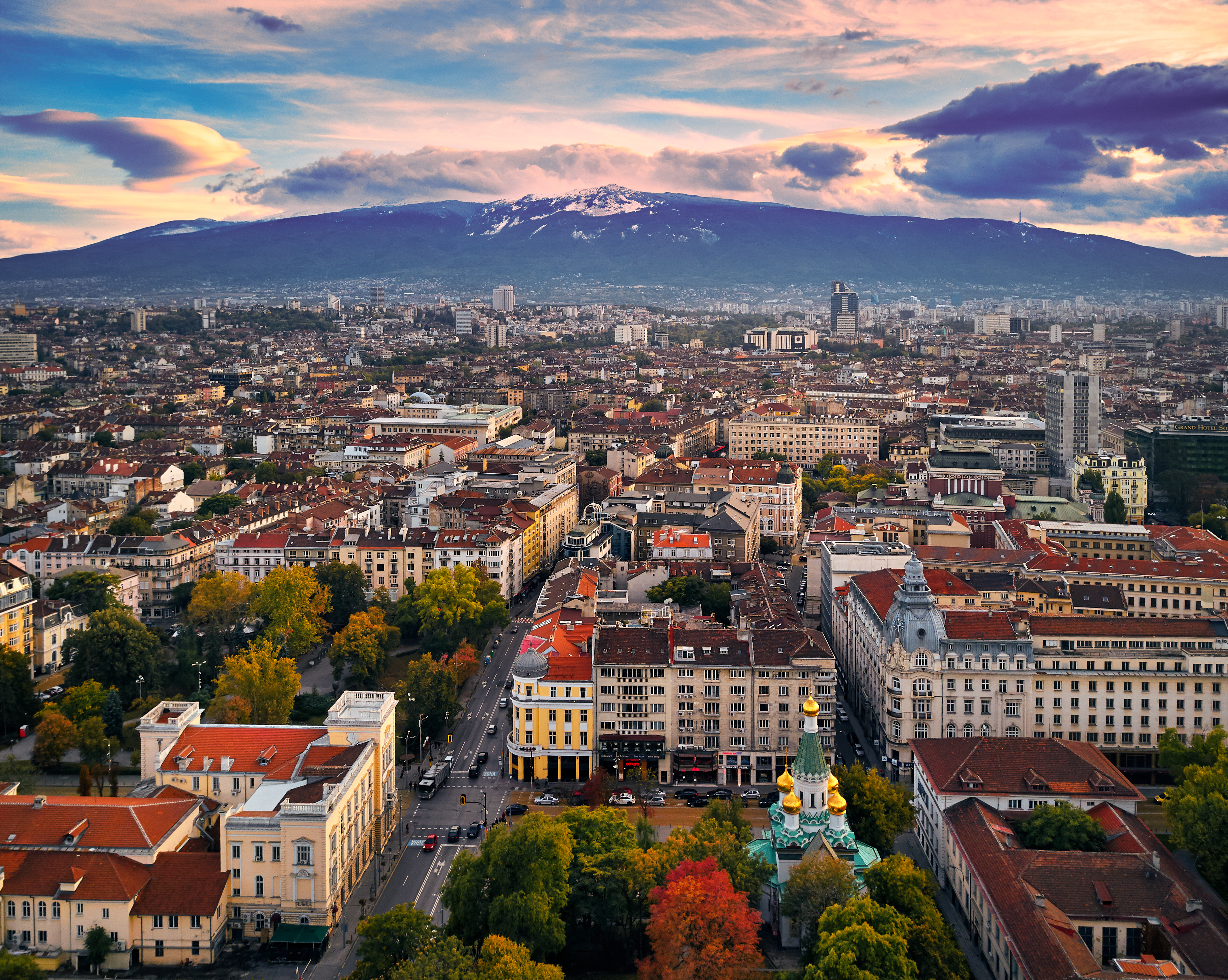
Sofia is the budget-European capital that keeps surprising people — a city of Roman ruins under the streets, Thracian treasure in the National Museum, Vitosha mountain as a backdrop, and a café culture that makes any comparable EU capital feel overpriced.
Sofia gets less than it deserves from European travelers who tend to use it as a transit point toward the Greek islands or the Romanian highlands. This is their loss. The city sits at the foot of Vitosha Mountain — a 2,290-meter massif whose slopes begin effectively at the city's southern edge, close enough that you can see hikers on the ridge from downtown. The combination of a functioning capital city and immediate access to mountain wilderness is something you pay much more for in Lucerne or Innsbruck.
The history runs deeper than most visitors expect. The Sofia underground is literally layered — excavations for the metro in the 1990s unearthed Roman Serdica underneath the city center, and the result is a glass-floor installation directly beneath the streets of modern Sofia where you can walk over 4th-century Roman roads and walls. The Boyana Church, a UNESCO World Heritage Site in the foothills south of the city, contains medieval frescoes from 1259 that art historians describe as a precursor of the Italian Renaissance — painted 40 years before Cimabue in Florence.
The neighborhood of interest is Studentski Grad (the university quarter) and the streets around Vitosha Boulevard and the Ivan Vazov area — a concentration of independent cafés, natural wine bars, craft beer pubs, and a restaurant scene that has genuinely advanced over the last decade. Sofia in 2026 has some legitimately serious cooking — farm-to-table Bulgarian cuisine, a specialty coffee scene that would hold its own in Warsaw or Tallinn, and a bar culture that stays remarkably cheap by Western European standards.
The trade-off: Sofia is still catching up on tourist infrastructure, and some of the city's most significant sights (the National History Museum, Boyana Church) require a taxi to reach. Some central streets feel underdeveloped compared to Tallinn or Ljubljana. But the value proposition — excellent food, mountain access, 7,000-year history, and a bed for €25 — is hard to argue with. The traveler who writes Sofia off as 'not pretty enough' is almost certainly the traveler who would have written off Lisbon in 1998.
The practical bits.
- Best time
-
April – June · September – OctoberSpring (April–June) brings mild temperatures (15–22°C), the Vitosha hiking season opening, and the city without summer heat. September and October are excellent — temperatures comfortable, the surrounding Rhodope Mountains coloring for autumn, and the tourist thinning that makes the city feel more genuinely local. July and August are hot (28–35°C) with an active local nightlife scene. Winter offers skiing at Borovets and Bansko (both within 2 hours).
- How long
-
3 nights recommendedTwo nights covers the city center sights. Three nights adds Boyana Church, Vitosha hiking, and the National History Museum. Four or five nights makes sense if combining with Plovdiv or the Rila Monastery day trips.
- Budget
-
€85 / day typicalSofia is one of the cheapest capitals in Europe. A restaurant meal costs €8–15; a craft beer in a bar €2–3; a taxi across the city €3–5. Hostel beds from €12; midrange hotels €40–80. Budget travelers can eat and drink extremely well for €40/day.
- Getting around
-
Tram + metro + taxiThe Sofia metro has two lines covering the main east-west and airport corridors. Trams supplement in the city center. Taxis are cheap by European standards (€3–5 across town) — use the OK Supertrans or Yellow apps to avoid tourist pricing. The National History Museum and Boyana Church both require a short taxi or bus.
- Currency
-
Bulgarian Lev (BGN) · 1 EUR = ~1.96 BGNCards widely accepted in restaurants and hotels. Cash useful for markets, small shops, and taxis. ATMs ubiquitous. Bulgaria has not yet joined the Eurozone — exchange euros at banks, not street bureaux.
- Language
- Bulgarian (Cyrillic script). English increasingly spoken by under-40s, less so outside the center and tourist areas. Basic Cyrillic reading helps navigate signage.
- Visa
- EU/Schengen: Bulgaria became a Schengen member in 2024. US, UK, Canadian, and Australian passport holders get 90 days visa-free.
- Safety
- Generally safe. Petty crime (pickpocketing) near the central market and Lion's Bridge area. Take licensed taxis only. The political demonstrations that have occasionally occurred near the parliament should be observed from a distance.
- Plug
- Type C / F · 230V — standard European adapter.
- Timezone
- EET · UTC+2 (EEST UTC+3 late March – late October)
A few specific picks.
Hand-picked, not algorithmic. Each of these has earned its space.
One of the largest Eastern Orthodox cathedrals in the world — built between 1882 and 1912 to commemorate the Russian soldiers who died liberating Bulgaria from Ottoman rule. The neo-Byzantine gold domes and vast interior are genuinely impressive. Free to enter; the crypt icon museum charges a small fee.
A tiny medieval church housing frescoes from 1259 — painted nearly 40 years before Cimabue in Florence, showing a naturalism and emotional depth that prefigures the Italian Renaissance. A UNESCO World Heritage Site. Entry limited to 8 people per session to protect the microclimate; book at least a day ahead.
Bulgaria's largest museum, housed in the former Communist Party residence. Highlights include the Panagyurishte Gold Treasure (4th century BC Thracian golden rhytons), early Christian mosaics, and medieval Bulgarian royal regalia. Taxi from center costs €5.
The remains of Roman Serdica (4th century AD) are preserved under the streets of modern Sofia in a glass-floored installation accessible from the TZUM building and the metro station. Walking over original Roman streets in the center of a modern capital is a genuinely strange experience.
Sofia's 2,290-meter backyard — accessible by tram 9 to the Vitosha Nature Park entrance. Marked trails to Zlatni Mostove (stone rivers), Kopitoto summit, and the Cherni Vrah peak (2,290m). A 3–4 hour round trip from the city edge. You can legitimately hike from the center of a European capital to a mountain summit and back in a day.
The only functioning mosque in Sofia, built in 1576 during Ottoman rule — a 16th-century Mimar Sinan-school structure next to the public mineral baths. The juxtaposition of mosque, mineral bath, and the ruins of a Roman forum within 200 meters is the most layered single block in Sofia.
The spectacular yellow-and-blue majolica-tiled Art Nouveau building (1913) that housed the city's public thermal baths for most of the 20th century is now the Sofia History Museum. The building alone is worth seeing; the museum inside covers the 7,000-year history of human settlement at Sofia's hot springs.
Sofia's main open-air market — fresh produce, Bulgarian honey, herbs, dried mushrooms, and the ingredients of Balkan home cooking. Go on a Saturday morning. The surrounding streets have Bulgaria's best collection of independent ethnic restaurants.
Bulgarian art from the 19th century to the present in a well-maintained gallery in the former royal palace building. The collection of Bulgarian Realist and Post-Impressionist painting is stronger than the international profile suggests. Free on some days.
The anchor of Sofia's new bar scene — a serious selection of Bulgarian and Balkan rakia (fruit brandy) served by knowledgeable staff in an atmosphere that takes the spirit as seriously as a French sommelier takes Burgundy. The homemade food pairings are excellent.
Pick a neighborhood, not a hotel.
Sofia is a city of neighborhoods. The one you stay in shapes the trip more than the property does.
Different trips for different travelers.
Same city, very different stays. Pick the lens that matches your trip.
Sofia for budget travelers
Sofia is Europe's answer to the budget-city question — excellent food and drink for €35–45/day, mountain hiking for free, world-class museums for €3–8. Hostel beds from €12. The value-to-quality ratio is the strongest of any EU capital city.
Sofia for history and archaeology enthusiasts
Roman Serdica under the streets, Thracian gold in the National History Museum, medieval frescoes at Boyana, Ottoman mosques and mineral baths — Sofia is a palimpsest of 7,000 years of continuous human settlement. Rare depth for a city its size.
Sofia for hikers and outdoor travelers
Vitosha Mountain is 40 minutes by tram from the city center. Three major ski resorts (Borovets, Bansko, Pamporovo) within 2–3 hours. The Rila Mountains (Rila Monastery area) are among the finest hiking ranges in Southeastern Europe. Sofia punches dramatically above its weight for outdoor access.
Sofia for emerging destination seekers
Sofia in 2026 has the trajectory Lisbon had in 2008 — independently minded food scene, craft beer culture, rakia bars, and a local population that hasn't lost patience with tourism yet. Worth visiting before the 'discovered' tag gets attached.
Sofia for weekend city-breakers
Low-cost carriers serve Sofia from most major European airports at budget prices. Three nights covers the main sights, Boyana Church, and a day on Vitosha. Budget under €250 per person all-in for a genuine European capital city break.
Sofia for couples
The combination of mountain hiking, evenings at rakia bars, museum mornings, and the extraordinary value of dining well in Sofia makes it excellent for couples who want experience over luxury spend. The Boyana Church experience is genuinely romantic in its hushed, fresco-surrounded intimacy.
When to go to Sofia.
A quick year at a glance. Great, good, or skip — see what each month is doing before you book.
Borovets and Bansko ski season at peak. City life continues quietly. Very few tourists.
Baba Marta Day (March 1 transition) brings martenitsi (red-and-white friendship tokens) to every wrist. Ski season continues.
Baba Marta (March 1) — red-and-white martenitsi tokens everywhere. Spring emerging. City livening up.
Vitosha hiking season opens. Easter is major (Orthodox calendar). Excellent for city walks.
Best overall month. Markets full of spring produce, terraces open, Vitosha easily accessible.
Pleasant early month, increasingly warm. Summer festivals beginning. Mountain hiking excellent.
Hot in the city. Vitosha and Rila Mountains offer cool escape. Active nightlife.
Peak heat. Some locals leave for the coast. Still active city but temperature-challenging.
Excellent. Post-summer calm, Vitosha trails clear, local harvest produce at the market.
Vitosha's birch forests turn gold. Mountain air crisp. Outstanding hiking month.
Quieter. First snow on Vitosha peak. Good museum days. Low prices.
Christmas market on Vitosha Boulevard. First ski runs at Borovets. Local holiday warmth.
Day trips from Sofia.
When you want a change of pace. Each one's a half-day or full-day out, easy from Sofia.
Rila Monastery
2h by busDirect bus from Ovcha Kupel station, morning departures. Bulgaria's largest Eastern Orthodox monastery in a forested mountain valley — extraordinary National Revival-period frescoes (1840s) and a medieval Hrelyo Tower. Spiritual atmosphere strongest on weekday mornings.
Plovdiv
2h by train or busTrain from Sofia Central Station or bus from central bus station. The Old Town on the three hills has the best-preserved National Revival houses in Bulgaria. Kapana (The Trap) district has galleries, craft beer bars, and independent restaurants. Plovdiv was European Capital of Culture 2019.
Koprivshtitsa
2h by trainTrain from Sofia + local bus connection. A village of 5,000 where the April 1876 uprising against Ottoman rule began — the houses of the rebellion leaders are now museums in their original preserved form, complete with period furnishings.
Borovets Ski Resort
1h 30mBus from Sofia's Ovcha Kupel station. Bulgaria's oldest mountain resort at 1,350m in the Rila Mountains — skiing December–March, hiking June–September. Far cheaper than comparable Alpine resorts.
Melnik
3h by busMelnik is Bulgaria's smallest town (200 residents) and its most important wine-producing village — Melnik grape wine is unique to this microclimate. The surrounding landscape of dramatic sandstone pyramid formations is unlike anywhere else in the Balkans.
Vitosha Mountain
45 min by tramTram 9 to the park edge, then marked trails. The Zlatni Mostove (Golden Bridges) stone river is a phenomenon of large granite boulders carried by periglacial processes — a striking geological sight 1h 30m into the park. Summit (Cherni Vrah, 2,290m) is a 3–4h return from the park edge.
Sofia vs elsewhere.
Quick honest reads on the cities people compare Sofia to.
Bucharest has a more developed nightlife, a rowdier Old Town, and the Palace of Parliament (a genuine spectacle of communist architecture). Sofia has better mountain access (Vitosha), the Boyana UNESCO frescoes, a calmer character, and a more cohesive food scene. Both deserve 3-night visits.
Pick Sofia if: Mountain proximity, medieval art, and a calmer Eastern European capital character appeal over Bucharest's larger, rowdier energy.
Belgrade has the most intense nightlife of any Balkan capital, a magnificent river fortress, and a Serbian food culture centered on grilled meats and rakija. Sofia has better mountain access, UNESCO sites, and a more varied museum culture. Belgrade for nightlife; Sofia for history and outdoor access.
Pick Sofia if: UNESCO heritage, mountain hiking, and Eastern European history matter more than Balkan party culture.
Tallinn has a better-preserved medieval old town (UNESCO, dramatic city walls) and a more advanced café and restaurant scene. Sofia is significantly cheaper, has better mountain access, and deeper ancient history (Roman, Thracian). Tallinn for Northern European medieval charm; Sofia for the Balkans' complex layers.
Pick Sofia if: Budget, mountain access, and Byzantine-Thracian history matter more than medieval Northern European atmosphere.
Athens has the Acropolis, significantly warmer weather, and a more developed tourist infrastructure. Sofia is cheaper, less overwhelmingly touristed, and has superior mountain access. Athens for classical civilization; Sofia for the Balkans' layered history on a tight budget.
Pick Sofia if: You want Eastern Europe's cheapest capital with Roman ruins and mountain hiking rather than the Greek classical experience.
Itineraries you can start from.
Rough shapes for a trip here — a feel for the pace and cost. Find the one that fits you.
Day 1: Walking tour of center (Serdica ruins, Alexander Nevsky, mineral baths, mosque), evening on Vitosha Boulevard. Day 2: Boyana Church morning (book ahead), National History Museum, Vitosha evening walk.
Two nights Sofia, two nights Plovdiv. Day trips: Rila Monastery from Sofia, Old Town Plovdiv and Kapana creative district from Plovdiv. Both cities connected by 2-hour train.
Sofia base for 3 nights, day trips to Rila Monastery and Borovets or Bansko ski resort area. Then 2 nights in Plovdiv. The Bulgarian cultural circuit on a genuinely affordable budget.
Things people ask about Sofia.
When is the best time to visit Sofia?
April through June and September through October are the best months — mild temperatures, the Vitosha hiking season in full swing, and the city without summer heat. July and August are hot (28–35°C) with active nightlife but heavy warmth. Winter (December–February) is cold and grey but Sofia is a good ski-resort gateway — Borovets and Bansko are both within 2 hours by bus or car.
Is Sofia safe to visit?
Yes, generally safe. The main concerns are the usual European petty crime — pickpocketing near crowded markets and transport hubs. Licensed taxis using the OK Supertrans or Yellow Taxi apps avoid the tourist-pricing scams that hit unwary visitors at the airport. The city has significantly lower violent crime than comparable Balkan capitals.
Is Bulgaria in the Schengen area?
Yes — Bulgaria joined the Schengen zone in 2024. US, UK, Canadian, and Australian passport holders get 90-day visa-free access. Note that Bulgaria still uses the Bulgarian Lev (BGN) and has not joined the Eurozone — the euro is not official currency, though some tourist establishments accept it at poor exchange rates.
How much does Sofia cost per day?
Sofia is one of Europe's best-value capitals. A restaurant meal with a drink costs €8–15; a craft beer in a bar €2–3; a taxi across the city €3–5. Budget travelers can eat and drink well for €35–45/day. Midrange travelers with a decent hotel and restaurant dinners spend €80–110. Even the higher end of Sofia's restaurant scene — farm-to-table Bulgarian cuisine in Lozenets — rarely exceeds €30 per person.
What is Bulgarian food and what should I try?
Bulgarian cuisine is vegetable-forward with strong Ottoman, Slavic, and Greek influences. Must-tries: shopska salad (tomatoes, cucumbers, peppers, roasted red peppers, topped with grated white sirene cheese — the national salad); tarator (cold cucumber-yogurt soup); banitsa (flaky filo pastry stuffed with sirene cheese — the traditional breakfast); kavarma (slow-cooked meat stew); and kebapche (grilled minced meat rolls). Rakia — fruit brandy distilled from plum, grape, or apricot — is the national spirit, and Raketa Rakia Bar is the best place to understand it properly.
What are the must-see sights in Sofia?
The Alexander Nevsky Cathedral for the gold-domed neo-Byzantine interior and the crypt icon museum. Boyana Church (UNESCO) for the medieval frescoes that predate the Italian Renaissance — book ahead and go on the first tour. The Serdica Roman ruins under the streets for the surreal experience of walking over 4th-century Rome in a modern city. The National History Museum for the Panagyurishte Gold Treasure. And Vitosha Mountain for the city-to-summit hike.
How do I get from Sofia Airport to the city center?
Metro Line 2 connects Sofia Airport Terminal 2 to the city center (Serdika station) in about 30 minutes for BGN 1.60 (€0.80) — one of the best-value airport connections in Europe. Taxis cost €8–12; use only licensed cabs with meters or the OK Supertrans app. The metro is the obvious choice unless you have very heavy luggage.
What is Boyana Church and why is it UNESCO listed?
Boyana Church is a medieval Bulgarian Orthodox church in the foothills south of Sofia, containing frescoes painted in 1259 by an unknown master. The naturalism, emotional expressiveness, and portraiture techniques in these frescoes anticipate the Italian Renaissance by decades — predating Cimabue in Florence. UNESCO recognized the site as a World Heritage property in 1979. Entry is limited to 8 visitors per 10-minute session to protect the humidity levels. Book at boyanasite.bg at least a day ahead.
Can I hike Vitosha Mountain from Sofia?
Yes — Vitosha is genuinely walkable from the city's southern neighborhoods. Tram 9 from the center reaches the Vitosha Nature Park entrance at Dragalevtsi. From there, marked trails lead to Zlatni Mostove (the stone rivers, 1h 30m), Kopitoto (1,810m, 2h), and Cherni Vrah (the summit, 2,290m, 3–4h round trip from the park edge). The Simeonovo cable car (when operational) offers an alternative ascent. Take proper footwear and an extra layer.
What day trips can I do from Sofia?
Rila Monastery (2h by direct bus from Ovcha Kupel station) is the most important — the largest Eastern Orthodox monastery in Bulgaria, in a forested mountain valley, UNESCO listed, with extraordinary National Revival-period frescoes. Plovdiv (2h by train or bus) is Bulgaria's second city with a remarkable Old Town and a thriving contemporary art scene. Koprivshtitsa (2h by train + connection) is a preserved National Revival village where the April 1876 uprising against Ottoman rule began.
Is Sofia good for a short break?
Yes — it's one of Europe's best emerging weekend destinations. Ryanair, Wizz Air, and easyJet all serve Sofia from multiple UK and European cities, often at low prices. The combination of cheap accommodation, cheap food and drink, Roman ruins, mountain hiking, and a developing food scene makes it compelling for 3-night breaks from London, Vienna, or Berlin.
What is the rakia tradition in Bulgaria?
Rakia is the Bulgarian (and broader Balkan) fruit brandy — distilled from grapes (grozdova), plums (slivova), or a mix, typically homemade in villages but increasingly produced by artisan distilleries. It's offered as a hospitality drink (a glass of homemade rakia is a traditional Bulgarian welcome) and serves as the aperitif equivalent. At Raketa Rakia Bar, an educated flight through Bulgarian regional styles is an excellent introduction — start with the plum, compare to the grape, end with the quince.
What is Bulgaria's currency and can I use euros?
Bulgaria uses the Bulgarian Lev (BGN), pegged to the Euro at 1 EUR = 1.956 BGN. Bulgaria has not joined the Eurozone and the lev remains the only legal tender. Some tourist restaurants and upscale hotels accept euros, but at rates significantly below the official rate. Use ATMs (the rate is fair and automatically applied) rather than street exchange bureaux. Credit cards are widely accepted in the city center.
What language is spoken in Sofia?
Bulgarian, written in the Cyrillic alphabet. English is widely spoken by under-40s in the city center, cafés, restaurants, and hotels. German and Russian are understood in some contexts. Learning a few Cyrillic characters (especially for metro station names) helps considerably; most major sites have English signage.
What is the National History Museum in Sofia worth seeing?
The National History Museum is Bulgaria's largest, housed in the former Communist Party government residence south of the city center. The collection spans 7,000 years of Bulgarian history; the Thracian gold highlights include the Panagyurishte Treasure — nine golden rhytons (ritual drinking vessels) from the 4th century BC of extraordinary craftsmanship. The Rogozen Treasure (2,000+ silver and silver-gilt vessels) is the largest discovered Thracian silver hoard. Worth 2–3 hours; taxi from center costs €5–6.
Is Sofia good for solo travelers?
Very much so. The city has a thriving café and bar scene in the Studentski Grad and Ivan Vazov areas that's naturally social. The free Sofia walking tours (starting from the Palace of Justice by the Presidency building) are excellent for orientation and meeting other travelers. Hostels have active common areas. Solo dining is entirely culturally comfortable — Bulgarians eat and drink socially but are not fazed by solo guests.
What is happening in Sofia's food scene?
The Sofia food scene has meaningfully advanced since around 2018. Key developments: a specialty coffee culture centered on roasters like Dabov Specialty Coffee; farm-to-table Bulgarian restaurants like Made in Home (seasonal Bulgarian produce, excellent value); a natural wine bar scene around Oborishte; and serious rakia culture at Raketa. The city won't rival Warsaw or Tallinn for sheer range in 2026, but it's well past the 'tourist menu of grilled meats' era in its central neighborhoods.
How does Sofia compare to Bucharest?
Both are Eastern European capitals with communist-era architecture, rapidly developing food and bar scenes, and significant recent history. Bucharest has a larger old town (Centrul Vechi is rowdier and more developed for nightlife), the extraordinary Palace of Parliament (the world's second-largest administrative building), and is 1h 45m from the Transylvania region. Sofia has better mountain access, the Boyana UNESCO Church, and feels somewhat smaller and more manageable. Both reward 3-night visits; both are seriously underrated by Western European travelers.
Know someone headed to Sofia?
Send them this guide — real neighborhoods, timing, and prices, with nothing to sign up for.
Copies the link — nothing to install