Plovdiv
Send it to whoever you'd travel with
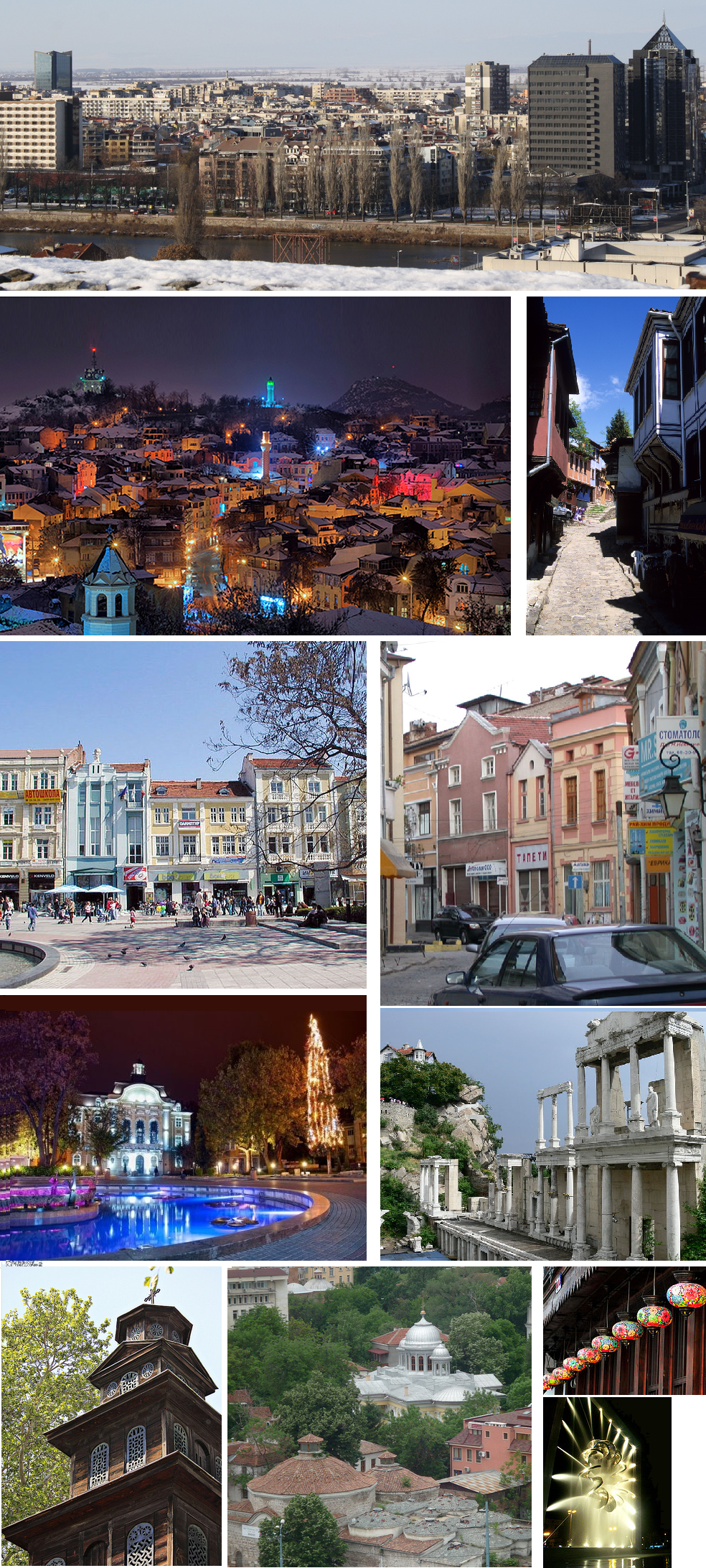
Plovdiv is one of Europe's oldest continuously inhabited cities, and it still functions like a city rather than a museum — a Roman amphitheater used for evening concerts, a 19th-century Revival old town with working art studios, and the Kapana creative district where young Bulgarians have built something with no European equivalent.
The claim that Plovdiv is one of the oldest continuously inhabited cities in Europe is genuinely contested — Larissa (Greece) and Argos make the same assertion — but the material evidence in Plovdiv covers enough centuries that the exact ranking matters less than the accumulated reality: a Roman amphitheater from the 2nd century CE that seats 7,000 and is still used for summer concerts, a medieval fortress wall on the Nebet Tepe hill with views across the Maritza plain that haven't fundamentally changed since the 5th century, and a dense network of 19th-century Bulgarian National Revival mansions that survived the Ottoman Empire's end and the Communist period largely intact.
The old town (Staré Grad) occupies three hills — the ancient Thracian and Roman settlement rearranged itself between the same rock formations through every subsequent civilization. The Bulgarian National Revival architecture of the 18th and 19th centuries, characterized by bay windows projecting over the cobblestone lanes, intricately painted facades, ornate wooden ceilings, and courtyard gardens that borrow from Ottoman and Mediterranean models while remaining distinctly Bulgarian, is the most concentrated and best-preserved collection of this style in the country. Several mansions have been converted to museums; others are still private homes, their gardens visible through iron gates in the lane walls.
Kapana ('The Trap') is the city quarter that got Plovdiv designated European Capital of Culture in 2019. A former craftsmen's district that declined through the Communist period and was largely abandoned by the 1990s, it has been methodically colonized since the 2000s by artists, architects, craft brewers, independent booksellers, and the owners of coffee shops with no international precedent — not Viennese cafés, not Scandinavian minimalism, but something that is specifically Bulgarian post-Socialist creative culture. The quarter is dense with murals, small independent galleries, Thracian rakia bars, and restaurants serving updated Bulgarian food. On summer weekends, the streets fill with a mix of locals and visitors that has more energy than the old town's preservation atmosphere.
The city is still genuinely cheap by Western European standards. A glass of local wine costs €2; a full meal in a traditional restaurant runs €8–15; a museum entry is €2–3. This is not poverty tourism — the city has a functioning middle class, a good university, and a quality of everyday life that its prices don't suggest. The cheapness is a legacy of Bulgarian living costs relative to Western Europe rather than deprivation, and it makes Plovdiv one of the best-value cultural destinations on the continent.
The practical bits.
- Best time
-
April–June and September–OctoberSpring and autumn bring the most comfortable weather for walking the old town's cobblestone hills — 18–24°C, clear skies, and the outdoor café culture in full operation. The Plovdiv International Fair (May and September) fills the city and raises hotel prices significantly. Summer (July–August) is hot (35°C+) and crowded with Bulgarian domestic tourism; the amphitheater concert season runs through August, which is a reason to brave the heat.
- How long
-
2 nights recommendedOne night is barely sufficient for the amphitheater, old town, and Kapana. Two nights covers all three zones properly plus the Archaeological Museum. Three to four nights adds the Bachkovo Monastery day trip, the Rhodope Mountains, and the Thracian tomb at Kazanlak.
- Budget
-
$80 / day typicalPlovdiv is among the cheapest cities in the EU for Western European or North American visitors. Budget guesthouses and hostels: €15–30/night. Mid-range hotels: €50–100. A rakia at a bar: €1.50. Dinner at a restaurant with wine: €12–20 per person. The Roman amphitheater entry: €5. Museum entries: €2–3 each.
- Getting around
-
Walking within the city; buses and shared taxis for day tripsThe old town, Kapana, and the central market area are all walkable — 15–20 minutes between zones on foot. The hills of the old town require some uphill walking; the lanes are cobblestone. For day trips, public buses run to Bachkovo Monastery from the central bus station (1h 30m). Plovdiv is on the main Sofia–Istanbul rail and road axis — express trains to Sofia take 1h 40m.
- Currency
-
Bulgarian Lev (BGN) · 1 BGN ≈ 0.51 EUR (Bulgaria maintains a fixed currency board peg to the euro)Cards increasingly accepted but cash is still important for smaller restaurants, market stalls, and the old town craft shops. ATMs are plentiful throughout the city center.
- Language
- Bulgarian. English widely spoken by those under 40 in the old town, Kapana, and tourist industry. Less English in residential neighborhoods. The Cyrillic alphabet is used — having key addresses transliterated or mapped helps.
- Visa
- Bulgaria is an EU member state but not fully Schengen as of 2024 (air/sea borders entered Schengen December 2024; land borders pending). US, EU, UK, and Australian passport holders enter without visa. Check current border status for your nationality.
- Safety
- Safe by European standards. Watch for pickpockets in the central market area during weekends. The old town cobblestone lanes are unlit in some sections after midnight. Plovdiv has a small Roma population; discrimination is a local reality and visitors sometimes encounter negative behavior in market areas.
- Plug
- Type C / F · 230V
- Timezone
- EET · UTC+2 (EEST UTC+3 late March – late October)
A few specific picks.
Hand-picked, not algorithmic. Each of these has earned its space.
A 2nd-century CE Roman theater for 7,000 seating, rediscovered in 1972 after a landslide, embedded in the old town hillside. Still used for summer performances and international concerts. The backdrop of the Rhodope Mountains visible from the upper tiers is dramatic. Entry €5; evening concerts require separate tickets.
The Bulgarian National Revival quarter — 18th and 19th-century mansions with cantilevered bay windows, painted facades, and courtyard gardens on cobblestone lanes. The Hisar Kapia gate, the Nebet Tepe hill fortress, and several open house-museums give architectural context. Best walked slowly over several hours.
The former craftsmen's quarter that became the 2019 European Capital of Culture's beating heart — murals, independent galleries, craft breweries, Thracian rakia bars, and coffee shops with their own character. The best food scene in the city is here. Weekends bring street markets and live music.
The strongest display of Thracian artifacts in Bulgaria — gold and silver funerary objects, sculpture, and ceramics from 6,000 years of continuous habitation. The Panagyurishte Gold Treasure (4th century BCE Thracian ceremonial vessels) is the centerpiece. Budget 1.5–2 hours.
The Thracian and later Byzantine fortress on the highest of Plovdiv's hills. The walls are ruined but the panoramic view across the Maritza plain, with the Rhodope Mountains to the south, is the best in the city. At dusk, when the hills below light up and the plain to the north takes on an amber tone, it's one of the finest views in the Balkans.
The studio and memorial house of Bulgaria's most significant modern painter. Boyadzhiev suffered a stroke in 1951 that paralyzed his right hand; he learned to paint with his left, and his post-stroke work is rawer and more expressively powerful than his pre-stroke paintings. The museum displays both periods in the original Revival-era house.
The finest National Revival mansion open to the public, with original furniture, hand-woven textiles, and decorative arts. The painted wooden ceilings are extraordinary examples of Plovdiv's 19th-century craft tradition. The house's asymmetric cantilevered facade is the most photographed in the old town.
Founded in 1083 by the Georgian general Grigoriy Bakuriani, one of the oldest and most significant Orthodox monasteries in Bulgaria. The 17th-century frescoes in the Assumption Church, the ossuary chapel with medieval bone paintings, and the riverside forest setting make this the best day trip from Plovdiv.
A 15th-century mosque in the city center, still in active use, with the remains of a Philippopolis Roman stadium visible in the plaza outside. The juxtaposition of Ottoman mosque, underground Roman stadium, and Bulgarian shoppers on a pedestrian street is very Plovdiv.
One of the best-preserved Roman mosaic floors in Bulgaria, discovered during underground mall construction and preserved in situ beneath the modern building. The mosaics date to the 4th century CE. The context — a Roman aristocratic house floor viewed from a pedestrian passage below a 21st-century shopping center — is perfectly Plovdiv.
Pick a neighborhood, not a hotel.
Plovdiv is a city of neighborhoods. The one you stay in shapes the trip more than the property does.
Different trips for different travelers.
Same city, very different stays. Pick the lens that matches your trip.
Plovdiv for history and archaeology enthusiasts
Eight thousand years of continuous habitation documented in a single mid-size Bulgarian city — Thracian gold, Roman amphitheater and stadium, Byzantine fortress walls, Ottoman mosque, and Bulgarian Revival mansions in sequence. The Archaeological Museum provides the material spine.
Plovdiv for architecture travelers
The Bulgarian National Revival architecture in the old town is the finest extant collection of this distinctive style. The Kuyumdzhioglu house (Ethnographic Museum) is the benchmark for understanding the full vocabulary. The Kapana murals add a contemporary visual dimension to the same streets.
Plovdiv for food and wine travelers
Kapana has made Plovdiv Bulgaria's most interesting food destination. Contemporary Bulgarian restaurants at European quality but Bulgarian prices — update Balkan cuisine with local produce, regional wines, and artisan rakia. The Plovdiv wine region (Thracian Valley) produces internationally recognized Mavrud and Rubin reds.
Plovdiv for budget travelers
Plovdiv is among the cheapest quality city destinations in the EU. Hostel beds from €8; guesthouse double rooms from €25; excellent full dinners with wine from €12 per person. The main sites cost €2–5 each. A serious 3-day cultural trip here costs what a single museum day in London or Paris would.
Plovdiv for first-time balkans visitors
Plovdiv is an excellent entry point for the Balkans — relatively easy to navigate, English widely spoken in tourist areas, safe, cheap, and historically layered enough to reward serious attention. Pair with Sofia (2h by train) and Belgrade or Istanbul for a broader Balkan circuit.
Plovdiv for arts and contemporary culture travelers
The 2019 European Capital of Culture designation transformed Plovdiv's arts infrastructure permanently. Several galleries, performance spaces, and creative studios established during that year have continued. The Kapana open-air gallery circuit changes seasonally. The summer concert season at the Roman amphitheater is the flagship cultural event.
When to go to Plovdiv.
A quick year at a glance. Great, good, or skip — see what each month is doing before you book.
Low season, quiet, cold. Old town in winter silence has its own atmosphere. Very affordable.
Trifon Zarezan (February 14) is the Bulgarian wine harvest blessing festival — vineyards and restaurants celebrate. Otherwise quiet.
March 1 is Baba Marta — red and white martenitsi decorations appear everywhere. Spring energy returning.
Excellent shoulder month. Comfortable walking weather, gardens in bloom, low crowds.
Plovdiv International Fair fills hotels and raises prices. Early May is good; Fair week should be booked far ahead.
Excellent. Opera Pleasures Festival at the Roman amphitheater. Long days, lively Kapana evenings.
Hot but functional. Amphitheater concerts peak. Bulgarian domestic tourists arrive. Evening culture compensates for midday heat.
Peak heat and tourism. Best months for concerts. Explore early mornings and evenings; rest midday.
Autumn Fair (same hotel price issues as May). Otherwise one of the best months — warm, less crowded, long evenings.
Excellent shoulder month. Crowds gone, weather pleasant, autumn light on the old town facades.
Quieter. Some outdoor café culture closes for winter. Good for budget visits.
Plovdiv's Christmas market on the main square is atmospheric. Cold but not extreme.
Day trips from Plovdiv.
When you want a change of pace. Each one's a half-day or full-day out, easy from Plovdiv.
Bachkovo Monastery
1h 30m by bus southBulgaria's second-largest monastery (1083 CE). Combine with Asen's Fortress cliff-top ruins for a full Rhodope day. Bus from Plovdiv central station.
Asen's Fortress
45 min from BachkovoA 12th-century Bulgarian fortress perched on a cliff above a river gorge, with the Church of the Holy Mother of God still standing. Good hiking access.
Koprivshtitsa
2h by car or train from SofiaThe best-preserved National Revival town in Bulgaria, site of the 1876 April Uprising against the Ottomans. Usually combined with a Sofia transit rather than as a direct Plovdiv day trip.
Kazanlak and Rose Valley
2h by car northThe Kazanlak Thracian tomb has 4th-century BCE painted burial chamber frescoes. Combine with a rose distillery visit in season. Full day.
Hisarya (Hissar) Spa Town
45 min by busA small Plovdiv-region spa town with significant Roman thermal bath ruins and surrounding wine-producing villages. Easy afternoon trip.
Pamporovo Ski Resort
1h 30m south in RhodopesThe most affordable ski resort within range of Plovdiv. Better suited to beginners than experienced skiers. Day or overnight trip in winter season.
Plovdiv vs elsewhere.
Quick honest reads on the cities people compare Plovdiv to.
Sofia is Bulgaria's capital with superior museums, wider restaurant variety, and international transport connections. Plovdiv is more immediately beautiful for walking, has the best-preserved old town in Bulgaria, and is significantly more atmospheric as a travel destination. Most Bulgaria trips benefit from both.
Pick Plovdiv if: You want the most rewarding walking city experience in Bulgaria with ancient ruins, Revival architecture, and a creative district that Sofia's scale dilutes.
Bucharest is Romania's large, lively capital with Belle Époque architecture, the (absurd) Palace of the Parliament, and a more developed international tourist infrastructure. Plovdiv is smaller, cheaper, more historically layered, and less chaotically urban. Both are underrated Eastern European capitals.
Pick Plovdiv if: You want Roman ruins, intact Ottoman-era architecture, and a compact walkable city rather than a large Eastern European capital experience.
Thessaloniki (Greece) has Roman monuments, Byzantine churches, and one of Europe's best food scenes. Plovdiv has Bulgarian Revival architecture and a different cultural register. Both have Roman foundations; Plovdiv is less visited and notably cheaper.
Pick Plovdiv if: You want a deep dive into Bulgarian culture and history rather than the Greek version of the same Balkan Roman-to-Byzantine legacy.
Sarajevo is the more emotionally complex destination — Ottoman architecture, the 1990s war memory, and a Muslim-Christian-Jewish cultural intersection. Plovdiv has deeper ancient history and a lighter contemporary atmosphere. Both are genuinely interesting and underrated.
Pick Plovdiv if: You want Bulgarian rather than Bosnian history, and a city with a more relaxed contemporary energy and lower prices.
Itineraries you can start from.
Rough shapes for a trip here — a feel for the pace and cost. Find the one that fits you.
Day one: old town circuit, Roman amphitheater, Ethnographic Museum, sunset from Nebet Tepe. Evening in Kapana. Day two: Archaeological Museum, Dzhumaya Mosque, Roman stadium, Kapana lunch.
Days one–two cover all Plovdiv city highlights. Day three: Bachkovo Monastery morning, Asen's Fortress afternoon in Rhodope foothills, return evening.
Three nights Plovdiv. Day four: day trip to Kazanlak (Thracian tomb UNESCO), Valley of the Roses, Shipka Pass Monument. Return to Plovdiv for night.
Things people ask about Plovdiv.
Is Plovdiv really one of Europe's oldest cities?
The claim is credible though contested. Continuous human habitation at Plovdiv dates to at least 6,000 BCE in the Neolithic period, with Thracian settlement well documented from the 5th century BCE and Philip II of Macedon (Alexander the Great's father) founding the Macedonian city of Philippopolis here in 342 BCE. Roman Trimontium was a major provincial capital. Medieval Plovdiv survived under Byzantine, Bulgarian, and Ottoman rule. The Archaeological Museum documents this continuity with material evidence spanning 8,000 years. Whether it's strictly the oldest is a matter of definition; that the layering is extraordinary is not.
What is the Kapana district and why does it matter?
Kapana ('The Trap') is the former craftsmen's quarter immediately adjacent to the main pedestrian street, named for its network of lanes that visitors historically got lost in. After decades of decline through the Communist period and 1990s, it was gradually colonized from the 2000s onward by artists, designers, craft brewers, and independent restaurants. The Plovdiv 2019 European Capital of Culture designation accelerated this transformation. Today it has the most interesting food scene, the best coffee, and the most energetic social atmosphere in the city — a genuine creative district with a Bulgarian rather than internationally-franchised character.
How do I get from Sofia to Plovdiv?
By train: Express trains run from Sofia Central Station to Plovdiv in 1h 40m–2h (BGN 12–20, approximately €6–10). Multiple daily departures from early morning to evening; the fastest services are the express trains. By bus: Frequent coaches from Sofia's Central Bus Station take 1h 45m–2h 30m depending on traffic (BGN 12–15). By car: 153km on the A1/Trakia motorway, 2h in normal conditions. Train is generally more comfortable and reliable than road transport.
What is the Bulgarian National Revival architectural style?
The Bulgarian National Revival (Balgarski Vazrazhdane) refers to the cultural and architectural awakening of the late 18th and 19th centuries as Bulgarian identity re-emerged under late Ottoman rule. The architecture is distinctive: large wooden-framed houses with upper floors cantilevered over narrow lanes, elaborate painted wooden ceilings with geometric patterns, carved wooden screens and balcony railings, bay windows (erkeri) projecting outward, and central courtyard gardens. It draws on Ottoman residential forms but incorporates distinctly Bulgarian decorative elements. Plovdiv has the most intact concentration of this style in Bulgaria; Koprivshtitsa is the other main preserved example.
Is the Roman amphitheater still used for performances?
Yes. The 2nd-century CE theater was rediscovered in 1972 after a landslide, excavated, and eventually restored for modern use. It now seats approximately 7,000 for performances — the summer season (May–September) includes opera, jazz, folk music, and international pop concerts. The Opera Pleasures Festival and the International Folklore Festival are the main anchors. Checking the schedule before your visit is worthwhile — a concert in the amphitheater against the old town backdrop is the most memorable evening experience Plovdiv offers.
What is Bulgarian food and what should I try?
Bulgarian cuisine draws on Balkan, Ottoman, and Slavic influences with exceptional dairy quality as its defining strength. Shopska salad (tomatoes, cucumbers, peppers, onions topped with white sirene cheese) is the national dish. Banitsa (filo pastry with cheese) is the breakfast staple, often bought hot from street bakeries. Tarator (cold yogurt and cucumber soup) is essential in summer. Kavarma (slow-cooked meat and vegetable clay pot) is the signature main course. Rakia (fruit brandy — grape, plum, apricot) is the social spirit. Plovdiv's Kapana restaurants have updated these dishes into contemporary Bulgarian cooking while keeping the foundations.
What is the Bachkovo Monastery and is the day trip worth it?
Bachkovo Monastery is 32km south of Plovdiv in the Rhodope foothills, founded in 1083 by a Georgian military general serving the Byzantine Empire. It is the second-largest Orthodox monastery in Bulgaria (after Rila). The main church has 17th-century frescoes of strong quality. The ossuary chapel contains remarkable medieval bone paintings. The setting — beside the Asenitsa river with forest above — is excellent. The day trip is straightforward by public bus (1h 30m) or taxi (40 min). Combine with Asen's Fortress (a medieval citadel ruin on a cliff 8km away) for a full day.
What is the Panagyurishte Gold Treasure?
The Panagyurishte Gold Treasure is a collection of nine 4th-century BCE Thracian ceremonial vessels — rhytons (drinking horns), an amphora, and a phiale — made from solid gold, total weight 6.1 kg. Discovered by construction workers in 1949, they represent the finest known example of Thracian high-status craft. The rhytons are shaped as animal heads and human busts; the detail of the workmanship is extraordinary. The collection is housed in the Plovdiv Regional Archaeological Museum (not to be confused with the National History Museum in Sofia, which holds different Thracian treasures). Seeing these objects in person rather than in photographs does justice to the quality.
How does Plovdiv compare to Sofia as a travel destination?
Sofia is Bulgaria's capital — larger, with stronger museums (National History Museum, National Art Gallery), more international restaurant and nightlife infrastructure, and international airport connections. Plovdiv is more immediately beautiful for walking, with the old town hills, the Roman amphitheater, and the Kapana district. Sofia is more useful as a transit and logistics hub; Plovdiv is more rewarding as a pure travel destination. Most visitors to Bulgaria benefit from both: fly into Sofia, spend a night, then train to Plovdiv for two to three nights.
When is the Rose Festival in the Valley of the Roses?
The Valley of the Roses (Kazanlak area, about 120km north of Plovdiv via Stara Zagora) holds its annual rose harvest and festival in late May to early June — the exact dates depend on the bloom timing each year. The Damascene rose harvest for attar (essential oil) runs for 20–30 days at dawn. The festival in Kazanlak includes folk music, rose queen ceremonies, and the ability to visit working rose distilleries. This is a significant detour from Plovdiv that requires planning; it adds genuine context to Bulgaria's most economically distinctive agricultural product.
What is the Roman Stadium visible under the main street?
During the 1st–4th centuries CE, Philippopolis (Roman Plovdiv) had a large stadium on the main north-south street. Parts of the north curve of the stadium are still visible in the plaza outside the Dzhumaya Mosque and beneath the adjacent shopping mall — the Trakart Cultural Center preserves the excavated section with its mosaics. Most of the stadium remains buried beneath the modern city. The visible section can be viewed free from ground level and from the indoor Trakart center (entry BGN 5).
Is Plovdiv good for solo travelers?
Excellent. Plovdiv has a large university student population that gives it an unusually social atmosphere for a small-to-medium Bulgarian city. Kapana's independent bars and coffee shops are comfortable for solo visitors. The old town walks are entirely suitable for solo exploration. The hostel scene is good (Hostel Old Plovdiv and Sofia Hostel have both been recommended). The city is compact enough to orient in an afternoon. Bulgarian people are generally reserved at first contact but warm on acquaintance — a word of Bulgarian (blagodaria for 'thank you') opens conversations considerably.
What is rakia and where is the best place to drink it in Plovdiv?
Rakia is a Balkan fruit brandy produced throughout the region in grape (grozdova), plum (slivova), apricot (kaysiyeva), and quince (duyulyova) varieties. Bulgarian rakia differs from Serbian and Croatian versions primarily in local fruit sourcing and aging methods. In Plovdiv, traditional mehanas (taverns) and Kapana bars serve it in small clay cups (shots) or larger carafes as an aperitif with a shopska salad. The best places are the traditional mehanas in the old town and the Kapana bars that specialize in artisan rakia from small producers. Order 'domashna rakia' (house/homemade) — it is invariably better than commercial brands.
What are the other UNESCO sites near Plovdiv?
Within 2–3 hours of Plovdiv: the Kazanlak Thracian Tomb (4th century BCE, UNESCO, with extraordinary painted tomb chamber); the Boyana Church near Sofia (12th-century medieval frescoes, UNESCO); Rila Monastery (9th century, Bulgaria's most famous monastery, UNESCO, 2.5h from Sofia). The Valley of the Roses (Kazanlak area) and the Shipka Pass Memorial Church (commemorating the Russian-Ottoman war of 1877–78) are not UNESCO but are compelling day trips from the Plovdiv direction.
What is the best bar or coffee experience in Kapana?
Kapana's coffee culture is specific to Plovdiv and worth engaging. Specialty coffee shops like Little Things, Dabov Coffee, and several unnamed basement workshops serve quality single-origin espresso in spaces decorated with murals and reclaimed furniture. For beer, the craft brewery scene has grown significantly — local breweries like Shtastlivetsa (also a restaurant) and Compass Brewery have tasting rooms in the district. The Friday and Saturday evening atmosphere in Kapana, when the lanes fill with a mixture of students, families, and visitors between 7 PM and midnight, is the best introduction to contemporary Bulgarian urban culture.
Should I visit during the Plovdiv International Fair?
The Plovdiv International Fair (spring session in May, autumn session in September–October) is a major trade fair that has operated since 1892 and is one of the oldest in the Balkans. During the fair period, the city fills significantly with business visitors and hotel prices rise 30–60%. The fair grounds are separate from the tourist circuit, so the old town and Kapana function normally — but accommodation becomes expensive and harder to find. Unless you have a specific interest in the fair, the shoulder weeks before and after are preferable.
Is Plovdiv appropriate for families with children?
Yes, for older children (8+). The Roman amphitheater's engineering scale and concert potential work for children who can sit through a show. The Archaeological Museum's Thracian gold objects are visually striking. The Nebet Tepe hill view is universally appealing. For younger children, the Plovdiv Zoo and the large riverside parks provide age-appropriate space. The cobblestone old town hills require stroller-incompatible paths. Budget family travel in Plovdiv is among the easiest in the EU — costs are genuinely low and restaurant staff accommodate children.
Know someone headed to Plovdiv?
Send them this guide — real neighborhoods, timing, and prices, with nothing to sign up for.
Copies the link — nothing to install