Santo Domingo
Send it to whoever you'd travel with
Santo Domingo is the Caribbean's most historically dense city — the oldest continuously inhabited European settlement in the Americas, with a UNESCO Colonial Zone that has become one of the region's more genuinely surprising urban destinations as its restaurant and arts scene has evolved.
The Zona Colonial is the founding argument for visiting Santo Domingo: a 12-block grid of 16th-century buildings that constitutes the oldest European-built city in the Western Hemisphere, where Bartholomew Columbus established a settlement in 1496 and his nephew Diego oversaw the construction of the first Christian cathedral in the Americas (completed 1541). The stones of the fortified walls, the arcaded governor's palace (Alcázar de Colón), and the cobblestone grid of Calle Las Damas — the first street paved in the New World — are legitimate historical material, not reconstructions.
What's surprised visitors who arrive with lowered expectations is the quality of the contemporary life built on top of that foundation. The streets immediately around the Colonial Zone have developed a restaurant and cocktail bar scene over the last decade that has no real equivalent elsewhere in the Caribbean — proper kitchens doing Dominican-Creole cooking with real technical skill, natural wine lists, and a design sensibility that manages to feel globally current without erasing local character. Meson D'Bari, La Cantina, Patio Andaluz, and a shifting set of newer openings around the Parque Colón and Calle El Conde pedestrian street reward multiple evenings.
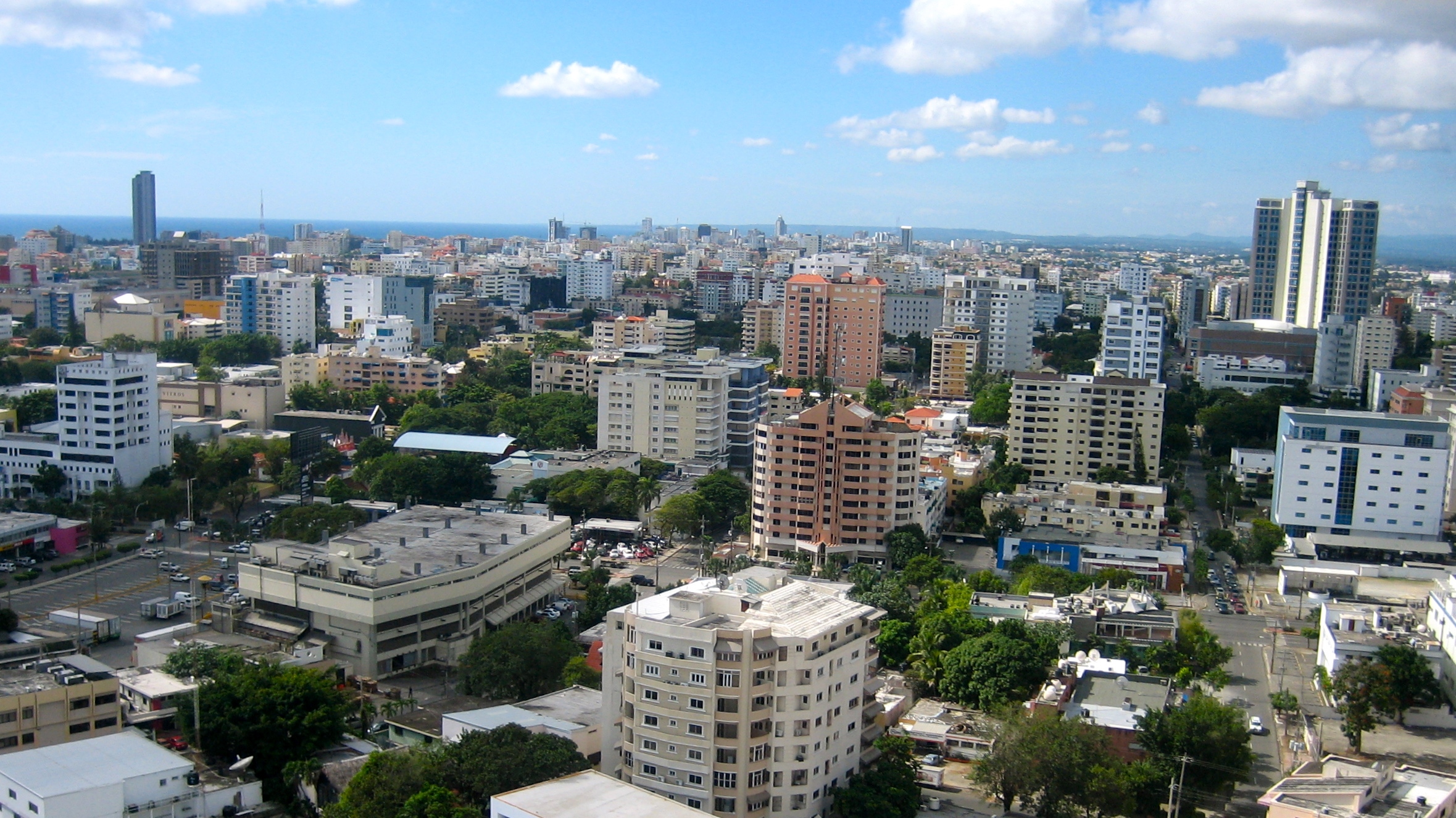
The city beyond the Colonial Zone is a major Latin American capital of 3 million people — Caracas-scale traffic, high-rise commercial corridors, and neighborhoods varying from the manicured Piantini district (where the embassies and luxury hotels sit) to the informal settlements that stretch north and east. Most visitors correctly stay in or adjacent to the Colonial Zone. The Malecón sea drive runs west from the Colonial Zone along the Caribbean coast — 15 km of waterfront boulevard lined with hotels, restaurants, and the city's main open-air evening promenade.
The practical picture: Santo Domingo is cheap relative to Caribbean island standards. A full dinner for two at one of the Zone's best restaurants runs $40–60 including wine. A comfortable boutique hotel in the Colonial Zone itself costs $80–150/night. The city is genuinely walkable within the Colonial Zone, less so outside it. Spanish is the only language in real Dominican life; tourist businesses in the Zone manage basic English. Crime is the persistent caveat — the Colonial Zone itself is well-patrolled and safe, but the surrounding barrios require normal large-city caution, and the Malecón after midnight is not a place for casual walking.
The practical bits.
- Best time
-
November – April (dry season)Santo Domingo is inland from the Caribbean coast and has a somewhat different weather pattern than Punta Cana. The dry season (Nov–Apr) is the most reliable — 26–31°C, lower humidity, and minimal rain. The city is hot in summer; the July–August rainy season brings afternoon showers and high humidity. Hurricane season (Jun–Nov) has real risk for the island.
- How long
-
4 nights recommended2 nights covers the Colonial Zone at a sprint. 4 nights allows the Zone properly, a Malecón evening, the Los Tres Ojos lagoon cave, and the Mercado Modelo. 7+ makes sense for travelers combining with the Cibao Valley (La Vega Carnival, Santiago cigar factories) or Jarabacoa mountains.
- Budget
-
$130 / day typicalSanto Domingo is the cheapest major city in this Caribbean guide. Guesthouses in the Colonial Zone run $50–80/night. A proper dinner at a Colonial Zone restaurant is $20–35 per person with drinks. Mid-range covers a boutique Colonial Zone hotel and restaurant meals.
- Getting around
-
Walk within the Zone, taxi elsewhereThe Colonial Zone is entirely walkable — 12 blocks that contain essentially everything a visitor needs. Beyond it, taxis (meter-free; negotiate before entering) or ride-hail apps (InDriver and Uber both work) are the practical options. Public conchos (shared route taxis) are cheap but confusing without Spanish knowledge.
- Currency
-
Dominican peso (DOP) · approximately 58 DOP = 1 USD (2026) · USD accepted in tourist areasCards at hotels and most Colonial Zone restaurants. Cash in DOP for markets, street food, and local shops. ATMs abundant in Piantini and the Colonial Zone area.
- Language
- Spanish. English spoken at tourist hotels and restaurants; rare in local contexts.
- Visa
- U.S., Canadian, and most Western passport holders pay a $10 tourist card (often included in airline ticket or paid on arrival). UK and EU citizens generally visa-free for 30 days.
- Safety
- The Colonial Zone is well-patrolled and genuinely safe for walking during the day and at most restaurants in the evening. The adjacent barrios (Ciudad Nueva, Gascue) require awareness after dark. The Malecón is safe in the early evening with crowds present; quieter sections after 11 PM are not. Use ride-hail apps rather than flagging cars for late-night transport.
- Plug
- Type A / B · 110V — same as the U.S. No adapter needed for American visitors.
- Timezone
- AST · UTC-4 year-round (no daylight saving)
A few specific picks.
Hand-picked, not algorithmic. Each of these has earned its space.
The first cathedral built in the Americas, with construction completed in 1541 on the original site from 1514. The current structure is a mix of Gothic, Baroque, and Renaissance stonework. The interior houses 14 side chapels and what was long claimed (and disputed) to be Columbus's bones. Free to enter.
The palatial home of Diego Columbus (Christopher's son), built in 1514 without a single nail — only mortise-and-tenon stone construction. Now a museum with period furniture. The second-floor loggia overlooking the Ozama River and the harbor is the building's best architectural moment.
The first paved street in the New World, running along the Ozama River fortification wall. The Spanish Colonial buildings along its length include the Panteón Nacional (a Jesuit church converted to a mausoleum for DR heroes), the Fortaleza Ozama, and the Casa de Francia.
The oldest military building in the Americas, with walls begun in 1502. The Torre del Homenaje (Tower of Homage) gives the city's best elevated view over the Ozama River mouth and the Colonial Zone rooftops. Served as a Spanish colonial military prison for 300 years.
The central square of the Colonial Zone, flanked by the Cathedral and the Old City Hall. A bronze statue of Columbus faces the sea (controversially, some argue). The square is the social center of the Zone — cafés on the arcaded perimeter, vendors, and the city's main informal social life.
Three underground lagoons inside a collapsed limestone cave system — freshwater, sulfurous, and a deeper blue pool connected by a raft crossing. The stalactite-draped caverns are dramatic; a fourth lagoon is accessed by a short ferry. One of the city's most unusual natural attractions.
The city's main artisanal and local goods market — amber jewelry, larimar (the DR's endemic blue stone), Dominican paintings, cigars, spices, and rum. The craft quality varies; the lower floor has genuine amber and larimar alongside tourist trinkets. The upper floor herb and spice section is more local.
The Colonial Zone's most respected restaurant for traditional Dominican cooking — sancocho (seven-meat stew), mofongo, chivo guisado (braised goat), and mangú (mashed plantain) prepared with real skill in an old colonial building. Lunch and dinner. Reserve ahead.
The 15-km seaside boulevard running west from the Colonial Zone along the Caribbean coast — evening promenade, outdoor bars, hotels, and the city's most expansive ocean view. The crowd thickens on Friday and Saturday nights. Walk the first kilometer west from the Colonial Zone; further west is quieter.
A small museum dedicated to larimar — a blue pectolite stone found only in the Dominican Republic, mined in the Bahoruco Mountains. The showroom-museum explains the mining process and the stone's properties. Free entry, with quality jewelry for sale at fair prices compared to market stalls.
Pick a neighborhood, not a hotel.
Santo Domingo is a city of neighborhoods. The one you stay in shapes the trip more than the property does.
Different trips for different travelers.
Same city, very different stays. Pick the lens that matches your trip.
Santo Domingo for history and architecture travelers
The Zona Colonial is one of the Western Hemisphere's most significant concentrations of 16th-century colonial architecture. The Alcázar, the Cathedral, Calle Las Damas, and the Fortaleza Ozama collectively constitute the founding fabric of European presence in the Americas. No other Caribbean city provides this depth.
Santo Domingo for foodies and local cuisine seekers
The Colonial Zone's restaurant evolution has made it genuinely interesting. Meson D'Bari, Pat'e Palo, Patio Andaluz, and the newer natural-wine and craft cocktail bars have created a food and drink scene that surprises most visitors. The street food alone — quipes, mangú, chicharrón — constitutes a real curriculum.
Santo Domingo for latin american urban travelers
Santo Domingo functions as a major Latin American capital — concerts, galleries, theater, nightlife, meringue and bachata clubs. Travelers who find Caribbean beach islands limiting and prefer the energy of a real city will find more to engage with here than anywhere else in the Caribbean.
Santo Domingo for budget travelers
Santo Domingo is dramatically cheaper than island Caribbean destinations. Guesthouses in the Colonial Zone from $50/night. Local comedores (diners) serve full plates for 200–400 DOP ($3–7 USD). The UNESCO Zone's primary sights cost $2–5 each or are free. Unbeatable value for Caribbean travel.
Santo Domingo for solo travelers
The Colonial Zone's compact walkability, restaurant bar culture, and number of solo-friendly street-level cafés make it one of the Caribbean's better solo destinations. Spanish ability transforms the experience. InDriver ride-hail app makes solo night transport safe and predictable.
Santo Domingo for punta cana extenders
For travelers already in the DR for a Punta Cana beach week, the 3.5-hour drive or bus to Santo Domingo for a 3-night Colonial Zone extension transforms a beach trip into an understanding of the actual country. This combination gives the most complete Dominican Republic experience.
When to go to Santo Domingo.
A quick year at a glance. Great, good, or skip — see what each month is doing before you book.
Peak season and best conditions. The city is busy but not overwhelmingly so. Excellent for walking.
Dominican Carnival season — parades in La Vega and smaller versions in Santo Domingo. Great energy.
Still comfortable. Later in March humidity starts rising. Good conditions continue through mid-month.
Easter week brings local holiday travel. Late April becomes noticeably more humid. Still fine for the Colonial Zone.
Rainy season onset. Afternoon showers start appearing. Hot. The Colonial Zone is quieter and cheaper.
Hurricane season opens. City hot and humid but functional. Showers typically afternoon-only. Cheap rates.
Peak heat and humidity. The Colonial Zone's cobblestones steam after rain. Best confined to mornings and evenings.
Peak hurricane season risk for the island. Santo Domingo is inland but still affected by storms. Hottest month.
Peak of hurricane season. The DR can be significantly affected by Atlantic storms. Avoid if flexibility allows.
Storm risk declining. Humidity still high. Second half of October begins to recover. Cheapest month.
Conditions improve notably through the month. By late November, the Colonial Zone is pleasant again. Good value.
Christmas period brings local celebrations and street decoration in the Colonial Zone. Peak season pricing restarts.
Day trips from Santo Domingo.
When you want a change of pace. Each one's a half-day or full-day out, easy from Santo Domingo.
Los Tres Ojos Cave Lagoons
30 min drive eastEntry is $3 USD. Bring a swimsuit for the swimming lagoon. The cave system takes 1.5–2 hours to explore properly. Combines well with a stop at Las Américas Beach or the Olympic Center adjacent to the east bank.
Altos de Chavón & La Romana
90 min drive eastThe recreated 16th-century village at Casa de Campo's riverbank, with a cathedral, amphitheater, and craft market. Combine with a Chavón River boat tour. A full day from Santo Domingo with the drive.
Jarabacoa Mountain Town
90 min drive northwestA comfortable Dominican mountain town at 529m altitude — cooler than the coast, with waterfalls (Salto de Jimenoa, Salto de Baiguate), the Rio Yaque del Norte for whitewater rafting, and a genuine local agricultural town character.
La Vega Carnival
90 min drive north (seasonal)La Vega's Carnival (February–March Sundays) is considered the most exuberant in the DR. The diablos cojuelos (limping devils) costume tradition produces elaborate papier-mâché masks. Book accommodations in advance if timing a visit.
Boca Chica Beach
30 min drive eastA sheltered bay 30 km east with calm shallow water popular with Santo Domingo residents. More locals than tourists, a working fishing village at one end, and beach restaurants serving fresh fish. Not pristine, but the most accessible beach day from the capital.
Punta Cana Extension
3.5 hr drive eastRather than a day trip, treat this as an extension — 3–4 nights Punta Cana appended to 4 nights in Santo Domingo. The combination makes a full Dominican Republic experience. Bus is the most practical transport option.
Santo Domingo vs elsewhere.
Quick honest reads on the cities people compare Santo Domingo to.
Santo Domingo is a city trip — history, food, urban culture. Punta Cana is a beach resort trip — sun, pool, all-inclusive. They're in the same country 200 km apart. Not competitive; different trips. Many travelers should do both.
Pick Santo Domingo if: You want the real Dominican Republic — its history, food, architecture, and urban life — rather than a beach resort that could be transplanted to any tropical coast.
Both are Spanish colonial Caribbean capitals with UNESCO historic zones. Havana has more architectural drama and cultural cachet; Santo Domingo has the older founding claim and easier access for Americans. Havana requires pre-trip research for U.S. visitors; Santo Domingo does not.
Pick Santo Domingo if: You want the most historically significant European colonial city in the Caribbean without the U.S.–Cuba travel logistics.
Old San Juan is Puerto Rico's compact colonial gem — colorful, very well-maintained, English-language-accessible, and backed by U.S. infrastructure. Santo Domingo is more historically significant (older, denser), cheaper, and more Spanish in character. Old San Juan is more polished; Santo Domingo is more substantial.
Pick Santo Domingo if: You want historical depth and affordability over a more tourist-polished colonial city experience.
Cartagena, Colombia has a more immediately beautiful walled city and a better international reputation. Santo Domingo has the older founding claim and is significantly cheaper. Both are worth visiting; Cartagena has more sophisticated boutique hotel development and the Rosario Islands beaches adjacent.
Pick Santo Domingo if: You want the most historically significant colonial city in the Caribbean and the most affordable major city experience.
Itineraries you can start from.
Rough shapes for a trip here — a feel for the pace and cost. Find the one that fits you.
Colonial Zone hotel. Cathedral and Alcázar de Colón on day 1. Calle Las Damas and Fortaleza Ozama. Parque Colón evening. Meson D'Bari dinner. Mercado Modelo morning. Malecón sunset walk.
Colonial Zone base. Full Zone walking tour. Los Tres Ojos day. Larimar Museum and Mercado Modelo morning. Two restaurant evenings. Malecón promenade. Optional day trip to La Romana (Altos de Chavón) or Jarabacoa mountains.
4 nights Colonial Zone (full historical circuit). Rental car for 4 nights inland — Jarabacoa (mountain town, adventure sports), Constanza (mountain valley), and Las Cañitas (ecotourism). A completely different Dominican Republic from the coastal resort model.
Things people ask about Santo Domingo.
Why is Santo Domingo historically significant?
Santo Domingo is the oldest continuously inhabited European settlement in the Americas. Bartholomew Columbus founded a colony here in 1496; Diego Columbus built the Alcázar palace in 1514. The first Christian cathedral in the Americas was completed here in 1541. Calle Las Damas was the first paved street in the New World. The first hospital, university, and court of the Americas were all in this city.
Is the Zona Colonial safe for tourists?
Yes. The Colonial Zone is heavily patrolled and safe for walking during the day and for restaurant evenings. Adjacent barrios require awareness. Late-night walks beyond well-lit restaurant streets are not recommended. Use InDriver or Uber for transport after midnight. Petty theft is the main risk — keep bags zipped and don't display expensive cameras in the street.
How do I get from Punta Cana to Santo Domingo?
Three options: (1) Rental car — 200 km on the Autopista del Este, about 3–3.5 hours in good traffic, the most flexible option. (2) Bus — Caribe Tours and Metro Bus run comfortable air-conditioned coaches between Las Américas-adjacent terminals and central Santo Domingo for about $12–15 USD, taking 4–4.5 hours. (3) Domestic flight — short but requires airport time at both ends, making it barely faster than the bus for most travelers. Car or bus are the practical choices.
What is Dominican food and what should I eat?
Dominican cuisine centers on la bandera: white rice, red beans, and meat — the daily staple. Mangu is mashed green plantain with red onions, typically served at breakfast with fried egg and queso frito. Sancocho is a seven-meat stew, the national celebration dish. Tostones (twice-fried plantains) appear alongside everything. Fresh tropical juices (chinola, tamarindo) are excellent and cheap. Comedores (local diners) deliver the most authentic and affordable meals.
What is larimar and where can I buy it authentically?
Larimar is a pale blue volcanic stone (a variety of pectolite) found only in the Dominican Republic's Bahoruco Mountains. Quality varies widely — high-grade larimar has deep sky-blue color with white contrast; poor quality is nearly white. The Larimar Museum in the Colonial Zone explains quality grades and sells certified pieces. Street vendors at the Mercado Modelo offer variable quality; compare before purchasing.
What is amber from the Dominican Republic?
Dominican amber is fossilized resin from the extinct Hymenaea protera tree, approximately 15–40 million years old — one of the world's oldest and clearest amber deposits. Unlike Baltic amber, Dominican amber frequently contains preserved prehistoric insects, plants, and lizards still visible in the translucent stone. The La Cordillera Septentrional mountains in the north are the main source. The Amber Museum in Puerto Plata (3 hours north) is the most complete presentation; the Colonial Zone's amber shops sell certified pieces.
What is the best museum in Santo Domingo?
The Alcázar de Colón (Diego Columbus's palace, now a period museum) is the most historically significant. The Museo de las Casas Reales (the colonial governor's courts, now a museum of colonial administration and exploration) is underrated and has the most comprehensive collection of colonial-era objects including weapons, navigational instruments, and household goods from the 16th–18th centuries. The Panteón Nacional on Calle Las Damas is architecturally striking but the interred figures require Spanish historical knowledge to fully appreciate.
When is the best time to visit Santo Domingo?
November through April is the most comfortable period — the dry season brings lower humidity and more reliable sunshine. December and January are the peak travel months but not oppressively so in terms of crowds compared to resort areas. The rainy season (May–October) brings daily afternoon showers and higher humidity; walking the cobblestone Zone in July heat and humidity is taxing but manageable. Hurricane risk peaks August–October.
Is Santo Domingo good for food?
Better than most Caribbean destinations and improving rapidly. The Colonial Zone's restaurant scene has genuinely evolved since 2018 — Meson D'Bari, La Cantina, and Pat'e Palo (500-year-old building with a solid continental-Caribbean kitchen) represent the established quality. El Conuco in Gazcue does the full DR folkloric-food experience. The street food (chicharrón, tostones, quipes — a Lebanese-influenced fried bulgur snack that became Dominican staple) is excellent and cheap.
Is Santo Domingo a good destination for solo travelers?
Yes, particularly for history- and food-focused solo travelers. The Colonial Zone is manageable on foot and has enough restaurant and bar life for solo evenings. The city's museums are almost all free or very cheap. Spanish ability helps enormously; without it, you're limited to the tourist-facing Colonial Zone experience. The safety picture for solo women at night in the Colonial Zone is reasonable with normal urban precautions.
What is the relationship between Santo Domingo and Punta Cana?
They're in the same country but offer entirely different trips. Santo Domingo is a major Latin American capital of 3 million with genuine history, food, and culture. Punta Cana is a resort corridor with beach and all-inclusive infrastructure and almost no local Dominican life. They're 200 km apart (3.5 hrs by car). A complete DR itinerary includes both — 4 nights Colonial Zone, then 5 nights Punta Cana beach.
What is Los Tres Ojos?
Los Tres Ojos (The Three Eyes) is a system of three underground lagoons inside a collapsed limestone cave, 30 minutes from the Colonial Zone. The pools are one freshwater (swimming allowed), one sulfurous, and one deep blue. A raft crossing leads to a fourth lagoon. Stalactites line the cave walls and diffuse light filters through the ceiling. Entry is about $3 USD.
What is the Malecón and should I walk it?
El Malecón is a 15 km seafront boulevard running west from the Colonial Zone along the Caribbean coast. The first kilometer near the Independence monument is the most active — outdoor bars, food vendors, and the city's evening promenade. Walk it at sunset for the light. It gets quieter and less safe for solo walking past the main hotel zone after 10 PM.
Can I take a day trip to Santo Domingo from Punta Cana?
Technically yes — 3.5 hrs by car each way — but 7 hours of driving for 2–3 hours in the city is exhausting and unsatisfying. The Colonial Zone deserves a proper overnight minimum. If you want to see Santo Domingo during a Punta Cana trip, structure 2–3 nights there rather than attempting a day trip. Some tour operators run air-conditioned coach day excursions; they give you 3–4 hours in the Zone before the return drive.
Is Santo Domingo good for families?
For families with older children (10+) interested in history, yes. The Colonial Zone walking tour, the Alcázar museum, and Los Tres Ojos caves all work well for history-curious kids. Young children will find the heat and the cobblestones challenging. There are no theme parks or resort kids' clubs — Santo Domingo is genuinely a city trip, not a beach vacation. For families wanting both, a combined itinerary with Punta Cana makes more sense.
What's the currency situation in Santo Domingo?
The Dominican peso (DOP) is the local currency; approximately 58 DOP per USD in 2026. USD is accepted in the Colonial Zone's tourist-facing restaurants and hotels. Street food, local shops, and transport expect DOP. ATMs in the Colonial Zone dispense DOP at reasonable rates. Exchange booths in the tourist areas often have worse rates than ATMs. Credit cards work at hotels and most established restaurants; cash is essential for street food and markets.
What else is in the Dominican Republic worth visiting?
The country has more depth than the Punta Cana–Santo Domingo axis. Cabarete on the north coast is world-class for kitesurfing and windsurfing. The Cibao Valley around Santiago is the cigar and merengue heartland. Jarabacoa and Constanza in the Cordillera Central mountains offer canyoning, rafting, and mountain scenery completely unlike the coast. La Romana and Casa de Campo offer luxury at a different register from Punta Cana. The entire country merits its own 2-week trip.
Know someone headed to Santo Domingo?
Send them this guide — real neighborhoods, timing, and prices, with nothing to sign up for.
Copies the link — nothing to install