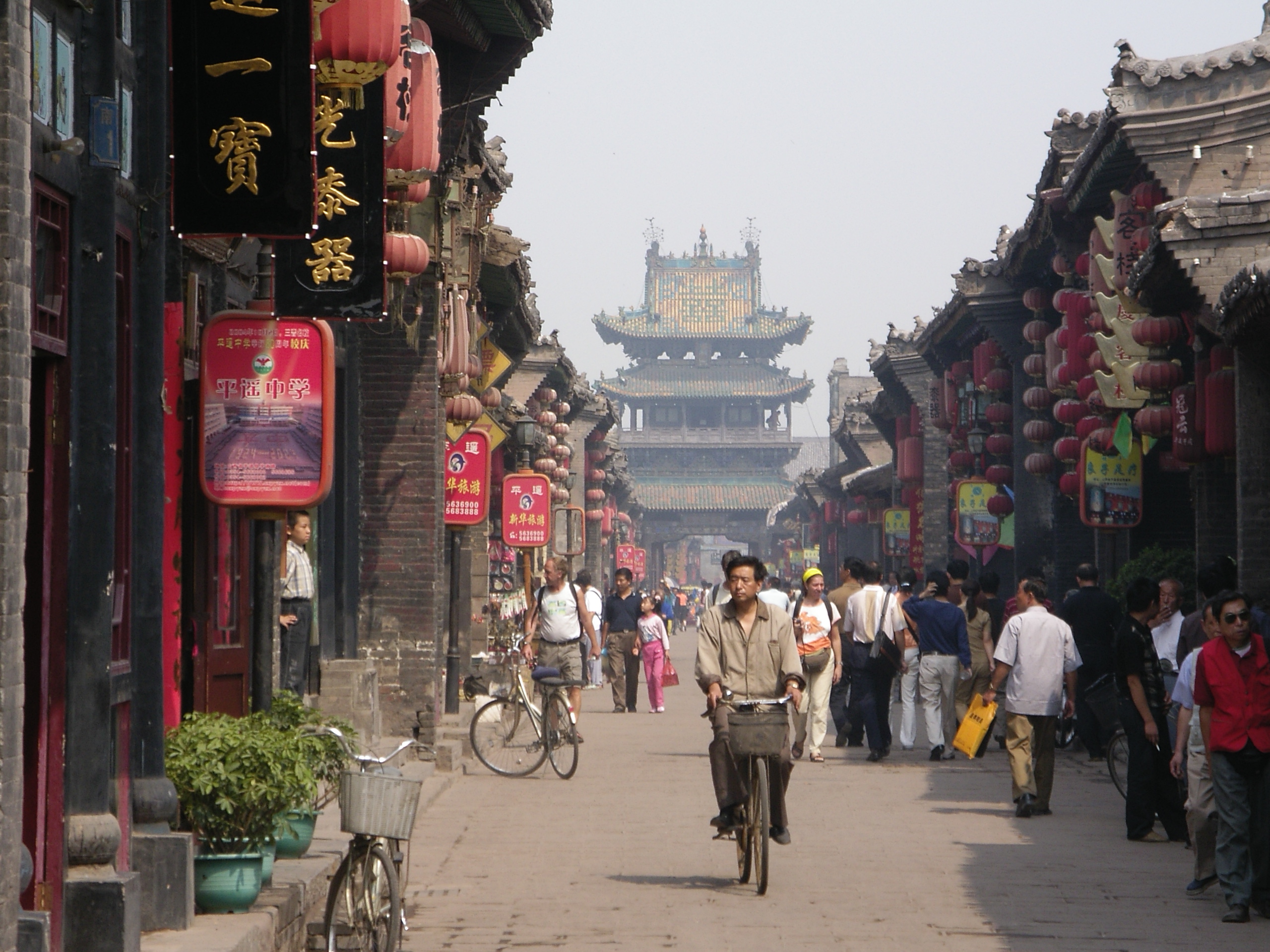
Pingyao
Send it to whoever you'd travel with
Pingyao is the best-preserved Ming-Qing walled city in China — 2.7 kilometres of intact city walls enclosing a street grid, guild halls, and courtyard architecture that collectively represent the commercial prosperity of 17th to 19th-century Shanxi province.
Pingyao is the argument for UNESCO inscription working as intended. When the walls were declared a World Heritage Site in 1997, the town's economic position relative to modern Shanxi cities was low enough that demolition for development hadn't yet destroyed what other Chinese cities had lost. What remained — and remains — is the most complete Ming-Qing era urban environment in China: 2.7 kilometres of original city walls, six gate towers, 72 watchtowers, and within them a street grid still following its original plan, courtyard residences still occupied, and guild halls and temples still standing in something close to their original form.
The wealth that built Pingyao came from finance. In the 19th century, Shanxi merchants controlled much of China's commercial banking system through piaohao — remittance houses that functioned as China's first private banks, transferring funds across the empire through a network of branches. The Rishengchang exchange shop, founded in 1823 in Pingyao, is credited as the first piaohao in China and the predecessor to modern banking. The courtyard mansions and guild halls that the Shanxi merchants built with their banking profits survive as some of the finest examples of Qing-era secular architecture in China.
The experience of Pingyao is primarily sensory and spatial rather than focused on any single monument. Walking the full city wall circuit takes 90 minutes; the view inside the walls shows the grey-tiled roofline of a traditional Chinese city at nearly intact scale. The lanes between the main commercial streets are residential and quiet — older residents sitting in courtyard doorways, bicycles leaning against carved wooden screen gates, the smell of vinegar (Shanxi's signature condiment) from small restaurants. The town functions as a heritage district, but it is not empty.
The best accommodation strategy is a converted courtyard inn — mingsu or kezhan in the old city — which puts guests inside a traditional structure rather than adjacent to it. The experience of sleeping in a carved-wood guestroom around a central courtyard, with the city wall visible above the roofline, cannot be replicated from a modern hotel outside the walls.
The practical bits.
- Best time
-
April – May · September – OctoberSpring and early autumn are ideal — mild temperatures comfortable for wall walks and outdoor lanes, low humidity, and good air quality. Summer (June–August) brings domestic peak tourism, significant heat, and occasional haze. Winter is cold (below zero) but the walled city in snow has a dramatic visual quality and very few visitors. The March–April period can have dust storms from the Gobi Desert.
- How long
-
2 nights recommendedOne night gives the wall walk and the Rishengchang and Qingyuan Fuyuan guild hall highlights. Two nights adds the Shuanglin Temple and full residential lane exploration. Three or four nights pairs with a Qiao Family Compound day trip and deeper Shanxi countryside.
- Budget
-
¥580 / day (~$80) typicalPingyao is inexpensive. The combined ticket for main sites is ¥120. Courtyard inn rooms run ¥150–400/night for mid-range. Local restaurants serve Shanxi noodles and yellow-braised pork for ¥30–60 per dish.
- Getting around
-
Walking + bicycle + electric cartThe walled city is 0.9 km wide and walkable end-to-end in 20 minutes. Bicycles and electric bikes are available for rent (¥20–40/day) for the wall circuit and day trips. Electric tourist carts operate inside the walls for those who prefer not to walk. Outside the walls, taxis and ride-share apps connect to the train station and surrounding countryside.
- Currency
-
Chinese Yuan (¥/RMB) · cash helpfulWeChat Pay and Alipay are widely used. Cash is still needed at smaller restaurants and market stalls. International card ATMs are available near Pingyao station and the main tourist entry gates.
- Language
- Mandarin Chinese. Very limited English in restaurants and local shops; translation apps are useful. The major heritage sites have English-language signage.
- Visa
- China visa required for most Western passports — apply in advance.
- Safety
- Very safe. Pingyao has minimal crime. Take standard precautions with valuables in crowded heritage areas.
- Plug
- Type I and Type A/C · 220V
- Timezone
- CST · UTC+8
A few specific picks.
Hand-picked, not algorithmic. Each of these has earned its space.
The 6.2-km wall circuit on the original Ming-era battlements — 72 watchtowers, six gate towers, and a view into the intact grey-roofed interior of China's best-preserved walled city. The south and west sections are the most photogenic.
The 1823 building considered China's first private bank (*piaohao*) — the origin of China's commercial banking system. The multiple interconnected courtyard complex shows the scale of 19th-century Shanxi merchant operations.
A monastery outside the south gate with an extraordinary collection of coloured clay sculptures — over 2,000 Qing and Ming-era religious figures in 10 halls, rarely visited by Western tourists. One of the finest religious sculpture collections in northern China.
The converted siheyuan courtyard inns inside the walls are the defining accommodation of a Pingyao trip. Sleeping in a carved-wood room around a traditional courtyard puts you inside the heritage rather than adjacent to it.
Shanxi is the noodle province of China — *dao xiao mian* (knife-shaved noodles), *cat ear noodles* (*maomao*), and la mian pulled varieties. Local restaurants on the residential lanes serve better versions than the tourist-strip operations.
The main historic commercial street — guild halls, merchant houses, and the primary heritage buildings along the central axis. Busy with visitors in daytime; quiet and atmospheric in the early morning.
One of the finest guild hall complexes in Pingyao — a merchant gathering and transaction space with elaborate carved brick and wood ornamentation showing the peak of Shanxi artisan craftsmanship.
A Tang Dynasty wooden hall 8 km north of the city — one of the three oldest surviving wooden structures in China, predating the city's Ming walls by 600 years. Requires a taxi and is rarely visited.
The courtyard-lined lanes east and west of the main street are still home to Pingyao residents. Dawn walking reveals door carvings, stone door gods, and the morning rhythms of a community living inside a World Heritage Site.
Shanxi lacquerware (*tuotai qiqi*) is one of the province's historic crafts. The museum demonstrates the traditional process and displays historical pieces. The attached workshop sells contemporary pieces at fixed prices.
Pick a neighborhood, not a hotel.
Pingyao is a city of neighborhoods. The one you stay in shapes the trip more than the property does.
Different trips for different travelers.
Same city, very different stays. Pick the lens that matches your trip.
Pingyao for history and architecture travelers
Pingyao is a once-in-a-lifetime destination for anyone interested in Chinese architectural and urban history. The completeness of the Ming-Qing environment — walls, guild halls, merchant residences, temples, government buildings — makes it the best available demonstration of what a traditional Chinese city looked like.
Pingyao for slow travelers
Pingyao rewards the traveler who resists the tick-box approach. Three nights in a courtyard inn, morning walks in the residential lanes before the tour groups arrive, long noodle lunches, and an afternoon on the walls give the full experience.
Pingyao for photography travelers
The grey-tiled roofline seen from the walls, the carved wooden screen gates in the dawn light, the door guardian sculptures, and the old residents sitting in their courtyards compose naturally. The city is visually coherent in a way that modern Chinese cities are not.
Pingyao for budget travelers
One of the best-value UNESCO World Heritage sites in China. The combined ticket is ¥120; courtyard inn stays run ¥150–300/night; Shanxi noodles cost ¥20–40. A full two-night stay including all sites and meals can be done for under ¥1,000.
Pingyao for couples
Staying in a traditional courtyard inn — particularly in a room facing the central garden court — is one of the most atmospheric accommodation experiences in China. The candlelit restaurant tables in old carved-wood rooms have a natural romance. Quiet evening lanes after the day-trippers leave.
Pingyao for china circuit travelers
Pingyao sits naturally on the Beijing–Xi'an axis by high-speed rail, making it an excellent two-night stop between the two major destinations. It provides a completely different register — intimate, traditional, rural — from the large capital cities.
When to go to Pingyao.
A quick year at a glance. Great, good, or skip — see what each month is doing before you book.
Very quiet. City in snow is beautiful but cold. Some inns and restaurants reduce service. Few tourists.
Chinese New Year brings a large domestic tourism surge. Book well in advance or avoid entirely.
Spring begins but dust storms from the Gobi possible. Rapidly improving. Good for wall walks.
Excellent. Spring tourism season begins. Green growth in the courtyard gardens. Good photography light.
One of the best months. Comfortable temperatures for wall walking. Crowds building but manageable.
Heat building. Still good but afternoon heat on the walls is significant.
Peak summer tourism. Hot and crowded. Early morning is the only comfortable time on the walls.
Still peak season. Very crowded on weekends. Some rain. Not recommended for first-time visits.
Excellent. Crowds dropping, temperatures ideal for wall walking. Harvest season visible in surrounding countryside.
Golden Week (first week) brings massive crowds. Rest of October is very good. Clear Shanxi plateau air.
Quiet season. Good for undisturbed exploration. Some outdoor restaurants close. Bring warm layers.
Very few tourists. Snow adds beauty. The courtyard inns are warming; the walls are dramatic in winter.
Day trips from Pingyao.
When you want a change of pace. Each one's a half-day or full-day out, easy from Pingyao.
Qiao Family Compound
45 min (car or taxi)37 km northeast near Qixian — six large courtyards, carved brick and wood ornamentation, and the setting of Zhang Yimou's *Raise the Red Lantern*. Half-day minimum. Hire a driver in Pingyao for the most flexibility.
Wang Family Compound
1 h (car)The Wang Jiayuan near Lingshi (60 km south) is larger and in some ways more impressive than the Qiao Compound. The hilltop site with fortress-like perimeter walls is dramatic. Combine with a Qiao visit for a full Shanxi merchant architecture day.
Shuanglin Temple
10 min (taxi)6 km southwest — accessible by bicycle or taxi. The density and quality of the Song–Qing era figures make this one of northern China's most underrated religious sites.
Zhengguo Temple
20 min (taxi)One of only three surviving Tang Dynasty wooden buildings in China. The Wanfo Hall (963 CE) has 11 polychrome clay sculptures from the Five Dynasties period. 8 km north of the city walls.
Taiyuan
30 min (train)Taiyuan is the Shanxi capital — worth a visit primarily for the Jinci Temple complex, a Song Dynasty shrine with one of the oldest cast-iron statues in China. Train from Pingyao is 25–30 minutes.
Xi'an
2h 30m (high-speed train)The natural extension on a northern China itinerary. Not a day trip — an onward destination. Pingyao to Xi'an by high-speed train is 2 hours 20 to 2 hours 40 minutes.
Pingyao vs elsewhere.
Quick honest reads on the cities people compare Pingyao to.
Both are UNESCO walled historic towns in China. Lijiang is more touristically developed, in a mountain setting, with Naxi minority culture; Pingyao is more purely architectural, more intact at the urban planning level, and less transformed by tourist commerce. Pingyao is the more serious heritage destination.
Pick Pingyao if: You want the most archaeologically complete Ming-Qing city environment without the mountain-resort overlay.
Xi'an is a major city with Tang Dynasty walls and the Terracotta Warriors; Pingyao is a small town where the Ming-Qing heritage is more intimate and accessible. Xi'an's walls are impressive but the city inside them is modern. Pingyao's interior is the authentic heritage.
Pick Pingyao if: You want to be inside a living traditional Chinese city rather than a modern city with historic walls.
Zhouzhuang (near Shanghai) is China's famous water town; Pingyao is the famous walled city. Both are UNESCO-listed or equivalent. Zhouzhuang is easier to reach from Shanghai but heavily commercialised; Pingyao is less convenient but more authentic.
Pick Pingyao if: You want a northern Chinese trading city rather than a southern water town.
Kashgar in Xinjiang has a partially preserved old city of Uyghur culture; Pingyao has the fully intact Han Chinese merchant city. Both are in the top tier of Chinese urban heritage but represent entirely different cultural and architectural traditions.
Pick Pingyao if: You want Han merchant culture and Ming-Qing architecture rather than Central Asian heritage.
Itineraries you can start from.
Rough shapes for a trip here — a feel for the pace and cost. Find the one that fits you.
Day one: wall circuit walk, Rishengchang and guild halls, South Street. Evening in a courtyard inn. Day two: Shuanglin Temple, residential lane morning walk, Shanxi noodle lunch.
Day one and two as above. Day three: half-day day trip to the Qiao Family Compound (Qiao Jiayuan, 37 km northeast), the most complete Shanxi merchant mansion complex.
Pingyao two nights, then car or bus to Qiao Family Compound, Wang Family Compound, and the Jinci Temple near Taiyuan. End with onward train to Xi'an or Beijing.
Things people ask about Pingyao.
What makes Pingyao different from other Chinese walled cities?
Most Chinese historic city walls have been partly demolished or substantially rebuilt over the past century. Pingyao's walls and the urban fabric inside them survived intact largely because the city's economic importance declined before modern development pressure arrived. The result is the most complete Ming-Qing era urban environment in China — original walls, original street grid, original courtyard architecture in use. The UNESCO inscription in 1997 formalised what was already exceptional.
How do I get to Pingyao?
High-speed train from Xi'an to Pingyao takes around 2 hours 30 minutes; from Beijing, 2 hours 40 minutes; from Taiyuan, 30 minutes. The station is Pingyao Gucheng Station (3 km from the old city). Taxis and electric carts connect station to the old city entrance gates. Overnight trains also operate but have been largely displaced by high-speed rail.
What is the combined ticket for Pingyao?
The main Pingyao sites are covered by a combined ticket — currently ¥120 for the main Old City sites plus the city wall access and key guild halls and museums. Some outlying sites like Shuanglin Temple and Zhengguo Temple require separate admission (¥35–50). The ticket is valid for multiple days and is sold at the main entrance gates.
What is the Shanxi merchant banking history?
In the 17th–19th centuries, merchants from Shanxi dominated China's financial system through *piaohao* — essentially private banking and remittance houses that transferred money across the empire without physically moving silver. The Rishengchang exchange shop, founded in Pingyao in 1823, is credited as the first such institution. At their peak in the mid-19th century, Shanxi merchant banks held deposits from the imperial court and provincial governments across China.
What is Shuanglin Temple?
The Temple of the Twin Forests is a Buddhist monastery 6 km southwest of Pingyao with over 2,000 coloured clay figurines from the Song, Yuan, Ming, and Qing dynasties in 10 halls. The expressiveness and technical quality of the figures — warrior guardians, bodhisattvas, and narrative scenes — is extraordinary and largely unknown to Western visitors. It ranks as one of the finest collections of religious folk sculpture in northern China. Allow 2 hours.
What is the best accommodation in Pingyao?
A courtyard inn (*mingsu* or *kezhan*) inside the walled city is the definitive experience. The best properties convert original siheyuan courtyard compounds with carved wood details, traditional furniture, and central garden courts. Book 1–2 months ahead for weekends and national holidays. Mid-range courtyard inns run ¥200–400/night; the premium properties (Jing's Residence is the best-known) run ¥600–1,200.
What food should I eat in Pingyao?
Shanxi noodles are the primary food culture. *Dao xiao mian* (knife-shaved noodles) are cut directly from a large dough ball into a simmering broth — the technique is theatrical and the result is excellent. Pingyao beef (*Pingyao niurou*) is a slow-cured, spiced beef served cold, sliced thin — a local product sold from every market stall. Shanxi mature vinegar (*chen cu*) is added to almost everything and is worth buying to take home.
How do I walk the city walls?
Access to the wall is included in the combined site ticket. Steps up to the battlements are located near all six gates. The full circuit is 6.2 km and takes 1.5–2 hours at a comfortable pace. The southern section, running between the South Gate (Yingxun Gate) and the southwest corner tower, gives the most photogenic interior views. The wall is best walked in the morning or evening to avoid midday sun.
Is Pingyao crowded with tourists?
Pingyao draws significant domestic Chinese tourism, particularly on national holidays (Golden Week in October and Chinese New Year) when the old city can be genuinely overwhelming. Shoulder months — April, May, September — see manageable crowds. The residential lanes away from South Street are quiet at most times. Early morning (6–8 AM) is the best time to experience the city before tour groups arrive.
What is the Qiao Family Compound?
The Qiao Jiayuan (Qiao Family Compound) is a Shanxi merchant mansion 37 km northeast of Pingyao — a massive complex of six large courtyards built during the Qing Dynasty for the Qiao family, major merchants and bankers. It was used as the setting for Zhang Yimou's 1991 film *Raise the Red Lantern*. The scale of the architecture demonstrates the extraordinary wealth of the Shanxi merchant class at its peak.
What is Shanxi vinegar and is it worth buying?
Shanxi mature vinegar (*Shanxi chen cu*) is one of China's Four Famous Vinegars, produced primarily in Taiyuan from sorghum, barley, and peas using a process of fermentation and aging. It is deeper, more complex, and less sharp than the rice vinegars used in Jiangsu and Zhejiang. It is used in virtually all Shanxi cooking — noodles, braises, and cold dishes — and sold in ceramic bottles at Pingyao market stalls and shops. Worth purchasing as an ingredient to take home.
What is the best day trip from Pingyao?
The Qiao Family Compound (37 km northeast) is the most significant, worth half a day. The Wang Family Compound (Wang Jiayuan) near Lingshi (60 km south) is even larger and more architecturally impressive. Zhengguo Temple (8 km north, Tang Dynasty wooden hall) appeals to serious architectural travelers. All three require a car or taxi; hiring a driver for the day from the old city is the simplest approach.
Is Pingyao good in winter?
Fewer visitors and crisp cold air are the main winter advantages — the grey-tiled city in snow has a particular beauty. Temperatures drop to -10°C or below; prepare accordingly. Some smaller inns and restaurants reduce hours or close. The wall walk in cold dry weather gives exceptional visibility across the Shanxi plateau. Not recommended during the Chinese New Year spring festival when domestic tourists arrive in large numbers.
How long is the Pingyao city wall?
The city wall is 6.2 km in circumference, originally built in the 14th century (early Ming Dynasty) and substantially repaired in the 17th century. The current height averages 10 metres with a 3–5 metre wide battlement walkway. The 72 watchtowers correspond symbolically to the 72 disciples of Confucius; the four corner towers and six gate towers are the main architectural features.
What is Pingyao beef and where should I buy it?
*Pingyao niurou* (Pingyao beef) is a slow-cured, spiced preserved beef — traditionally made by simmering beef with spices, then aging it in soy brine. It is served cold, sliced thin, and eaten as an appetizer or street snack. It has been a local specialty since the Ming Dynasty and is sold from every market stall and shop in the old city. Buy from a shop with high turnover; vacuum-packed versions travel well.
What is the significance of Pingyao's street layout?
Pingyao's street grid follows the Ming Dynasty urban planning model based on traditional Chinese cosmological principles — a central north-south axis, aligned gates, and a market square near the centre. The grid has remained largely unchanged since the 17th century, giving planners and historians a nearly intact record of how a Chinese county-level city was organised. The city wall, gates, government office, and commercial street all occupy their historically specified positions.
How does Pingyao connect to Xi'an?
High-speed rail from Pingyao Gucheng Station to Xi'an takes approximately 2 hours 20 to 2 hours 40 minutes. This makes a Pingyao–Xi'an combination natural on a northern China itinerary — two to three nights in Pingyao, then onward to Xi'an for the Terracotta Warriors. The Xi'an to Beijing line also passes through Pingyao, making the three-city circuit straightforward.
Know someone headed to Pingyao?
Send them this guide — real neighborhoods, timing, and prices, with nothing to sign up for.
Copies the link — nothing to install