Manama
Send it to whoever you'd travel with
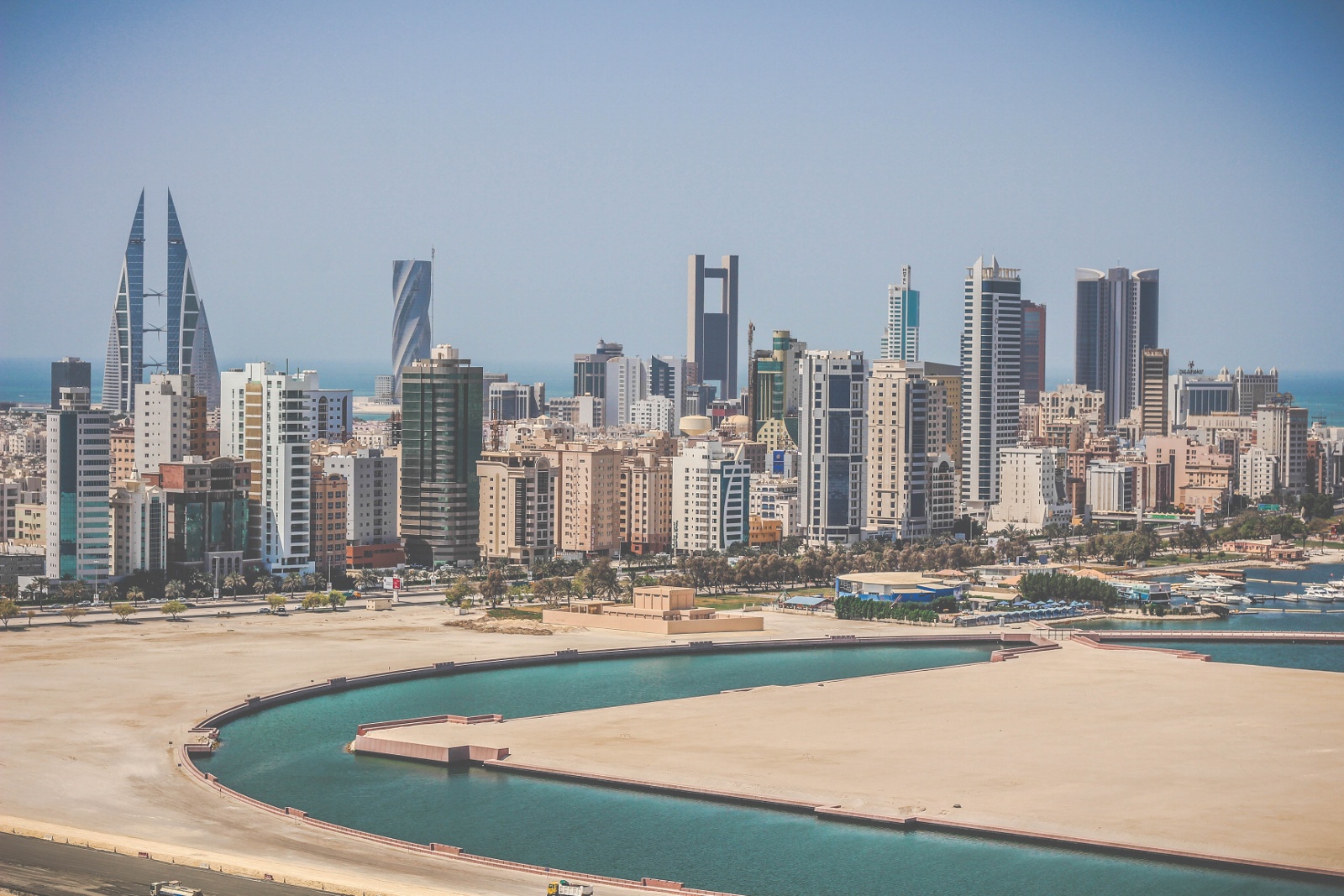
Manama is a compact Gulf island capital with a genuine ancient history, a functioning Arabic souq, a Formula 1 circuit in March, and the practical advantage of being the most permissive and accessible city in the Gulf.
Bahrain is the Gulf's smallest country and most underestimated one. The island of roughly 775 square kilometers connects to Saudi Arabia via the King Fahad Causeway, and for three decades has served as the pressure valve through which Saudi residents drive on weekends for a restaurant meal with wine, a cinema, and a walk in a functioning souq. The rest of the world tends to route through Bahrain International Airport without stopping, which is a reasonable choice but not the only one.
Manama has a proper old city core — the Manama Souq, the Bab al-Bahrain gateway, and the gold souq running inland from the traditional port area — that retains more commercial authenticity than the equivalent structures in Dubai or Abu Dhabi. The Bahrain Fort (Qal'at al-Bahrain), a 5,000-year-old archaeological mound on the northwest coast, is a UNESCO World Heritage Site that records human occupation from the Dilmun civilization through the Portuguese period. The National Museum is the best-funded and most coherent national history presentation in the Gulf.
Every year in March, Formula 1 arrives at the Sakhir circuit for the Bahrain Grand Prix — the traditional season opener, famously run under lights on a circuit carved from the desert south of the capital. The race weekend transforms the city and the island, filling hotels for 80 km in all directions and making it a destination for motorsport travelers who find Abu Dhabi's season finale more convenient but Bahrain's night-race atmosphere more atmospheric.
For the remaining 11 months, Manama works best as a 2–3 night stopover that combines the fort, the National Museum, the souq, and the Tree of Life day trip with a genuine feeling for a Gulf Arab city that has not entirely surrendered its character to glass-and-steel hotel construction. The Pearl Roundabout — the site of Bahrain's 2011 Arab Spring protests — is no longer physically present (it was demolished in the crackdown); its historical significance is real and worth understanding before visiting.
The practical bits.
- Best time
-
November – MarchBahrain is a low-lying island in the Gulf and shares the same brutal summer as its neighbors. November through March brings 20–28°C, low humidity, and outdoor comfort for the fort and the Tree of Life. March adds the F1 Grand Prix — book months ahead for that window. April and October are transitional. June through September runs 35–40°C with high humidity.
- How long
-
2 nights recommended1 night: Bahrain Fort, National Museum, and an evening in the souq. 2 nights: adds the Tree of Life, Al-Fateh Mosque, and a proper meal at a heritage restaurant. 4 nights: adds Muharraq island's Pearling Path UNESCO site and the A'ali burial mounds.
- Budget
-
$150 / day typicalManama is generally cheaper than Dubai and Abu Dhabi. Budget hotels near the souq or the Diplomatic Area run BHD 20–35 ($55–95). Mid-range runs BHD 50–100. Food at local Bahraini restaurants is inexpensive: machboos (the national dish, spiced rice with meat or fish) costs BHD 2–3 ($5–8). Alcohol in hotel bars: BHD 3–6 per drink.
- Getting around
-
Taxis and rental cars; the island is smallBahrain International Airport is close to the city center. Taxis from the airport cost BHD 3–5. Uber operates; agree on destination in the app. The island's small size makes self-drive car rental (BHD 10–20/day) the most flexible option for the fort, Tree of Life, and Sakhir Circuit visits. The F1 circuit is 40 minutes south of the city.
- Currency
-
Bahraini Dinar (BHD) · 1 BHD ≈ 2.65 USDCards widely accepted at hotels, restaurants, and malls. Cash useful for the old souq and local restaurants. ATMs plentiful.
- Language
- Arabic. English is widely spoken in hotels, malls, and restaurants — Bahrain has historically had a large English-speaking expatriate population.
- Visa
- Visa on arrival (BHD 5, ~$13) or e-visa (evisa.gov.bh) for most Western, East Asian, and many other nationalities. Gulf Cooperation Council nationals enter freely. Multiple-entry visas available. Some nationalities require prior application.
- Safety
- Very safe for tourists. Standard urban precautions apply. Bahrain experienced political unrest in 2011 (Arab Spring); that situation has long since stabilized. No current significant threat to tourist visitors.
- Plug
- Type G (British three-pin) · 230V
- Timezone
- AST · UTC+3 · no daylight saving
A few specific picks.
Hand-picked, not algorithmic. Each of these has earned its space.
A UNESCO World Heritage Site — a 5,000-year-old archaeological mound with 8 layers of civilization, from Dilmun Bronze Age through Tylos Hellenistic to Portuguese colonial fortifications. The adjacent museum is excellent. Allow 2–3 hours including the museum and the fort itself at sunset.
The best national history museum in the Gulf — a clear, well-funded narrative from the Dilmun civilization (3rd millennium BCE pearling empire) through Islamic and modern Bahrain. The Dilmun burial mound gallery and the traditional crafts section are particular strengths. Allow 2 hours.
A functioning old commercial market anchored by the Bab al-Bahrain (Gate of Bahrain) trading post building. Gold, textiles, spices, and the narrow lanes of the pearl-trading district. Less theatrical than Dubai's equivalent and more genuinely in use. Best in the late afternoon.
A 400-year-old mesquite tree standing alone in the center of the Bahraini desert, 9 km from the nearest water source. How it survives is genuinely unknown. Mystified visitors have carved their names into it for generations; the trunk is covered in inscriptions from around the world.
One of the largest mosques in the world, capable of accommodating 7,000 worshippers. Open to non-Muslim visitors with a guided tour; the tour includes the library, which holds a remarkable collection of Islamic manuscripts. Dress code strictly enforced.
The Formula 1 Bahrain Grand Prix, typically held in March, is a floodlit night race in the desert. The atmosphere is unique; the circuit is carved from sand and the night sky adds to the spectacle. Non-race-week, the circuit museum and driving experiences are open.
A UNESCO World Heritage-listed 3.5 km walking path on Muharraq island (connected to Manama by bridge) through historic pearl merchants' houses, a mosque, and the seafront. The pearl diving tradition that built pre-oil Bahrain is documented and still felt here.
A recently developed waterfront heritage district with reconstructed traditional Bahraini architecture, souvenir shops, restaurants, and sunset dhow views. More curated than the old city but well executed and pleasant for an evening walk.
Over 100,000 Bronze Age burial mounds — the largest concentration anywhere in the world — dot the Bahraini landscape. The mounds at A'ali are among the best-preserved; they are the physical evidence of Dilmun's status as a trading civilization and underworld gateway in ancient Mesopotamian mythology.
Bahrain's most concentrated dining neighborhood — Lebanese restaurants, Bahraini seafood, Indian biryani houses, and licensed rooftop bars in a walkable block. The best evening dining street in the capital.
Pick a neighborhood, not a hotel.
Manama is a city of neighborhoods. The one you stay in shapes the trip more than the property does.
Different trips for different travelers.
Same city, very different stays. Pick the lens that matches your trip.
Manama for formula 1 fans
The Bahrain Grand Prix is the classic season-opener night race. The desert circuit atmosphere, the floodlit sand outside the perimeter fence, and the high-caliber early-season racing make it consistently well-reviewed by F1 attendees. Book 6+ months ahead for race week.
Manama for history and archaeology travelers
The Dilmun civilization is one of the ancient world's most overlooked Bronze Age cultures — referenced in Sumerian texts, documented at the Bahrain Fort, and represented in the A'ali burial mounds. The National Museum tells this story with rare clarity. Combine with the Pearling Path for the pre-oil era.
Manama for gulf stopover travelers
Bahrain International Airport is a hub for Gulf Air with good connections across Europe, Asia, and the Middle East. A 1–2 night stop en route to or from a Gulf city allows a National Museum morning, a fort sunset, and an Adliya dinner — genuinely worth the airport layover conversion.
Manama for business travelers
Bahrain is the Gulf's financial services hub and home to several regional banks and the Bahrain Financial Harbour. Business travelers from conservative Gulf contexts appreciate Bahrain's more permissive environment. The Diplomatic Area hotels and Adliya restaurants handle the business dinner circuit effectively.
Manama for couples on a gulf weekend
The Bahrain Fort sunset, an Adliya dinner with wine, and a morning at the Pearling Path make for a comfortable long-weekend. Many couples from Saudi Arabia use the causeway for exactly this purpose. Unmarried couples have fewer practical restrictions in Bahrain than in Saudi Arabia.
Manama for budget-conscious gulf visitors
Bahrain is meaningfully cheaper than Dubai or Abu Dhabi while offering comparable heritage institutions and a more authentic souq experience. Budget hotels near the old souq run BHD 15–25/night. The National Museum entry is BHD 2; Bahrain Fort entry is BHD 2. Machboos at a local restaurant costs BHD 2–3.
When to go to Manama.
A quick year at a glance. Great, good, or skip — see what each month is doing before you book.
Quiet season. Ideal outdoor weather for the fort and pearling path. Cheapest hotel rates.
Excellent. Spring is close; the souq gardens are pleasant.
Formula 1 Grand Prix — book months ahead. Excellent weather; the circuit night race is the event of the year.
Good for mornings outdoors. Humidity building in the second half.
Outdoor activity limited to morning. Indoor museums and the souq still comfortable.
Challenging outdoor conditions. Malls and indoor attractions fully operational.
Hottest month. The lowest accommodation rates of the year if the heat doesn't deter you.
Similar to July. Indoor activities only.
Late September begins to improve. Still very warm for outdoor activity.
Outdoor sightseeing returning to comfortable. The fort and pearling path viable again.
Excellent. Full season opens. One of the best months for a Bahrain stopover.
Good weather for all outdoor sites. National Day (December 16) has events and light displays.
Day trips from Manama.
When you want a change of pace. Each one's a half-day or full-day out, easy from Manama.
Bahrain Fort Extended Visit
20 min from centerThe fort museum contains excellent interpretive material on the Dilmun civilization that makes the fort mound itself much more comprehensible. Allow 3 hours for both. The sunset from the fort top, looking across the Gulf, is excellent.
Tree of Life and Sakhir Circuit
40 min southCombine the Tree of Life (20-minute stop) with the Sakhir Circuit driving experience or museum visit on the same southern drive. Allow half a day.
Muharraq Pearling Path
20 min from centerThe Pearling Path is best done in the morning with a guide from the Bin Matar House starting point. Allow 2–3 hours for the full 3.5 km walk including the merchants' houses interiors.
A'ali Burial Mounds
30 min southwestThe mounds are spread across a residential area south of Manama; the largest 'Royal Mounds' are signposted. Best visited with the Bahrain Fort on the same day for Bronze Age Dilmun context.
Al Khobar (Saudi Arabia)
45 min via causewayFor travelers with time and the required Saudi visa, the Al Khobar Corniche and waterfront are a 45-minute drive across the causeway. Requires a Saudi visa arranged in advance.
Riffa Fort
20 min southA restored mud-brick fort from the 18th century perched above Riffa town and the wadi below. Smaller than Bahrain Fort but well-maintained and less visited. Good views from the watchtower.
Manama vs elsewhere.
Quick honest reads on the cities people compare Manama to.
Dubai is larger, more glitzy, and more thoroughly developed as a global tourism machine. Manama is more compact, cheaper, more historically authentic (Dilmun, the Pearling Path), and more permissive with alcohol. Both are Gulf Arab cities; Dubai is the spectacle version, Manama the understated one.
Pick Manama if: You want historical depth, the Pearling Path UNESCO site, and a human-scaled Gulf city without Dubai's visitor infrastructure.
Doha has a grander museum district (the Islamic Art Museum, the National Museum of Qatar) and a larger city footprint. Manama has better historical heritage (Dilmun predates Qatar's urbanization by millennia), a more authentic souq, and a more relaxed social environment. Both are compact Gulf capitals.
Pick Manama if: You want the Gulf's oldest civilization layer and a more affordable, more permissive stopover destination.
Abu Dhabi has the Sheikh Zayed Grand Mosque, the Louvre Abu Dhabi, and the Liwa Desert. Manama has deeper pre-Islamic history and a more affordable, more accessible stopover proposition. Abu Dhabi is a 1-hour flight if you want both on the same Gulf trip.
Pick Manama if: You want the Gulf's Bronze Age heritage and the most compact Gulf capital rather than Abu Dhabi's cultural institution investment.
Muscat has mountains, wadis, the Grand Mosque, and a dramatically scenic natural setting. Manama is flatter, more island-bound, and richer in ancient archaeological layers. Muscat is a better base for outdoor exploration; Manama is better as a stopover with a strong museum.
Pick Manama if: You want a compact 2-night stopover with a world-class archaeological museum rather than Muscat's broader outdoor circuit.
Itineraries you can start from.
Rough shapes for a trip here — a feel for the pace and cost. Find the one that fits you.
Airport to the National Museum (2h). Manama Souq and Bab al-Bahrain (1.5h). Bahrain Fort at sunset (2h). Dinner in Adliya. Return to airport.
Day 1: National Museum, Souq, Al-Fateh Mosque, Adliya dinner. Day 2: Bahrain Fort, Tree of Life, A'ali Mounds, Pearling Path on Muharraq. Evening return.
Book race weekend 6+ months ahead. Days 1–2: city sights around F1 activities. Race night. Day 4: Fort and souq decompression before departure.
Things people ask about Manama.
Do I need a visa for Bahrain?
Most Western, East Asian, and many other nationalities can obtain a visa on arrival (BHD 5, around $13) or an e-visa through evisa.gov.bh before arrival. The process is simple and straightforward. GCC nationals (Saudi, Emirati, Kuwaiti, etc.) enter freely. Check the Bahrain e-Visa website for your specific nationality.
Is alcohol available in Bahrain?
Yes — Bahrain is one of the more permissive Gulf states regarding alcohol. It is available in licensed hotel bars and restaurants, a number of independent licensed restaurants (particularly in Adliya and Juffair), and duty-free stores for visitors. Alcohol is not available in the souq area or non-licensed local restaurants. This permissive policy is partly why Bahrain serves as a weekend destination for Saudi residents driving across the causeway.
What is the Formula 1 Grand Prix in Bahrain?
The Bahrain Grand Prix is typically the first or second race of the Formula 1 season, held in March at the Sakhir International Circuit about 40 km south of Manama. It is one of two night races on the calendar (the other is Singapore) — the desert circuit illuminated under floodlights creates a visually dramatic atmosphere. Race weekend causes hotels across the island to sell out 6–8 months in advance; book early if motorsport is your reason for visiting.
What is the Tree of Life and where is it?
The Tree of Life (Shajarat-al-Hayat) is a 400-year-old mesquite (Prosopis cineraria) tree standing alone on a sand hill in the middle of Bahrain's arid interior, approximately 40 km south of Manama and 9 km from the nearest water source. The tree is healthy and alive; how it sustains itself in the waterless desert is genuinely unexplained. It is a short detour on the route to or from the Sakhir F1 circuit.
What is the Dilmun civilization?
The Dilmun civilization occupied Bahrain (and parts of eastern Arabia) from approximately 3000 BCE and is documented in Sumerian and Babylonian texts as a trading kingdom and the land of immortality in Mesopotamian mythology. Dilmun controlled the pearl trade in the Gulf and the Mesopotamian trade route between India and the Tigris-Euphrates valley. The Bahrain Fort sits on the capital city of this civilization; the A'ali burial mounds are the largest Bronze Age necropolis in the world and belong to this culture.
How does Manama compare to Dubai?
Manama is much smaller, quieter, and less glitzy than Dubai. It has genuine historical depth (Dilmun, the Pearling Path, the Bahrain Fort) that Dubai cannot match. It allows alcohol more permissively and at lower cost than most Gulf cities. The souq is more authentic; the museum is better. If you want nightlife, theme parks, and the full Gulf luxury machine, Dubai wins; if you want heritage depth, a functioning Arabic city, and a manageable scale, Manama is stronger.
Is Bahrain good as a stopover?
Bahrain International Airport is a Gulf Aviation hub (Gulf Air's home base), and the visa-on-arrival policy and compact city make it excellent for a 24–48 hour stopover. The National Museum alone is worth a 2-hour stop; the Bahrain Fort at sunset adds another 2 hours. The Adliya dining district is 20 minutes from the airport. You can see Bahrain's main cultural assets in a single long day.
What is the Pearling Path?
The Pearling Path is a UNESCO World Heritage site on Muharraq island — a 3.5 km heritage trail through the old pearl merchants' district, including 17 historic buildings (wealthy merchants' houses, mosques, and working buildings), a section of the old pearling seafront, and the Muharraq souq. Pearl diving was the economic foundation of pre-oil Bahrain; the path documents the industry at its height in the 19th and early 20th century before the Japanese cultured pearl industry collapsed the market.
What is the food like in Manama?
Bahraini cuisine centers on machboos (spiced rice with fish or meat — the national dish, similar to Saudi kabsa), muhammar (sweet rice with dates), and fresh Gulf seafood — the local hammour and kingfish are excellent. Adliya and the seafront restaurants have strong Bahraini, Lebanese, and Indian options. The old city tea houses serve traditional karak chai (spiced sweet tea) in a setting unchanged for decades.
How safe is Manama for tourists?
Manama is safe for tourists. Street crime targeting visitors is very low. The city's political tensions (Bahrain experienced significant Arab Spring protests in 2011 and subsequent security crackdowns) are not part of the visitor experience but provide context for understanding the country. Standard urban precautions apply; areas around the old souq at night are generally safe.
What is the King Fahad Causeway?
The King Fahad Causeway is a 25 km bridge connecting Bahrain to Saudi Arabia's Eastern Province, opened in 1986. It carries heavy traffic of Saudi visitors coming to Bahrain for the weekend. Crossing requires a valid passport and applicable visa; Saudi nationals cross freely. For visitors based in Riyadh or Dammam, it makes a Bahrain day trip straightforward by car.
Is there a beach in Bahrain?
Yes — Bahrain has beach resorts along its northern and eastern coastlines, particularly at Al Jazayer Beach and the private beach clubs attached to the Sofitel, Gulf Hotel, and Movenpick properties. The water is warmer than Mediterranean beaches but Gulf waters are shallower and less clear than the Red Sea. Public beaches are available; private beach clubs charge a modest entry fee. The sea is swimmable from October through May.
What is the Al-Fateh Grand Mosque?
The Al-Fateh Grand Mosque in Juffair is one of the largest mosques in the world, built between 1984 and 1988. It can hold 7,000 worshippers and is notable for its fiberglass-reinforced dome, hand-crafted teakwood doors, and Italian marble interior. Non-Muslims are welcome on guided tours (Saturday through Thursday mornings, 9 AM–noon). The attached Islamic library holds a large collection of manuscripts and printed works.
Can I drive from Saudi Arabia to Bahrain?
Yes — the King Fahad Causeway connects the island to Saudi Arabia's Eastern Province. The drive from Dammam city is about 45 minutes to the Bahraini border. You will need a valid passport for the border crossing. Saudi nationals and GCC residents use the causeway extensively for weekend visits. International visitors driving from Saudi Arabia need a valid Bahrain visa.
What language is spoken in Bahrain?
Arabic, specifically a Gulf Bahraini dialect with some Peninsular Arabic influence. English is widely spoken across Manama in tourism, business, and hospitality — Bahrain has a long history of British influence and a large English-speaking expat community. Street signage is in Arabic and English. No functional barrier to English-language travel.
What is the best souq in Manama?
The main Manama Souq running inland from Bab al-Bahrain is the historical center — gold, textiles, spices, and local goods. The gold souq is more functional than performative; local women shop here, not just tourists. The Muharraq Souq on Muharraq island is older and quieter, focusing on traditional crafts, halwa sweets, and local fishing-village goods. Both reward an afternoon visit.
When should I visit if I want to avoid the F1 crowds?
Any time except the Bahrain Grand Prix weekend in March. The race draws tens of thousands of international visitors; hotels are fully booked and prices triple. Outside March, November through February provides ideal weather, comfortable hotel rates, and uncrowded sights. December and January are the quietest and cheapest months with the best weather.
Know someone headed to Manama?
Send them this guide — real neighborhoods, timing, and prices, with nothing to sign up for.
Copies the link — nothing to install