Lima
Send it to whoever you'd travel with
Lima is quietly the best food city in the Americas — the city that gave the world ceviche, pisco sours, and a restaurant culture that out-competes cities five times its tourist budget, all wrapped in colonial architecture and Pacific clifftop views.
Lima's reputation pivot in the last fifteen years is one of travel's more remarkable reversals. The city long functioned as an airport transit stop on the way to Machu Picchu — a grey, sprawling Pacific coast city famous mostly for its cloud cover and its difficult traffic. Then the restaurant generation arrived, and Lima became the city that put two restaurants in the top five of the World's 50 Best list simultaneously. Central, Maido, Astrid y Gastón: these are not trend restaurants. They represent a culinary tradition — Peruvian, Nikkei, Amazonian — that has no true equivalent anywhere else in South America.
The honest geography helps explain the food. Lima sits at the confluence of three distinct ecological zones: the Pacific coast (providing ceviche's acidic, chili-flecked raw fish culture), the Andes (potato varieties numbered in the thousands, corn of colors not seen elsewhere), and the Amazon basin (fruit, palm hearts, unusual protein sources). The cuisine is simultaneously a synthesis of immigrant influences — Spanish, Japanese, Chinese, Italian — that arrived over four centuries and fused into something neither European nor purely indigenous.
Miraflores and Barranco are the neighborhoods that matter for most visitors. Miraflores sits on Pacific clifftops above the gray beach known as Costa Verde — the Malecón is a 3 km clifftop park walkway with paragliders launching off the edge every afternoon. Barranco, immediately south, is the artist district: colorful colonial houses, the Puente de los Suspiros footbridge, the Bajada de Baños lane down to the water, and the highest density of serious cevicherías in the city.
Lima doesn't get the weather its food deserves. The garúa — the Pacific coast marine layer — sits over the city from May through November, producing cool, grey, drizzly conditions without the drama of actual rain. The paradox: December through April brings warm sun and blue skies but is also when Machu Picchu's highland access gets complicated by rain. Plan Lima in the warm season and Cusco separately; they don't need to be the same trip.
The practical bits.
- Best time
-
December – AprilLima's summer (Southern Hemisphere) — warm, sunny, 22–28°C. The garúa cloud layer disappears and the city is actually warm. May through November brings the marine layer: cool (15–18°C), grey, and drizzly without proper rain. Technically you can visit year-round; January and February are peak summer with beach weather.
- How long
-
3 nights recommended2 nights is enough as a gateway stop to Cusco; 3–4 nights does Lima justice as a food and culture destination. 5+ pairs with Paracas and the Nazca Lines as a South Coast extension.
- Budget
-
$130 / day typicalLima is notably affordable by global standards. A ceviche lunch at a neighborhood cevichería runs S/.25–40 (about $7–11). Mid-range hotel in Miraflores runs $80–160/night. A tasting menu at Central runs approximately $200 per person. Budget travelers in Barranco can eat extraordinarily well for $15–20/day on food.
- Getting around
-
Taxi apps + walking within neighborhoodsUse Uber, InDriver, or Beat — safer and cheaper than street taxis. Rides across Lima run $4–12 depending on traffic (rush hour on the Via Expresa can add significant time). Miraflores and Barranco are walkable between each other (30 min walk or $4 Uber). The historic center (Lima Centro) is 20 minutes by app taxi. Avoid the Metropolitano bus system unless you know the route.
- Currency
-
Peruvian Sol (PEN / S/.)Cards accepted at mid-range and upscale restaurants and hotels. Small cevicherías and markets are often cash-only. ATMs are widely available in Miraflores; use bank ATMs rather than standalone machines for better rates.
- Language
- Spanish. In Miraflores and Barranco, English is spoken at restaurants and hotels. Outside tourist areas, Spanish is required.
- Visa
- US, Canadian, Australian, and most EU citizens enter visa-free for up to 183 days. Show proof of onward travel. No ESTA or eTA equivalent required.
- Safety
- Miraflores and Barranco are safe for tourists — Lima's middle-class residential neighborhoods with consistent police presence. Use app-based taxis rather than hailing street taxis. Don't walk with phones visible after dark outside these neighborhoods. The historic center (Lima Centro) is fine during the day with a companion; more caution needed at night.
- Plug
- Type A / B · 220V — US travelers need a voltage converter or dual-voltage devices. Adapters alone are not enough for 110V-only devices.
- Timezone
- PET · UTC−5 year-round (no daylight saving time)
A few specific picks.
Hand-picked, not algorithmic. Each of these has earned its space.
Virgilio Martínez's flagship — consistently one of the top 5 restaurants in the world. A 17-course tasting menu organized by altitude, from ocean-floor ingredients to high-Andean flora. Book 4–8 weeks ahead; the wait list is shorter than its reputation suggests.
Mitsuharu Tsumura's Nikkei (Japanese-Peruvian) restaurant regularly ranks in the world's top 10. The sea urchin nigiris and the slow-cooked pork belly with Amazon peppers represent a cuisine that exists nowhere else. Book well ahead.
Gastón Acurio's famous lunchtime cevichería — the benchmark for accessible high-quality ceviche in the city. Long lines are normal; the causas, tiraditos, and classic ceviche mixto are worth them. Lunch only; arrives at 11 AM.
The 3 km clifftop park above the Pacific — paragliders launch off the edge throughout the afternoon ($40–60 for a tandem flight over Costa Verde). The sunset view north toward the cliffs of Barranco is Lima at its most photogenic.
A pre-Inca adobe pyramid rising improbably out of the Miraflores residential grid — an active archaeological site that visitors walk around at near-eye level. The restaurant set against the illuminated pyramid at night is one of Lima's more unlikely experiences.
Lima's arts and bohemian district — colonial buildings in blues and yellows, the Puente de los Suspiros (Bridge of Sighs), the Bajada de Baños staircase to the ocean, and the highest density of cevicherías per block in the city. The Larco museum is 20 minutes north; Barranco's galleries and bars are the evening draw.
Lima's most diverse covered market — 300+ varieties of potato laid out in rows, Amazonian fruits unrecognizable to anyone from outside Peru, fresh aji amarillo paste, ceviche ingredients. The morning is best; chefs from Central and Maido shop here.
Rafael Larco's pre-Columbian art collection in an 18th-century colonial mansion surrounded by gardens. The gallery of erotic Moche ceramics is the famous draw; the textile and gold collections are more illuminating. $15 entry; the restaurant in the garden is excellent for lunch.
José del Castillo's restaurant brings Lima's coastal comfort food — anticuchos (beef heart skewers), seco de cordero, arroz con leche — to a beautiful Barranco colonial house at mid-range prices. The lunch menu is outstanding value.
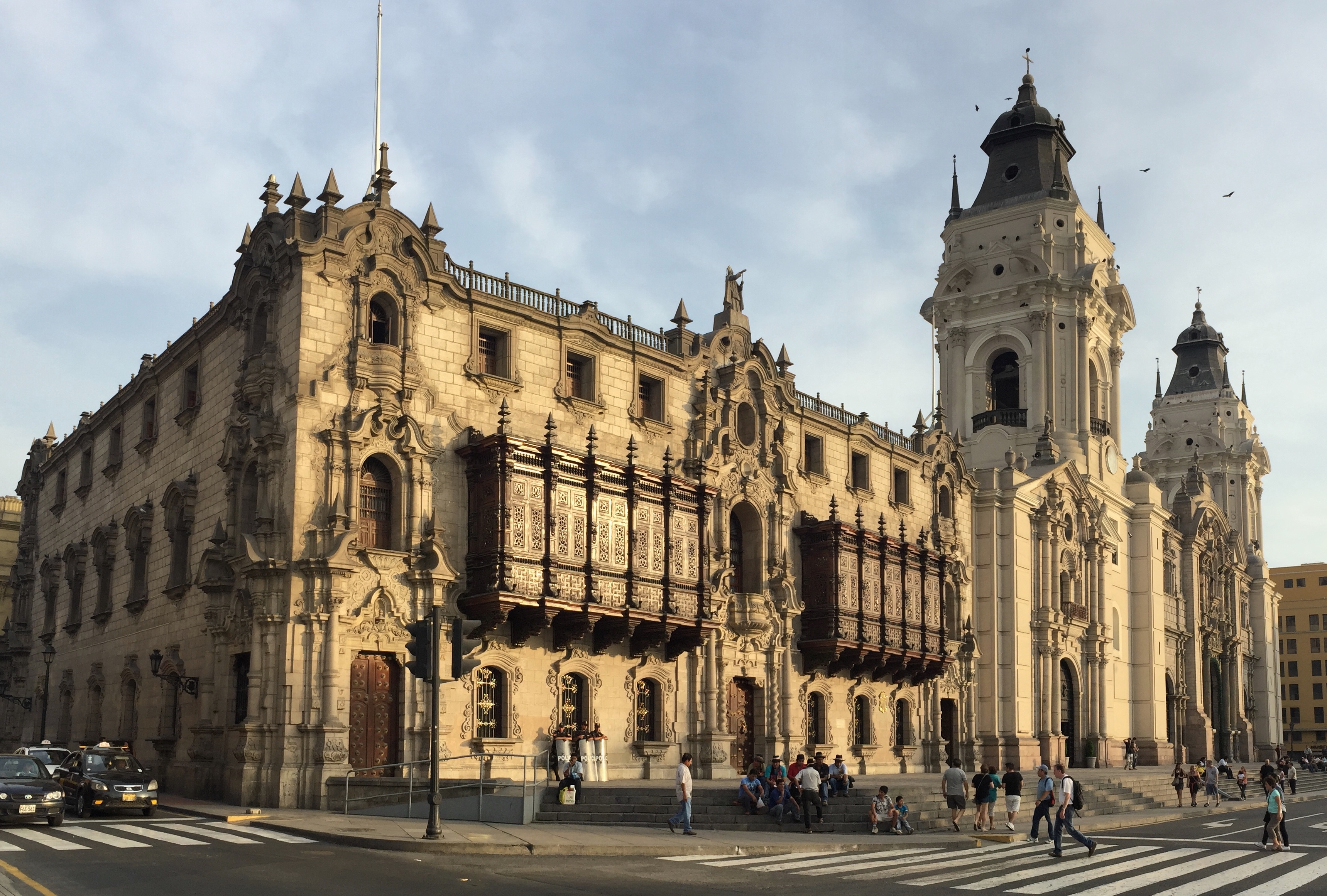
The original center of colonial Lima — the Government Palace (changing of the guard 12:45 PM daily), the Cathedral (Pizarro's remains inside), and the Archbishop's Palace face each other across a fountain. Best visited on a clear summer morning with a walk into the surrounding streets of Centro Histórico.
Pick a neighborhood, not a hotel.
Lima is a city of neighborhoods. The one you stay in shapes the trip more than the property does.
Different trips for different travelers.
Same city, very different stays. Pick the lens that matches your trip.
Lima for foodies
Lima is the destination. Book Central and Maido 4–6 weeks ahead. La Mar for ceviche at lunch (no reservations, arrive at 11 AM). Isolina in Barranco for coastal Peruvian comfort food. Mercado de Surquillo on a market morning. Budget at least one night for the fine-dining tier — the prices are lower than equivalent meals in New York or London.
Lima for first-time visitors
Miraflores base (safe, walkable, restaurant-dense). La Mar lunch on arrival. Museo Larco and Huaca Pucllana. Malecón walk with a paragliding session if the weather is clear. A Barranco evening. Three nights minimum.
Lima for history and archaeology enthusiasts
Pachacamac (45 min south) is an undervisited pre-Inca oracle complex. The Museo Larco has the finest pre-Columbian textile collection in the world. Lima Centro's Plaza Mayor and Convento de San Francisco (catacombs) are the colonial anchors.
Lima for budget travelers
Barranco guesthouses run $25–50/night for clean rooms near great restaurants. Cevicherías in Surquillo serve lunch for S/.20–35 ($6–10). App taxis (InDriver is often cheaper than Uber) keep transport costs low. The Mercado de Surquillo provides breakfast ingredients cheaply.
Lima for couples
Miraflores clifftop at sunset, tandem paragliding, dinner at Central or Maido (book ahead), the Bajada de Baños walk in Barranco, a Paracas overnight for the Islas Ballestas at sunrise. Lima's mix of dramatic setting and extraordinary food makes it the best romantic food destination in South America.
Lima for photographers
The Malecón paragliders in afternoon light. Mercado de Surquillo in the morning. The illuminated Huaca Pucllana pyramid at night. Barranco street art and the Puente de los Suspiros. Lima Centro's colonial facades at sunrise before the crowds arrive.
When to go to Lima.
A quick year at a glance. Great, good, or skip — see what each month is doing before you book.
Best weather of the year. Beaches at Paracas and Miraflores enjoy summer conditions. Peak season — book accommodation ahead.
Carnival season in Peru. Warmest month. Excellent for outdoor Malecón dining and Paracas day trips.
Still warm and pleasant. Easter week (Semana Santa) sees Peruvians traveling internally — slightly busier.
Coastal cloud returning toward month's end. Still good weather for visiting — cooler and more comfortable for walking.
The marine layer is back. Grey, cool, and occasionally drizzly. Still a functional visit — the food doesn't change.
Fiestas Patrias (Peru's independence day, July 28) approaches. Good for the food; grim for the Malecón walk.
Fiestas Patrias (July 28–29) is Peru's biggest national holiday — restaurants book out. Crowds but great energy.
The longest grey stretch. Not beach weather. The Michelin-caliber restaurants are quieter and reservations easier.
Gradual improvement. Mistura food festival (Lima's major food festival) typically falls in September.
Month of the Señor de los Milagros purple procession (October 18–19 main days) — Lima's most significant religious event.
Lima starts waking up. Spring warmth building. Good for shoulder-season visits with improving weather.
Christmas season, summer beginning. The Malecón comes alive. Good timing for the Paracas coast and Barranco evenings.
Day trips from Lima.
When you want a change of pace. Each one's a half-day or full-day out, easy from Lima.
Paracas & Islas Ballestas
4 hours by busCruz del Sur bus from Lima. The Ballestas Islands boat tour ($20, 2 hours) is the main draw — penguins, sea lions, Peruvian pelicans, boobies. The Paracas Reserve's red sand Playa Roja is a half-day by taxi. Better as an overnight in Paracas town.
Huacachina
5 hours by busA natural oasis surrounded by 100-meter sand dunes near the city of Ica. Dune buggy rides at sunset are the experience. Better combined with Paracas as a 2-night South Coast trip.
Pachacamac
45 min by busA large pre-Inca pilgrimage center 30 km south of Lima — pyramids, plazas, and the Temple of the Sun. The new site museum opened in 2016 and provides good context. Easily done as a half-day.
Malecón Paragliding
Within MirafloresMultiple operators launch from Parque Raimondi on the Malecón — $40–60 for 10–15 minutes of tandem flight over Costa Verde beach. No experience needed; best on clear afternoons December through April.
Lunahuaná
3 hours by carA small valley town in the Andes foothills (3 hours by car south of Lima) with class II–IV rafting on the Cañete River and small local wineries. Best for the wet season (January–March) when the river runs full.
Nazca Lines
5.5 hours by busThe lines themselves are best seen from a small plane (30 minutes, $80–120 from the Nazca airstrip). Overflight from the Paracas/Ica airport is an alternative. Best combined with the Paracas overnight — Nazca is 1.5 hours from Ica.
Lima vs elsewhere.
Quick honest reads on the cities people compare Lima to.
Buenos Aires is European in feel, strong in tango, wine, and nightlife; Lima is more distinctly South American with a more original cuisine culture. Lima's food scene is more globally significant; Buenos Aires has more neighborhood texture and a deeper arts scene.
Pick Lima if: You want the most distinctive and original food culture in the Americas, with archaeological depth as a bonus.
Both are Andean capitals with complex histories, improving safety reputations, and good food scenes. Lima's cuisine is more famous and better developed internationally. Bogotá has a better coffee culture and more interesting political energy.
Pick Lima if: You want a destination where the restaurant scene alone justifies the trip.
Both are arguing for best food city in the Americas. Mexico City has more architectural drama, a stronger arts scene, and a more established tourism infrastructure. Lima's cuisine is more globally unusual — fewer travelers have experienced it, which makes the discovery feel more original.
Pick Lima if: You want South America's most distinctive food culture in a setting of Pacific clifftops and pre-Inca archaeology.
Not really competing — they're sequential stops on the same Peru trip. Cusco is the Inca gateway city at altitude (3,400m), the base for Machu Picchu; Lima is the coastal food capital and international gateway. Build 3–4 nights in Lima before your Cusco visit.
Pick Lima if: You're choosing how many nights to allocate between Lima and Cusco — Lima deserves at least 3 to do the food justice.
Itineraries you can start from.
Rough shapes for a trip here — a feel for the pace and cost. Find the one that fits you.
Miraflores base. La Mar ceviche lunch on arrival. Malecón walk and sunset. Museo Larco or Huaca Pucllana on day two before the flight to Cusco.
Miraflores/Barranco base. La Mar day one. Mercado de Surquillo morning, Barranco afternoon day two. Central or Maido dinner (book in advance). Lima Centro history day three. Paracas day trip day four.
3 nights Lima (full food itinerary), then Paracas (1 night) for the Ballestas Islands and reserve, and Ica (1 night) for the Huacachina sand dune oasis. Back to Lima for the flight home.
Things people ask about Lima.
When is the best time to visit Lima?
December through April — Lima's summer months in the Southern Hemisphere. Temperatures reach 22–28°C with blue skies, perfect for the Malecón clifftop walks and the beach at nearby Paracas. May through November brings the garúa — a persistent Pacific marine layer that makes the city cool (15–18°C) and grey without actual rain. The food is extraordinary year-round; the weather is not.
Is Lima really the best food city in South America?
That argument is serious, not boosterism. Lima has two restaurants simultaneously ranked in the world's top 10 (Central and Maido), a distinct cuisine tradition (Peruvian, Nikkei, Amazonian fusion) with no true parallel elsewhere, and a market culture that supplies a biodiversity of ingredients unavailable anywhere outside Peru. São Paulo has more restaurants; Lima has a more coherent and distinctive culinary identity. For food-focused travelers, this is the destination.
What is ceviche and where should I eat it in Lima?
Peruvian ceviche is raw fish (often corvina or sea bass) cured in fresh lime juice with aji amarillo chili, red onion, and cilantro — the citrus 'cooks' the protein through acid. The liquid left in the bowl (leche de tigre, tiger's milk) is drunk as a hangover cure or palate cleanser. La Mar in Miraflores is the benchmark upscale version. El Mercado or Punto Azul are good mid-range options. Lunch only — Lima's cevicherías traditionally don't operate at night.
How safe is Lima for tourists?
Miraflores and Barranco are safe — these are Lima's middle-class residential neighborhoods with consistent security. Use Uber or InDriver rather than hailing street taxis (street taxis have been associated with express kidnappings). Don't walk with your phone visible in unfamiliar neighborhoods after dark. Lima Centro is fine during the day; after 8 PM it's quieter and less comfortable as a solo tourist. San Isidro and Surquillo (daytime) are fine.
How do I get from Lima's airport to Miraflores?
Uber or InDriver from Jorge Chávez International Airport to Miraflores runs S/.30–55 ($8–15) depending on traffic — 30–60 minutes. Official airport taxis from the Green Taxi counter inside arrivals charge around S/.80–100 but are reliable and regulated. Avoid unofficial drivers offering rides before you exit the arrivals hall. The ride to Miraflores takes 30 minutes outside peak hours; rush hour (7–9 AM, 6–8 PM) can add 30–45 minutes.
Do I need to visit Lima before going to Machu Picchu?
Practically, yes — Jorge Chávez International is the main international gateway for most flights, and Lima has the best connections to Cusco (1-hour flight). But Lima is not just a transit hub. Spending even 2 nights in Miraflores for a ceviche lunch and the Museo Larco changes the entire framing of a Peru trip. 3–4 nights does it real justice.
What is pisco and what is a pisco sour?
Pisco is a clear or slightly golden brandy distilled from grapes — Peru's national spirit, and an active territorial dispute with Chile over which country invented it. A pisco sour is pisco, fresh lime juice, simple syrup, egg white, and Angostura bitters — shaken until frothy. The best pisco sours in Lima are at Astrid y Gastón or at any bar in Barranco that takes its cocktails seriously. The Peruvian version uses quebranta grape pisco; don't confuse it with Chilean pisco sour.
How expensive is Lima compared to other South American capitals?
Affordable to mid-range by global standards. Budget travelers eating at neighborhood cevicherías can keep food costs to $15–25/day. Mid-range hotels in Miraflores run $80–150/night. Uber rides are $4–10. A tasting menu at Central or Maido runs $180–220 per person — expensive by Lima standards but cheap compared to equivalent restaurants in London or New York. Overall, $100–150/day covers a comfortable mid-range trip.
What is Nikkei cuisine?
Nikkei (Japanese-Peruvian) cuisine emerged from the large Japanese immigrant community that arrived in Peru from 1899 onward. Japanese precision in knife work and fermentation applied to Peruvian ingredients — tiradito (sashimi with leche de tigre), ceviche with soy and yuzu, mochi made with Andean quinoa. Maido is the canonical expression; Lima is the only city in the world where this cuisine exists at its highest level.
Should I take a day trip from Lima to Paracas?
Yes, strongly recommended. Paracas is 4 hours south of Lima by bus (Cruz del Sur from Plaza Norte or Javier Prado station) or a short flight. The Islas Ballestas boat tour (Humboldt penguins, sea lions, thousands of seabirds, a Nazca Lines-scale geoglyph visible from the boat) is $20 and runs every morning. The Paracas Natural Reserve beach and the red sand 'Playa Roja' are accessible by taxi. Better as an overnight.
What is the Malecón in Miraflores?
The Malecón de Miraflores is a 3 km clifftop park system running along the Pacific edge of the Miraflores district — several connected parks (Parque del Amor with the ceramic-mosaic lovers' bench, Parque Raimondi, Larcomar shopping center built into the cliff face) looking out over Costa Verde beach and the Pacific. Paragliders launch from Parque Raimondi every afternoon for $40–60 (tandem, about 10 minutes in the air). The sunset from Larcomar's terrace restaurants is Miraflores's best-value view.
What is Barranco like and how does it differ from Miraflores?
Barranco is immediately south of Miraflores — a 30-minute walk or $4 Uber. Where Miraflores is upscale and residential, Barranco is the city's bohemian and arts district: colorful colonial mansions converted to galleries and restaurants, the Bajada de Baños lane down to the ocean, the Puente de los Suspiros ('Bridge of Sighs') over a eucalyptus-filled ravine, and better nightlife. The MATE museum (Mario Testino Photography) and the MAC Lima (contemporary art) are both here.
Is Lima good for vegetarians?
Better than most South American capitals. The market ingredient diversity means vegetable-forward dishes aren't just salads — Andean potato dishes, quinoa stews, causa (potato terrine) with avocado, and fresh ceviche substitutions with mushrooms or hearts of palm work well. Miraflores has dedicated vegetarian restaurants. The challenge is that the signature dishes (ceviche, anticuchos) are fish or meat; order causa, papas a la huancaína, and the vegetable tiradito at any cevichería.
What is anticucho and should I eat it from a street cart?
Anticuchos are beef heart skewers marinated in aji panca chili and cumin, grilled over charcoal — a Lima street food institution of Afro-Peruvian origin. Street carts appear in Miraflores and Barranco after 6 PM; the lady with the cart outside the Miraflores park on Larco Avenue is an institution. Yes, eat it. The heart has a mild, slightly mineral flavor — not gamey. Served with a boiled potato and a fried corn kernel.
What languages do I need in Lima?
Spanish is essential outside tourist areas. In Miraflores and Barranco, restaurant and hotel staff typically speak enough English for basic communication. App taxis (Uber drivers) rarely speak English — have your hotel address written in Spanish or use the app's location pin. Learning basic food vocabulary (aji amarillo, leche de tigre, chicha morada) enriches the entire food experience even if you speak no Spanish otherwise.
Are there any free things to do in Lima?
The Malecón clifftop walk and parks are free. The changing of the guard at the Government Palace (daily at 12:45 PM) is free. Barranco's streets, murals, and the Puente de los Suspiros are free to walk. Parque Kennedy in Miraflores (the park with dozens of resident cats) is free. The exterior and main nave of Lima's Cathedral is free; the museum inside charges. Public beach access at Costa Verde is free but the water is cold and not recommended for swimming.
How does Lima compare to Buenos Aires as a South American city?
Different cities serving different interests. Buenos Aires is more European in feel, has better tango and nightlife culture, and Argentina's wine and steak culture is world-class. Lima has a more distinctive and original cuisine, a stronger food-travel case, and more archaeological depth (Huaca Pucllana is right in the middle of the city). Buenos Aires rewards longer stays and has more neighborhood texture. Lima can be done justice in 4 focused nights.
Is Lima a good base for exploring Peru?
Functionally yes — Jorge Chávez is the main international hub, and domestic flights to Cusco (for Machu Picchu), Arequipa, Iquitos (Amazon), and Trujillo (Chan Chan) all depart from here. But Lima isn't just a transit hub. Build 3–4 nights at the start or end of any Peru trip specifically for the food; don't reduce it to an airport stopover.
Know someone headed to Lima?
Send them this guide — real neighborhoods, timing, and prices, with nothing to sign up for.
Copies the link — nothing to install