Kamakura
Send it to whoever you'd travel with
Kamakura is a coastal temple town an hour south of Tokyo where a 13-meter bronze Buddha, Zen monasteries, and hiking trails replace Kyoto's crowds.
Most people do Kamakura as a day trip from Tokyo and regret it by mid-afternoon. The town is small — you can walk the headline sights in a single sweaty loop — but the good Kamakura, the one that rewards you, lives in the gaps between temples. It's the smell of cedar inside Engakuji's gate at 8am before the tour buses, the wooden Enoden train rattling past someone's laundry line, the moment after the Daibutsu when you turn around and realize the bronze Buddha has been sitting open-air in that hollow since 1252 because typhoons keep taking the roof off. Stay one night. The town empties at five and you get it to yourself.
Kamakura was Japan's capital for 150 years — the seat of the first shogunate — and the religious infrastructure from that era is still standing. You get Zen monasteries in the northern hills (Kita-Kamakura), a working Shinto shrine on the central axis (Tsurugaoka Hachimangu), and the carved-into-the-cliffside Hasedera down toward the coast. Unlike Kyoto, the sites are close enough that two days on foot covers most of what matters. The trade-off: Kamakura is a small town that gets flattened on weekends and during sakura. Travel midweek if you can.
Eat shirasu. Whitebait is pulled out of Sagami Bay every morning, served raw over rice when the boats come in and boiled-and-piled when they don't. The signature bowl is shirasu-don — a generous mound on warm rice with shiso, ginger, and a splash of soy. Komachi Street is the obvious food strip: matcha soft-serve, kibi-dango sticks, croquettes, and at least three places claiming to have invented the murasaki-imo (purple sweet potato) tart. It's touristy and good. For something quieter, walk five minutes off the main drag toward Onarimachi.
The sleeper move is the Daibutsu Hiking Trail — a 2.5km wooded ridge connecting Kita-Kamakura to the Great Buddha. It passes Zeniarai Benten, a money-washing shrine tucked inside a cave, and gives you sea views over the Shonan coast as you descend. It's not strenuous, but the path is dirt and roots, so wear shoes you can scuff. Pair it with Hokokuji's bamboo grove (smaller and calmer than Arashiyama's, and you sit with matcha at the back) and you've got a day Kyoto can't replicate.
The practical bits.
- Best time
-
Oct – early Dec, late Mar – AprAutumn foliage in the temple hills; cherry blossoms along Wakamiya Oji and at Tsurugaoka Hachimangu.
- How long
-
2 nights recommendedDay-trippable from Tokyo, but staying overnight gets you the temples at opening time before the crowds arrive.
- Budget
-
$130 / day typicalAccommodation swings the bill — Kamakura ryokans run 2–3x a Tokyo business hotel; food is reasonable.
- Getting around
-
Walk, plus the Enoden coastal train.Central Kamakura, Komachi, and Hase are all walkable. The Enoden line connects Kamakura Station to Hase (for the Great Buddha) and onward to Enoshima. The Enoshima-Kamakura Freepass gives you unlimited Enoden rides for a flat fee.
- Currency
-
¥ Japanese YenCards work at most hotels and bigger restaurants, but small shops, shrines, and bus fares still expect cash. Pull yen from a 7-Eleven ATM before you leave Tokyo.
- Language
- Japanese. English signage is solid at major temples and the station; spotty at small restaurants — Google Translate's camera mode earns its keep.
- Visa
- US, UK, EU, Canadian, and Australian passport holders get visa-free entry to Japan for up to 90 days; register on Visit Japan Web before arrival.
- Safety
- One of the safer destinations in an already very safe country. The only real hazards are slippery hiking trails after rain and getting elbowed in the Komachi Street crush on weekends.
- Plug
- Type A, 100V
- Timezone
- GMT+9
A few specific picks.
Hand-picked, not algorithmic. Each of these has earned its space.
The 13.4m bronze Amida Buddha has been sitting open-air since the original hall was wrecked by tsunamis. Pay an extra ¥50 to step inside the hollow statue.
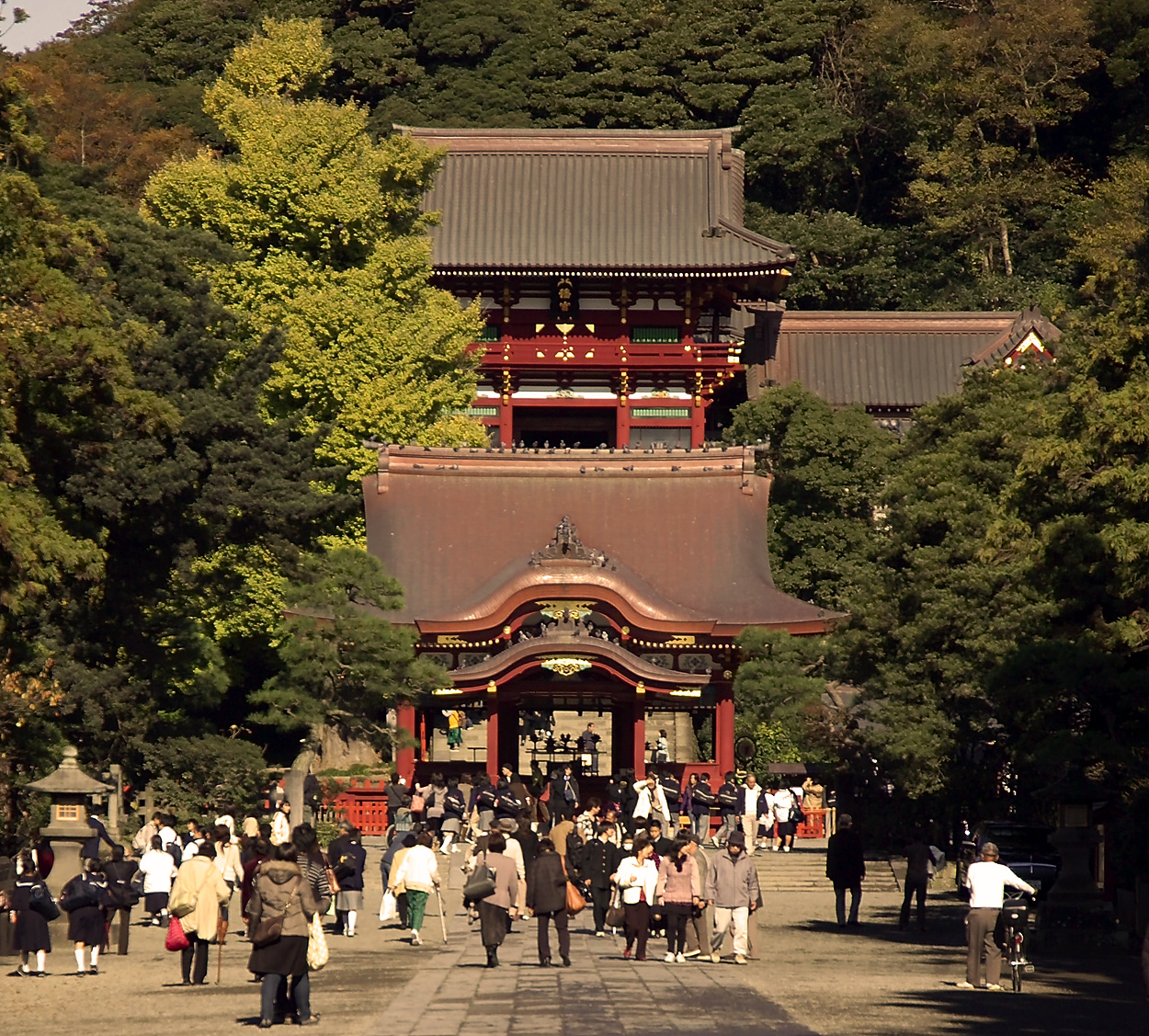
The central Shinto shrine, founded 1063 and moved here by Minamoto Yoritomo. The Wakamiya Oji approach is the best cherry-blossom street in Kanto outside Tokyo.
Cliff-side temple with a 9.18m wooden Kannon, a hydrangea path that flowers in mid-June, and a viewing terrace looking over Yuigahama beach.
One of the great Zen monasteries, founded 1282. Arrive at opening for cedar-scented quiet before the tour groups land.
A smaller, calmer bamboo grove than Arashiyama, with a matcha tea house at the back where you sit and watch the stalks sway.
Tucked inside a cave reached through a rock tunnel; locals wash coins in the spring to multiply their wealth. Stop here on the Daibutsu trail.
The originator of the shirasu-don. Morning-caught Sagami Bay whitebait, raw and boiled, over rice.
Quiet tempura counter a short walk from Hachimangu; build a set with cold soba in summer or hot tsuyu in winter.
The 360m souvenir-and-snack run from the station to the shrine. Matcha soft-serve, shirasu croquettes, and at least three rival murasaki-imo tarts.
Kamakura's main beach. Surfing in shoulder seasons, sunbathing chaos in August, and quiet salt-air walks the rest of the year.
A 2.5km wooded ridge from Jochiji to the Great Buddha. Dirt path, sea views, plus Zeniarai Benten en route.
The wooden coastal train between Kamakura and Enoshima. Worth riding end to end for the level-crossing views of laundry lines and surfboards.
Pick a neighborhood, not a hotel.
Kamakura is a city of neighborhoods. The one you stay in shapes the trip more than the property does.
Different trips for different travelers.
Same city, very different stays. Pick the lens that matches your trip.
Kamakura for first-timers in japan
Kamakura is the easiest way to get temple-town Japan without committing to a Kyoto leg. The whole loop is signposted in English and walkable from one train station.
Kamakura for repeat tokyo visitors
If you've already done Asakusa and Shibuya, Kamakura is the obvious next move — close enough to be a day trip, distinct enough to feel like a real change of scenery.
Kamakura for hikers
The Daibutsu, Tenen, and Gionyama trails crisscross the wooded hills. Easy grades, temples as waypoints, and sea views over the Shonan coast as you descend.
Kamakura for buddhist and zen pilgrims
Kita-Kamakura is one of the densest concentrations of Zen monasteries in Japan — Engakuji, Kenchoji, Tokeiji — and several still run zazen sessions open to foreigners.
Kamakura for foodies
Shirasu in every conceivable preparation, plus Sagami Bay seafood, Kamakura vegetables, and a Komachi Street snack run worth pacing yourself for.
Kamakura for beach travelers
Yuigahama and Zaimokuza are working surf beaches with sunset views toward Enoshima and, on clear winter days, Mount Fuji on the horizon.
When to go to Kamakura.
A quick year at a glance. Great, good, or skip — see what each month is doing before you book.
Quiet and cheap; best Fuji visibility from Inamuragasaki.
Plum at Egara Tenjin; thin crowds.
Cherry blossoms hit Wakamiya Oji end of March.
Sakura peak first week; book accommodation early.
Golden Week (late Apr–early May) brings domestic crowds.
Hydrangeas peak at Hasedera and Meigetsuin — beautiful but lines are real.
Beach season opens at Yuigahama; temples sweltering.
Avoid unless you came specifically for the beach.
Shoulder pricing returns; trails reopen comfortably.
Best month for the Daibutsu trail.
Autumn leaves peak last week of November.
Quiet outside the New Year shrine-visit week.
Day trips from Kamakura.
When you want a change of pace. Each one's a half-day or full-day out, easy from Kamakura.
Enoshima
25 min by EnodenIsland with a 1,000-year-old shrine, observation tower, and the Iwaya sea caves — pairs naturally with Kamakura.
Yokohama
30 min by JRJapan's biggest Chinatown, a working harbor, and the Cup Noodles Museum if you have kids in tow.
Zushi
10 min by JR or hikeLocal beach town favored by Tokyoites for a calmer Shonan coast experience.
Hakone
90 minMountain hot-spring region with the Hakone open-air museum and pirate-ship lake cruises. Doable but tight as a day trip.
Tokyo
55 min by JRMost travelers base in Tokyo and add Kamakura, but it works in reverse for repeat visitors.
Yokosuka
20 min by JRNaval base town with the famous Yokosuka curry and Mikasa battleship — niche but rewarding.
Kamakura vs elsewhere.
Quick honest reads on the cities people compare Kamakura to.
Kyoto is the deeper temple-city — hundreds of sites, weeks of material, layered districts. Kamakura is the tighter, coastal, day-trippable version with a fraction of the crowds.
Pick Kamakura if: Pick Kamakura if you have less than a week and you're already in Tokyo; pick Kyoto if temples are the whole point of the trip.
Both are Tokyo day-trip historical sites. Nikko is mountain-and-mausoleum (Toshogu, waterfalls, cedar forests); Kamakura is coastal-and-Zen.
Pick Kamakura if: Pick Kamakura for the coast and easier logistics; pick Nikko for dramatic mountain scenery and the Tokugawa shrines.
Nara is older — Japan's 8th-century capital, free-roaming deer, the world's largest wooden Buddha hall. Kamakura is the medieval shogunal capital with a more compact, Zen-leaning profile.
Pick Kamakura if: Pick Nara if you're already in Kyoto/Osaka; pick Kamakura if you're based in Tokyo.
Hakone is the onsen-and-Fuji weekend; Kamakura is the temple-and-coast weekend. Both are 60–90 minutes from Tokyo and frequently paired.
Pick Kamakura if: Pick Kamakura for history and walkability; pick Hakone for hot springs and mountain scenery.
Yokohama is the modern port city — Chinatown, harbor views, museums. Kamakura is the historical counterpart 30 minutes south.
Pick Kamakura if: Pick Kamakura for temples and nature; pick Yokohama for nightlife and food variety. Easy to pair both.
Itineraries you can start from.
Rough shapes for a trip here — a feel for the pace and cost. Find the one that fits you.
Train down after breakfast, knock out Kita-Kamakura temples and the Daibutsu trail, sleep in Hase, catch Hasedera at opening, train back.
Two nights to do Kamakura properly: northern Zen circuit one day, Daibutsu hike and Hokokuji the next, with a beach afternoon at Yuigahama.
Add an Enoden day trip to Enoshima's caves and aquarium, plus a hiking afternoon down to Zushi. Best in shoulder season.
Things people ask about Kamakura.
Is Kamakura worth visiting?
Yes, especially if you've already done the obvious Tokyo highlights. Kamakura packs a 12th-century shogunate capital — Zen temples, a giant bronze Buddha, hiking trails, and a coast — into an area you can cover on foot in two days. It's the closest thing to Kyoto within an hour of Tokyo, with a fraction of the tourists and a beach attached.
How many days do you need in Kamakura?
One day is enough to see the headline sights — Tsurugaoka Hachimangu, Komachi Street, the Great Buddha, and Hasedera — at a brisk pace. Two days lets you add the Daibutsu hiking trail, the eastern temples around Hokokuji, and a meal that isn't rushed. Three nights is the right length if you also want to ride the Enoden coast to Enoshima.
Is Kamakura better than Kyoto?
No, but it's the right answer to a different question. Kyoto has the depth — hundreds of temples, multiple districts, weeks of material — but it's also crowded, far from Tokyo, and increasingly expensive. Kamakura gives you the temple-town atmosphere in a smaller, quieter package an hour from the capital. Pick Kyoto for a full week, Kamakura as a Tokyo add-on.
Best time to visit Kamakura?
Late October through early December for autumn foliage in the temple hills, and late March to early April for cherry blossoms along Wakamiya Oji. Mid-June is the hydrangea peak at Hasedera and Meigetsuin — beautiful, but rainy and crowded. Avoid July and August unless you specifically want the beach; the heat and humidity are punishing.
How do you get from Tokyo to Kamakura?
Take the JR Yokosuka Line direct from Tokyo Station to Kamakura Station — about 55 minutes, covered by the JR Pass and Suica. You can also depart from Shinagawa, Shimbashi, or Yokohama on the same line. For the Enoshima side, the Odakyu Romancecar from Shinjuku to Fujisawa is faster than connecting through Tokyo Station.
Is Kamakura a day trip or overnight?
Most people day-trip, but staying one night is the smart upgrade. Kamakura empties around 5pm when the day crowds leave, the temple grounds at opening time are dramatically quieter, and you get the Enoden coast at golden hour without rushing back to Tokyo. One night is enough; two is comfortable.
Where should you stay in Kamakura?
Stay in Hase or near Kamakura Station if you want walkable access to the main sights. Hase puts you near the Great Buddha and Yuigahama beach, with smaller ryokans and guesthouses. The station area is more convenient for trains and Komachi Street eating. Kita-Kamakura is quieter and good if temples are your priority.
Is Kamakura expensive?
Moderately. A budget traveler can do Kamakura on about $60 a day; mid-range runs around $130; luxury can hit $250+. Eating is cheaper than Tokyo or Kyoto. Accommodation is where it stings — Kamakura ryokans charge a premium and the inventory is small, so book ahead, especially for autumn and sakura.
Is Kamakura safe for solo travelers?
Very. Japan is one of the safest countries to travel in, and Kamakura is a small temple town with even less to worry about than Tokyo. Solo female travelers report no issues. The only real risks are slipping on hiking trails after rain and getting separated from your group in the Komachi Street weekend crowds.
What is Kamakura known for?
Kamakura is best known for the Great Buddha at Kotoku-in — a 13-meter bronze statue from 1252 that has sat open-air for centuries — plus its Zen monasteries, the Tsurugaoka Hachimangu shrine, and being Japan's first shogunal capital. Locally it's also known for shirasu (Sagami Bay whitebait) and the Enoden coastal train.
Cash or card in Kamakura?
Carry cash. Most hotels and bigger restaurants take cards, but small temples, shrine donations, traditional eateries, and bus fares are cash-only. The reliable ATM move is any 7-Eleven — their machines accept foreign cards 24/7. Pull a few days of yen in Tokyo and refill as you go.
How do you get from Kamakura to Enoshima?
Take the Enoden line — a wooden single-track coastal train — from Kamakura Station to Enoshima Station, about 25 minutes. The ride itself is a highlight, threading between houses and along the surf coast. The Enoshima-Kamakura Freepass gives you unlimited rides for the day plus discounts at major sights.
What are the best day trips from Kamakura?
Enoshima is the obvious one — an island shrine with caves and an observation tower, 25 minutes on the Enoden. Yokohama (30 minutes north) gives you Chinatown and the harbor. Hakone for onsen and Fuji views is doable as a stretch day trip, and Zushi at the end of the Daibutsu hiking trail makes a quiet coastal half-day.
Can you see Mount Fuji from Kamakura?
Yes, on a clear winter day. The best views are from Inamuragasaki Cape on the Shonan coast and from the higher points on the Daibutsu hiking trail. Visibility peaks in December and January, when the dry air strips away the haze. In summer you'll rarely see it from sea level.
Is the Great Buddha worth visiting?
Yes. Photos make it look smaller than it is — at 13.4 meters and 121 tons of bronze, it's genuinely imposing in person. The detail you miss in pictures: it's been sitting open-air since the surrounding hall was destroyed by storms in the 14th century, and you can pay a small fee to step inside the hollow statue itself.
Know someone headed to Kamakura?
Send them this guide — real neighborhoods, timing, and prices, with nothing to sign up for.
Copies the link — nothing to install