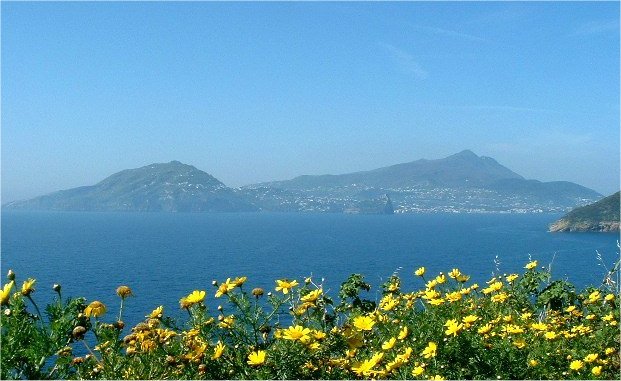
Ischia
Send it to whoever you'd travel with
Ischia is the volcanic island in the Bay of Naples that Capri-bound day-trippers always look at and never reach — bigger, less famous, less photographed, with the best thermal-spa culture in Italy, a proper Aragonese castle on a rocky islet, and a working-island authenticity that Capri lost a long time ago.
Ischia is the largest of the three islands in the Bay of Naples — about an hour by hydrofoil from the city, four times the size of Capri, and somehow consistently overlooked by international visitors who get fixated on Capri's smaller, glossier reputation. Ischia is a working volcanic island with a population of 65,000, a centuries-old thermal-spa industry built on geothermal springs from the still-active Mount Epomeo, six distinct towns each with its own character, and beaches and coves that don't require a tendered launch from a luxury yacht to reach.
The thermal spa tradition is the headline draw and the deepest local culture. Ischia has been famous for its hot springs since Roman times — Pliny the Elder wrote about the curative waters. The island today has dozens of thermal gardens (giardini termali) — Negombo, Poseidon, Castiglione, the smaller Aphrodite-Apollon at Sant'Angelo — which combine a series of pools at different temperatures (28-40°C, occasionally hotter) set in landscaped gardens with sea views. €30-50 buys a full day. The whole island runs on a slower, semi-aquatic rhythm that this tradition encourages.
The Castello Aragonese is the architectural showstopper — a 5th-century BC Greek-Phoenician fort, rebuilt in the 1440s by Alfonso V of Aragon, on a rocky islet connected to Ischia Ponte by a 220-metre stone causeway. The interior is a maze of churches, terraces, dungeons (where prisoners were dropped through floor-grates onto sharpened poles below), gardens, and the convent where the Renaissance poet Vittoria Colonna lived. €12 entry; allow 3 hours. From the upper terraces, the entire Bay of Naples opens up — Vesuvius on the horizon, Procida directly north, Capri to the southeast.
Trade-offs: Ischia is not Capri. It doesn't deliver the dramatic Faraglioni stack-and-cliff drama, the international glamour, or the postcard-density of Capri's small footprint. It's a real island where Italians come for thermal spa weeks; not a postcard destination for celebrity day-trippers. Some travelers expecting Capri are disappointed; others are delighted by exactly the same fact. Logistics are also slower — buses and a car ferry, not as polished as Capri's funicular-and-taxi system.
The practical bits.
- Best time
-
May – June · September – OctoberLate spring and autumn deliver the sweet spot — warm enough for sea and thermal pools, full operating season, manageable crowds. July-August is Italian holiday peak — full island, premium prices. October has stable warm weather and is the spa-season highlight as locals return to thermal baths. Many businesses close November-March, though Ischia stays open year-round more than Capri does (the thermal trade keeps shoulder months viable).
- How long
-
5 nights recommendedThree nights covers the castle, one spa day, beaches, and a town circuit. Five is the sweet spot — adds Mount Epomeo, deeper spa time, and a relaxed pace. Seven works for a proper thermal-cure holiday or for combining with Procida and Naples day trips.
- Budget
-
~$160 / day typicalCheaper than Capri (significantly), comparable to Sorrento. Mid-range hotels €100-200/night with thermal pool access; €200-350 in August. Thermal garden day passes €30-50. Restaurant dinners €25-40. Hydrofoil to/from Naples €25-35 each way.
- Getting around
-
Bus + occasional taxiThe EAV bus network covers the whole island reasonably well — single tickets €1.50, day passes €4.50. Service is frequent on main routes (Ischia Porto - Forio - Sant'Angelo loop) and reasonable elsewhere. Taxis are available but expensive. Bringing a car from the mainland is possible but bizarrely complicated (vehicle ferries from Pozzuoli and Naples) and parking is grim. Walking the towns; bus or taxi between.
- Currency
-
Euro (€) — cards in larger venues, cash often preferred in smaller restaurants.Cards in hotels and main restaurants. Beach clubs, small osterie, and bus tickets often cash-preferred.
- Language
- Italian. Neapolitan dialect among older residents. English in tourist-facing roles in Ischia Porto and Forio; less common elsewhere.
- Visa
- Schengen zone. 90-day visa-free for US, UK, Canadian, Australian. ETIAS authorization required from late 2026.
- Safety
- Very safe. Standard caution with valuables on beaches. The volcanic nature means thermal water temperatures vary — check at spas before plunging in. Driving the island roads is challenging — narrow switchbacks, aggressive scooters.
- Plug
- Type C / F / L · 230V — Italian three-pin sockets.
- Timezone
- CET · UTC+1 (CEST UTC+2 late March – late October)
A few specific picks.
Hand-picked, not algorithmic. Each of these has earned its space.
The headline monument — a fortified rocky islet connected to Ischia Ponte by a 220m causeway. 5th-century BC Greek-Phoenician origin, rebuilt by Alfonso V of Aragon in 1441. Churches, dungeons, gardens, and the convent of Vittoria Colonna. €12; allow 3 hours. The Bay of Naples panorama from the top terraces is the island's signature view.
Twelve thermal pools set in subtropical gardens designed by Ermanno Casasco — a Sri Lankan-inspired aesthetic (the founder spent time in Negombo, Sri Lanka). Pools range 27-40°C plus seawater pool and private cove. €40-50 full day. Most stylish of the thermal complexes.
The pedestrian-only fishing village at the southern tip — cobbled lanes, pastel houses, a tiny harbor, and the rocky promontory crowned by the village proper. The Maronti beach next door has fumarole sand (volcanically heated). Best evening passeggiata on the island.
The 789m volcanic peak in the middle of Ischia — last erupted in 1302 but still seismically active (the spa industry runs on its heat). Hike up from Fontana in 1.5 hours; the summit gives a 360° view of the entire bay. Bring water and proper shoes.
The largest town on the west coast — Renaissance churches (Santa Maria del Soccorso on its promontory is the famous one), sunset-facing position, the Giardini La Mortella (William Walton's botanical gardens). Less touristy than Ischia Porto.
The long sand beach at the south of the island — famous for the natural fumaroles where volcanic steam vents through the sand. You can boil an egg in it. Beach clubs at both ends; quieter centre. Reach by bus from Barano or by water taxi from Sant'Angelo.
The botanical gardens created by composer William Walton and his wife Susana from 1956 onwards — terraced subtropical planting, Thai pavilion, and a small open-air theatre where chamber concerts run in summer. €15 entry. One of the great gardens of Italy.
Two adjoining towns making up the main settlement. Ischia Porto is the modern ferry-arrival town with shops and restaurants; Ischia Ponte is the historic core with the causeway to the Aragonese castle. Walking distance between.
Larger and more traditional than Negombo — 20+ pools, beach access, sauna circuits, restaurants. Sprawling complex set into the cliff with terraced pools. €38-46 full day. The classic Ischia spa experience.
The third Bay of Naples island, 15 minutes from Ischia by hydrofoil — pastel fishing village (Corricella), pure unfiltered Bay of Naples life, almost no tourists. Named Italy's Capital of Culture 2022. Half-day to a full day.
Pick a neighborhood, not a hotel.
Ischia is a city of neighborhoods. The one you stay in shapes the trip more than the property does.
Different trips for different travelers.
Same city, very different stays. Pick the lens that matches your trip.
Ischia for thermal spa travelers
Ischia has the best thermal spa culture in Italy and arguably in the Mediterranean. The giardini termali concept — multiple pools at different temperatures, in landscaped gardens, with sea views — is unique to the island at this scale. €30-50 day passes.
Ischia for capri-alternative travelers
For travelers wanting the Bay of Naples island experience without the Capri price point, crowd density, and curated glamour. Ischia delivers a real working island at a fraction of the cost and four times the size.
Ischia for families
Thermal gardens have child-friendly zones, sandy beaches with shallow water, the Aragonese castle dungeons hold older children's attention, and hotels are family-oriented across the price spectrum. Less commercialized than typical Italian family resorts.
Ischia for longer-stay relaxation travelers
Ischia rewards the longer stay — 5-7 nights is right. The thermal rhythm, the bus-based island life, the six different towns all benefit from time. Italian thermal-cure tradition is typically 7-14 days; you can adopt the cadence.
Ischia for food and wine travelers
Coniglio all'ischitana is the island's signature dish. Biancolella and Forastera grape whites are excellent local wines. The seafood is straightforward and good. Best restaurants distributed across the island; rental car not needed thanks to the bus network.
Ischia for walkers
Mount Epomeo hike, the coastal paths between Sant'Angelo and Maronti, the Forio Renaissance church walks, the volcanic Cretaio crater hike. Less famous than the Sorrento peninsula walks but rewarding for travelers wanting to combine beach and walking.
When to go to Ischia.
A quick year at a glance. Great, good, or skip — see what each month is doing before you book.
Many beach venues closed but thermal spas continue. Locals' island. Cure-season pricing.
Off-season continues. Thermal trade active. Walking weather.
Beach venues reopening. Wildflowers, hiking, low prices.
Spring properly. Sea still cool. Excellent walking, low prices.
Sea swimmable late month. Best for combining spa, beach, and hiking.
Warm sea, full operations, pre-Italian-holiday-peak crowds.
Italian holidays start. Beaches busy, prices climb.
Italian holiday peak. Premium prices, crowded everywhere.
Best month overall — warm sea, thinning crowds, full operations.
Sea swimmable early month. Thermal spa season highlight as Italians return.
Off-season properly. Thermal trade active. Locals' favorite quiet month.
Thermal cures continue. Quiet, atmospheric.
Day trips from Ischia.
When you want a change of pace. Each one's a half-day or full-day out, easy from Ischia.
Procida
15 min by hydrofoilItalian Capital of Culture 2022. The Corricella pastel-fishing harbor is one of Italy's most photogenic. Smaller and less developed than Ischia. Walk the lanes, lunch on the harbor, return by afternoon hydrofoil.
Capri
50 min by hydrofoilDirect connections from Ischia in summer. The dramatic Faraglioni, Anacapri, Villa Jovis. Full day. Booked-out in summer; prefer May or September for crowd-comfort.
Naples
1h by hydrofoilThe National Archaeological Museum (containing the best Pompeii frescoes), Spaccanapoli old town, the Duomo with the San Gennaro relic. Full day; overnight better.
Pompeii
2h via NaplesPossible but long. Hydrofoil to Naples, Circumvesuviana train to Pompeii Scavi. The ruins need 4-5 hours minimum. Better as part of a Naples overnight rather than a day trip.
Sorrento
45 min by hydrofoil seasonalDirect hydrofoil from Ischia in summer. The Sorrento peninsula and gateway to the Amalfi Coast. Better as part of a longer Bay of Naples sweep.
Phlegraean Fields
1h 30m via PozzuoliThe Roman Pozzuoli amphitheatre, Cuma's ancient Greek colony, the Solfatara volcanic crater (when accessible). Less famous than Pompeii but archaeologically excellent. Long day.
Ischia vs elsewhere.
Quick honest reads on the cities people compare Ischia to.
Capri is small, dramatic, glamorous, day-tripper-overrun, and expensive. Ischia is four times larger, volcanic with thermal springs, has six towns, is a fraction of the cost, and has real working-island culture. Capri for one stunning day; Ischia for a thermal week.
Pick Ischia if: You want a real Bay of Naples island holiday with thermal spa culture over a famous-name dramatic small island.
Procida is tiny, intimate, almost undeveloped — best experienced as a day trip or one overnight. Ischia is much larger with thermal spa infrastructure, multiple distinct towns, and full hotel/restaurant variety. Procida is more photogenic per acre; Ischia is more substantive over a week.
Pick Ischia if: You want a full Bay of Naples island holiday with spa infrastructure rather than a tiny intimate village experience.
Elba is the Tuscan island — granite, Napoleon history, beach variety, no thermal springs. Ischia is the Bay of Naples volcanic island — thermal spas, Aragonese castle, southern Italian food. Both are 3-5x cheaper than Capri. Different regional flavors entirely.
Pick Ischia if: You want the Bay of Naples experience with thermal spas and southern Italian food over Tuscan-archipelago granite beaches.
Itineraries you can start from.
Rough shapes for a trip here — a feel for the pace and cost. Find the one that fits you.
Day one: arrive, Aragonese castle, Ischia Ponte dinner. Day two: Negombo or Poseidon thermal day. Day three: Sant'Angelo and Maronti beach with fumaroles.
Two nights Ischia Ponte for the castle and east coast. Three nights Forio or Lacco Ameno for the thermal-garden circuit. Mount Epomeo hike one morning. Procida day trip optional.
Five nights Ischia for thermal + island life. Two nights Naples for the city — National Archaeological Museum, Pompeii or Herculaneum, Naples street food. Hydrofoil connections.
Things people ask about Ischia.
Is Ischia worth visiting?
Yes — particularly if you want a Bay of Naples island experience that isn't the brutally overcrowded Capri day-trip routine. Ischia is four times Capri's size, a fraction of the cost, with thermal-spa culture going back to Roman times, an Aragonese castle, and six distinct towns. It rewards 4-5 nights properly.
How is Ischia different from Capri?
Capri is small, dramatic, glamorous, expensive, and packed with day-trippers — beautiful but heavily curated. Ischia is four times larger, volcanic with thermal springs, has six distinct towns, less dramatic single-spot scenery, and a real working-island culture. Capri is for one stunning day; Ischia is for a week of thermal slowness.
How many days do I need in Ischia?
Three nights minimum to justify the ferry effort. Five is the sweet spot — covers the castle, two or three thermal gardens, Sant'Angelo, Mount Epomeo, and beach time. Seven works for a proper thermal-cure week as Italians take it.
When is the best time to visit Ischia?
May-June and September-October. Sea swimmable, full operating season, manageable crowds. July-August is Italian holiday peak with full island, premium prices, and crowded beaches. The thermal season is genuinely year-round — many spas stay open through winter as Italians come for thermal cures.
How do I get to Ischia?
Hydrofoil from Naples (Molo Beverello terminal) in 1 hour to Ischia Porto, €25-35 each way. Slower ferries (1h 30m, with car) from Pozzuoli, €15-25 plus vehicle. The hydrofoils run roughly hourly. Procida is between (15 min stop). Don't bring a car from the mainland unless you have specific reason — the island has plenty of buses.
What are the thermal gardens?
Landscaped complexes combining multiple pools at different temperatures (typically 27-40°C, occasionally up to 75°C in the hottest fumaroles), sea pools, saunas, and restaurants — set in tropical or formal gardens with sea views. €30-50 buys a full day. The famous ones: Negombo (most stylish), Poseidon (largest), Castiglione, Aphrodite-Apollon (Sant'Angelo). Each has a distinct character.
What is the Castello Aragonese?
A fortified rocky islet connected to Ischia Ponte by a 220m stone causeway — Greek-Phoenician 5th century BC, Aragonese rebuild 1441. Inside: churches, dungeons (the prisoners' floor-grate execution chamber is genuinely disturbing), terraced gardens, the convent of Vittoria Colonna (the Renaissance poet who corresponded with Michelangelo), and panoramic terraces. €12; allow 3 hours.
Should I climb Mount Epomeo?
Yes if you're reasonably fit. The 789m summit is reachable from Fontana in 1.5 hours of hiking — moderate difficulty, the final section through volcanic tuff is via stone steps. The 360° view over the Bay of Naples is the reward — Vesuvius, Procida, Capri, the mainland. Bring water and proper shoes.
What is Sant'Angelo?
The pedestrian-only fishing village at the southern tip of Ischia — pastel houses, cobbled lanes climbing a rocky promontory, a tiny harbor, and the Maronti beach (with volcanic fumaroles heating the sand) immediately east. Best base for the south coast; best evening passeggiata on the island. Cars are excluded; reach by bus from Serrara Fontana.
Are the beaches good on Ischia?
Yes — a wide variety. Sand: Maronti (south, with fumaroles), San Montano (north, family-friendly), Citara (west, sunset). Pebble and cove: Sorgeto (with thermal water flowing into the sea), Cava Grado (Sant'Angelo). Beach clubs charge €15-30/day for loungers. Free public access between clubs. Clearer water than mainland Italy nearby.
Is Ischia good for families?
Yes. Several thermal gardens (Poseidon, Castiglione) have child-friendly pool zones. Sandy beaches with shallow water (Maronti, San Montano). The Aragonese castle dungeons fascinate older children. Sant'Angelo is small and walkable. Hotels family-oriented in the spa towns. Less commercialized than typical Mediterranean family resorts.
What should I eat in Ischia?
Coniglio all'ischitana — slow-cooked rabbit with tomatoes and herbs, the island's signature dish (rabbits were imported by the Greeks to control snake populations and never left). Spaghetti alle vongole, fresh seafood, mozzarella di bufala from the mainland. The local Biancolella and Forastera grape whites are excellent. Best restaurants: Il Focolare (rabbit specialist), Da Ciccio, Da Peppina.
Is Ischia cheaper than Capri?
Significantly. Mid-range hotels run €100-200/night versus €250-500 in Capri (and €600+ in season). Restaurants average €25-40 per person versus €40-80 in Capri. The hydrofoil is comparable. Spa day passes €30-50 — Capri doesn't have equivalents. Ischia delivers about a third of the cost for a substantively similar Bay of Naples island experience.
Can I day-trip to Pompeii from Ischia?
Possible but punishing. Hydrofoil to Naples (1h), then Circumvesuviana train to Pompeii (40 min) — 4-5 hours each way of transit for a 3-hour visit. Better to stay overnight in Naples before or after Ischia. Or do the Bay of Naples circuit with separate Naples nights.
Should I visit Procida from Ischia?
Strongly yes — Procida is 15 minutes by hydrofoil and offers the purest unfiltered Bay of Naples experience. The pastel fishing port at Corricella is one of the most photogenic harbors in Italy. Procida was Italian Capital of Culture 2022 but remains genuinely undeveloped. Half-day minimum; overnight possible.
Is Ischia open in winter?
More than Capri or Procida — the thermal-cure trade keeps many spas operating year-round (different pricing structures), and the main towns retain a working population. Some beach restaurants close November-March. Treat winter as a thermal-and-walking holiday rather than a beach trip. November is the locals' favorite quiet month.
Know someone headed to Ischia?
Send them this guide — real neighborhoods, timing, and prices, with nothing to sign up for.
Copies the link — nothing to install