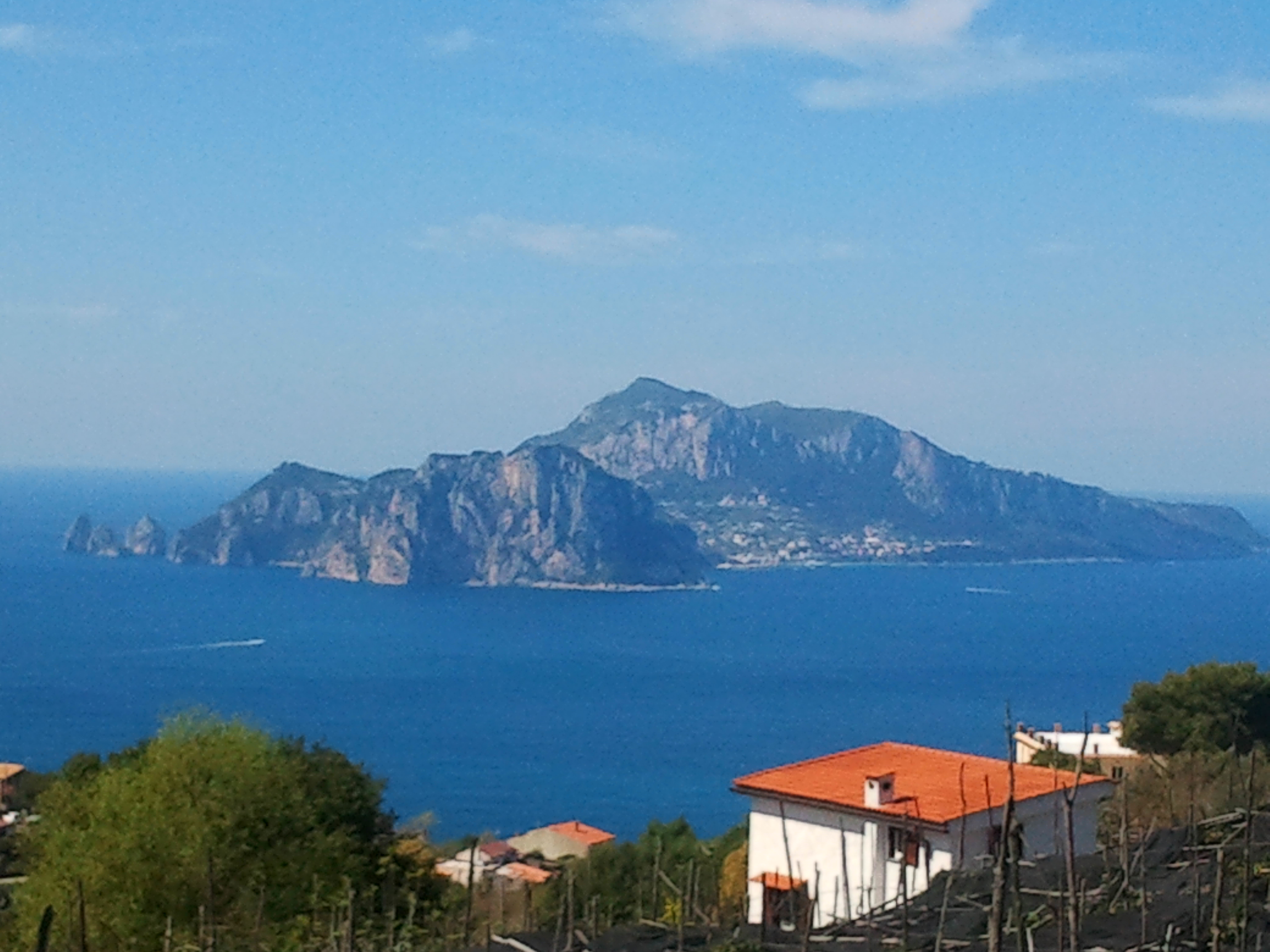
Capri
Send it to whoever you'd travel with
Capri is two different islands: the day-trip version overrun by tour groups between 10 AM and 5 PM, and the quiet, elegant island that emerges when the last hydrofoil leaves — stay at least one night to meet the second one.
Between roughly 10 AM and 5 PM in July and August, Capri can feel like an experiment in how many people can fit on a small island. Day boats from Naples, Sorrento, and Salerno disgorge several thousand visitors at a time; the funicular from Marina Grande to the Piazzetta runs at capacity; the Blue Grotto queue stretches along the cliff. The island, in those hours, is a logistical object lesson.
After the last hydrofoil leaves, Capri changes completely. The Piazzetta — Capri's tiny central square — empties of selfie-sticks and fills with local families, late dinners, and the particular golden light of a western-facing Mediterranean island at dusk. The paths to Villa Jovis and around the Faraglioni are walkable without backlog. The hotel terrace bars serve Campari spritzes to a fraction of the daytime crowd. This is the Capri that people who've stayed overnight talk about.
The island is genuinely divided into two towns: Capri town, with the Piazzetta and the luxury hotels, and Anacapri, higher on the ridge, quieter, more residential, and the jumping-off point for the chair lift to Monte Solaro. Both have their own character; a complete visit touches both. The path between them is steep enough to be called a workout.
The honest cost warning: Capri is among the most expensive destinations in Italy. A mid-range hotel room in June runs €250–400/night; the famous Grand Hotel Quisisana and its equivalent are in the €700–1500 territory. A simple lunch at a terrace restaurant is €40–60 per person. The island does not pretend otherwise. What you're paying for is real — the water is a color blue that takes people by surprise, the faraglioni rock stacks are as dramatic as advertised, and the evening atmosphere is genuinely hard to replicate anywhere else on the Italian coast.
The practical bits.
- Best time
-
May – June · September – OctoberMay and June have the best combination of warm weather, manageable day-trip crowds, and open businesses. September is the local favorite — the sea is warmest, summer crowds have thinned, and prices drop significantly. October has perfect hiking weather. July–August is peak season in every sense: warmest, most crowded, most expensive.
- How long
-
2 nights recommended1 night is the minimum to experience the island after the day boats leave. 2 nights covers Capri town, Anacapri, the Faraglioni walk, and a Blue Grotto morning. More than 3 nights and most visitors have exhausted the loop.
- Budget
-
$380 / day typicalCapri has no budget option in season. A simple room runs €150–200 minimum in May; drinks at the Piazzetta bars run €12–18 each. Budget travelers are better served staying in Sorrento and day-tripping.
- Getting around
-
Ferry in; walking + funicular + open-air taxi on islandFerries and hydrofoils from Sorrento (25 min), Naples (50–75 min), and Positano (30 min). On the island: the funicular from Marina Grande to Capri town runs constantly; open-air taxis cover Anacapri and the villas; the island is otherwise walked. No privately rented cars or scooters allowed.
- Currency
-
Euro (€)Cards universally accepted. Prices are simply high — carry some cash for smaller purchases at market stalls.
- Language
- Italian. English spoken at all hotels and most restaurants.
- Visa
- 90-day Schengen visa-free for US, UK, Australian, and most Western passports. ETIAS authorization required from late 2026.
- Safety
- Extremely safe. The main annoyances are the cliff-edge paths at night without a torch, and the sheer cost of everything.
- Plug
- Type C / F · 230V
- Timezone
- CET · UTC+1 (CEST UTC+2 late March – late October)
A few specific picks.
Hand-picked, not algorithmic. Each of these has earned its space.
The 'world's most fashionable coffee table' — all four sides lined with café chairs, completely overrun at midday, genuinely wonderful after 6 PM. The clock tower and the church dome frame the square.
The famous sea cave where reflected light turns the water an electric cobalt blue. Visit by rowboat (the only way in) at 10–11 AM for the best light. Queues are long in peak season; arrive early or accept the wait.
The highest point on the island at 589m, reached by a 12-minute chairlift from Anacapri. The view takes in the entire Gulf of Naples, Vesuvius, the Faraglioni, and on clear days the Apennine mountains. Walk down instead of riding back.
The ruins of Emperor Tiberius's main palace — he governed Rome from here for over a decade. 45-minute walk from the Piazzetta through lemon groves; few tourists make it this far. The cliff views from the Salto di Tiberio are vertiginous.
The three sea-stack rocks that define Capri's silhouette. Best viewed by boat (local boat tours from Marina Grande go through the arch of the third faraglione). The Pizzolungo path gives the cliff-top perspective.
Lemon-grove dining under actual lemon trees — tables set between the laden branches, fairy lights, and Caprese cooking that justifies the setting. Reserve in advance. Not cheap, but honest about what it is.
Swedish doctor Axel Munthe built this villa over a Roman-era chapel and filled it with antiquities. The garden terrace has one of the island's best views at a fraction of hotel-terrace prices. His memoir The Story of San Michele is worth reading before you go.
A limestone arch carved by wind and sea — reached by a 20-minute walk from the Piazzetta through Matermanta. Usually quiet even in season; the path winds through Mediterranean scrub with no guardrails.
The Capri island version of limoncello uses local sfusato lemons grown on the terraced slopes. The family operation near Via Roma offers honest tastings without the showroom atmosphere of the main-drag shops.
The western cape lighthouse — reached by bus from Anacapri — looks directly into the sunset over the Tyrrhenian Sea. A local swimming spot and the least-visited large beach on the island. The bar at the lighthouse serves cold beer.
Pick a neighborhood, not a hotel.
Capri is a city of neighborhoods. The one you stay in shapes the trip more than the property does.
Different trips for different travelers.
Same city, very different stays. Pick the lens that matches your trip.
Capri for couples and honeymooners
Capri is the obvious choice for a romantic Italian island stay. The Piazzetta at sunset, dinner at Da Paolino under lemon trees, a boat trip to the Faraglioni arch — the scenery is built for couples. Book 3–4 months ahead for the right hotel. Budget for €400–600/night for the experience to feel seamless.
Capri for luxury travelers
Grand Hotel Quisisana, Capri Palace Jumeirah, Villa Brunella, and Punta Tragara compete for the top end. A private boat rental for the day, dinner at Aurora, and a couple of afternoons doing nothing on your terrace is the honest Capri luxury script.
Capri for day-trippers from sorrento or naples
A valid approach — arrive on the first morning boat, Blue Grotto at 10 AM, Villa Jovis walk, lunch at Marina Grande, leave by 4 PM before the return boat queues build. You'll see the island well; you just won't see it at its quietest.
Capri for hikers
The island has more serious walking than most visitors know. The path from Anacapri to Monte Solaro (walking down from the chairlift summit), the Villa Jovis walk, the Pizzolungo coastal path, and the Natural Arch route are all rewarding. Best in May, October, or early June.
Capri for history and culture seekers
Villa Jovis is the star — Tiberius ran Rome from here, and the ruins plus the cliff setting make a compelling half-day. Villa San Michele in Anacapri and the Certosa di San Giacomo (a 14th-century Carthusian monastery with a small museum) round out the history list.
Capri for budget travelers
The honest advice: stay in Sorrento and day-trip. If staying on Capri is the goal, Marina Grande has the most affordable restaurant options, Anacapri hotels are cheaper than Capri town, and the best activities (walking, swimming, viewpoints) are free or low-cost.
When to go to Capri.
A quick year at a glance. Great, good, or skip — see what each month is doing before you book.
Off-season. Most hotels and restaurants closed. The island is a different place — local and empty.
Still mostly closed. Locals visible again. Wild cyclamen on the hillside paths.
Season begins. Ferries resume more frequent schedules. Unpredictable weather but beautiful light.
Easter week brings Italian crowds. Otherwise the island is in beautiful shape — wildflowers, green slopes.
One of the best months. Wisteria in bloom, water warming, day-trip crowds not yet at peak.
Excellent through mid-month. Full ferry schedules, all businesses open. Second half sees crowds rising.
Beautiful but overwhelming during day hours. Staying overnight essential to experience the island without the masses.
The hardest month to visit well. Ferragosto floods the island. Worth it only for overnight guests who avoid midday entirely.
The best month on Capri for most travelers. Post-August: prices drop, day-trip volume falls, sea temperature peaks.
Still warm enough for swimming into mid-month. Hiking paths outstanding. Occasional autumn storms from late month.
Off-season begins. Atmospheric but reduced services.
The island is at its most local and empty. A few hotels and restaurants stay open for the holiday season.
Day trips from Capri.
When you want a change of pace. Each one's a half-day or full-day out, easy from Capri.
Sorrento
25–35 min ferryMost visitors reverse this — based in Sorrento, day-tripping to Capri. If staying on the island, a Sorrento afternoon gives a useful change of pace and better transport onward.
Positano
30 min ferry (seasonal)Seasonal direct ferry runs May–October. Positano from the water looks different from the tourist-facing cliff-front experience.
Naples
50–75 min ferryThe ferry from Marina Grande to Molo Beverello gives a sea approach to Naples that frames the city well. Keep the visit to the historic center; the taxi network is reliable.
Amalfi
Seasonal ferry, 1hSeasonal direct service; check schedules in advance. The boat approach to Amalfi from the water is one of the best arrivals on the coast.
Pompeii
Ferry to Sorrento + Circumvesuviana, ~1h 30mLonger but very doable in a day from Capri. Take the morning ferry to Sorrento and the train directly to Pompeii Scavi — back on a late afternoon Sorrento–Capri boat.
Ischia
Ferry via Naples, ~2–3h totalIschia is the quieter, more local-feeling island of the Gulf of Naples — volcanic hot springs, fewer boutiques, a very different atmosphere from Capri. Seasonal direct service exists on some routes.
Capri vs elsewhere.
Quick honest reads on the cities people compare Capri to.
Ischia is larger, more local, and built around thermal springs rather than dramatic geology. Capri is smaller, more intense, more beautiful, and significantly more expensive. Ischia feels like a place people actually live; Capri in peak season feels like a luxury stage set.
Pick Capri if: You want the most dramatic coastal scenery in the Gulf of Naples and are willing to pay the premium.
Both are expensive and beautiful. Positano is a cliff-face village — vertically stacked, not an island. Capri has more to do (walks, grottos, Anacapri, boat circuits) and a more distinct evening atmosphere. Positano is the more photogenic; Capri is the more complete experience.
Pick Capri if: You want an island experience and a full two-to-three day program rather than a single beautiful village.
Santorini is a caldera rim, dramatically volcanic, built on Instagram views. Capri is a limestone island with grottos, Roman ruins, and a more functional local life. Both are expensive; Capri has more to actually do beyond staring at views. Santorini caldera sunset is hard to beat; Capri's Blue Grotto and Faraglioni have no equivalent in Greece.
Pick Capri if: You prefer Italian culture and food alongside the dramatic scenery rather than the Greek island party-and-sunset circuit.
Sorrento is the practical mainland hub; Capri is the expensive island reward. Most travelers do both — base in Sorrento, day-trip or overnight in Capri. The contrast is the point.
Pick Capri if: You want the island isolation and evening calm that Sorrento, as a mainland town, cannot offer.
Itineraries you can start from.
Rough shapes for a trip here — a feel for the pace and cost. Find the one that fits you.
Arrive on a morning ferry from Sorrento. Blue Grotto at 10 AM. Lunch at Da Paolino. Afternoon Faraglioni walk. Piazzetta at sunset. Dinner. Next morning chairlift to Monte Solaro, then ferry back.
Day 1: Capri town, Villa Jovis, Piazzetta evening. Day 2: Anacapri, Monte Solaro, Blue Grotto, Punta Carena sunset. One dinner at Da Paolino, one at a simpler Anacapri trattoria.
Three nights at a quieter Anacapri hotel. Add a full boat tour around the island, a swim day at Marina Piccola, and one afternoon simply doing nothing on a hotel terrace. For those who want to reset.
Things people ask about Capri.
Is Capri worth the price?
Yes — if you understand what you're paying for. The water color, the evening Piazzetta atmosphere, the walks to Villa Jovis and Monte Solaro, and the quality of food when you eat at the right places are genuinely exceptional. What you're not paying for is authenticity or budget value; Capri is unabashedly expensive and unabashedly beautiful. Those two things coexist without apology.
Should I stay overnight in Capri or just day-trip?
Stay at least one night. The island before 10 AM and after 5 PM is a completely different place. Day-trippers see the crowded midday version; overnight guests see the quieter, more elegant island that remains when the boats leave. One night is the minimum; two nights gives you Anacapri and the walks without rushing.
When is the best time to visit Capri?
May, June, and September are the sweet spots — warm enough for swimming and boat trips, manageable crowds compared to July–August, and businesses fully open. October has excellent hiking weather and off-peak prices. July and August are the hottest, most crowded, and most expensive months; the island is fully operational but the experience is degraded by volume.
How do I get to Capri?
Ferries and hydrofoils from Sorrento (25–35 min, most convenient), Naples (50–75 min, most connections), and Positano (30 min, seasonal). Book return tickets in advance in July–August — the return boats fill up. Multiple companies operate the routes; prices range from €15 to €30 each way depending on vessel type.
Is the Blue Grotto worth visiting?
Yes, but manage expectations. The visit lasts about 5 minutes in a small rowboat; the blue light effect is genuinely extraordinary and unlike anything else. The queue can be 60–90 minutes in August. Best visited at 10–11 AM when the sun angle maximizes the interior glow. Closed in rough sea conditions.
What's the best view on Capri?
Monte Solaro from the Anacapri chairlift, at 589m, gives the complete panorama — the whole Gulf of Naples, Vesuvius, the Faraglioni, and the island laid out below. The Villa San Michele garden terrace in Anacapri gives a comparable view for free with museum entry. Both beat the hotel-terrace version at a fraction of the price.
Can you swim in Capri?
Yes — but the swimming spots require either boat access or a walk. Marina Piccola has the most accessible beach (pebble and rock, with beach clubs). The Faraglioni area has sea platforms. A boat rental or tour gives access to the best swimming spots along the coast, including the Grotta Verde and coves unreachable on foot.
Is Capri safe?
Completely. The island has essentially no crime of note. The main physical hazards are unguarded cliff paths at night and the steep roads when tired. The funicular and taxi service are reliable; just don't walk the cliff paths after dark without a torch.
What should I eat in Capri?
Caprese salad in its actual homeland — local buffalo mozzarella and tomatoes that actually taste of something. Ravioli alla caprese (filled with caciotta cheese and marjoram, with tomato sauce) is the island's signature pasta. Limoncello in its local sfusato-lemon version. Fish at Da Paolino or a Marina Grande trattoria. Budget for it — a sit-down dinner will cost €50–80 per person.
How expensive is Capri?
Very. Among the most expensive destinations in Italy. Hotel rooms in Capri town start at €200/night in May and climb steeply. A coffee at the Piazzetta runs €4–6; a Campari spritz €14–18. Lunch for two without wine: €80–120. Budget travelers should day-trip from Sorrento and eat at Marina Grande, where prices are marginally more reasonable.
Can I rent a car or scooter on Capri?
No — private car and scooter rentals are banned on the island by local ordinance. The transport options are: walking (most of the island is accessible on foot), the funicular between Marina Grande and Capri town, open-air taxis (book in advance or queue at stands), and the bus between Capri town and Anacapri.
What is Anacapri like compared to Capri town?
Anacapri sits higher on the ridge and feels slower, more local, and less dominated by luxury boutiques than Capri town. The chairlift to Monte Solaro, the Villa San Michele, and the Blue Grotto access point are all here. Hotels in Anacapri are generally quieter and slightly cheaper. Many repeat visitors prefer it as a base.
What is Villa Jovis and is it worth visiting?
Villa Jovis is the largest and best-preserved of Emperor Tiberius's twelve Capri villas — he ruled Rome from here 26–37 AD. The 45-minute walk from the Piazzetta through lemon groves is itself beautiful, and the ruins with their cliff-edge views are genuinely moving. Few day-trippers make the walk; it's the part of Capri most worth seeing and most often skipped.
Is Capri good for families?
Mixed. The island is stroller-hostile (steps, narrow lanes, steep terrain), and the price point is high for a family. Older children who can walk the paths and appreciate the views will find it magical. The boat trips and swimming are family-friendly. Younger children are better served at a resort beach further south. A day trip rather than an overnight stay works better for families with small children.
What's the worst time to visit Capri?
Mid-July through August: the island operates at its uncomfortable maximum. The day-trip crowd is overwhelming between 10 AM and 5 PM; ferry queues are long; Blue Grotto wait times exceed 90 minutes; restaurants are fully booked. If August is your only window, base in Sorrento and arrive at Capri on the first morning boat, leaving by 4 PM.
What are the Faraglioni?
The three limestone sea stacks off the southeastern coast of Capri — the island's defining visual. Faraglione di Terra connects to the island by a natural arch; Faraglione di Mezzo has a sea arch large enough for small boats to pass through; Faraglione di Fuori is home to a blue lizard found nowhere else in the world. Best seen from the water on a boat tour.
How do I book a Capri hotel?
Book 3–4 months ahead for May, June, and September; 5–6 months for July and August. The top hotels — Grand Hotel Quisisana, Capri Palace, Villa Brunella — book out in peak season before that. Most Capri hotels have strict minimum-night requirements (often 3 nights) in July–August. Anacapri hotels have more availability and lower minimums.
Are there any free things to do in Capri?
Several. The walk to Villa Jovis (ruins entry €6), the paths around the Faraglioni, the Natural Arch via Matermanta, the Piazzetta itself (expensive only if you sit at the café tables), and Monte Solaro on foot from Anacapri (chairlift down is the paid option). The island's best quality — its paths and coast — is largely free to access.
Know someone headed to Capri?
Send them this guide — real neighborhoods, timing, and prices, with nothing to sign up for.
Copies the link — nothing to install