Húsavík
Send it to whoever you'd travel with
Húsavík is Iceland's whale watching capital — a small harbour town on Skjálfandi Bay in the north with a 97% whale sighting success rate, the GeoSea geothermal sea baths, and a position on the Diamond Circle that makes it the best base in North Iceland.
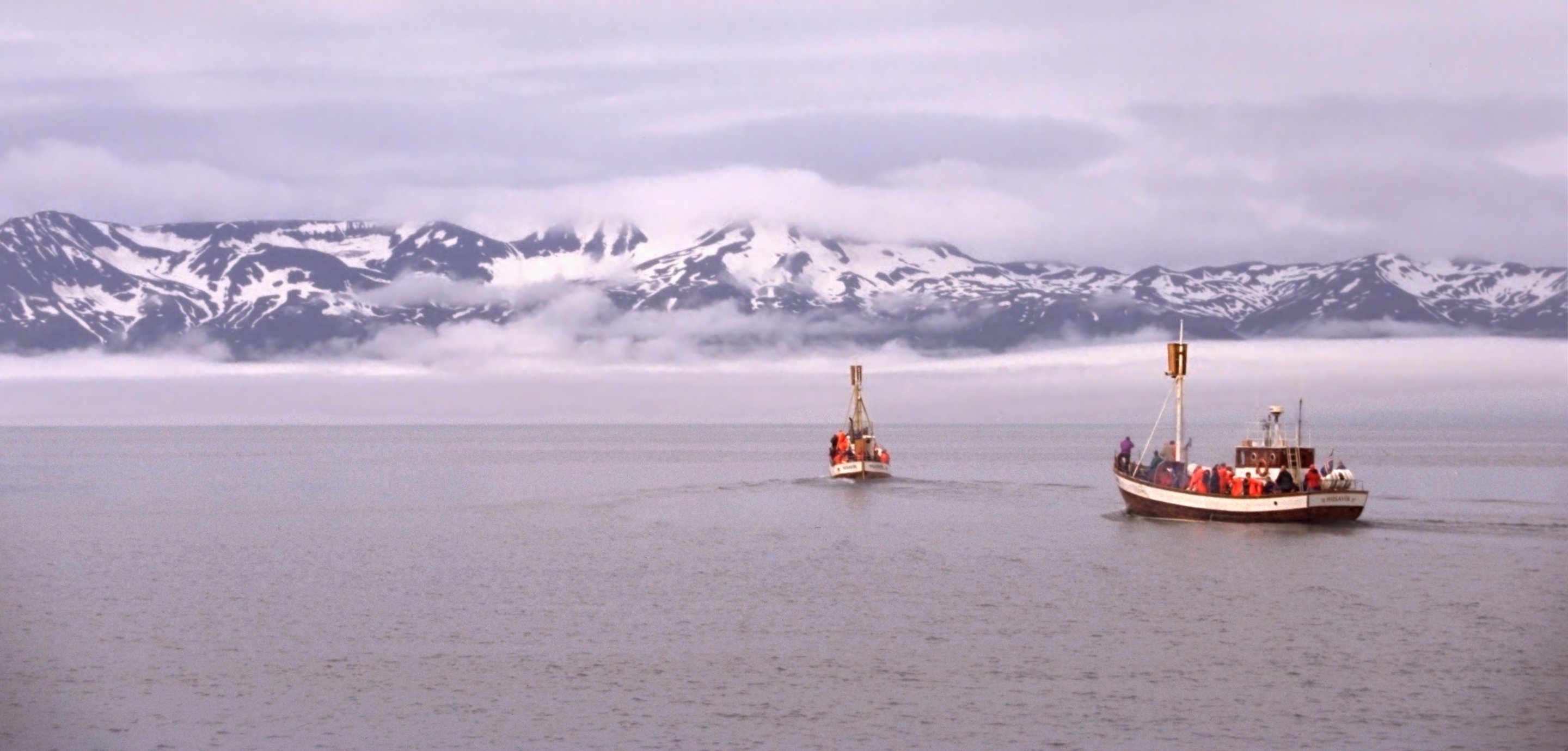
Húsavík (population 2,200) is the town that did whale watching in Iceland before Reykjavik made it mainstream — the first commercial whale-watching tour in Iceland departed from Húsavík in 1995, and the town has been refining the operation ever since. The success rate (97% based on data collected from every tour since 1995) reflects the nutrient-rich Skjálfandi Bay, which attracts humpback whales from April through October and occasionally blue whales from June through August. The tours run from 3-hour traditional oak boat excursions to faster RIB speedboat tours.
The town sits on the north coast at 66°N, and the bay opens northward toward the Arctic Ocean — the horizon from the harbour has a specific northern quality, open and huge, that the south coast lacks. The whale watching here is not manufactured: the boats go to where the whales are, and the humpbacks breach, feed, and flukes-up dive in proximity to the vessels without being attracted by feeding or sound. A 97% success rate over 30 years of operations is a genuine ecological statement about Skjálfandi Bay's productivity.
Beyond whales, Húsavík has built a second major attraction in the GeoSea geothermal sea baths — a recently opened (2018) facility on the cliff above the harbour, where seawater is mixed with geothermal water to create pools at 38–42°C with an unobstructed view of Skjálfandi Bay and, on clear nights, the Northern Lights. Entry costs approximately ISK 7,490 (€52/person in 2026) — expensive but the setting is extraordinary.
The town is also the base for the Diamond Circle — North Iceland's scenic driving circuit encompassing Goðafoss waterfall (20 min west), Dettifoss (Europe's most powerful waterfall, 1h 30m east), Ásbyrgi canyon (1h east), Mývatn lake (50 min south), and the geothermal areas of Námaskarð and Hverir. One to two nights in Húsavík suits a Diamond Circle base that also allows a morning whale-watching departure.
The practical bits.
- Best time
-
April – OctoberWhale watching season April–October; peak humpback activity May–August; blue whales most likely June–August; orcas possible in winter following herring. The most diverse whale species mix is July–August. Northern Lights visible from the GeoSea baths October–March.
- How long
-
1 – 2 nights recommendedOne night suits those using Húsavík as a Diamond Circle base: morning whale-watching, afternoon GeoSea baths, following day to Dettifoss or Ásbyrgi. Two nights is comfortable with time for both major whale watch tours and the full Diamond Circle day.
- Budget
-
~$280 / day typicalIceland uses Króna (ISK). Whale-watching tours ISK 11,900–16,900 (€80–115). GeoSea baths ISK 7,490 (€52). Accommodation in Húsavík: guesthouses from ISK 22,000/night. Self-catering is limited — the town has a small supermarket.
- Getting around
-
Car required for Diamond Circle · Whale watch departs from harbourHúsavík is not on a bus route from Reykjavik with convenient frequency. A rental car from Akureyri (1h south) or Reykjavik is the practical way to visit. The Diamond Circle requires a car. Whale watching tours depart from the Húsavík harbour — all operators collect walk-in bookings and many have same-day availability outside July.
- Currency
-
Icelandic Króna (ISK). Cards universally accepted; Iceland is nearly cashless.Contactless standard everywhere.
- Language
- Icelandic. English universally spoken.
- Visa
- Schengen zone. 90-day visa-free for US, UK, Canadian, and Australian passports. ETIAS required from late 2026.
- Safety
- Sea safety on whale-watching boats: follow crew instructions, waterproof gear provided. GeoSea baths: water is 38–42°C; don't overheat in summer. Diamond Circle driving: single-track roads in places, check weather and road conditions at road.is.
- Plug
- Type C / F · 230V
- Timezone
- GMT · UTC+0 year-round
A few specific picks.
Hand-picked, not algorithmic. Each of these has earned its space.
3-hour tours on traditional oak boats or faster RIB speedboats departing April–October. 97% success rate. Humpback whales are the most common species; blue whales possible June–August (the largest animal ever to have lived on Earth). Minke whales, dolphins, and porpoises also common. Tours ISK 11,900–16,900.
Seawater mixed with geothermal water in cliff-top pools at 38–42°C, looking directly over Skjálfandi Bay. Open year-round; Northern Lights visible from the pools October–March. Entry ISK 7,490 (€52) in 2026. Book ahead in summer.
One of the world's best whale biology museums — full-size skeletons of multiple species including a blue whale skeleton, interactive exhibitions on whale biology and conservation, and the history of whale watching in Húsavík. Entry approximately ISK 2,500. Allow 1–2 hours.
The 'Waterfall of the Gods' — a 12m high, 30m wide horseshoe falls on the Skjálfandafljót river. Accessible from both banks. Named for the event in 1000 AD when Iceland's lawspeaker threw his Norse idols into the falls after adopting Christianity. 30 minutes from Húsavík on the Ring Road.
Europe's most powerful waterfall — 500 cubic metres per second over a 44m drop, 100m wide. The visual scale is extraordinary: grey glacial water pounding into a grey basalt canyon with mist rising 100m. Accessible from both east and west rims by car.
A horseshoe-shaped canyon 3.5km long and 100m deep, according to Norse mythology created by Odin's horse Sleipnir stepping on earth. A forested floor with a lake, hiking trails, and extraordinary geology. The canyon walls look improbable — almost artificially vertical.
A volcanic lake system with pseudocraters, lava formations (Dimmuborgir), fumaroles, and the Mývatn Nature Baths (a Blue Lagoon equivalent at 1/3 the price). The midges (mý) give the lake its name and can be extreme in summer; a head net is practical June–July.
A peninsula north of Húsavík with fossil-bearing Pliocene cliffs — the only place in Iceland where marine fossils from 3–4 million years ago are accessible on foot. A remarkable and completely uncrowded geological site.
Pick a neighborhood, not a hotel.
Húsavík is a city of neighborhoods. The one you stay in shapes the trip more than the property does.
Different trips for different travelers.
Same city, very different stays. Pick the lens that matches your trip.
Húsavík for whale watching enthusiasts
Húsavík is the best whale-watching location in Iceland and one of the best in the North Atlantic. The 97% success rate and the possibility of blue whale sightings (June–August) make it the dedicated whale-watcher's destination.
Húsavík for geothermal bath seekers
The GeoSea baths — cliff-top sea pools at 38–42°C with a direct Skjálfandi Bay view — are among the most scenically positioned geothermal facilities in Iceland.
Húsavík for north iceland road-trippers
Húsavík is the natural base for the Diamond Circle — the North Iceland scenic driving route covering Goðafoss, Dettifoss, Ásbyrgi, and Mývatn in a single day.
Húsavík for wildlife and nature travelers
Humpbacks, minkes, blue whales, puffins (boat tours available), Arctic tern colonies, and the Tjörnes fossil cliffs make Húsavík one of Iceland's best wildlife bases.
Húsavík for northern lights seekers
The GeoSea baths are one of Iceland's most dramatic aurora viewing locations — soaking in 40°C water watching Northern Lights over the open bay October–March.
When to go to Húsavík.
A quick year at a glance. Great, good, or skip — see what each month is doing before you book.
No whale watching season. GeoSea open — excellent Northern Lights viewing from the baths.
GeoSea in Northern Lights season. No whale tours.
GeoSea aurora season ending. First whale tours possible in late March.
Whale watching season starts. Humpbacks arriving. Good shoulder pricing.
Excellent: whale activity increasing, uncrowded, good pricing. Puffin tours beginning.
Blue whales most likely. 24-hour daylight approaching. GeoSea in long summer light.
Most active whale month. Most crowded. Book whale tours 2–3 days ahead.
Still excellent whale watching. Blue whale window closing mid-month. Puffin season ending.
Whale watching continues. First Northern Lights from GeoSea. Thin crowds.
Whale watching season ending late October. GeoSea Northern Lights excellent.
No whale tours. GeoSea open — Northern Lights season proper.
GeoSea aurora viewing. No whale tours.
Day trips from Húsavík.
When you want a change of pace. Each one's a half-day or full-day out, easy from Húsavík.
Goðafoss
30 min from HúsavíkThe Waterfall of the Gods — 30m wide, 12m high, accessible from both banks. Named for the Norse god-idol-throwing event of 1000 AD. 30 minutes west on the Ring Road. A required stop.
Dettifoss
1h 30m from Húsavík500 m³/s over a 44m drop in a grey basalt canyon. The mist rises 100m. Both east and west rim roads accessible most of summer. The most physically overwhelming waterfall in Europe.
Ásbyrgi Canyon
1h from HúsavíkA 3.5km horseshoe canyon 100m deep with a forested lake floor. Almost vertical walls that look impossible in Iceland's treeless landscape. Easy 1h hiking circuit on the canyon floor.
Mývatn Area
50 min from HúsavíkA full half-day destination: pseudocraters, Dimmuborgir lava maze, Námaskarð boiling mud and fumaroles, and the Mývatn Nature Baths (geothermal lagoon, ISK 4,000 entry).
Húsavík vs elsewhere.
Quick honest reads on the cities people compare Húsavík to.
Reykjavik whale watching operates in Faxaflói Bay with lower success rates (70–80%) and primarily minke whales. Húsavík offers 97% success, humpbacks as the standard species, and blue whale possibility. Húsavík is significantly better for whale watching; Reykjavik is more convenient.
Pick Húsavík if: You are making a specific whale-watching pilgrimage and want the best possible success rate with humpbacks and blue whales.
Akureyri is North Iceland's capital city — 1h south of Húsavík, with better accommodation range, more restaurants, and the Akureyrarkirkja church. Húsavík has the whales and GeoSea. Many travelers base in Akureyri for city infrastructure and day-trip to Húsavík.
Pick Húsavík if: You want to be directly beside the whale-watching harbour and the GeoSea baths rather than commuting 1h each way from Akureyri.
The Westfjords is more remote, with Dynjandi and Látrabjarg as highlights; Húsavík is on the Ring Road circuit with better transport access. They serve different parts of Iceland and are best on separate trips.
Pick Húsavík if: You want the Diamond Circle and whale watching with Ring Road accessibility over the remote, self-sufficient Westfjords experience.
Itineraries you can start from.
Rough shapes for a trip here — a feel for the pace and cost. Find the one that fits you.
Arrive midday. Whale watching tour (3h, afternoon). Return to town. Dinner at Gamli Baukur harbour restaurant. Evening GeoSea baths (sunset over the bay). Depart next morning.
Day one: Whale watching morning, GeoSea evening. Day two: Drive Diamond Circle — Goðafoss, Dettifoss, Ásbyrgi, Mývatn lake and geothermal fields. Return Húsavík evening.
Day one: Whale watching, Whale Museum, harbour walk. Day two: East Diamond Circle (Dettifoss, Ásbyrgi). Day three: West Diamond Circle (Goðafoss, Mývatn, Námaskarð fumaroles). GeoSea each evening.
Things people ask about Húsavík.
Is whale watching in Húsavík worth it?
Yes — the 97% success rate over 30 years is a genuine ecological fact about Skjálfandi Bay's productivity. Humpback whales (the most acrobatic: breach, tail slap, flukes-up dive) are the most common species from April–October. Blue whales possible June–August. The traditional oak boats are slow and weather-dependent; RIB speedboats are faster and more stable in chop.
What whales can I see in Húsavík?
Humpback whales are the most frequently sighted (April–October, very active and acrobatic). Minke whales are common. Blue whales — the largest animal ever to have lived — appear in Skjálfandi Bay June–August and Húsavík has more consistent blue whale sightings than anywhere else in Iceland. Orcas sometimes follow herring shoals in winter.
What is the GeoSea?
Geothermal sea baths on the cliff above Húsavík harbour — seawater mixed with geothermal water in pools at 38–42°C, with an unobstructed view of Skjálfandi Bay. The setting (open water horizon, North Iceland light, Northern Lights in winter) is extraordinary. Entry ISK 7,490 (approximately €52 / $60 in 2026). Book ahead for summer evenings.
What is the Diamond Circle?
North Iceland's scenic driving circuit — approximately 250km from Húsavík, covering Goðafoss waterfall (30 min), Dettifoss (Europe's most powerful waterfall, 1h 30m), Ásbyrgi horseshoe canyon (1h), Mývatn lake and geothermal area (50 min south). A full day from Húsavík as a base.
How do I get to Húsavík?
By car from Akureyri (1h south on the Ring Road) or from Reykjavik (5h via Akureyri). Eagle Air operates domestic flights from Reykjavik domestic airport to Húsavík (35 minutes) seasonally. No practical bus connection from Reykjavik. A rental car from Akureyri is the most flexible option.
What is the best whale watching tour in Húsavík?
North Sailing (traditional oak boats, established 1995 — the original), Gentle Giants (larger vessel, good service), and Salka Whale Watching are the main operators. North Sailing's electric-solar hybrid oak boat is the most atmospheric option. All have similar success rates. RIB speedboats from North Sailing cover more area and see whales faster; traditional boats are more comfortable.
Is Húsavík worth staying overnight?
Yes — arriving the evening before allows an early-morning whale-watching departure (humpbacks are most active early), the GeoSea baths in the long evening light, and a morning before driving the Diamond Circle. Two nights is the right base for the full North Iceland experience.
What is Dettifoss and how do I get there from Húsavík?
Dettifoss is Europe's most powerful waterfall — 500 cubic metres per second over a 44m, 100m-wide drop. 1h 30m from Húsavík on Route 862 (east rim, partially gravel) or Route 864 (west rim, similar). The east rim gives a closer view; the west rim gives the full width panorama. Accessible to most cars in good summer conditions.
Know someone headed to Húsavík?
Send them this guide — real neighborhoods, timing, and prices, with nothing to sign up for.
Copies the link — nothing to install