Gstaad
Send it to whoever you'd travel with
Gstaad is a discreet Bernese Oberland chalet village where old-money Europe skis, hikes, and lingers on a car-free pinewood promenade.
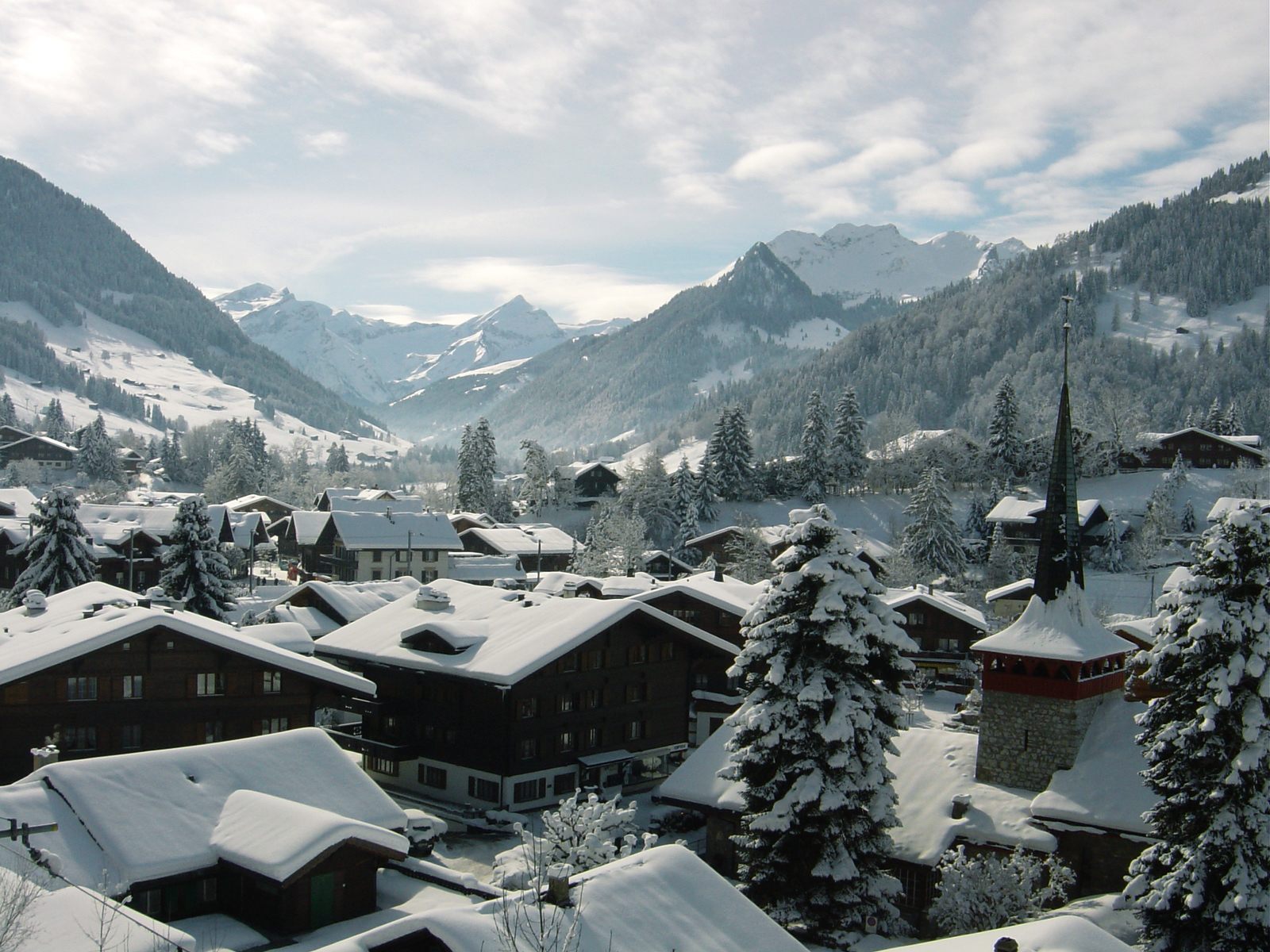
Gstaad does the Swiss Alps very differently than its rivals. There are no glassy modernist towers, no thumping après bars on the main drag, no Matterhorn selfie queue. Instead there's a pedestrianised wooden promenade lined with 18th-century chalets, a handful of family-run hotels that have hosted the same European families for four generations, and a regional rule that no building can rise above three storeys. The effect is a village that feels conspicuously unconspicuous — which is, of course, exactly why the money keeps coming back.
The region is technically ten villages, not one. Gstaad itself sits at 1,050m on a sunny shelf in the Saanenland, with Saanen, Schönried, Saanenmöser, Lauenen, Gsteig, Feutersoey, Turbach, Zweisimmen and French-speaking Rougemont fanning out along the valley floor. Locals call the whole thing 'Destination Gstaad,' but for a visitor that just means you can base yourself in the centre and still ride lifts, hike trails or eat fondue across an area roughly the size of greater Zurich.
Winter is the headline act. You get around 220 km of pisted slopes split across multiple sectors — Eggli, Wispile, Wasserngrat, Saanersloch, Rinderberg — none of them especially gnarly, all of them photogenic, most of them well-suited to intermediates and families. The serious skiing is up at Glacier 3000 outside Les Diablerets, where the Peak Walk suspension bridge swings between two summits and runs stay open into May. The crowd skews older, the lift queues are short, and lunch on a sun terrace tends to take ninety minutes whether you planned it that way or not.
Summer is the quiet revelation. The Saanenland opens up into 300+ km of waymarked hiking paths, the Lauenensee turns the colour of mouthwash, and the calendar fills with serious events — the Menuhin Festival for classical music, the Swiss Open for tennis on clay, the Hublot Polo Gold Cup. Prices drop by roughly a third versus high winter, the chalet villages empty out at dusk, and the most extravagant thing you can do is order a Käsegrotte fondue backpack from the Gstaad dairy and walk it into a meadow.
The practical bits.
- Best time
-
Dec – Mar (ski) or Jun – Sep (hike)Two completely different trips depending on season; shoulder weeks in April and November are mostly closed.
- How long
-
5 – 7 nights recommendedThree nights is enough for a ski long-weekend; a week lets you ride the GoldenPass and explore the outlying villages.
- Budget
-
$480 / day typicalHotel choice swings the entire trip. A Saanen B&B vs the Alpina vs a private chalet are three different planets.
- Getting around
-
Walk the village; ride the MOB regional train and PostBuses for everything else.The Gstaad-Saanen valley is stitched together by the narrow-gauge MOB line and a free PostBus network included with most hotel guest cards. The village centre itself is car-free, and almost every lift base is reachable on foot or in 10 minutes by bus. A rental car is only useful if you want to drive over the Col du Pillon to Glacier 3000.
- Currency
-
CHF (Swiss Franc)Cards are universal, contactless everywhere, including most mountain huts. Carry a little cash for tipping ski instructors and small bakeries in the outer villages.
- Language
- Swiss German (Bernese dialect) is local; French is spoken in Rougemont and the wider Romandy region. English fluency in hotels and on the Promenade is excellent.
- Visa
- Schengen rules apply: most US, UK, Canadian and Australian visitors enter visa-free for up to 90 days; ETIAS pre-authorisation is now required for visa-exempt nationalities.
- Safety
- One of the safest destinations in Europe — petty crime is rare and the mountain rescue infrastructure is world-class. The real risks are alpine: weather changes fast above 2,000m and off-piste skiing without a guide is unwise.
- Plug
- Type J, 230V
- Timezone
- GMT+1 (GMT+2 in summer)
A few specific picks.
Hand-picked, not algorithmic. Each of these has earned its space.
The pedestrianised chalet-lined main street — a tiny stretch where Hermès, the village butcher and a 300-year-old hotel share an awning line.
Cable car to 3,000m and the world's only summit-to-summit suspension bridge — views stretch from the Matterhorn to Mont Blanc on clear days.
A glacial lake at the end of a quiet valley with an easy loop trail, picnic spots and a wooden Berghaus serving Älplermagronen.
Oldest inn in the village and the closest thing Gstaad has to an institution — dark wood, candlelight and a rösti that hasn't changed since the 1970s.
Le Grand Bellevue's headline restaurant — maximalist room, ambitious tasting menu, and the best fine-dining argument in the village.
The village dairy hires out a backpack containing burner, pot and cheese — walk it to a meadow and cook your own fondue with a view.
Gondola up, easy ridge walk along grassy ledges with cowbells and the full Saanenland spread out below.
Three km from Gstaad and a century quieter — 18th-century painted chalets, the 15th-century St-Mauritius church and a tiny but vivid Saturday market.
Doug Aitken's mirrored chalet sits in an alpine meadow at Videmanette — it's seasonal and worth chasing while it's up.
Bellevue's intimate Swiss room — fondue, raclette and röstis in a deliberately old-fashioned setting; book ahead in winter.
Twice-daily 1930s-style train down to Montreux through farms and vineyards — the most scenic two hours in the country.
Even non-guests can book treatments; the 2,000sqm spa terraces look directly across the valley to Eggli.
Pick a neighborhood, not a hotel.
Gstaad is a city of neighborhoods. The one you stay in shapes the trip more than the property does.
Different trips for different travelers.
Same city, very different stays. Pick the lens that matches your trip.
Gstaad for honeymooners
Quiet, ridiculously pretty and built around long meals — the chalet-style suites at the Alpina or Le Grand Bellevue are essentially private hideouts.
Gstaad for intermediate skiers
Gstaad's lower-altitude terrain is forgiving, sun-drenched and uncrowded — the right resort for skiers who want long days without queues or fear.
Gstaad for hikers
Over 300km of waymarked trails, multiple lifts running into autumn, and easy connections to higher routes via Glacier 3000.
Gstaad for families
Small village, manageable lift queues, gentle pistes, sledding hills, dairy visits and ice rinks — and the trains are a hit on their own.
Gstaad for wellness travellers
Three of the strongest hotel spas in Switzerland (Alpina, Four Seasons, Le Grand Bellevue) and a quiet enough village to actually use them.
Gstaad for festival-goers
Menuhin Festival classical music in summer, the Swiss Open ATP clay-court tennis in July and the Hublot Polo Gold Cup in August make for distinct trip themes.
When to go to Gstaad.
A quick year at a glance. Great, good, or skip — see what each month is doing before you book.
Peak ski season — book early, especially around the New Year window.
Best snow conditions of the year; European school holidays bring crowds mid-month.
Soft snow, sunny terraces and the lowest hotel rates of the winter — a sweet spot for intermediate skiers.
Skip unless you're targeting Glacier 3000 specifically — the village largely shuts down.
Most lifts and many restaurants remain closed through late May; trails open progressively.
The mountains reopen; trails are clear from late June and the festival calendar starts.
Swiss Open ATP tennis and the Menuhin Festival run — busy by Gstaad standards.
Polo Gold Cup, full lift access and long evenings — the strongest summer month.
Best hiking conditions of the year, thinner crowds, manageable hotel rates.
Trails stay open until mid-month; some hotels close late October for maintenance — check ahead.
Most lifts and many hotels closed; lifts spin up only in late November or early December.
Lifts open mid-month; Christmas and New Year is the social high point of the year and prices peak.
Day trips from Gstaad.
When you want a change of pace. Each one's a half-day or full-day out, easy from Gstaad.
Montreux
1h 40 by GoldenPass trainDescend from snow to palm trees in under two hours on the Belle Époque train.
Glacier 3000 (Les Diablerets)
45 min by car or bus + cable carGoes from valley floor to 3,000m in under two hours, year-round.
Gruyères
1h 15 by train (via Montbovon)Pair the dairy tour with a cheese lunch and a wander through the walled village.
Bern
1h 30 by train (via Spiez)An easy half-day if you base in Gstaad for a full week.
Lauenensee
20 min by bus from GstaadA summer-only outing — the road is closed in deep winter.
Rougemont
10 min by trainCrosses the Saane language line — useful to see how quickly things shift in Switzerland.
Gstaad vs elsewhere.
Quick honest reads on the cities people compare Gstaad to.
Zermatt is higher, snowier and dominated by the Matterhorn; Gstaad is lower, prettier as a village and significantly easier to reach from Geneva.
Pick Gstaad if: Pick Gstaad for atmosphere and ease; pick Zermatt if the skiing itself is the priority.
St Moritz is sunnier, glossier and built around a lake-and-spa scene; Gstaad is smaller, more discreet and woodsier.
Pick Gstaad if: Choose Gstaad if you find St Moritz a bit loud — and St Moritz if you find Gstaad a bit sleepy.
Verbier is the more serious skiing destination with a livelier nightlife scene; Gstaad is the slower, more architectural village.
Pick Gstaad if: Verbier for the slopes and the bar; Gstaad for the chalets and the spa.
Interlaken is a transport hub for the Jungfrau region and far more touristed; Gstaad is a destination in itself and considerably quieter.
Pick Gstaad if: Pick Interlaken to base for Jungfrau-region sightseeing; pick Gstaad if the village itself is the point.
Lucerne is a lakeside city with easy alpine excursions; Gstaad is the alpine village itself, with no lake and no urban scale.
Pick Gstaad if: Choose Lucerne if you want city-plus-mountain; choose Gstaad if you only want mountain.
Itineraries you can start from.
Rough shapes for a trip here — a feel for the pace and cost. Find the one that fits you.
Four nights in central Gstaad with two full ski days on Eggli and Wispile, a half-day at Glacier 3000 and dinner on the Promenade.
Six nights in Saanen, day hikes from Wispile to Eggli and around Lauenensee, plus a GoldenPass round-trip to Montreux.
A week split between Gstaad and Schönried — mornings on the trails, afternoons in the Alpina spa, evenings learning the difference between a moitié-moitié and a Vacherin fondue.
Things people ask about Gstaad.
Is Gstaad worth visiting?
Yes — particularly if you're after the quieter, more discreet end of Swiss luxury rather than the postcard intensity of Zermatt or the see-and-be-seen glamour of St Moritz. Gstaad's strength is its scale: a walkable car-free village wrapped in ten chalet hamlets, with skiing or hiking right out the door. It's not a budget destination, but it's one of the few alpine resorts that still feels lived in.
How many days do you need in Gstaad?
Plan for four to seven nights. Three is enough for a ski long weekend or a single big hike-and-spa rhythm, but you'll feel rushed. Five nights lets you ski two or three different sectors, ride the GoldenPass to Montreux for a day, and still have time for Glacier 3000. A full week is the right answer if you've rented a chalet or want to fold in a festival.
When is the best time to visit Gstaad?
Two clear windows. Mid-December through early March delivers reliable snow and the full winter scene; late June through mid-September brings open lifts, dry trails and the festival calendar. April, May and November are essentially closed — many hotels, lifts and restaurants shutter for maintenance and staff holidays. October can be glorious but check what's still operating.
Is Gstaad expensive?
Yes, comfortably among the most expensive resorts in the Alps. A mid-range day works out around CHF 400–500 once you account for hotel, lift pass, lunch on the mountain and dinner. Fine dining at a flagship restaurant can pass CHF 600 a head with wine. You can soften the cost by basing yourself in Saanen or Schönried, eating bakery lunches, and visiting in summer when rates drop roughly 30%.
What is Gstaad known for?
Discreet old-money luxury, intact chalet architecture and a car-free village promenade. Beyond that: a long ski tradition (since the 1900s), the Menuhin classical music festival, the Swiss Open ATP tennis tournament, the Hublot Polo Gold Cup, Glacier 3000 with its summit-to-summit suspension bridge, and a celebrity-discreet hotel scene anchored by the Four Seasons (formerly The Park), Le Grand Bellevue and The Alpina.
How do you get to Gstaad from Geneva Airport?
Take a direct interregional train from Geneva Airport to Montreux (about 1 hour 10), then board the MOB GoldenPass Express or Panoramic line through the mountains to Gstaad (about 1 hour 40). Total journey is roughly two hours forty minutes with one change. Driving is faster at around two hours via the A12 and Col des Mosses. A taxi transfer typically costs CHF 600–800.
Is Gstaad good for non-skiers?
Very. The village is built for walking and lingering, and the lift network keeps several gondolas running in winter for sightseers, sledders and lunchers heading to mountain restaurants. Cross-country trails, ice rinks, curling, snowshoeing, indoor pools and the spas at the Alpina, the Four Seasons and Le Grand Bellevue can fill a week without ever clipping into a ski boot.
What are the best day trips from Gstaad?
Glacier 3000 over the Col du Pillon for the Peak Walk and year-round snow; Montreux on Lake Geneva via the MOB GoldenPass for the lakefront and Chillon Castle; Lauenensee for an easy alpine lake hike; Gruyères for the cheese caves and medieval old town; and Bern, the federal capital, about ninety minutes away by train.
Where should you stay in Gstaad?
Gstaad village if you want to walk to the Promenade, the lifts and dinner — the Four Seasons (formerly The Park), The Alpina, Le Grand Bellevue and Hotel Olden are the headline addresses. Saanen and Schönried are quieter, more authentic and cheaper. Lauenen and Gsteig suit travellers who want real silence and don't mind a short drive to the action.
Gstaad or Zermatt — which is better?
Zermatt for serious skiing and the Matterhorn view; Gstaad for atmosphere, walkability and a quieter scene. Zermatt has higher terrain (skiing year-round), more vertical and more obvious bucket-list appeal. Gstaad has the better village fabric, easier transit access from Geneva, lower-altitude (and gentler) slopes and a stronger summer programme. Honeymooners and intermediate skiers lean Gstaad; first-timers and big-mountain skiers lean Zermatt.
Gstaad or St Moritz — which should I pick?
St Moritz if you want glamour, gala dinners and Engadine sunshine; Gstaad if you want discretion, chalet character and easier access. St Moritz has more skiing, more sun, bigger hotels and a louder scene; Gstaad is smaller, lower, greener and significantly less ostentatious. They attract overlapping but different crowds — St Moritz looks at itself in the mirror; Gstaad pretends there isn't one.
Is Gstaad safe for solo travellers?
Exceptionally safe. Switzerland consistently ranks among the world's lowest-crime countries, the village is tiny, well-lit and walkable, and public transport is punctual into the evening. The genuine risks are alpine: changing weather above 2,000m, slick winter pavements, and off-piste skiing without a guide. Hotel concierges can arrange certified mountain guides and ski instructors for solo travellers.
What language do they speak in Gstaad?
German is the official language, and locals speak the soft Bernese dialect ('Bärndütsch') with each other. French takes over in nearby Rougemont, only a short train ride away. English is fluent in every hotel, restaurant on the Promenade and lift office — staff are accustomed to international guests and you won't need German to navigate the village.
Can you visit Gstaad without a car?
Easily. The MOB regional train links every village in the Saanenland, PostBuses cover the side valleys, and most hotels issue a free guest card that includes local transport. The village centre is car-free anyway. The only itinerary that benefits from a car is the drive over the Col du Pillon to Glacier 3000, and even that runs on a regular bus connection from Gsteig.
What should I pack for Gstaad in winter?
Layered ski gear if you're skiing, waterproof boots for the village (sidewalks get slushy), and at least one slightly dressy outfit for dinner — Gstaad's headline restaurants and hotel bars lean smart-casual at minimum, and a few enforce jackets after 7pm. Sunglasses are essential year-round at altitude. Sunscreen too — the glacier light is brutal.
Is there nightlife in Gstaad?
Mild by alpine standards. The scene is hotel-bar centric — the Green Go at the Four Seasons, the Bellevue's bar, and Olden's bar are the long-running anchors. There are no big clubs and no thumping après pyramids. Most nights end with a long dinner and a digestif, which is exactly how the regulars like it. The energy lifts during festival weeks and the Christmas-New Year window.
Know someone headed to Gstaad?
Send them this guide — real neighborhoods, timing, and prices, with nothing to sign up for.
Copies the link — nothing to install