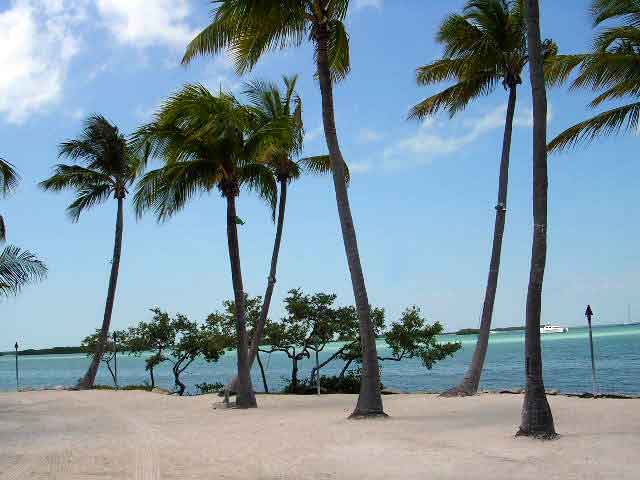
Florida Keys
Send it to whoever you'd travel with
The Florida Keys are best understood as a 113-mile road trip through a string of low-lying islands — each with its own character, its own dive site, its own bar built on a dock — connected by one of America's most scenic drives.
The Florida Keys don't behave like a normal destination. There's no single city, no central downtown, no one landmark to stand in front of. Instead, US Route 1 — branded here as the Overseas Highway — runs 113 miles from Key Largo at the top of the chain to Key West at the bottom, threading through 42 bridges over turquoise water with something worth stopping for every 15 minutes. Most travelers rush to Key West and miss the middle. That's the classic mistake.
Key Largo sets the tone immediately: it's where John Pennekamp Coral Reef State Park offers the most accessible Atlantic reef diving in the continental United States. The coral here isn't what it was in 1970, but it's still a living reef with barracuda, moray eels, sea turtles, and the famous Christ of the Abyss submerged statue. Islamorada (loosely encompassing a cluster of islands around Mile Marker 80) has the best sportfishing culture in the Keys — tarpon, bonefish, and permit on the flats are the draw for a certain kind of very dedicated angler.
Marathon, near the chain's midpoint, is where the Florida Keys Overseas Heritage Trail is most rideable, and where the Turtle Hospital offers rehabilitation tours that pull families in reliably. The Seven Mile Bridge heading south from Marathon is the photographic centerpiece of the whole drive — a straight line over open water with nothing on the horizon but sky and sea. Big Pine Key, quiet and residential, is home to the Key deer: a miniature subspecies found nowhere else on earth, frequently spotted at dusk near the road.
Key West gets the most visitors and deserves some of them. The Conch Republic's identity as an independent, eccentric frontier outpost is partly theater and partly genuine — the Hemingway House, the sunset ceremony at Mallory Square, the architecture of Old Town's wooden shotgun houses, and the unbroken tradition of Duval Street bar crawls are all real. But Key West is also expensive, crowded in season, and can feel like a manufactured version of itself on a Saturday night. The travelers who like the Keys best are often those who make Key West the final night rather than the whole point.
The practical bits.
- Best time
-
November – AprilDry season brings temperatures in the 70s–80s°F, low humidity, calm seas for diving and snorkeling, and the best fishing windows. May and October are good shoulder months. Summer is hot and humid with hurricane risk; August–September are the least advisable months.
- How long
-
5 nights recommendedThree nights focused on Key West works as a standalone trip. Five nights drives the whole Overseas Highway properly with stops at Pennekamp, Islamorada, Marathon, and Key West. Ten nights works if you're seriously diving or fishing.
- Budget
-
$310 / day typicalThe Keys are expensive by US beach standards. Key West hotels in high season average $250–450/night. Key Largo and Marathon run cheaper. Food ranges from $8 fish tacos at a roadside stand to $90/person dinners in Key West. Dive gear rentals add $50–100/day.
- Getting around
-
Rental car essentialThe Overseas Highway (US-1) is the spine of the Keys and a car is non-negotiable for doing the chain properly. Key West itself is bike and scooter-friendly — rent wheels on arrival and park the car. No public transit connects the Keys meaningfully. Miami to Key Largo is about 1 hour; Key Largo to Key West is 2.5 hours more.
- Currency
-
US Dollar (USD)Cards everywhere. Cash useful at some seafood shacks, fish markets, and small dockside bars.
- Language
- English. Spanish spoken widely especially in Key West.
- Visa
- No visa required for US citizens. International travelers follow standard US ESTA/visa entry requirements.
- Safety
- Generally safe. Hurricane preparedness essential June–November. Rip currents at some ocean-side beaches; Atlantic side swims require awareness. Key West's Duval Street has the usual bar-district late-night dynamic.
- Plug
- Type A / B · 120V
- Timezone
- EST · UTC-5 (EDT UTC-4 mid-March – early November)
A few specific picks.
Hand-picked, not algorithmic. Each of these has earned its space.
The first underwater state park in the US — glass-bottom boat tours, snorkel trips, and scuba diving over living Atlantic reef. Book tours in advance during high season. The Christ of the Abyss statue at 25 feet is the most requested dive in the state.
The structural and visual centerpiece of the Overseas Highway — 6.8 miles of straight road over open ocean. The old abandoned bridge running parallel is now a walking and cycling trail with some of the Keys' best fishing.
The daily sunset celebration at the Key West dock is part street performance, part community ritual, part tourist spectacle. Go once — it earned its reputation. Arrive 45 minutes before sunset for a good position.
The self-proclaimed 'Sport Fishing Capital of the World' earns it: tarpon, bonefish, permit, and dolphinfish are all targeted here. Half-day reef trips run around $100/person; full-day backcountry flats charters run $600–900 for a private boat.
Arguably the finest beach in the Keys — clear water, white sand, and the remains of Flagler's original railroad bridge overhead. Snorkel rental, kayak rentals, and camping all available. The beach at Sandspur is the best in the chain.
Key deer — a subspecies of Virginia white-tailed deer no larger than a large dog — live only in the lower Keys. Blue Hole at Big Pine is the best sighting spot at dawn or dusk. They're bold and approachable, but feeding them is illegal.
Hemingway's Key West home is now a museum with 50+ six-toed cats wandering the property. The literary pilgrimage value is real; the cats are the actual draw for everyone else.
A 90-mile paved multi-use trail running the length of the Keys, often along the old Flagler railroad bed. Cycling sections near Marathon and Big Pine Key offer the best scenery. Rent bikes in Key West for the city section.
A fish shack on a dock with cold beer and the catch of the day. Represents the best of the Keys roadside seafood tradition — fresh, unpretentious, and priced for locals not tourists. Call ahead; hours are irregular.
Fort Jefferson, Civil War-era fort on a remote island, surrounded by some of the clearest water in the US. Ferry from Key West (2.5 hours each way) or seaplane (45 minutes). The 100-mile round-trip day trip is genuinely worth the effort.
Pick a neighborhood, not a hotel.
Florida Keys is a city of neighborhoods. The one you stay in shapes the trip more than the property does.
Different trips for different travelers.
Same city, very different stays. Pick the lens that matches your trip.
Florida Keys for divers and snorkelers
The Keys chain is the premier dive destination in the continental US. Base in Key Largo (Pennekamp) or Big Pine (Looe Key) for reef quality. Visibility, coral variety, and dive operator infrastructure all exceed what's available anywhere else east of the Mississippi.
Florida Keys for anglers and fishing enthusiasts
Islamorada for flats fishing (bonefish, tarpon, permit on fly) — one of the world's great light-tackle destinations. Key West for offshore trolling. Bridge fishing throughout the chain for accessible, low-cost angling. Hire a guide for the flats; the learning curve is steep without local knowledge.
Florida Keys for road trippers
The Overseas Highway is a legitimate American scenic drive worth doing for its own sake. Rent a convertible in Miami and drive US-1 over four or five days, stopping when something looks interesting. The bridges over open water, the mile-marker logic, and the quirky roadside culture are the point.
Florida Keys for families
Turtle Hospital in Marathon, glass-bottom boats at Pennekamp, Key deer at Big Pine, and Bahia Honda's calm beach are the family anchor points. Avoid Key West for young children on the first night — it's more suited to their older teenage phase.
Florida Keys for couples and honeymooners
Islamorada has the most romantic Keys lodging — waterfront boutique resorts and fishing lodges without Key West's crowds. A private sunset sail, a fishing guide for the day, and a long dinner at one of the island restaurants covers a perfect Keys long weekend.
Florida Keys for budget travelers
Camping at Bahia Honda State Park or Long Key State Park dramatically reduces costs. Roadside fish shacks throughout the chain (fish tacos, conch fritters, fresh catch) are cheap and excellent. The free beaches, bridge-fishing, and Overseas Heritage Trail biking add days of activity at near-zero cost.
Florida Keys for nature and wildlife travelers
Key deer at Big Pine, wading birds along US-1, American crocodiles at Flamingo, roseate spoonbills in the backcountry, and the full reef ecosystem underwater. The Keys have a higher density of threatened and endemic species than anywhere else in Florida.
When to go to Florida Keys.
A quick year at a glance. Great, good, or skip — see what each month is doing before you book.
Peak season in full swing. Best weather for diving and fishing. Hotels at highest rates. Book months ahead.
Optimal month — weather perfect, seas calm, full services operating. Busiest lodging period.
Spring break brings Key West crowds. Islamorada and mid-Keys less affected. Water warming for snorkeling.
Excellent month. Prices dropping after Easter. Water temperature ideal for diving. Lobster mini-season planning.
Shoulder month — good weather, lower prices, fewer crowds. Tarpon migration peaks in May.
Hurricane season begins. Daily thunderstorms common. Water hottest for diving. Some prices drop significantly.
Lobster mini-season last days of July draws crowds. Otherwise hot and storm-prone.
Most hurricane-vulnerable month for the Keys. Several destructive storms have made direct hits. Travel insurance required.
Hurricane season active through mid-October. Fewest visitors, lowest prices, most unpredictable weather.
Excellent late in month. Fantasy Fest in Key West last week of October. Season beginning to restart.
Season opening — full services, comfortable weather, prices below January peaks. One of the best-value months.
Holiday week is peak pricing and full occupancy. Early December before Christmas is an excellent quiet window.
Day trips from Florida Keys.
When you want a change of pace. Each one's a half-day or full-day out, easy from Florida Keys.
Dry Tortugas National Park
2.5 h ferry from Key WestThe ferry (Yankee Freedom III) is the standard access; the seaplane is faster and allows longer island time. The moat around Fort Jefferson is one of the clearest snorkeling spots in Florida. Book months ahead in high season.
Everglades National Park (Flamingo)
1 h from Key LargoThe Flamingo district at the park's southern tip is easily accessible from Key Largo. Kayak the Wilderness Waterway, look for American crocodiles at the marina, and combine with the drive back on US-1 for a full day.
John Pennekamp Coral Reef State Park
At Key Largo — in-chain stopBest treated as a first-day activity rather than a day trip. Book snorkel or dive tours at the park marina on arrival. The 2.5-hour glass-bottom boat tour is appropriate for non-swimmers.
Miami
1 h from Key LargoFrom Key Largo, Miami is about an hour north. Worthington for a Keys traveler wanting a city day — Wynwood, Little Havana, or South Beach as a contrast to the island pace.
Looe Key Reef
Near Big Pine Key (MM 27)Looe Key National Marine Sanctuary is widely considered the finest reef system in the chain — more living coral and higher marine life density than Pennekamp. Dive/snorkel operators from Big Pine Key and Marathon access it easily.
Bahia Honda State Park
In-chain stop at MM 37Reserve camping spots months in advance for a Keys camping experience. Day visitors can park and access Sandspur Beach — the clearest water in the chain and the best shelling away from Sanibel.
Florida Keys vs elsewhere.
Quick honest reads on the cities people compare Florida Keys to.
Key West is one node in the Keys chain — the southernmost, most famous, and most touristic. The full Florida Keys experience covers 113 miles and multiple distinct islands. Travelers who stay only in Key West consistently report missing what made them want to come.
Pick Florida Keys if: You want the full Overseas Highway experience with diving, fishing, beaches, and the Key West end all in one trip.
The Gulf Coast (Naples, Sarasota, Clearwater) has superior sandy beaches and is calmer for casual swimming. The Keys have better snorkeling, diving, and fishing, plus the unique Overseas Highway experience. The Gulf side is easier for beach families; the Keys reward activity-focused travelers.
Pick Florida Keys if: You want diving, snorkeling, fishing, and a road-trip experience rather than traditional beach resort time.
Belize has the Mesoamerican Barrier Reef (second largest in the world) and is dramatically cheaper. The Keys are more accessible from the US East Coast, more developed, and logistically easier. Serious divers typically rate Belize higher for reef quality; the Keys win for convenience.
Pick Florida Keys if: You want the best reef diving within the continental US without international travel logistics.
The Outer Banks of North Carolina is a barrier island road trip with different character — Atlantic waves, wild horses, Cape Hatteras lighthouse, and a more rugged beach culture. The Keys are warmer year-round, better for snorkeling, and more tropical. The Outer Banks is the better surfing destination.
Pick Florida Keys if: You want tropical water, reef access, and year-round warm temperatures rather than Atlantic Coast barrier island character.
Itineraries you can start from.
Rough shapes for a trip here — a feel for the pace and cost. Find the one that fits you.
Fly into Miami or Fort Lauderdale, drive US-1 stopping at Pennekamp snorkel and the Seven Mile Bridge. Two nights Key West — Mallory Square, Hemingway House, Old Town walking, one evening on Duval.
Night 1 Key Largo (Pennekamp diving). Night 2 Islamorada (fishing or reef trip). Night 3 Marathon (Seven Mile Bridge bike, Turtle Hospital). Nights 4–5 Key West. Drive back via US-1 or fly home from Key West.
Two nights Islamorada (bonefishing flats charter). Two nights Key Largo (2 days Pennekamp diving). One night Big Pine (Bahia Honda, Looe Key drift dive). Two nights Key West. Dry Tortugas day trip seaplane optional.
Things people ask about Florida Keys.
What is the best way to see the Florida Keys?
Drive the Overseas Highway (US-1) southbound from Key Largo to Key West, stopping at John Pennekamp for snorkeling, the Islamorada restaurants, Bahia Honda State Park beach, and the Seven Mile Bridge viewpoint. Doing this over 4–5 days with overnight stops in Islamorada or Marathon gives the full experience. Flying straight into Key West and staying there misses most of what makes the Keys distinct.
How long is the drive from Miami to Key West?
About 3.5–4 hours from Miami to Key West without stops on US-1. The drive from Florida City (where US-1 leaves the mainland) to Key West is 106 miles — but the two-lane road, numerous stop lights, and traffic in season mean it never moves quickly. Budget half a day if you plan any stops, which you should.
What is the best part of the Florida Keys to stay?
Depends on your priorities. Key Largo is best for divers and snorkelers (Pennekamp). Islamorada is the best overall base for a Keys-focused trip — good restaurants, less crowded than Key West, excellent fishing. Key West is best if you want nightlife, history, and a proper town. Marathon is the practical midpoint good for families. Most visitors who stay only in Key West express regret at missing the middle Keys.
Is diving in the Florida Keys worth it?
Yes, especially for US-based divers. John Pennekamp in Key Largo offers the most accessible coral reef diving in the continental US — the Christ of the Abyss statue, living coral heads, and consistent marine life. Looe Key (Big Pine) is considered the best natural reef in the chain. Visibility averages 30–60 feet. The reefs have suffered bleaching damage but remain genuinely impressive.
What is the best beach in the Florida Keys?
Bahia Honda State Park (Big Pine Key, MM 37) is the consensus answer — clear water, white-sand beaches, and the backdrop of the old Flagler bridge. Most Keys islands are mangrove shoreline rather than sandy beach; Bahia Honda is the rare exception. Sombrero Beach in Marathon is a solid free alternative. Key West has small man-made beaches at Fort Zachary Taylor State Park.
How much does it cost to visit the Florida Keys?
The Keys are expensive. Mid-range hotels in Key West average $280–400/night in high season; Key Largo and Marathon run $180–280. Food: fish taco roadside stands run $10–15; sit-down dinners in Key West average $60–90 per person. Dive trips add $70–150/day. Budget $250–350/day total for a mid-range experience. Camping at Bahia Honda State Park significantly reduces costs.
When should you avoid the Florida Keys?
August and September are the least advisable — peak hurricane season, highest humidity, and some businesses on reduced schedules. Mid-June through early October carries hurricane risk; September is statistically the most active month. Spring Break (mid-March) brings crowds and price spikes to Key West specifically. Christmas week is the most expensive period in the chain.
Can you see coral reefs without scuba diving in the Florida Keys?
Yes — John Pennekamp offers glass-bottom boat tours that pass directly over living reef and the Christ of the Abyss statue, and snorkel trips in 3–15 feet of water where most of the visible reef life concentrates. Bahia Honda and Looe Key offer good snorkeling from the surface. You don't need a dive certification to see the best of the Keys reef system.
What is the Overseas Highway?
US Route 1 through the Florida Keys — 113 miles from Florida City on the mainland to Key West, built in part along the roadbed of Henry Flagler's Florida East Coast Railway (completed 1912, destroyed by the 1935 Labor Day hurricane). It crosses 42 bridges, including the famous Seven Mile Bridge. The drive itself is considered one of America's great scenic routes.
How do you get to Dry Tortugas from the Florida Keys?
From Key West: the Yankee Freedom III ferry runs daily (2.5 hours each way, roughly $220 round trip). Seaplane transfers (45 minutes each way, $350+ per person) allow more time on the island. The ferry is the budget-friendly option; the seaplane allows you to arrive early and see the island before the day-trip crowds. Overnight camping is possible but limited.
Are the Florida Keys good for families?
Yes, with the right planning. The Turtle Hospital in Marathon is a genuine hit with kids — injured sea turtles in active rehabilitation. Pennekamp's glass-bottom boats are appropriate for non-swimming children. Bahia Honda's calm, clear beach is ideal for young kids. Key West Old Town is walkable and interesting. Keep in mind summer heat and the absence of wave pools or major theme parks.
What is Key West like beyond Duval Street?
The Old Town wooden architecture, the Hemingway House, Fort Zachary Taylor (excellent beach and Civil War fort), the Key West Butterfly Conservatory, and the historic Southernmost Point marker are the main non-Duval draws. Mallory Square's sunset tradition is genuine community ritual. The Truman Little White House and Audubon House fill a culture morning. Key West is more rewarding when you spend time off the main bar strip.
What are Key deer and where do you see them?
Key deer are a miniature subspecies of Virginia white-tailed deer, standing about 28 inches at the shoulder, found only in the lower Florida Keys — primarily Big Pine Key and No Name Key. They're listed as threatened. The Blue Hole on Big Pine Key (a freshwater quarry pond) is the best sighting spot, especially at dawn and dusk. The deer are habituated to humans but feeding them is illegal and harmful.
Can I do the Florida Keys without a car?
Key West is doable without a car — it's walkable and bikeable, and the airport receives direct flights. But experiencing the Keys chain properly requires a car or rental. A bus service (Keys Shuttle) connects the chain but runs infrequently and isn't practical for spontaneous stops. Most travelers fly into Miami or Fort Lauderdale, pick up a rental, and drive the Overseas Highway south.
What is the best fishing in the Florida Keys?
Islamorada is the flats-fishing center — tarpon, bonefish, and permit on the shallow backcountry flats are the prestige targets for fly fishers. Marathon and Key West offer offshore trolling for mahi-mahi, sailfish, and wahoo. Bridges throughout the chain are popular with land-based anglers for snapper, grouper, and jacks. Half-day reef fishing runs $100–150 per person; private flats charters run $600–900 for the boat.
Is Key West safe?
Key West is generally safe for tourists. The Duval Street bar district has late-night alcohol-related issues like any resort town bar strip. Old Town and residential Bahama Village are safe to walk. Water safety is more relevant — rip currents on the Atlantic side, boat traffic in channels, and jellyfish seasonally. Check water conditions before ocean swimming.
What airport do you fly into for the Florida Keys?
Key West International Airport (EYW) serves Key West directly with limited nonstop service from Miami, Atlanta, and Charlotte. Most travelers fly into Miami International (MIA) or Fort Lauderdale-Hollywood (FLL) and drive US-1 south — about 3.5 hours to Key West. Flying into MIA and renting a car gives you the Overseas Highway drive as part of the experience.
What is the water like for swimming in the Florida Keys?
The Gulf side (Florida Bay) is calm, warm, and shallow — good for wading and kayaking, but murky in places. The Atlantic side has clearer, deeper water with better snorkeling but more wave action and occasional rip currents. The best swim beaches (Bahia Honda, Fort Zachary Taylor in Key West) are on the Atlantic-facing side. Water temperature runs 75–84°F year-round.
Know someone headed to Florida Keys?
Send them this guide — real neighborhoods, timing, and prices, with nothing to sign up for.
Copies the link — nothing to install