Outer Banks
Send it to whoever you'd travel with
The Outer Banks is a chain of barrier islands off the North Carolina coast where the Wright Brothers flew the first powered airplane, wild horses still roam the northernmost beaches, and the Atlantic hits the shore with a directness that more manicured beach destinations have spent decades engineering away.
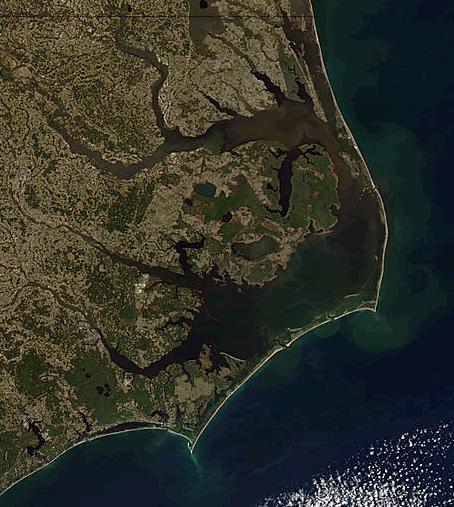
The Outer Banks is a 200-mile chain of barrier islands that bows out into the Atlantic off North Carolina's coast — geographically separated from the mainland by sounds, connected by bridges and, at the northern tip, by ferry. The islands are narrow in many places, rarely more than a few miles across, with the Atlantic on the east side and the Pamlico Sound (or Roanoke Sound, or Currituck Sound, depending on where you are) on the west. The geography creates a quality of light and sky that is different from the enclosed-bay beaches to the north and south.
Kitty Hawk is where Orville and Wilbur Wright made the first successful powered airplane flight on December 17, 1903 — a 12-second, 120-foot hop across sand dunes in a cold December wind. The Wright Brothers National Memorial in Kill Devil Hills (the actual flight site) is well-maintained and affecting in the way that genuinely important places are — not spectacular, just true. The granite monument on the hill where they launched, the concrete markers indicating where the plane stopped on each of the four flights that day, and the reconstruction of the 1903 Flyer in the visitor center are the components.
The northernmost stretch of the Outer Banks — from Corolla north to the Virginia state line — is accessible only by 4WD vehicle driving on the beach, and this is where roughly 100 wild Colonial Spanish Mustangs live, descendants of horses brought by Spanish explorers in the 1500s. The Corolla Wild Horse Fund runs guided tours; the horses are genuinely wild, not managed in a paddock, and the experience of seeing a herd of them on the beach is one of the most unusual wildlife encounters available along the Atlantic Coast.
The Outer Banks has five historic lighthouses, each at a different point along the chain. Cape Hatteras Lighthouse is the tallest brick lighthouse in the United States (198 feet) and was physically moved 2,900 feet inland in 1999 when erosion threatened its original site — an engineering operation that drew worldwide attention and was completed successfully. Climbing it in the off-season is one of the better lighthouse experiences on the East Coast.
The practical bits.
- Best time
-
Late April – June · September – OctoberThe OBX rewards shoulder season visitors. Late spring and early fall bring warm ocean temperatures, manageable crowds, and prices 30–50% below peak. July and August are the busiest weeks of the year — traffic on US-158 can be severe, and rentals book out months ahead. Early October is particularly good: water is still warm from summer, crowds have cleared, and the light on the marshes is beautiful.
- How long
-
5 nights recommendedThree nights covers the Wright Brothers Memorial, the lighthouses, and beach time. Five gives you a full week rhythm, time to drive to Corolla for the wild horses, and the Cape Hatteras climb. Seven to ten for families who want a vacation base.
- Budget
-
$175 / day typicalAccommodation is the dominant cost — OBX is primarily a vacation rental destination, and beach-house weekly rentals during July–August can run $3,000–8,000+ for a family home. Shoulder-season and mid-week rentals are significantly cheaper. Food and activities outside the rental are moderately priced.
- Getting around
-
Car required — the OBX is a 200-mile chain of barrier islandsA car is essential. The main driving routes are NC-12 (the main north-south highway through Hatteras Island, sometimes covered by storm overwash) and US-158 through the northern beaches. For Corolla's wild horse area, a 4WD vehicle is required. The Hatteras-Ocracoke ferry (free, scenic, 40-minute crossing) is the only way to reach Ocracoke Island.
- Currency
-
US Dollar (USD)Cards and contactless everywhere. Smaller fish camps and some local stands are cash-preferred.
- Language
- English
- Visa
- US domestic travel. International visitors: ESTA waiver for VWP countries; visa required for others.
- Safety
- The primary safety concerns on the OBX are water-related. The Atlantic along Cape Hatteras is among the most dangerous surf on the East Coast — strong rip currents, unpredictable shoals, and no-lifeguard beaches outside the developed northern area. Swim only at lifeguarded beaches from Memorial Day through Labor Day. Hurricane season (June–November) requires monitoring forecasts.
- Plug
- Type A/B · 120V — standard US outlets
- Timezone
- Eastern Time · UTC−5 (EDT UTC−4 Mar–Nov)
A few specific picks.
Hand-picked, not algorithmic. Each of these has earned its space.
The site of the first powered airplane flights on December 17, 1903. The visitor center holds a reproduction of the 1903 Flyer; the outdoor markers show exactly where each of the four flights that day began and ended. The granite monument on the hill is understated and affecting. Entry is $10 per person (America the Beautiful Pass accepted).
Roughly 100 wild horses descend from Colonial Spanish Mustangs brought in the 1500s, roaming the northernmost beaches accessible only by 4WD. The Corolla Wild Horse Fund runs guided tours daily from March through November. Do not approach the horses on your own — they are genuinely wild.
The tallest brick lighthouse in the United States at 198 feet. Famous for having been moved 2,900 feet inland from its threatened original site in 1999. The 257-step climb is open seasonally (April–Columbus Day). Book timed-entry tickets in advance during summer.
The tallest active sand dune system on the East Coast — dunes up to 80 feet high that shift with the wind. Free to enter. Hang gliding lessons run from the dune face; sunset from the top is one of the best views in the OBX. The dune walk across the top is otherworldly.
The most remote and most characterful of the major Outer Banks islands, accessible by ferry (free, 40 minutes from Hatteras). Ocracoke village has the feel of a genuine fishing community — oyster shacks, one main street, and Ocracoke's own barrier-island dialect still spoken by some older residents.
75 miles of undeveloped barrier-island shoreline protected as a National Seashore since 1953 — the first national seashore in the United States. The wide, natural beaches with minimal commercial development are what the OBX offers that more developed barriers do not.
The inlet separating the northern Outer Banks from Hatteras Island, crossed by the Basnight Bridge (opened 2019, replacing the aging Bonner Bridge). Oregon Inlet Fishing Center is one of the main departure points for offshore fishing charters on the Atlantic.
The site of the 'Lost Colony' — the 1587 English settlement that vanished without explanation. The Elizabethan Gardens are a recreation of Tudor garden design. The outdoor drama 'The Lost Colony' performs annually from May through August in an outdoor theater near the original fort site.
Cape Hatteras Point, where the Gulf Stream meets the colder Labrador Current, is one of the best fishing locations on the East Coast — known for blue marlin, yellowfin tuna, and mahi-mahi offshore, and bluefish and red drum from the beach and pier. Charter boats depart from Oregon Inlet and Hatteras Village.
The northernmost Outer Banks lighthouse — unpainted red brick, 162 feet, climbable, and surrounded by historic keeper's quarters and a boardwalk through maritime forest and marsh. Less crowded than Cape Hatteras. Part of the same journey as the Corolla wild horse tour.
Pick a neighborhood, not a hotel.
Outer Banks is a city of neighborhoods. The one you stay in shapes the trip more than the property does.
Different trips for different travelers.
Same city, very different stays. Pick the lens that matches your trip.
Outer Banks for families on a beach vacation
The OBX is one of the classic American family beach destinations. Large multi-bedroom vacation homes are the standard accommodation, often with private pools and direct beach access. Corolla and the northern beaches have the best combination of crowd level and amenities. Book 6–12 months ahead for peak summer weeks.
Outer Banks for history travelers
The Wright Brothers Memorial, Fort Raleigh and the Lost Colony, Cape Hatteras Lighthouse (moved in 1999), Blackbeard's pirate history in Ocracoke, and the Graveyard of the Atlantic maritime history. A four-day history circuit can be built across the full chain.
Outer Banks for surfers
Cape Hatteras produces some of the best waves on the East Coast, particularly at the Point and Cape Hatteras Lighthouse beach. The collision of the Gulf Stream and Labrador Current creates reliable swells. Best surf conditions are in fall (September–November) and in the wake of offshore storms.
Outer Banks for wildlife and nature travelers
Wild horses at Corolla, migratory waterfowl on Currituck Sound (one of the major Atlantic Flyway stops), loggerhead sea turtles nesting on Cape Hatteras beaches (June–August), dolphins off the beach, and the undeveloped marshes and maritime forest of the National Seashore.
Outer Banks for fishing enthusiasts
Cape Hatteras Point is one of the premier East Coast sportfishing locations. Charter boats for offshore bluewater fishing depart from Oregon Inlet Marina and Hatteras Village. Surf fishing and pier fishing for red drum, bluefish, and flounder are accessible without a charter.
Outer Banks for off-season solitude seekers
October through early November is the best off-season window — warm enough to swim, empty beaches, significant price drops, and the OBX's natural character fully visible without summer crowds. Many restaurants stay open through October; November starts to get quiet.
When to go to Outer Banks.
A quick year at a glance. Great, good, or skip — see what each month is doing before you book.
Most seasonal businesses closed. The National Seashore is empty and dramatic. For solitude seekers only.
Valentine's weekend sees some off-season rentals. Very quiet otherwise.
Some businesses re-open. Corolla wild horse tours resume. Still cold for swimming.
Excellent shoulder season. Lighthouse climbing opens mid-April. Light crowds and low prices.
Ocean temperature reaching swimmable range by late May. Crowds beginning to build.
Good before the peak summer crush arrives. Early June has moderate crowds and warm water.
Maximum crowds and prices. Traffic on US-158 on Fridays and Saturdays can be extreme. Book well ahead.
Still peak season. Hurricane season is a real factor. Sea turtle nesting events on Hatteras beaches.
Best combination of warm water and manageable crowds. Fishing season peaks. Hurricane risk until mid-month.
The strongest shoulder month. Water still swimmable early in the month. Fall migration brings birding.
Most seasonal businesses close by mid-month. Great for outdoor walking and off-season solitude.
Very quiet. Holiday weekends bring some visitors. The beaches and National Seashore are beautiful in a bleak, elemental way.
Day trips from Outer Banks.
When you want a change of pace. Each one's a half-day or full-day out, easy from Outer Banks.
Ocracoke Island
40 min by ferryThe free Hatteras-to-Ocracoke ferry runs regularly and takes 40 minutes. Day trips are possible but an overnight at one of Ocracoke's small inns or rental cottages shows you the village after the day-trippers leave. The Ocracoke Lighthouse and Silver Lake harbor are the heart of the village.
Roanoke Island / Manteo
30 min from Nags HeadA 30-minute drive west from the Nags Head area. Fort Raleigh National Historic Site, the Elizabethan Gardens, the North Carolina Aquarium on Roanoke Island, and the walkable Manteo waterfront make a full rainy-day or history day.
Elizabeth City, NC
1hA historic small city on the Pasquotank River with a walkable downtown, wine bars, and independent restaurants. A good break from a week of pure beach eating.
Norfolk, Virginia
1h 45mThe Chrysler Museum of Art has exceptional glass collection and solid general holdings — and is free to enter. Naval Station Norfolk tours are a draw for military history interest. Good urban alternative to a full beach day.
Corolla 4WD Beach (Wild Horses)
45 min from Nags HeadThe 7,500-acre corridor north of the paved road at Corolla is only accessible by 4WD driving on the beach. Rent a 4WD vehicle for the day or book a guided tour. The beaches north of the pavement have no crowds and the wild mustangs.
Kitty Hawk Kites Hang Gliding
0 minKitty Hawk Kites at Jockey's Ridge State Park offers introductory hang gliding lessons for beginners on the dune face. No experience required; the tandem training format has a high success rate. $99–130 for an introductory lesson. The Wright Brothers flew their glider tests on the same dunes.
Outer Banks vs elsewhere.
Quick honest reads on the cities people compare Outer Banks to.
The Chesapeake Bay shore is sheltered, warmer, and calmer; the OBX faces the open Atlantic with stronger surf, stronger character, and more historical drama. Both are barrier/tidal coastlines; the OBX is wilder.
Pick Outer Banks if: You want open Atlantic surf, lighthouses, wild horses, and the Wright Brothers history rather than a sheltered bay experience.
Cape Cod is a permanent community with better dining and cultural infrastructure; the OBX is more rural, more natural, with better fishing and more genuinely undeveloped coastline. Both have spectacular lighthouse traditions. Cape Cod is more expensive.
Pick Outer Banks if: You want more wilderness, lower prices, better surfing, and a more isolated feel than Cape Cod's more developed communities deliver.
Virginia Beach is a developed resort city with strong tourist infrastructure; the OBX is a barrier island chain with more natural landscape, more historical significance, and less commercial development. Virginia Beach is more convenient; OBX is more distinctive.
Pick Outer Banks if: You want the wild coastline, lighthouses, wild horses, and the Wright Brothers history rather than a full-service resort city.
Hilton Head is more manicured, more resort-oriented, and better for golf; the OBX is rawer, more naturally varied, and has more historical depth. Hilton Head is a managed experience; the OBX is more genuinely coastal.
Pick Outer Banks if: You want wild horses, lighthouse climbing, a national seashore, and the history of flight and the Lost Colony.
Itineraries you can start from.
Rough shapes for a trip here — a feel for the pace and cost. Find the one that fits you.
Base in Nags Head or Kill Devil Hills. Wright Brothers Memorial, Jockey's Ridge at sunset, Cape Hatteras Lighthouse, one beach day. Day trip to Corolla for the wild horses.
Add the Hatteras-Ocracoke ferry and a night on Ocracoke, Fort Raleigh and the Lost Colony, Oregon Inlet fishing charter or kayak. Full 200-mile island experience.
Rent a vacation house for a week on Hatteras Island or in Corolla. Build a rhythm of beach mornings, lighthouse and history afternoons, and evening oyster shacks.
Things people ask about Outer Banks.
What is the Outer Banks?
A 200-mile chain of barrier islands and barrier spits off the coast of North Carolina, stretching from the Virginia border south to Ocracoke Inlet. The islands are narrow — rarely more than a mile or two wide — with the Atlantic Ocean on the east and various sounds (Currituck, Roanoke, Pamlico) on the west. They are separated from the mainland by these sounds and are connected by a series of bridges; Ocracoke Island is accessible only by ferry.
When is the best time to visit the Outer Banks?
Late April through June and September through October are the best windows. These shoulder seasons have warm ocean temperatures, smaller crowds, and prices significantly below the July–August peak. September and October are particularly good — the water is still warm from summer, hurricane risk decreases through October, and the marshes and sounds take on a golden fall light. July and August are high season with maximum crowds and maximum rental prices.
What is the Wright Brothers Memorial?
The Wright Brothers National Memorial in Kill Devil Hills marks the site of the first powered airplane flights on December 17, 1903, when the Wright brothers flew four times in one day. The site includes a visitor center with a 1903 Flyer reproduction, outdoor markers showing where each flight ended, and the granite monument on Big Kill Devil Hill. NPS manages it; entry is $10 per person.
How do I see the wild horses at Corolla?
The Colonial Spanish Mustangs in the northern Outer Banks roam a 7,500-acre corridor accessible only by 4WD driving on the beach north of Corolla. The Corolla Wild Horse Fund runs guided tours daily from March through November. Do not approach, feed, or chase the horses; they are genuinely wild and will kick. Seeing a herd on the beach with the ocean behind them is a remarkable experience.
Can I climb Cape Hatteras Lighthouse?
Yes, seasonally. The lighthouse is open for climbing from mid-April through Columbus Day weekend (mid-October). The 257-step climb is moderately strenuous; the view from the top at 198 feet encompasses both the Atlantic and the Pamlico Sound. Timed-entry tickets are required during the open season — book through the Cape Hatteras National Seashore website. The lighthouse is worth visiting as a structure even when closed to climbing.
What is Jockey's Ridge State Park?
The largest active sand dune system on the East Coast, with dunes reaching 80–100 feet in Nags Head. The park is free. Walk to the top for panoramic views of the sound and ocean, sand-slide the face, or watch hang gliding lessons from Kitty Hawk Kites (the Wright Brothers tested gliders here before powered flight). The sunset from the ridge is one of the best OBX experiences.
What is Ocracoke Island?
The southernmost major Outer Banks island, accessible only by ferry — a free 40-minute ride from Hatteras or a longer paid ferry from the mainland. Ocracoke village is small and genuine: one main street, docks, oyster shacks, and an 18th-century lighthouse. Blackbeard the pirate was killed in Ocracoke Inlet in 1718. The Ocracoke Brogue dialect is still spoken by some older residents.
What is the Lost Colony?
In 1587, English colonists established a settlement on Roanoke Island (now part of Dare County, just inside the OBX). When supply ships returned in 1590, the colony — 117 men, women, and children — had vanished without explanation. The word 'CROATOAN' was carved on a post. The fate of the colonists remains genuinely unknown. Fort Raleigh National Historic Site on Roanoke Island marks the location; the outdoor drama 'The Lost Colony' (performed annually since 1937) dramatizes the story.
Is the Outer Banks good for families?
Yes, particularly as a vacation-home rental. Large beach houses accommodate multiple families or generations, with direct beach access and enough rooms that children can have space. The wild horses, the lighthouse climbs, Jockey's Ridge, and the North Carolina Aquarium on Roanoke Island are strong family activities. The National Seashore beaches are wide and safe on calm days, though rip currents require supervision and lifeguarded beach access is limited to the northern towns.
How do I get to the Outer Banks?
Most visitors drive. From Norfolk, Virginia (the nearest major airport), it is about 1.5–2 hours to Nags Head. From Raleigh, North Carolina, allow 3–3.5 hours. Charlotte is about 5 hours. There is no train or bus service to the OBX. The closest commercial airports are Norfolk International (ORF) and Raleigh-Durham International (RDU). A very small regional airport (First Flight Airport in Kill Devil Hills) serves small charter and private aircraft.
What is the fishing like in the Outer Banks?
Exceptional. Cape Hatteras Point, where the Gulf Stream meets the Labrador Current, attracts blue marlin, yellowfin tuna, mahi-mahi, wahoo, and sailfish offshore. From the beach and piers, red drum, bluefish, and flounder are the targets. Surf fishing along the National Seashore is a strong tradition; a beach driving permit ($50/year or $10/week from NPS) is required for vehicle access.
What are the major Outer Banks lighthouses?
Five historic lighthouses mark different points along the chain: Cape Henry (Virginia, just over the NC line), Currituck Beach (Corolla, 162 feet, red brick, climbable), Bodie Island (south of Nags Head, black and white horizontal stripes, climbable), Cape Hatteras (198 feet, tallest brick lighthouse in the US, climbable seasonally), and Ocracoke (74 feet, active, the oldest in the chain, not climbable). A lighthouse tour driving the full OBX is a coherent two or three-day itinerary.
Are there rip currents at Outer Banks beaches?
Yes — Cape Hatteras and the areas around the Inlets are among the most dangerous rip current zones on the East Coast. The Diamond Shoals offshore Cape Hatteras — a graveyard of ships — is created by the collision of the Gulf Stream and Labrador Current, which also drives dangerous nearshore conditions. Swim only at beaches with lifeguards during the supervised season (Memorial Day through Labor Day). Check surf and current forecasts at beach entrances before entering the water.
What is Cape Hatteras known for beyond the lighthouse?
Cape Hatteras is North Carolina's easternmost point, where the Gulf Stream passes close inshore — creating strong fishing and significant surf. More than 1,000 documented shipwrecks lie offshore, earning the area the nickname 'Graveyard of the Atlantic.' The Graveyard of the Atlantic Museum in Hatteras village covers that history. Many Atlantic hurricanes pass near Cape Hatteras as they track northward.
What should I know about driving on the beach?
Beach driving is permitted in designated areas of the Cape Hatteras National Seashore and north of Corolla, but requires a vehicle permit ($50/year or $10/week, purchased from NPS for the National Seashore, or free in the open 4WD area north of Corolla). Four-wheel drive with reduced tire pressure (around 20 psi) is required for soft sand. The route north of Corolla is the only access to the wild horse area and to isolated beaches unavailable to non-4WD vehicles.
What are the best OBX seafood spots?
Outer Banks seafood culture centers on fresh local catch. The Blue Point in Duck and Tortugas Lie in Kill Devil Hills are the fine-dining anchors. Owens' Restaurant in Nags Head has been serving local seafood since 1946. Ocracoke's back streets have waterfront oyster docks where the gap between boat and plate is sometimes measured in hours. The NC shrimp, oysters from the Pamlico Sound, and locally caught bluefish are the things to order.
What is the OBX like in the off-season?
Much of the OBX closes from November through March. What remains — the National Seashore, the sounds for kayaking, the major migratory flyway birds — is beautiful in a quieter way. Some residents find the off-season OBX the most honest version of the place. Rates are very low. If you come in January, bring warm layers — the Atlantic wind on a barrier island is unforgiving.
What is the Currituck Sound and why does it matter?
The Currituck Sound is a shallow freshwater lagoon between the northern OBX and the mainland, averaging less than 5 feet deep. It is a critical habitat for migrating waterfowl — millions of ducks and geese use the Atlantic Flyway here. The sound side of the barrier is excellent for kayaking, paddleboarding, and wildlife watching, and delivers the most dramatic OBX sunsets.
Know someone headed to Outer Banks?
Send them this guide — real neighborhoods, timing, and prices, with nothing to sign up for.
Copies the link — nothing to install