Paphos
Send it to whoever you'd travel with
Paphos is the southwest Cyprus city that has the island's best Roman mosaic floors, a UNESCO-listed archaeological park by the sea, and a lighthouse perched above cliffs where Aphrodite is said to have risen from the waves — making it substantially more interesting than its package-resort reputation suggests.
Paphos sits at the southwest corner of Cyprus, divided between Kato Paphos (lower, archaeological and coastal) and Pano Paphos/Ktima (upper, the old market town where locals actually live). The package-resort infrastructure concentrates on the seafront near Kato Paphos; the archaeology — which is genuinely world-class — is a 10-minute walk from the beach hotels and massively undervisited relative to what it contains.
The Kato Paphos Archaeological Park is a UNESCO World Heritage Site containing the finest Roman mosaic floors outside Italy. The House of Dionysus, the House of Theseus, the House of Orpheus, and the House of Aion each contain complete mythological mosaic sequences — hunting scenes, the labours of Dionysus, the Rape of Ganymede — that were the domestic luxury of wealthy Romans in the 2nd–5th century AD. They are extraordinary and almost never crowded, even in peak season. The adjacent Odeon (2nd century AD) is still used for summer concerts.
The Tombs of the Kings, 2 km north of the park, is the other essential: carved underground into the native rock from the 3rd century BC, the subterranean royal tombs are unexpectedly vast — colonnaded atriums open to the sky, burial chambers with Doric columns, the kind of underground labyrinth that takes 45 minutes to explore properly. Neither the mosaics nor the tombs require advance booking; neither are crowded.
Petra tou Romiou (the Rock of Aphrodite), 25 km east of Paphos on the Limassol coast road, is where Aphrodite is said to have risen from the sea. A large rock in the surf, cliffs, and a parking area with the usual tourist infrastructure — but the site itself is genuinely beautiful, especially at dusk when the rock is silhouetted. The sea at the base of the cliffs is swimmable (rocky entry).
The practical bits.
- Best time
-
March – May · October – NovemberCyprus has the longest beach season in the Mediterranean (April–November) but the best general travel conditions are spring and autumn. March–May gives wildflowers, green hills, and archaeological sites without summer heat (40°C in July–August is common inland). October–November keeps sea temperatures above 24°C while reducing crowds and prices significantly.
- How long
-
4 nights recommendedTwo nights covers the archaeological park and Tombs of the Kings. Four nights adds Petra tou Romiou, the Troodos mountains day trip, and time for the upper town. Six nights works as a full western Cyprus base for Akamas Peninsula and coastal driving.
- Budget
-
~$130 / day typicalCyprus is mid-range European — not cheap like Albania, not expensive like Santorini. Budget accommodation runs €50–90/night. A meze dinner is €20–30 per person. The archaeological park entry is €4.50, Tombs of the Kings €2.50. Car rental from Paphos airport: €30–50/day.
- Getting around
-
Car essential + walking in Kato PaphosPaphos Airport (PFO) is 15 km from Kato Paphos. Car rental is the most practical option for reaching Petra tou Romiou, Akamas Peninsula, and the Troodos mountains. The seafront and archaeological park are walkable from Kato Paphos hotels. Local buses connect upper and lower Paphos (€1.50). Note: Cyprus drives on the left (British legacy).
- Currency
-
Euro (€). Cards widely accepted throughout Cyprus.Cards accepted everywhere including small restaurants. ATMs abundant.
- Language
- Greek and English. Cyprus has English as a de facto second language from the British colonial era — English is spoken everywhere with no language barrier.
- Visa
- EU citizens: no visa. US, UK, Canadian, Australian: visa-free 90 days. Note: Cyprus is not in the Schengen Area — ETIAS (late 2026) does not apply to Cyprus.
- Safety
- Very safe. Cyprus has very low crime. Sea swimming: some rocky entries require care; designated beach areas are safe and lifeguarded in season.
- Plug
- Type G (UK 3-pin) · 230V — British standard, not European.
- Timezone
- EET · UTC+2 (EEST UTC+3 late March – late October)
A few specific picks.
Hand-picked, not algorithmic. Each of these has earned its space.
The finest Roman mosaic floors outside Italy — House of Dionysus, House of Theseus, House of Aion. Open-air park; take a hat and water in summer. Entry €4.50. Allow 2 hours minimum.
Carved underground from the 3rd century BC — vast subterranean royal tomb complexes with Doric columns and colonnaded atriums open to the sky. Entry €2.50. Allow 45 minutes. Nearly always quiet.
Aphrodite's mythological birthplace — a large rock in the surf at the base of dramatic white cliffs. Swimmable (rocky entry), beautiful at sunset. 30-minute drive from Paphos along the coast road.
The authentic upper town where Cypriot life happens — the covered market, the Byzantine Museum, the ethnographic museum, and the Paphos District Archaeological Museum. Cooler and much less touristy than Kato Paphos.
Coral Bay is the most popular organised beach (10 km north of Paphos). Lara Beach (25 km north, Akamas Peninsula) is where loggerhead and green turtles nest — access managed by wildlife authorities.
Cyprus's most rugged coastline — hiking trails through endemic flora, sea caves, the Blue Lagoon accessible by boat or 4WD. The Aphrodite Trail (7.5 km loop) is the standard route. Spring (March–May) for wildflowers.
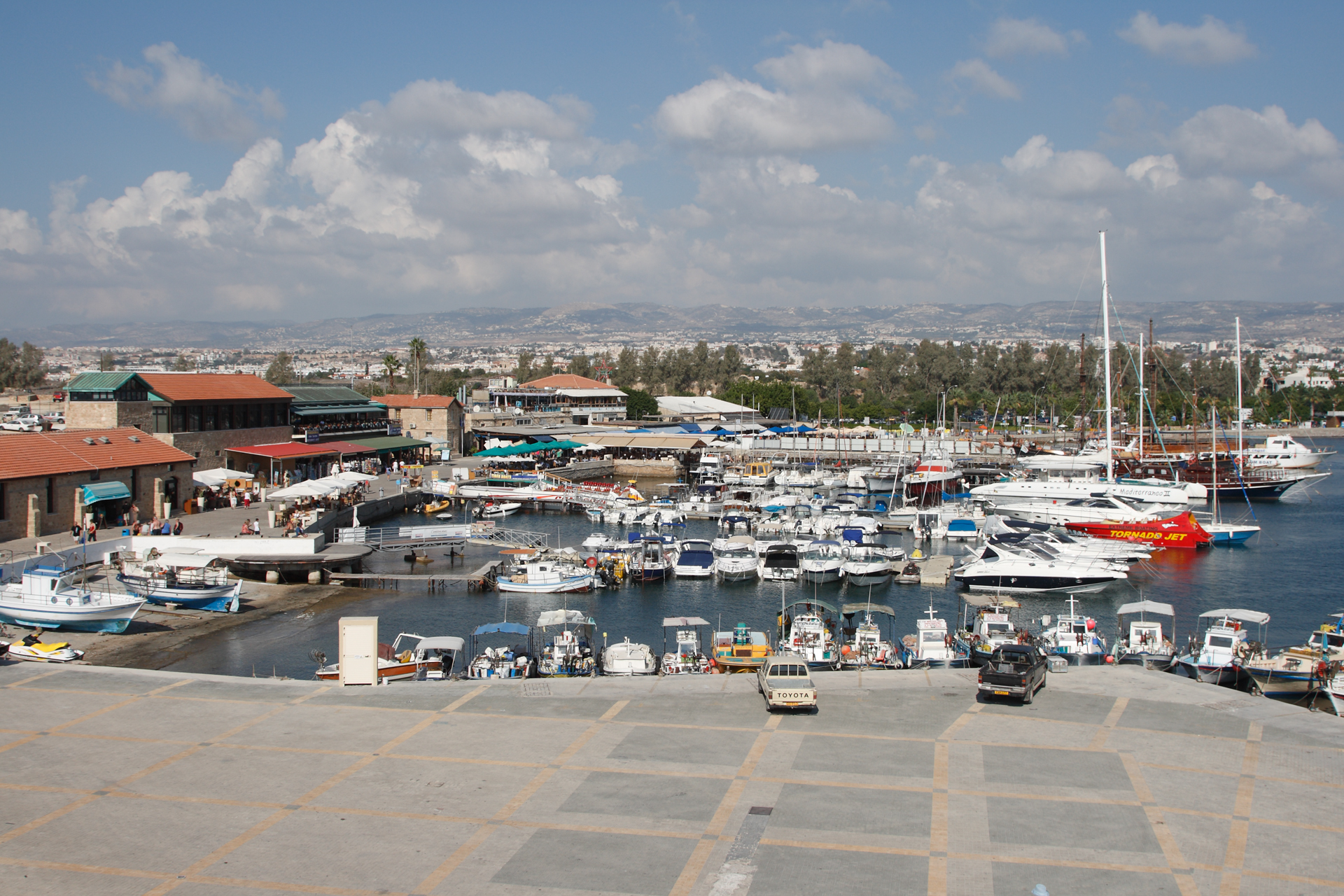
The Byzantine fortress at the harbour entrance (rebuilt by the Ottomans, entry €2.50) and the small fishing harbour with fish tavernas. The sunset from the fort's roof terrace over the harbour is Paphos's best.
Pick a neighborhood, not a hotel.
Paphos is a city of neighborhoods. The one you stay in shapes the trip more than the property does.
Different trips for different travelers.
Same city, very different stays. Pick the lens that matches your trip.
Paphos for archaeology and history lovers
The UNESCO mosaics are genuinely world-class. Paphos rewards those who come for the archaeology, not just the beach.
Paphos for beach and culture combiners
The combination of Blue Flag beaches and walking-distance Roman mosaics makes Paphos uniquely useful for those who want both.
Paphos for nature hikers
Akamas Peninsula, the Aphrodite Trail, and the Troodos mountain churches reward those who leave the coast.
Paphos for couples
Aphrodite's birthplace, clifftop sunsets, meze dinners — Paphos has a natural romantic character that its resort reputation undersells.
Paphos for winter sun seekers
Paphos is one of the Mediterranean's better winter destinations — December–February temperatures of 16–20°C, flights from northern Europe, and golf courses year-round.
When to go to Paphos.
A quick year at a glance. Great, good, or skip — see what each month is doing before you book.
Off season. Good for archaeology without crowds. Sea not swimmable for most visitors.
Almond blossom across the Paphos district. Very quiet. Budget prices.
Akamas wildflowers. Sea reaching 18°C. Excellent hiking conditions.
Best spring month. Sea swimmable, sites uncrowded, everything open.
Excellent. Sea warm, coast beautiful, before peak-season prices.
Good early June. Heat building; archaeology best in the morning.
Maximum heat and crowds. Beach is fine; inland travel requires early starts.
Peak beach season. The sea is perfect. Everything else requires heat management.
Excellent — sea at peak temperature, crowds dropping, archaeology comfortable again.
Best autumn month. Sea still 24°C+, prices dropping, no crowds.
Good for cultural visits. Sea cooling but still swimmable early month.
Christmas in warm sunshine. Very quiet. Good for archaeology and archaeology only.
Day trips from Paphos.
When you want a change of pace. Each one's a half-day or full-day out, easy from Paphos.
Petra tou Romiou
30 min driveThe icon of Cyprus — a large sea rock at the base of white cliffs, beautiful at sunset. 25 km east on the B6 coast road. Stop at Aphrodite Hills winery on the way back.
Akamas Peninsula
40–60 min drive to trailheadsCyprus's protected coastal wilderness — endemic plants, the Aphrodite Trail (7.5 km loop), and the Blue Lagoon accessible by boat from Latchi. Best March–May for wildflowers.
Troodos Mountains
1h driveThe mountain range above Paphos has 10 UNESCO-listed Byzantine painted churches with medieval frescoes. Kykkos Monastery is the most significant. Cedar Valley has a wild mouflon population. Very different from coastal Cyprus.
Nicosia
1h 45min by motorwayThe world's last divided capital — cross the Green Line to North Nicosia for Büyük Han and Selimiye Mosque. A full day from Paphos covers the city well.
Limassol
45 min driveCyprus's second city and wine capital — the Limassol Wine Festival (September), Kolossi medieval castle, and a developing marina district. Good for an afternoon change of pace from Paphos.
Paphos vs elsewhere.
Quick honest reads on the cities people compare Paphos to.
Nicosia is the divided inland capital — urban, complex, the Green Line crossing experience. Paphos is the coastal archaeological resort. They represent different halves of Cyprus and complement each other.
Pick Paphos if: You want Mediterranean coast, Roman mosaics, and Aphrodite's beach over the divided capital's political complexity.
Santorini has the caldera and the famous view. Paphos has better archaeological depth at a fraction of the price. Cyprus's slower pace and British-legacy English fluency makes it more relaxed for some travelers.
Pick Paphos if: You want UNESCO archaeology and a Mediterranean pace over the Cycladic glamour.
Malta has better medieval fortifications (Valletta, the Three Cities) and a denser British-colonial character. Paphos has better ancient archaeology and a larger, more varied island. Both drive on the left and use the plug type G.
Pick Paphos if: You want Cypriot mythology and Roman mosaics over Maltese baroque and medieval knights.
Itineraries you can start from.
Rough shapes for a trip here — a feel for the pace and cost. Find the one that fits you.
Day 1: Archaeological Park morning, harbour fort sunset, fish taverna. Day 2: Tombs of the Kings, Ktima upper town market, Byzantine Museum. Day 3: drive to Petra tou Romiou, swim, return via Coral Bay. Complete and satisfying.
Add Akamas Peninsula hiking (Aphrodite Trail). Day in Troodos mountains (Kykkos Monastery, Byzantine church frescoes, mountain lunch). Full western Cyprus circuit from Paphos base.
Paphos 4 nights, day trip to Nicosia (1h 45min by motorway), evening in Limassol's old town (45 min drive). Akamas, Troodos, archaeology, and the two contrasting Cyprus cities.
Things people ask about Paphos.
Is Paphos more than a beach resort?
Significantly more. The UNESCO archaeological park with Roman mosaics is one of the most undervisited world-class sites in the Mediterranean. The Tombs of the Kings and Petra tou Romiou add further layers. Most beach visitors never enter the archaeological park, which is their loss and your opportunity.
Do I need a car in Paphos?
For Kato Paphos archaeology and the harbour: no, it's walkable from the hotel strip. For Petra tou Romiou, Coral Bay, Lara Beach, and the Akamas Peninsula: yes, a car is essential. Paphos airport to Kato Paphos: €20 taxi or rental car.
What is the best Roman mosaic to see?
The House of Dionysus has the most complete and best-preserved sequence — the hunting mosaic, the Triumph of Dionysus, and the mosaic of the Seasons cover entire floors. The House of Aion has the most dramatic mythological scenes. Do both; they're in the same park.
What is Cyprus's plug type?
Type G — the British three-pin plug. Carry an adapter if you have European (Type C/F) devices. This is the most commonly missed practical detail for first-time Cyprus visitors.
Is Cyprus in the Schengen Area?
No — Cyprus is an EU member but not part of Schengen. ETIAS (late 2026) does not apply to Cyprus. Most Western passports enter visa-free for 90 days.
What should I eat in Paphos?
Meze — the full Cypriot mezze is a 15-20 dish spread of dips (hummus, taramasalata, tahini), halloumi (fresh and grilled), loukaniko sausage, grilled octopus, lamb kleftiko, and afelia (pork with coriander seeds). Order meze for two and share; it arrives continuously. Zivania (grape distillate) as a digestif.
When is the best time to visit Paphos?
March–May for spring wildflowers, green hillsides, comfortable hiking in Akamas, and sea temperatures already reaching 18–20°C. October–November for warm sea (still 24°C+), thin crowds, and very affordable accommodation. July–August has the most beach weather but also 38–40°C and maximum resort crowds.
Can I combine Paphos and Nicosia?
Yes — Nicosia is 1h 45min by motorway from Paphos. A day trip from Paphos to the divided capital covers the Green Line crossing, Selimiye Mosque, Büyük Han, and the old town in a full day. Alternatively, spend a night in Nicosia on the way to/from Paphos.
Know someone headed to Paphos?
Send them this guide — real neighborhoods, timing, and prices, with nothing to sign up for.
Copies the link — nothing to install