Brasília
Send it to whoever you'd travel with
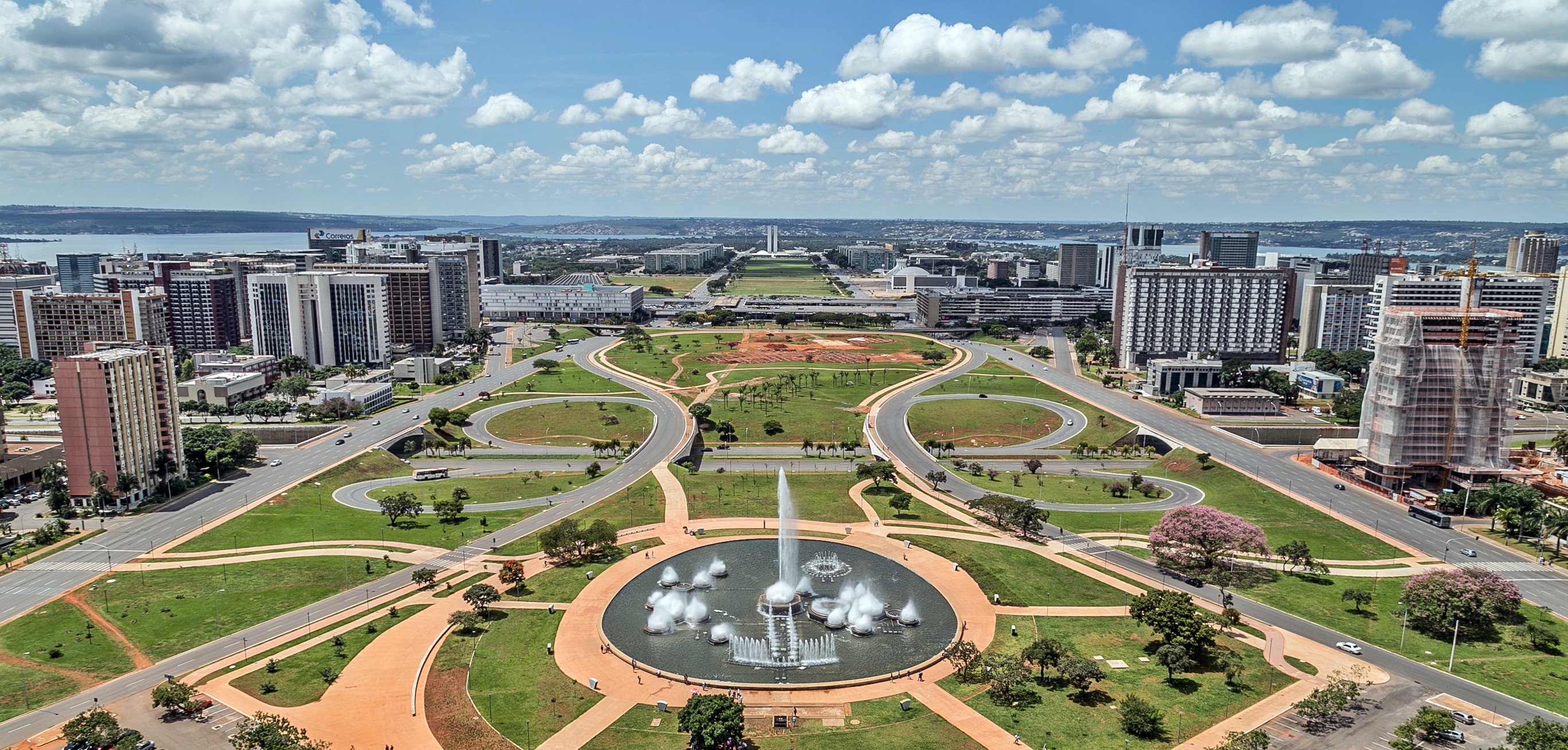
Brasília is the city that shouldn't work but does — a planned capital built in 41 months in the middle of a savanna, where Oscar Niemeyer's concrete curves and Lúcio Costa's Pilot Plan grids constitute the most coherent modernist urban statement in the Americas, even if getting anywhere requires a car.
Brasília is a city that architecture and urban planning students visit as a pilgrimage and that most Brazilian tourists approach with a mixture of civic duty and skepticism. Built in 1,320 days in the cerrado (Brazil's tropical savanna) on the orders of President Juscelino Kubitschek, inaugurated in April 1960, and declared a UNESCO World Heritage Site in 1987 — making it the only city built in the 20th century to receive that designation — it is simultaneously one of the greatest achievements of 20th-century modernist design and one of the most honest cases of a planned city where the planners forgot to account for how humans actually move around.
Oscar Niemeyer's buildings are the architectural argument. The National Congress with its twin towers and paired domes (one dome inverted, one upright — the Senate and the Chamber of Deputies in visual dialogue), the Presidential Palace of the Planalto, the Cathedral of Brasília with its 16 curved concrete columns and the stained-glass interior floating above the sunken nave, the Supreme Court, the Itamaraty Foreign Ministry with its arched arcades above a reflecting pool — they are all grouped within the Monumental Axis, walkable from each other (in the sense that the distances are technically on foot, though the Plano Piloto's scale defeats most pedestrians). Niemeyer was 52 years old when he designed most of them and lived to 104; this is where his vision cohered.
Lúcio Costa's urban plan — the Pilot Plan — is a cross shape often described as an airplane or a bird, with the Monumental Axis as the fuselage and the residential superquadras fanning out on either side. The superquadras were the social experiment: mixed-income blocks of apartments set in gardens, with local commerce, schools, and churches at ground level, designed to create an egalitarian city without the class segregation of traditional urban development. They partly worked. The superquadras are pleasant to walk through; the city's social geography has not remained as equitable as Kubitschek hoped.
The honest thing to say about visiting Brasília is that the city is built for cars. Walking between major monuments involves crossing large arterial roads without pedestrian crossings, traversing empty plazas at heat-radiating scales, and navigating a city that was designed from the air rather than at street level. Rent a car or use rideshare for any cross-city movement. But the architecture pays back the effort: standing inside the Cathedral while blue and green light pours through the suspended stained glass, or watching the afternoon light on the Planalto's pilotis, is an architectural experience available nowhere else on earth.
The practical bits.
- Best time
-
May – SeptemberBrasília's dry season runs May–September. The city is at 1,172m altitude in the cerrado; temperatures are 22–28°C, clear blue skies, and extremely low humidity. The rainy season (October–April) brings afternoon thunderstorms that can be dramatic, high humidity, and less pleasant conditions for outdoor monument walking. June–August is the sweet spot: perfectly dry, comfortable temperatures, and the cerrado's golden-dry landscape is striking.
- How long
-
3 nights recommended2 nights covers the Monumental Axis and the main Niemeyer buildings. 3 nights adds the superquadras, Museu Nacional, Paranoá Lake, and the cerrado parklands. 5 nights for anyone doing Chapada dos Veadeiros as a side trip.
- Budget
-
$130 / day typicalBrasília is a government and business city; mid-range hotels run $100–160/night. Restaurants range from government-workers' pay-by-kilo buffets ($8–12) to the upscale dining around the Asa Sul neighborhoods ($50–100 per person). Taxi and rideshare costs add up — the city's car-dependent layout means transit spend is higher than in a walkable city.
- Getting around
-
Rental car or Uber/99The Monumental Axis buildings are theoretically walkable from each other but the distances and road crossings are brutal in heat. Uber and 99 work well and are the practical solution for most monument-to-monument travel. For Chapada dos Veadeiros, a rental car is essential. A metro line connects the Plano Piloto to the satellite cities but doesn't effectively serve the tourist circuit.
- Currency
-
Brazilian Real (BRL). Cards accepted everywhere at hotels and restaurants. Cash useful for informal vendors and local markets.Credit cards universally accepted. Pix instant transfer used widely for local purchases. ATMs in the main hotel areas and shopping centers.
- Language
- Brazilian Portuguese. English spoken at international hotels and some restaurants; limited elsewhere. Brasília's population is atypically educated and cosmopolitan for Brazil; English is more common than in most Brazilian cities.
- Visa
- US, UK, Canadian, and Australian citizens visa-free for up to 90 days. Check current rules as Brazil's reciprocal visa policies change.
- Safety
- The Plano Piloto (Pilot Plan) tourist area around the Monumental Axis and the upscale Asa Norte and Asa Sul neighborhoods are generally safe. Brasília's satellite cities (Ceilândia, Taguatinga) have different safety profiles. Stick to the central planned area for tourist purposes; use rideshare after dark.
- Plug
- Type N (Brazilian 3-pin) · 220V most outlets. Adapters needed for US devices.
- Timezone
- BRT · UTC-3 (Brasília does not observe daylight saving time — in fact, its time zone name IS BRT)
A few specific picks.
Hand-picked, not algorithmic. Each of these has earned its space.
Niemeyer's most iconic composition: twin towers flanked by a dome (Senate) and an inverted dome (Chamber of Deputies). The building is open to guided public visits when Congress is in session. The Praça dos Três Poderes below offers the canonical view of all three branches of government — Congress, Planalto, and the Supreme Court — in a single sight line.
Sixteen curved concrete columns, each weighing 90 tons, converge in a crown above a sunken nave. The interior is entirely underground relative to the plaza; stained glass panels of blue, green, and white by artist Marianne Peretti fill the ceiling. The transition from the glare of the cerrado sun to the cool underwater-blue interior is one of architecture's great sensory transitions.
The executive palace, open to public visits on Sundays from 9 AM to 2 PM. Niemeyer's pilotis (angled ground-floor columns) and the Athaide Azevedo murals inside are the main draws. The Changing of the Guard ceremony (Sundays, 10 AM) in full dress uniform is a spectacle.
Niemeyer's last major Brasília commission — a museum that is itself the exhibit, with a white dome and a ramp curving around its exterior. The permanent collection is modest; the architecture is the reason to come. Best visited in late afternoon light.
Lúcio Costa's residential blocks — apartment buildings set in gardens with ground-floor commercial streets and local schools — are where the Pilot Plan's social vision is best understood. Take a slow walk through two or three superquadras in the late afternoon when residents are out; the scale and intention become clear.
A national park on the edge of the city with natural swimming pools fed by cerrado springs — a beloved local escape from the urban geometry. The cerrado landscape (twisted trees, russet grasses, a sky that goes to the horizon) is worth experiencing beyond the architectural monuments.
The artificial lake created when the Paranoá River was dammed to supply water for the new capital now forms an 80km² recreational anchor. Sailing clubs, restaurants on the waterfront, and a weekend market make the lakeside a Brasília leisure circuit.
The twin rows of identical ministry buildings flanking the central axis — a modernist repetition that creates an imposing processional approach to the Congress building. Walking this axis at dawn, before the official cars arrive, is the experience of Brasília at its most serene.
The tomb and museum of JK — the president who built Brasília — inside a Niemeyer-designed structure with an 8-meter bronze sculpture above the sarcophagus. The exhibition documents the extraordinary political will and logistical ambition that built a capital city in 41 months.
The Sunday crafts market at the base of the TV Tower is where Brasília actually functions as a city with human texture — local handicrafts, food stalls, families, and a more relaxed energy than the monument circuit. A welcome contrast to the geometric solemnity of the Esplanada.
Pick a neighborhood, not a hotel.
Brasília is a city of neighborhoods. The one you stay in shapes the trip more than the property does.
Different trips for different travelers.
Same city, very different stays. Pick the lens that matches your trip.
Brasília for architecture and design travelers
Brasília is a pilgrimage destination for architecture enthusiasts. Bring your Niemeyer and Lúcio Costa readings; hire an architecture-specialist guide for at least one day. The monument circuit covers the most concentrated ensemble of 20th-century modernist public architecture in the world.
Brasília for brazil circuit travelers
Brasília sits at the center of Brazil geographically and logistically — Latam/Gol/Azul hub with connections to every region. Adding 2–3 nights here to a Rio–Salvador or Rio–Florianópolis trip costs little in time and adds the architectural counterpoint to the coastal cities.
Brasília for nature travelers
The combination of Brasília (urban architecture) and Chapada dos Veadeiros (cerrado wilderness) creates one of Brazil's better land+architecture pairings. The cerrado is a deeply undervalued biome; Chapada dos Veadeiros is the best place to understand it.
Brasília for photographers
The white concrete against cerrado blue sky is Brasília's photographic calling card. Morning light before 8 AM on the Esplanada, the Cathedral's interior stained glass, the reflecting pool at the Itamaraty — these require early starts and clear dry-season skies. Rain-season dramatic clouds can also be spectacular.
Brasília for business travelers
Brasília is a government and business city. Hotels in the Setor Hoteleiro Norte/Sul are well-stocked with meeting facilities and proximity to ministries. The business traveler who uses downtime well can see the monument circuit in two evenings and a Sunday morning.
Brasília for south american circuit travelers
Brasília is often skipped on South America circuits in favor of Rio, Iguazu, and Buenos Aires. Adding it specifically because it's different from everything else on that circuit — the only planned modernist capital, the only UNESCO city built in the 20th century — rewards travelers who want the full range of what South America offers.
When to go to Brasília.
A quick year at a glance. Great, good, or skip — see what each month is doing before you book.
Rainy season. The cerrado turns green. Afternoon storms can interrupt outdoor monument visits. Mornings generally clear.
Continued rains. Not the worst month but not ideal for extended outdoor monument walks.
Transition toward drier conditions late month. Still rainy but less intense than January.
Good transition month. Rains sharply reduced; the cerrado landscape is beautiful with the last of the green before the dry season.
Dry season begins in earnest. Clear skies, comfortable temperatures, zero humidity. Start of the best period.
One of the best months. The cerrado turns its golden-dry color. Perfect for monument photography. Cool evenings.
Peak dry season. Brazilian school holidays bring domestic visitors. Cold nights (bring a layer). Ideal outdoor conditions.
The air is very dry — lips and skin chap; carry moisturizer. But the sky and light are exceptional.
Last of the dry season. Hot afternoons and the cerrado vegetation at its most parched. First pre-rainy season thunderstorms possible.
Rains returning. The first storms of the wet season. Still manageable but declining conditions for outdoor walks.
Rainy season fully underway. Cerrado turns green rapidly. Afternoon storms reliable.
Christmas period. Full rainy season. Mornings are usually clear for monument visits; afternoons are wet.
Day trips from Brasília.
When you want a change of pace. Each one's a half-day or full-day out, easy from Brasília.
Chapada dos Veadeiros
3h by carBetter as a 2–3 night trip than a day trip. The main trails (Vale da Lua, Catarata dos Couros) require half-day hikes each. Alto Paraíso de Goiás is the base town with good pousadas and restaurants.
Goiás Velho (Cidade de Goiás)
2h 30min from BrasíliaA beautifully preserved colonial town in Goiás State — UNESCO-listed for its 18th-century architecture, stone-paved streets, and churches. The Procissão do Fogaréu (Holy Week procession) is internationally recognized. Best as an overnight.
Pirenópolis
1h 30min from BrasíliaA 18th-century colonial town in the cerrado with multiple waterfalls accessible within a 10km radius. Cavalhadas festival (May/June) is a colorful medieval jousting tradition maintained since 1826. Good for a day trip or overnight.
Parque Nacional de Brasília
20min from city centerThe natural pools (piscinas de águas minerais) on the park's edge are the most popular local escape — fed by cerrado springs, clear and cold, extremely crowded on weekends. Go on a weekday. The interior park trails require more planning and a guide.
Cachoeira do Itiquira
1h 30min from BrasíliaA 168-meter waterfall in the cerrado east of Brasília, with a natural pool at the base for swimming. Half-day excursion; entrance fee modest. The drive crosses open cerrado landscape.
Ceilândia Saturday Market
30min by metroThe large Saturday street market in Ceilândia — one of Brasília's satellite cities — is where Central Brazil's real food culture lives: pequi, cerrado fruits, traditional Goiás and Bahian home cooking. Safe during the day; culturally very different from the Pilot Plan.
Brasília vs elsewhere.
Quick honest reads on the cities people compare Brasília to.
Rio is the sensory opposite: tropical, organic, geographically dramatic, culturally dense. Brasília is geometric, planned, government-serious. Both are essential Brazil; they don't overlap in what they offer. Rio first for most travelers; add Brasília when you want the architectural chapter.
Pick Brasília if: You want Brazil's most coherent architectural statement rather than its most celebrated natural and cultural city.
Le Corbusier's planned Indian capital and Niemeyer/Costa's Brasília are the two great exercises in mid-century modernist capital-building. Chandigarh is more lived-in and worn; Brasília is more formally unified. Both are fascinating; Brasília has the stronger tourist infrastructure.
Pick Brasília if: You want the more visually unified and UNESCO-designated modernist capital.
São Paulo is Brazil's megacity — food, contemporary art, nightlife, urban scale at continent level. Brasília is the quiet government capital where the architecture is the point. Completely different purpose; both are worth seeing to understand the full range of Brazil.
Pick Brasília if: You want architecture, UNESCO heritage, and cerrado nature rather than South America's best restaurant city.
Both are purpose-built capitals in the interior of a continent, built because neither Sydney nor Rio could agree to cede capital status. Canberra is a garden city of low density; Brasília is a concentrated modernist monument. Brasília is the more architecturally significant and more rewarding to visit.
Pick Brasília if: You want the world's most architecturally ambitious planned capital rather than a quiet, spread-out Australian garden city.
Itineraries you can start from.
Rough shapes for a trip here — a feel for the pace and cost. Find the one that fits you.
Day 1: Monumental Axis — National Congress, Planalto (if Sunday), Cathedral, Supreme Court. Day 2: Museu Nacional, Museu da República, TV Tower Sunday market, Lago Paranoá sunset. Day 3: Superquadra walk (Asa Sul), Memorial JK, fly out.
2 nights Brasília for the monument and architecture circuit, then 3 nights in Alto Paraíso de Goiás for the Chapada dos Veadeiros national park — waterfalls, cerrado trekking, and natural pools. 3-hour drive each way.
Brasília 3 nights, Goiás Velho 1 night (colonial baroque city, UNESCO), Chapada dos Veadeiros 3 nights. The three together present the full range of Central Brazil's architecture, history, and cerrado landscape.
Things people ask about Brasília.
Why was Brasília built?
Brasília was built to move Brazil's capital from Rio de Janeiro to the interior, fulfilling a provision in Brazil's 1891 constitution that had never been enacted. President Juscelino Kubitschek (1956–1961) made it a personal mission: he wanted to develop Brazil's vast interior, reduce the coastal concentration of power and population, and announce Brazil's modernity on the world stage. Construction began in 1956; the city was inaugurated April 21, 1960.
What is Oscar Niemeyer's role in Brasília?
Niemeyer (1907–2012) was the chief architect of Brasília's public buildings. Working with urban planner Lúcio Costa, he designed the National Congress, the Presidential Palace, the Cathedral, the Supreme Court, the Foreign Ministry, and dozens of other structures. The curving white concrete forms that define Brasília — the dome-and-tower Congress, the crown columns of the Cathedral — are all Niemeyer's. He was 52 when Brasília opened and lived to design additions for another 50 years.
What is the Pilot Plan (Plano Piloto)?
Lúcio Costa's 1957 urban plan for Brasília — submitted on five index cards in an open competition — conceived the city as a cross shape, often compared to a bird or airplane in flight. The Monumental Axis (east-west) holds the government buildings; the Residential Axis (north-south, the 'wings') holds the superquadras. The entire Pilot Plan is what UNESCO designated in 1987 — not just individual buildings but the complete urban design.
Is Brasília worth visiting if I'm not an architecture fan?
It's honest to say the case is harder. The monument circuit is architecturally extraordinary; the city outside it has decent restaurants, good cerrado parks, and the lakeside is pleasant. But Brasília lacks the street life, cultural density, or natural drama of Brazil's coastal cities. Three nights is optimal — enough to see what is genuinely remarkable without staying past your interest. Combining it with Chapada dos Veadeiros adds a nature dimension.
Why is Brasília UNESCO World Heritage Site?
UNESCO designated the Pilot Plan of Brasília in 1987 — making it the only city built in the 20th century on the list at the time of designation. The criteria cited were: an outstanding example of town planning (Costa's cross-shaped design), the exceptional ensemble of Niemeyer's public buildings, and the vision of modernist urbanism applied at city scale. The designation covers the entire Plano Piloto, not just specific buildings.
What is the best time to visit Brasília?
May through September is the dry season and consistently the best time: temperatures 22–28°C, virtually no rain, low humidity, and clear blue skies that show the white concrete buildings at their sharpest. Brasília is at 1,172m altitude, which moderates the tropical heat. The rainy season (October–April) has afternoon thunderstorms that can interrupt outdoor monument walks, though mornings are generally clear.
Can I visit the National Congress and Planalto?
Yes. The National Congress is open for guided visits on weekdays and some Saturdays — the schedule depends on congressional sessions; check camara.leg.br and senado.leg.br. The Palácio do Planalto is open to the public on Sundays from 9 AM to 2 PM. Both are free. Photography is permitted in most areas. The Supreme Court (STF) has a visitor center and is also publicly accessible.
What is inside the Cathedral of Brasília?
The Cathedral of Brasília (Catedral Metropolitana) is mostly underground — the plaza-level structure reveals only the 16 curved concrete columns. The interior is a subterranean nave lit entirely by stained glass panels (blue, green, and white) by Marianne Peretti that fill the ceiling. Four aluminum angel sculptures hang from the ceiling. The capacity is about 4,000 people. The transition from the outdoor heat to the cool blue interior is one of the great spatial experiences in Brazilian architecture.
Is Brasília walkable?
In the Monumental Axis, the distances between buildings are technically walkable but the scale is punishing — the Esplanada alone is 2km, with no shade and large intersections designed for cars. In the residential superquadras, walking is pleasant and human-scaled. In practice, most visitors use Uber or 99 between major monuments and walk only within individual building complexes. Rent a car or use rideshare; the Pilot Plan was designed from the air.
What is the cerrado and can I experience it near Brasília?
The cerrado is Brazil's tropical savanna — a biome characterized by twisted, fire-resistant trees, rust-colored soils, and extraordinary biodiversity that is under significant threat from agricultural expansion. Brasília sits entirely within the cerrado. The Parque Nacional de Brasília (Água Mineral park) at the city's edge has cerrado hiking and natural swimming pools. Chapada dos Veadeiros national park, 3 hours north, is the premier cerrado destination in Central Brazil.
What happened to the satellite cities around Brasília?
The Pilot Plan's residential superquadras could not accommodate all the construction workers and low-income migrants who built and serviced the new capital. Satellite cities — Ceilândia, Taguatinga, Gama, Planaltina — were built outside the Pilot Plan to house this population, connected to the center by highways. These cities now hold the majority of the Federal District's population (around 3 million in total, vs approximately 250,000 in the Pilot Plan itself). They are not designed for tourist visits.
What food is Brasília known for?
Brasília doesn't have a strongly distinctive regional cuisine — it was assembled from workers from all over Brazil and the result is a city with good examples of many Brazilian regional cuisines, plus a well-developed contemporary dining scene in Asa Sul. Goiás-style dishes (pequi, a cerrado fruit with a pungent flavor, in stews and rice) are the closest to a regional specialty. The pay-by-kilo lunch buffet culture of government worker restaurants is the authentic daily food experience.
What is Chapada dos Veadeiros and how far is it from Brasília?
Chapada dos Veadeiros is a national park in the cerrado 230km north of Brasília, centered on the town of Alto Paraíso de Goiás. It has dramatic waterfalls, crystal-clear natural pools, canyon trails, and cerrado landscapes that shift between green (rainy season) and gold (dry season). A UNESCO Biosphere Reserve. Drive of about 3 hours or a 30-minute flight from Brasília. Strongly recommended as a 3-night addition to any Brasília trip.
Is the Memorial JK worth visiting?
Yes, especially for context on why Brasília exists. The memorial documents President Kubitschek's life and his obsessive drive to build the new capital — the political deals made, the opposition faced, the logistics of building a city from nothing on a plateau. The tomb is inside a Niemeyer building; the 8-meter bronze statue above it is striking. The visit takes 45–60 minutes.
What is the TV Tower Sunday market?
The Sunday crafts fair at the base of the 218-meter TV Tower is one of Brasília's more human-scale pleasures — local artisans selling silverwork, ceramics, textiles, and food from across Brasília's catchment area (Goiás, Minas Gerais, the Northeast). The market runs from about 8 AM to 6 PM and is the city's best casual social gathering point.
Can I visit Brasília in 2 days?
Two full days covers the essentials: Day 1 for the Monumental Axis (Congress, Cathedral, Planalto if Sunday, Supreme Court, Esplanada), Day 2 for the Museu Nacional, TV Tower, superquadra walk, and Lago Paranoá sunset. A third day is optional if you want to go beyond the monument circuit. Two days is a reasonable minimum; three is better for a non-rushed visit.
How does Brasília compare to other planned capitals?
Chandigarh (Le Corbusier, India), Canberra (Walter Burley Griffin, Australia), and Abuja (Nigeria) are the comparable planned capitals. Brasília is generally considered the most architecturally coherent — Niemeyer's buildings are more formally unified than Chandigarh's, and the Pilot Plan has a conceptual clarity absent from Canberra's garden-city sprawl. The UNESCO designation (the only such capital on the list) reflects this judgment.
Know someone headed to Brasília?
Send them this guide — real neighborhoods, timing, and prices, with nothing to sign up for.
Copies the link — nothing to install