Trapani
Send it to whoever you'd travel with
Trapani is a hook-shaped Sicilian port town built on salt, fish couscous, and easy ferries to the Egadi Islands.
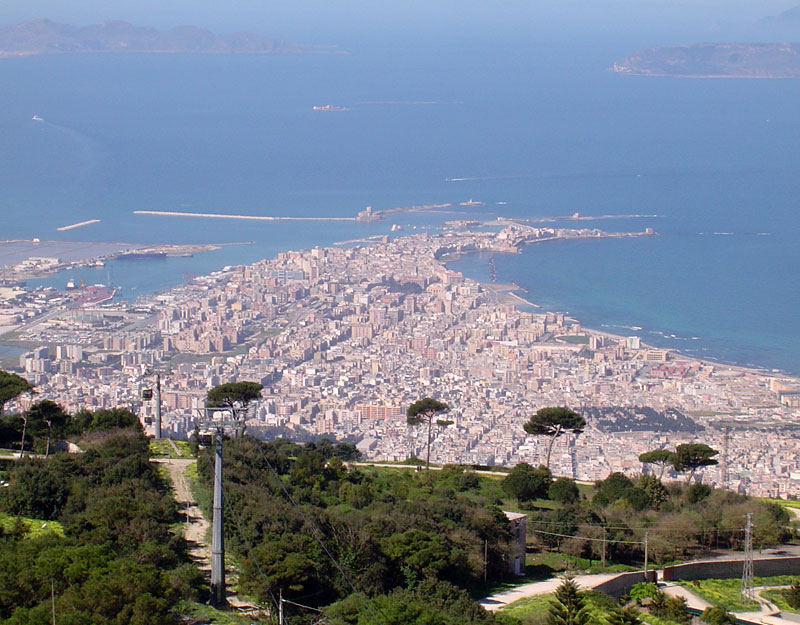
Trapani is what happens when a Sicilian port forgets to become famous. It sits on a thin, sickle-shaped peninsula at the island's western edge, with the sea on three sides and a salt lagoon glittering to the south. The old town is a flat grid of pale tufo stone and balconied palazzi, walkable end-to-end in twenty minutes, and the rhythm is set by the fishing fleet and the wind. Most travellers pass through chasing ferries to Favignana or the cable car up to Erice, which is exactly why it stays itself. Stay two nights and it feels like a base. Stay five and you start eating at the same place twice.
The centro storico does almost everything you came for. Corso Vittorio Emanuele runs the spine, lined with baroque churches and the Cattedrale di San Lorenzo, and every evening the passeggiata thickens it into a slow current of locals doing nothing in particular. Cars can't squeeze in, so the noise is just feet and forks. Mornings belong to the fish market at the port — tuna laid out on ice, sardines for the panelle stalls, octopus that was crawling around six hours ago. By 1pm it's gone. By 5pm the bars on Piazza Saturno are pulling out chairs and pouring Grillo by the glass.
The food is the unique angle here, and it has a North African accent you don't get further east. Couscous alla trapanese — fish broth, not lamb — arrived with Tunisian fishermen and stayed for centuries; San Vito Lo Capo throws a whole festival for it every September. Busiate, the local hand-rolled pasta, gets tossed in pesto trapanese (almonds, tomato, basil, garlic). The tuna is salted and dried into bottarga. Even the salt itself has a story: the flats just south of town have been worked since the Phoenicians, and the fior di sale harvested by hand in summer ends up on chocolate bars in Milan.
The other reason to come is leverage. From Trapani you're forty minutes by cable car to medieval Erice on its 750-metre crag, an hour by hydrofoil to Favignana's cove-pocked coast, ninety minutes by car to the Doric temple at Segesta, and ten minutes from the salt pans of the WWF reserve where the windmills throw long shadows at sunset. Marsala is a half-hour south. The Zingaro nature reserve and San Vito Lo Capo's white-sand beach are an hour north. Few small cities in the Mediterranean give you this many one-day adventures from a single, cheap hotel room.
The practical bits.
- Best time
-
Apr – Jun, Sep – OctWarm sea, walkable temperatures, low crowds outside ferragosto.
- How long
-
5 nights recommendedThree for town and Erice, five to fold in Egadi and Segesta, ten if you're using it as a slow western-Sicily base.
- Budget
-
$170 / day typicalFerries and day-trip car rentals are the swing line — a Favignana day with a bike rental adds about €40 per person.
- Getting around
-
Walk the centro; hydrofoil, cable car, or rental car for everything else.The old town is small enough that taxis feel silly. For Erice take the funivia from the eastern edge of town (about €10 return). The Egadi islands run year-round via Liberty Lines hydrofoils from the port. Renting a car at the airport is the cleanest way to reach Segesta, the salt pans, San Vito Lo Capo and Marsala.
- Currency
-
€ Euro (EUR)Cards are accepted at hotels and most restaurants, but smaller trattorias, bakeries and the fish market are still cash-first. Keep €50 in coins and small bills.
- Language
- Italian, with strong Sicilian dialect; English is patchy outside hotels — basic Italian helps everywhere.
- Visa
- EU citizens enter freely; US, UK, Canadian and Australian passport-holders get 90 days visa-free in Schengen, with ETIAS pre-authorisation now required.
- Safety
- Genuinely safe, including for solo women, day and night in the old town. The usual urban caution applies in the port area after midnight, and watch bags in the fish-market crowd.
- Plug
- Type F/L, 230V
- Timezone
- GMT+1 (GMT+2 in summer)
A few specific picks.
Hand-picked, not algorithmic. Each of these has earned its space.
The baroque cathedral on Corso Vittorio Emanuele, with a quiet white interior that's a relief from the midday glare.
Open-air morning fish market down by the port — tuna, swordfish, gamberi rossi. Arrive before 10am or it's gone.
WWF salt reserve with the Dutch-style windmills; come at sunset for the postcard you came for.
Ten-minute cable car up to medieval Erice at 750m — the views over the Egadi alone are worth the ride.
Old-school trattoria locals send you to for couscous alla trapanese and busiate al pesto.
No printed menu — whatever the boats brought in that morning. The fritto misto is what to order.
A slightly dressier seafood room near Piazza Mercato del Pesce, strong on couscous and a deep Sicilian wine list.
Late-night gelato near the port, open until 11pm; the pistachio and ricotta-fig are the moves.
17th-century watchtower at the very tip — sunset spot with sea on both sides and a small archaeology museum inside.
Lush public park between the old town and the train station — a shady escape during afternoon heat.
Join the 7pm slow walk down the main pedestrian spine — it's the social engine of the whole town.
The launch pad for Favignana, Levanzo and Marettimo — book the day before in summer.
Pick a neighborhood, not a hotel.
Trapani is a city of neighborhoods. The one you stay in shapes the trip more than the property does.
Different trips for different travelers.
Same city, very different stays. Pick the lens that matches your trip.
Trapani for food obsessives
Couscous alla trapanese, busiate al pesto, and a working morning fish market all within four blocks. The North African accent here doesn't exist in eastern Sicily.
Trapani for slow travelers
A small, walkable old town that rewards staying a week. Same trattoria twice, same barista in the morning, ferries you start to know by name.
Trapani for solo travelers
Genuinely safe day and night in the centro, sociable passeggiata culture, and easy single-night logistics on the Egadi if you want to island-hop alone.
Trapani for history buffs
Phoenician Mozia, Greek Segesta, Norman Erice, Spanish-era salt monopolies and Baroque churches all within an hour. Few small towns offer this much layered material.
Trapani for beach seekers
Trapani itself is more port than beach, but San Vito Lo Capo, Favignana's coves, and Scopello are inside an hour — among the best swimming water in Sicily.
Trapani for couples
Sunset at the salt-pan windmills, a night up in Erice, hydrofoil mornings to Favignana — the romantic logistics here are unusually easy.
When to go to Trapani.
A quick year at a glance. Great, good, or skip — see what each month is doing before you book.
Quietest month — many island ferries reduce, some Erice restaurants close.
Carnival in Trapani is small but charming; sea still too cold to swim.
Easter can fall here — the Misteri procession is the year's biggest event.
Lowest-stress month of the year — full ferry schedules return mid-month.
Best balance of weather, prices and crowds — book ahead for weekends.
Egadi water hits 22°C; Italian school holidays haven't started.
Busy but workable; book ferries and Favignana stays in advance.
Ferragosto week (mid-month) is chaos — prices double, locals vanish to the islands.
San Vito Lo Capo's Cous Cous Fest in late September is the regional highlight.
Olive harvest and new-season fior di sale arrive in markets.
Cheapest prices of the shoulder season; island ferries thin out.
Town quiet outside Christmas week; nativity displays in old-town churches are a sweet bonus.
Day trips from Trapani.
When you want a change of pace. Each one's a half-day or full-day out, easy from Trapani.
Erice
10 min by cable carCobbled lanes, Norman castle, and view straight down to the Egadi — half a day is plenty.
Favignana
30 min by hydrofoilRent a bike at the port and loop tufo-quarry coves; Cala Rossa is the swim of the trip.
Segesta
60 min by carUnfinished Doric temple standing alone on a hillside — among the best-preserved in the Mediterranean.
Marsala
35 min by car or trainCantine Florio and the Mozia ferry are the moves; tasting flights from €15.
San Vito Lo Capo
60 min by carCaribbean-coloured water under the limestone face of Monte Monaco — the September couscous festival is huge.
Zingaro Nature Reserve
75 min by carA 7km path along undeveloped Sicilian coast with five small beaches to drop into.
Trapani vs elsewhere.
Quick honest reads on the cities people compare Trapani to.
Palermo is a chaotic, grand capital with serious street food and museums; Trapani is a small, walkable port with cleaner sea access and easier day trips.
Pick Trapani if: You want islands, ferries and a slower base — not a capital-city experience.
Catania is the gritty, volcanic eastern hub for Etna and Taormina; Trapani is the salty western counterpart for Egadi, Segesta, and Marsala.
Pick Trapani if: You're orienting your Sicily trip around the western half of the island.
Marsala is quieter, lower-key, and oriented around fortified wine and the Stagnone lagoon; Trapani has more restaurants, ferries, and evening life.
Pick Trapani if: You'd rather have hydrofoils, fish market and passeggiata than vineyards and silence.
Cefalù is a beach town with one famous Norman cathedral and a long sandy crescent; Trapani is a working port with a wider day-trip radius.
Pick Trapani if: You want a base for exploring, not a beach holiday with a cathedral.
Valletta is fortified, English-speaking, and culturally distinct; Trapani is more rustic, cheaper to eat in, and rooted in Sicilian fishing-port life.
Pick Trapani if: You want trattoria-and-ferry rhythm over walled-city density.
Itineraries you can start from.
Rough shapes for a trip here — a feel for the pace and cost. Find the one that fits you.
Two nights in the centro storico, a half-day on the Erice cable car, and one long evening at the salt pans for sunset.
Five nights based in Trapani with day trips to Favignana, Segesta, Marsala wineries, and San Vito Lo Capo's beach.
Three nights in town, two on Favignana, two on Marettimo — ferries, snorkeling coves, and an apprenticeship in couscous.
Things people ask about Trapani.
Is Trapani worth visiting?
Yes, especially if you want a small, walkable Sicilian base that isn't Palermo or Taormina. Trapani gives you a working fishing port, distinctive North-African-tinged food, evening passeggiata energy, and an unusually high number of one-day excursions — Erice, Egadi Islands, Segesta, salt pans, Marsala — all within an hour. Skip it if you only have three days in Sicily and want headline sights; come if you want texture.
How many days do I need in Trapani?
Three nights covers the town itself plus Erice and the salt pans. Five nights is the sweet spot — enough to fold in a full day on Favignana, a half-day at Segesta, and a Marsala wine afternoon without rushing. Seven-plus nights makes sense if you're treating Trapani as a base for slow western-Sicily exploration including overnights on the Egadi islands.
What is the best time to visit Trapani?
Mid-April to mid-June and September through October. You get sea temperatures in the low 20s°C, daytime highs of 22–28°C, and noticeably thinner crowds than peak summer. July is hot but still pleasant on the coast. Avoid early August around ferragosto, when prices spike and locals leave town. November is the wettest month; winter is mild but most island ferries reduce schedules.
Is Trapani safe for solo travelers?
Yes. Trapani has a low crime rate, a tight-knit old town, and feels safe to walk alone at night within the pedestrian zone. Solo female travelers consistently report it as one of the easier Sicilian cities. Standard caution applies near the port after midnight and in the fish-market crowd, where pickpocketing is the realistic risk rather than anything more serious.
Is Trapani expensive?
No, it's one of the better-value bases in Sicily. Mid-range hotels run €60–120 in shoulder season, a full sit-down trattoria dinner is €25–35 per person with wine, and a Liberty Lines ferry to Favignana is around €13 each way. Costs jump in July and August, especially for waterfront and Egadi stays, and rental cars get scarce — book those weeks ahead.
What is Trapani known for?
Three things: salt, couscous, and ferries. The salt pans south of town have been worked since the Phoenicians and still produce *fior di sale* by hand. The local couscous alla trapanese — fish-broth, not lamb — is a direct inheritance from Tunisian fishermen and a regional specialty. And the port is the main gateway to the Egadi archipelago: Favignana, Levanzo, and Marettimo.
Cash or card in Trapani?
Both, but lean cash. Hotels, larger restaurants, and the supermarket chains all take card, including contactless. Smaller trattorias, the morning fish market, bakeries, and stand-up bars frequently expect cash, and some hydrofoil kiosks prefer it for small purchases. Keep around €50 in coins and small notes on you, and use an ATM in the centro storico rather than at the airport.
How do I get from Trapani airport to the city center?
The AST shuttle bus runs hourly between roughly 6:30am and 11:30pm, takes about 40 minutes, and costs €4.90 — tickets are sold on board by cash or card. A fixed-fare taxi is €35 day or night for up to four passengers and takes 25–30 minutes. If you're heading to multiple towns, pick up a rental car at TPS arrivals instead.
What are the best day trips from Trapani?
Erice by cable car (half-day), Favignana by hydrofoil (full day), and Segesta's Doric temple by car (half-day) are the unmissable three. Add Marsala for wine cellars, San Vito Lo Capo for white-sand beach, the Zingaro nature reserve for a coastal hike, and Mozia island plus the salt pans for a Phoenician archaeology and sunset combo. Most are under 90 minutes one-way.
Where should I stay in Trapani?
The centro storico is the right answer for almost everyone — it's flat, pedestrianised, packed with restaurants and a five-minute walk from the port. Within it, the stretch between Piazza Saturno and the cathedral is the most atmospheric. Choose Lungomare Dante Alighieri if you want a sea-view balcony, or splurge on a night up in Erice for the medieval altitude experience.
Trapani vs Palermo — which should I visit?
Palermo if you want a grand, gritty, capital-city experience with serious museums, baroque churches, and chaotic street food at scale. Trapani if you want a small, walkable port town with cleaner sea access, easier day trips, and lower prices. Many travelers do both — Palermo for two or three nights, then a hire car west to Trapani for the rest of the week.
Trapani vs Catania — which is better?
They're almost opposite cities. Catania is volcanic, gritty, young, university-driven, on the east coast and best as a base for Etna and Taormina. Trapani is small, salt-tinged, slower, on the west coast and best for islands, archaeology, and the couscous coast. Choose Catania for Mount Etna access; choose Trapani for ferries and softer pace.
Can I visit the Egadi Islands as a day trip from Trapani?
Yes, very easily. Liberty Lines hydrofoils run Favignana in around 30 minutes, Levanzo in 25, and Marettimo in just over an hour. Favignana is the obvious day trip — rent a bike at the port and loop the coves, ending at Cala Rossa. Aim for the first morning ferry and the last afternoon return; book a day ahead in July and August.
What food is Trapani famous for?
Couscous alla trapanese is the signature dish — semolina steamed and served with a fish-and-tomato broth, brought here by Tunisian fishermen centuries ago. Busiate al pesto trapanese is the pasta to order: hand-rolled tubes with almond-tomato-basil pesto. Add tuna bottarga, fresh red shrimp from the morning market, panelle (chickpea fritters), and Marsala wine from the next town south.
Do I need to rent a car in Trapani?
Not for the town itself or for Erice, Egadi, or Marsala — buses, the funivia, and hydrofoils cover those well. Rent one if you want Segesta, Mozia, San Vito Lo Capo, the Zingaro reserve, or any agriturismo-style stay outside the centro. A four-day rental from TPS airport is the most flexible way to see the wider western corner of the island.
Is English widely spoken in Trapani?
Less than in Rome or Taormina. Hotels and the bigger restaurants will manage English, and younger staff at bars are usually comfortable, but family trattorias, the fish market, and bus drivers often won't be. A few stock Italian phrases — buongiorno, il conto, due birre — go a long way and Sicilians are warm to anyone who tries.
Know someone headed to Trapani?
Send them this guide — real neighborhoods, timing, and prices, with nothing to sign up for.
Copies the link — nothing to install