Santander
Send it to whoever you'd travel with
Santander is northern Spain's elegant coastal capital — wide Atlantic beaches, Cantabrian seafood, and a Renzo Piano art center on the bay.
Santander is the Spain people who already love Spain start visiting once San Sebastián feels too booked-out. It sits on a long, sheltered bay in Cantabria — the green strip between the Basque country and Asturias — and feels less like a tourist city than a slightly grand provincial capital that happens to have one of the most beautiful urban beaches in the country. The crowds skew Spanish, the seafood is the point, and the weather is genuinely cooler and rainier than Madrid or Barcelona, which is half the appeal in July.
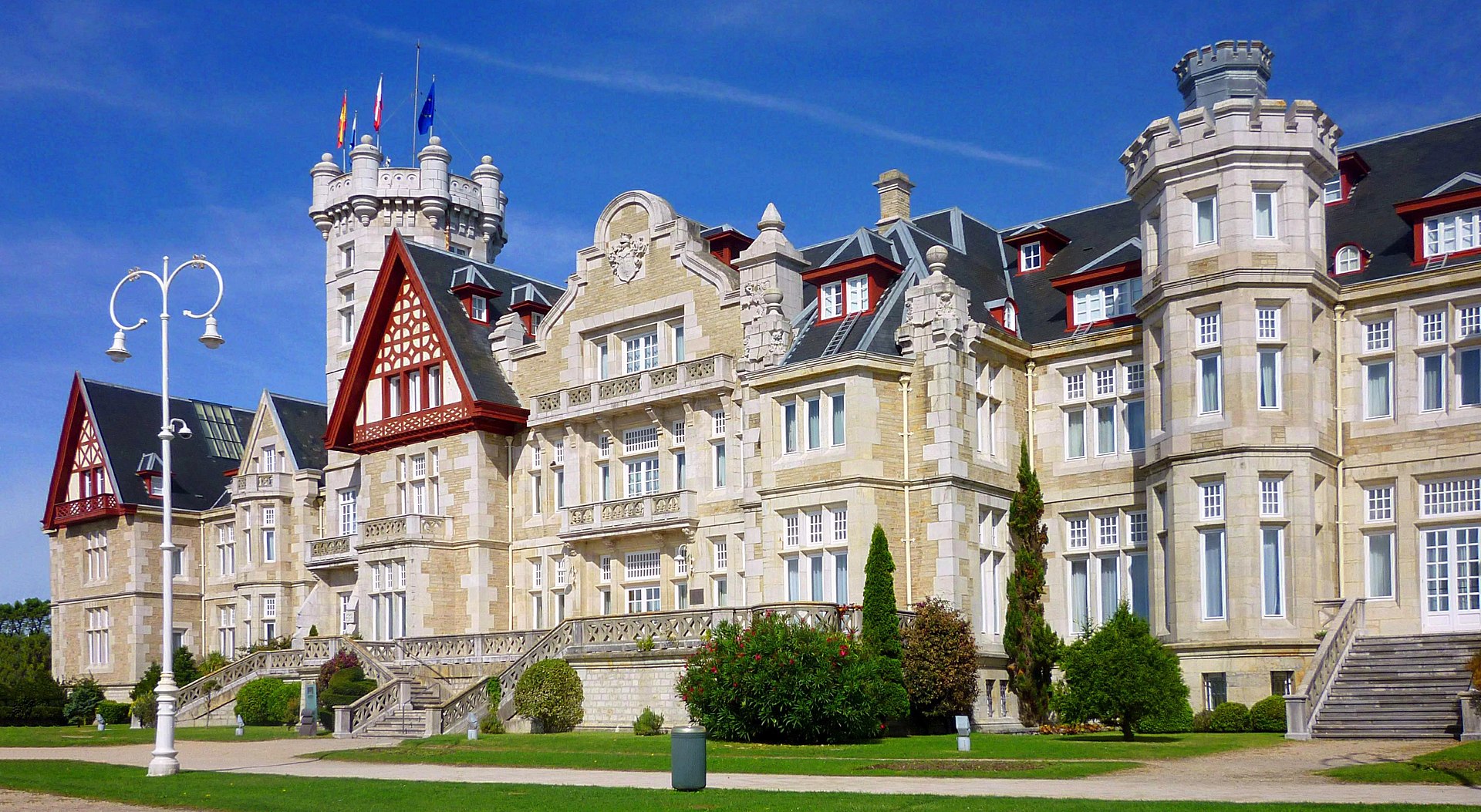
The shape of the city is unusually legible. There's a compact downtown around the Catedral and the waterfront, the Renzo Piano-designed Centro Botín jutting out over the bay like a polished spaceship, a marina at Puertochico for the after-work caña crowd, and then El Sardinero — a long curve of golden sand backed by a belle époque casino and the green headland of La Magdalena, where King Alfonso XIII's summer palace still presides. You can walk most of it. The seafront promenade between the two is one of the great underrated city walks in Spain.
The food argument here is simple: this is the Cantabrian Sea, and the kitchens know it. Anchovies from Santoña, percebes (goose barnacles) prised off cliff faces by licensed divers, rabas (battered squid), and the regional tuna stew called sorropotún. The Mercado de la Esperanza is where you start. The Barrio Pesquero — the old fishermen's quarter near the port — is where you finish, usually with a plate of grilled fish at one of the tiled, fluorescent-lit, unromantic-looking places that turn out to serve some of the best seafood in northern Spain.
What Santander isn't: a nightlife destination, a pintxo-trail city to rival San Sebastián, or somewhere you'll burn through a week of must-sees. Three or four nights is the sweet spot — enough to do the city slowly, take the little ferry across to Somo for a surf-town afternoon, drive out to medieval Santillana del Mar and the Altamira cave museum, and still have a morning left for a long swim and a long lunch before the train south.
The practical bits.
- Best time
-
Jun – SepMildest, driest stretch; sea swimmable July–September peaking around 21°C.
- How long
-
3 – 5 nights recommendedA week works if you're using it as a base for Cantabria day trips.
- Budget
-
$140 / day typicalHotel prices spike sharply in August; shoulder season cuts costs roughly in half.
- Getting around
-
Walk the center, ride the city bus for €1.30, take the harbour ferry for the beaches across the bay.Santander's downtown and seafront are easily walkable end-to-end in 30–40 minutes. TUS city buses cover the rest cheaply, and the little Los Reginas ferries crossing to Somo and Pedreña are a working part of the transit system, not just a tourist ride.
- Currency
-
€ Euro (EUR)Cards accepted virtually everywhere, including buses and most market stalls. Carry €20–40 in cash for older bars and the harbour ferry kiosk.
- Language
- Spanish (Castilian). English is functional in hotels and on the seafront, patchier in the Barrio Pesquero and at the market.
- Visa
- Schengen rules — US, UK, Canadian, Australian and most Latin American travellers visa-free for up to 90 days in any 180-day period; ETIAS pre-authorisation is rolling in for visa-exempt visitors.
- Safety
- Among the safest cities in Spain — low violent crime, very walkable at night, and routinely flagged as comfortable for solo female travellers. Standard big-city pickpocketing awareness on the bus and around the market is enough.
- Plug
- Type C/F, 230V
- Timezone
- GMT+1 (GMT+2 in summer)
A few specific picks.
Hand-picked, not algorithmic. Each of these has earned its space.
Renzo Piano's bay-floating arts centre — worth the visit for the rooftop terrace alone, which gives you the best view back at the city.
The Spanish royal family's old summer residence on its own peninsula, ringed by walking paths and small coves. Free to wander the grounds.
A 1.3 km arc of pale sand backed by a *belle époque* casino. Busy by 11am in August, near-empty by October.
Cantabria's largest food market — ground floor is wall-to-wall fish, upstairs is meat, cheese and produce. Go hungry, go before noon.
Architecturally bleak, gastronomically essential. The fishing-quarter tabernas are where locals send you for grilled hake and rabas.
Working lighthouse on a cliff at the city's northern edge, with a small art museum inside and a clifftop walk back into town.
Two-storey medieval cathedral on the highest point of the old town; the lower crypt church is the atmospheric half.
Thirty-minute bay crossing to a surf town with a vast wild beach. A cheap and disproportionately scenic afternoon.
Small cliff-backed cove that locals use when El Sardinero gets crowded — steep stairs down, but worth it.
Compact harbour ringed by tapas bars; the default evening drink spot for anyone not bothering with El Sardinero.
The grand seafront boulevard between the cathedral and Puertochico — the one walk every visitor ends up doing twice.
Pick a neighborhood, not a hotel.
Santander is a city of neighborhoods. The one you stay in shapes the trip more than the property does.
Different trips for different travelers.
Same city, very different stays. Pick the lens that matches your trip.
Santander for foodies
Cantabrian seafood, the Mercado de la Esperanza, and the Barrio Pesquero give you a more local, less polished northern-Spain food trip than San Sebastián.
Santander for families
Compact, safe, very walkable, with a wide gentle beach and the Cabárceno wildlife park 25 minutes away. Genuinely low-stress for kids.
Santander for solo travellers
Repeatedly rated one of Spain's safest cities. Easy to eat alone at a marina bar, easy to join surf or Spanish-language schools.
Santander for surfers
Somo, Loredo and Liencres deliver consistent Atlantic swell with year-round surf schools — Santander is a working base, not a posing spot.
Santander for slow travellers
A city you can settle into for a week, walk every day, and never feel rushed. Cheap weekly apartment rentals in the off-season.
Santander for couples
Belle époque seafront walks, sunset drinks at Puertochico, and quiet headland coves at Mataleñas — romantic without being twee.
When to go to Santander.
A quick year at a glance. Great, good, or skip — see what each month is doing before you book.
Cheapest hotels of the year; expect to be indoors most afternoons.
Carnival in February brings a bright spike of local energy.
Quiet and inexpensive; pack layers and waterproofs.
Semana Santa adds processions and a long weekend bump.
Excellent walking weather and pre-season prices on the coast.
Arguably the best month — fully open, not yet packed.
Sea finally swimmable; international Music Festival runs through August.
Busiest and most expensive month — book accommodation well ahead.
The locals' favourite — crowds gone, water still inviting.
Strong food month, soft prices, beach walks rather than beach days.
Cheapest hotel month of the year if weather isn't the priority.
Christmas market and lights bring a brief, cosy reason to visit.
Day trips from Santander.
When you want a change of pace. Each one's a half-day or full-day out, easy from Santander.
Santillana del Mar
30 min driveCobblestoned, photogenic, and pairs perfectly with the prehistoric replica caves nearby.
Comillas
45 min driveHome to El Capricho, Gaudí's earliest standalone building, plus a quiet beach and Modernist cemetery.
Castro Urdiales
45 min driveGothic church on a headland above a working harbour — go for lunch and a swim.
Santoña
45 min driveSpain's anchovy capital, with the long wild beach of Berria a short drive on.
Cabárceno Nature Park
25 min driveFormer open-pit mine rewilded with free-roaming bears, elephants and big cats across 750 hectares.
Puente Viesgo
30 min driveThe El Castillo cave paintings are older than Altamira's and you can still actually visit them.
Santander vs elsewhere.
Quick honest reads on the cities people compare Santander to.
Bilbao is bigger, edgier, and culture-led — the Guggenheim, an industrial-chic riverfront, and a strong pintxo scene. Santander is calmer with better beaches.
Pick Santander if: Pick Bilbao for art and pintxos; pick Santander for the seaside and seafood.
San Sebastián has Spain's most famous food scene and a near-identical crescent beach, but books out fast and runs roughly 30% pricier in summer.
Pick Santander if: Pick San Sebastián for the pintxo trail; pick Santander to avoid the August squeeze.
Oviedo is inland Asturias — cider houses, pre-Romanesque churches, and a denser old town. Santander has the coast.
Pick Santander if: Pick Oviedo for green-Spain food and history; pick Santander if you want to wake up on a bay.
Gijón is more working-class port city, Santander more belle époque resort. Similar beaches, different mood.
Pick Santander if: Pick Gijón for a grittier, cheaper Asturian feel; pick Santander for a polished seaside.
Biarritz, just across the French border, is glossier, surf-chic and Euro-pricey. Santander is the Spanish equivalent at roughly half the cost.
Pick Santander if: Pick Biarritz for French resort polish; pick Santander for the same beach hours at Spanish prices.
Itineraries you can start from.
Rough shapes for a trip here — a feel for the pace and cost. Find the one that fits you.
Two nights downtown for the cathedral, Centro Botín and Barrio Pesquero, one night out at El Sardinero for the beach and Magdalena Peninsula.
Three nights in the city, two split across Comillas and Santillana del Mar, with the Altamira cave museum and Cabárceno Nature Park on the route between.
A full week using Santander as a base — beach mornings, an Asturias day trip west, a Basque coast day trip east, and the prehistoric caves of Puente Viesgo.
Things people ask about Santander.
Is Santander worth visiting?
Yes — particularly if you've already done Madrid and Barcelona and want the cooler, greener northern coast. Santander offers one of Spain's most beautiful urban beaches at El Sardinero, world-class Cantabrian seafood, the Renzo Piano-designed Centro Botín arts centre, and easy day trips to medieval Santillana del Mar and the Altamira caves. It's not a bucket-list city, but it's a calm, elegant, low-stress one.
How many days do you need in Santander?
Three to five nights is ideal. You can cover the historic centre, the waterfront promenade, Centro Botín, the Magdalena Peninsula and El Sardinero beach comfortably in two days, then use the rest for day trips along the Cantabrian coast — Comillas, Castro Urdiales, Santoña, or the Altamira cave museum. A week works if you're treating Santander as a base for the wider region.
What is the best time to visit Santander?
Late June through mid-September is the sweet spot. Northern Spain has a wetter, cooler climate than the Mediterranean coast, and these months are the driest and warmest, with highs around 22–24°C and the sea finally swimmable from July through September. July and August are the busiest and most expensive; June and early September give you most of the weather with fewer crowds.
Is Santander safe for solo travellers?
Yes. Santander is consistently rated one of the safest cities in Spain, with very low violent crime, well-lit central streets, and a relaxed pace that makes evenings comfortable even alone. It's regularly recommended for solo female travellers. Standard urban precautions on busy buses or around the market are enough; you don't need to plan routes around safety the way you might in larger European capitals.
Is Santander expensive?
Less expensive than San Sebastián or Barcelona, broadly similar to Bilbao and noticeably cheaper than Madrid for food. Expect roughly €60–80 a day on a backpacker budget with hostels and market meals, €130–150 for a comfortable mid-range trip, and €250+ for boutique hotels and tasting menus. August spikes prices sharply for hotels — shifting one week earlier or later cuts costs significantly.
What is Santander known for?
Santander is best known for the El Sardinero beach, the *belle époque* architecture of its seafront, the Palacio de la Magdalena where the Spanish royal family once summered, and the Cantabrian seafood scene. The city is also home to Centro Botín, Renzo Piano's striking bay-floating arts centre, and to one of Spain's most respected universities. Banking, fishing and the summer resort tradition still shape it.
Cash or card in Santander?
Card almost everywhere. Hotels, restaurants, supermarkets, taxis, the airport bus and even the city buses (with contactless) all take cards without complaint. Carry €20–40 in cash for older bars in the Barrio Pesquero, market stalls that may have a card minimum, the small harbour ferries and any tip you want to leave. ATMs are widely available across the centre.
How do you get from Santander airport to the city?
Santander Airport (SDR) is only about 5 km from the centre. The S4 city bus runs from outside the terminal to the central bus station in under 20 minutes for €3.20, operating roughly 06:30 to 23:00. Taxis are quick at about 12 minutes and €15–20 for up to four passengers. There's no train link, but car rental desks are available in the terminal.
What are the best day trips from Santander?
The strongest are Santillana del Mar (a preserved medieval village 25 minutes west) paired with the Altamira cave museum; Comillas with its Gaudí-designed Capricho; the Cabárceno Nature Park, a former quarry rewilded with free-roaming animals; the surf beach at Somo across the bay; and the prehistoric painted caves at Puente Viesgo. Most are reachable in 30–60 minutes by car or ALSA bus.
Where is the best neighbourhood to stay in Santander?
Centro is the default choice — you'll be walking distance from the cathedral, Centro Botín, the Mercado de la Esperanza and the seafront promenade, with the widest range of hotels at every price point. El Sardinero is the alternative for travellers who want the beach on their doorstep and a quieter, more resort-style stay. Puertochico is the compromise: central, but right on the marina.
Santander or Bilbao — which should I visit?
Bilbao is bigger, edgier, more architecturally ambitious, and home to the Guggenheim — better for a city break centred on food and museums. Santander is calmer, prettier on the waterfront, and has the beaches Bilbao lacks. If you only have time for one, pick Bilbao for culture and pintxos, Santander for seaside and seafood. Many travellers do both — they're 90 minutes apart by bus.
Santander or San Sebastián — which is better?
San Sebastián has the world's most famous pintxo scene, more Michelin stars per capita than almost anywhere on earth, and a similarly stunning crescent beach. Santander is cheaper, less crowded, and feels more local — fewer English-language menus, fewer day-trippers. Choose San Sebastián if food tourism is the goal, Santander if you want northern-Spain beaches without the booked-out August premium.
What should you eat in Santander?
Start with rabas (battered squid rings), anchoas de Santoña (cured anchovies from the regional port), and any grilled fresh fish — hake (merluza), turbot (rodaballo) or sea bass. Order percebes (goose barnacles) when in season, try sorropotún (Cantabrian tuna stew), and finish with quesada pasiega, the regional cheesecake. Pair with crisp Albariño from neighbouring Galicia or a local Cantabrian sidra.
Can you swim in Santander?
Yes, but the Atlantic here is cool — the sea reaches roughly 18–21°C between July and September, which is its only genuinely comfortable swimming window. El Sardinero and Playa de la Magdalena are the safest, most family-friendly choices in the city itself. Across the bay, Somo offers a vast, wilder beach popular with surfers. Outside July–September, locals walk the beach rather than swim.
Do you need a visa to visit Santander?
Santander follows Spain's Schengen rules. US, UK, Canadian, Australian, New Zealand and most Latin American passport holders can visit visa-free for up to 90 days in any 180-day period for tourism. The EU's ETIAS pre-authorisation system is rolling in for visa-exempt visitors, so check the current status before booking. Travellers from non-exempt countries apply for a Schengen visa through the Spanish consulate.
Is Santander good for families?
Very. The city is compact and walkable, the El Sardinero beach is wide and shallow at low tide, the Magdalena Peninsula has a small zoo area with seals and penguins, and the Cabárceno Nature Park 15 minutes inland is a major hit with children. Add the harbour ferry to Somo, gentle bike paths along the bay, and you have a low-stress, low-cost family destination by Spanish-coast standards.
Know someone headed to Santander?
Send them this guide — real neighborhoods, timing, and prices, with nothing to sign up for.
Copies the link — nothing to install