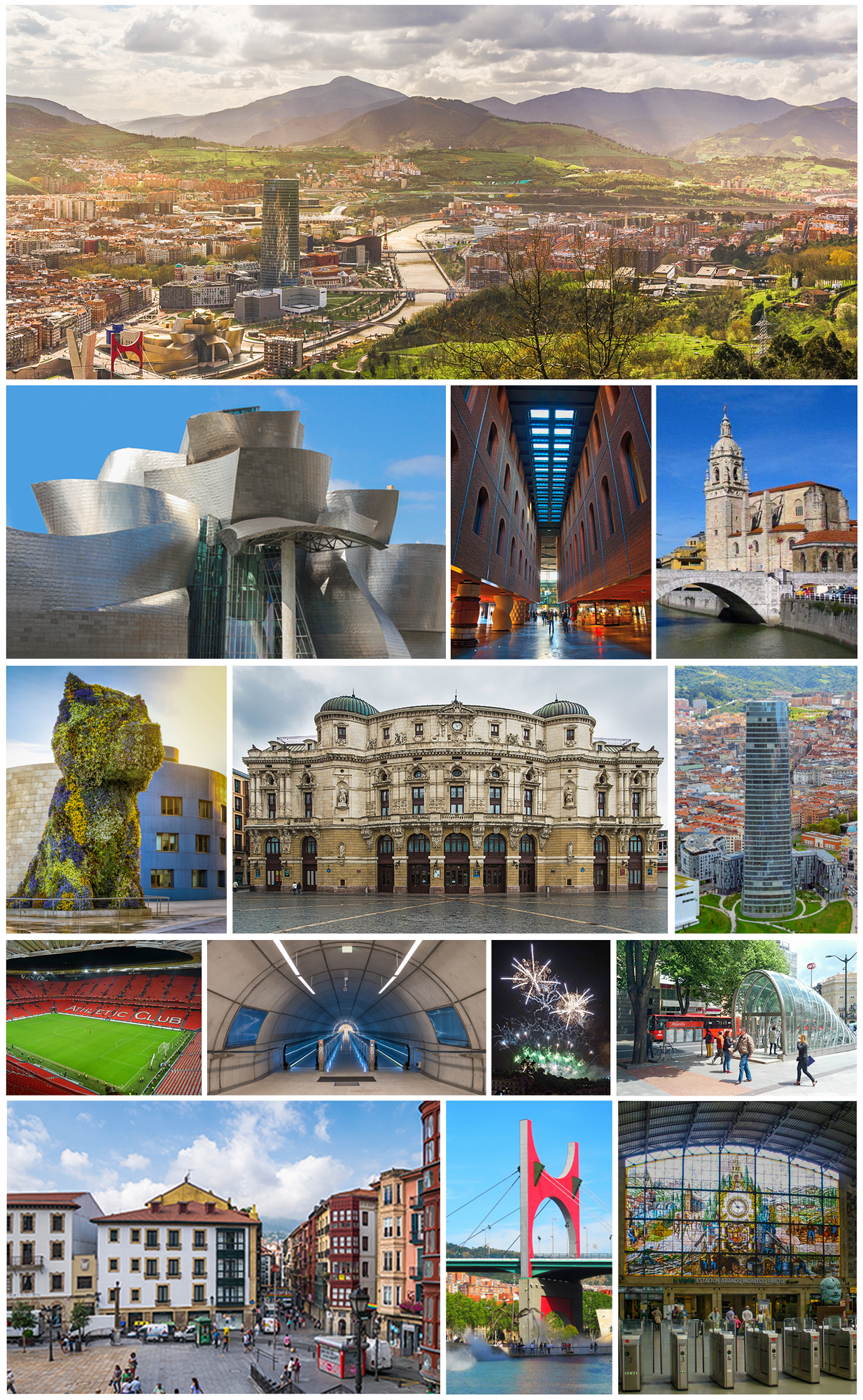
Bilbao
Send it to whoever you'd travel with
Bilbao earned its place on the European city-break circuit through one building — the Guggenheim — but the more compelling reason to stay is what exists beyond it: a serious food city with a working-class Basque identity that hasn't been prettified for export.
Before 1997, Bilbao was the kind of city travel writers described as 'gritty' — an industrial port town of steelworks and shipyards, built around the Nervión river estuary, with a functional old town and not much else that drew outsiders. The Guggenheim Bilbao changed that with a degree of comprehensiveness that became a case study in urban regeneration. The titanium-clad Gehry building didn't just bring contemporary art to the Basque Country; it fundamentally reframed the city's relationship to itself.
What the Guggenheim effect didn't do is change the food. Bilbao was eating extremely well before 1997, and it continues to eat extremely well now. The Casco Viejo — the seven streets (siete calles) of the medieval old town — has been serving pintxos and txakoli in the same bars for generations. The Mercado de la Ribera on the Nervión bank is still the largest covered market in Spain; the fishing port of Bermeo supplies the city daily with the anchovies and kokotxas (cod cheeks) that define Basque cooking.
The city navigates its identity carefully. Bilbao is Basque before it is Spanish — the Euskara language appears on signs alongside Castilian, the political culture is distinct, and the pride in local food, football (Athletic Club, 'La Catedral' of San Mamés), and independence is deeply embedded. This is not hostility to outsiders; Basques are remarkably welcoming. It is simply a culture that knows what it is.
The comparison to San Sebastián is inevitable and imprecise. San Sebastián has more culinary star power — more Michelin stars per capita than any other city in Europe. Bilbao has more daily authenticity — the pintxos bars in the old town serve the same txakoli to the same office workers at noon that they serve to tourists at 7 PM. The cities are 1 hour apart by bus. Most serious food travelers do both in a single trip, and the contrast between them is part of the education.
The practical bits.
- Best time
-
May – June · September – OctoberThe Basque Country has a genuinely Atlantic climate — mild but frequently wet. May and June give the best probability of warm, dry days with fewer crowds. September has excellent weather and the Semana Grande festival in late August just finishing. October brings autumn color to the hills and continued good temperatures. July–August is warmer but can still be wet; summer is not reliably Mediterranean here.
- How long
-
3 nights recommended2 nights is a tight but workable city-break minimum — Guggenheim, old town, one good dinner. 3–4 nights gives time for the Guggenheim and its context, a day in San Sebastián, and the real pintxos circuit. 5 nights pairs with the Basque Coast and Bilbao's surroundings.
- Budget
-
$190 / day typicalBilbao is one of Spain's more affordable mid-size cities. Budget pintxos lunch (€15); good mid-range dinner (€40–50/person with wine). Hotels are reasonable — central 4-stars run €120–200/night. The Guggenheim entry is €16; its temporary exhibitions can add €12 more.
- Getting around
-
Metro + walking + tramThe Bilbao metro (designed by Norman Foster) is clean, fast, and covers the city well. Most tourist destinations are within walking distance of the Abando rail station and the Guggenheim. The tram line connects the waterfront to the Casco Viejo. Bus to San Sebastián runs every 30 minutes from the Termibús station (1h, €7).
- Currency
-
Euro (€)Cards accepted everywhere. Pintxos bars tend to tab you up and pay at the end — some accept cards, some prefer cash. Carry €20–40 for bar hopping.
- Language
- Spanish (Castilian) and Basque (Euskara). English spoken at hotels and tourist-facing venues; less in neighborhood bars in the Casco Viejo.
- Visa
- 90-day Schengen visa-free for US, UK, Australian, and most Western passports. ETIAS required from late 2026.
- Safety
- Very safe. Standard urban awareness. The old town late at night is lively but not dangerous.
- Plug
- Type C / F · 230V
- Timezone
- CET · UTC+1 (CEST UTC+2 last Sunday March – last Sunday October)
A few specific picks.
Hand-picked, not algorithmic. Each of these has earned its space.
Frank Gehry's titanium-clad museum is the building that changed Bilbao's identity — and still earns its visit on architectural merit alone. The permanent collection is strong; the temporary exhibitions are often the reason to go. Book tickets online; the first Friday evening of each month is free.
The ritual: walk the Calle del Licenciado Poza and the siete calles streets from bar to bar, one pintxo and one txakoli glass per stop. El Globo and Baster are reliable anchors. The local practice is to eat standing at the bar, not at a table. Do it at 1 PM when locals eat, not at 8 PM when tourists arrive.
The largest covered market in Spain by floor area — three floors on the Nervión waterfront, with fish hall, meat market, and pintxos counters on the upper floor. The fish selection reflects how seriously the Basque Country takes its sea-to-table sourcing. Best on Friday morning.
The other pintxos street — across the river from the old town, less touristy, with bars that serve the after-work Bilbao crowd. The local version of the pintxos experience, priced and paced for the people who live here.
The fine arts museum that sits in the shadow of the Guggenheim and is consistently overlooked — free entry, strong collection from medieval Flemish paintings to 20th-century Basque art. Worth 2 hours; usually quiet.
The medieval heart of Bilbao — the seven streets laid out in the 14th century, the Plaza Nueva (a neoclassical arcaded square used for Sunday antiques markets), and the Catedral de Santiago. The neighborhood is compact, walkable, and genuinely animated from morning to night.
The local Basque white wine — extremely dry, slightly sparkling, poured from height to aerate it. The proper pour in a Bilbao pintxos bar is a minor theater. At its best slightly acidic and tasting of green apple and sea air. Produced in the hills above the Basque coast.
Athletic Club de Bilbao's home — 'La Catedral' to the locals. The club's unique cantera policy (only players born or trained in the Basque Country) makes it one of European football's most distinctive institutions. Tours available; match tickets are hotly contested but available for some fixtures.
The 1915 funicular to the hill above the city — at the top, a complete panorama of Bilbao's estuary, the surrounding green hills, and on clear days the Pyrenees. A 15-minute ride from the Casco Viejo; the view from the top gives the city's industrial-to-cultural arc in a single frame.
Fernando Canales's fine-dining restaurant in the Euskalduna palace — one of the city's most accomplished contemporary Basque kitchens, with market-sourced tasting menus that avoid the luxury-showcase trap. Book ahead; the Guggenheim-era riverside location adds the right context.
Pick a neighborhood, not a hotel.
Bilbao is a city of neighborhoods. The one you stay in shapes the trip more than the property does.
Different trips for different travelers.
Same city, very different stays. Pick the lens that matches your trip.
Bilbao for food travelers
Bilbao is the most accessible Basque food city and the first stop for a serious Basque gastronomic trip. The Mercado de la Ribera, the pintxos circuit in the Casco Viejo, and the contemporary Basque kitchen (Etxanobe, Mina, Zortziko) cover the full range from market stall to tasting menu.
Bilbao for architecture and design travelers
The Guggenheim is the centerpiece, but Bilbao's architectural story is broader: the Norman Foster metro, the Santiago Calatrava bridge (Zubizuri), the Alhóndiga building (Philippe Starck interior), and the Euskalduna congress center all add to a city that used design intentionally to rebuild itself.
Bilbao for first-time spain visitors
Bilbao paired with San Sebastián makes an excellent Basque introduction that's completely unlike the Barcelona or Madrid experience. The culture, language, food, and landscape are distinct. If you want to understand that Spain is not one thing, start here.
Bilbao for budget travelers
Bilbao is excellent value by Spanish city standards. The pintxos lunch system (€1.50–2.50 per pintxo, €2 txakoli) is the cheapest good eating in any major European city. The Museo de Bellas Artes is free. Hostel beds in the Casco Viejo run €25–35.
Bilbao for culture and history seekers
The Basque cultural story — Euskara (an ancient language isolate unrelated to any other European language), the industrial history of the estuary, the political history of the ETA years, and the cultural regeneration post-1997 — is genuinely fascinating and available in several museums and the city's fabric itself.
Bilbao for weekend city-breakers
Bilbao is one of the better European weekend breaks — compact enough to cover the key hits in two full days, with enough depth for a third. Direct flights from London, Paris, and Amsterdam make it a straightforward 3-night trip.
When to go to Bilbao.
A quick year at a glance. Great, good, or skip — see what each month is doing before you book.
Cheapest time to visit. The food scene doesn't close; the Guggenheim doesn't close. Just bring a serious raincoat.
Carnaval festivities add color. Still off-season prices.
Spring beginning. Green hills become very green (this is the Atlantic Basque Country). Weather still unpredictable.
Semana Santa brings Spanish visitors. Otherwise an excellent month — the hills are intensely green, food markets are full.
Best spring month. Outdoor café culture begins. The Guggenheim's outdoor sculpture garden is at its best.
Good travel month. Long evenings. Pintxos bars extending outdoors.
Summer in Bilbao is not guaranteed sun — the Atlantic climate persists. Still the warmest reliable period.
Aste Nagusia festival mid-August: the city at maximum festivity and maximum crowds. Hotels book out well ahead.
One of the best months. Summer crowds gone; weather often at its clearest; food scene in full swing.
Autumn color on the surrounding hills. The pintxos circuit is at its most relaxed pace.
Hunting season in the mountains. The autumn mushroom haul appears in market and restaurant menus.
Christmas markets and local festivities. Quieter tourist-wise but the city has its own internal energy.
Day trips from Bilbao.
When you want a change of pace. Each one's a half-day or full-day out, easy from Bilbao.
San Sebastián
1h busThe Alsa bus from Termibús runs every 30 min and costs €7. Essential on any Basque trip — the food culture complements rather than duplicates Bilbao's. Book any starred-restaurant lunch 3–4 weeks ahead.
Bermeo
30–45 min by busThe working anchovy and tuna port that supplies Bilbao's markets. The harbor, the fishing boats, and the anchovy museum (Museo del Pescador) give context to what you eat in the city. Very local; almost no tourist infrastructure.
Getaria
1h by busThe coastal village where the best txakoli is produced. Restaurante Elkano (one Michelin star) is famous for grilled turbot; book months in advance. The harbor church and the view across to the island of Ratón are worth the visit independent of the restaurant.
Rioja Alavesa (Laguardia)
1h by carThe Basque wine country — technically in Álava province but producing Rioja. Laguardia is a medieval hilltop village with underground bodegas beneath its streets. Marqués de Riscal (Frank Gehry-designed winery hotel) and Baigorri are the famous names. Requires a rental car; no direct bus connection.
Vitoria-Gasteiz
1h by trainThe least visited of the three Basque capitals — quieter than Bilbao and San Sebastián, with a compact medieval almond-shaped old town, excellent pintxos bars, and a relaxed local pace. The Renfe Alvia from Bilbao Abando takes 60 minutes.
Cantabrian Coast (Llanes area)
1h 30m by carThe Cantabrian coast west of Bilbao offers a different Spanish landscape — green cliffs, small fishing villages, and a quieter Atlantic beach character. Requires a car; best explored over a full day.
Bilbao vs elsewhere.
Quick honest reads on the cities people compare Bilbao to.
Bilbao is more industrial, more authentic, and more architecturally dramatic. San Sebastián is more beautiful, has a beach, and concentrates more Michelin stars in a smaller area. They're not rivals — most serious visitors do both. Bilbao has the Guggenheim; San Sebastián has Concha. The food culture differs by specific bar and dish rather than quality.
Pick Bilbao if: You want the Guggenheim and the working Basque city alongside the food, rather than the resort beach and maximum star power.
Barcelona is bigger, sunnier, beachfront, and internationally famous in a way Bilbao isn't. Bilbao is more authentically Spanish (or rather Basque) — Barcelona has become a victim of its own success with overtourism issues. Bilbao's food is more specific and interesting at the everyday level.
Pick Bilbao if: You want a compact, authentic Spanish city with serious food culture and less tourist saturation.
Porto and Bilbao are the European city-break peer group — both industrial river cities with remarkable food cultures, strong local identity, and a single transformative building (Guggenheim vs Casa da Música). Porto is more photogenic and somewhat cheaper; Bilbao has a more distinct cultural identity.
Pick Bilbao if: You want the Basque culture, food specificity, and the Guggenheim's scale of architectural ambition over Porto's azulejo-and-wine charm.
Seville is hotter, more exuberant, and more immediately beautiful — Moorish architecture, flamenco, and an Andalusian character that exports globally. Bilbao is cooler in both senses: more reserved, more industrial, more specifically its own thing. Both are excellent Spanish cities; they're answers to different questions.
Pick Bilbao if: You want the Basque north — rain-green hills, sea fish, and a culture that defines itself by distinctness from the Spanish cliché.
Itineraries you can start from.
Rough shapes for a trip here — a feel for the pace and cost. Find the one that fits you.
Day 1: Guggenheim all morning, riverside walk, museum café lunch. Day 2: Mercado de la Ribera, Casco Viejo pintxos circuit at 1 PM, Bellas Artes afternoon. Day 3: day trip to San Sebastián by bus. Two dinners at Indautxu restaurants.
Bilbao (3n): Guggenheim, old town, Artxanda. San Sebastián (2n): La Parte Vieja, Concha beach, one starred restaurant. Return flight from either city.
Add the coastal villages (Getaria, Zarautz), the Rioja Alavesa wine country (Laguardia), and Vitoria-Gasteiz — the Basque Country's quieter capital. A week structured around eating, drinking, and understanding a distinct culture.
Things people ask about Bilbao.
Is Bilbao worth visiting beyond the Guggenheim?
Yes — the Guggenheim is the reason most visitors come, but the reason they stay is the food. The pintxos culture in the Casco Viejo is one of Spain's most authentic food experiences; the Mercado de la Ribera is the largest covered market in the country; txakoli wine is local and specific in a way that Rioja isn't. A traveler who does only the Guggenheim has seen the famous thing and missed the essential one.
What are pintxos and how do I eat them?
Pintxos (the Basque spelling of pinchos) are small snacks served on bread or skewered with a cocktail pick in bar counters — Basque tapas, essentially, but distinct in culture. The local practice: enter a bar, order txakoli or a cañita, eat one or two pintxos from the counter, pay, move to the next bar. The standing bar rhythm matters. Locals eat at 1–2 PM; tourists tend to arrive at 7–8 PM and the counter selection is often diminished. Come early.
How far is Bilbao from San Sebastián?
About 100 km — 1 hour by direct Alsa bus from Termibús station (€7 each way, every 30 minutes in peak hours) or 1h 15m by car. Most travelers do both cities in a single trip, spending 2–3 nights in each. Bilbao has the Guggenheim; San Sebastián has Concha beach and the highest Michelin star density in Europe. They are complementary, not interchangeable.
When is the best time to visit Bilbao?
May through June and September through October give the best combination of weather and manageable crowds. The Basque Country has an Atlantic climate — expect rain in any season, and don't count on the Mediterranean reliability of Barcelona or Valencia. July and August are warmer but can still be wet. The Semana Grande festival in mid-August floods the city with people.
Is Bilbao expensive?
Mid-range by Spanish city standards — cheaper than San Sebastián and Barcelona, comparable to Seville. Budget travelers manage on €80–90/day with a hostel, pintxos lunches, and museum free days. Mid-range at €170–200 covers a central hotel, two good dinners, and the Guggenheim. San Mamés match tickets, starred restaurant meals, and wine-country day trips add to the higher end.
What is the Guggenheim Bilbao?
Frank Gehry's titanium-and-limestone museum on the Nervión waterfront, opened in 1997 — the building that defined the 'Bilbao Effect' concept in urban regeneration. The exterior is the spectacle; the interior holds a strong permanent collection of contemporary art plus major temporary exhibitions. Book tickets online (€16 adults); the first Friday evening of each month offers free entry, which means crowded. Allow 2.5–3 hours.
What is txakoli wine?
The local Basque white wine — produced on the coastal hills of Getariako Txakolina and Bizkaiko Txakolina. It's very dry, low in alcohol (10–11%), slightly effervescent, and powerfully mineral. The traditional pour is from height (the bartender raises the bottle above the glass) to aerate it and develop a slight fizz. It pairs specifically with pintxos and seafood; it does not pair well with red meat. Order it without asking what it is.
How do I get to Bilbao?
Bilbao Airport (BIO) is 12 km from the city — the Bizkaibus A3247 shuttle runs to the city center in 30 minutes (€3). By train from Madrid: the RENFE Alvia takes 4h 45m (€35–80) from Madrid Chamartín. From Barcelona: 7h by train or 1h by Vueling/Iberia Express. By bus from San Sebastián: 1 hour (€7).
Is Bilbao good for families?
Yes. The Guggenheim has specific programming for children; the Artxanda funicular is universally popular; the estuary waterfront is walkable and safe. The pintxos bar culture is not inherently child-unfriendly — Spanish bar culture in general extends to children during the early evening. The Casco Viejo has pedestrian areas where children can range freely.
What should I eat in Bilbao beyond pintxos?
Bacalao a la vizcaína — salt cod in a dried red pepper sauce, the Bilbao-specific preparation that differs from the Basque coast's other bacalao styles. Marmitako — a tuna and potato stew from the fishing boats. Kokotxas al pil-pil — cod cheeks emulsified in their own gelatin with olive oil. The Nervión brings fresh anchovy and bonito into the market daily; the kitchen follows the port.
What is the Casco Viejo?
The medieval old town — seven streets (siete calles) laid out on a grid plan in the 14th century. The area includes the Plaza Nueva (a neoclassical arcaded square host to Sunday antiques markets), the Gothic Catedral de Santiago, and the densest concentration of pintxos bars in the city. It sits across the Nervión from the Guggenheim and the modern waterfront.
Is Bilbao safe?
Yes — Bilbao is one of the safer mid-size cities in Spain. The Casco Viejo late at night is lively and energetic, not threatening. Standard urban awareness applies in crowded market areas and at the bus station. No significant tourist crime problems; the city's compact size makes it easy to orient and move safely after dark.
What day trips can I do from Bilbao?
San Sebastián (1h bus) is the headliner. The Basque Coast towns — Bermeo (30 min bus, the main anchovy fishing port), Lekeitio (1h), and Getaria (1h) — are excellent half-days. The wine country of Rioja Alavesa (Laguardia, 1h by car) is the best drive from Bilbao. Vitoria-Gasteiz (1h by train) is the Basque Country's underrated capital.
What is Athletic Club Bilbao?
One of Spanish football's most unusual clubs — Athletic Club maintains a strict cantera policy, fielding only players born in the Basque Country or who came through the Basque football academy system. This makes them a perennial surprise in La Liga, where they compete with Real Madrid and Barcelona without the possibility of buying talent globally. The club is deeply embedded in Basque identity; San Mamés stadium ('La Catedral') is the pilgrimage site.
How do I use the Bilbao metro?
The metro (designed by Norman Foster) has two lines covering the main tourist zone, plus a third coastal line. A single ticket costs €1.50–1.75 depending on zones; the Barik transport card offers slight discounts across metro, bus, and tram. Most tourist destinations are within walking distance of each other, but the metro is useful for the airport bus connection and getting to the outer neighborhoods.
What language do people speak in Bilbao?
Spanish (Castilian) is the primary spoken language in Bilbao; Basque (Euskara) is co-official and appears on street signs, menus, and public announcements. The two languages coexist without friction. English is well-spoken at hotels and tourist restaurants, less so in neighborhood pintxos bars and the Mercado de la Ribera. A few words of Spanish will ease every interaction.
What's the Semana Grande in Bilbao?
Aste Nagusia (Semana Grande in Castilian) is Bilbao's main festival — nine days in mid-August centered on the 'Marijaia' puppet figure. It includes free outdoor concerts, bullfighting (controversial but traditional), fireworks competitions, and the full saturation of bar culture. The city is at its most festive and most crowded. Hotels book out; prices peak. It's a genuine local event rather than a tourist festival — if you're in the region in August, it's worth experiencing for at least one day.
Know someone headed to Bilbao?
Send them this guide — real neighborhoods, timing, and prices, with nothing to sign up for.
Copies the link — nothing to install