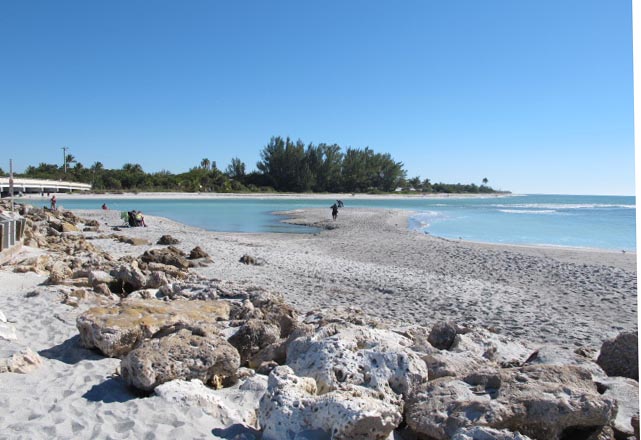
Sanibel Island
Send it to whoever you'd travel with
Sanibel Island is the Gulf Coast's most distinctive natural refuge — the J.N. Ding Darling National Wildlife Refuge covers a third of the island, the shelling beaches are among the best in the Western Hemisphere, and the island's decision to limit development to low-rise and car-scaled streets has preserved a character that most Florida barrier islands gave away forty years ago.
Most shells on Florida's Gulf Coast beaches arrive from the south and west, driven by currents along the coast. Sanibel Island bends at an almost exact right angle — it runs east-west instead of north-south — which means it intercepts shells that would otherwise bypass the coast entirely. The beaches face directly into the prevailing shell-bearing currents. The result is the most productive shelling in the continental United States, and possibly the Western Hemisphere. The island has given the posture of shell-searching — bent over, eyes down, shuffling slowly along the tide line — the local name 'the Sanibel Stoop.'
The J.N. 'Ding' Darling National Wildlife Refuge covers more than 6,400 acres across the northern third of the island — the largest undeveloped mangrove ecosystem in the United States. Named for the Iowa editorial cartoonist who became FDR's wildlife conservation chief and redesigned the Duck Stamp program, Darling is one of the most accessible wildlife refuges in the country. The Wildlife Drive (5 miles, open to cars, bicycles, and walkers) runs through the refuge's interior, past brackish lagoons where roseate spoonbills, tricolored herons, and great blue herons hunt in plain view. Alligators rest in the sun a few feet from the road. Anhingas spread their wings to dry in the live oaks.
Hurricane Ian made landfall at Sanibel on September 28, 2022, as a Category 4 storm with a 12-foot storm surge that inundated the entire island. The causeway connecting Sanibel to Fort Myers was destroyed; the Darling Refuge, the Sanibel-Captiva Conservation Foundation lands, and hundreds of buildings took catastrophic damage. Recovery has been significant and ongoing — the island reopened the causeway in November 2022, the Darling Refuge Wildlife Drive reopened in 2023, and most beach access has been restored. Some businesses remain closed or relocated; travelers should verify specific restaurant and attraction hours before visiting.
The development character that survived Hurricane Ian — low-rise, no chain hotels, no traffic lights until 2003, a strict building height limit that prevents obstruction of the treeline — reflects deliberate choices made by residents over decades. Sanibel incorporated as a city in 1974 specifically to prevent the high-rise development that had consumed Miami and Fort Lauderdale. The result is an island that feels more like a wildlife preserve that happens to have good accommodations than a resort that happens to have some nature.
The practical bits.
- Best time
-
November – AprilWinter (December–March) is the classic season — temperatures in the mid-70s°F, low humidity, minimal rain, Gulf water warm enough to swim, and peak shelling conditions after winter storm activity rolls shells ashore. November and April are the best shoulder months with fewer crowds and reasonable prices. Summer (June–September) is hot, humid, and in hurricane season.
- How long
-
3–4 nights recommendedTwo nights covers Ding Darling and a full shelling day. Three to four nights allows early-morning Wildlife Drive multiple times (different tides reveal different species), Captiva Island afternoon, and the Bailey-Matthews Shell Museum. Ten nights is common for winter escape regulars who treat Sanibel as a seasonal home.
- Budget
-
$280 / day typicalSanibel is premium-priced by Gulf Coast standards. Cottages and condos run $300–700/night in peak season (January–March); off-season rates are significantly lower. The Ding Darling Wildlife Drive costs $10/vehicle or is free on Fridays. Bailey-Matthews Shell Museum $15 adults. Beach access is free. Causeway toll $8 each way.
- Getting around
-
Car needed; cycling recommendedSanibel has 25+ miles of dedicated paved bike paths parallel to the main roads — cycling is a practical and pleasant way to reach the beach, the refuge, and the village. Bike rentals are widely available from $20–30/day. A car is needed to cross the causeway; parking at beach access points is limited. The island's roads are not congested outside of peak winter weekend afternoons.
- Currency
-
US Dollar (USD)Cards everywhere. Causeway toll is cash or SunPass transponder.
- Language
- English
- Visa
- ESTA for Visa Waiver Program countries.
- Safety
- Safe throughout. Hurricane season runs June–November; the island's storm evacuation procedures are well-established. Gulf swimming: gentle surf, but Gulf rip currents and jellyfish possible. Hurricane Ian recovery means some areas remain under reconstruction — verify specific businesses before arrival.
- Plug
- Type A / B · 120V
- Timezone
- EST · UTC-5 (EDT UTC-4 Mar – Nov)
A few specific picks.
Hand-picked, not algorithmic. Each of these has earned its space.
6,400 acres of mangrove wetlands and brackish lagoons covering the northern third of the island. The 5-mile Wildlife Drive is one of the most productive wildlife-watching drives in the entire US refuge system — roseate spoonbills, alligators, herons, anhingas, and osprey visible in the first hour. Best at low tide two hours before sunrise and at low tide mid-morning.
The best shelling beach on the island — a long walk from the parking area through pine flatwoods gives it lower traffic than the causeway beaches. Best after winter storms when new shells wash ashore. Sunrise is the optimal time — low tide and calm conditions before other shellers arrive.
The only museum in the world dedicated entirely to shells and mollusks. The identification stations let you match your morning finds; the ocean hall traces the ecological role of bivalves and gastropods globally. An unusually specific and rewarding museum that justifies the $15 admission.
The smaller island north of Sanibel, connected by a bridge and road. Smaller, more exclusive, wilder feeling. The Mucky Duck pub is a beloved local institution for Gulf sunset beer. South Seas Island Resort occupies the northern tip; the beaches in between are quiet and shelly. An excellent afternoon drive from Sanibel.
The 5-mile Wildlife Drive is open to cyclists before it opens to vehicles (early morning). Cycling it in the low-light pre-dawn conditions — birdsong, alligators warming on the banks, spoonbills crossing the lagoons — is one of the most atmospheric wildlife experiences in Florida. Bike rental shops on the island open early for this purpose.
The 1884 iron lighthouse at the island's eastern tip, one of the first Gulf Coast lighthouses built after the Civil War. The beach here — at the confluence of the Gulf and Pine Island Sound currents — is among the island's most productive shelling spots. A 2-mile boardwalk trail through coastal scrub leads to the lighthouse grounds.
Tarpon Bay Explorers operates guided kayak and canoe tours through the mangrove creeks inside the Ding Darling Refuge and adjacent Pine Island Sound. The tram and pontoon tours they run through the refuge are more accessible alternatives for travelers who don't kayak.
Blind Pass Beach at the island's western end faces directly into the Gulf sunset. Less populated than Captiva and with the tidal pass creating an interesting circulation of Gulf and back-bay water. The combination of shell-bearing tide and direct western exposure makes it a good combined shelling and sunset beach.
Marine education programs for adults and children — snorkeling with knowledgeable instructors, ocean ecology tours, and shell identification workshops. One of the better ways to understand what you are collecting and why the island's position makes its shells so diverse.
A casual local institution that survived Ian — sandwiches, grouper, and fresh Gulf catch in a setting that feels genuinely local rather than resort-curated. A useful reminder that the best food on Sanibel is more often in the modest establishments than in the resort dining rooms.
Pick a neighborhood, not a hotel.
Sanibel Island is a city of neighborhoods. The one you stay in shapes the trip more than the property does.
Different trips for different travelers.
Same city, very different stays. Pick the lens that matches your trip.
Sanibel Island for shell collectors
The primary reason many travelers visit and the reason many return annually. Low-tide dawn walks at Bowman's Beach or Turner Beach, a Bailey-Matthews Shell Museum visit for identification, and patience across several tidal cycles are the formula. December through March maximizes finds. Bring a field guide and a mesh bag.
Sanibel Island for wildlife and birding travelers
Ding Darling is one of the top 10 most-visited wildlife refuges in the US and for good reason. Add Cayo Costa by boat for undisturbed beach wildlife, and the back-bay mangrove kayak circuit through Pine Island Sound. January and February bring migratory shorebirds in addition to the year-round residents.
Sanibel Island for families
Shell collecting is naturally child-engaging. The Shell Museum has education programs for children. The Wildlife Drive delivers live alligators and colorful birds at close range without any hiking. Gulf water is safe and gentle for young swimmers. The island's slow pace and cycling paths are ideal for families with children of varied ages.
Sanibel Island for couples
Gulf sunsets from Blind Pass Beach or Captiva Island's Mucky Duck, morning shell walks before other visitors arrive, a kayak tour through mangrove tunnels, and seafood dinners on a cottage porch are the Sanibel couple's program. Captiva has the most intimate accommodation options.
Sanibel Island for nature and ecology travelers
Ding Darling's mangrove system, the Pine Island Sound seagrass flats (manatee habitat), the shell identification programs at Bailey-Matthews, and the Sanibel Sea School marine education programs all give serious nature travelers more than a casual wildlife drive could provide. The island's conservation history — incorporating specifically to prevent high-rise development — is a story worth knowing.
Sanibel Island for winter escape travelers
Sanibel is a classic long-term winter escape for Northern retirees and repeat visitors — many book the same cottage annually for January and February. The island's scale and pace suit longer stays better than most Gulf Coast destinations. Monthly rental rates on Periwinkle Way condos are significantly lower per day than weekly resort rates.
When to go to Sanibel Island.
A quick year at a glance. Great, good, or skip — see what each month is doing before you book.
Peak season. Best shelling after winter cold fronts. Full refuge activity. Book accommodation months ahead.
Best overall month — peak shelling, Gulf warm, low humidity. Most crowded and most expensive. Book very early.
Excellent. Spring break crowds mid-month. Still peak shelling conditions. Wildlife Drive at its most active.
Very good shoulder month. Reduced crowds after Easter. Shelling still good. Gulf warm (75°F). Best value in high-quality season.
Getting hot. Humidity rising. Good tarpon fishing in Pine Island Sound. Fewer visitors.
Rainy season begins. Afternoon storms. Hurricane season opens. Not recommended for typical visitors.
Hottest month. Daily afternoon thunderstorms. Hurricane watch. Low prices, very low crowds.
Peak storm and hurricane season. The month Ian struck (2022). Not recommended.
Hurricane season peak continues. Storms and humidity. Low prices but weather unreliable.
Excellent shoulder — humidity dropping, refuge increasingly active, Gulf warm, low prices, few visitors. Underrated month.
Very good. First winter visitors arriving. Shell season picking up. Migratory shorebirds arriving at Ding Darling.
High season begins. Post-Thanksgiving rush builds. Gulf comfortable. Good shelling conditions. Book early.
Day trips from Sanibel Island.
When you want a change of pace. Each one's a half-day or full-day out, easy from Sanibel Island.
Fort Myers
40 minutesThe Edison-Ford Winter Estates on the Caloosahatchee River are the primary reason to drive to Fort Myers — Thomas Edison's winter laboratory and garden, still intact with the original research equipment and the largest banyan tree in the continental US, alongside Henry Ford's adjacent cottage.
Sarasota
1.5 hoursThe most culturally complete day trip from Sanibel. The Ringling Museum complex takes a full morning; Siesta Key Beach is a 30-minute drive from the Ringling. Plan as an overnight rather than a day trip to make both worthwhile.
Naples
45 minutesNaples' Fifth Avenue South has the best restaurant concentration on the Southwest Florida Gulf Coast — largely upscale but with some genuinely good options. Corkscrew Swamp Sanctuary (40 minutes northeast of Naples) is a Audubon sanctuary protecting the largest remaining old-growth bald cypress forest in North America.
Cayo Costa State Park
1 hour by boatAn uninhabited barrier island north of Captiva accessible only by boat from Pine Island or Bokelia. One of Florida's best undeveloped Gulf beaches. The park-operated ferry runs daily in season. Shell collecting is exceptional; the island sees far fewer visitors than Sanibel. Camping available.
Big Cypress National Preserve
2 hoursA large federal preserve east of Naples protecting the wet prairies, cypress domes, and strand swamps feeding the Everglades. Alligators and wading birds are easily seen from Loop Road (a 27-mile unpaved scenic drive). Better as an overnight toward Everglades City than a pure day trip from Sanibel.
Gasparilla Island / Boca Grande
1 hour 15 minutesAn old-money railroad resort island reached via causeway toll from Placida. Boca Grande Village has a preserved 1920s character. The world's most celebrated tarpon fishing (April–June). Gasparilla Island State Park with lighthouse and undeveloped beach at the southern tip.
Sanibel Island vs elsewhere.
Quick honest reads on the cities people compare Sanibel Island to.
Sarasota has the Ringling Museum complex, a serious performing arts scene, and more restaurant variety. Sanibel has better shelling beaches, the Ding Darling wildlife refuge, and a quieter, more nature-oriented character. Sarasota is a cultural city; Sanibel is a wildlife island with accommodation.
Pick Sanibel Island if: Your priority is shelling, bird watching, and natural Gulf island character over museums and restaurants.
Marco Island is more developed, with high-rise hotels and resort infrastructure. Sanibel has a strict height limit and a conservation-driven planning history. Marco Island's beaches are good but not the shelling benchmark Sanibel offers. Sanibel has more distinctive wildlife character.
Pick Sanibel Island if: You want a Gulf island that has preserved its natural character and shelling beaches over resort amenities.
Captiva is smaller, more exclusive, and wilder than Sanibel — fewer services, more remote feeling. Sanibel has more infrastructure, the Shell Museum, Ding Darling, and the primary beach access. Most travelers base on Sanibel and visit Captiva on a half-day drive.
Pick Sanibel Island if: You want the full island experience — wildlife refuge, Shell Museum, varied beach access — with a half-day Captiva extension.
The Outer Banks is Atlantic coast, windier, with stronger surf culture and Civil War/maritime history. Sanibel is Gulf coast, calmer, with shelling and wildlife refuge culture. Both are barrier island destinations with strong conservation advocates and development-limit histories.
Pick Sanibel Island if: Gulf warmth, world-class shelling, and a significant wildlife refuge are your island priorities over Atlantic surf and lighthouse history.
Itineraries you can start from.
Rough shapes for a trip here — a feel for the pace and cost. Find the one that fits you.
Day 1: Ding Darling Wildlife Drive by bike at low tide morning. Day 2: Bowman's Beach full shell-collecting morning; Shell Museum afternoon. Day 3: Captiva drive, Mucky Duck sunset, Blind Pass shelling.
Add Tarpon Bay kayak tour through the mangroves, a Sanibel Sea School snorkeling program, and a Lighthouse Beach sunrise walk. A full complement of the island's natural experiences.
Three nights Sanibel (shells, Ding Darling, Captiva), then drive north to Sarasota for two more nights combining Siesta Key beach with the Ringling Museum. Return via Fort Myers Beach causeway.
Things people ask about Sanibel Island.
Is Sanibel open and recovered from Hurricane Ian?
Yes, substantially. Hurricane Ian struck in September 2022 and caused catastrophic flooding across the entire island. The causeway reopened in November 2022. The Ding Darling Wildlife Drive fully reopened in 2023. Most major beach access points and rental businesses have resumed operations. Some restaurants, shops, and rental properties remain closed or have relocated. Verify specific businesses before your trip — the Sanibel-Captiva Chamber of Commerce and individual business websites are the most current sources.
Why is Sanibel the best shelling beach in the US?
Sanibel's east-west orientation is the physical explanation — the island runs perpendicular to Florida's north-south coast, intercepting shells that would otherwise drift past the shoreline. The Gulf currents from the Caribbean carry shells from a wide range of tropical marine habitats into Sanibel's beaches. Over 250 species have been documented. The most productive shelling is during and after winter storms (December–March), during low tides, and in the early morning hours before other collectors arrive.
What shells can I find on Sanibel?
Over 250 species have been documented on Sanibel's beaches. Common finds include lightning whelks (Florida's state shell), horse conchs, calico scallops, banded tulips, olive shells, and sand dollars. The junonia — a large spotted volute — is a prized rare find that draws dedicated collectors. The Bailey-Matthews Shell Museum has identification charts and staff who can help identify what you have found. It is legal to collect shells on Sanibel as long as the animal inside is dead.
What is the J.N. Ding Darling National Wildlife Refuge?
A 6,400-acre national wildlife refuge covering the northern third of Sanibel Island, named for cartoonist and conservationist Jay Norwood 'Ding' Darling (1876–1962), who headed the US Biological Survey under FDR and designed the Federal Duck Stamp that has funded waterfowl conservation since 1934. The refuge's 5-mile Wildlife Drive is one of the most accessible and productive wildlife-watching drives in the US refuge system. Roseate spoonbills, alligators, manatees, anhingas, and dozens of heron and egret species are regularly visible.
When is the best time to visit Sanibel for shelling?
December through March is peak shelling season. Winter storms churn up shells from deeper Gulf waters and deposit them on the beaches. Low tides expose the most shells; consult a local tide chart and aim for the two hours before and after each low tide. Sunrise low tides are the gold standard — shells are freshest, other collectors are absent, and the light is beautiful. The best single shelling window is after a winter cold front passes, when north winds drive Gulf water and shells onto the shore.
What is Captiva Island?
Captiva is the small island north of Sanibel, connected by a road bridge through the Buck Key conservation lands. It is more exclusive, less developed, and quieter than Sanibel — primarily vacation rentals, the South Seas Island Resort at the northern tip, and a small village with the Mucky Duck pub (a beloved institution for Gulf sunset watching). Captiva's beaches have good shelling. Most visitors make it a half-day drive from Sanibel rather than staying independently.
Is cycling practical on Sanibel?
Very much so. Sanibel has over 25 miles of dedicated paved bike paths running parallel to the main roads — Periwinkle Way, Sanibel-Captiva Road, and the beach access roads all have separated paths. Cycling to the Ding Darling Wildlife Drive before it opens to vehicles, and along the beach-access paths, is the best way to experience the island at the right pace. Bike rentals are available from multiple shops on Periwinkle Way for $20–30/day.
What wildlife can I see at Ding Darling?
The refuge is one of the most productive wildlife-watching sites in Florida. Regular sightings include roseate spoonbills (pink wading birds, year-round), tricolored and little blue herons, great white egrets, anhingas (spread-winged drying posture on mangrove branches), brown pelicans, osprey, American alligators, and river otters. Manatees sometimes shelter in the warm shallow tidal creeks. Winter (November–March) brings migratory shorebirds and waterfowl. Dawn and two hours before low tide are the most productive times on the Wildlife Drive.
What happened to Sanibel during Hurricane Ian?
Hurricane Ian made landfall at Cayo Costa (just north of Sanibel) on September 28, 2022, as a Category 4 storm with sustained winds of 150 mph and a storm surge of 10–12 feet that inundated the entire island. The causeway was destroyed; hundreds of homes and businesses were devastated or destroyed. The island was without power and inaccessible for weeks. Recovery was rapid relative to the damage — the causeway reopened in November 2022, wildlife refuge restoration was substantially complete by 2023, and most tourism infrastructure has reopened.
What is the Sanibel Stoop?
A local nickname for the posture adopted by shell collectors on the beach — bent at the waist, eyes fixed on the shell line at the water's edge, shuffling sideways along the tide as the waves recede. The name is used affectionately and appears on local t-shirts and bumper stickers. It is one of those place-specific cultural references that tells you immediately when someone has been to Sanibel. The physical explanation is simple: the most productive shelling requires close attention to the surf wash.
Is Sanibel good for families with children?
Excellent. Shell collecting is inherently child-engaging; the Bailey-Matthews Shell Museum has child-specific programs and scavenger hunts; the Ding Darling refuge Wildlife Drive is a live-animal experience that holds most children's attention; and the Gulf water is gentle enough for young swimmers. The island's low-rise, low-traffic character — cycling paths connecting major attractions, no traffic lights until 2003 — makes it unusually comfortable for families who want a low-stress beach environment.
How do I get to Sanibel Island?
Sanibel is reached via the Sanibel Causeway from Fort Myers, on US-41/I-75 corridor. Southwest Florida International Airport (RSW) in Fort Myers is the closest airport — 30 to 40 minutes from the island. Major airlines including Southwest, American, Delta, and United serve Fort Myers. The causeway toll is $8 cash or SunPass. There is no ferry service or public transit to the island.
What should I pack for Sanibel?
Shell collecting bags or a fine-mesh bag (not plastic) that lets sand drain. Sun protection — SPF 50+ sunscreen, a hat, and a rash guard for prolonged beach time in Florida sun. Polarized sunglasses for seeing through Gulf surface glare. Reef-safe bug spray for the mangrove areas near Ding Darling at dawn. Binoculars for wildlife watching. Lightweight cotton or linen clothing. Water sandals or old sneakers for the rocky tidal flats at the Lighthouse Beach area.
What is the best beach on Sanibel?
For shelling: Bowman's Beach (northwestern end, longer walk from parking, highest tide energy, lowest crowds) and Turner Beach / Blind Pass Beach (western end, strong tidal pass circulation). For swimming and access: Gulfside City Park and Tarpon Bay Road beach (calmer water, good for children). For atmosphere: Lighthouse Beach (east end, historic lighthouse, Pine Island Sound, good at sunrise). For a combined experience: Bowman's is the benchmark on any list.
What are the best kayaking spots near Sanibel?
Tarpon Bay Explorers runs guided kayak tours through the mangrove creeks inside Ding Darling at dawn — the best single kayaking experience on the island. The Pine Island Sound back-bay (west and north of Sanibel) offers miles of flatwater paddling through seagrass flats and mangrove islands. The Caloosahatchee River mouth near Fort Myers, accessible by car, is good for manatee encounters in winter. J.N. 'Ding' Darling offers self-guided kayak routes through tidal channels with an issued map.
What is the Mucky Duck?
A casual waterfront pub on Captiva Island, open since 1976, with a Gulf-facing sunset patio that has been the definitive Captiva social institution for 50 years. Known for the sunset crowd — arrive 30–45 minutes before sunset to secure a waterfront seat. Fish sandwiches, cold beer, and the Gulf sunset are the program. Damaged but repaired after Ian; operating schedules should be confirmed before visiting.
Is there good food on Sanibel beyond the resorts?
Yes, but the dining scene is modest and some of the best local spots are small and informal. Grandma Dot's Sanibel Grill (casual, good grouper, locals eat here), Over Easy Café (breakfast institution), and Traders Café (on Periwinkle Way, reliable Gulf seafood) are the non-resort anchors. The island lost several established restaurants to Ian damage; some have reopened and some have not. Verify before planning a specific dinner. For a more complete food and cultural scene, Sarasota or Fort Myers are better options on the same trip.
What is the best time of day to watch wildlife at Ding Darling?
Two to three hours before low tide and at dawn are the most reliable conditions. Low tide concentrates fish in the shrinking pools, which concentrates birds hunting them — the shallow tidal flats visible from the Wildlife Drive become crowded with spoonbills, herons, and egrets at low tide. The refuge opens at sunrise (cycling allowed before vehicle opening). Midday, when tides are typically higher and sun harsh, is the least productive. Check the local tide table for each day's optimal window.
Know someone headed to Sanibel Island?
Send them this guide — real neighborhoods, timing, and prices, with nothing to sign up for.
Copies the link — nothing to install