San Miguel de Allende
Send it to whoever you'd travel with
San Miguel de Allende is a UNESCO colonial town in the Bajío highlands that has become one of the most photographed cities in Mexico — genuinely beautiful, internationally curated, and priced accordingly, with an expat population large enough to reshape the culture.
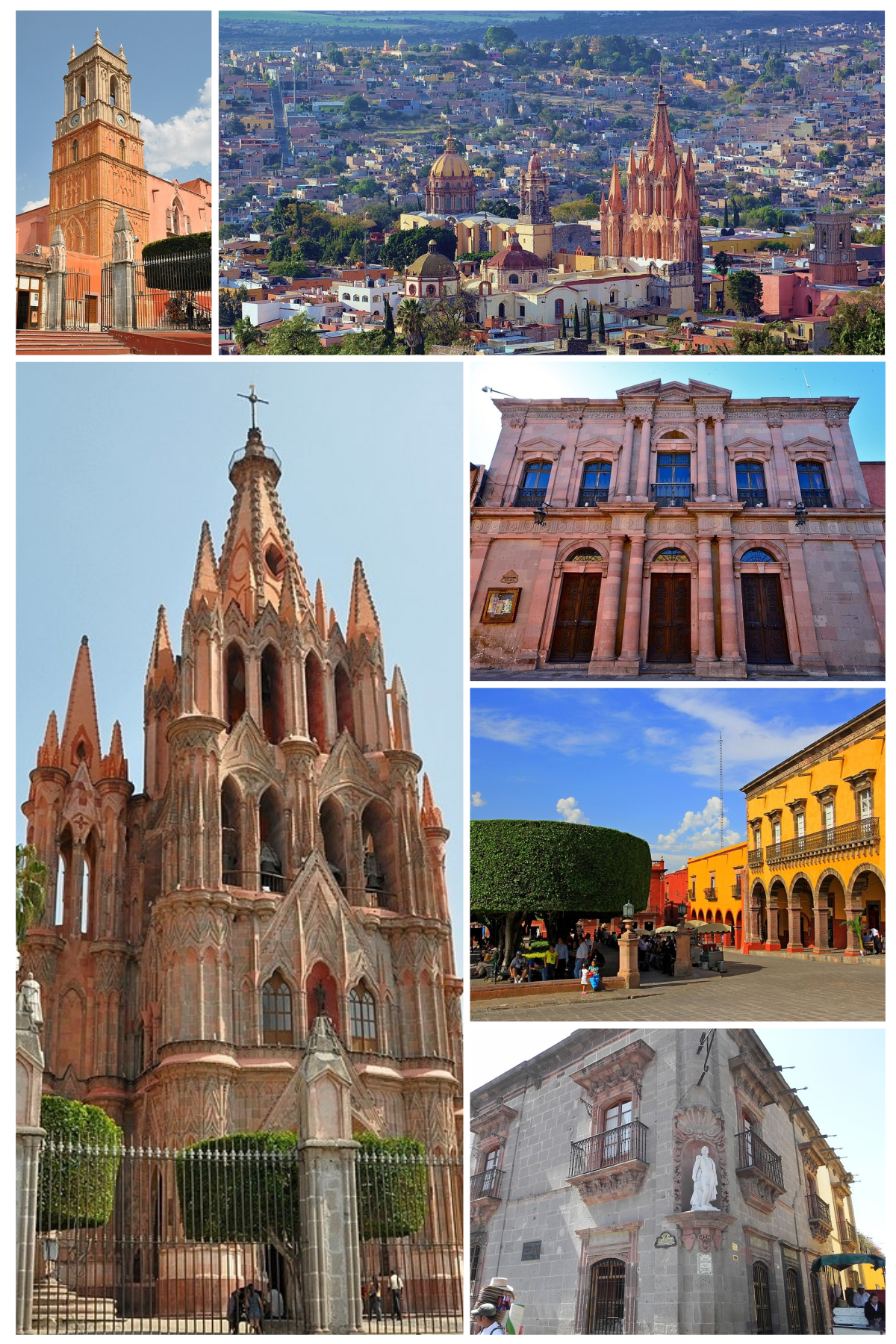
San Miguel de Allende is the most beautiful small city in Mexico, and it knows it. The rosy-pink neo-Gothic facade of La Parroquia de San Miguel Arcángel — a 17th-century church whose towers were redesigned by a self-taught indigenous stonemason who sketched Gothic cathedrals from postcards — dominates every photograph of the city and every view from the rooftops. At golden hour, when the light hits the church from the west and the swifts spiral overhead, the image is so precisely cinematic that it feels staged. It isn't.
The city's other defining fact is the expat community — among the largest American and Canadian populations of any Mexican city relative to size. They began arriving in the 1950s, drawn by cheap rents and a GI Bill art school, and they never really stopped. The result is a city that is more internationally polished, more English-fluent, and more expensive than its physical size would suggest. International galleries, New York-priced restaurants, yoga retreats, cooking schools, literary residencies, and retirement communities all coexist within the pink-stone streets.
For the traveler, this creates a specific dynamic. The colonial architecture is impeccable and well-maintained. The food scene — particularly the higher end of it — is excellent by any standard, not just by Mexican small-town comparison. The art culture is genuine: the Centro de Arte Allende, the Fabrica La Aurora design and gallery complex, and dozens of independent galleries carry serious work. But you pay for it. Budget travelers may find the expat-market pricing frustrating; travelers who want a polished, beautiful, deeply photogenic Mexican town with working infrastructure will find exactly that.
The surrounding Bajío region rewards those willing to look further. Atotonilco — a UNESCO-listed church complex 14 km north, called the Sistine Chapel of the Americas for its astonishing floor-to-ceiling fresco interior — is a half-day trip that most visitors underestimate. The thermal springs at nearby Escondido Place and Xote are an afternoon option. And the city's position between Guanajuato (a more authentically gritty colonial rival) and Querétaro (a serious industrial city with a beautiful colonial core) makes it easy to build a Bajío circuit that gives San Miguel the right proportion of your time.
The practical bits.
- Best time
-
October – MaySan Miguel sits at 1,910 meters — the altitude keeps it pleasantly dry and mild from October through May (18–25°C days, cool nights). The rainy season (June–September) brings daily afternoon showers but rarely full-day rain. The Christmas posadas, Día de Muertos, and Semana Santa are the most culturally active periods.
- How long
-
4 nights recommended2 nights covers the centro walk and Parroquia. 4 adds Atotonilco, a cooking class, and the gallery circuit. 7+ allows day trips to Guanajuato and Querétaro, or simply living slowly in the town.
- Budget
-
$150 / day typicalSignificantly more expensive than most comparable Mexican cities. Boutique hotels run $120–300 USD per night. Restaurants in the upper tier reach Mexico City fine-dining prices. Street food and market lunches keep costs down; the expat restaurant scene spends Californian.
- Getting around
-
Walking + taxiThe Centro Histórico is entirely walkable. The main zones of interest are all within 15–20 minutes on foot from the Jardín Principal. Taxis are cheap for outlying areas like the Fábrica La Aurora or to the highway for Atotonilco. Uber is available but less reliable than in larger cities.
- Currency
-
Mexican Peso (MXN) · USD widely acceptedCards accepted at most restaurants, galleries, and hotels. Many markets and street stalls remain cash-preferred. ATMs in the centro are plentiful.
- Language
- Spanish, with substantial English use throughout the centro and tourist zone. More bilingual than almost any comparable Mexican city.
- Visa
- Visa-free for US, Canadian, EU, UK, and Australian passport holders for up to 180 days. Tourist card issued on arrival.
- Safety
- One of Mexico's safest cities for tourists. The centro and tourist zones are extremely comfortable. Standard precautions apply for dark side streets at night.
- Plug
- Type A / B · 127V — same as US/Canada.
- Timezone
- CST · UTC-6 (CDT UTC-5 summer)
A few specific picks.
Hand-picked, not algorithmic. Each of these has earned its space.
The pink neo-Gothic facade turns deep rose-gold as the sun drops behind it. The Jardín Principal (main square) in front fills with vendors, pigeons, and people. This is the moment the city is famous for; it delivers every time.
A UNESCO World Heritage site separate from San Miguel's own listing. The interior walls and ceilings of the main church are covered floor-to-ceiling in 18th-century frescoes painted over 30 years. 'The Sistine Chapel of the Americas' is an overused comparison, but the visual density is genuinely staggering.
A converted 1902 textile factory housing 30+ galleries, design studios, and artisan workshops. The mix of contemporary Mexican art, antiques, and high-end craft in an industrial heritage setting is unique. Worth a morning.
The main local market, two blocks from the Jardín. Far less touristic than it sounds — produce stalls, butchers, spice traders, and comida corrida at 60–90 pesos. The enchiladas and sopa azteca here are the best cheap lunch in the city.
A former convent now housing the national fine arts school and several rotating galleries. The central courtyard garden is among the most peaceful spaces in the city. Free entry to the public areas.
The main square is a sociable stage — families on benches, vendors selling corn and elotes, live music on weekends. Spend an evening here before dinner and you've understood the rhythm of the city.
Several boutique hotels and restaurants have rooftop terraces with direct Parroquia views. The view at sunset is worth the price of a margarita. Candelaria and El Manantial are the most reliably scenic.
Natural geothermal pools 10 minutes from the centro by taxi. Several options ranging from rustic to resort. La Gruta has Roman-style arched grottos. Best mid-week morning when crowds are low.
Often overlooked next to the Parroquia, this 18th-century Baroque church has a stunning pink Churrigueresque facade and elaborate painted dome interior. Rarely crowded even at midday.
Several established cooking schools offer market-to-table classes. Seasons of My Heart (Susana Trilling), Sazón, and the Instituto Allende all run reputable half-day formats. Booking ahead is essential in high season.
Pick a neighborhood, not a hotel.
San Miguel de Allende is a city of neighborhoods. The one you stay in shapes the trip more than the property does.
Different trips for different travelers.
Same city, very different stays. Pick the lens that matches your trip.
San Miguel de Allende for couples and honeymooners
The Parroquia-view rooftop cocktail, a cooking class for two, an afternoon at a thermal grotto, dinner at Moxi — San Miguel is extremely well-configured for romantic travel. Book boutique hotels with interior courtyards; this is not a resort-pool destination.
San Miguel de Allende for art and gallery visitors
The Fábrica La Aurora for the gallery concentration, the Bellas Artes for rotating institutional shows, and Atotonilco for the most significant religious art within a day trip. The town has more gallery square footage per block than almost any small city in the Americas.
San Miguel de Allende for food-focused travelers
Cooking classes are the city's most distinctive culinary offering. The top-end restaurant scene is genuinely impressive and international in reach. For budget eating, the Mercado Ramírez and street tacos on Calle Loreto provide the best value.
San Miguel de Allende for long-stay and remote workers
The expat infrastructure makes San Miguel exceptionally easy for extended stays: English-language medical services, excellent coffee shops with reliable WiFi, a library with English books, language schools, yoga studios. Many visitors arrive for a week and extend to a month.
San Miguel de Allende for first-time mexico visitors
San Miguel is the gentlest introduction to Mexico for visitors who are cautious about comfort and safety. The English fluency, infrastructure, and high security make it easy. The risk is leaving with a skewed impression of what Mexican cities are actually like.
San Miguel de Allende for festival travelers
Semana Santa (Easter) for the intense religious processions and floats. Día de Muertos (October 31–November 2) for elaborate altars and cemetery ceremonies. Las Posadas (December 16–24) for candlelit street processions. Book accommodation 3–6 months ahead for all three.
When to go to San Miguel de Allende.
A quick year at a glance. Great, good, or skip — see what each month is doing before you book.
Clear and crisp. Cold evenings need a real jacket. Quiet post-holiday period. Good rates.
One of the quietest and clearest months. Good for photography. Low prices.
Semana Santa falls in March or April — the city's most elaborate religious festival week.
Semana Santa if not in March. Beautiful warm days, minimal rain. Spring flowers on the hills.
Hottest dry month. First shower possible. Still very good, slightly fewer crowds.
Afternoon rains begin. Hills turn green. Mornings are consistently beautiful.
Lush vegetation. Afternoon downpours but mornings clear. Manageable for the right traveler.
Rain continues. Not the best month but not unpleasant. Prices lower.
Independence Day (Sept 16) celebrations are lively but cobblestones get slippery.
Día de Muertos (Oct 31–Nov 2) is one of the best in Mexico. Dry season returning.
Post-Día de Muertos quiet. Clear skies return fully. Evenings getting cool.
Las Posadas (Dec 16–24) are spectacular. Christmas week sees premium pricing and full hotels.
Day trips from San Miguel de Allende.
When you want a change of pace. Each one's a half-day or full-day out, easy from San Miguel de Allende.
Sanctuary of Atotonilco
20 min by taxi14 km north. Allow 90 minutes inside. Often combined with a stop at the thermal springs on the return. Avoid Sunday afternoons when Mexican pilgrims arrive in large numbers.
Guanajuato
1 h 30 min by busBus departures from the Central de Autobuses. Guanajuato's tunnel road system and alley grid are unlike any other Mexican city. The Callejón del Beso (alley of the kiss) is overcrowded; the Cerro del Cubilete view is not.
Querétaro
1 h by carLess visited than San Miguel but architecturally impressive and with a growing wine and cheese scene from the surrounding highlands. The Templo de Santa Rosa de Viterbo facade is Churrigueresque at its most extravagant.
Dolores Hidalgo
45 min by carWhere Father Hidalgo rang the church bell in 1810 to launch Mexican independence. The town is also a center for Talavera-style ceramic production and sells flavored ice creams (chile, beer, avocado) that are genuinely good rather than a gimmick.
La Gruta Hot Springs
15 min by taxiThe most famous of the local thermal facilities. Natural geothermal water channeled into pools inside underground grottos. Half-day passes available. Mid-week mornings are crowd-free.
Mineral de Pozos
1 h by carA near-abandoned silver mining town with crumbling hacienda ruins, a small permanent arts community, and dramatic high-desert scenery. Romantic without the crowd. Combine with a lunch stop in town.
San Miguel de Allende vs elsewhere.
Quick honest reads on the cities people compare San Miguel de Allende to.
Oaxaca has deeper indigenous culture, more complex food, and a more gritty, authentic atmosphere; San Miguel is more polished, safer, and more European in tone. Oaxaca's art scene is rooted in local craft traditions; San Miguel's is more international. Both are among the best small cities in Mexico.
Pick San Miguel de Allende if: You want an immaculately preserved colonial town with easy infrastructure and a strong expat community.
Guanajuato is hillier, more labyrinthine, less polished, and more authentically Mexican; San Miguel is flatter, more curated, more expensive, and better configured for a comfortable stay. Guanajuato is the better day trip; San Miguel is the better base.
Pick San Miguel de Allende if: You want comfort, galleries, and cooking infrastructure over Guanajuato's student energy and tunnels.
Puerto Escondido is a beach-and-surf destination on the Pacific coast; San Miguel is a colonial highland town with no beach. The comparison only makes sense for travelers choosing between a beach trip and a cultural trip in Mexico.
Pick San Miguel de Allende if: You want highlands, colonial architecture, and cultural depth rather than surf and coast.
Both are UNESCO colonial towns with strong expat populations, impressive churches, and similar price levels relative to their home countries. Antigua has active volcano views and cheaper prices; San Miguel has better food and more gallery infrastructure. Both reward the same kind of slow colonial tourism.
Pick San Miguel de Allende if: You want Mexico-based colonial tourism with the strongest art and restaurant scene in the Bajío region.
Itineraries you can start from.
Rough shapes for a trip here — a feel for the pace and cost. Find the one that fits you.
Check in, Jardín Principal at golden hour, rooftop dinner with Parroquia views. Morning walk through Centro, Bellas Artes courtyard, market lunch. Drive to Atotonilco before the afternoon clouds arrive.
Four full days: one for the Centro circuit and Fábrica La Aurora, one for Atotonilco and hot springs, one cooking class with market morning, one for Guanajuato day trip. Evening gallery walks and rooftop cocktails throughout.
San Miguel base with day trips to Guanajuato (2h), Querétaro (1h), and Dolores Hidalgo for Talavera ceramics. Slow mornings, a Spanish lesson, two longer meals per day. A week at this pace doesn't feel long enough.
Things people ask about San Miguel de Allende.
Is San Miguel de Allende worth the hype?
For the right traveler, yes. The colonial architecture is genuinely beautiful and extremely well-preserved. The Parroquia at sunset is a real moment. Atotonilco is an underappreciated masterpiece. If you go expecting a polished, internationally priced, heavily photographed Mexican colonial town — and that's what you want — it delivers completely. If you expect authentic gritty Mexico, you may find the expat overlay frustrating.
How do I get to San Miguel de Allende?
There is no commercial airport in San Miguel. The nearest airports are Bajío/Del Bajío (BJX) near León/Guanajuato (90 minutes by car), Querétaro (QRO, 1 hour), and Mexico City (MEX, 3.5 hours). First-class buses from Mexico City's Terminal Norte run directly to San Miguel in about 4 hours. The ride-share and taxi connections from BJX and QRO are straightforward.
Why is San Miguel so popular with expats?
The expat community traces to the 1950s when inexpensive rents and a GI Bill-subsidized art school drew American artists and veterans. The climate (mild year-round due to altitude), safety, walkability, beauty, and gradual infrastructure improvement sustained and grew the community. Today San Miguel has one of the highest American retiree concentrations in Mexico. The community brought premium services and English fluency — and fundamentally reshaped the city's economic register.
What is Atotonilco and why should I visit?
The Sanctuary of Atotonilco is a Baroque church complex 14 km north of San Miguel, built between 1740 and 1776 and decorated entirely in frescoes painted over 30 years by a single artist, Miguel Antonio Martínez de Pocasangre. Every surface — walls, ceilings, arches — is covered in paintings depicting scenes from the Passion, saints, and allegories. It shares San Miguel's UNESCO listing. It takes about 90 minutes and is far less visited than the Parroquia.
When is the best time to visit San Miguel de Allende?
October through May is consistently clear, warm, and dry. The Christmas posada season (December 16–24) is culturally spectacular. Semana Santa (Easter week) is the most visually dramatic religious festival. Día de Muertos (October 31–November 2) is elaborate here. The rainy season (June–September) brings afternoon showers but rarely full-day rain, and the hills turn green and photogenic.
Is San Miguel de Allende expensive for Mexico?
Yes — it consistently ranks among Mexico's most expensive small cities. Boutique hotels run $120–300 USD per night, comparable to upscale international destinations. The top restaurants charge $40–70 USD per person for dinner. Street food, local market lunches, and comida corrida fondas still offer value at 60–120 pesos. Budget travelers can manage, but it requires deliberate effort to avoid the expat-pricing ecosystem.
What is the Fábrica La Aurora?
A converted textile factory from 1902 on the outskirts of the Centro, now housing roughly 30 galleries, design studios, and artisan workshops. It is the best single place to see a concentration of contemporary Mexican fine art, high-end craft, antique furniture, and textile work. The building retains its industrial structure; the light inside is excellent. Most galleries open Tuesday–Sunday, 10 AM–6 PM.
Can you take a day trip to Guanajuato from San Miguel?
Yes — Guanajuato is about 90 minutes west by car or the direct bus service. It makes one of the best day trips from San Miguel: colorful alley-grid architecture, the Museo de las Momias, the Diego Rivera birthplace, and a genuinely different urban energy than San Miguel. Guanajuato is hillier, more chaotic, less polished, and, to many travelers, more authentically alive.
What are the hot springs near San Miguel de Allende?
The area's geothermal springs have been channeled into several resort-style facilities within 15 minutes of the Centro. La Gruta has naturally warm pools inside underground grottos — the most famous option. Escondido Place, Xote, and Santuario are alternatives with varying levels of amenity. All charge day-pass fees ($15–30 USD). Book ahead for weekend visits or high season.
What are the best restaurants in San Miguel de Allende?
The restaurant scene skews international and expensive at the top. Moxi (Hotel Matilda) for contemporary Mexican tasting menu. Lavanda and The Restaurant for reliable upscale meals. For local cooking, the market at Mercado Ignacio Ramírez serves the best comida corrida in the city. On weekend evenings, Calle Recreo and Mesones become the pedestrian-heavy dining corridor.
Is San Miguel de Allende safe?
It is among Mexico's safest tourist destinations. The Centro and surrounding tourist zones are extremely secure; it is a small, walkable, well-monitored city. The expat community has invested significantly in private security. Standard city awareness applies at night: keep to lit streets, use registered taxis or your hotel's recommended drivers.
What is the Parroquia and who designed it?
La Parroquia de San Miguel Arcángel is San Miguel's defining landmark — a 17th-century parish church whose towers were redesigned in the 1880s by Zeferino Gutiérrez, a self-taught indigenous stonemason who had never left Guanajuato. He reportedly sketched the Gothic cathedrals of Europe from postcards and postcards alone, producing a unique neo-Gothic facade in pink quarried stone. The result is one of the most photographed buildings in Mexico.
How different is San Miguel from Oaxaca?
Very. Oaxaca has deeper indigenous culture, a more complex food tradition, a more active contemporary art scene rooted in local craft, and less foreign-visitor saturation in its residential zones. San Miguel is more European in atmosphere, more influenced by its American expat community, and architecturally more consistent — but culturally thinner. Both are exceptional; they serve different interests.
What language do people speak in San Miguel?
Spanish is the official language, but English is spoken widely throughout the tourist zone, hotels, restaurants, galleries, and markets frequented by foreign visitors. San Miguel has a higher density of English fluency than almost any comparable Mexican city of its size. Most service staff speak functional to fluent English.
Are there good cooking classes in San Miguel?
Yes — cooking education is one of the city's strongest offerings. Susana Trilling's Seasons of My Heart (based at a rancho outside town) is internationally known for its rigorous approach to Oaxacan and regional Mexican cuisine. Sazón, Instituto Allende, and several boutique hotels offer half-day market-to-table formats. Book at least a week ahead in high season.
What is the best view of the Parroquia?
From the Jardín Principal at ground level, especially at golden hour and after dark. From a rooftop bar on Calle Canal or Calle Recreo for the wider pink skyline view. From the mirador at Parque Juárez (the main park, south of centro) for a green-framed distance shot. The rooftop terrace at the Hotel Rosewood is the most elevated vantage point.
What are the Posadas in San Miguel?
The Las Posadas celebrations run December 16–24, commemorating Mary and Joseph's search for shelter. Each evening features a candlelit procession through the streets, singing, piñata breaking, and food. In San Miguel, the celebration is extremely elaborate — one of the most photographed Christmas traditions in Mexico. The Centro fills with pilgrims and tourists both; book accommodation months in advance for this period.
Can I combine San Miguel with Guanajuato and Querétaro in one trip?
Easily — the three cities form a natural Bajío triangle. Querétaro is 1 hour south, Guanajuato 1.5 hours west. A 7–10 night trip could base in San Miguel for 4 nights and day-trip both, or split nights: 3 in San Miguel, 2 in Guanajuato, 2 in Querétaro. All three are walkable, colonial, and architecturally significant — and each has a distinct enough character to reward the comparison.
Know someone headed to San Miguel de Allende?
Send them this guide — real neighborhoods, timing, and prices, with nothing to sign up for.
Copies the link — nothing to install