Patmos
Send it to whoever you'd travel with
Patmos is a quiet Dodecanese island built around a UNESCO monastery, with hilltop white villages, hidden coves, and a slower, more reflective Greek-island rhythm.
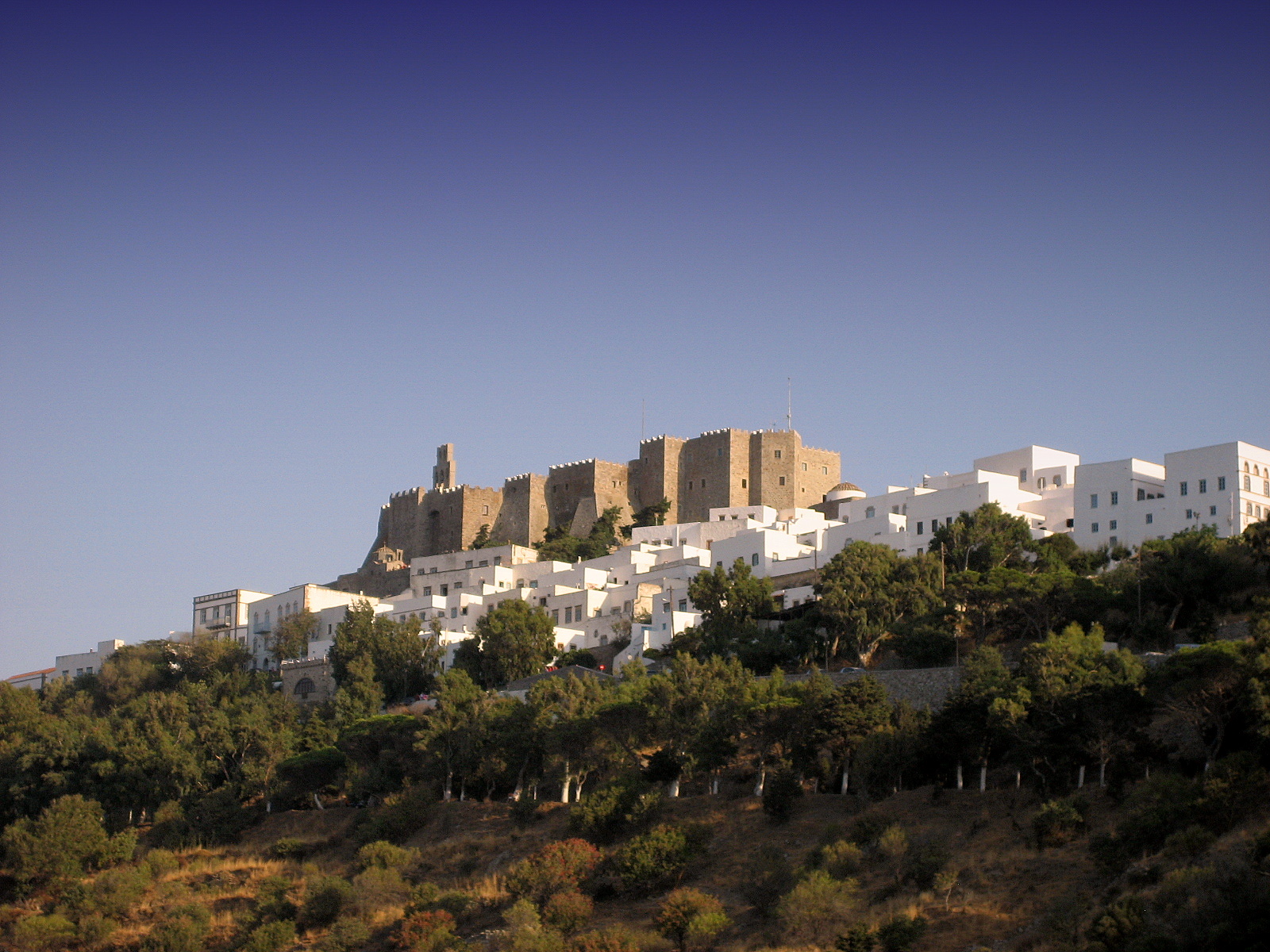
Patmos doesn't try to sell itself, and that's most of the point. There's no airport, no beach-club arms race, no Mykonos-style scene — just a ferry from Piraeus, a working port at Skala, and a fortified Byzantine monastery on a hill that has quietly run the place since 1088. The island has been a UNESCO site since 1999 for a single reason: the Cave of the Apocalypse, where John the Apostle is said to have written the Book of Revelation while exiled here around 95 AD. That history isn't a museum exhibit; it shapes the rhythm of the day. Bells, processions, monks in black walking through Chora at dusk — it's all still happening.
Skala is where you land and probably eat dinner. It's pretty in a working-port way: caïques tied up along the quay, a few good fish tavernas, the bus to Chora rumbling past every hour or so. Up the hill, Chora is the showpiece — a UNESCO-protected cluster of mansions and chapels wrapped around the monastery, with views that on a clear afternoon stretch to Samos and the Turkish coast. The whitewashed lanes there are narrow enough that scooters give up. Sunset from a Chora rooftop bar is the moment most visitors quietly admit they're going to come back.
The beaches are the honest weak spot — Patmos doesn't do showstopper coves the way Milos or Koufonisia do. What it has are honest pebble bays: Lambi on the north coast with its famously colored stones, Psili Ammos reached only by boat or a 25-minute walk, Petra anchored by one of the best lunch tavernas in the Aegean. Most people end up renting a small boat from Skala for at least one day, both because the island's real coast is best read from the water and because the nearby islets — Marathi, Arki, Lipsi — are within easy sailing range and worth a long lunch.
It's an island for a particular kind of traveler: someone who likes the idea of a five-night holiday where the schedule is a monastery in the morning, a swim somewhere remote at midday, and grilled octopus under bougainvillea at night. Patmos has a quiet luxury circuit — discreet villa rentals, a couple of serious five-star hotels around Grikos — but it never feels like a brand. Easter week is the exception: the Niptir ceremony on Holy Thursday, where the abbot washes the feet of twelve monks in the Chora square, draws a real pilgrimage crowd. The rest of the year, it's just you and the wind.
The practical bits.
- Best time
-
Late May – mid-June, SeptemberWarm sea, long light, and the August crowd hasn't arrived (or has just left).
- How long
-
5 – 7 nights recommendedFive is the sweet spot — enough for a boat day, a hike, and slow mornings without running out of island.
- Budget
-
$220 / day typicalPatmos has a thin middle: cheap pensions or proper villas, less in between. August doubles everything.
- Getting around
-
Rent a small car or scooter; the bus exists but barely.The island is small enough to circle in an hour. A scooter or compact rental (≈€50/day in season) unlocks the northern beaches and the inland chapels. Water taxis from Skala are the easiest way to reach Psili Ammos and the offshore islets.
- Currency
-
€ Euro (EUR)Cards work in hotels and most restaurants in Skala, Chora and Grikos. Carry euros for tavernas in Kampos, beach kantinas, and the smaller chapels.
- Language
- Greek; English is widely understood in tourism but less so in inland villages.
- Visa
- EU/Schengen rules: most US, UK, Canadian and Australian travelers can enter visa-free for up to 90 days; ETIAS pre-authorization will apply once it's live.
- Safety
- Very low crime, including for solo travelers. The real hazards are loose gravel on scooter switchbacks and underestimating the meltemi wind on boat days.
- Plug
- Type C / F, 230V
- Timezone
- GMT+2 (GMT+3 in summer)
A few specific picks.
Hand-picked, not algorithmic. Each of these has earned its space.
The fortified Byzantine monastery that founded the modern island in 1088. Dress modestly — knees and shoulders covered — and aim for opening at 8am to have the icons and treasury essentially to yourself.
The grotto where John is said to have dictated Revelation. Tiny, low-ceilinged, lit by a single hanging lamp — surprisingly affecting even if you're not religious.
A UNESCO-protected village of captains' mansions and 17th-century chapels wrapped around the monastery walls. Best walked at golden hour, then dinner up here.
Long-running seafront restaurant on a Sapsila terrace; modern Greek cooking with the harbor lights as wallpaper. Book ahead in season.
Family-run taverna on the edge of Petra beach using their own garden produce — the lunch most people remember longest.
Old-school taverna in the shadow of the monastery; grilled octopus and courgette fritters under a fig tree.
A pebble bay famous for its swirl of multicolored stones. There's a single tavern at the back — order the lobster pasta.
The island's only proper sand beach, reachable by water taxi from Skala or a 25-minute walk from a rough road. Bring water and shoes.
Marriott Luxury Collection resort on Grikos bay — the upscale option, with the spa and the sunset terrace as the draws.
A restored 17th-century mansion turned five-suite hotel inside the UNESCO village; the most atmospheric bed on the island.
A signposted footpath linking Skala, Chora and the northern beaches via old shepherd routes. About three hours one way, mostly downhill if you start in Chora.
Harbor-front café that has been pouring Greek coffee at the same tables for decades. Best place to wait for a ferry.
Pick a neighborhood, not a hotel.
Patmos is a city of neighborhoods. The one you stay in shapes the trip more than the property does.
Different trips for different travelers.
Same city, very different stays. Pick the lens that matches your trip.
Patmos for pilgrims & history travelers
One of the most significant Orthodox pilgrimage sites in the world, with the Cave of the Apocalypse and a still-active 11th-century monastery at its center.
Patmos for quiet luxury
Discreet villa rentals in Chora and Sapsila, plus a serious five-star resort at Grikos, with none of the see-and-be-seen energy of Mykonos.
Patmos for sailors
A natural base for cruising the northern Dodecanese — sheltered anchorages, easy hops to Lipsi, Arki and Leros, and a proper marina at Skala.
Patmos for foodies
Small but mighty restaurant scene: Benetos, Ktima Petra and Pantheon all serve modern Greek cooking at a level rare on islands this size.
Patmos for solo travelers
Very safe, easy to navigate, and the slow pace makes solo dinners feel relaxing rather than awkward.
Patmos for hikers
Old monastic and shepherd footpaths — including the Aporthianos trail — link villages, chapels and remote beaches across the island.
When to go to Patmos.
A quick year at a glance. Great, good, or skip — see what each month is doing before you book.
Locals-only month; the monastery is open but the ferry schedule is thin.
Same as January — quiet, green, and not really set up for visitors.
Hotels begin reopening late in the month; sea still too cold to swim.
Orthodox Easter and the Niptir ceremony land here or in early May — the most atmospheric pilgrimage moment.
Late May is one of the best weeks of the year — sea swimmable, hotels open, prices reasonable.
The sweet spot before the August surge; book a few weeks ahead for Chora and Grikos.
Busier and pricier, with the meltemi occasionally cancelling boat days.
Greek-holiday peak; prices double and the better tavernas are fully booked. Avoid if you can.
The best month for most travelers — summer weather, post-August calm, long evenings.
Early October still works for swimming and hiking; many hotels close by month-end.
Off-season — ferries thin out and most restaurants close.
Closed-island feeling apart from a Christmas service at the monastery.
Day trips from Patmos.
When you want a change of pace. Each one's a half-day or full-day out, easy from Patmos.
Lipsi
45 min by ferryTiny Dodecanese island with a sleepy port, good wine, and beaches you can walk to from town.
Arki & Marathi
1 hr by boatA cluster of islets north of Patmos with translucent coves and two or three family-run fish tavernas.
Leros
1 hr by ferryLarger neighbor with art-deco buildings from the Italian occupation and a much greener landscape than Patmos.
Samos
2 hrs by ferryPythagoras's birthplace, the Heraion temple, and serious wine country — a long but rewarding round-trip.
Kalymnos
2 hrs by ferryWorking-island feel with world-class limestone cliffs; popular with climbers from April through October.
Patmos vs elsewhere.
Quick honest reads on the cities people compare Patmos to.
Mykonos is the international party brand with the curated beaches; Patmos is its quiet, monastic opposite with deeper history and a fraction of the noise.
Pick Patmos if: You want atmosphere and history, not beach clubs.
Santorini delivers the iconic caldera and sunset; Patmos delivers a UNESCO village without the cruise crowds and a more livable pace.
Pick Patmos if: You've done the postcard islands and want something slower.
Paros has better beaches and easier flights; Patmos has stronger history, less commercial sprawl and a more contemplative mood.
Pick Patmos if: Vibe and heritage matter more to you than the beach itself.
Naxos is bigger, cheaper and family-friendly with great sand; Patmos is smaller, harder to reach and rewards travelers who like quiet over convenience.
Pick Patmos if: You're choosing depth over breadth on a short Greece trip.
Both are quiet, beautiful Dodecanese options; Symi is built around its dazzling pastel harbor, Patmos around its hilltop monastery and inland villages.
Pick Patmos if: You want monastic Patmos energy with a UNESCO old town instead of Symi's harbor postcard.
Itineraries you can start from.
Rough shapes for a trip here — a feel for the pace and cost. Find the one that fits you.
Two nights in Chora for the monastery and rooftop dinners, three nights in Grikos with a chartered boat day around Marathi and Arki.
Skala home base with day sails to Lipsi, Leros and the Arki islets; a midweek hike along the Aporthianos trail and one Easter-style monastery morning.
A short, focused trip built around the Cave of the Apocalypse and Chora at dawn, with one boat afternoon and Petra for lunch.
Things people ask about Patmos.
Is Patmos worth visiting?
Yes — if you want a quiet, atmospheric Greek island rather than a party or a beach-club scene. The Monastery of St John and Chora are genuinely world-class, the food is excellent, and you'll share the island with a fraction of the crowds you'd find on Mykonos or Santorini. Skip it if iconic beaches are your top priority — Patmos's coves are good, not great.
How many days do you need in Patmos?
Five nights is the sweet spot. That gives you a slow morning at the monastery, a half-day at the Cave of the Apocalypse, a full boat day to Marathi or Arki, an afternoon at Psili Ammos or Lambi, and at least one long dinner in Chora without feeling rushed. Three nights works for a focused pilgrimage trip; seven if you're island-hopping the Dodecanese.
What is the best time to visit Patmos?
Late May through mid-June and all of September. The sea is warm (22–25°C), days are long, and the August crowds have not arrived or have just left. July and August are hot, busy and pricier; April brings Orthodox Easter and the famous Niptir ceremony, but the water is still cold for swimming. November to March is mostly closed.
Is Patmos expensive?
It's mid-tier by Greek-island standards — more expensive than Naxos or Tinos, considerably cheaper than Mykonos. A comfortable mid-range trip runs about $220 per person per day including a small hotel, taverna dinners, a rental car and one boat day. Luxury villas and the five-star resorts at Grikos easily push $600+. August roughly doubles peak-season rates.
How do you get to Patmos?
There's no airport on Patmos. The two common routes are a 7–9 hour overnight Blue Star ferry from Piraeus (Athens), or a flight to Kos, Leros, Samos or Kalymnos followed by a 1–2 hour onward ferry. Catamarans (Seajets, Dodekanisos) are faster but seasonal. Tickets from Piraeus start around €44 in deck class.
Is Patmos safe for solo female travelers?
Yes, very. Patmos consistently ranks among the safer Greek islands for solo travel — violent crime is essentially nonexistent, locals are used to single travelers including pilgrims, and walking back to your hotel after dinner in Chora or Skala is fine at any hour. Normal precautions around scooters, sun and meltemi wind on boats matter more than any safety concern.
What is Patmos known for?
Patmos is best known as the island where John the Apostle is said to have received the visions recorded in the Book of Revelation, around 95 AD. The Cave of the Apocalypse and the fortified Monastery of St John the Theologian (founded 1088) make it one of the most important Orthodox Christian pilgrimage sites in the world. The whole historic centre of Chora is UNESCO-listed.
Cash or card in Patmos?
Both. Hotels, most restaurants in Skala, Chora and Grikos, and all the rental agencies take cards. Smaller tavernas in Kampos and Lambi, beach kantinas, and donations at the chapels are euro-cash only. There are ATMs in Skala on the harbor and one in Chora; pull cash before you head to the more remote north.
How do you get from Skala port to Chora?
Skala and Chora are about 5 km apart. The cheapest way is the local bus, which runs roughly hourly in season for around €2. A taxi from the rank on the Skala quay costs about €10–12. If you've rented a scooter or car, it's a winding ten-minute drive uphill, with the road passing the Cave of the Apocalypse on the way.
What are the best day trips from Patmos?
The obvious one is a boat day to Marathi, Arki and Lipsi — three tiny islets within an hour's sailing, with empty coves and a couple of fish tavernas. Larger Leros makes a comfortable full-day ferry trip. Adventurous travelers can do Samos in a day for the Heraion ruins, though it's a long round-trip on the boat.
What's the best neighborhood to stay in Patmos?
Chora if you want atmosphere — restored mansions, rooftop dinners, the monastery five minutes away — but you'll drive or bus to swim. Skala is the easy choice without a car: ferries, restaurants, taxis all on the doorstep. Grikos is the resort pick: a quiet bay with two five-star hotels and a beach you can walk to in pyjamas.
Patmos vs Mykonos — which is better?
Different islands for different trips. Mykonos is the international party-and-beach-club brand, with prices to match; Patmos is quiet, spiritual and slow, with stronger history and weaker beaches. Pick Mykonos for nightlife and curated sand; pick Patmos for a UNESCO village, monastic atmosphere and dinners where nobody is filming. They don't compete — they're opposite ends of the Aegean spectrum.
Patmos vs Santorini — which should I choose?
Santorini wins on dramatic geology and the caldera sunset; Patmos wins on authenticity, lower crowds and a much more interesting old town. If you've never been to Greece and want the postcard, do Santorini. If you've done the famous islands and want something quieter with serious history and good food, Patmos is the upgrade trip.
Are there good beaches in Patmos?
Patmos has good beaches, not great ones. Lambi (multi-colored pebbles), Psili Ammos (the island's only sand cove, boat-access), Livadi Geranou (organized, northern) and Petra (with the best lunch on the island) are the standouts. They're mostly pebble or mixed, sheltered from the meltemi, and on quiet days you can have one to yourself even in July.
Can you visit the Monastery of St John?
Yes — the monastery is open to visitors most mornings, typically 8am to 1:30pm, with afternoon hours added in summer. Entry is a few euros. Dress modestly: shoulders and knees covered for everyone, and women may be offered a wrap at the door. The treasury, with its 11th-century icons and manuscripts, is the part most travelers underrate.
Do you need a car in Patmos?
If you're staying more than two nights, yes — a car or scooter unlocks the north (Kampos, Lambi, Livadi Geranou) and lets you eat at Petra without negotiating a taxi. The island is small enough that a compact rental at €40–60/day is enough. Skala-only stays of one or two nights can rely on the bus, taxis and water taxis instead.
Know someone headed to Patmos?
Send them this guide — real neighborhoods, timing, and prices, with nothing to sign up for.
Copies the link — nothing to install