Ottawa
Send it to whoever you'd travel with
Ottawa is Canada's underrated capital — Parliament Hill, a UNESCO-listed canal you skate in winter, museums for days, and a tidy, walkable downtown.
Ottawa gets dismissed as the boring capital, and that reputation is mostly written by people who came in November. Visit in mid-May, when a million tulips bloom around Dow's Lake and the Rideau Canal pathway fills with cyclists, or in late January, when the same canal freezes into the world's largest skating rink — and the city makes a much better case for itself. It's compact, walkable, surprisingly green, and unusually polite, even by Canadian standards. You can stand on Parliament Hill, look across the Ottawa River into Quebec, and reach a different province in ten minutes by foot.
The downtown core is small enough that you don't really need a plan. Parliament Hill anchors the west end of a ten-minute walk that drops you into ByWard Market, the city's historic produce hall turned restaurant district, and then into the cluster of national museums — Nature, History (technically across the river in Gatineau), War, the National Gallery with its Louise Bourgeois spider out front. Most are free or cheap, and most are genuinely good. The Canadian Museum of History in particular is one of the better museums in North America and almost nobody east of Toronto talks about it.
What surprises people is the food. ByWard Market has its tourist BeaverTails and bachelor-party steakhouses, but the actual scene has migrated west — to Hintonburg, Wellington West, and the Glebe — where places like Art Is In Bakery, Bar Lupulus, and a deep bench of independent cafes operate at a level you'd expect from a much bigger city. Coffee culture is strong. Craft beer is everywhere. The diplomatic corps gives the dining scene an Ethiopian, Lebanese, and Vietnamese depth that punches above the city's size.
The trade-off is weather. Ottawa is one of the coldest national capitals on earth — colder than Moscow on paper — and February is brutal if you're not committed to the skating. Summer is short, humid, and surprisingly hot. Shoulder seasons are perfect but narrow. Pick your month deliberately and the city rewards you; show up mid-November and you'll understand the boring reputation.
The practical bits.
- Best time
-
May or late Jan – mid FebTulip Festival in May and Winterlude through early February are the two unmissable windows.
- How long
-
3 – 4 nights recommendedLong weekend hits the core; a week lets you add Gatineau Park and a Montreal or Kingston day trip.
- Budget
-
$200 / day typicalHotels swing hard during Winterlude, Tulip Festival, and Canada Day weekend.
- Getting around
-
Walk downtown; transit or rideshare for outer neighborhoods.The core (Parliament Hill, ByWard Market, Glebe, Centretown) is genuinely walkable. The new O-Train light rail connects east-west, and OC Transpo buses cover everything else. Uber and Lyft both operate.
- Currency
-
CA$ Canadian DollarCards are accepted everywhere — tap-to-pay is standard, even at food trucks and farmers' markets. Almost no need to carry cash beyond a small tip buffer.
- Language
- English and French are both official; English dominates downtown, French dominates across the river in Gatineau. Everyone in tourism speaks English fluently.
- Visa
- Most travelers from visa-exempt countries need an eTA before flying in; US citizens just need a passport. Check IRCC for your specific situation.
- Safety
- One of the safest major cities in Canada — comfortable for solo and female travelers. The one rough patch is around Rideau Street and the eastern edge of ByWard Market late at night, where intoxication and panhandling are more visible.
- Plug
- Type A/B, 120V
- Timezone
- GMT-5 (EST) / GMT-4 (EDT)
A few specific picks.
Hand-picked, not algorithmic. Each of these has earned its space.
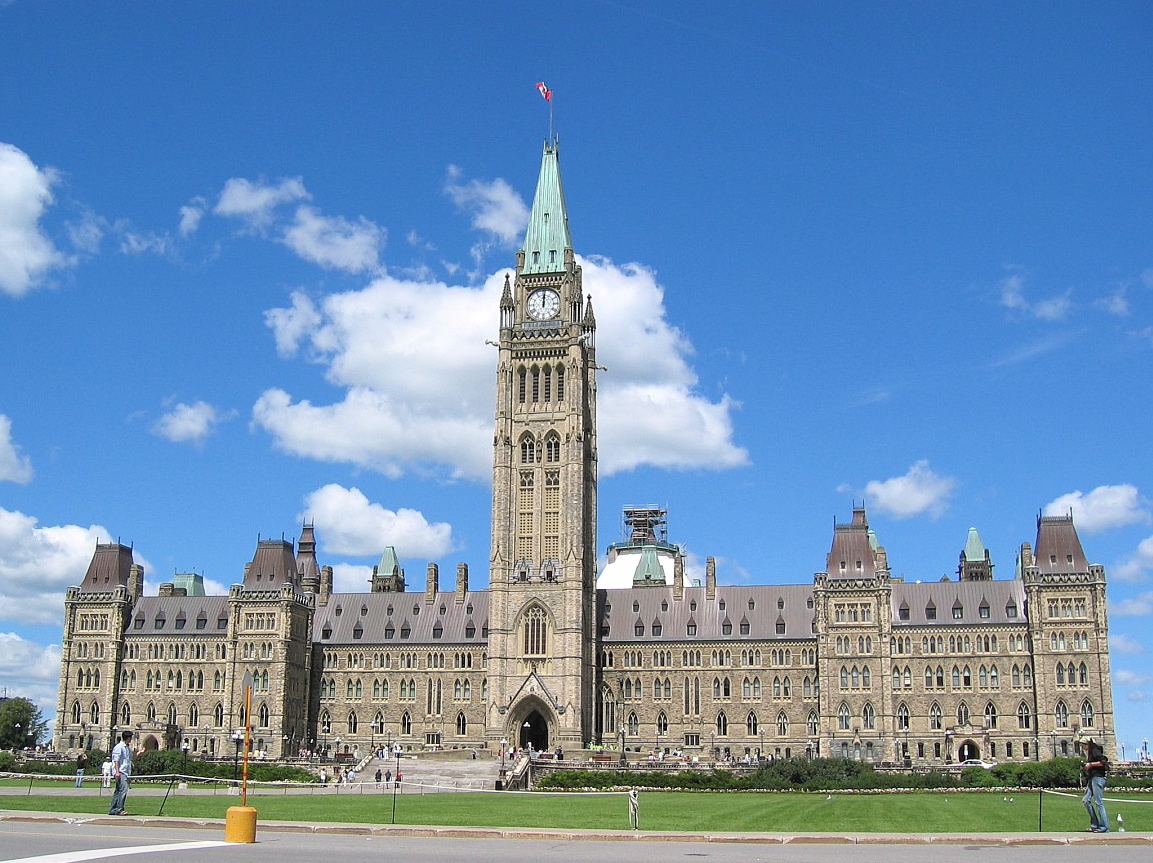
Gothic-revival seat of Canadian government on a bluff above the Ottawa River. Free guided tours of West Block; the Centre Block is closed for restoration through the decade.
In winter, the 7.8-km canal becomes the world's largest skating rink. Rent skates at Dow's Lake and glide to downtown, stopping for BeaverTails along the way.
Moshe Safdie's glass-roofed cathedral of a museum. The Indigenous collection and the reconstructed Rideau Street Convent Chapel are the standouts.
Across the Alexandra Bridge in Quebec. The Grand Hall of West Coast totem poles, with floor-to-ceiling windows looking back at Parliament, is one of the great museum spaces in North America.
Ottawa's oldest public market — produce stalls outside, restaurants and bars packed into the surrounding 19th-century blocks. Touristy by day, rowdy late.
Almond croissants in the morning, wood-fired pizza by evening, possibly the best bread in the city in between.
Tight, ambitious contemporary Canadian cooking on a quiet Hintonburg corner — the kind of restaurant that justifies the neighborhood's rise.
Southeast Asian-inflected sharing plates in a tucked-away former carriage house — the rare ByWard Market room that's actually good rather than just convenient.
A neo-gothic 'castle' housing dinosaur halls, a blue whale skeleton, and the country's best mineral collection. Underrated for adults; spectacular for kids.
361 square kilometers of lakes and ridgelines fifteen minutes from downtown. Hike Pink Lake or drive the Champlain Lookout for the canonical Ottawa Valley view.
Ground zero for the Canadian Tulip Festival in May — 300,000+ tulips along Dow's Lake. Mornings on weekdays are the only way to actually enjoy it.
The city's best stretch of independent restaurants, third-wave coffee, vintage shops, and breweries — five minutes by O-Train from downtown.
Pick a neighborhood, not a hotel.
Ottawa is a city of neighborhoods. The one you stay in shapes the trip more than the property does.
Different trips for different travelers.
Same city, very different stays. Pick the lens that matches your trip.
Ottawa for families
Free or cheap museums, the canal skateway, ByWard Market food stalls, and short transit distances make Ottawa unusually easy with kids.
Ottawa for solo travelers
One of the safest large cities in Canada — comfortable walking and dining alone, with strong hostel and budget-hotel options in Centretown.
Ottawa for museum lovers
Six major national museums within a short walk, including the National Gallery and the Canadian Museum of History — easily a four-day itinerary in itself.
Ottawa for foodies
ByWard Market for visibility, but Hintonburg and Wellington West are where the actual cooking happens — diplomatic-corps-driven ethnic depth too.
Ottawa for winter sports
Skate the world's largest rink, cross-country ski in Gatineau Park, and warm up on BeaverTails — all reachable without a car.
Ottawa for history buffs
Parliament Hill, the Canadian War Museum, the Diefenbunker Cold War museum, and the UNESCO-listed Rideau Canal — the political and military spine of Canada.
When to go to Ottawa.
A quick year at a glance. Great, good, or skip — see what each month is doing before you book.
Winterlude opens late January; canal skateway typically opens this month.
Peak Winterlude and canal skating — book hotels well ahead.
Awkward shoulder month — skip unless you're here on business.
Quiet and cheap, but most outdoor attractions are still warming up.
Canadian Tulip Festival mid-month — the single best time to visit.
Patio season starts; weekends busy with festivals.
Canada Day (July 1) is massive — fireworks on Parliament Hill, hotels priced accordingly.
Bluesfest and quieter weekdays make this a strong summer pick.
Excellent shoulder month — comfortable for walking and biking the canal.
One of the prettiest weeks of the year if you time it right.
The classic 'Ottawa is boring' month — visit only if you must.
Pretty around Christmas Lights Across Canada, but canal not yet open for skating.
Day trips from Ottawa.
When you want a change of pace. Each one's a half-day or full-day out, easy from Ottawa.
Gatineau Park
15 min driveEasiest nature escape from any Canadian capital.
Montreal
2 hr 15 min trainVIA Rail runs multiple times daily; downtown to downtown.
Kingston
2 hr drive or trainPairs well with a Thousand Islands boat cruise in summer.
Wakefield, Quebec
35 min drivePretty all year, perfect in autumn.
Mont-Tremblant
2 hr driveDoable as a long day in winter, better overnight.
Perth, Ontario
1 hr driveQuiet, walkable, no buses of tourists.
Ottawa vs elsewhere.
Quick honest reads on the cities people compare Ottawa to.
Montreal is bigger, livelier, more cosmopolitan, with deeper nightlife and a stronger upper-end restaurant scene. Ottawa is calmer, cheaper, safer, easier to navigate, and better for museums and outdoor activity.
Pick Ottawa if: Pick Ottawa for capital sights and ease; Montreal for energy and food.
Toronto is the country's economic and cultural powerhouse with vastly more to do, eat, and see — but it's also more expensive, more congested, and less postcard-pretty than Ottawa.
Pick Ottawa if: Pick Ottawa for a manageable capital weekend; Toronto for big-city density.
Quebec City wins on Old World atmosphere, walled-city romance, and French-Canadian character. Ottawa wins on museums, free attractions, and overall variety.
Pick Ottawa if: Pick Ottawa for breadth and easy English; Quebec City for charm and history.
Both are tidy national capitals built around free museums and walkable monumental cores. DC is larger, more politically charged, and warmer in winter; Ottawa is more compact, safer, greener, and easier to navigate.
Pick Ottawa if: Pick Ottawa for a calmer, cleaner capital experience; DC for scale and political theatre.
Itineraries you can start from.
Rough shapes for a trip here — a feel for the pace and cost. Find the one that fits you.
Parliament tour, the National Gallery, two nights of ByWard Market dinners, and a half-day across the river at the Museum of History.
Time it for mid-May: tulips at Commissioners Park at dawn, canal bike rides, museum afternoons, and one day hiking Gatineau Park.
Skate the Rideau Canal from Dow's Lake to downtown, ice sculptures at Confederation Park, BeaverTails for warmth, and one slow Hintonburg dinner.
Things people ask about Ottawa.
Is Ottawa safe for solo travelers?
Yes — Ottawa is consistently ranked among the safest large cities in Canada, with very low violent crime and a strong public-safety culture. Solo travelers, including solo women, generally feel comfortable walking downtown, taking transit, and dining alone. The one area to be more aware in is around Rideau Street and the eastern edge of ByWard Market late at night, where intoxication and panhandling are more visible. Stick to well-lit streets, use rideshares after midnight, and you'll be fine.
How many days do you need in Ottawa?
Three to four nights is the sweet spot for most visitors. Two nights is enough to walk Parliament Hill, see one or two museums, eat in ByWard Market, and skate or bike the Rideau Canal. A third and fourth night give you room for Gatineau Park, the National Gallery in depth, and an evening in Hintonburg. Add a fifth or sixth night only if you plan to use Ottawa as a base for day trips to Montreal or Kingston.
What is the best time to visit Ottawa?
Mid-May for the Canadian Tulip Festival, when a million tulips bloom around Dow's Lake and the canal, or late January through mid-February for Winterlude and skating the Rideau Canal Skateway. Summer (June through August) is warm and lively but humid, with the most outdoor festivals. September and early October give you fall colour in Gatineau Park. Late October through April outside Winterlude is cold, gray, and best skipped unless you're visiting for a specific reason.
Is Ottawa cheap or expensive to visit?
Ottawa is one of the more affordable major Canadian cities — noticeably cheaper than Toronto or Vancouver, and a bit cheaper than Montreal for hotels. Budget travelers can manage on around US$90 a day with hostels or budget hotels, casual meals, and the many free museums. Mid-range travelers should plan US$200 a day for a three-star hotel, sit-down meals, and paid attractions. Hotel rates spike sharply during Winterlude, the Tulip Festival, and Canada Day weekend in early July.
What is Ottawa known for?
Ottawa is best known as Canada's national capital — home to Parliament Hill, the Supreme Court, the Prime Minister's residence, and most of the country's national museums. Beyond the political role, it's known for the Rideau Canal, which becomes the world's largest skating rink in winter and a UNESCO World Heritage Site year-round; for the Canadian Tulip Festival each May; and for being a strikingly green, bilingual, walkable capital that punches above its weight on museums and food.
Cash or card in Ottawa?
Card, almost exclusively. Tap-to-pay credit and debit cards are accepted everywhere — restaurants, taxis, museums, farmers' market stalls, and even most food trucks. Apple Pay and Google Pay work seamlessly. You'll rarely need cash beyond small tips for housekeeping or bell staff, and ATMs are widely available if you do. Foreign cards generally work without issue; let your bank know you're traveling to avoid the occasional fraud-flag pause.
How do you get from Ottawa Airport to downtown?
It's a short trip — about 15 to 20 minutes by car. A taxi runs roughly CA$30 to downtown hotels; Uber and Lyft cost similar or slightly less. The cheapest option is OC Transpo's Line 97 bus or the new Line 4 O-Train to South Keys plus a connecting bus, which costs about CA$3.75 and takes 35 to 45 minutes. Roughly 15 downtown hotels run free shuttles — worth checking when you book.
What are the best day trips from Ottawa?
Gatineau Park, a 361-square-kilometer wilderness fifteen minutes across the river in Quebec, is the easiest and most rewarding — hike Pink Lake or drive the Champlain Lookout. Montreal is two hours by VIA Rail and makes an ambitious but doable day trip. Kingston is a similar two-hour ride and pairs well with the Thousand Islands. Closer in, the Wakefield covered-bridge village and the Mer Bleue bog boardwalk are easy half-days.
What is the best neighborhood to stay in Ottawa?
First-time visitors should base in ByWard Market or Centretown, both walking distance to Parliament Hill, the National Gallery, and most museums. The Glebe is a calmer alternative with quick canal access — better for returning visitors and families. Hintonburg and Wellington West skew local and food-focused but trade some convenience. Westboro suits travelers prioritizing the river, beach, and morning runs over museum proximity.
Ottawa vs Montreal — which should I visit?
Montreal is bigger, busier, more cosmopolitan, and has deeper nightlife and a stronger restaurant scene at the top end. Ottawa is calmer, cheaper, safer, easier to walk, and far better for museums and outdoor activity. If you have one long weekend in Canada and want energy, pick Montreal. If you want a tidy capital with world-class museums, a UNESCO canal, and easier logistics — or if you can spare four days for both — Ottawa earns its place. They're a two-hour train apart.
Can you skate the Rideau Canal in winter?
Yes — and it's the city's signature experience. When fully open (typically late January to mid-February, weather depending), the Rideau Canal Skateway is the world's largest skating rink at 7.8 kilometers. Skate rentals, warm-up huts, and food kiosks line the route, including BeaverTails stalls. Check the official conditions page before going; recent warmer winters have shortened the season, so don't assume it's open just because you're in town.
What language do they speak in Ottawa?
Both English and French are official, but English is dominant on the Ontario side of the river, and French is dominant across in Gatineau, Quebec. Federal signage is bilingual everywhere. In practice, almost everyone in tourism, transit, hotels, and restaurants speaks fluent English. A few words of French go a long way in Gatineau but are not necessary anywhere in Ottawa proper.
Do you need a visa to visit Ottawa?
Requirements depend on nationality. US citizens need only a valid passport. Travelers from most visa-exempt countries (UK, EU, Australia, Japan, etc.) need an eTA — an electronic travel authorization — applied for online before flying. Other nationalities require a full visitor visa. Check the Government of Canada's IRCC site for the current rules, since lists change. Apply at least a few weeks before travel to avoid surprises.
Is Ottawa walkable?
The downtown core is very walkable. Parliament Hill, ByWard Market, the National Gallery, the Rideau Canal, and most major museums sit within a thirty-minute walking radius. The Glebe and Centretown are also easy on foot. Outer neighborhoods like Hintonburg, Westboro, and Wellington West are best reached by the O-Train or a short rideshare. The grid is logical, sidewalks are wide, and winter sidewalks are generally well-cleared.
When is the Canadian Tulip Festival?
The Canadian Tulip Festival runs annually for about ten days in mid-May, with the 2026 edition scheduled for roughly May 8 to 18. Commissioners Park along Dow's Lake holds the main display, with over 300,000 tulips planted in choreographed beds. Weekends get genuinely crowded; weekday mornings are dramatically better. The festival commemorates the wartime sheltering of the Dutch royal family in Ottawa and the annual gift of bulbs from the Netherlands since 1945.
What is there to do in Ottawa in winter?
More than you'd expect for a city this cold. The Rideau Canal Skateway is the headline act, alongside Winterlude in late January and early February with ice sculptures, snow playgrounds, and free outdoor concerts. The national museums — Nature, History, War, the National Gallery — are ideal cold-weather days. Gatineau Park has cross-country skiing and snowshoeing fifteen minutes away. ByWard Market and Hintonburg restaurants get cozy and uncrowded. Dress for -20°C and you'll be fine.
Know someone headed to Ottawa?
Send them this guide — real neighborhoods, timing, and prices, with nothing to sign up for.
Copies the link — nothing to install