Manali
Send it to whoever you'd travel with
Manali is where the Indian subcontinent ends and the Tibetan plateau begins — a Himalayan valley town that functions simultaneously as a tourist hill station, the gateway to Ladakh and Spiti, and the base for some of the subcontinent's most serious mountain adventure.
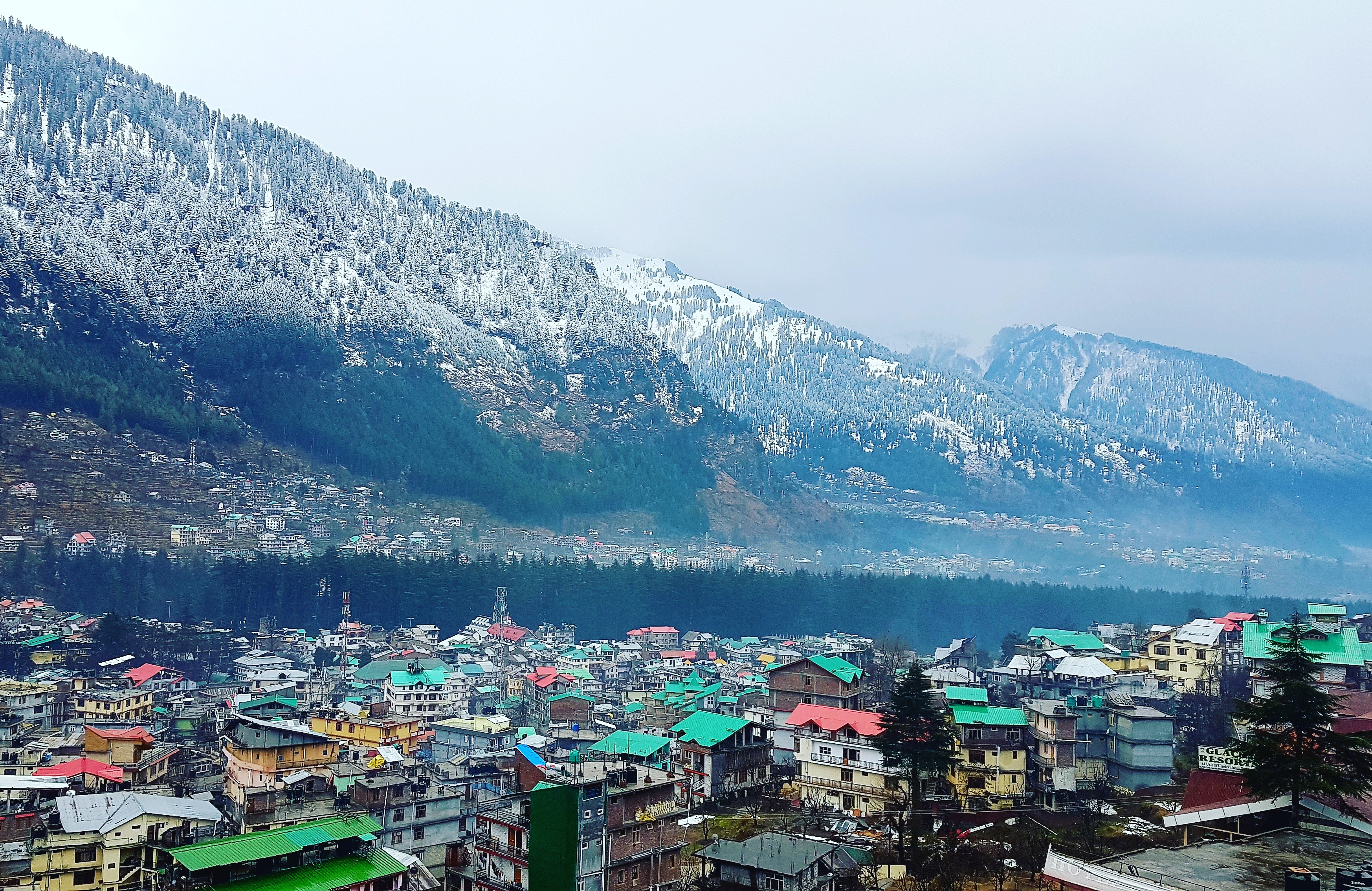
Manali sits in the Kullu Valley at 2,050 meters where the Beas River is still fast and cold from glacial melt, and the Dhauladhar and Pir Panjal ranges close in on both sides. The town is a study in Indian hill-station contrasts: Old Manali, above the market, is a genuine Himachali village with apple orchards, wood-and-stone houses, and the Hadimba Devi Temple in the deodar cedar forest; New Manali, below, is a strip of budget guesthouses, adventure-sports booking agents, and cafés serving everything from dal makhani to Israeli food to mushroom pasta, aimed squarely at the backpacker market and the Delhi honeymoon crowd in roughly equal measure.
The Rohtang Pass, 51 km north at 3,978m, is the most direct road over the Pir Panjal to the Lahaul valley — and the conventional marker of where 'civilized' Himalayan foothills end and the high-altitude Trans-Himalayan desert begins. The road has been supplemented by the Atal Tunnel (opened 2020), which bores 9 km under the pass at a lower elevation and keeps Lahaul and Spiti accessible year-round for the first time. Rohtang itself still draws hordes for the snow experience — the permit system introduced to reduce traffic is chaotic but functional.
Solang Valley, 14 km north of Manali on the Rohtang road, has the most concentrated adventure sports infrastructure in Himachal Pradesh: paragliding, zorbing, horse riding, and in winter (January–March) the best accessible skiing terrain in India — a certified ski resort with basic but functional lift infrastructure and rental equipment. The winter sports scene is genuinely improving, particularly since the Atal Tunnel removed the snow-closure isolation of the valley.
The Manali–Leh Highway and the Manali–Spiti circuit are the roads most travelers come to drive, ride, or bus. The Leh highway crosses five passes above 4,000m (including Baralacha La at 4,890m) over two days; it is open approximately June to October and is one of the great overland routes in Asia. Spiti Valley, the cold-desert lunar landscape 200 km east, is accessible from Manali via Rohtang Pass and Kunzum Pass (also summer-only) or year-round via Shimla from the other direction. Both trips have their own full-day and multi-day logistical framework.
The practical bits.
- Best time
-
May – June · September – OctoberMay–June gives the last window before monsoon (July–August) and the first open passes; the Leh Highway opens around June 1. September–October is the post-monsoon sweet spot — clear skies, full rivers, the best landscape colors. July–August: Himalayan monsoon brings persistent cloud, landslide risk, and flooded river crossings. November–March: cold and mostly snowed in; the Atal Tunnel keeps Lahaul accessible but Rohtang, Spiti, and the Leh highway close.
- How long
-
4 nights recommendedTwo nights is not enough. Three to four nights covers Old Manali, Solang Valley adventure sports, Hadimba Temple, Rohtang Pass day trip, and a Vashisht village evening. Five to seven nights for those using Manali as a base for multi-day Spiti or Leh highway excursions.
- Budget
-
$75 / day typicalManali has very wide budget spread. Budget rooms in Old Manali guesthouses from ₹600/night. Good mid-range hotels ₹3,000–7,000. River-view heritage properties ₹8,000–18,000. Adventure activities add significantly: paragliding ₹2,500–3,500, skiing packages ₹3,000–8,000. Rohtang Pass entry permit ₹550 per vehicle.
- Getting around
-
Walking (Old Manali) + auto/taxiOld Manali, Vashisht, and the Hadimba Temple are a walkable 2–3 km circuit. New Manali market to Old Manali is 2 km uphill — manageable on foot but taxis are widely available. Solang Valley and Rohtang require a hired jeep or the state HRTC bus. The Mall Road in New Manali handles local auto-rickshaws.
- Currency
-
Indian Rupee (₹) · carry cashATMs in New Manali market are functional but can run out in peak season. Carry ₹5,000–8,000 cash before arrival. Cards at major hotels; cash elsewhere. UPI increasingly accepted at restaurants and adventure operators.
- Language
- Hindi and Kullui (Himachali). English widely spoken at tourist guesthouses, adventure operators, and most restaurants.
- Visa
- Indian e-Visa required for most nationalities. Apply at indianvisaonline.gov.in. For onward travel to Lahaul–Spiti and Ladakh, no separate permit is required for Indian nationals; foreigners need Protected Area Permits (PAP) for some restricted areas near the Chinese border.
- Safety
- The main hazards are mountain-specific. Road conditions on the Rohtang–Leh and Manali–Spiti routes involve real danger from landslides, narrow one-lane roads, and high-altitude weather shifts. Never drive these routes after dark. Altitude sickness is a genuine risk above 3,500m — the Leh road crosses passes above 4,800m. Acclimatize before attempting high passes. River water levels in monsoon are dangerous.
- Plug
- Type C / D / M · 230V. Power outages occur, especially in winter and after heavy rain. Power banks essential for multi-day mountain excursions.
- Timezone
- IST · UTC+5:30
A few specific picks.
Hand-picked, not algorithmic. Each of these has earned its space.
A 1553 cedar-wood pagoda temple dedicated to Hadimba (the Pandava wife from the Mahabharata) standing in old-growth deodar forest. The three-tiered wooden spire and the carved door panels are among the finest examples of Himachali wooden architecture. Deer graze in the forest around the temple.
The original Himachali village above the tourist strip — stone houses with wooden upper floors, apple orchards, rooftop cafes overlooking the Beas River canyon, and a slower rhythm than New Manali's hotel-strip energy. The 15-minute walk up from the bridge is entirely worth the climb.
Paragliding (2,000m launch), zorbing (giant ball roll down the slope), skiing (January–March), and a ropeway lift in summer. The valley fills with day-trippers from Manali on weekends; arrive before 10 AM for shorter queues at the paragliding operators.
The 3,978m pass connecting the Kullu Valley to Lahaul. Snow from October to May; vehicles require a daily permit (₹550). The views of the Kullu Valley below and the Lahaul moonscape above are exceptional. The tourist infrastructure at the pass is overwhelming on summer weekends — arrive early or consider the pass a drive-through on the way to Lahaul rather than a destination.
A sulfur hot spring temple complex in a traditional Himachali village. Communal bathing pools separated by gender. The temple's carved wooden architecture is notable. The surrounding village lanes have the most authentic local feel in the immediate Manali area.
The walking path along the Beas River below Old Manali gives the best canyon-level perspective on the surrounding valley walls. The river runs turquoise-green from glacial silt in summer. Riverside cafes operate on the flat sections near the bridge.
UNESCO World Heritage national park protecting the upper Beas and Tirthan river basins. Entry requires a permit; guided treks into the buffer zone are arranged from Gushaini village. The park has the best population of Western Tragopan (one of the world's most endangered pheasants) in India.
An ancient temple dedicated to Manu — the Hindu figure associated with the creation of humanity after the great flood. The temple is perched on a cliff above Old Manali with views down the valley. Considered one of the oldest Manu temples in India.
Two Tibetan Buddhist gompa (monasteries) operate in the Manali area — one Gadhan Thekchhokling near the bus stand, one in the Mountainview area. The morning puja is open to visitors. The adjacent Tibetan refugee market sells carpets, singing bowls, and thangkas.
Himachal Pradesh produces 25% of India's apples; the Kullu Valley orchards begin below Manali and fill the valley sides. Harvest season (September–October) fills the road with laden trucks and lets guesthouse owners sell direct from their trees. The apple crisp sold at roadside stalls in October is the season's best quick food.
Pick a neighborhood, not a hotel.
Manali is a city of neighborhoods. The one you stay in shapes the trip more than the property does.
Different trips for different travelers.
Same city, very different stays. Pick the lens that matches your trip.
Manali for adventure sports travelers
Paragliding in Solang, rafting on the Beas, skiing in January–March, motorcycle hire for the Leh Highway, trekking the Hampta Pass — Manali is the most complete adventure sports hub in the Indian Himalayas. Budget multiple days per activity rather than cramming everything.
Manali for leh and ladakh highway travelers
Manali is the southern end of the Manali–Leh Highway. Acclimatize for 2 days in Manali (2,050m) before attempting the passes above 4,500m. Buses depart from Manali bus stand; motorcycles and private vehicles need permits and complete equipment checks. June–September only.
Manali for trekkers
Hampta Pass (3 days), Beas Kund (2 days to glacial lake), Pin–Parvati Pass (7+ days, an expert route connecting Spiti to Parvati Valley), and the Deo Tibba Base Camp circuit are accessible from Manali. The town has well-developed guide and equipment hire infrastructure.
Manali for winter and skiing travelers
January–March: Solang Valley ski season, Manali town in snow, Atal Tunnel for Lahaul day trips. The skiing is basic but accessible. Winter Manali — empty of summer crowds, apple orchards under snow, deep night cold — is a very different experience from peak season.
Manali for budget backpackers
Old Manali guesthouses from ₹600/night with mountain views. The café culture is cheap (momos ₹80, thali ₹150). The Delhi–Manali Volvo bus at ₹1,200 is the standard arrival route. Extended stays are common — many travelers arrive for a week and stay three.
Manali for couples and honeymoon travelers
Book a boutique Old Manali property or a river-view hotel in Vashisht. Avoid Mall Road-facing rooms in peak season. For the most atmospheric stay: a converted wooden Himachali house with orchard views. Add a private camp on a river bend or a jeep ride to Solang at dawn before the crowd arrives.
When to go to Manali.
A quick year at a glance. Great, good, or skip — see what each month is doing before you book.
Solang Valley ski season peak. Manali town under snow. Rohtang and Spiti roads closed. Extreme cold at night. For winter adventure travelers.
Still ski season. Coldest temperatures of year. Beautiful snowy landscape but limited mobility beyond the valley.
Snowmelt begins. Ski season ends by mid-March. Roads starting to clear toward the end of month.
Apple blossom. Rhododendrons on the valley sides. Rohtang road opening preparation. Good walking conditions.
Rohtang Pass opens (usually late May). Pre-monsoon clear skies. Peak begins. One of the best months.
Leh Highway opens around June 1. Peak season begins. Weather excellent before monsoon. Most crowded period.
Monsoon arrives. Landslide risk on mountain roads. Cloud cover limits views. Leh Highway disrupted.
Continuous cloud and rain. Road closures possible. Not recommended for road trips to Leh or Spiti.
Monsoon clears. Apple harvest begins. Autumn colors emerging. One of the two best months.
Kullu Dussehra festival. Apple orchards in harvest. Clear mountain views. High passes begin to close late month.
Rohtang and Spiti roads close for winter. Manali town becomes quiet. First snowfall arrives. Atal Tunnel keeps Lahaul accessible.
Manali under snow. Very cold. Limited activities but atmospheric. Christmas domestic tourists arrive.
Day trips from Manali.
When you want a change of pace. Each one's a half-day or full-day out, easy from Manali.
Rohtang Pass
51 kmDay trip from Manali requires vehicle permit (book at rohtangpermits.nic.in) and early departure — traffic builds quickly. The pass itself is overrun on summer weekends; the drive to and from is the real experience. Open approximately May–October.
Naggar Castle and Roerich Museum
20 km southThe 15th-century Naggar Castle (now a heritage hotel) and the Nicholas Roerich Art Gallery — the Russian painter spent his last 20 years in the Kullu Valley. The village above the castle is one of the most authentic Himachali settlements accessible by road.
Hampta Pass Trek (3-day)
25 km from ManaliThe Hampta Pass crossing (4,270m) — from Kullu valley green to Lahaul moonscape — is the best 3-day trek accessible from Manali. Not a day trip but the trailhead at Jobra is 25 km from town. Guide and camping gear required.
Tirthan Valley and GHNP
60 km southThe Tirthan Valley below the Great Himalayan National Park is one of Himachal's best-kept ecotourism destinations. Village homestays, fly fishing on the Tirthan River, and day treks into the GHNP buffer zone. An overnight is preferable to a day trip.
Kullu (festival or temple circuit)
40 km southKullu town is 40 km south — worth visiting for the October Dussehra festival (7 days of deity processions) or the Bijli Mahadev temple on the hill above the Beas River. The drive down the valley through apple orchards is the experience.
Chandratal Lake (overnight required)
120 km (via Rohtang/Spiti)The 'Moon Lake' at 4,250m in Lahaul, accessible via Atal Tunnel to Gramphoo then jeep track. Day trip is extremely rushed (240 km round trip plus trail walk); an overnight camp at the lake is the right call. The emerald-blue lake against the arid brown landscape is one of the Himalayas' great scenic rewards.
Manali vs elsewhere.
Quick honest reads on the cities people compare Manali to.
Rishikesh has better white-water rafting, yoga culture, and is at lower altitude year-round. Manali has higher mountains, skiing, the Leh Highway gateway, and more dramatic scenery. Both are North India Himalayan adventure bases but for different trip types.
Pick Manali if: You want higher Himalayan terrain, winter skiing, the Ladakh highway experience, and a drier mountain landscape over the Ganges yoga culture.
Leh is higher (3,500m), more remote, Tibetan Buddhist in culture, and requires an entire dedicated trip. Manali is the highway gateway to Leh, more accessible by road from Delhi, and provides the complete Himachali hill-station experience alongside adventure sports.
Pick Manali if: You want a full hill-station experience, adventure sports, and a Himalayan valley base rather than the high-altitude Tibetan plateau of Ladakh.
Darjeeling is Eastern Himalayas — tea, Toy Train, Kanchenjunga views. Manali is Western Himalayas — adventure sports, Leh Highway, apple orchards. Both are at similar elevations; they serve entirely different trip typologies.
Pick Manali if: You want adventure sports, the Spiti/Leh highway experience, winter skiing, and Western Himalayan scenery over tea culture and heritage railway.
Shimla is the Himachal state capital hill station — colonial architecture, the Kalka–Shimla Railway, more developed infrastructure. Manali is more rugged and wild, with a better adventure sports base and gateway to higher passes.
Pick Manali if: You want mountain adventure and the Leh Highway gateway over the polished colonial hill-station experience.
Itineraries you can start from.
Rough shapes for a trip here — a feel for the pace and cost. Find the one that fits you.
Day 1: Old Manali walk, Hadimba Temple, Vashisht hot spring. Day 2: Solang Valley paragliding. Day 3: Rohtang Pass day trip (permit required).
Three days of town exploration and adventures, plus a 2-day Hampta Pass trek crossing from Kullu to Lahaul — the most accessible high-altitude pass trek from Manali.
Two nights Manali acclimatization and exploration, then 5 nights through Spiti Valley (Kaza, Key Monastery, Kibber, Chandratal Lake) before returning via Shimla.
Things people ask about Manali.
What is the best time to visit Manali?
May–June and September–October are the two windows. May–June has clear skies, open mountain roads, and the first Rohtang Pass opening of the year. September–October is post-monsoon — clear air, autumn colors in the apple orchards, and the best photography conditions. July–August monsoon brings landslide risk on mountain roads and cloud over the passes. November–April is mostly closed for high passes; the Atal Tunnel keeps Lahaul accessible but Rohtang and Spiti roads close.
What is the Atal Tunnel and how does it change travel?
The Atal Tunnel opened in 2020 — a 9-km road tunnel boring under Rohtang Pass, keeping Lahaul–Spiti accessible year-round for the first time. Previously the district was cut off for 6 months when Rohtang closed. For travelers: the Lahaul side (Sissu, Keylong) can now be reached even in winter — roughly 30 minutes through the tunnel versus the 3-hour Rohtang drive in summer.
Do I need a permit for Rohtang Pass?
Yes. All vehicles require a Rohtang Pass permit (₹550 per vehicle + ₹200 for private vehicles) to cross the pass, issued to limit traffic. Permits are issued online at rohtangpermits.nic.in and must be applied for in advance. Only a fixed number are issued per day; they sell out quickly on summer weekends. The pass is open approximately May to November, weather permitting.
How do I get to Manali?
By air: Kullu–Manali Airport (Bhuntar) is 50 km south, connecting to Delhi (1-hour flight on Alliance Air or Air India, though weather cancellations are frequent). By bus: Volvo overnight buses from Delhi's ISBT Kashmiri Gate take 12–14 hours; book through HRTC or private operators (₹1,200–1,800). By private car: Delhi to Manali is 545 km — 10–12 hours, a standard route for road-trip Indians. There is no railway to Manali.
What adventure sports are available in Manali?
Manali is Himachal Pradesh's adventure sports capital. Paragliding from Solang Valley (₹2,500–3,500 for a 10-minute tandem flight or longer launches from Dobhi). White-water rafting on the Beas River (Grade II–IV, ₹600–1,500). Mountain biking (half-day to multi-day). Zorbing at Solang. Rock climbing instruction on local crags. Skiing at Solang Valley (January–March, ₹3,000–6,000 for equipment rental and lift). River crossing and rappelling in the side valleys.
What is the Manali–Leh Highway like?
One of the world's great overland routes — 479 km crossing five passes (Rohtang 3,978m, Baralacha La 4,890m, Nakee La 4,739m, Lachlung La 5,059m, Tanglang La 5,328m). The road is open June to October. By bus (₹900–1,500) it takes 2 days with an overnight at Keylong or Sarchu. By motorcycle the same, with more flexibility. Pre-book accommodation in Sarchu or Jispa during peak season.
What is altitude sickness and do I need to worry in Manali?
Manali at 2,050m is low enough that altitude sickness is uncommon for healthy adults. The risk begins at Rohtang (3,978m) and increases significantly above 4,500m on the Leh Highway. Symptoms include headache, nausea, fatigue, and poor sleep. Standard precautions: ascend gradually, stay hydrated, avoid alcohol in the first 24 hours at altitude. Acetazolamide (Diamox) is available at Manali pharmacies. Don't cross 5,000m passes without acclimatizing overnight near 3,000m first.
What is Old Manali?
Old Manali is the traditional Himachali village 2 km uphill from the New Manali commercial strip — the original settlement before the hill-station tourism boom. It retains stone-and-wood houses, apple orchards, and a village character that the hotel-lined Mall Road entirely lacks. The Manu Temple perches on a cliff above it. Most backpackers base in Old Manali for the guesthouses with orchard views and rooftop cafes.
Is Manali good for skiing?
Manali has India's most accessible ski terrain at Solang Valley (2,480–2,800m), with basic lift infrastructure and ski rental equipment. The season runs January–March when Solang has reliable snow. It's not Zermatt — the facilities are basic, the ski school is for beginners, and intermediate skiers will exhaust the terrain quickly. For serious skiing in India, Gulmarg (Kashmir) is the alternative. For the India ski experience and winter Himalayan landscape, Solang in January is excellent.
What is Spiti Valley and can I access it from Manali?
Spiti is a cold-desert valley at 3,800–4,500m in Himachal Pradesh — brown, lunar, near-Tibetan in character, with ancient Buddhist monasteries (Key, Tabo, Dhankar), the high-altitude village of Hikkim (one of the world's highest post offices), and the road over Kunzum Pass (4,590m). From Manali, Spiti is accessible via Rohtang and Kunzum Pass (summer-only) — a 2-day journey to Kaza, the valley's main town. The alternative route from Shimla via Kinnaur is open year-round and takes 3 days.
What is the Hampta Pass trek?
Hampta Pass (4,270m) is a 3-day trek crossing the pass from the Kullu Valley green forest side to the arid Lahaul moonscape on the other — one of the most visually dramatic single-pass crossings in Himachal. The contrast between the two sides is extraordinary. Most trekkers start from Jobra (25 km from Manali), cross via Shea Goru camp, and exit at Chatru in Lahaul. A standard option adds the optional descent to Chandratal Lake before returning. Best mid-June to mid-September.
What is the Kullu Dussehra festival?
The Kullu Dussehra (70 km south of Manali) is one of India's most famous regional festivals — a 7-day event in October when 200+ village deities are carried in elaborately decorated palanquins to the central Dhalpur Maidan for the celebrations. Unlike the nationally celebrated Vijayadashami marking the end of Navratri, Kullu Dussehra starts on the day that most of India's celebrations end and continues for a week. A significant reason to time an October Manali–Kullu visit.
Is Manali good for a honeymoon?
Manali is one of India's most popular honeymoon destinations. The landscape is genuinely romantic, river-view hotels are beautiful, and snow at Rohtang is novel for most Indian couples. The downside: peak season (May–June) fills Mall Road and the Rohtang queue turns chaotic. For a honeymoon, choose a boutique Old Manali property, add a private river camp or Hampta Pass trek, and avoid weekends.
What should I eat in Manali?
Trout from the Beas River is the local delicacy — river-side restaurants serve freshly grilled Himalayan trout. Sidu (Himachali steamed bread filled with walnuts or poppy seeds) is the local bread. Old Manali cafes do creditable momos, thukpa, and Tibetan butter tea. Israeli-food cafes (a legacy of 1990s backpacker culture) serve genuine shakshuka and falafel — still a presence in the Old Manali lane scene.
Can I rent a motorcycle in Manali for the Leh Highway?
Yes — several operators near the Mall Road rent Royal Enfields for the Leh Highway (₹1,500–2,500/day). This is among the most legendary motorcycle journeys in Asia. Requirements: a valid motorcycle licence, basic off-road riding competence, and a reliable mechanic check of the bike before departure. Carry spare inner tubes, basic tools, and emergency warmth layers. The highway is above 4,500m for extended periods; mechanical problems at altitude are serious situations.
Is Manali accessible in winter?
The Atal Tunnel now keeps Manali–Lahaul accessible year-round. Manali town itself receives snowfall from December to February — making it a viable snowfall destination for Indian tourists who don't need to cross the passes. The main attractions (Old Manali village, Hadimba Temple, Vashisht) all operate year-round. Rohtang, Spiti, and the Leh highway close November–May. Solang Valley ski season is January–March. Winter Manali is cold (0 to -10°C nights) but atmospheric.
What is the Naggar Castle and should I visit it?
Naggar Castle is a 15th-century stone-and-wood Rajasthani-style palace 20 km south of Manali, now a heritage hotel run by Himachal Pradesh Tourism. The Nicholas Roerich Museum adjacent to it houses paintings by the Russian artist who spent his final 20 years in the Kullu Valley. The castle courtyard and the valley views from its terrace are among the most atmospheric in Himachal Pradesh. A half-day drive from Manali; you can stop for tea without staying.
Know someone headed to Manali?
Send them this guide — real neighborhoods, timing, and prices, with nothing to sign up for.
Copies the link — nothing to install