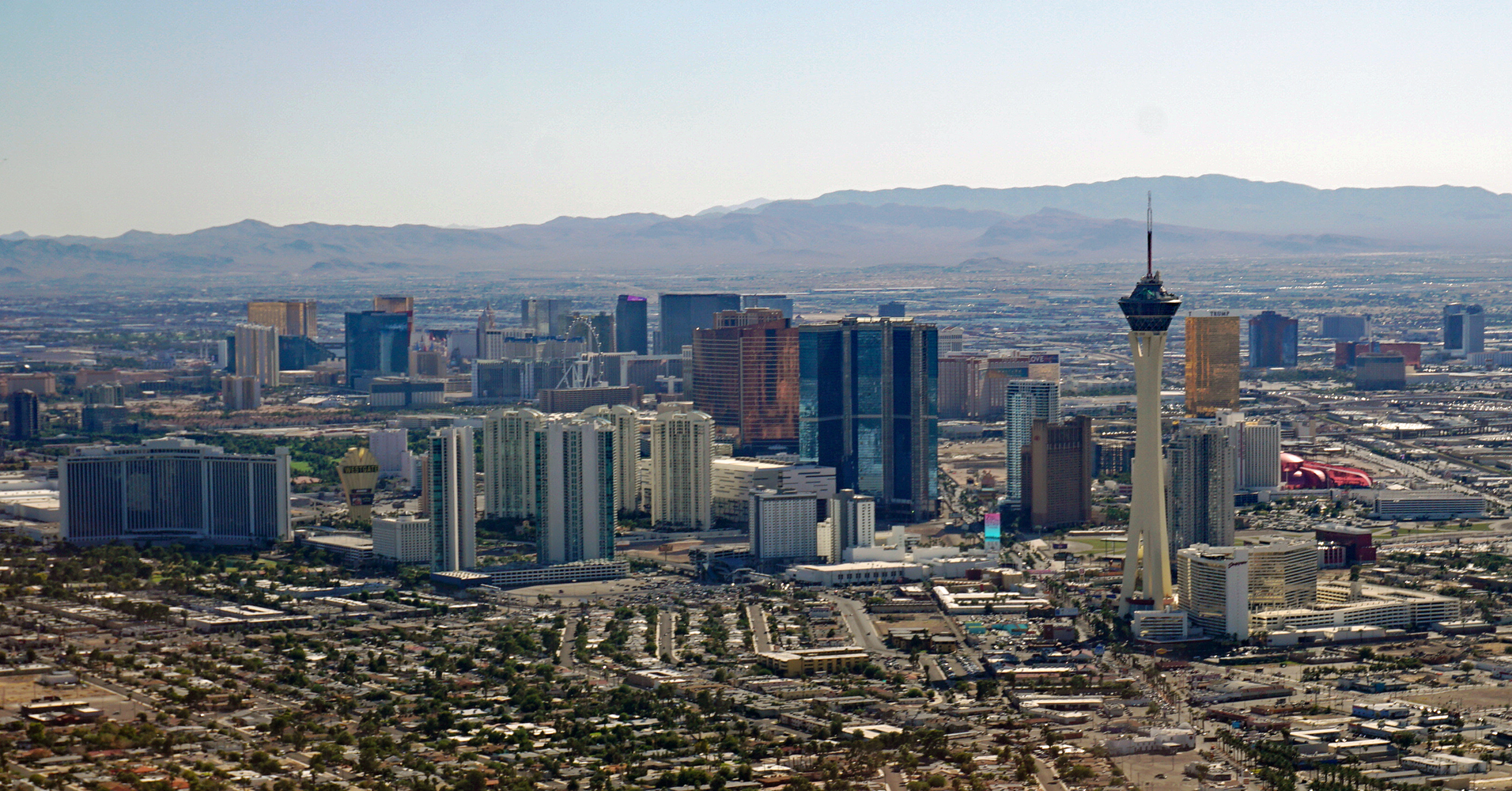
Las Vegas
Send it to whoever you'd travel with
Las Vegas is simultaneously one of the most honest and most deceptive cities in America — it wants your money openly, the kitsch is purposeful, and underneath the casino carpet there is genuinely excellent food and a city that functions on rules no other American city follows.
The Strip works on a logic of controlled disorientation: no clocks, no windows, air conditioning set at a temperature that makes you forget it's 42°C outside, and the sound of slot machines calibrated to produce a near-constant low-level stimulation. Once you understand that the casino floor is a transportation system designed to move you from entrance to game table with maximum slowness, you can enjoy it on your own terms. Stand at the Bellagio fountains at 9 PM and watch them go off to Sinatra. Order a cocktail at the bar of the Cosmopolitan. Play a little; most people lose but most people also have the sense to set a limit.
The food is the least discussed and most underrated part of Las Vegas. Joël Robuchon at the MGM Grand operates his L'Atelier concept at one of its highest international expressions. Bouchon Bistro (Thomas Keller, Venetian) makes the best eggs Benedict in Nevada and possibly further. The Peppermill Restaurant and Fireside Lounge has been open 24 hours since 1972 and serves the pink Scorpion cocktail in a fishbowl with a fire pit by your table — it is one of the more genuinely weird American dining experiences available. The Strip's mid-range food courts are not the shame that tourist guides pretend — the Wynn's café and the Aria buffet (when it operates) are seriously good.
Off the Strip is the other Las Vegas. The Arts District on Main Street has independent coffee shops, galleries, and cocktail bars that have nothing to do with casinos. Downtown's Fremont Street has the older, cheaper, more authentic version of the casino experience — the neon is original, the cocktails are stronger, the minimum bets are lower. The Container Park is a shipping-container retail and food development that works better than it sounds. Locals live in Summerlin, Henderson, and the surrounding suburbs and largely avoid the Strip.
And then there is the desert. Red Rock Canyon is 30 minutes from the Strip and has some of the most dramatic sandstone scenery in the American Southwest — free hiking trails, the 13-mile Scenic Drive loop, and zero casino carpet. The Grand Canyon's South Rim is 4.5 hours by car. Zion National Park is 2.5 hours. Death Valley, the lowest and hottest point in North America, is 2 hours. Las Vegas is the most misunderstood gateway to the American Southwest.
The practical bits.
- Best time
-
March–May · October–NovemberSpring and autumn bring 20–30°C — perfect for the Strip and desert day trips. July and August see 40–45°C which makes outdoor walking genuinely uncomfortable and hiking dangerous without very early starts. December–February are cold (5–15°C) but cheap — the off-season casino rates are the best value. Spring break (March) and major conventions spike room rates without warning.
- How long
-
3–4 nights recommendedTwo nights is a compressed visit — one evening on the Strip, one show, one casino. Three to four nights allows a day trip to Red Rock or the Grand Canyon, a proper dinner at a fine dining restaurant, and time to find your rhythm. More than five nights and most visitors exhaust the city.
- Budget
-
$250 / day typicalHighly variable. Budget hotel rooms on off-Strip properties: USD 40–80. Strip properties on weekday non-event nights: USD 80–200. Weekends and special events: USD 200–500+. The casino resort fee (typically USD 25–45/night) is added to every booking. Food ranges from USD 10 at a food court to USD 500+ at Joël Robuchon's tasting menu.
- Getting around
-
Walk the Strip · Lyft / Uber · MonorailThe Strip is 6.8km long — walkable but longer than it looks. The Las Vegas Monorail runs along the east side of the Strip and is useful for multi-casino moves. Lyft and Uber operate everywhere and are cheap. Rental cars are unnecessary on the Strip but essential for desert day trips. Never drive after drinking — enforce this rule.
- Currency
-
US Dollar (USD). Cards universally accepted. Tipping is mandatory by local convention: 18–22% at restaurants, USD 1–2 per drink at bars, USD 2–5 per night for hotel housekeeping.Cards everywhere. Casino chips are the internal currency — cash in and out at the cage. ATMs on casino floors charge USD 6–10 per withdrawal; use bank ATMs instead.
- Language
- English. Spanish is widely spoken among service staff. Las Vegas has a large Latin American community and Spanish-language signage is common in residential areas.
- Visa
- ESTA required for Visa Waiver Program countries (EU, UK, Australia). ESTA is USD 21 and valid for 2 years, multiple entries. Apply at esta.cbp.dhs.gov at least 72 hours before travel.
- Safety
- The Strip is safe in the sense that heavy police and security presence keeps the tourist zone controlled. Avoid Fremont Street's eastern end and the Strip's southern end after midnight. The main risk is financial — predatory pricing, excessive drinking, and gambling losses are the hazards. Keep valuables in the hotel safe.
- Plug
- Type A and B · 120V. US standard — European devices need both a plug adapter and a voltage converter for high-draw items.
- Timezone
- PST · UTC-8 (PDT UTC-7 March–November)
A few specific picks.
Hand-picked, not algorithmic. Each of these has earned its space.
Sixteen-course degustation in a Belle Époque dining room — considered one of the finest French restaurants in the US. Reserve well in advance. L'Atelier de Joël Robuchon (same property) is the more casual and less expensive counter-dining option that approaches the same kitchen quality.
1,000 jets of water choreographed to music every 30 minutes in the afternoon and every 15 minutes from 8 PM. Free to watch from the Strip sidewalk or the Bellagio's own terrace. Best seen after dark with the hotel's facade lit.
Thomas Keller's all-day French bistro inside the Venetian tower. The eggs Benedict and croque madame at brunch are exceptional — better than most of what France will actually serve you. Reasonably priced by Strip standards; USD 25–40 per person for lunch.
Massive Aztec sandstone formations rising to 3,000 feet above the Mojave Desert floor. The 13-mile one-way Scenic Drive is free with a USD 15 day pass. Hiking trails range from 1-mile walks to serious all-day scrambles. Go before 9 AM to avoid heat and crowds.
Open 24 hours since 1972. Pink neon, fire pits, a fishbowl cocktail called the Scorpion, and a menu of American diner classics large enough to serve a family of four. The Fireside Lounge has been featured in more films and television shows than the owners can count. Go at 3 AM.
The 18,000-seat MSG Sphere — a 366-foot spherical entertainment venue with the world's largest LED interior display. The 'Postcard from Earth' experience (immersive nature film on a 160,000 sq ft screen) is the resident show when concert acts are not in residence. The exterior LED display (530 feet in diameter) is one of the city's most striking nighttime sights.
The old Las Vegas Strip — 5 casino-hotels under a 1,500-foot LED canopy that puts on light shows every hour after dark. The minimum bets are lower, the drinks are stronger, and the atmosphere is more authentically American than the international-resort polish of the new Strip. The zip-line above the canopy is a serious thrill.
Las Vegas's most human-scale neighborhood — galleries, specialty coffee shops (PublicUs, Vesta), cocktail bars, and the monthly First Friday event that fills the streets. The anti-Strip; the place where people who live in Vegas actually spend leisure time.
A bar built inside a three-story crystal chandelier — the most architecturally interesting space in any Strip casino. The cocktail menu is equally ambitious; the Verbena (with a Szechuan button garnish that numbs your tongue for three minutes) is a considered choice.
Las Vegas's most legitimately excellent museum — the history of organized crime in America, told through the city that the mob literally built. The Al Capone room, the St. Valentine's Day Massacre wall, and the basement speakeasy (actual cocktails, Prohibition-era atmosphere) all work better than expected.
Pick a neighborhood, not a hotel.
Las Vegas is a city of neighborhoods. The one you stay in shapes the trip more than the property does.
Different trips for different travelers.
Same city, very different stays. Pick the lens that matches your trip.
Las Vegas for first-time visitors
Stay Center Strip (Cosmopolitan, Aria, Bellagio) for the first visit. Walk the Strip both day and night — they are entirely different experiences. Do the Bellagio fountains at 9 PM, eat one serious dinner and one food-court meal, and spend one evening at Fremont. Set your gambling limit before you enter any casino.
Las Vegas for foodies
Reserve Joël Robuchon or L'Atelier at least a month ahead. Bouchon for brunch. The Peppermill at 3 AM. The Wynn's SW Steakhouse for the Lake of Dreams view. Carversteak for dry-aged prime. The food court at Aria for the best mall-quality eating in the country. Vegas's fine dining scene outperforms its reputation significantly.
Las Vegas for couples
The Wynn or Encore for the most aesthetically coherent luxury casino stay. A Cirque du Soleil show one evening; a private poolside cabana one day. The Chandelier Bar for cocktails. Red Rock Canyon at dawn before the temperature builds. A helicopter flight over the Grand Canyon for the memory.
Las Vegas for gamblers
Stay at the Wynn or Aria for the most serious poker rooms. The poker rooms at the Bellagio and MGM Grand are the traditional prestige venues. For lower-limit table games, Downtown's Fremont casinos have the city's best minimums. The Casino at the Golden Nugget has a shark tank through the pool.
Las Vegas for outdoor enthusiasts
Las Vegas is underrated as a Southwest adventure base. Red Rock Canyon (30 min), Valley of Fire (1h), Spring Mountain Ranch (30 min), Zion National Park (2.5h), and Death Valley (2h) are all day-accessible from the Strip. Stay off-Strip to save money and maximize driving range.
Las Vegas for budget travelers
Las Vegas has genuine budget options if you know where to look. The Strat (formerly Stratosphere) at the North Strip has low minimums and genuine room deals on weekdays. The Cal Hotel Downtown is a Hawaiian-themed casino hotel with the cheapest oxtail soup in the city. The Fremont casinos have quarter slots and USD 5 blackjack minimums.
Las Vegas for concert and event travelers
The Strip's entertainment roster is essentially permanent — major artists take up multi-week residencies at the MGM Grand Garden Arena, T-Mobile Arena, Dolby Live at Park MGM, and now the Sphere. Check the 3–6 month forward schedule when planning. Formula 1 has raced on the Strip since 2023 (November) — the Grand Prix weekend requires 6+ month advance booking.
When to go to Las Vegas.
A quick year at a glance. Great, good, or skip — see what each month is doing before you book.
Cheapest hotel rates of the year. CES (Consumer Electronics Show) in the first week spikes prices and fills every hotel — plan around it or embrace it.
Valentine's Day weekend sees premium rates. Otherwise a quiet, affordable month with pleasant daytime temperatures for Red Rock Canyon.
Spring Break creates crowds and rate spikes from mid-month. Early March is the sweet spot — warm, before the crowds.
One of the best months. The desert is in bloom, pool season begins in earnest, and the Strip is at comfortable walking temperature.
The heat is building but still manageable for morning outdoor activities. Memorial Day weekend brings crowds and rate spikes.
Summer begins. Outdoor time best limited to early morning and late evening. The Strip is air-conditioned; outdoor pools peak.
The hottest month. Walking the Strip midday is genuinely punishing. Monsoon storms (brief, intense) are common. Stay inside, come for the casinos.
Same as July. Summer pricing is often cheaper — the heat keeps casual tourists away. Casinos are fully air-conditioned.
The heat begins to ease. By late September outdoor activities are comfortable again. Labor Day weekend is busy and expensive.
One of the best months. Red Rock Canyon hiking is ideal. Pool season winds down. Formula 1 Grand Prix (2023 onward) in mid-November builds from October event activity.
Formula 1 Las Vegas Grand Prix (mid-November) — the city shuts down in the best way. Book 6+ months ahead for GP weekend. The rest of November is quieter and pleasant.
New Year's Eve on the Strip is one of America's great celebrations — streets closed, fireworks from casino rooftops, and hotel rates at their annual peak. Book 4–6 months ahead for December 31.
Day trips from Las Vegas.
When you want a change of pace. Each one's a half-day or full-day out, easy from Las Vegas.
Red Rock Canyon
30 min by carThe most accessible desert day trip from the Strip. The 13-mile Scenic Drive (one-way, USD 15/vehicle) has pullouts for Calico Hills, Spring Mountain Ranch, and the Wilson Cliffs. Hiking trails depart from each stop. Go before 9 AM in summer; the park opens at sunrise.
Grand Canyon South Rim
4h 30m by carLong for a day trip — better with an overnight at the El Tovar or Bright Angel Lodge (book 6–11 months ahead). The rim walk is flat and paved; the descent into the canyon is serious and requires ample water.
Zion National Park
2h 30m by carOne of the great American national parks — the Virgin River Narrows (a slot canyon waded through a river) and Angels Landing (a chain-grip exposed ridge trail with drop-offs on three sides) are the signature experiences. Better as an overnight in Springdale; the park entrance is busiest before 8 AM.
Hoover Dam
45 min by carThe 726-foot concrete arch-gravity dam that created Lake Mead and provided power for the Strip's earliest neon signs. Tours of the interior are well-organized (USD 15–30). The bridge walkway above the dam gives the best view. An easy 3-hour excursion.
Death Valley National Park
2h by carOnly visit October through March — summer temperatures exceed 50°C and have killed unprepared visitors. Badwater Basin (280 feet below sea level), Artist's Palette, and Zabriskie Point are the three must-stops. The drive through Titus Canyon requires a high-clearance vehicle.
Valley of Fire State Park
1h by carNevada's oldest and largest state park — Aztec sandstone formations in intense red, white, and lavender. The Elephant Rock formation, the Wave (similar to Utah's), and the 3,000-year-old Atlatl Rock petroglyphs are the main draws. USD 15 entry. Better in spring and autumn.
Las Vegas vs elsewhere.
Quick honest reads on the cities people compare Las Vegas to.
Miami is the ocean-facing, Latin-infused, design-driven version of American excess; Las Vegas is the landlocked, neon-drenched, casino-driven version. Miami has the beach; Vegas has the desert. Both are party cities with world-class food and nightlife. Miami wins on outdoor lifestyle and cultural scene; Vegas wins on concentrated entertainment density.
Pick Las Vegas if: You want the 24-hour city without humidity and with the American Southwest as your day-trip backdrop.
New Orleans has the authentic American cultural depth that Las Vegas lacks — jazz that emerged from African American history, Creole cuisine with genuine roots, architecture built over 300 years. Las Vegas has more efficient entertainment delivery. New Orleans is the better food city; Las Vegas is the better show city.
Pick Las Vegas if: You want the western desert, concentrated casino entertainment, and the finest French restaurant in Nevada.
Macau is the Las Vegas of the East — but the casino revenues dwarf Las Vegas by 5x. Macau has Portuguese colonial history and the Cotai Strip's extraordinary casino architecture. Las Vegas has better English-language support, more culture outside the casino floor, and direct access to American Southwest national parks.
Pick Las Vegas if: You want the original, and access to the American Southwest as a backdrop to the casino experience.
LA and Las Vegas are 4.5 hours apart and draw completely different visitors. LA is the entertainment industry city — beaches, film studios, diverse neighborhoods, serious food scene. Vegas is concentrated spectacle. The I-15 drive between them is a classic American road trip.
Pick Las Vegas if: You want concentrated entertainment, 24-hour energy, and a desert day-trip base rather than sprawling coastal city culture.
Itineraries you can start from.
Rough shapes for a trip here — a feel for the pace and cost. Find the one that fits you.
Night 1: Strip walk, Bellagio fountains, dinner at Bouchon or a food court of choice. Day 2: Red Rock Canyon morning, Sphere or Mob Museum afternoon, dinner at L'Atelier. Night 3: Fremont Street.
2 nights Las Vegas (Strip, food, Fremont), then 1 night Tusayan/Grand Canyon Village, 1 night back in Vegas before departing.
2 nights Vegas, drive through Zion (1 night Springdale), Bryce Canyon (1 night), return to Vegas for 1 night. Rent a car; this is one of the great American road trip arcs.
Things people ask about Las Vegas.
Is Las Vegas worth visiting if you don't gamble?
Yes. The casino floor is a small part of what Las Vegas offers. The food at the top of the market (Joël Robuchon, Bouchon, é by José Andrés) is genuinely world-class. The shows range from Cirque du Soleil residencies to major concert performers. Red Rock Canyon and the surrounding Southwest desert is a world-class natural destination accessed directly from the Strip. The pool culture, the architecture-as-spectacle, and the 24-hour energy are experiences on their own terms.
When is the best time to visit Las Vegas?
March through May and October through November. Spring brings 20–30°C days without the summer brutality; desert day trips are comfortable from 7 AM. Autumn cools from the summer extremes while maintaining warm afternoons. July and August see sustained 40–45°C — outdoor walking beyond the air-conditioned casino corridor is unpleasant. December through February is cold but cheap — weekday January rates on the Strip can be remarkable.
How much should I budget for Las Vegas?
More than you think, and with wide variance. The resort fee (USD 25–45/night) is added to every hotel booking and is effectively unavoidable. Food ranges from USD 10 at a food court to USD 450+ at Joël Robuchon's degustation. Set a gambling budget that is real money you can lose; the house edges are real and compound over time. USD 250/day covers a Strip hotel, meals across multiple quality levels, and entertainment without gambling. Add what you plan to bet on top.
What is the best restaurant in Las Vegas?
Joël Robuchon at MGM Grand is the benchmark — 16-course French degustation in a Belle Époque room, widely considered one of the best dining experiences in America. For more accessible excellence, L'Atelier de Joël Robuchon (the counter-dining option in the same complex) matches the kitchen without the ceremony. Bouchon at the Venetian (Thomas Keller) is the best all-day French bistro in Nevada. é by José Andrés at the Cosmopolitan is a 10-seat avant-garde dining experience that requires reservations months in advance.
What is the Peppermill Restaurant?
A Las Vegas original — open 24 hours since 1972, located on the North Strip outside any casino. The interior is relentless 1970s: pink and magenta neon, fire pits, mirrored ceilings, and a fishbowl cocktail called the Scorpion that is arguably the closest thing to a Las Vegas signature drink. The food is American diner at scale — portions that defeat most solo diners, prices that defy Strip inflation. Go at 2–3 AM when it belongs to shift workers, insomniacs, and people who've just left the casino.
What is the Sphere?
MSG Sphere is a 366-foot spherical entertainment venue that opened in 2023 behind the Venetian. The interior has the world's largest LED display — a 160,000 square foot screen that wraps the entire upper bowl. The resident experience 'Postcard from Earth' (directed by Darren Aronofsky) is an immersive nature film that is genuinely unlike anything else available. The exterior LED display is a Las Vegas sight in its own right — visible from the Strip and the highway, it displays rotating art and advertisements on a 530-foot sphere.
Is the Grand Canyon a day trip from Las Vegas?
Yes, but a long one. The South Rim is 4.5 hours by car — doable as a very full day trip but better with an overnight near the canyon. The West Rim (Skywalk) is closer — 2.5 hours — and easily done as a long day. Helicopter tours to the canyon floor from Las Vegas are popular (2–3 hour experience, USD 300–600) and can be booked through most Strip concierge desks.
What is Red Rock Canyon?
A national conservation area 30 minutes west of the Strip — massive Aztec sandstone formations (the tallest nearly 3,000 feet), desert tortoise habitat, and hiking trails that range from 1-mile scenic walks to serious technical climbs. The 13-mile Scenic Drive is one-way with multiple pullouts. Entry fee is USD 15/vehicle. The contrast with the Strip is total — no neon, no air conditioning, no casino carpet. Go in the morning before 10 AM in summer; carry plenty of water.
What is Fremont Street like vs the Strip?
Fremont Street (Downtown) is the original Las Vegas — older, cheaper, more American, and more working-class than the international-resort polish of the Strip. The minimum bets are lower, the drinks are stronger, and the five-block pedestrian zone under the Fremont Street Experience LED canopy has a different energy: less performative, more carnival. The Mob Museum is a 5-minute walk. The Fremont East entertainment district has some of the city's best cocktail bars.
Can you walk the entire Strip?
Yes, but it takes longer than it looks on a map. The Strip runs roughly 6.8km from Mandalay Bay to the Strat. Walking the whole length comfortably takes 2–3 hours with stops. In summer (July–August), walking the Strip midday is genuinely unpleasant — the heat reflects off the asphalt and the air conditioning corridors between casinos become the route. The Las Vegas Monorail covers the east side of the Strip's center section and is useful for longer moves.
What is the best show in Las Vegas?
Las Vegas's resident shows change regularly. Historically reliable: the Cirque du Soleil residencies (O at Bellagio is the water-based benchmark), David Copperfield at MGM Grand (still running, still remarkable), and the Penn and Teller residency at the Rio. For music, the Strip attracts major touring acts for residencies throughout the year — Adele, Beyoncé, Lady Gaga, and Usher have all done extended runs. Check the current schedule 3–6 months ahead for the major shows.
Is Las Vegas safe?
The tourist corridor (Strip + Fremont) is heavily policed and generally safe. The main safety issues are self-inflicted: excessive drinking (which impairs judgment about gambling and personal safety), gambling losses beyond your limit, and walking south of Tropicana or east of the Strip at night. The Strip itself has significant security presence inside and outside the casino resorts. Standard urban precautions apply; keep valuables in your hotel safe.
What is the resort fee and can I avoid it?
No. The resort fee (typically USD 25–45/night, charged on top of the room rate) is a mandatory add-on at virtually every Strip casino hotel. It is listed in the fine print of every booking and is non-negotiable. It supposedly covers parking, WiFi, and amenity access. Budget it as part of your accommodation cost — a room listed at USD 120/night is actually USD 165/night with the fee.
What are the casino house edges?
Brief reference: blackjack (basic strategy) runs around 0.5% house edge — the best mathematical bet in the casino. Video poker (Jacks or Better, optimal strategy) runs 0.5–1%. Baccarat runs 1.2%. Roulette (single zero) runs 2.7%; American double-zero roulette 5.26%. Slot machines run 4–15% house edge. The longer you play, the more the edge compounds. Set a budget that represents the cost of entertainment, not an investment.
What is the Arts District?
The 18b Arts District sits southwest of Downtown, around Main Street and Casino Center Boulevard. It is the most livable part of Las Vegas for locals — galleries, specialty coffee (PublicUs is the best), independent cocktail bars (The Velveteen Rabbit, Herbs & Rye), vintage shops, and the monthly First Friday event (first Friday of each month, 5–11 PM) which fills the streets with food trucks, art stalls, and live music. The anti-Strip in every good sense.
What is the best pool in Las Vegas?
The Encore Beach Club at Wynn is the most consistently well-regarded day-club pool — landscaped, less chaotic than some, with optional cabana rental. Mandalay Bay's pool complex (3 outdoor pools plus a wave pool and lazy river) is the largest and most family-oriented. The Cosmopolitan's Boulevard Pool has the best Strip view. The MGM Grand pool complex is well-sized but shows its age. Day passes are sold at most pool venues and are worth it in spring and fall.
What is Las Vegas like outside the Strip?
A sprawling American desert city of 2.3 million people. Summerlin (northwest suburbs) is where affluent locals live — good restaurants, Red Rock Canyon access, master-planned subdivisions. Henderson (southeast) is the quieter, newer suburb. Downtown has the Arts District and the Mob Museum. The Strip is, for many locals, a place they visit for concerts and avoid otherwise. The real Las Vegas is one of the fastest-growing cities in America, driven by tech migration from California, healthcare, and logistics — a very ordinary American growth story alongside the extraordinary tourist apparatus.
Know someone headed to Las Vegas?
Send them this guide — real neighborhoods, timing, and prices, with nothing to sign up for.
Copies the link — nothing to install