Komodo Islands
Send it to whoever you'd travel with
The Komodo archipelago delivers something genuinely rare — prehistoric reptiles at close range, pink-sand beaches, and world-class dive sites — but the logistics require a committed choice between liveaboard and day-boat before you book.
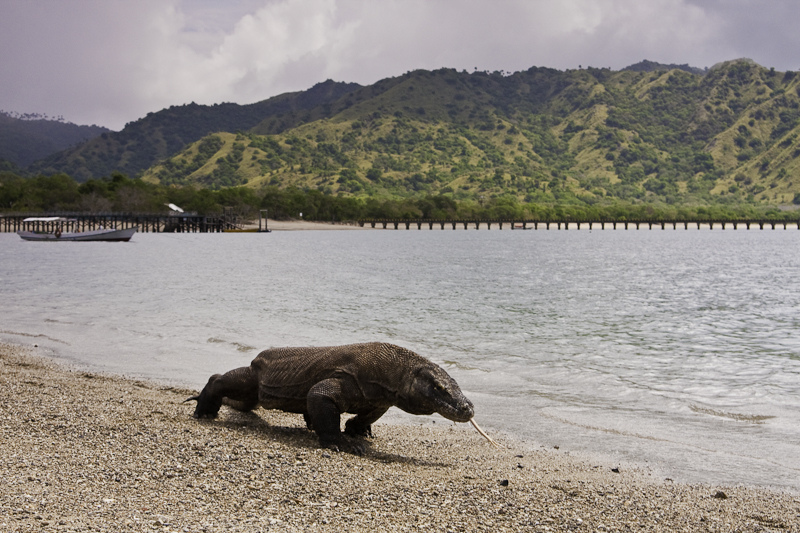
The Komodo dragon is not a metaphor. It is a 70-kilogram lizard with serrated teeth, a forked tongue that tastes the air for blood, and an evolutionary lineage that predates the dinosaurs. Getting within 10 meters of one — which happens routinely at Rinca or Komodo Island, with a guide who carries a forked stick and knows which way to run — is an encounter with something that sits outside the usual vocabulary of tourism.
The islands themselves are a tectonic oddity: volcanic hills covered in dry savanna grass roll into the Flores Sea, which here drops to extraordinary depths and produces some of the strongest tidal currents in Indonesia. That current is what makes the diving extraordinary. Manta rays aggregate at Manta Point in feeding behaviors visible from the surface. Pygmy seahorses cling to sea fans at depth. Hammerhead sharks patrol the deeper channels. The visibility on a calm day in the right season is 30 meters in every direction.
Pink Beach (Pantai Merah) is genuinely pink — the sand's color comes from fragments of red coral mixed into the white, and the effect is most visible in late afternoon light. Padar Island, a sharp-ridged volcanic island accessible in a 20-minute boat ride, offers a short but steep hike to a viewpoint that looks back over three bays simultaneously, two of which are different shades of blue. It is among the more photographed viewpoints in Southeast Asia, and it earns the reputation.
The decision between a liveaboard and a Labuan Bajo base matters enormously. Liveaboards spend 3–4 nights moving between the best dive and snorkel sites, waking up anchored at different locations each morning — they are the better value for divers and the more immersive experience overall. Labuan Bajo as a base gives more flexibility to add dragon treks, sunset dinners, and town logistics, but the 2–3 hour boat transit to the main sites each day adds fatigue and cost.
The practical bits.
- Best time
-
April–June · August–OctoberThe driest season (April–October) delivers the best visibility and calmest waters. Manta rays are present year-round but peak April–June. July–August is the highest-traffic month (school holidays, peak international). November–March is the wet season — rougher seas, reduced visibility, boat trips occasionally cancelled. Manta sightings actually increase in January–March if seas allow.
- How long
-
4 nights recommended2 nights covers the basic day-boat circuit (Komodo/Rinca + Pink Beach + Padar). 4–5 nights allows proper diving, a liveaboard, or a combination of snorkeling and sunset beaches. 7 nights for dedicated divers doing multiple sites.
- Budget
-
$140 / day typicalBudget guesthouses in Labuan Bajo from $20/night. A day-boat trip to the main islands runs $50–80/person including guide, park entry, and lunch. Liveaboards cost $150–400/night per person depending on vessel and itinerary. Dive costs add $40–70 per dive on a day-boat.
- Getting around
-
Day boats + liveaboards from Labuan BajoLabuan Bajo is the gateway — fly here from Bali (50 min), Lombok, or Jakarta. All island trips depart by boat from the harbor. Day-boat operators line the waterfront; book through your guesthouse or one of the established operators rather than the lowest-cost touts. Liveaboards depart from the main pier. Within Labuan Bajo, walk the waterfront strip or use ojek (motorbike taxi).
- Currency
-
Indonesian Rupiah (IDR)Labuan Bajo has ATMs but they run out during high season — bring sufficient cash. Day-boat and park fees are cash. Mid-range hotels and restaurants accept cards. On a liveaboard, cash is needed for tips and any extras bought at shore stops.
- Language
- Bahasa Indonesia. English is spoken at all Labuan Bajo hotels and reputable boat operators; almost no English on the islands themselves beyond ranger guides.
- Visa
- Indonesia's e-Visa on Arrival is available to most Western nationalities for 30 days at $35, extendable once for another 30 days. Stamp on arrival at Labuan Bajo's Komodo Airport. Alternatively, free visa-free entry is available for citizens of 10 ASEAN nations and some others.
- Safety
- Komodo dragons are genuinely dangerous — always stay with a licensed guide on Komodo and Rinca Island, do not trail behind the group, and never wear red (attracts attention). Diving: strong currents make some sites expert-only; brief your guide on your certification level honestly. Boats: avoid the very cheapest day-boat operators, who may have inadequate life-saving equipment. Petty theft is low; general Indonesia travel safety rules apply.
- Plug
- Type C / F · 230V
- Timezone
- WITA · UTC+8 (Central Indonesia)
A few specific picks.
Hand-picked, not algorithmic. Each of these has earned its space.
Guided walks of 30 minutes to 2 hours encounter wild Komodo dragons — at a kill site, near the ranger station where they gather, or on a longer trail into the hills. Rinca has higher dragon density near the station; Komodo is larger with more remote routes. The short trail at Rinca is fine; the long Komodo trail requires fitness and commitment.
Reef manta rays aggregate here, often in groups of 5–15, cleaning and feeding in the current. Snorkelers and divers share the site — you do not need a dive certification to see them. Early morning gives the best odds before surge and other boats arrive.
The pink color is real, caused by fragments of Foraminifera (red coral organisms) in the sand. Most vivid in late afternoon light. The snorkeling directly offshore is excellent, with staghorn coral gardens and abundant reef fish in shallow, calm water.
A 30-minute steep hike over volcanic rock and dry grass to a ridge viewpoint looking over three bays of different colors — black sand, white sand, and pink sand. Start at sunrise or one hour before sunset to beat the heat and the crowds. Bring water; there is nothing at the top.
A small private island 30 minutes from Labuan Bajo with a simple bungalow resort, a fringing reef, and a quieter atmosphere than the main Komodo circuit. Good for a half-day snorkel or an overnight escape from the Labuan Bajo strip.
Two of the best dive sites in the archipelago: submerged pinnacles swept by current, with schools of grey reef sharks, napoleon wrasse, giant trevally, and occasional hammerheads. Intermediate to advanced conditions — brief your operator accurately.
The harbor faces west over small islands, and the sunset is reliably dramatic in dry season. The waterfront strip has grown fast — some excellent restaurants, roof bars, and increasingly upmarket hotels, alongside the older dive-town infrastructure.
A steep hillside hike to a viewpoint over a sheltered bay where yachts and liveaboards anchor at sunset. One of the most serene spots in the park and accessible only by boat — most liveaboards stop here on the final evening.
A lone submerged pinnacle in the middle of a busy channel — considered one of the most biodiverse dive sites in the world, with over 1,000 fish species recorded. Strong current; best for experienced divers but snorkelers can see the reef top in calmer conditions.
A forested island with a small resort, excellent snorkeling on the reef flat, and a sandy spit ideal for swimming. Closer and calmer than the main Komodo circuit — good for families with children or travelers whose main interest isn't diving or dragon trekking.
Pick a neighborhood, not a hotel.
Komodo Islands is a city of neighborhoods. The one you stay in shapes the trip more than the property does.
Different trips for different travelers.
Same city, very different stays. Pick the lens that matches your trip.
Komodo Islands for divers
Komodo is in the global top five for dive biodiversity. Book a dedicated liveaboard (3–4 nights) to reach Castle Rock, Crystal Rock, Batu Bolong, and Cannibal Rock. State your certification level accurately — current speeds at some sites exceed 4 knots. Bring a dive computer; most sites have no dive shop backup once you're out.
Komodo Islands for wildlife enthusiasts
The dragon trek is the draw, but the marine wildlife rivals it — manta ray aggregations, schooling sharks, and abundant reef fish in remarkably healthy coral. Allow a full day each for Komodo Island and the marine sites rather than rushing both in one.
Komodo Islands for photography enthusiasts
Padar Island at sunrise, dragons at the Rinca station in morning light, the manta aggregation from surface level, and the Pink Beach color in late afternoon sun are the headline frames. A wide-angle underwater housing is the most useful specialist gear. Drone permits require advance coordination with the national park authority.
Komodo Islands for couples
Komodo works well for couples who share an interest in diving or nature. A 3–4 night liveaboard on a well-chosen vessel (private cabin, good meals, sundeck) is a more romantic experience than Labuan Bajo guesthouses. The sunset anchorage at Gili Lawa is a high point.
Komodo Islands for snorkelers
Non-divers see manta rays, turtles, and reef fish at Manta Point, Pink Beach, and Kanawa without a tank. The coral health in the national park is among the best in Indonesia. Rent quality fins and a mask from a reputable shop rather than using the low-grade gear on cheap day boats.
Komodo Islands for backpackers and budget travelers
Budget accommodation in Labuan Bajo runs $15–25/night. Share a day-boat charter with a group of 4–6 to cut per-person costs significantly. The guesthouses on the main strip can connect you with other solo travelers for boat sharing. The cheapest approach that doesn't sacrifice safety: a shared boat with a recommended operator, no liveaboard.
When to go to Komodo Islands.
A quick year at a glance. Great, good, or skip — see what each month is doing before you book.
Manta ray aggregations can be spectacular in calm windows. Seas often too rough for comfortable day boats. Liveaboards navigate better.
Highest rainfall. Some operators suspend day-boat services. Best month for experienced liveaboard divers chasing manta peaks.
Seas calming toward month end. Fewer visitors. Good for budget travelers willing to accept some rain days.
One of the best months. Manta season strong, visibility climbing to 20–25m, fewer crowds than high summer.
Optimal conditions. Manta rays at peak. Dive visibility often 30m. Not yet peak crowd season.
Excellent all-round month. Seas calm, visibility high. Crowds building but not at July–August peak.
Peak tourist season (school holidays). Book accommodation and liveaboards 3+ months ahead. Busiest dragon trekking month.
Peak season continues. Strong southeastern winds can make some exposed sites choppy. Book far ahead.
Excellent conditions. Crowds thinning after school holidays. Visibility still high. One of the best value months.
Good through mid-month. Seas can start rising in late October. Fewer visitors, good prices.
Rain increases. Some operators reduce schedules. Day trips still possible in early November with weather checks.
Christmas week sees some visitors willing to chance the weather; conditions are unreliable. Not recommended for first visits.
Day trips from Komodo Islands.
When you want a change of pace. Each one's a half-day or full-day out, easy from Komodo Islands.
Rinca Island Dragon Trek
40 min from Labuan BajoThe closest dragon trekking location. Ranger-guided walks of 30–90 minutes. Dragons congregate near the kitchen area of the station. Go early morning — they're sluggish in the midday heat and often hidden.
Padar Island Sunrise Hike
1.5h boat from Labuan BajoDepart Labuan Bajo at 4 AM to arrive at the trailhead before dawn. The hike is 30 minutes of rocky steep terrain. Bring a headlamp. The viewpoint is best in the first light — golden with less direct sun glare.
Pink Beach
2h boat from Labuan BajoCombine with Komodo Island dragon trek as a full-day trip. Snorkel gear is essential — the staghorn coral garden is 20 meters offshore in 3 meters of water.
Manta Point
2h boat from Labuan BajoA sheltered bay where reef manta rays congregate to feed and clean. Best April–June. Snorkelers see them as well as divers. Early morning before the chop builds gives calmer surface conditions.
Kanawa Island
30 min from Labuan BajoSmaller, calmer alternative to the main Komodo circuit. Good for a half-day or overnight stay at the island resort. The fringing reef has healthy coral and turtles are frequently spotted.
Gili Lawa Darat
2h from Labuan BajoBest done as a liveaboard final-night anchorage or a day-boat afternoon extension. The hilltop trail gives a 360-degree view of the park. Boats anchor in the protected bay below for sunset — one of the most peaceful spots in the national park.
Komodo Islands vs elsewhere.
Quick honest reads on the cities people compare Komodo Islands to.
Raja Ampat in West Papua has the highest marine biodiversity on earth and more pristine coral. Komodo adds unique land wildlife (dragons) and is logistically easier to reach. Both are premier dive destinations; Raja Ampat is the underwater specialist trip, Komodo the combined wildlife-and-dive experience.
Pick Komodo Islands if: You want to combine a prehistoric reptile encounter with world-class diving and manta rays in an easily reached destination.
Bali is a cultural and lifestyle destination with beach clubs, temples, and rice terraces. Komodo is pure nature and adventure with minimal nightlife or cultural complexity. They're 50 minutes apart by air and many travelers combine both.
Pick Komodo Islands if: You want the adventure-nature experience with zero cultural distraction — this is not a shopping-and-sunset-cocktail destination.
The Great Barrier Reef has better snorkeling infrastructure and more accessible day trips; Komodo has stronger current diving, more intact coral, better large pelagic wildlife, and no land mammal competition anywhere in the world. Komodo is cheaper and more adventurous.
Pick Komodo Islands if: You want current-swept dive sites, intact coral, and a wildlife encounter (dragons, mantas, sharks) the Great Barrier Reef cannot match.
Both are wildlife-first archipelagos. Galapagos has sea lions, marine iguanas, tortoises, and strict visitor quotas that preserve an extraordinary tameness in the animals. Komodo is far cheaper, less regulated, and adds premium diving. Galapagos is the more unique global rarity; Komodo is the better value.
Pick Komodo Islands if: You want comparable wildlife intensity at roughly one-fifth of the cost, and premium diving is part of your travel goal.
Itineraries you can start from.
Rough shapes for a trip here — a feel for the pace and cost. Find the one that fits you.
Fly Bali–Labuan Bajo. Day 1: Rinca (dragons) + Padar sunrise hike + Pink Beach snorkel. Day 2: Komodo Island long dragon trail + Manta Point. Day 3: Kanawa Island half-day, fly back.
Arrive Labuan Bajo, 3-night liveaboard (Komodo Island, Crystal Rock, Gili Lawa, Batu Bolong), return to Labuan Bajo for 2 nights of restaurants and hillside accommodation.
4-night liveaboard covering the full northern and southern park circuit (Castle Rock, Tatawa Besar, Manta Alley, Batu Bolong). Two nights Labuan Bajo either side. 12–15 dives total.
Things people ask about Komodo Islands.
Is it better to do a liveaboard or day trips from Labuan Bajo?
Liveaboards are better value for divers and those wanting to see the park at depth — you wake up anchored at different locations each morning, lose no time to 2-hour transits, and typically see more wildlife. Day boats from Labuan Bajo are better if you want flexibility, a comfortable hotel base, or if you want to combine dragon trekking with Labuan Bajo restaurants and nightlife. Most visitors stay 3–5 days; divers should do at least one liveaboard night.
Are Komodo dragons dangerous?
Yes — they are large predatory reptiles that will attack humans if they feel threatened, are hungry, or are surprised. Attacks on rangers and visitors have occurred, though fatalities are rare. The rule is simple: always stay with a licensed ranger guide, maintain a minimum 5-meter distance, don't walk between a dragon and a tree it could use for shade, and don't trail at the back of the group. The risk is real but manageable with guide compliance.
When is the best time to visit Komodo?
April through June and August through October are the sweet spots: dry season, calm seas, and visibility up to 30 meters. July and August are peak crowd months. November through March is the wet season — seas are rougher, visibility drops, and some day-boat operators cancel. Manta rays are present year-round; the January–March manta aggregation can be exceptional if weather cooperates.
How do I get to Labuan Bajo?
Fly. Komodo Airport (LBJ) in Labuan Bajo has direct flights from Bali (Ngurah Rai, 50 minutes) with Garuda Indonesia, Lion Air, and Batik Air. Connections from Jakarta (via Bali or direct, 2.5h). The ferry from Sape (Sumbawa) takes 6–8 hours and is used by budget backpackers doing the Flores overland — not recommended if time is limited.
How much does Komodo cost?
Day-boat trips run $50–100/person including a park entry fee (around $15 in standard season; a controversial premium conservation fee system is under ongoing review). A 3-night liveaboard costs $300–1,200 total depending on vessel quality. Budget guesthouses in Labuan Bajo from $20/night; mid-range hillside hotels with bay views $60–120/night. Dive costs: $40–70 per dive on a day-boat, included on most liveaboards.
Do I need to be certified to dive in Komodo?
For most popular sites, an Open Water certification is sufficient. Several sites — Castle Rock, Crystal Rock, Shotgun — have strong currents that require Advanced Open Water or better. Be honest with your operator about your experience; pushing a beginner into a strong current site is dangerous. Most liveaboards and day-boat operators have divemaster-guided options for all levels.
Is the Komodo conservation fee worth the controversy?
The Indonesian government has periodically proposed a $1,000/person conservation fee to reduce visitor numbers. The implementation has been delayed multiple times. Currently (as of 2025) a standard national park fee applies. Check the current status before booking — fees and access rules in the park have changed several times in recent years.
Can I snorkel in Komodo without diving?
Yes, and well. Manta Point, Pink Beach, Kanawa Island, and Bidadari Island all offer excellent snorkeling in shallow, relatively calm water. The reef fish and coral density at Pink Beach is accessible without a dive cylinder. Manta rays often feed within 3–5 meters of the surface at Manta Alley. Non-divers do not feel shortchanged in Komodo.
Is Komodo suitable for families with children?
Older children (10+) handle the experience well — dragon treks, snorkeling, and Padar hike are manageable and memorable. Younger children need supervision carefully around the dragons (the risk is real) and on boats in choppier conditions. Pink Beach and Bidadari Island are calmer snorkel options for younger swimmers. A day-boat circuit rather than liveaboard is more practical for families.
What should I wear for the Komodo dragon trek?
Long pants and closed shoes are strongly recommended — not just for dragons but for the dry-grass terrain with sharp rocks. Bring water (at least 2 liters for a long trek on a hot day), sun protection, and a hat. The midday heat between April and October is significant — the morning trek (7–9 AM) is much more comfortable than an afternoon walk. Do not wear perfume or strong scents.
What is the food like in Labuan Bajo?
The waterfront strip has grown considerably into a mix of Indonesian seafood restaurants, Western cafés, and a few genuinely excellent spots. Fresh catch grilled at the harbor warungs is the best value; the hillside hotels increasingly serve quality food. On boats and liveaboards, Indonesian cooking (rice, noodles, fish, vegetables) is the standard — most liveaboards provide good quality and plenty of it.
Is Labuan Bajo worth spending extra days in?
One or two days is plenty for the town itself; it's a small port that has grown fast. The value of staying longer is as a base for island day trips — Kanawa, Bidadari, Seraya Island — rather than for the town. The sunset from the waterfront and the hillside bars is genuinely excellent, and the restaurant scene has improved dramatically since 2020.
What's the difference between Komodo Island and Rinca Island for dragon trekking?
Rinca is closer to Labuan Bajo (40 minutes vs 2–2.5 hours) and has higher dragon density near the ranger station, making it better for a quick encounter. Komodo Island is larger, with longer trail options and more varied habitat including forested valleys. If you can only do one, Rinca gives more dragon sightings per unit of time; if you have a full day, Komodo has more landscape variety and a longer forest walk.
What marine life can I expect to see in Komodo?
Beyond manta rays: reef sharks (whitetip, blacktip, grey, occasional hammerhead at Castle Rock), eagle rays, Napoleon wrasse, giant trevally, schools of tuna, pygmy seahorses (on sea fans at depth), blue-ringed octopus, and occasionally dugong near the grass beds. The diversity is consistently ranked among the top five dive destinations in the world.
How is the internet and mobile coverage in Labuan Bajo?
Labuan Bajo has reasonable 4G coverage in town; the islands and out at sea have none. Wi-Fi in mid-range hotels is functional but not fast. On a liveaboard, assume no connectivity for the duration. Buy a Telkomsel SIM card at the airport in Bali before you fly — it provides the best coverage in Nusa Tenggara.
What's the biggest mistake travelers make in Komodo?
Booking the cheapest day-boat without checking the operator's safety record, guide certification, and boat condition. The cheapest boats often have unreliable engines, inadequate life vests, and uncertified guides. The price difference between a reputable operator and the cheapest is $15–30/person — a very small amount relative to the risk and the experience quality.
Should I combine Komodo with Lombok or Flores?
Combining with Flores (driving east through volcanic lakes at Kelimutu, traditional villages, Bajawa and Ende) is a classic 10–12 day Nusa Tenggara overland. Lombok (Rinjani volcano trekking, the Gili Islands) is a natural addition accessible by ferry or short flight from Labuan Bajo. Both pairings work well for travelers with 10+ days in Eastern Indonesia.
Can I visit Komodo independently without a tour?
Komodo and Rinca require a licensed ranger to accompany you — you cannot walk the island alone. You do, however, not need to book a packaged tour; you can hire a boat directly at the Labuan Bajo harbor, pay park entry at the island pier, and join the ranger's designated group. This DIY approach requires confidence with negotiation and logistics, but saves the markup of a full tour package.
Know someone headed to Komodo Islands?
Send them this guide — real neighborhoods, timing, and prices, with nothing to sign up for.
Copies the link — nothing to install