Jackson Hole
Send it to whoever you'd travel with
Jackson Hole is a Wyoming valley town where serious skiing, Grand Teton wildlife, and a walkable Western downtown collide year-round.
Jackson Hole isn't really one place. It's a valley — the actual hole — wedged between the Tetons and the Gros Ventre range, with the town of Jackson at its southern end, the Jackson Hole Mountain Resort cluster at Teton Village nine miles north, and Grand Teton National Park sprawling above it all. That geography is the whole point. Most other ski-town destinations make you choose between mountain access and a real downtown. Jackson refuses to. You can ski Corbet's Couloir in the morning and eat at a James Beard-nominated restaurant on Town Square that night, then drive forty minutes north and watch a moose cross the road before breakfast.
The town itself is small — antler arches on the square, board-and-batten storefronts, a single stoplight feel — but the prices are not. Jackson has quietly become one of the most expensive zip codes in the U.S., and it shows up at the hotel desk and the dinner check. The trade-off is that the money has bought a level of craft that's unusual for a town this size: the restaurants are genuinely good, the galleries are real, the outfitters know what they're doing. You're not paying ski-town markup for ski-town mediocrity.
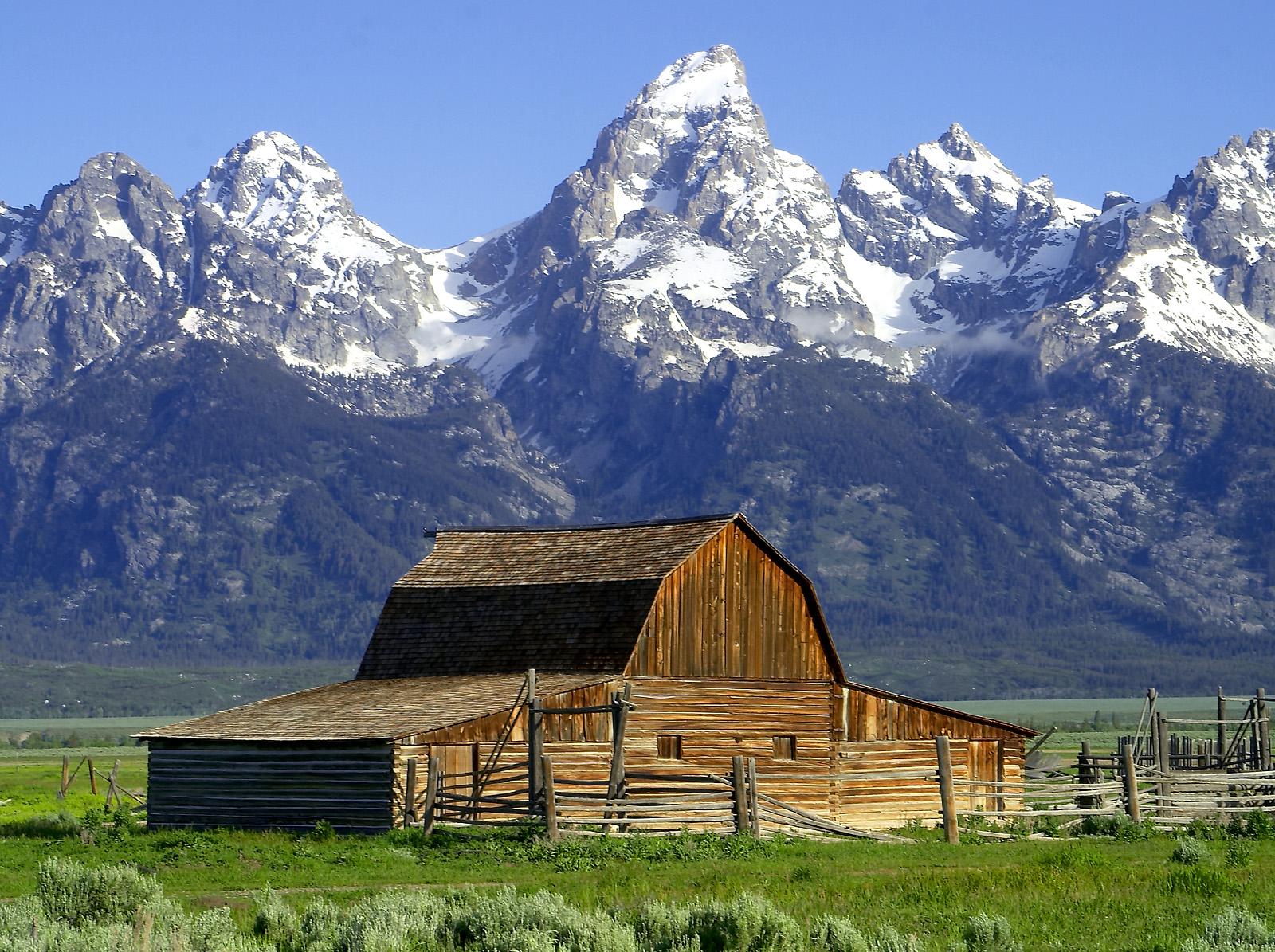
What sets Jackson apart from Aspen or Park City is the wildlife. Grand Teton begins where the town ends, and Yellowstone is two hours up the road. In a single week you can credibly expect moose, elk, bison, pronghorn, and — if you go early or late in the season and pay attention — bears. The light here is part of the appeal too: the Tetons rise straight out of the valley floor with no foothills to soften them, which is why every photo of the range looks staged. It's not staged. It just looks like that.
The honest catch: this is a trip, not a city break. You need a car for most of what makes Jackson worth visiting, weather can rearrange your itinerary on short notice in any season, and the shoulder months (April, November) are genuinely sleepy. Plan around what you came for — skiing, parks, or wildlife — and the rest of the valley arranges itself.
The practical bits.
- Best time
-
Jun – Sep, or Feb for skiSummer for parks and hiking; February for peak snow and full resort operations.
- How long
-
5-7 nights recommendedFive gets you the town plus a real Grand Teton day; seven adds Yellowstone without rushing.
- Budget
-
$350 / day typicalLodging is the swing factor — shoulder-season rooms drop 35-50%, peak-ski rooms can clear $700.
- Getting around
-
Rent a car — public transit covers the basics but not the parks.The START bus is free inside Jackson and $3 each way to Teton Village, running until about 10:30pm. For Grand Teton, Yellowstone, or any trailhead beyond the resort, you'll want your own vehicle. Taxis and rideshare exist but get expensive fast.
- Currency
-
$ USDCards work everywhere, including most trailhead concessions. Keep a little cash for tipping outfitters and rural diners outside town.
- Language
- English; Spanish widely spoken in service jobs.
- Visa
- U.S. entry rules apply — ESTA for visa-waiver countries, B-1/B-2 otherwise.
- Safety
- Very low crime, friendly locals, and walkable downtown after dark. Real safety risk is wildlife and weather — give bison and moose 25 yards, bears 100, and carry bear spray on any backcountry trail.
- Plug
- Type A/B, 120V
- Timezone
- GMT-7 (Mountain Time)
A few specific picks.
Hand-picked, not algorithmic. Each of these has earned its space.
4,139 vertical feet, the legendary aerial tram, and Corbet's Couloir for skiers who actually mean it. In summer, the tram still runs for hikers and waffle-eaters at Corbet's Cabin.
Start at Jenny Lake — the shuttle across to the Hidden Falls and Inspiration Point hike is the highest-payoff two miles in the valley.
Four arches built from shed elk antlers anchor the square. Touristy, photographed to death, and genuinely the heart of town.
James Beard-nominated, 300-bottle wine list, and a fireplace bar that locals actually use. Book it.
Wood-fired Italian inside the Hotel Terra at the base of the mountain. The salumi bar makes the post-ski queue tolerable.
James Beard-winning breakfast spot in a wood-stove cabin across the pass. Huevos rancheros and banana bread French toast are the orders.
Award-winning pies in a basement off the square. Late-night crowd, no pretension, the after-ski default.
The Moulton barns with the Tetons behind them — the most photographed image in the valley. Best at sunrise, empty by 8am.
The 'Town Hill' — steep, in-town skiing without the Teton Village commute, plus an alpine slide and bike park in summer.
Winter-only horse-drawn sleighs into a wintering herd of 6,000+ elk. Cold, slow, unforgettable.
Cavernous saloon-restaurant at the base of the resort. Local ingredients, eclectic vibe, and live music that runs late.
Surprisingly excellent sushi in a historic log cabin off the square. Tiny room, big check — reservations essential.
Pick a neighborhood, not a hotel.
Jackson Hole is a city of neighborhoods. The one you stay in shapes the trip more than the property does.
Different trips for different travelers.
Same city, very different stays. Pick the lens that matches your trip.
Jackson Hole for skiers
Jackson Hole Mountain Resort is one of the steepest mountains in North America, with 4,139 vertical feet and a legitimate big-mountain reputation. Add Snow King in town and Grand Targhee over the pass for variety.
Jackson Hole for wildlife photographers
Grand Teton at dawn, Antelope Flats at golden hour, and the National Elk Refuge in winter make this one of the most reliable wildlife-viewing destinations in the U.S.
Jackson Hole for hikers
Jenny Lake, Cascade Canyon, Death Canyon, and the high trails out of Phelps Lake offer everything from family loops to multi-day backcountry — all within forty minutes of town.
Jackson Hole for couples
Downtown Jackson is walkable and dense with good restaurants, the spa scene at Amangani and Four Seasons is genuinely high-end, and an evening sleigh ride or sunset float is hard to beat.
Jackson Hole for families
Snow King in town has alpine slides and a bike park, the START bus is free, and a Jenny Lake boat-shuttle hike to Hidden Falls is an achievable big day even with younger kids.
Jackson Hole for foodies
Two James Beard-recognized restaurants (Snake River Grill, Nora's Fish Creek Inn), a strong farm-to-table scene, and a surprising sushi spot on the square make Jackson one of the better small-town dining destinations in the West.
When to go to Jackson Hole.
A quick year at a glance. Great, good, or skip — see what each month is doing before you book.
Quiet, cold, and excellent for skiers who want emptier lifts than February.
The strongest ski month — full operations and the best base depth of the season.
Spring-skiing window with discounted lift tickets after mid-month.
Resort closes early in the month, parks are quiet but trails are sloppy — locals' off-season.
Bears emerge, baby animals appear, deals on lodging — but pack for any season.
Arguably the best month — full park access, lighter crowds than July, active wildlife.
Peak season — book everything months ahead and start trailheads early.
Still busy but trail crowds ease late month; wildfire smoke is a possibility.
Elk rut begins, crowds drop sharply after Labor Day — the local pick.
Quiet park visits and bear hyperphagia, but some park roads close late month.
Resort hasn't opened, parks are mostly closed — the deepest off-season.
Resort opens early month; holiday week is the busiest and priciest stretch of the year.
Day trips from Jackson Hole.
When you want a change of pace. Each one's a half-day or full-day out, easy from Jackson Hole.
Grand Teton National Park
30 minBegins minutes from downtown — Jenny Lake, Mormon Row, and Schwabacher's Landing are the must-stops.
Yellowstone National Park
2 hrSouth entrance is two hours up Route 191. Doable as a long day; better as a two-night overnight.
Grand Targhee Resort
75 minOver Teton Pass in Idaho — famously deep snow and a fraction of the Village crowds.
Snake River Canyon
30 minClass II-III rapids south of town, with multiple outfitters running half-day trips.
National Elk Refuge
10 minRight at the edge of town — December through early April only.
Jackson Lake
45 minThe big northern lake in Grand Teton — rent a kayak at Colter Bay for a half-day on the water.
Jackson Hole vs elsewhere.
Quick honest reads on the cities people compare Jackson Hole to.
Aspen is glossier and easier to spend money in; Jackson is rougher, steeper, and closer to real wilderness. Aspen has the better luxury hotel scene, Jackson has the better park access.
Pick Jackson Hole if: Pick Jackson if you want big-mountain skiing and national parks; pick Aspen for nightlife and four-mountain variety.
Park City is dramatically easier to reach — 35 minutes from a major airport — and has gentler terrain plus a year-round event calendar. Jackson is harder, wilder, and more rewarding in summer.
Pick Jackson Hole if: Pick Park City for a fast, easy ski trip; pick Jackson if national parks and wildlife matter as much as the skiing.
Banff is the international equivalent — bigger mountains, glacier-fed lakes, more dramatic peaks — but more crowded in summer and farther from a major U.S. hub. Jackson trades scale for accessibility and a real Western downtown.
Pick Jackson Hole if: Pick Banff for raw scenery; pick Jackson if you want park access without a passport and a livelier town.
Bozeman is the quieter, more affordable Montana cousin — Yellowstone's northern gateway, with Big Sky an hour away. Jackson is more polished and touristic, Bozeman feels like a college town that snuck into a mountain valley.
Pick Jackson Hole if: Pick Bozeman for cheaper lodging and easier Yellowstone access; pick Jackson for Grand Teton and a denser food scene.
Vail is Colorado's polished European-village ski destination — easier groomed cruising, dependable Front Range access. Jackson is the steeper, wilder alternative with summer parks Vail can't match.
Pick Jackson Hole if: Pick Vail for groomers and a manicured ski-village experience; pick Jackson for terrain and wildlife.
Itineraries you can start from.
Rough shapes for a trip here — a feel for the pace and cost. Find the one that fits you.
Two days in Grand Teton (Jenny Lake, Mormon Row, a guided wildlife dawn drive), a town day, a half-day on the Snake, and an evening at Snake River Grill.
Three nights in Jackson for Grand Teton and town, two in or near Yellowstone for Old Faithful and the Lower Loop, two back in Jackson to decompress.
Six nights at Teton Village, four lift days, one rest day for the elk-refuge sleigh ride and a town dinner, and one storm-chase backup day.
Things people ask about Jackson Hole.
Is Jackson Hole worth visiting?
Yes — it's one of the few American destinations that combines world-class skiing, two national parks at the doorstep, and a genuinely good food and gallery scene in a walkable town. The cost is high and you need a car for most of what makes the valley special, but five to seven nights here delivers a wider range of experiences than almost any other U.S. mountain trip.
How many days do you need in Jackson Hole?
Five to seven nights is the sweet spot. Three is enough for a quick ski weekend or a fast Grand Teton sampler but feels rushed. Five gives you two real park days, a town day, and time on the Snake River. Seven lets you add Yellowstone — two hours each way — without compressing it into a single exhausting day.
What is the best time to visit Jackson Hole?
Late June through early September for hiking, wildlife, and full park access; February for peak ski conditions and reliable snowpack. May and November are the deepest shoulder seasons — cheap and quiet, but many trails are muddy or closed and the resort is between seasons. Fall (mid-September to mid-October) is underrated for wildlife and color.
Is Jackson Hole expensive?
Yes — it's quietly one of the most expensive small towns in the U.S. Peak-season hotel rooms routinely run $250-$700 a night, dinner for two at a mid-range restaurant lands around $120, and ski-day lift tickets clear $200. Budget travelers can manage on $170 a day with hostels, cooked meals, and the free in-town bus, but the realistic mid-range is $300-$400 per person daily.
What is Jackson Hole known for?
Three things: the Jackson Hole Mountain Resort's big-mountain skiing and the infamous Corbet's Couloir; Grand Teton National Park, which begins minutes from downtown; and a Western town square ringed by four arches built from shed elk antlers. It's also a wildlife corridor — moose, bison, elk, and bears all live within an hour of the square.
Cash or card in Jackson Hole?
Cards work everywhere — restaurants, lift tickets, gas stations, even most trailhead concessions and park entrance booths. Keep $40-$60 in cash for tipping fishing guides, sleigh drivers, and rafting outfitters, and for the rare rural diner or roadside stand outside town. ATMs are easy to find downtown and at the airport.
How do you get from Jackson Hole Airport to town?
It's a 10-mile drive — about fifteen minutes. A seasonal START airport shuttle runs in ski season for $10 (adults), connecting JAC to four downtown stops. Off-season your options are taxis, rideshare (limited), a private shuttle (around $50-$80 to town, more to Teton Village), or a rental car, which most visitors end up needing anyway.
What are the best day trips from Jackson Hole?
Grand Teton National Park is essentially in town — Jenny Lake and Mormon Row are 30-40 minutes away. Yellowstone's southern entrance is about two hours up the parkway; doable as a long day but better as an overnight. Grand Targhee Resort is over the pass in Idaho for quieter skiing, and the Snake River Canyon south of town is the spot for whitewater rafting.
Where is the best neighborhood to stay in Jackson Hole?
Downtown Jackson for first-timers — you can walk to restaurants, galleries, and bars, and the free START bus reaches Teton Village in 40 minutes. Teton Village if you're here mainly to ski. The West Bank around Wilson if you want quieter mountain views with a rental car. Moose if you're hiking Grand Teton at sunrise every day.
Jackson Hole vs Aspen — which is better?
Jackson is the more serious mountain — steeper, colder, and more big-mountain terrain, with national parks at the doorstep. Aspen is glossier and has the stronger nightlife and luxury scene, with four mountains in one pass. Pick Jackson for skiing, wildlife, and Western character; pick Aspen for après, restaurants, and shopping. Jackson is meaningfully cheaper on food, though not on lodging.
Jackson Hole vs Park City — which should I pick?
Park City is easier — 35 minutes from Salt Lake City's major airport, gentler terrain, and a year-round event calendar including Sundance. Jackson is harder to reach but rewards you with steeper skiing, far better summer access to national parks, and bigger wildlife encounters. Park City for a fast, easy ski trip; Jackson for a full mountain-and-parks vacation.
Is Jackson Hole safe for solo travelers?
Very. Crime is low, the downtown is well-lit and walkable late, and locals are notably friendly. The real risks are environmental: bears and moose in the backcountry, sudden weather changes in any season, and limited cell service on trails. Carry bear spray on hikes, download offline maps, and tell someone your plan if you're going out alone.
Do you need a car in Jackson Hole?
For Jackson town itself, no — the free START bus and walking cover everything. For Teton Village, a $3 bus runs frequently. For Grand Teton trailheads, Mormon Row at sunrise, Yellowstone, or any wildlife driving at dawn or dusk, yes — you'll want your own car. Most visitors rent one even if they stay downtown.
What should I pack for Jackson Hole?
Layers, always — even July mornings dip into the 40s°F and afternoons can hit the 80s°F. Add a real rain shell, sturdy hiking shoes, and sun protection (the valley sits at 6,200 feet). For winter trips bring genuine cold-weather gear; January lows run well below freezing and wind chills are brutal on the resort. Bear spray can be bought or rented locally.
Can you see bears in Jackson Hole?
Yes, and the odds are better than in most U.S. destinations. Grizzly and black bears are active in Grand Teton and Yellowstone, with the highest sighting probability in late spring (May-June, when bears emerge) and early fall (September-October, hyperphagia feeding). Stay at least 100 yards back, carry bear spray on trails, and never approach for a photo.
Is Jackson Hole good for non-skiers in winter?
Yes. Snowmobiling, snowshoeing, the National Elk Refuge sleigh rides, cross-country tracks at Trail Creek and Turpin Meadow, and snow-coach tours into Yellowstone all work without lift tickets. The town itself stays lively — restaurants, galleries, and the Center for the Arts run full programming, and the resort village at Teton has good food and bars even if you never ride a lift.
Know someone headed to Jackson Hole?
Send them this guide — real neighborhoods, timing, and prices, with nothing to sign up for.
Copies the link — nothing to install