Ishigaki
Send it to whoever you'd travel with
Ishigaki is Japan's southernmost major island — closer to Taipei than to Tokyo — where manta rays circle cleaning stations reliably enough that dive operators guarantee encounters, and where Kabira Bay's seven shades of blue earned a Michelin three-star designation for a view that costs nothing to experience from shore.
Ishigaki sits at 24°N latitude — the same as the Bahamas — roughly 400 km southwest of the Okinawa main island and 270 km east of Taiwan. The Yaeyama Islands, of which Ishigaki is the hub, are Japan's most remote inhabited island chain within the prefectural border, and the distance shows in the climate (warmer and more reliably sunny than Okinawa), the culture (a distinct Yaeyama folk music tradition, the three-stringed sanshin played differently from Okinawan style), and the marine environment (some of the healthiest coral reefs remaining in East Asia).
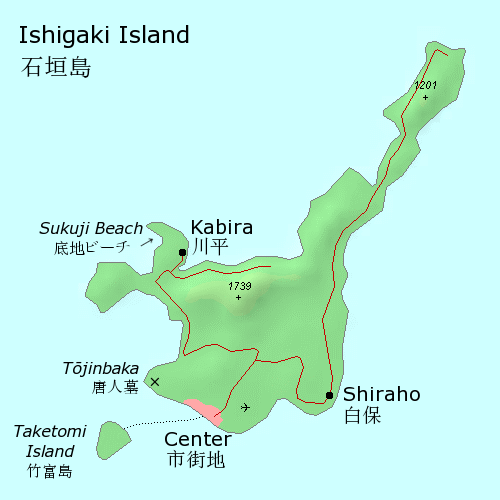
Kabira Bay on the island's northwest coast is the set-piece — an enclosed bay of seven gradient shades of blue, fringed by islets of dense vegetation, with the clearest water in Japan. Glass-bottom boat tours operate over the coral (swimming is prohibited inside the bay to protect the black pearl oyster farms). The view from the hillside overlook above the bay entrance is free and extraordinary. Michelin gave it three stars; every travel photographer with a drone in Japan has a Kabira Bay image.
The marine activity center is Manta Scramble — a dive site near Kabira Bay where manta rays gather at cleaning stations reliably enough that operators run 'manta guarantee' policies (return if none sighted, which is very rarely invoked July–October). Snorkelers can reach shallower cleaning stations at Manta City near Kohama Island. The Shiraho coral reef on the island's southeast coast is one of the last healthy blue coral colonies in Japan — accessible by kayak or guided snorkeling from the beach.
The logistics are elegant: New Ishigaki Airport receives direct flights from Tokyo (Haneda, 3h), Osaka, Nagoya, and several other cities, as well as connections from Naha (45 min). The island is small enough (roughly 20 km across) to cover by rental scooter or bicycle on the flat southeast, and by rental car for the more remote west and north. The outer Yaeyama islands — Iriomote (jungle, waterfalls, rare wildcat), Taketomi (preserved Ryukyuan village), and Hateruma (Japan's southernmost inhabited point) — all depart from Ishigaki port in 15–60 minutes.
The practical bits.
- Best time
-
April – June · October – DecemberApril–June has warm water, pre-typhoon clarity, and manta rays active. October–December is the sweet spot after typhoon season — clear skies, water still warm (25–27°C), mantas still present, and significantly fewer tourists. July–September is peak season but peak typhoon season simultaneously — cancellations are common. Winter (January–March) is cheapest; water cooler but mantas still occasionally seen and humpback whales appear.
- How long
-
4 nights recommendedThree nights covers Kabira Bay, Manta Scramble dive/snorkel, and Shiraho beach. Four nights adds Iriomote day trip (waterfall hike or river kayaking) or Taketomi Island. Five to seven nights for serious divers wanting multiple dive days, outer island overnights, or Hateruma.
- Budget
-
~¥22,000/day ($150) typicalIshigaki is more expensive than mainland Japan on accommodation. Guesthouses from ¥5,000/night; mid-range hotels ¥14,000–20,000. Manta ray dive ¥12,000–18,000. Glass-bottom boat tour ¥1,300. Rental scooter ¥3,000/day. Ishigaki beef (wagyu local breed) yakiniku dinner ¥4,000–8,000. Ferry to Iriomote ¥1,750 return.
- Getting around
-
Rental car or scooter + ferriesNew Ishigaki Airport is 5 min from Ishigaki city center by taxi (¥700) or free shuttle from rental car companies. Rental cars (from ¥6,000/day) and scooters (from ¥3,000/day) are the primary transport; the bus network is limited. Ferries to outer islands (Taketomi 15 min, Iriomote 35–50 min, Hateruma 60 min) depart from Ishigaki Port (Uechi and Yaeyama piers).
- Currency
-
Japanese Yen (JPY). Cards accepted at hotels and larger restaurants; dive operators and some island stalls cash-preferred. ATMs at the 7-Eleven near the port and Japan Post.Carry ¥20,000+ cash for dive tours, ferries, and smaller restaurants. Ishigaki beef restaurants typically accept cards.
- Language
- Japanese. English widely spoken at dive operators, tourist-facing restaurants, and hotels in Ishigaki city. Outer islands (Iriomote, Hateruma) have minimal English.
- Visa
- Japan 90-day visa-free for most developed-country passports. Visit Japan Web registration before arrival.
- Safety
- Very safe. Ocean hazards: habu jellyfish July–October (wear rashguard), stonefish on reef (water shoes), coral cuts (reef shoes). Always dive with certified operators. Iriomote jungle hiking requires a guide for river crossings.
- Plug
- Type A · 100V — Japanese standard.
- Timezone
- JST · UTC+9 (no DST) — note that geographically Ishigaki is closer to UTC+8 (Taiwan, China), which is why the sun rises and sets later relative to the clock.
A few specific picks.
Hand-picked, not algorithmic. Each of these has earned its space.
Three Michelin stars for a view — the iconic bay of seven-gradient blue with islets of green. Glass-bottom boat tours over the coral and black pearl farms (¥1,300, 30 min). Swimming prohibited inside the bay. The hillside overlook above the bay entrance is free and better than any boat tour photo angle.
Manta Scramble is one of the world's most reliable manta ray dive sites — the mantas gather at cleaning stations consistently enough that operators guarantee encounters July–October. One-day intro dive ¥12,000–18,000; certified dive ¥8,000–12,000. Snorkel access at Manta City near Kohama Island.
One of the last healthy blue coral colonies in Japan — Porites coral formations that take hundreds of years to grow. Accessible by snorkeling off Shiraho Beach or by guided kayak from the shore. The beach itself is quiet and non-commercial. Best visibility on calm days.
Japan's second-largest subtropical island — 90% national park, dense jungle, mangrove river systems, and the rarest wild cat in Japan (the Iriomote cat, fewer than 100 individuals). River kayaking up the Urauchi River to Kanpire Falls is the classic activity. Guided jungle hike to Pinaisara Falls (highest in Okinawa Prefecture) is more demanding.
A tiny island (6 km²) where the Ryukyuan village is so well-preserved that it's designated a national cultural landscape: buffalo-cart rides between white-coral-sand lanes lined with shisa-topped walls and red hibiscus. No cars allowed in the village. The beaches (Kondoi Beach, Kaiji 'star sand' Beach) are beautiful and relaxed.
Ishigaki island raises its own Yaeyama Shimashima wagyu — black-haired cattle grazed in the subtropical climate, often acknowledged as among Japan's finest beef alongside Matsusaka and Kobe. Dinner at Kinjo (Ishigaki beef specialist) or Yakiniku Ishigaki is the essential Ishigaki food experience. Budget ¥4,000–8,000 per person.
Japan's westernmost inhabited island, 27 km from Taiwan. The underwater rock formation at Yonaguni (the 'Yonaguni Monument') — massive stepped stone terraces of uncertain origin (natural geological formation or ancient structure; strongly debated) — is one of the world's most unusual dive sites. Hammerhead sharks gather here January–March.
Japan's southernmost inhabited island — a quiet, flat island with crystal-clear beaches, a star-watching facility (among the darkest skies in Japan), and a pace of life that makes Ishigaki seem busy. Nishihama Beach is rated by some as Japan's most beautiful. Day trip is tight; overnight is better.
Pick a neighborhood, not a hotel.
Ishigaki is a city of neighborhoods. The one you stay in shapes the trip more than the property does.
Different trips for different travelers.
Same city, very different stays. Pick the lens that matches your trip.
Ishigaki for divers
Manta Scramble is one of the world's top manta ray dive sites. Shiraho blue coral, Yonaguni hammerheads, and Iriomote's river walls complete a dive circuit with almost no equivalent in Asia at comparable access.
Ishigaki for snorkelers
Manta City near Kohama, Yonehara roadside reef, and Shiraho Beach are all accessible without certification — Japan-level safety and quality with world-class coral at snorkel depth.
Ishigaki for island hoppers
Ishigaki as the hub for Iriomote, Taketomi, Kohama, Hateruma, and Yonaguni makes it the best base for Japan's most remote island-hopping circuit.
Ishigaki for nature and wildlife travelers
Iriomote cat, sea turtles (Ishigaki and Kerama), manta rays, hammerhead sharks, dugong (rare, Iriomote), and the Yonagunijima firefly crab — Yaeyama's wildlife list is extraordinary.
Ishigaki for off-grid travelers
Hateruma's southern darkness, Iriomote's jungle remoteness, and Yonaguni's Taiwan-facing isolation are as far off the Japanese tourist grid as you can get while retaining clean water, reliable ferries, and edible food.
When to go to Ishigaki.
A quick year at a glance. Great, good, or skip — see what each month is doing before you book.
Humpback whales in surrounding waters. Cheapest month. Water cooler but mantas occasionally present. Yonaguni hammerheads peak January–March.
Humpback whale watching continues. Yonaguni hammerheads. Low tourist volume.
Water warming. Pre-peak season calm. Good coral visibility. Hammerheads at Yonaguni still present early March.
Mantas reliably present. Pre-typhoon season clarity. Excellent snorkeling and diving conditions. Not yet crowded.
Rainy season starts mid-May but showers are brief. Water warm (26°C). Manta activity increasing.
Manta Scramble becoming very active. Hot and humid. Typhoon season begins but July is higher risk.
Manta peak begins. Peak tourist season. Typhoon risk — ferry cancellations possible.
Highest typhoon risk. Peak mantas. Busiest and most expensive month. Build in extra days for potential disruption.
Typhoon risk drops late September. Mantas still active. Prices starting to fall. Good month if typhoon-lucky.
Best overall month. Typhoons essentially done. Water 27°C. Mantas still present. Crowds falling significantly. Hotel prices drop.
Excellent conditions. Low tourists, good prices. Water still 25°C. Some of the best coral visibility of the year.
Quietest tourist month. Water cooling but comfortable with wetsuit. Humpback season approaching. Good deals everywhere.
Day trips from Ishigaki.
When you want a change of pace. Each one's a half-day or full-day out, easy from Ishigaki.
Iriomote Island
35–50 min by ferryJapan's most subtropical island — 90% jungle, rare Iriomote cat, Urauchi River kayak to Kanpire Falls. Day trip feasible (morning ferry, return evening); overnight gives time for Pinaisara Falls hike (full day, guide required for river crossing).
Taketomi Island
15 min by ferryThe best-preserved traditional Okinawan island village — white coral sand lanes, shisa-topped walls, red hibiscus. Buffalo-cart tour with sanshin music narration. Kondoi Beach and Kaiji star sand beach. Perfect half-day from Ishigaki.
Hateruma Island
60 min by high-speed ferryJapan's southernmost inhabited island. Nishihama Beach is exceptional. The southernmost-point monument is a pilgrimage for completists. The star-observation facility has some of Japan's clearest dark skies. Tight as a day trip; ferry scheduling makes overnight easier.
Kohama Island
25 min by ferryA quiet island with the Manta City snorkeling site (mantas visible from the surface), excellent cycling paths, and the Haimurubushi Resort for a luxury day-use option. Less visited than Taketomi and easier to have to yourself.
Yonaguni Island
30 min by flight (limited service)Japan's westernmost point — you can see Taiwan on a clear day. Hammerhead sharks gather at Dr. Reef (January–March). The 'underwater monument' dive site is controversial and spectacular. Limited flight service; check Ryukyu Air Commuter schedule.
Ishigaki vs elsewhere.
Quick honest reads on the cities people compare Ishigaki to.
Okinawa main island has better cultural infrastructure (Shuri Castle, WWII history, more restaurants). Ishigaki has dramatically better marine life and less tourist development. Okinawa is the cultural and logistical base; Ishigaki is the marine quality upgrade.
Pick Ishigaki if: You prioritize coral reef quality, manta ray diving, and remote island atmosphere over Ryukyuan cultural sites and WWII memorial depth.
Palau is the dedicated dive destination — the Jellyfish Lake, the Blue Corner, and pristine ocean biodiversity are arguably better. But Palau requires international flights, has limited accommodation options, and costs significantly more. Ishigaki is accessible on a Japan rail pass extension and domestic flights.
Pick Ishigaki if: You want world-class diving within Japan's transport infrastructure rather than a dedicated international dive destination.
Boracay has better beach-party infrastructure, more international crowd, and lower prices. Ishigaki has better coral reef health, quieter beaches, world-class manta diving, and Japan's safety and food quality. They serve different preferences.
Pick Ishigaki if: You want pristine nature, high-quality food, Japan safety standards, and serious marine life over party-beach infrastructure and low prices.
Itineraries you can start from.
Rough shapes for a trip here — a feel for the pace and cost. Find the one that fits you.
Day 1: Kabira Bay glass-bottom tour, Yonehara roadside snorkeling, Ishigaki beef dinner. Day 2: Manta ray diving full day (Manta Scramble). Day 3: Taketomi Island day trip (buffalo cart, Kondoi Beach), ferry back.
Add Iriomote day trip (Urauchi River kayaking to Kanpire Falls). Add Shiraho reef snorkeling by kayak. Optional: overnight on Hateruma for Japan's darkest skies.
Overnight on Iriomote (2 nights — Pinaisara Falls hike + mangrove kayak). Overnight on Taketomi (buffalo cart dusk, star sand beach morning). Yonaguni trip for hammerheads (January–March only) or diving Manta Scramble multiple days.
Things people ask about Ishigaki.
Is Kabira Bay swimmable?
No — swimming inside Kabira Bay is prohibited to protect the black pearl oyster farming and the coral ecosystem. The glass-bottom boat tour (¥1,300, 30 min) operates over the coral. The hillside overlook is free. For swimming, use Yonehara Beach (roadside reef snorkeling excellent) or Shiraho Beach.
When is the best time for manta rays?
Manta rays are present at Manta Scramble year-round, but peak density and 'guarantee' windows are July–October. Experienced dive operators offer return-trip guarantees in this window. November–March sees fewer mantas but they still appear; January–March is when hammerhead sharks gather at Yonaguni, 30 min flight away.
How do I get to Iriomote Island?
Ferries from Ishigaki Port (Uechi Pier) to Iriomote's Ohara Port or Uehara Port: 35–50 min, ¥870–1,750 one-way. Ohara is the entry for the Urauchi River (Kanpire Falls); Uehara is closer to Pinaisara Falls and the northern beaches. Most visitors take a morning ferry and return afternoon; an overnight is better for the Pinaisara hike.
What is star sand?
Star sand (Hoshi-suna) is a phenomenon found on Hateruma and Taketomi beaches — tiny star-shaped grains that are actually the shells of foraminifera (single-celled marine organisms). The 'star' shapes are the shell's radial structure. Kaiji Beach on Taketomi is the most famous location; collecting is now prohibited. Look at, photograph, don't take home.
Do I need to be a certified diver to see the manta rays?
No — the Manta Scramble site is deep enough (typically 12–25m) to require certification, but 'Manta City' near Kohama Island has shallower cleaning stations where snorkelers can observe mantas from the surface. Several operators offer snorkel-only manta tours (¥8,000–12,000). For Manta Scramble diving, an intro dive (experience dive with instructor) is offered for non-certified guests at a premium.
What is the Iriomote cat?
The Iriomote cat (Prionailurus bengalensis iriomotensis) is a subspecies of leopard cat found only on Iriomote Island — with fewer than 100 individuals remaining. It's classified as critically endangered. The cat is mostly nocturnal and extremely shy; encounters are exceptionally rare. Most visitors 'see' it through the museum at the Iriomote Wildlife Conservation Center near Uehara.
How long is the flight to Ishigaki from Tokyo?
Direct flights from Tokyo Haneda (ANA, JAL) to New Ishigaki Airport (ISG) take approximately 3 hours. From Osaka Itami: 2h 30m. From Nagoya: 2h 45m. Connecting via Naha: 45 min from Naha. Book domestic flights well ahead for the March–October peak period; prices rise sharply within 4–6 weeks of travel.
Know someone headed to Ishigaki?
Send them this guide — real neighborhoods, timing, and prices, with nothing to sign up for.
Copies the link — nothing to install