Miyajima
Send it to whoever you'd travel with
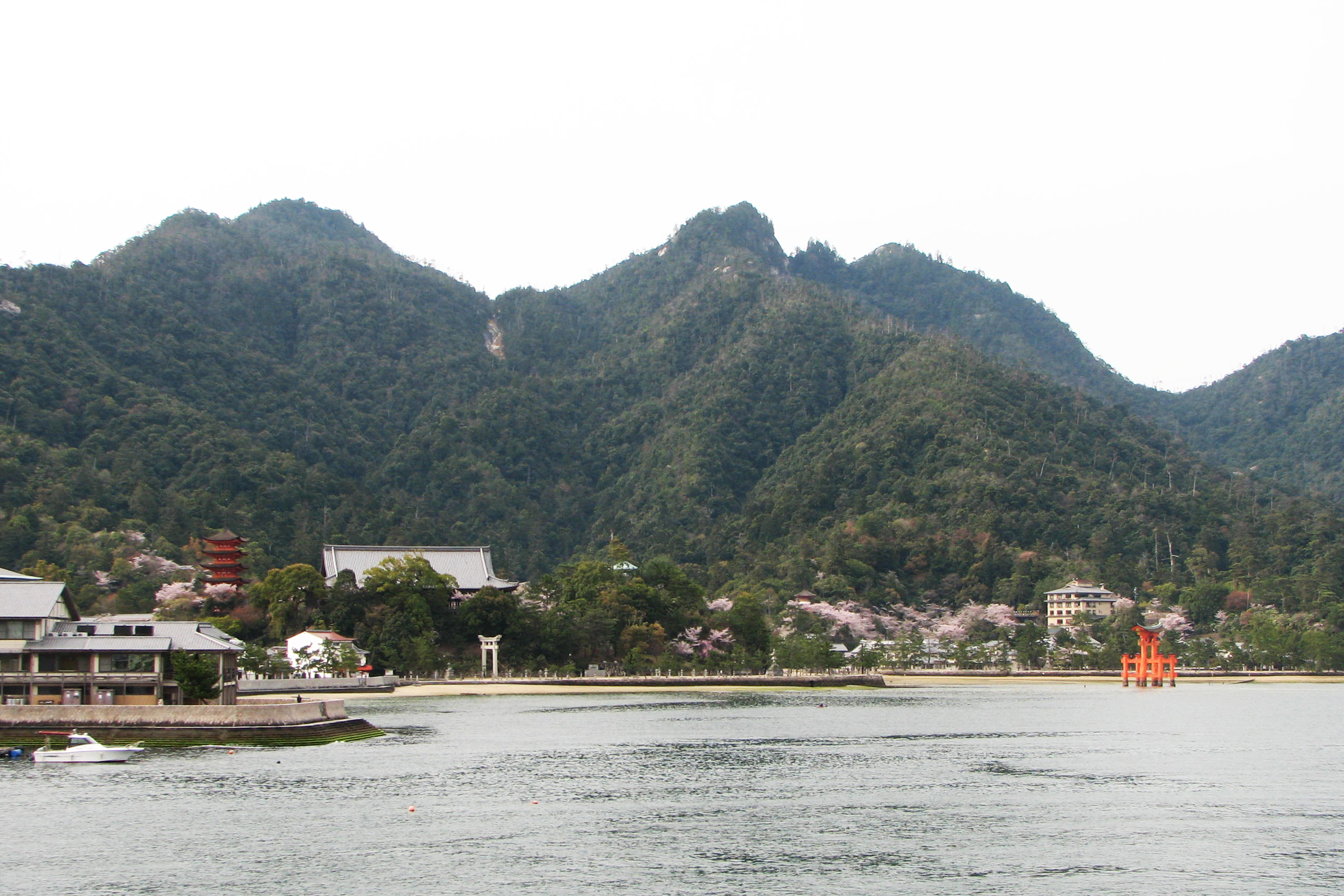
Miyajima is the small island an hour from Hiroshima where a vermillion torii gate appears to float above the Seto Inland Sea at high tide — and where the combination of that gate, wild deer, mountain-top views, and Hiroshima's Peace Memorial Museum makes for the most emotionally complete day-trip circuit in Japan.
Miyajima — officially Itsukushima — is a small island in Hiroshima Bay that has been considered sacred since antiquity. The main shrine (Itsukushima Jinja, UNESCO-listed) was built partially over the tidal flats precisely so that it appears to float, its vermillion wooden corridors rising above the sea at high tide. The torii gate in the water 200m offshore has become Japan's second or third most-photographed image — alongside Fuji and the Fushimi Inari red gates — but unlike those, it manages to be exactly as moving in person as in photographs.
The island is tiny (roughly 30 km² of which most is the forested Misen mountain), walkable from the ferry pier to the shrine in ten minutes, and home to a population of wild sika deer that have lost all fear of humans and wander through the shopping street, up the shrine steps, and occasionally through restaurant doorways. The deer are charming, persistent, and will steal your map if you're not paying attention. They are protected but not tame; maintain respectful distance and don't feed them.
The practical logic of Miyajima is usually as a day trip from Hiroshima — JR Sanyo Line to Miyajimaguchi (30 min), then a 10-minute ferry crossing (JR Pass covers the ferry). The Hiroshima Peace Memorial Museum and Park are the other half of this emotional day-trip circuit. The museum is one of the most serious and necessary tourist experiences in Japan — presenting the atomic bomb's effects with unflinching specificity through survivor testimonies, damaged artifacts, and architectural remains (the Genbaku Dome, UNESCO-listed, is the only surviving near-epicenter structure). The combination of Miyajima's natural beauty and Hiroshima's historical weight makes for a uniquely complete Japan travel day.
For those who overnight on Miyajima (recommended if possible), the island transforms after the day-trippers leave. The deer wander more freely; the shrine is lit at dusk; the Misen mountain ropeway (or a 1.5h hike) delivers evening views over the Seto Inland Sea that rank among Japan's best. An oyster dinner — Hiroshima Prefecture is Japan's largest oyster producer, and Miyajima's waterfront grill-stalls serve them fresh over charcoal — is the final component of a perfect island evening.
The practical bits.
- Best time
-
March – May · September – NovemberSpring delivers cherry blossoms on Miyajima (Itsukushima Shrine grounds, late March–mid April) and comfortable ferry conditions. Autumn (October–November) brings maple leaves on Misen mountain against the shrine's vermillion — one of Japan's most striking autumn-foliage combinations. Summer is hot and very crowded; typhoon risk in September. Winter is quiet, cheap, and often clear — the gate in cold morning mist is a different kind of beauty.
- How long
-
Day trip from Hiroshima (full day) or overnight on Miyajima recommendedA day trip from Hiroshima: leave by 9am, arrive Miyajima by 10am, 4–5 hours on island, return for Peace Memorial Museum late afternoon. An overnight on Miyajima adds Misen summit, dusk shrine, and the post-tourist-crowd quiet that transforms the place. Hiroshima city itself warrants 2 nights total.
- Budget
-
~¥19,000 / day (~$130) typicalFerry ¥200 each way (¥100 visitor tax if using JR Pass). Itsukushima Shrine entry ¥300. Ropeway to Misen ¥1,800 return. Grilled oysters ¥200–400 each on the waterfront. Hiroshima ramen lunch ¥800–1,200. Peace Memorial Museum ¥200. Miyajima overnight ryokan ¥25,000–50,000 with meals; guesthouses from ¥8,000.
- Getting around
-
Walking on Miyajima · Hiroshima tramMiyajima is walkable from ferry pier — shrine is 10 min, main shopping street 5 min. The Misen ropeway goes two-thirds up; 30 min walk to summit from the top station. In Hiroshima: trams (streetcars) are the primary public transport, covering Peace Park, Hiroshima Castle, and JR Station (¥220/ride). Day pass ¥700. Shinkansen from Tokyo: 3h 50m (Hikari). From Kyoto/Osaka: 1h 30m–2h.
- Currency
-
Japanese Yen (JPY). IC cards work on Hiroshima trams and JR lines. Miyajima ferry (non-JR Pass): cash or IC card.Larger ryokan and restaurants accept cards. Waterfront oyster stalls are cash-only. Carry ¥5,000–10,000 cash on the island.
- Language
- Japanese. English signage at Peace Memorial Museum (excellent), Itsukushima Shrine (adequate). Museum audio guide in English ¥300 (essential).
- Visa
- Japan 90-day visa-free for most developed-country passports. Visit Japan Web registration recommended before arrival.
- Safety
- Very safe. The deer are wild — don't provoke, don't feed, keep food hidden. Misen summit hiking: summer afternoon thunderstorms possible; start early.
- Plug
- Type A · 100V — Japanese standard.
- Timezone
- JST · UTC+9 (no DST)
A few specific picks.
Hand-picked, not algorithmic. Each of these has earned its space.
The UNESCO-listed shrine corridor built over tidal flats — at high tide it appears to float. The torii gate (currently restored and in full color as of 2022 after renovation) stands 200m offshore. Check tide tables at miyajima.or.jp for the high-tide window of your visit.
One of the most important museums in Japan — the atomic bomb's effects documented with survivor testimonies, charred artifacts, thermal shadow photographs, and the preserved Genbaku Dome (UNESCO) outside. Entry ¥200. Allow 2–3 hours. Not suitable for very young children.
The ropeway goes to Shishiiwa Station (433m), then 30 min walk to the summit (535m). Views over the Seto Inland Sea from the summit observatory rank among Japan's best. Legend says Kukai (Kobo Daishi) lit a flame here 1,200 years ago that still burns in the Reikado Hall.
Hiroshima Prefecture produces 60–70% of Japan's oysters. On Miyajima's waterfront shopping street, multiple stalls grill fresh oysters over charcoal at ¥200–400 each. These are among the freshest you'll eat anywhere. October–March is peak oyster season; summer is off-season.
The island's signature sweet — a maple-leaf-shaped cake filled with red bean paste, custard, or chocolate. Freshest from the bakeries that pipe live batter onto waffle irons in the shop window. Every stop on the Miyajima shopping street sells them; freshest wins.
The only building to survive near the atomic bomb's hypocenter — preserved exactly as it collapsed in August 1945. The dome's skeletal shell is visible across the Ota River from the Peace Park. UNESCO World Heritage Site. Free to view from outside; no interior access.
A cluster of historical structures on the west side of the island (facing the Seto Inland Sea) transformed into artist residences and spaces. Quieter than the main shrine area; the walk there through forested paths is excellent.
A major Shingon Buddhist temple complex on the lower slopes of Misen — hundreds of stone lanterns, spinning prayer wheels, statues, and a cave-shrine to Kobo Daishi. Often quieter than the main shrine area despite being within 10 min walk.
Pick a neighborhood, not a hotel.
Miyajima is a city of neighborhoods. The one you stay in shapes the trip more than the property does.
Different trips for different travelers.
Same city, very different stays. Pick the lens that matches your trip.
Miyajima for first-time japan visitors
The Hiroshima Peace Museum + Miyajima torii circuit is one of Japan's most recommended itinerary anchors — combining historical weight, natural beauty, and cultural depth in a way that exemplifies why Japan travel is so rewarding.
Miyajima for history and memorial travelers
The Hiroshima Peace Memorial Museum is the most important WWII site in Japan — carefully curated, unflinching, and humanizing. The Genbaku Dome alongside it makes Hiroshima a serious pilgrimage for those engaging with 20th-century history.
Miyajima for photographers
The floating torii gate at high tide — morning light, low mist, with the shrine behind — is one of Asia's most iconic photographic subjects. Overnight visitors can shoot in the golden hour light after day-trippers leave.
Miyajima for food travelers
Grilled oysters on the Miyajima waterfront, momijimanju from the waffle-iron shops, and Hiroshima's layered okonomiyaki are three of western Japan's most distinctive regional foods in one circuit.
Miyajima for spiritual travelers
Itsukushima Shrine's 1,400-year history as a sacred island, Daisho-in Temple's cave-shrine to Kobo Daishi, and Misen's eternal flame (allegedly burning since the 9th century) make Miyajima one of Japan's most spiritually layered destinations.
When to go to Miyajima.
A quick year at a glance. Great, good, or skip — see what each month is doing before you book.
Cold and quiet. The torii in morning mist is ethereal. Very low tourist density. Oyster season at peak.
Low season. Occasional cold rain. Plum blossoms appear late month. Oysters excellent.
Early cherry blossoms on the island by late March. Comfortable temperatures returning.
Cherry blossoms at Itsukushima Shrine peak early–mid April. Most beautiful month. Crowds significant but manageable.
Post-Golden Week excellent. Warm temperatures, ferry comfortable, shrine gardens green. Good month.
Tsuyu rain. Still atmospheric (shrine in mist) but wet. Not ideal for Misen hiking.
Obon mid-August is crowded. Hot but tolerable with early starts. Water warm enough for swimming off the island's southern coast.
Hiroshima Peace Memorial events August 6 (atomic bomb anniversary) — profoundly attended. Miyajima lantern ceremony on Obon. Very hot.
Typhoon season. Generally fine with some risk. Oyster season begins late September. Crowds dropping.
Misen maple foliage begins. Deer more active in cooler temperatures. Excellent month.
Peak autumn colors on Misen mountain — red maples against vermillion shrine. One of Japan's best autumn foliage combinations. Oyster season full swing.
Christmas illuminations on the island shopping street. Very quiet. Oysters best of the year. Cold but clear.
Day trips from Miyajima.
When you want a change of pace. Each one's a half-day or full-day out, easy from Miyajima.
Hiroshima City (Peace Park & Museum)
30 min by streetcar from Miyajima areaThe essential companion to any Miyajima visit. The Peace Memorial Museum (¥200, allow 2.5h) and the A-Bomb Dome are two of Japan's most important travel experiences. Hiroshima Castle (reconstruction) adds historical context. Hiroshima okonomiyaki for dinner.
Onomichi
1h by JR from HiroshimaA hillside port city of narrow lanes, 25 temples, and a famous population of street cats. The Temple Walk climbs through the old city; the Senkoji ropeway gives harbor views. Starting point for the Shimanami Kaido cycling route to Shikoku.
Kurashiki
1.5h by JR from Hiroshima (via Okayama)The Bikan historical quarter — willow-lined canal, white-walled kura storehouses — is the best-preserved merchant town streetscape in western Japan. The Ohara Museum of Art (Japan's first Western art museum) is excellent. Half-day from Hiroshima.
Iwakuni (Kintai-kyo Bridge)
45 min by JR from HiroshimaThe Kintaikyo Bridge — five wooden arches built in 1673 — spans the Nishiki River below Iwakuni Castle. One of Japan's three famous bridges. Cherry blossoms in April with the castle backdrop are excellent. Half-day trip.
Tomonoura
1h 45m (JR to Fukuyama + bus)A beautifully preserved Edo-period port town that inspired the setting for Studio Ghibli's Ponyo. Stone walls, old warehouses, the Taichoro guest house (Japan's oldest surviving inn). Best enjoyed slowly; less visited than it deserves.
Miyajima vs elsewhere.
Quick honest reads on the cities people compare Miyajima to.
Fushimi Inari is more accessible from central Kyoto and has its own iconic image quality (10,000 red torii gates in the hills). Miyajima is quieter (if you overnight), more comprehensive (shrine + mountain + deer), and has the emotional depth of Hiroshima nearby. They're both must-do; if choosing one, Miyajima offers more total experience.
Pick Miyajima if: You want a complete island experience with historical depth (Hiroshima) rather than a single-image shrine trail near the Kyoto tourist circuit.
Nara also has free-roaming deer and major temples in a day-trip context. Nara's Todai-ji great Buddha and Kasuga Shrine are impressive at larger scale. Miyajima has more dramatic natural scenery and the torii's uniqueness. Both are excellent; Nara is busier.
Pick Miyajima if: You want dramatic coastal scenery, the torii gate, and an onsen island overnight over Nara's deer park and giant Buddha.
The Peace Memorial Museum alone warrants the Hiroshima visit; Miyajima is the natural complement. Doing both together is the standard and correct approach — they're 50 minutes apart by transit and represent opposite emotional registers that together make a complete Hiroshima experience.
Pick Miyajima if: Always pair them — don't visit Hiroshima without Miyajima or vice versa.
Itineraries you can start from.
Rough shapes for a trip here — a feel for the pace and cost. Find the one that fits you.
Day 1 (Hiroshima): arrive, Peace Memorial Museum + Genbaku Dome (allow full afternoon), Hiroshima okonomiyaki dinner at Okonomimura building. Day 2: Miyajima full day — high tide torii, Itsukushima Shrine, Misen ropeway, oyster lunch, Daisho-in temple.
Day 1: Hiroshima Peace Park, museum, castle. Day 2: Miyajima day — shrine, Misen summit hike, waterfront oysters. Overnight on Miyajima (ryokan). Day 3: early morning on the quiet island, ferry back to Hiroshima, Shukkei-en Garden before departure.
Add Onomichi (1h east by JR — cat city, temple trail, cycling gateway to the Shimanami Kaido bicycle route). Or add Kurashiki (1.5h east) for the Bikan historical quarter. Hiroshima is the western anchor of many Japan circuits.
Things people ask about Miyajima.
What is the best time to see the floating torii at high tide?
The torii gate's floating effect is best at high tide — check tide tables at miyajima.or.jp or search 'Miyajima tide table' before your visit and plan to arrive 1–2 hours before high tide. At low tide you can walk out to the gate and inspect it close up — a completely different experience. Both are worth seeing; plan your visit around one or the other depending on priority.
How do I get to Miyajima from Hiroshima?
JR Sanyo Line from Hiroshima Station to Miyajimaguchi Station: 25–30 min, ¥420. Then a 10-min ferry (JR West Ferry ¥180 each way, but JR Pass covers this + ¥100 visitor tax; Matsudai Ferry ¥200 each way, JR Pass not valid). The ferry crossing itself is scenic. Total door-to-door from Hiroshima Station: about 50 min.
Are the deer at Miyajima dangerous?
The deer are wild sika deer — legally protected and habituated to humans, but genuinely wild. They will follow you for food, steal maps and bags, and occasionally headbutt insistently. Don't feed them (it's prohibited and encourages aggressive behavior). They're not dangerous to adults but can alarm small children. Keep food hidden and bags zipped.
Is Hiroshima's Peace Memorial Museum too intense for children?
The museum is honest and graphic about the atomic bomb's effects on the human body — survivor photographs, artifacts from victims, testimonies. The curatorial intent is to ensure visitors understand what happened. This is appropriate for children 12 and older; younger children may be disturbed by the graphic content. The Genbaku Dome and Peace Park are accessible and appropriate at any age.
What is Hiroshima-style okonomiyaki?
Hiroshima okonomiyaki differs from Osaka-style: it's a layered crepe rather than a mixed pancake — thin batter, cabbage and bean sprouts, noodles (yakisoba or udon), egg, pork, and savory sauce layered and cooked on a teppan griddle. The result is denser and more substantial than the Osaka version. Okonomimura (the 'okonomiyaki building' near Hondori) has 24 restaurants on 3 floors. Budget ¥900–1,500.
Should I stay on Miyajima overnight?
If you can manage the accommodation cost (ryokan from ¥25,000/night with meals, guesthouses from ¥8,000), yes — the overnight is transformative. After the day-trippers leave on the last afternoon ferries, the island becomes deeply quiet. The shrine at dusk, the deer moving silently through the village lanes, and the Seto Inland Sea sunrise are experiences day-trippers simply cannot access.
Is Miyajima's torii gate currently under restoration?
The renovation completed in late 2022. The gate is now at full vermillion color and fully open for viewing. No scaffolding remains.
What is the Shimanami Kaido?
The Shimanami Kaido is a 70km cycling route connecting Honshu (Onomichi, 1h from Hiroshima) to Shikoku (Imabari, near Matsuyama) across six islands via a series of suspension bridges. One of the world's great cycling routes, with rental bikes at each island. Not directly in Miyajima's orbit, but accessible as a 2–3 day extension from Hiroshima.
Know someone headed to Miyajima?
Send them this guide — real neighborhoods, timing, and prices, with nothing to sign up for.
Copies the link — nothing to install