Chester
Send it to whoever you'd travel with
Chester is the Roman-walled cathedral city in northwest England with a medieval shopping street built on a second-storey gallery â and the only complete Roman city wall in Britain you can walk around in two hours.
Chester is the city that does its history with more visible commitment than almost anywhere in England. The Roman wall around the medieval centre is still complete â you can walk the entire 2-mile circuit in under two hours, looking down into the modern city from a stone parapet built by the 20th Legion in the first century. Underfoot, you cross over a Norman castle, a medieval cathedral, an actual Roman amphitheatre, and a Victorian town hall. There is no other English city where the layered chronology is this walkable.
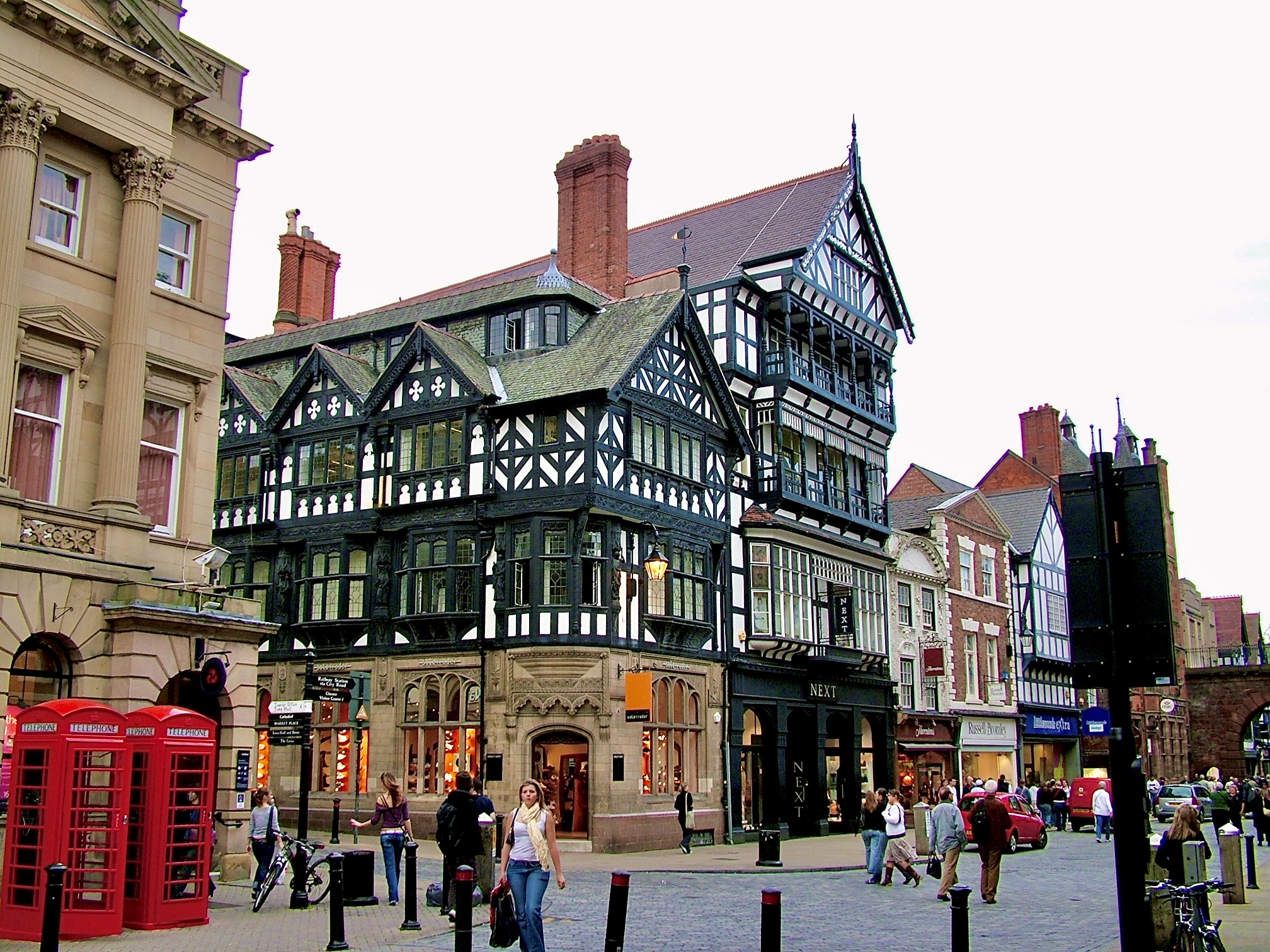
The Rows â Chester's signature feature â are a medieval shopping system at two levels. Ground floor shops face the street; above them, a covered gallery runs the length of each block with a second tier of shops. The earliest sections date to the 1200s. They are the only continuous example anywhere in Europe and serve as living retail today. Watergate Street has the best preserved stretch. Spend an hour walking the upper and lower levels of all four Rows-streets and you have done the central architectural pilgrimage.
Chester Cathedral is undervisited compared to York or Canterbury, but it shouldn't be. It started as a Benedictine abbey, became a cathedral at the Reformation, and retains the most complete monastic precinct in England â cloister, chapter house, refectory, all intact. The Cathedral falconry display in the precinct is a small surprise: trained birds of prey demonstrated against the medieval backdrop, three times daily in season.
The city has a tourist polish that some find performative â the Tudor Revival half-timbering on Eastgate Street is mostly Victorian, the river boats are quaintly priced, the town crier still operates. But the underlying historic fabric is real, the food scene has matured into something seriously credible, and the proximity to the North Wales coast (Snowdonia, Conwy Castle, the Llandudno seafront) makes Chester one of the best Northwest England bases. It also has the most photographed clock in England â the Eastgate Clock above the Roman gate, erected for Victoria's Jubilee in 1897.
The practical bits.
- Best time
-
April â June · September â OctoberSpring and early autumn deliver mild weather for walking the walls and the Roman gardens. Race meetings at the Chester Racecourse (the oldest in continuous use in Britain) run May through September â atmospheric but accommodation gets tight on race days. Christmas markets in December are good but very busy on weekends.
- How long
-
1 night recommendedOne night gets you the wall walk, Cathedral, the Rows, and dinner. Two nights makes sense if you want to base for North Wales day trips (Conwy, Llandudno, Snowdonia foothills) or to add Liverpool (40 min by train) to the trip.
- Budget
-
~£120 / day typicalChester is more expensive than the Welsh side of the border, cheaper than Bath or York. Mid-range hotels run £85â160/night; pub dinner with a pint £20â30; Cathedral free admission (donation suggested). Race days can double hotel rates.
- Getting around
-
WalkingThe walled centre is entirely walkable. Chester railway station is a 15-minute walk northeast of the centre, with direct trains from London Euston (2h 5m), Manchester (1h), Liverpool (40 min), and Cardiff (3h). Buses from the bus station for North Wales destinations. No metro.
- Currency
-
British Pound (£). UK is outside EU/Schengen post-Brexit. Cards universal; contactless standard.Cards and contactless everywhere. Apple Pay, Google Pay standard. Some pubs cash-friendly but cards always accepted.
- Language
- English. Light Cheshire accent â clear and easy.
- Visa
- UK visa rules apply. US/Canadian/Australian/EU passports get 6-month visa-free. ETA (Electronic Travel Authorisation) required from 2026 â £10 online before travel.
- Safety
- Very safe by day. Some lively pub clusters near the river get rowdy on weekend evenings; standard small-city caution. The walled core and main streets are entirely comfortable at all hours.
- Plug
- Type G · 230V â UK adapter needed.
- Timezone
- GMT · UTC+0 (BST UTC+1 late March â late October)
A few specific picks.
Hand-picked, not algorithmic. Each of these has earned its space.
The only complete circuit of Roman/medieval city walls in Britain â 2 miles, walkable in 90 minutes to 2 hours, free. Start at Eastgate, walk clockwise: Northgate, Watergate, Roman amphitheatre, back to Eastgate. The defining Chester experience.
The unique medieval two-tier shopping galleries on Watergate, Eastgate, Northgate, and Bridge Streets. Walk the upper galleries; many shops up there are independent and quieter than ground-floor chains. Watergate has the most intact stretch.
A complete medieval Benedictine abbey turned cathedral â Norman crypt, 14th-century cloisters, the most complete monastic precinct in England. Free entry (donation). The Falconry & Nature Gardens in the precinct run daily demos.
The largest Roman amphitheatre in Britain â half excavated, half still under a Victorian street. Free, atmospheric, just outside the wall by Newgate. Allow 30 minutes; combine with the wall walk.
The second-most-photographed clock in England (after Big Ben), erected 1897 for Victoria's Diamond Jubilee on top of the Roman Eastgate. Walk under it, walk the wall over it. Free, obvious, unavoidable.
Strong local museum â Roman Chester (Deva Victrix), period rooms, silverwork, natural history. Free. An hour minimum; longer if you're into Roman archaeology. Often missed by visitors who do only walls and Rows.
The Groves promenade alongside the River Dee â bandstand, riverboats, weeping willows, ice cream. Modest, pleasant, the right kind of afternoon break. Half-hour boat trips on the Dee available.
The oldest racecourse in Britain in continuous use, on the site of the Roman harbour. Race days (MayâSeptember) are huge events with hat-and-fascinator culture. Even on non-race days, the course is visible from the city wall.
One of Chester's standout independent restaurants â modern British, tight wine list, daily-changing menu. The fixed-price lunch is the value play. Book ahead for dinner.
Famously eccentric WWI-themed Edwardian pub near the walls â no children, no piped music, traditional cooked food (gravy boats and all). Adults only. The most distinctive pub in Chester.
Pick a neighborhood, not a hotel.
Chester is a city of neighborhoods. The one you stay in shapes the trip more than the property does.
Different trips for different travelers.
Same city, very different stays. Pick the lens that matches your trip.
Chester for history and roman-heritage travelers
The only complete Roman/medieval wall circuit in Britain, the largest Roman amphitheatre in the country, a complete medieval monastic precinct at the Cathedral. Architecturally the densest small city in England.
Chester for architecture enthusiasts
The Rows â unique anywhere in Europe â give Chester an architectural standout no other English city can match. Layered chronology from Roman to Victorian Tudor-Revival, all walkable in an afternoon.
Chester for north wales travelers
Chester is the most practical English base for North Wales day trips â Conwy, Llandudno, Snowdonia foothills all reachable by train under an hour. Better hotel rates than Welsh equivalents.
Chester for first-time uk visitors
After London, Chester is one of the most efficient cultural-tourist overnights â direct train, walkable historic core, complete UK-history showcase in 24 hours.
Chester for race-going travelers
The Chester Races at the Roodee are the oldest in continuous use in Britain. May Festival and summer fixtures are the year's centerpieces. Hat culture, fascinator culture, plus a working historic city to walk between races.
Chester for christmas market travelers
Chester's Christmas market in the Town Hall Square is one of the better English-city Christmas markets â Cathedral choir performances, mulled wine, ice rink. Weekends are very busy; midweek visits much more pleasant.
When to go to Chester.
A quick year at a glance. Great, good, or skip — see what each month is doing before you book.
Quiet, cheap. Wall walk doable on crisp days. Cathedral interior atmospheric in low light.
Quietest month. Half-term week briefly busy.
Daffodils on the walls. Tourist numbers tentative.
Easter crowds. Good walking weather.
May Festival at the Racecourse â huge week, book ahead. Otherwise the best month.
Long evenings, river boats running, summer crowds building.
Peak summer crowds. Wall walk best in early morning.
UK school holidays â busiest of the year. Race fixtures concentrate weekends.
Strong shoulder season. Final summer races. Excellent walking weather.
Quiet, photogenic, Cathedral cloisters at their atmospheric best.
Quiet. Christmas market begins late month.
Christmas market in full flow. Weekends rammed, weekdays manageable. Cathedral carol services excellent.
Day trips from Chester.
When you want a change of pace. Each one's a half-day or full-day out, easy from Chester.
Conwy
50 min by trainOne of the great Edwardian castles of North Wales â UNESCO World Heritage, 13th-century, fully walkable on the battlements. The walled town beside it is intact. Half day; add Llandudno on the same train line for a full day.
Llandudno
1h by trainThe classic Victorian Welsh seaside resort â long curving promenade, the Great Orme limestone headland with a tramway to the summit, and the longest pier in Wales. Half day to full day.
Liverpool
40 min by trainThe closest major city â Albert Dock UNESCO waterfront, Tate Liverpool, the Beatles Story, the cathedrals. A full day; longer if you want the music heritage in depth.
Snowdonia foothills
45 min by carEasier by car than public transport. Betws-y-Coed is the gateway village to Snowdonia National Park. Swallow Falls, the Mountain Railway from Llanberis. Full day.
Port Sunlight
30 min by trainThe Edwardian model village built by Lord Leverhulme for soap-factory workers â a perfectly preserved Arts and Crafts town, with the Lady Lever Art Gallery (excellent Pre-Raphaelite collection). Half day.
Manchester
1h by trainThe bigger northwest city â Museum of Science and Industry, Manchester Art Gallery, the Northern Quarter for music and food. Full day, more naturally an overnight.
Chester vs elsewhere.
Quick honest reads on the cities people compare Chester to.
York is larger, with the stronger Viking and Roman museum stock and a more dramatic Minster. Chester has the only complete wall circuit, the unique Rows, and easier North Wales access. York is the deeper trip; Chester is the more accessible.
Pick Chester if: You want a Roman wall walk and the Rows architecture, plus North Wales day-trip access, rather than York's larger size and Viking heritage.
Bath is Georgian and spa-themed; Chester is medieval and Roman. Bath rewards 2 nights for the architecture and the Roman baths; Chester is right at 1â2. Bath is the prettier short-break; Chester has more historical layers.
Pick Chester if: You want Roman walls and medieval Rows with North Wales as a bonus, rather than Georgian crescents and a Roman bath complex.
Canterbury has the more important religious history (Anglican mother church, Becket cult). Chester has the more visible Roman heritage and the architectural standout of the Rows. Both are small walled cathedral cities; different periods dominate.
Pick Chester if: You want Roman walls and a unique medieval shopping arcade rather than the central pilgrim cathedral of England.
Liverpool is a major industrial port city with world-class music heritage and waterfront museums. Chester is a small walled cathedral city. They're 40 minutes apart and complementary, not competitors. Pair them for a strong Northwest week.
Pick Chester if: You want medieval and Roman charm over big-city industrial heritage and Beatles tourism â but consider doing both.
Itineraries you can start from.
Rough shapes for a trip here — a feel for the pace and cost. Find the one that fits you.
Morning: arrive, walk the walls (2h). Afternoon: Cathedral, the Rows, Roman amphitheatre. Evening: dinner at Joseph Benjamin and a drink at The Albion. Morning departure after a Cathedral cloister visit.
Day one Chester. Day two: train to Conwy (50 min) for the castle and walled town, or Llandudno for the Victorian seafront. Sunset back in Chester for dinner. Strong Anglo-Welsh comparison.
Two Chester nights plus one Liverpool. Day trip to Conwy/Llandudno or into the Snowdonia foothills. Liverpool for the Beatles trail, the Albert Dock, and Tate Liverpool. Three contrasting Northwest experiences.
Things people ask about Chester.
Is Chester worth visiting?
Yes â it's the most architecturally layered small city in England, with the only complete Roman city walls and the unique medieval two-tier Rows. Best as a 1â2 night stop, especially as a base for North Wales day trips. Less famous than York or Bath, which means lower crowds and better hotel availability outside race days.
How many days do you need in Chester?
One night gets you the walls, Cathedral, Rows, and a proper dinner. Two nights makes sense as a base for North Wales â Conwy, Llandudno, or Snowdonia foothills. Three only if you're combining with Liverpool (40 min away).
How do I get to Chester from London?
Direct train from London Euston to Chester in 2h 5m, two trains an hour. Off-peak return £40â60 if booked in advance. By car, 3.5â4 hours via the M6. From Manchester, 1 hour by train; from Liverpool, 40 minutes.
What are the Chester Rows?
A unique medieval two-tier shopping system, found on the four main streets in the walled centre (Watergate, Eastgate, Northgate, Bridge Streets). Ground-floor shops face the street; an upper covered gallery has a second tier of shops above. Dating from the 13th century. Nowhere else has this architecture.
Can you walk the entire Chester wall?
Yes â the full 2-mile circuit is walkable, free, and takes 90 minutes to 2 hours including stops. Mostly intact medieval wall on Roman foundations. Start at Eastgate Clock. Recently reopened sections include the Roman north tower. Walkable in any weather.
Is Chester Cathedral worth visiting?
Yes â undervisited compared to York or Canterbury but with the most complete medieval monastic precinct in England. Norman crypt, 14th-century cloisters, refectory, chapter house. Free admission with suggested donation. Daily Falconry & Nature Gardens demos in the precinct.
When are the Chester Races?
The May Festival (early May) is the year's marquee meeting; further fixtures run through September. Race days transform the city â fascinators and dressed-up crowds, packed pubs, doubled hotel rates. Worth aligning with for the spectacle; worth avoiding for the crowds.
What is the best time to visit Chester?
AprilâJune and SeptemberâOctober. Spring brings the wall-walk weather; September has thinner crowds. Race meeting days can be busy and pricier. December Christmas markets are atmospheric but rammed on weekends. November and January are the quietest months.
Where should I eat in Chester?
Joseph Benjamin (modern British, on Northgate Street). Sticky Walnut on Charles Street for Mediterranean-inflected modern cooking. The Albion Inn for the genuine Edwardian pub experience (no children, no piped music). Hypha for outstanding vegetarian. Architect for a riverside dinner.
Is Chester a good base for North Wales?
Yes â one of the best. Direct trains to Conwy (50 min), Llandudno (1h), and Bangor (90 min) put much of North Wales on day-trip range. By car, Snowdonia foothills are 45 minutes; the full park 90 minutes. Better hotel rates and dining than the Welsh side of the border.
Is Chester safe?
Very safe by day. Some weekend evenings get rowdy in the pubs near the river â standard small-city caution. The wall walk, Rows, and main streets are entirely comfortable at all hours.
What is the difference between Chester and York?
York is bigger and more famously walled, with stronger Viking and Roman museum stock (Jorvik, Yorkshire Museum) and a more dramatic Minster. Chester has the only complete circuit of walls, the unique Rows, and better access to North Wales. Different scales; both rewarding.
Know someone headed to Chester?
Send them this guide — real neighborhoods, timing, and prices, with nothing to sign up for.
Copies the link — nothing to install