York
Send it to whoever you'd travel with
York is the best-preserved walled medieval city in Britain — a place where the Roman, Viking, Norman, and Tudor layers are not reconstructions but actual surviving fabric you walk through, eat in, and sleep behind.
The city walls are the first thing you should do in York. The 3.4-kilometre circuit of medieval walls, largely intact and walkable at parapet height, was begun by the Romans, extended by the Vikings, rebuilt by the Normans, and repaired by the Victorians. You can walk almost the entire circuit — from Bootham Bar past the Minster, along the longest surviving stretch by the railway station, down to Micklegate Bar (where defeated heads were traditionally displayed) and back. It takes about 90 minutes, the views down into the walled city are excellent, and it costs nothing.
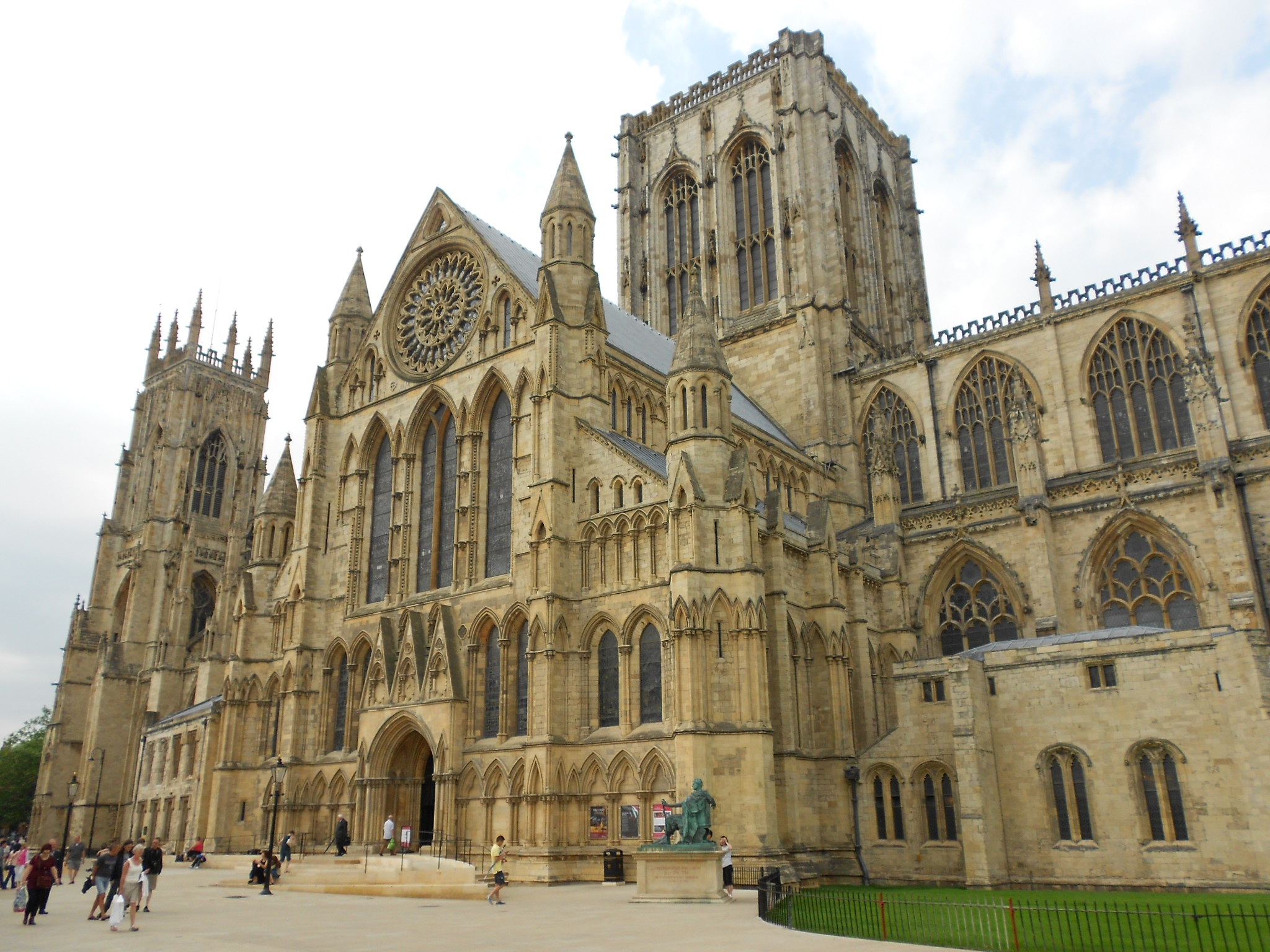
York Minster stands at the top of the European Gothic hierarchy by almost any measure: the largest Gothic cathedral in northern Europe, 1,000 years in continuous construction, and holder of one of the world's largest collections of medieval stained glass. The Great East Window contains more medieval glass than any other building in Britain. But the most affecting experience in the Minster is not the windows — it is descending into the Undercroft to see the Roman and Viking foundations laid bare under the Gothic nave, an accidental archaeological treasure revealed when engineers were reinforcing the central tower in 1967.
The Shambles is York's most photographed street and also one of the most genuinely preserved medieval streetscapes in Europe. The upper floors of the timber-framed buildings, dating to the 14th and 15th centuries, lean toward each other over the narrow lane — 'Diagon Alley' was reportedly partly inspired by the Shambles, and J.K. Rowling is believed to have visited York while writing Harry Potter. The ground floors are now independent shops, but the street itself is the point.
The JORVIK Viking Centre deserves more credit than its theme-park reputation suggests. Built on the actual archaeological site of the Coppergate dig (1976–1981, which uncovered the best-preserved Viking-age street in Europe), it takes visitors in a slow-moving ride through a reconstructed Viking neighbourhood at street level, using genuine artefacts in their excavated positions. Archaeologically serious, atmospherically excellent, and one of the most informative experiences in Yorkshire. The smell of the reconstruction is deliberate and historically documented.
The practical bits.
- Best time
-
May – June · September – OctoberMay and June offer warm days and the city's full cultural programme without peak August volume. September is excellent — crowds thin after the summer holiday season and the Yorkshire countryside around the city is at its most golden. The York Christmas Market (late November to Christmas Eve) is among the best in England and draws heavy crowds but the medieval setting is perfect for it.
- How long
-
2–3 nights recommendedTwo nights covers the Minster, walls circuit, Shambles, JORVIK, and York Castle Museum. Three nights adds the Yorkshire Museum, the National Railway Museum, and a Moors or Dales day trip. Five nights suits a full Yorkshire base.
- Budget
-
£115 / day typicalThe walls circuit is free. York Minster is £15; JORVIK £14; York Castle Museum £14. The National Railway Museum is free. Mid-range B&Bs run £85–150/night.
- Getting around
-
Walkable within the wallsThe walled city centre is compact and pedestrianised in many areas. Fast trains from London King's Cross take 1h 50m direct (LNER). The journey from Leeds is 25 minutes. A car is useful for North Yorkshire Moors and Dales day trips but a liability within the city.
- Currency
-
British Pound (£) · cards universalCards and contactless accepted everywhere. Cash useful for the Sunday market stalls.
- Language
- English.
- Visa
- Visa-free for EU citizens. US, Canadian, Australian holders visa-free for 6 months. Check UK ETA requirements.
- Safety
- Very safe. Standard awareness around the bus station at night. The walled city is safe at all hours.
- Plug
- Type G · 230V — adapter needed for US and European devices.
- Timezone
- GMT · UTC+0 (BST UTC+1 late March – late October)
A few specific picks.
Hand-picked, not algorithmic. Each of these has earned its space.
The largest Gothic cathedral in northern Europe. The Great East Window holds Britain's largest expanse of medieval stained glass. The Undercroft shows Roman and Viking foundations beneath the nave. Climb the Central Tower for views over the city and Yorkshire.
The 3.4km walkable circuit of medieval walls is free and takes 90 minutes at a gentle pace. The section behind the Minster (Dean's Park) and the stretch by the railway station are the most impressive. Four original gatehouses (bars) survive.
Medieval butchers' lane with overhanging 14th–15th century timber-framed buildings, often cited as the inspiration for Diagon Alley. Now independent shops. Best visited early morning before the tour groups arrive.
Built on the excavated site of the 1976 Coppergate Viking dig — the most significant Viking-age archaeological find in Britain. A slow-moving ride through a reconstructed Viking street using genuine artefacts. Serious archaeology delivered accessibly.
Housed in two former prisons, the museum reconstructs Victorian and Edwardian street scenes with genuine shop fronts and domestic interiors. Dick Turpin was held in one of the cells before his execution in 1739. One of England's best social history museums.
Free and the world's largest railway museum. Flying Scotsman, Mallard, and the Japanese Shinkansen all under one roof. More interesting than it sounds to non-enthusiasts; particularly strong for families.
The best archaeological museum in the north of England — Roman mosaics, Viking swords, medieval jewellery, and the Middleham Jewel (15th-century gold and sapphire pendant). Set in the ruins of St Mary's Abbey in the Museum Gardens.
Yorkshire's most famous tearoom, established 1919. The afternoon tea with fat rascals (heavy spiced scones), Yorkshire curd tart, and the house blend tea is the quintessential York food experience. Queue at weekends; no bookings for the main room.
York's best streets for independent eating — Fossgate and the surrounding lanes hold wine bars, tapas, Korean, and modern British restaurants that bypass the tourist main drag.
The keep of York Castle, built by William the Conqueror and the site of a Jewish massacre in 1190. The upper level of the tower gives the city's best 360-degree views. English Heritage; £9.
Pick a neighborhood, not a hotel.
York is a city of neighborhoods. The one you stay in shapes the trip more than the property does.
Different trips for different travelers.
Same city, very different stays. Pick the lens that matches your trip.
York for first-time uk visitors
York delivers more concentrated medieval English history per square mile than any other city outside London. Two nights, the walls circuit, the Minster, JORVIK, and Betty's covers the brief. The city is small enough that nothing feels like a side trip.
York for history enthusiasts
The layering is extraordinary: Roman fortress foundations under the Minster, Viking Coppergate under JORVIK, medieval walls and the Shambles, the Tudor and Stuart associations at Clifford's Tower and the Castle Museum. The Yorkshire Museum consolidates the archaeological finds from all layers.
York for families with children
York is one of England's best family history destinations. JORVIK, the National Railway Museum (free), York Castle Museum's Victorian street, and the walls walk all hold children's attention. The compact walled city means very little time is lost in transit.
York for couples
Betty's afternoon tea, a private tour of the Minster at dusk, dinner on Fossgate or Gillygate, and a morning walking the quieter section of walls from Monk Bar to Goodramgate make a refined York weekend.
York for food and drink travelers
York's independent food scene is concentrated on Fossgate, Goodramgate, and Bishopthorpe Road. The restaurant and small-plates scene has improved sharply since 2015. The covered Shambles Market (outdoor food market in the Shambles area) runs daily in season.
York for walking and cycling tourists
The walls circuit, the river walks along the Ouse and Foss, and the cycle paths out into the Vale of York are all excellent. The National Cycle Network Route 65 passes through the city. The Trans-Pennine Trail connects York westward toward Leeds and the Pennines.
When to go to York.
A quick year at a glance. Great, good, or skip — see what each month is doing before you book.
Cheapest hotels. Quiet streets. Good for museums without queues.
York Festival of Food and Drink runs some years in February.
Spring flowers in the Museum Gardens. Crowds still low.
Easter weekend brings visitors. Book ahead.
Excellent month. Long days, light crowds.
Early-summer peak begins. Viking Festival some years in June.
Peak season. All attractions busy.
Busiest month. JORVIK and Minster queues. Book ahead.
Excellent month. Crowds ease sharply after the first week.
Good month. Halloween events in late October.
Quiet. Christmas market opens late November.
One of England's best Christmas markets. The medieval setting is perfect. Book rooms months ahead.
Day trips from York.
When you want a change of pace. Each one's a half-day or full-day out, easy from York.
Castle Howard
30 min by carOne of England's most impressive country houses, set in parkland with fountains and a mausoleum. Used as Brideshead in both the 1981 TV series and 2008 film. Allow a full day.
Whitby
1h by carBram Stoker set part of Dracula here. The ruined 13th-century abbey on the clifftop overlooking the harbour is the most evocative thing in coastal Yorkshire. Best fish and chips at Magpie Café (queue early).
North Yorkshire Moors
30 min by carThe North Yorkshire Moors Railway steam service runs from Pickering to Whitby. Accessible without a car from York via Malton. The village of Goathland (Aidensfield in Heartbeat, Hogsmeade station) is on the steam line.
Harrogate
30 min by trainYorkshire's most genteel spa town, with the original Bettys tearoom in the market square and the Turkish Baths (1897). Easy train from York. Half a day.
Scarborough
50 min by trainTwo bays, a clifftop castle (12th century), and England's original seaside resort. Seasonal; best May–September. Direct train from York.
Durham Cathedral and Castle
50 min by trainDurham Cathedral is arguably England's greatest Norman building. The castle and cathedral perched above the River Wear form a UNESCO World Heritage Site. The train journey through the Vale of York is scenic.
York vs elsewhere.
Quick honest reads on the cities people compare York to.
Bath is Georgian, spa-focused, and southern; York is medieval, Viking-layered, and northern. Both are compact, walkable, and among England's finest city visits. Bath is more polished and spa-oriented; York has more archaeological depth and a stronger Viking identity.
Pick York if: You want medieval history, a walled circuit, Viking archaeology, and Yorkshire's wilder countryside on your doorstep.
Edinburgh is dramatically set, more culturally diverse, and the better base for Scottish Highlands trips; York is more compact, more medieval, and easier in 2–3 nights. Both are historic walled cities; Edinburgh's castle is grander, York's streetscape is more intact.
Pick York if: You want the most intact medieval walled city in England and prefer a compact, walkable visit to a larger, hillier capital.
Chester has Roman walls and the famous Rows (medieval double-decker arcaded shopping streets); York has more complete walls, a larger cathedral, and more archaeological depth. Chester is a pleasant half-day; York requires two nights minimum.
Pick York if: You want a fuller city with more historical layers, a bigger cathedral, and more museums than Chester offers.
Bruges is medieval, canal-laced, and Flemish; York is medieval, river-adjacent, and distinctly English and Viking-inflected. Both reward slow walking and independent exploration. Bruges has stronger dining; York has stronger archaeology and a more layered history.
Pick York if: You are in England and want the most intact medieval walled city experience with Viking depth and accessible countryside.
Itineraries you can start from.
Rough shapes for a trip here — a feel for the pace and cost. Find the one that fits you.
Day one: walls circuit, York Minster (including Undercroft), Shambles, Betty's tea. Day two: JORVIK, York Castle Museum, Yorkshire Museum, Clifford's Tower.
Day one as above. Day two adds National Railway Museum, Fossgate for dinner. Day three: half-day excursion to Castle Howard or North Yorkshire Moors Railway.
Three nights York with full city programme. Hire a car for two nights: one driving the Dales (Wharfedale, Malham Cove), one in Whitby for the abbey and harbour. Return via the moors.
Things people ask about York.
When is the best time to visit York?
May through June and September through October are the best windows — warm enough for the walls walk, the city's cultural programme running fully, and crowds below peak. The York Christmas Market (late November to December 24) draws tens of thousands of visitors but the medieval setting is genuinely spectacular for Christmas. July and August are busy — fully manageable but crowded on weekends.
How do you get to York from London?
LNER fast trains from London King's Cross take 1h 50m direct and are the only sensible option. Off-peak returns cost £30–60 booked in advance; advance singles from £15. The train station is 10 minutes' walk from the city centre. Coaches take 4h or more and are not worth it given the rail connection.
Is York good for families with children?
Exceptionally good. The JORVIK Viking Centre captivates most children 7 and above; the slow-moving ride and reconstructed Viking smells tend to provoke strong reactions. The National Railway Museum (free, Flying Scotsman, working turntable) is reliable for ages 5 and above. The York Dungeon (commercial attraction) plays to ages 10–16. The walls circuit is a good outdoor activity for energetic older children.
What is the JORVIK Viking Centre?
JORVIK is a museum built on the actual Coppergate excavation site where, between 1976 and 1981, archaeologists uncovered the best-preserved Viking-age street in Europe — complete with wooden buildings, tools, cloth, food, and even human waste preserved by the anaerobic soil. The museum uses the genuine artefacts in a recreation of the 10th-century neighbourhood. A slow-moving cart takes you through the scene at street level. It's more rigorous archaeology than the theme-park format suggests.
How long does the York city walls walk take?
The full circuit of 3.4 kilometres takes about 90 minutes at a gentle pace, including stops to look down into the city and at the four surviving medieval gatehouses. You don't have to do the whole circuit at once — the walls have steps at several points allowing you to descend into different neighbourhoods. The section behind the Minster (from Monk Bar to Bootham Bar) is the most atmospheric.
What is York Minster and how do you visit?
York Minster is the metropolitan cathedral of the Archbishop of York — the largest Gothic cathedral in northern Europe by floor area. Admission for a full visit is £15, which includes the Undercroft (Roman and Viking foundations), the Chapter House, and access to the Central Tower (275 steps to the top). Free services (Evensong, Sunday Eucharist) allow entry without an admission ticket. The Minster is closed for visitor admission on Sunday mornings during services.
Is the Shambles really the inspiration for Diagon Alley?
It is widely believed to be a partial inspiration — J.K. Rowling is known to have visited York while writing the Harry Potter books, and the overhanging medieval buildings of the Shambles share the characteristic lean and narrowness of Diagon Alley as depicted in the films. Rowling herself has not publicly confirmed it. The Shambles is genuinely medieval (14th–15th century) and is the best-preserved example of its type in Europe, regardless of any fictional connection.
What is Betty's Tearoom and is it worth it?
Betty's in St Helen's Square is York's (and Yorkshire's) most famous tearoom, opened in 1919 by a Swiss confectioner named Frederick Belmont. The afternoon tea, served in an Edwardian room with mirrored panels, includes fat rascals (large, fruit-filled scones with cherries on top), Yorkshire curd tart, and sandwiches alongside a range of loose-leaf teas. It is not cheap (£30+ per person for afternoon tea) and there is usually a queue at weekends. It is entirely worth it once.
How do I visit the North Yorkshire Moors from York?
The North Yorkshire Moors National Park is about 30 minutes by car from York. Without a car, the North Yorkshire Moors Railway (a heritage steam railway) runs from Pickering to Whitby on the coast — take a regular train from York to Malton or Pickering and join the steam service. Whitby (the Dracula connection, ruined abbey, harbour) is around 1h 20m by bus or car from York.
Is York expensive?
Below the London average but above average for the north of England. Central B&Bs run £85–160/night. The Minster costs £15; JORVIK £14; York Castle Museum £14; National Railway Museum free. Betty's afternoon tea is £30+ per person. A mid-range dinner on Fossgate runs £25–40 per person with drinks. Budget travelers can cover the main sights for around £50–70 per day.
What is the York Castle Museum?
The York Castle Museum occupies two former Georgian prisons and focuses on social history. Its most famous feature is the reconstructed Victorian street 'Kirkgate' — a full-scale recreation of a Victorian shopping street using genuine Victorian shop fronts, interiors, and stock collected by Dr John Kirk in the early 20th century. The museum also holds Dick Turpin's condemned cell (the highwayman was executed in York in 1739) and an extensive collection of everyday objects from the past three centuries.
What is the York Christmas Market?
York's Christmas market runs from late November to December 24 and is consistently rated among the best in England. Around 120 stalls set up through the city centre, with the highest concentration around St Helen's Square and along Parliament Street. The setting — medieval walls, the Minster lit at night, timber-framed facades — makes York unusually suited to Christmas market atmosphere. Book accommodation well ahead; the city is full on December weekends.
Are there Roman remains in York?
Yes — significant ones. York was the Roman fortress city of Eboracum, founded in 71 AD and important enough that Constantine the Great was proclaimed emperor here in 306 AD. The Multangular Tower in the Museum Gardens shows Roman masonry rising directly beneath medieval stonework. The Yorkshire Museum holds the best collection of Roman finds from the site, including mosaics, tombstones, and the Coppergate helmet. The Minster Undercroft preserves a Roman column from the original principia beneath the nave.
Can you visit the Yorkshire Dales from York?
Yes, by car. The Dales are 30–45 minutes from York — Wharfedale, Ribblesdale, and the market town of Skipton are all accessible for a full day trip. Malham Cove (a 260-foot limestone amphitheatre) and Ingleborough are popular hiking destinations. Public transport to the Dales is possible but limited; a hire car or organised day tour is more practical. The Dales and York complement each other well on a 4–5 night trip.
What is the best pub in York?
The Ye Olde Starre Inne on Stonegate (licensed since 1644, possibly York's oldest pub) and the Guy Fawkes Inn on High Petergate (birthplace of the Gunpowder Plot's central figure) both win on history. For atmosphere and ales: the Blue Bell on Fossgate (an unchanged Edwardian pub interior) and the Maltings by Lendal Bridge (excellent real ale selection). Avoid the Shambles-area tourist pubs.
What happened to the Jewish community in York?
In March 1190, approximately 150 members of York's Jewish community took refuge in Clifford's Tower during a wave of anti-Jewish violence. Most chose to take their own lives rather than surrender to the mob. A memorial plaque at Clifford's Tower marks the site. The Yorkshire Museum documents York's Jewish community before their expulsion from England in 1290.
Is York walkable without a car?
Completely, within the walled city. All the headline sights — Minster, Shambles, JORVIK, York Castle Museum, Yorkshire Museum, Clifford's Tower, Betty's — are within a 20-minute walk of each other. The National Railway Museum is 15 minutes from the city centre. Car hire is worth considering for Moors and Dales day trips, but for two to three nights of city exploring, a car is unnecessary and parking is expensive.
Who was Guy Fawkes and what is the York connection?
Guy Fawkes was born in York in 1570, near St Michael le Belfrey church beside the Minster. He became the central figure in the 1605 Gunpowder Plot, a Catholic attempt to blow up Parliament and kill King James I. The plot failed; Fawkes was tortured and executed. His birthplace is now the Guy Fawkes Inn on High Petergate.
What is the best walking route in York for a first visit?
Start at Bootham Bar (the north gate), walk the walls east to Monk Bar, descend, walk down Goodramgate to the Shambles, then to the Minster. After visiting the Minster, take the undercroft and tower. Walk south through the Museum Gardens past the ruined abbey to the Yorkshire Museum, then along the river to Clifford's Tower and the York Castle Museum. This clockwise route covers the major sights in about four hours with museum stops.
Know someone headed to York?
Send them this guide — real neighborhoods, timing, and prices, with nothing to sign up for.
Copies the link — nothing to install